-
-
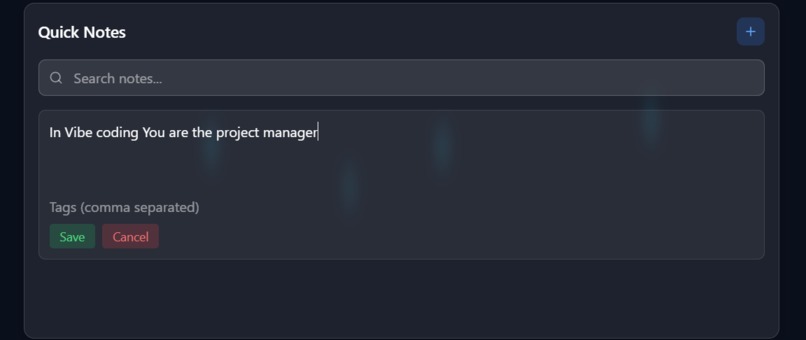
note taking for future reference
-
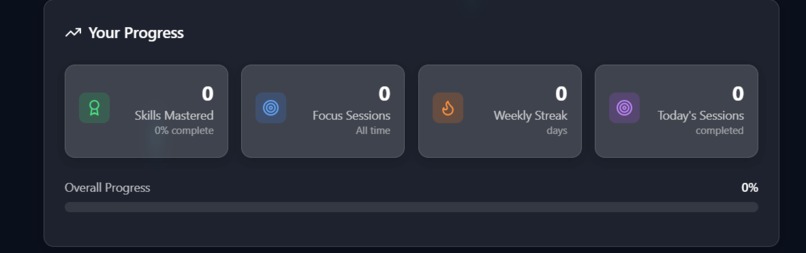
multiple modes for different coder modes
-
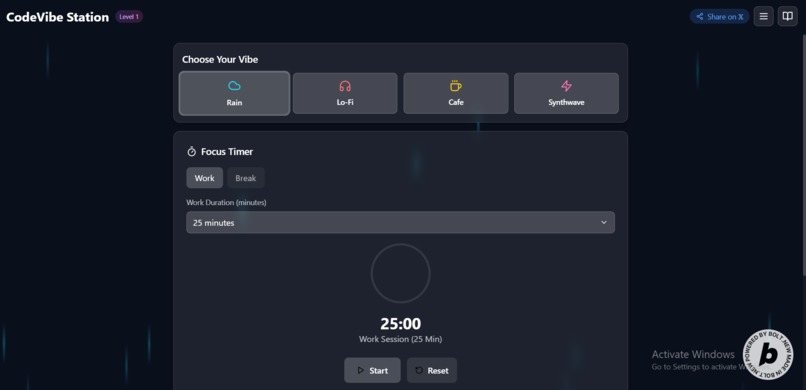
Vibe coding environment with animated backgrounds
-
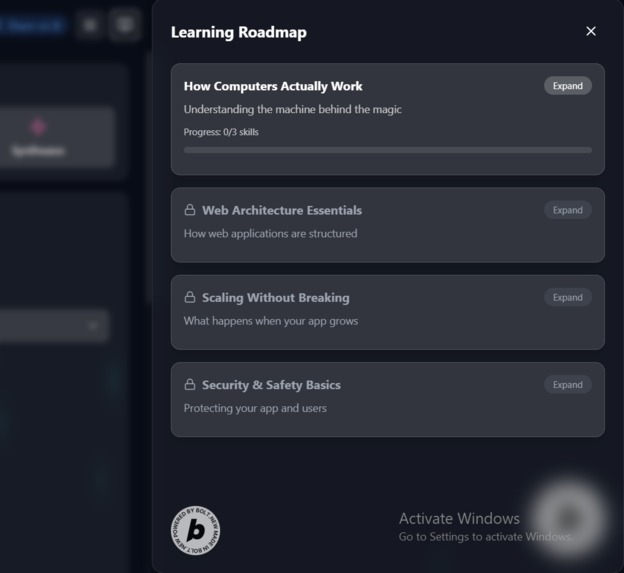
roadmap to the super vibe coder who can make truly scalable apps
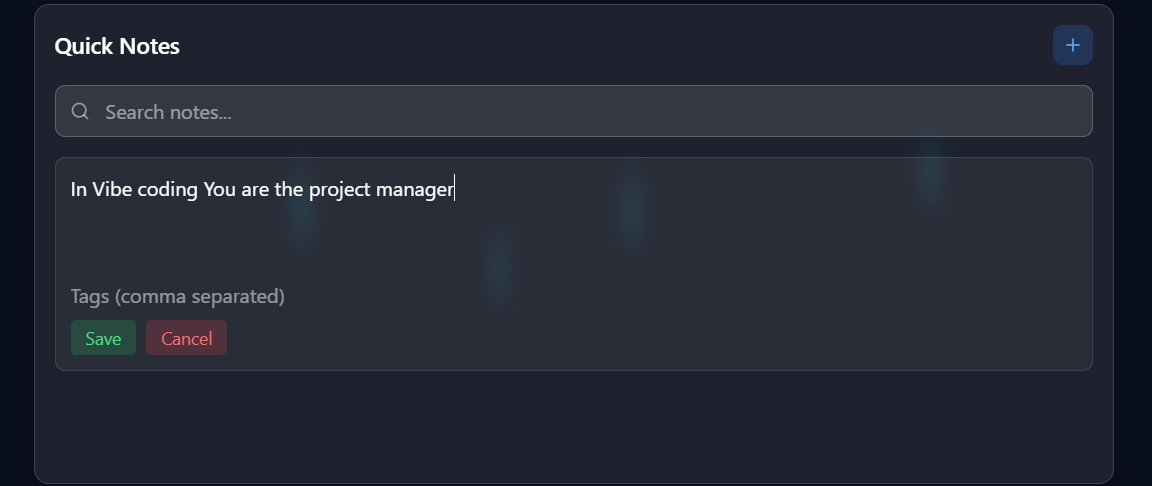
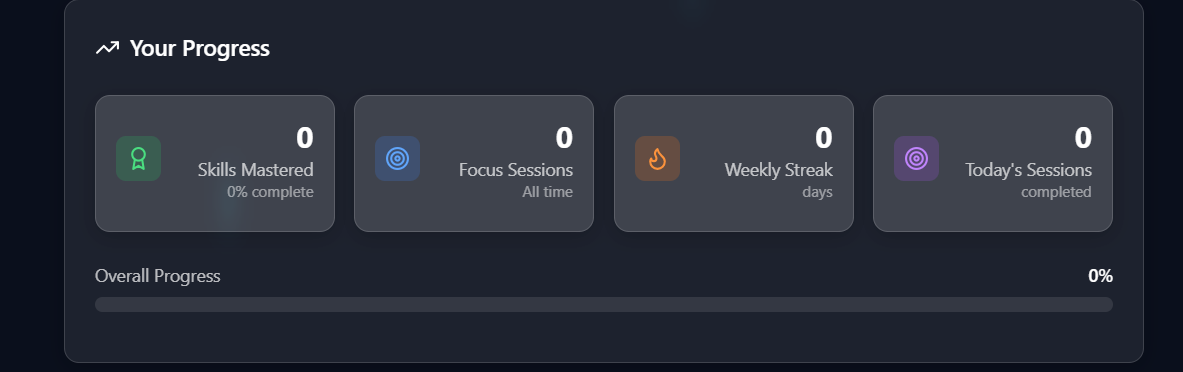
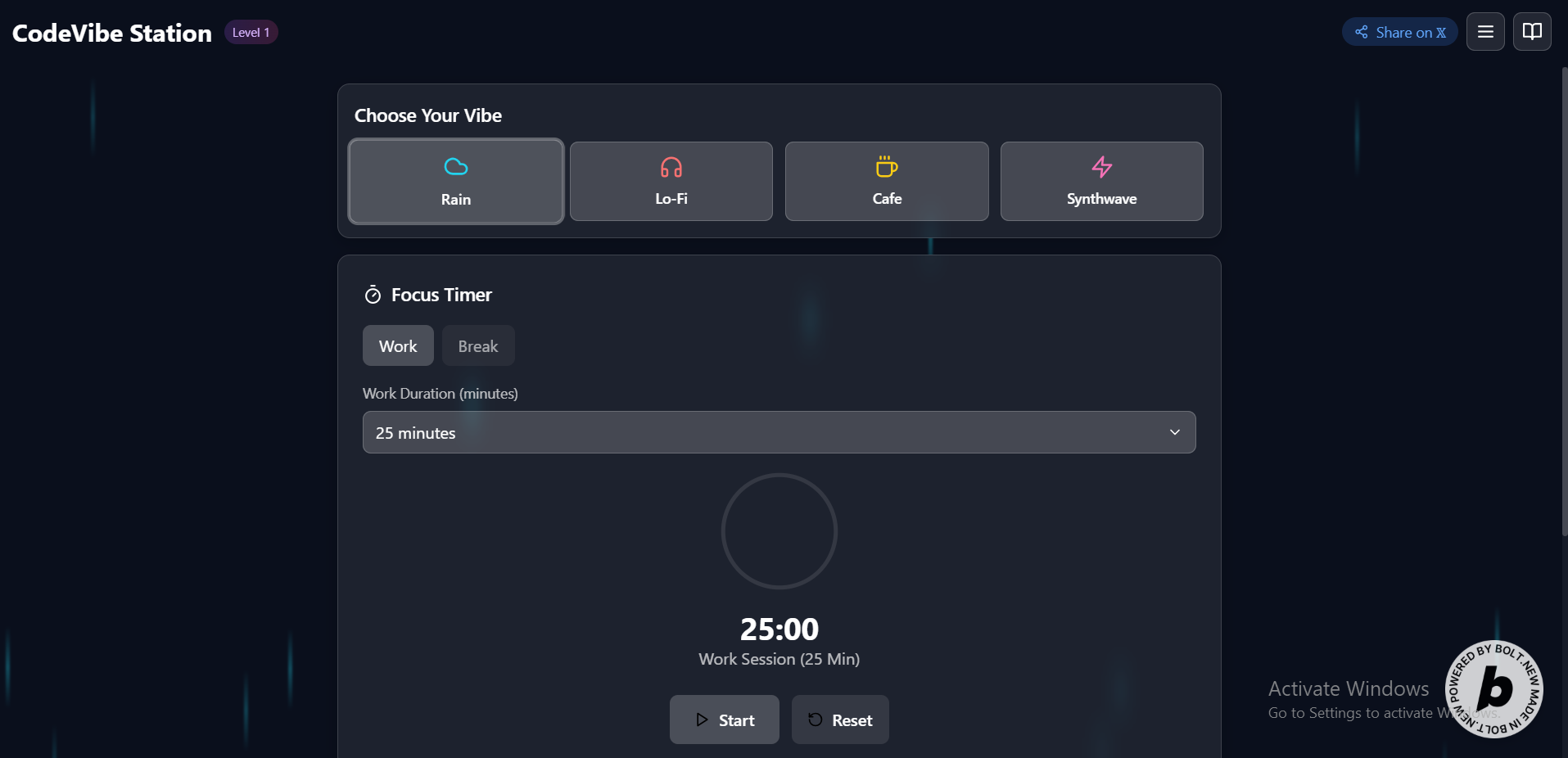
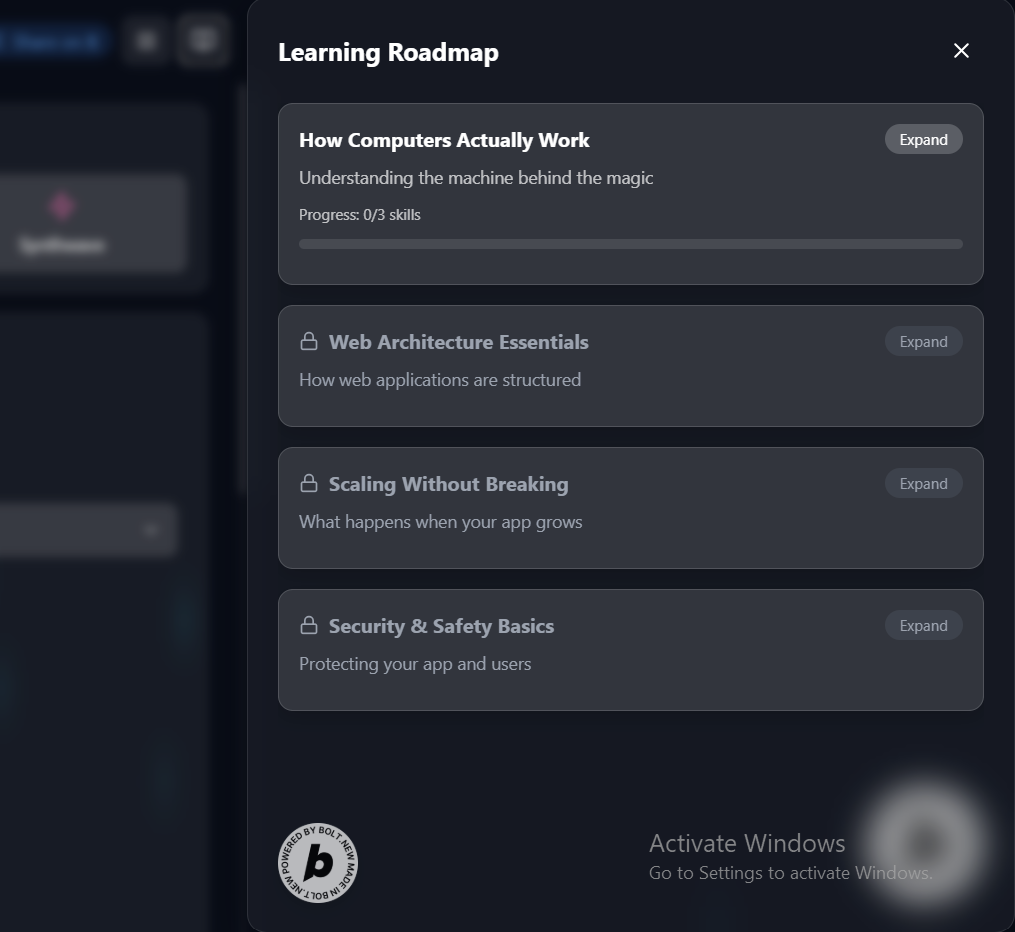
Inspiration I was inspired by "vibe coders"—talented developers who create beautiful UIs but often hit a "scaling wall" with backend concepts. I wanted to build a tool that respects their aesthetic workflow while seamlessly integrating the fundamental knowledge needed to build production-ready, scalable applications. What it does CodeVibe Station is a single-page React app that merges an ambient coding environment with a structured learning platform. It allows developers to find their focus and upskill simultaneously. Ambient Environments: Choose from four animated themes (Rain, Lo-Fi, Cafe, Synthwave) to set the mood. Learning Roadmap: A curated curriculum on web architecture, scaling, and security with links to resources and guided prompts. Quiz System: Test your knowledge on roadmap topics to track mastery. Productivity Tools: A built-in Pomodoro timer and a simple note-taking system. Local Persistence: All progress and preferences are saved in the browser via localStorage. How we built it For the Bolt Hackathon, I challenged myself to build the entire app from a single, highly-detailed prompt. I acted as the architect, defining the file structure, components, data models, and logic. The AI generated the initial code, which I then spent my time refining, debugging, and polishing. Tech Stack: React, TypeScript, Tailwind CSS, Framer Motion, and React Hooks for state management. Challenges we ran into Prompt Engineering: Crafting a single prompt that could define an entire coherent application was a significant architectural challenge upfront. State Management: Managing the app's interconnected state (theme, timer, user progress) using only React Hooks required careful design to avoid prop-drilling. Animation Syncing: Ensuring the Framer Motion animations for the collapsible sidebar were smooth and visually glitch-free took careful orchestration. Accomplishments that we're proud of Building a polished, functional app from a single prompt, proving the power of AI as a development accelerator when guided by a clear architectural vision. Creating a cohesive user experience where the ambient environment, productivity tools, and learning path all feel part of a single, unified product. Implementing a sleek and performant glassmorphism UI with smooth transitions that enhance the app's premium feel. What we learned AI is a force multiplier, not a replacement. It excels at execution but requires a human architect's vision to produce a high-quality product. Defining a design system upfront is crucial, even in a prompt. It saved immense time during refinement. Fundamental dev skills are non-negotiable. A deep understanding of React and CSS was essential for debugging and polishing the AI-generated code. What's next for CodeVibe Station Expanded Roadmap: Add advanced modules on topics like System Design, CI/CD, and Docker. User Accounts: Implement a proper backend (e.g., Supabase) for user accounts and cross-device sync. Community Features: Allow users to create and share their own custom "vibe" themes and notes.
Built With
- framer-motion
- local-storage
- react
- tailwind
- typescript


Log in or sign up for Devpost to join the conversation.