-
-
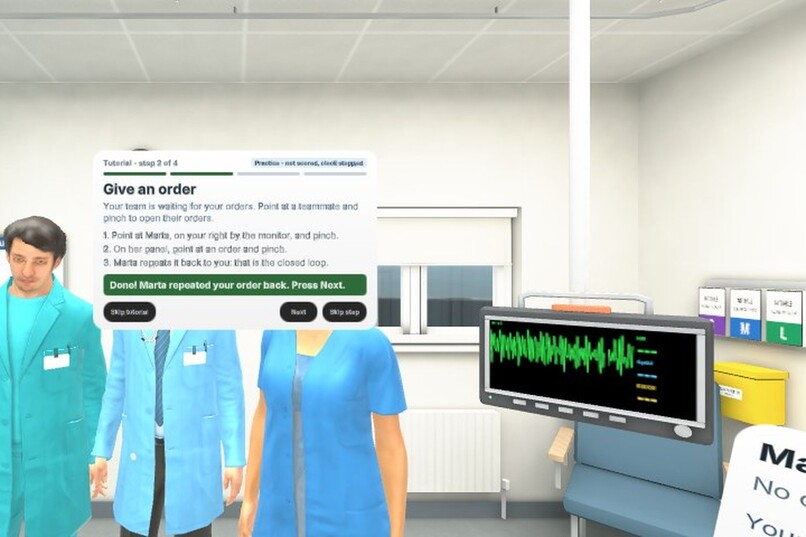
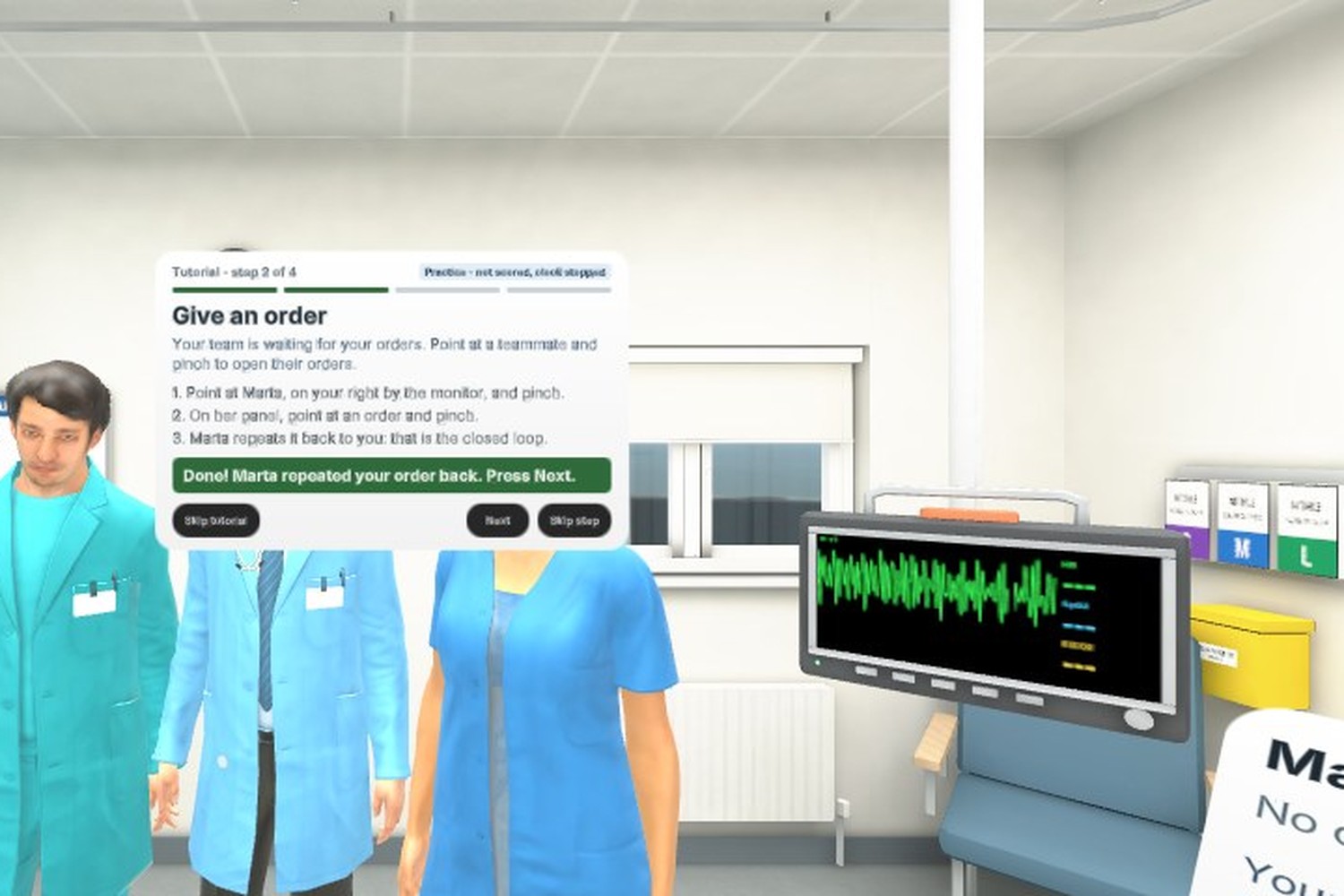
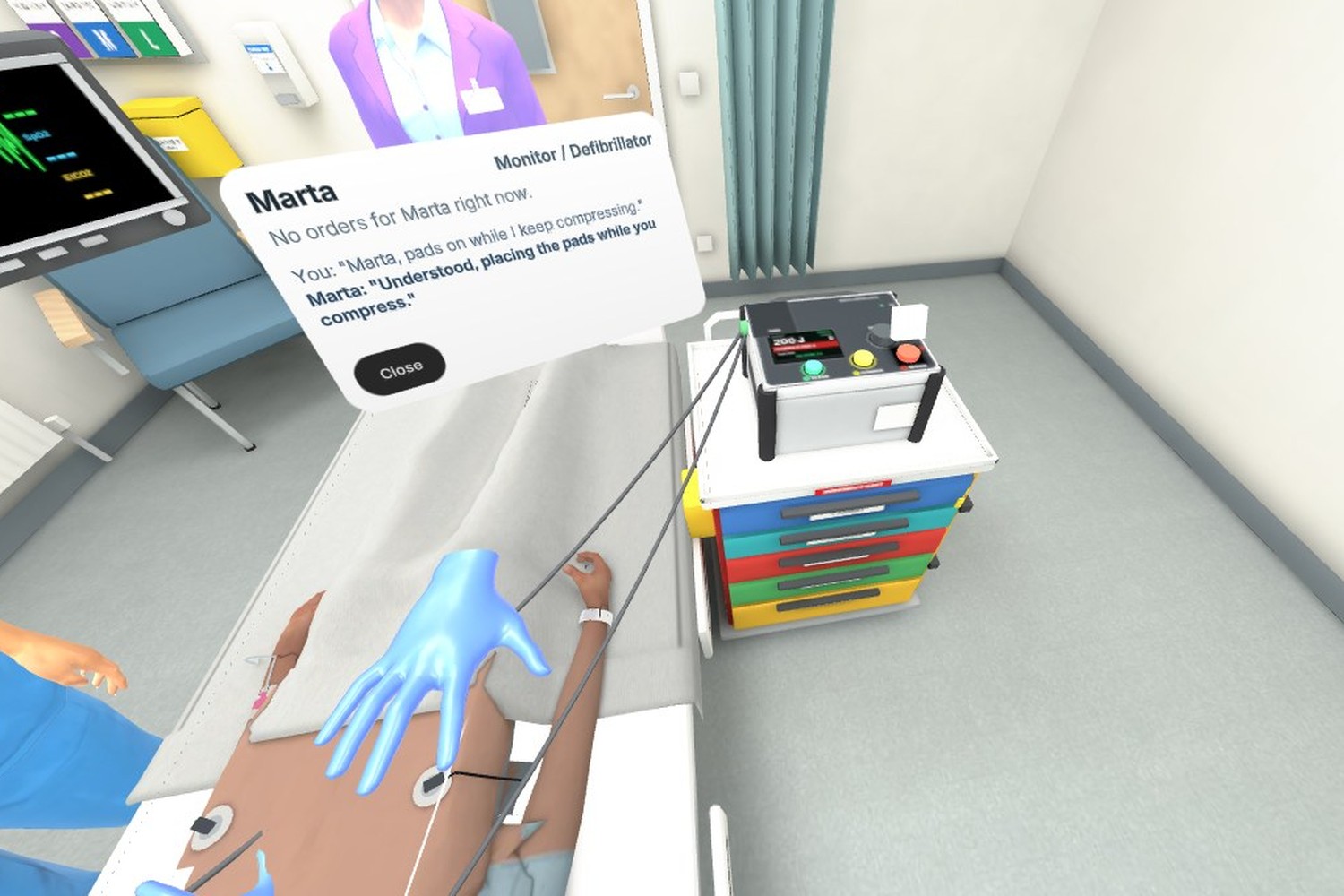
A short practice tutorial teaches each gesture first, here the closed-loop order to Marta.
-
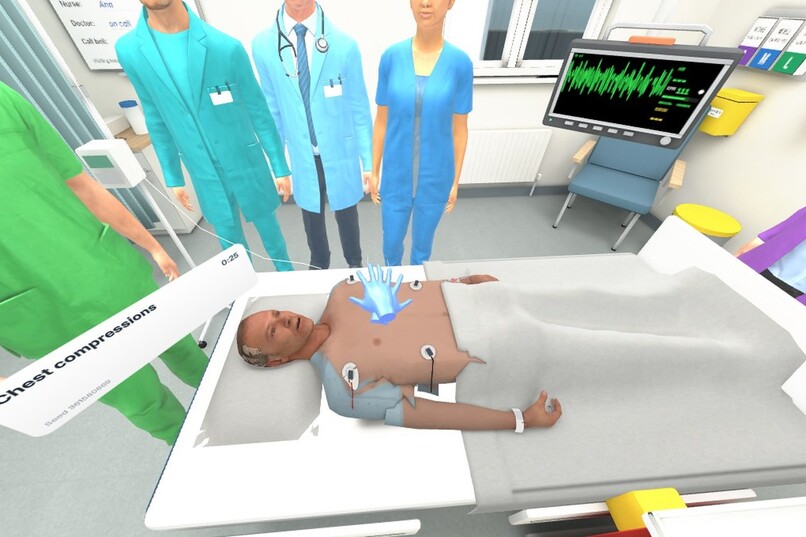
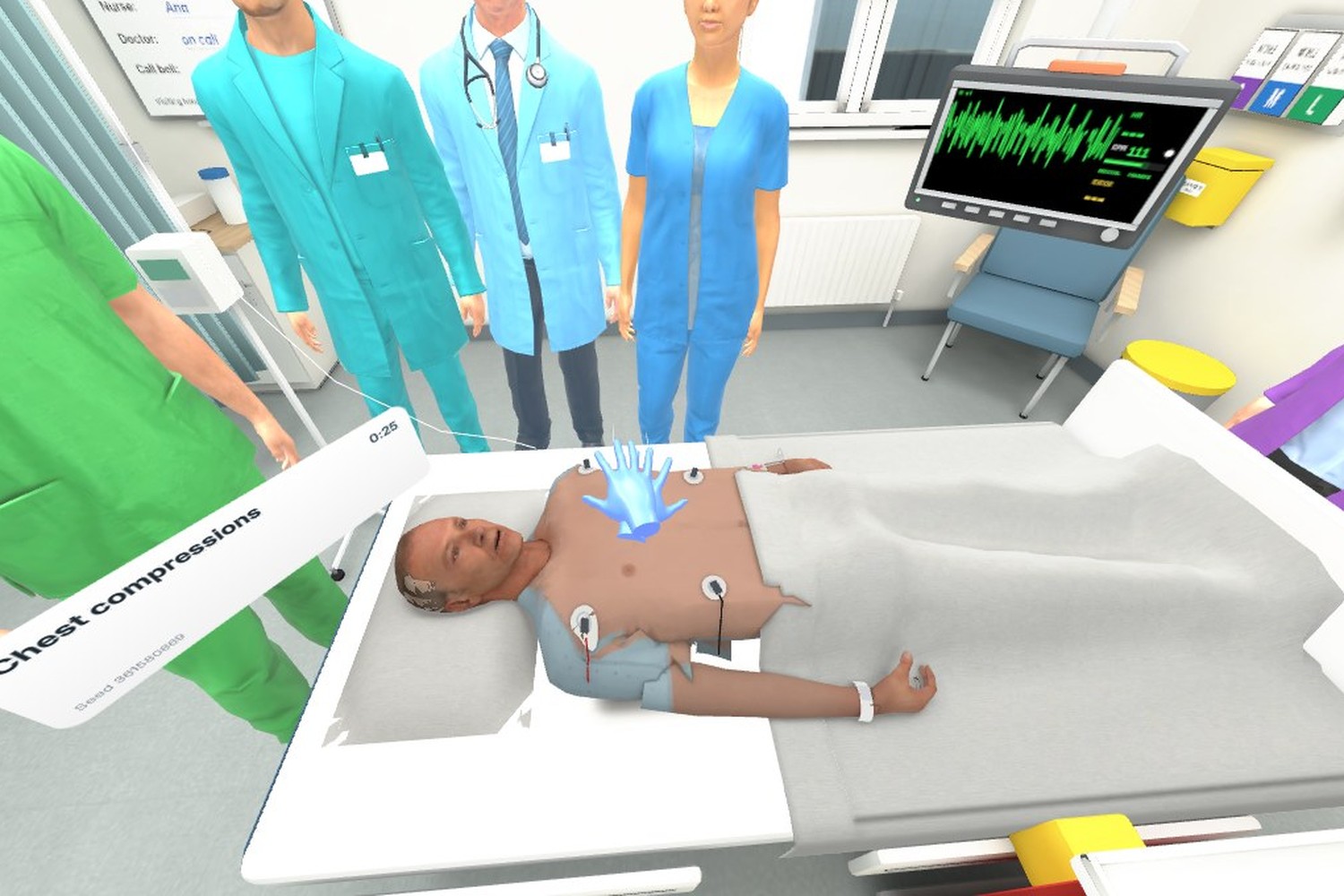
Start on the chest: hands-only CPR, with rate and depth tracked from your hand joints.
-
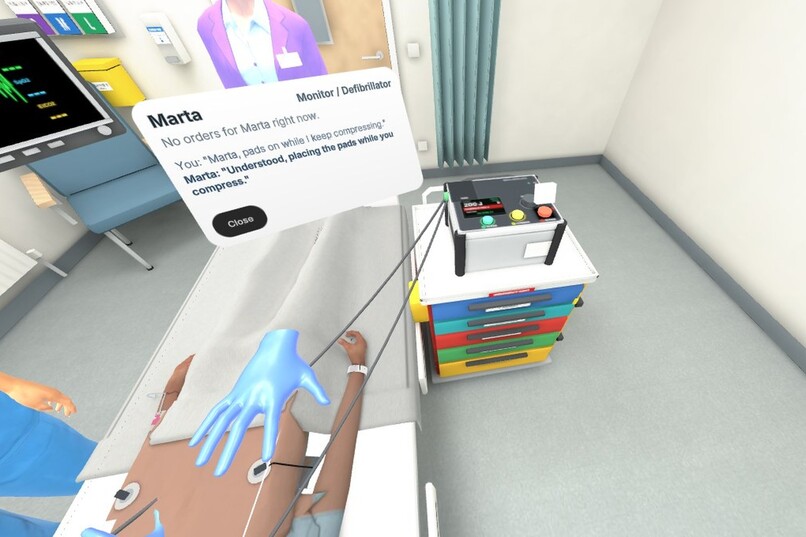
Defibrillation: charge, open your palm towards the team to call all clear, lift the cover and shock.
-
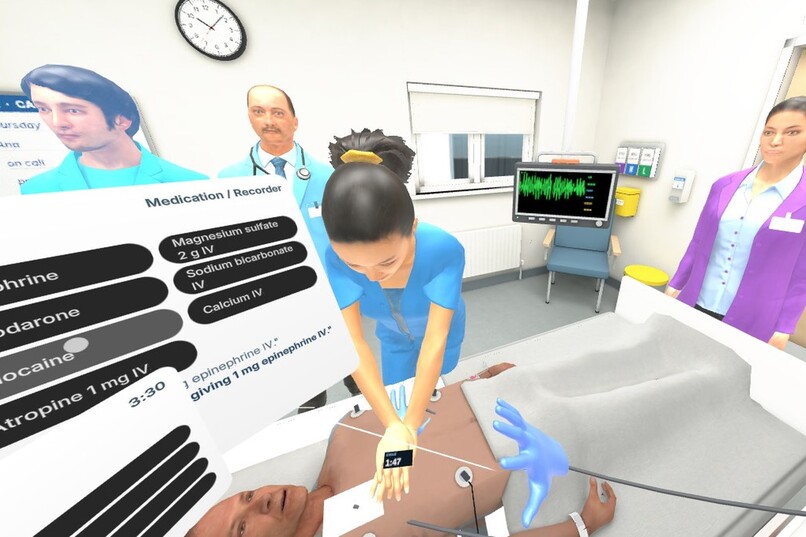
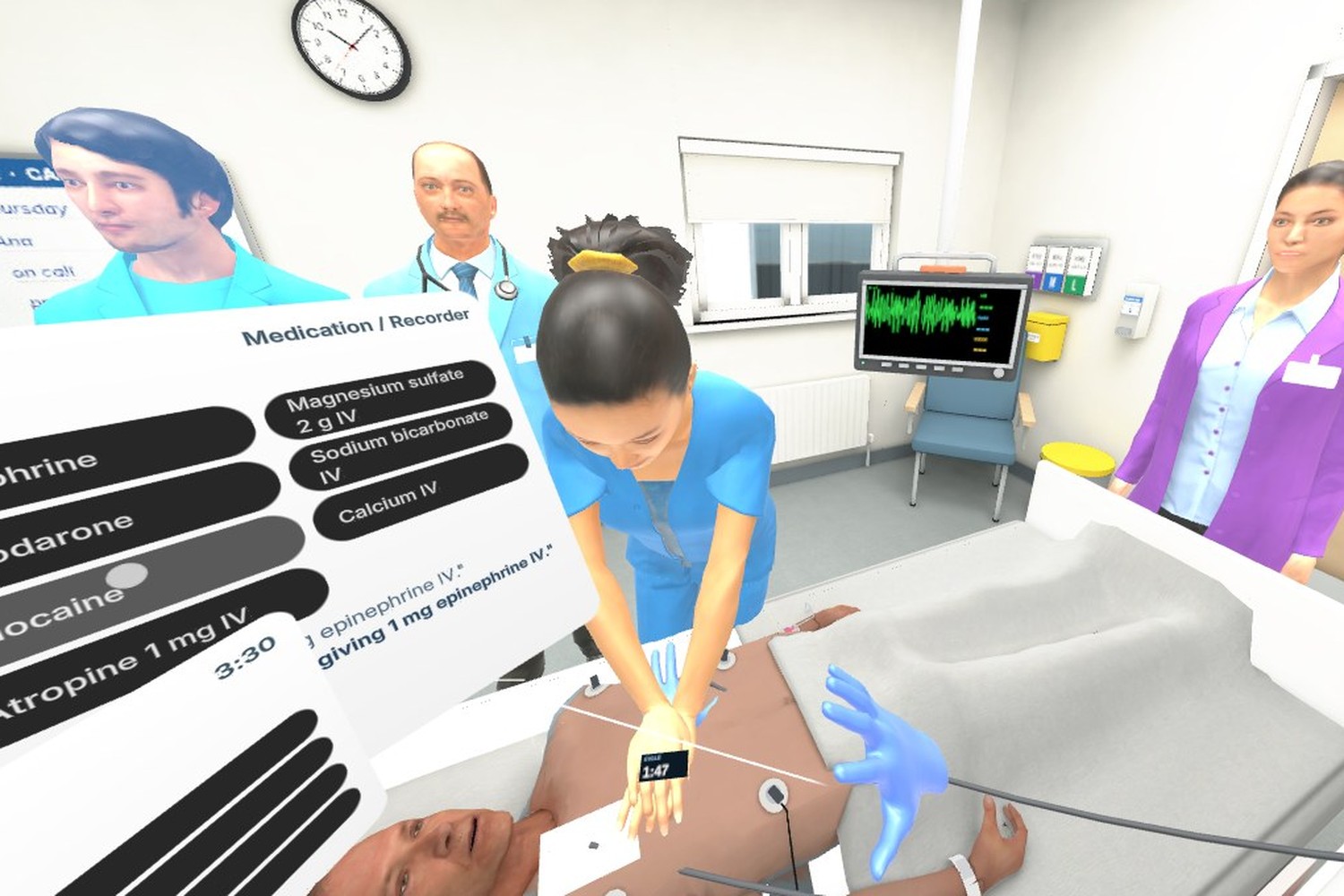
Closed-loop orders: point and pinch at Javier, choose drug and dose, and he echoes it back before giving it.
-
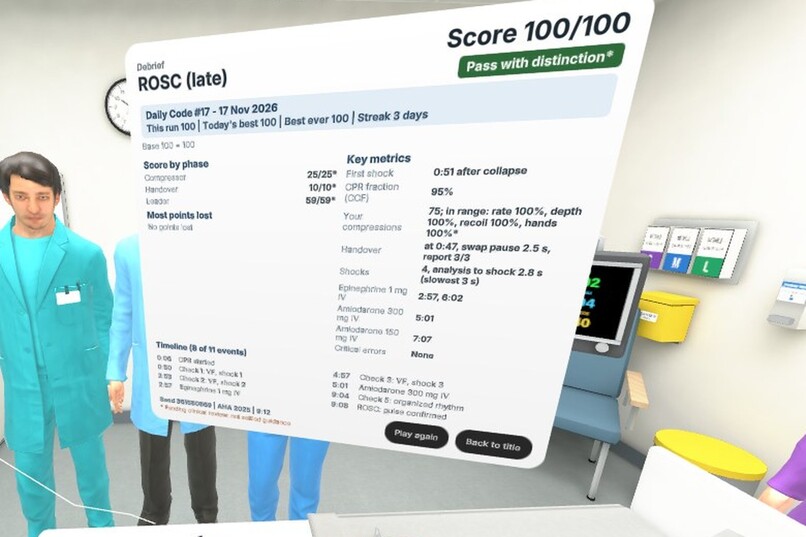
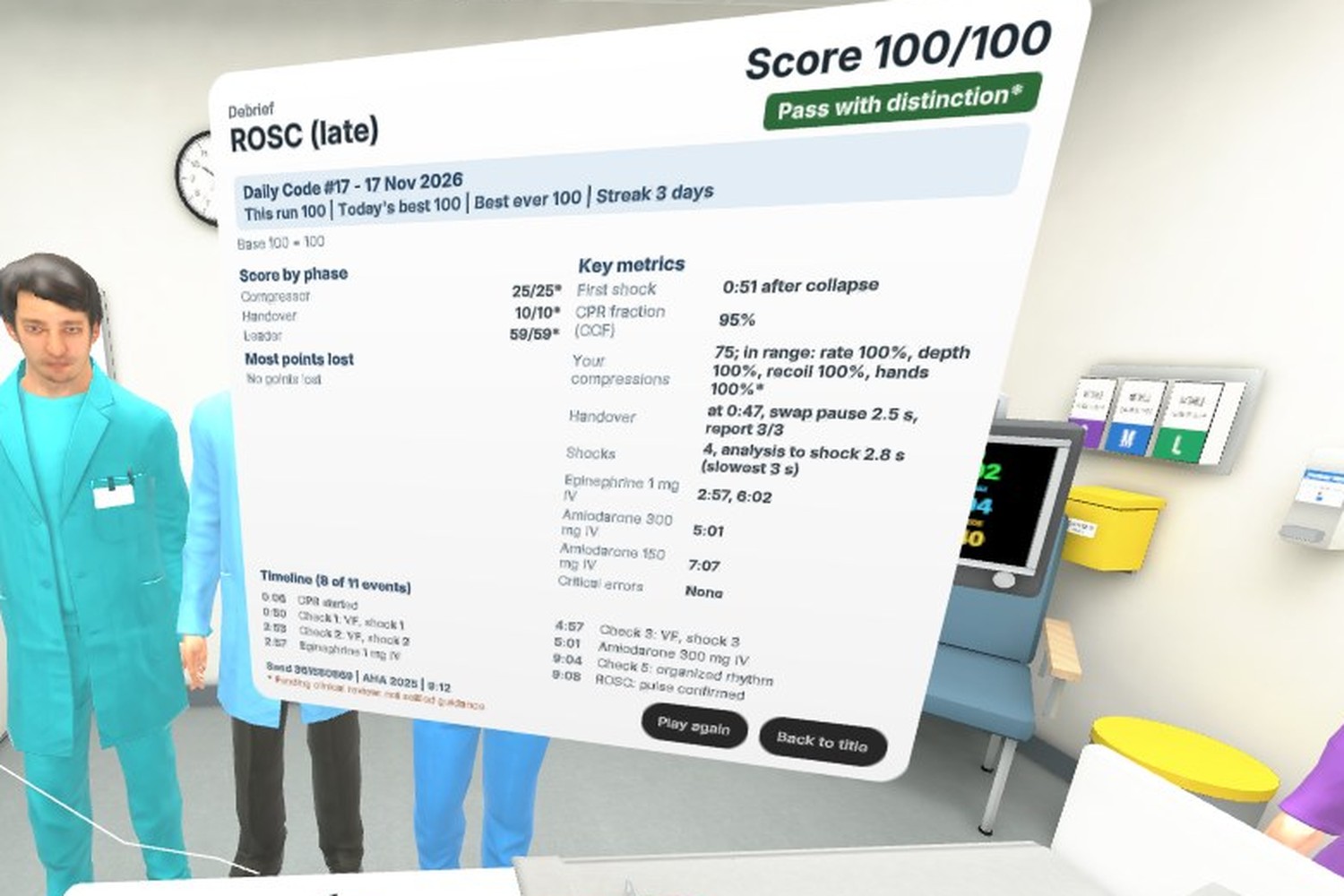
Debrief: score out of 100, points by phase, time to first shock, CPR fraction and a timeline of your decisions.
-
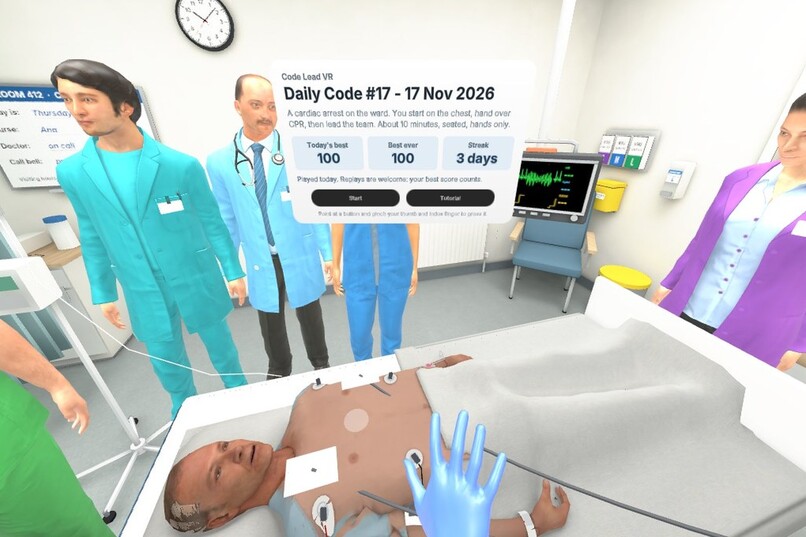
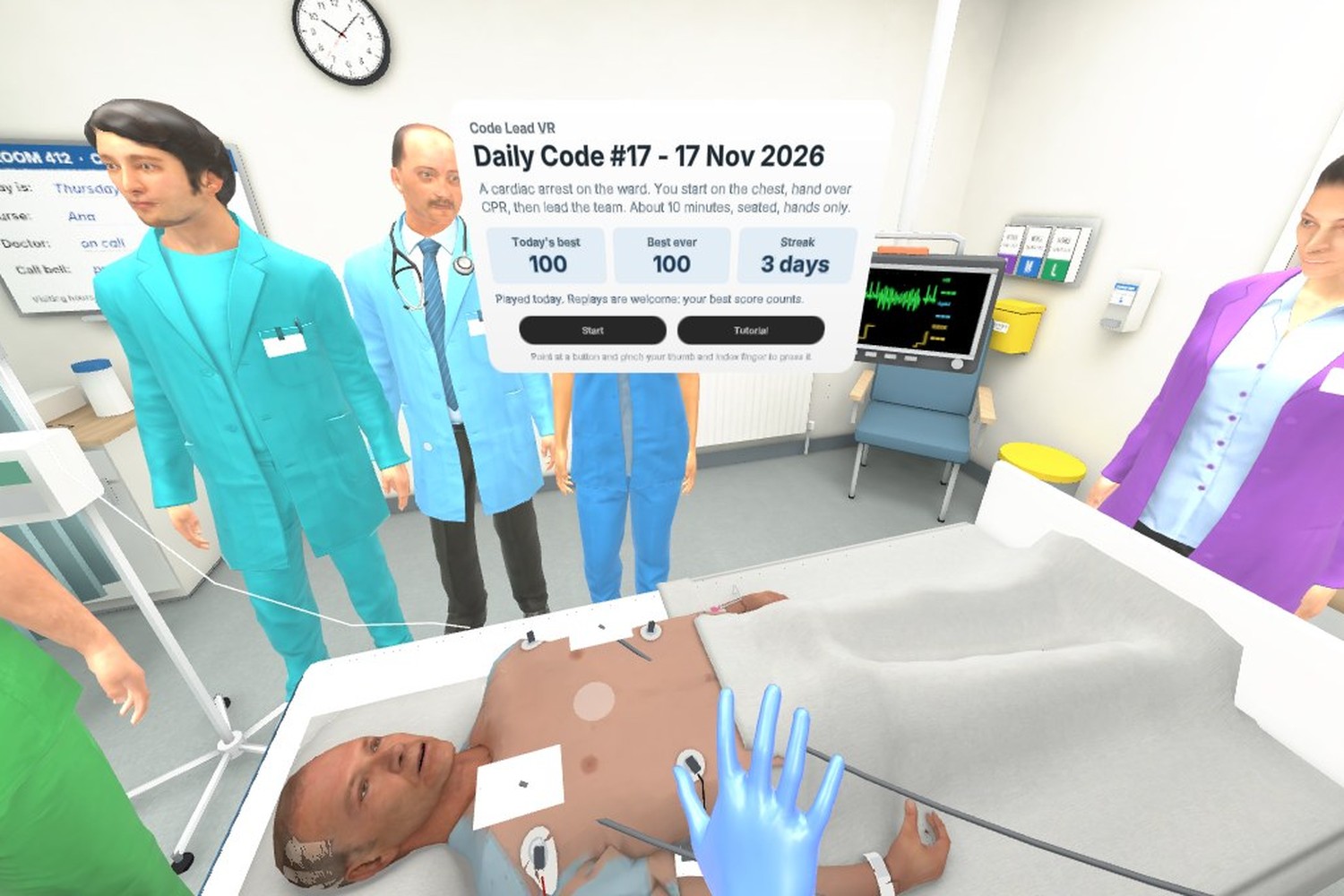
Back on the title after a run: today's best, best ever and a three-day streak. Tomorrow brings a new case.
-
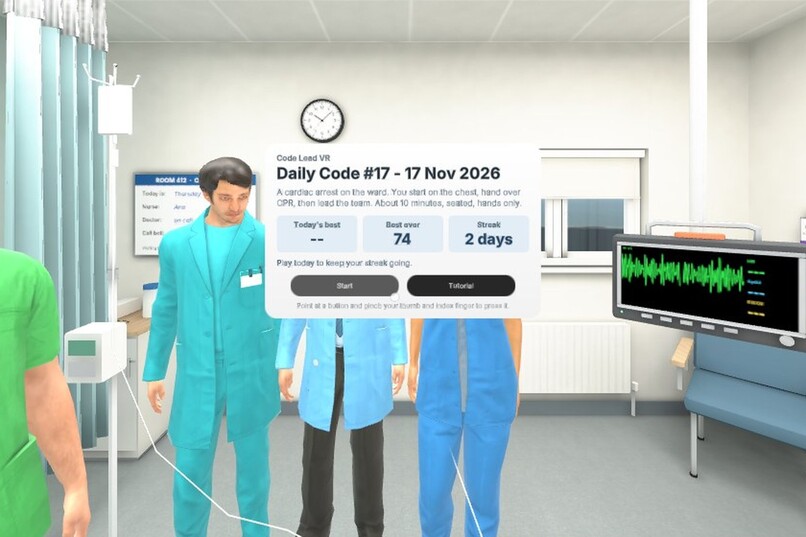
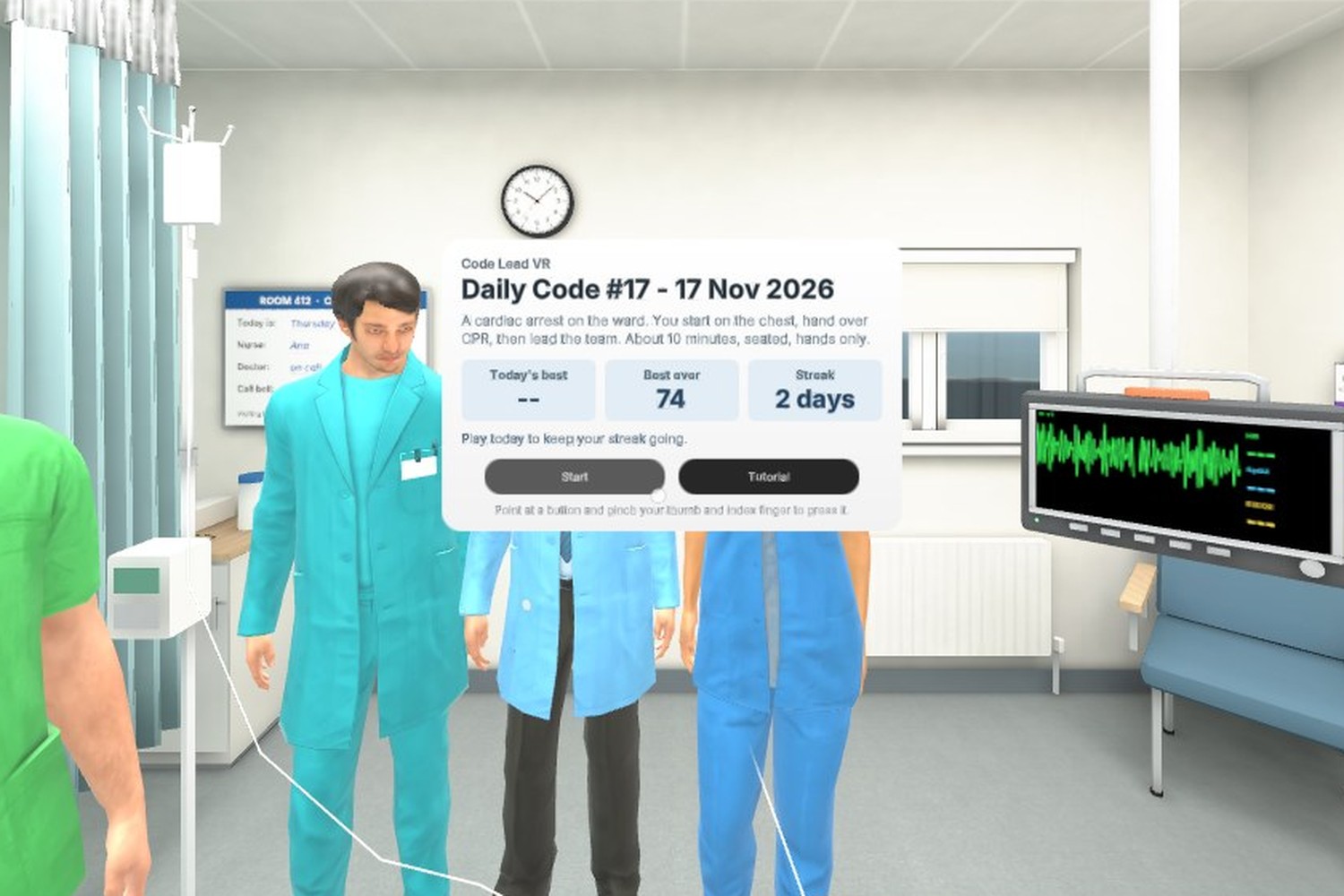
Daily Code: the same case for everyone today, with today's best, best ever and your streak.
Inspiration
Cardiac arrest is the most important emergency in my field. I am a Chilean emergency-room nurse working in Ireland, with a Master's in Emergency and Prehospital Care from the University of Barcelona, and in those minutes the difference between life and death often comes down to teamwork. A resuscitation should work like a Formula 1 pit stop: everyone knows their job and does it at the exact moment. The leader runs the team through closed-loop communication, with clear roles for airway, IV access, the monitor, and the person recording times.
In real life, teams are often uncoordinated, and every real arrest ends up being a training session. It shouldn't be that way. Leadership in a code is very hard to practise: you need a whole team to train with, and every arrest is different. Formal ACLS/ALS courses are expensive and most of us only take them every few years. Those courses are the only place where we get to lead a code. In between, training often means a manikin and "pretending" everything else: the patient, the monitor, the equipment. It lacks fidelity.
I built Code Lead VR on Meta Quest so any clinician can practise leading a resuscitation quickly, safely and interactively, with as much realism as VR allows, as often as they need.
What it does
Code Lead VR puts you inside a real-time cardiac arrest, in a safe space where mistakes cost nothing but where you feel the pressure of a team that depends on your leadership. It is built for everyone who may take part in an advanced life support resuscitation: doctors, nurses and paramedics.
You sit at the bedside of a patient in ventricular fibrillation. Often the first person to arrive is the one who has to recognise the arrest and start compressions, and immediate, effective CPR is what saves the most lives. So you start on the chest with both hands, then hand over compressions and take the lead. From there you run a five-person team through closed-loop communication: point at a teammate and pinch to give an order, they echo it back, and they act. Airway, pads and monitor, compressions, drugs: each role does its job only when you lead it. You read an unlabelled ECG, charge the defibrillator, call "all clear" with an open palm, and deliver the shock.
When the arrest ends, a debrief shows how the team performed: a score out of 100, points by phase, what cost you the most, key metrics such as time to first shock and CPR fraction, and a timeline of your decisions. Every day brings a new Daily Code scenario, so you can come back, practise again, and improve.
How I built it
I am a nurse, not a software developer. I built Code Lead VR alongside my shifts with Meta's Immersive Web SDK (WebXR, TypeScript, Vite), writing the code with Claude, hosted at https://code-lead-vr.vercel.app. A data-driven scenario engine (AHA 2025 by default, ERC 2025 optional) is tested in Node. I had no Meta Quest, so everything was built in emulators on a 7 GB laptop. The teammates are licensed Microsoft Rocketbox avatars; devices are generic, with no real brands. This is an educational tool, not a substitute for certified ACLS/ALS training.
Challenges I ran into
I am a nurse, not a software developer, and I built this alongside my emergency shifts, writing the code with Claude as my AI coding assistant. I did not have a Meta Quest, so every interaction had to be built and tested in emulators on a laptop with 7 GB of RAM. They were heavy and often unstable, and I tried several setups to make them work. That limited how much I could polish, and frame rate and real hand tracking still have to be confirmed on a headset.
The hardest clinical challenge was consequence. In a real arrest every action changes what happens next: a late shock, a long pause in compressions or a missed order changes the patient and the team. One clinical case is really a tree of branches. I had to turn that into a data-driven scenario engine where the rhythm, the team and the score respond to each decision, while keeping it faithful to AHA and ERC guidelines.
Keeping it seated, hands-only and free of real device brands also meant designing a generic defibrillator and monitor that still feel like the real thing.
Accomplishments that I'm proud of
I am proud of having the idea that the technology available today could turn into something genuinely useful: a tool that helps clinicians train better and, in the end, helps improve patient survival. And I built it without being a programmer and without owning a Meta Quest.
The full advanced life support loop works with hands only: Daily Code, a practice tutorial, CPR, handover, leading a five-person team with closed-loop orders, defibrillation and a scored debrief. What makes it feel like a real code is the setting: a clinical room, a monitor showing faithful clinical information and an unlabelled ECG you must read, and a team of people around the bed, just like on a real shift.
Colleagues at my hospital have seen it running in the emulator and liked the idea, which tells me it speaks to the people it is built for.
What's next
First, on-device playtesting on Quest 3 and 3S with real clinicians, and clinical sign-off of the remaining review items before a public launch after the judging period.
My vision is for Code Lead VR to become part of routine resuscitation training in hospitals: a short drill any team member can run between formal courses. I would like to present it to resuscitation bodies such as the AHA and the ERC as a complementary training project.
The next big step is multiplayer: a whole real team training together, each person in their own role, in VR or mixed reality, practising closed-loop communication with each other instead of with virtual teammates. Beyond cardiac arrest, the same engine can grow into other high-pressure scenarios, such as major trauma and mass-casualty incidents.
Above all, I want it to be accessible to anyone who needs to train, internationally, and especially in places where sophisticated ACLS courses are hard to reach or too expensive. A headset and a link should be enough to practise leading a code.
Built With
- blender
- immersive
- microsoft
- rocketbox
- sdk
- typescript
- uikit
- uikitml
- vercel
- vite
- vitest
- web
- webxr
