-
-
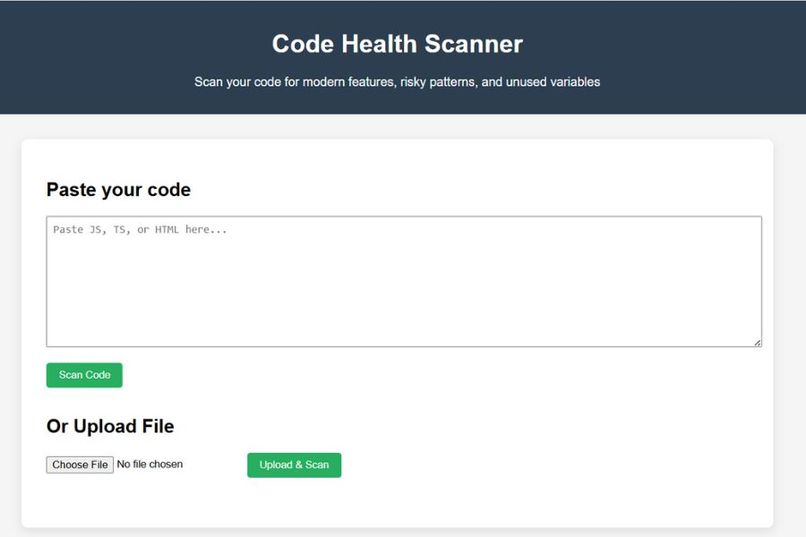
Overview of the Code Health Scanner Website
-
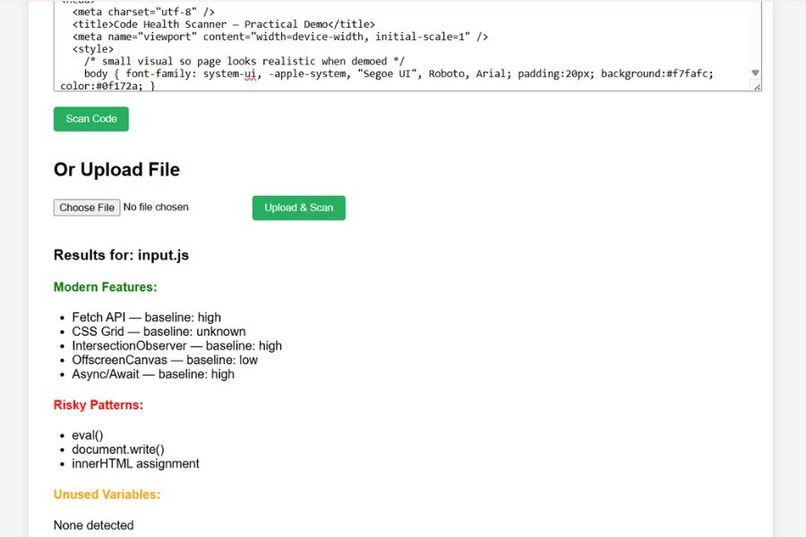
Results after scanning the code
-
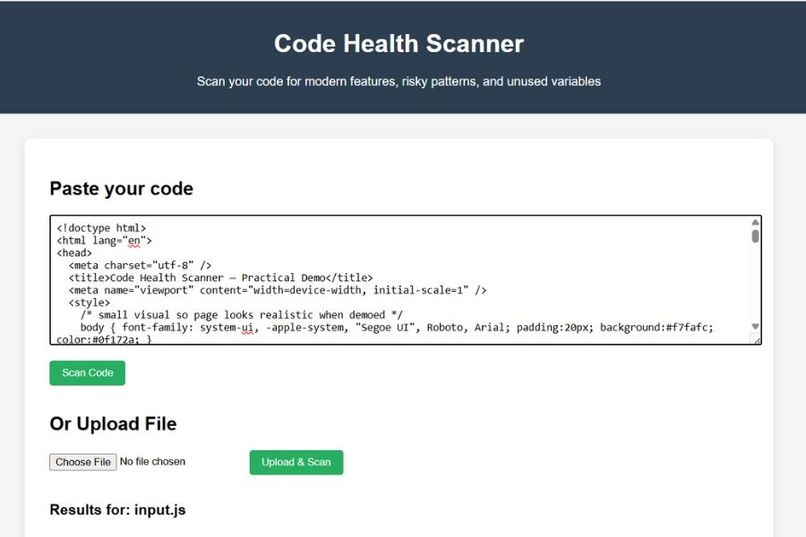
Demonstration
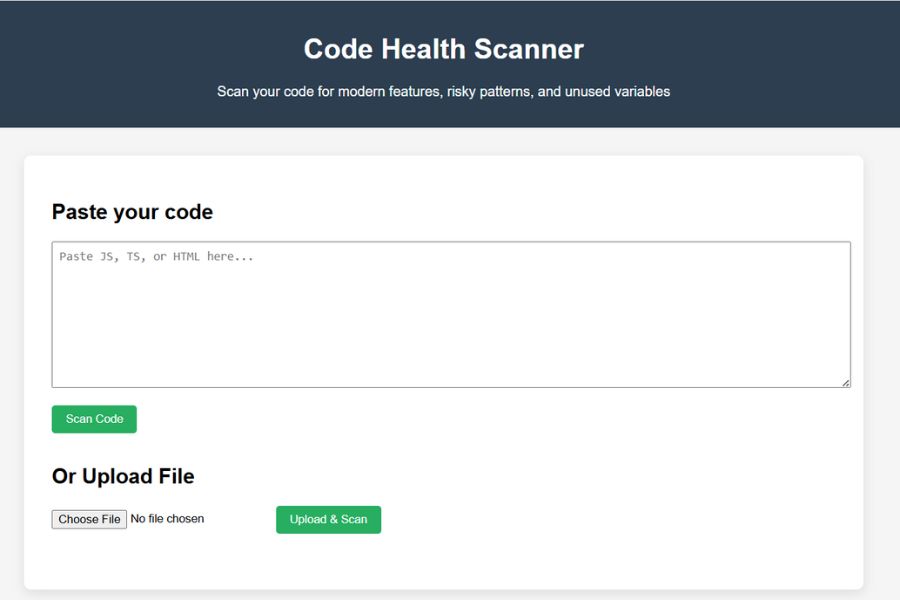
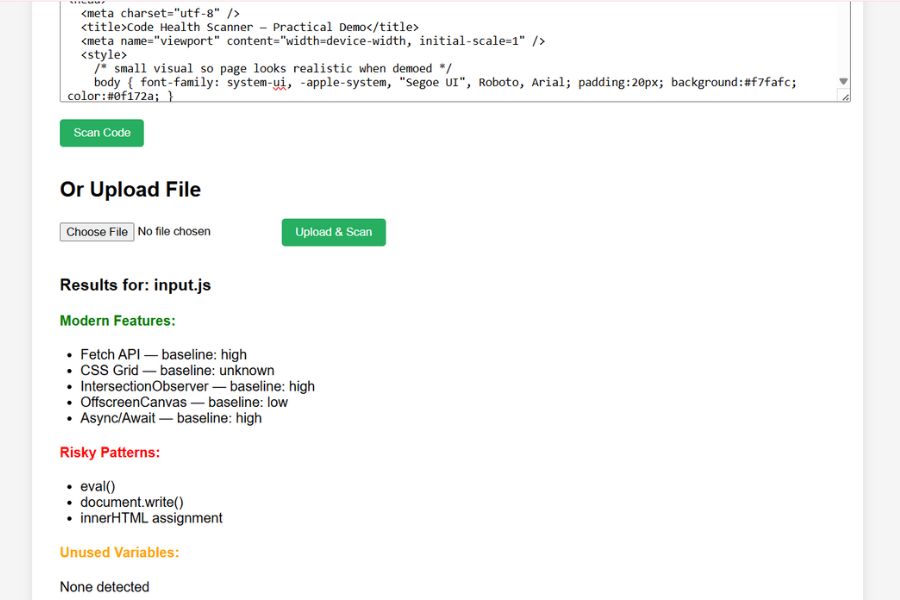
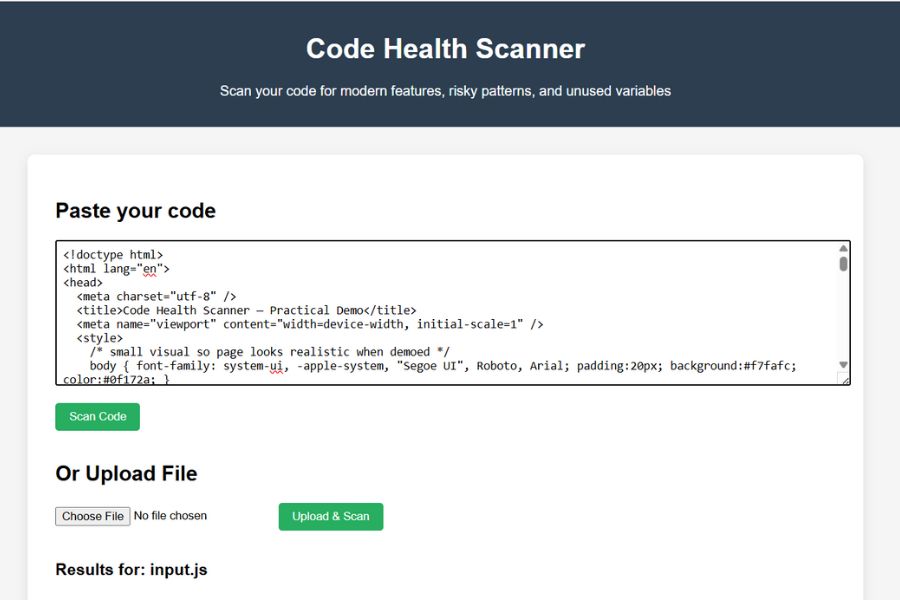
Code Health Scanner
Inspiration
Developers often struggle with messy, risky code and cross-browser compatibility issues. Debugging takes hours, and current tools either miss dangerous patterns or are too complex for beginners. I wanted to create a lightweight, beginner-friendly tool that instantly highlights risky JavaScript/HTML patterns and shows modern feature support using Baseline data.
What it Does
- Scans JavaScript/HTML files for risky patterns like
eval(),innerHTML,document.write, and unused variables. - Checks modern web feature support (e.g., Fetch API, CSS Grid, IntersectionObserver) using Baseline data.
- Provides a clear CLI report highlighting risky patterns and compatibility status.
How We Built It
- Built a Node.js CLI tool (
check.js) to scan files. - Integrated web-features npm package and Web Platform Dashboard API for feature compatibility data.
- Implemented pattern detection for risky or deprecated JavaScript practices.
- Tested the tool with multiple demo files using modern features and risky patterns.
Challenges We Ran Into
- Mapping Baseline feature IDs to actual code patterns sometimes caused ⚠️ warnings due to missing entries.
- Ensuring the CLI worked cross-platform (Windows/Mac/Linux) and handled different HTML/JS structures.
- Explaining results clearly in the output without overwhelming beginners.
Accomplishments
- Created a working CLI tool that scans files and reports risky patterns and feature adoption.
- Successfully integrated Baseline data for browser support.
- Documented the project and prepared demo files for submission.
What We Learned
- Learned how to integrate Baseline data into developer tooling.
- Improved understanding of modern JavaScript features and risky coding practices.
- Gained hands-on experience building a cross-platform Node.js CLI tool.
What's Next
- Add a web UI version for drag-and-drop file scanning.
- Expand pattern detection to cover more security risks and anti-patterns.
- Integrate the tool with VS Code or CI pipelines for real-time feedback.

Log in or sign up for Devpost to join the conversation.