-
-
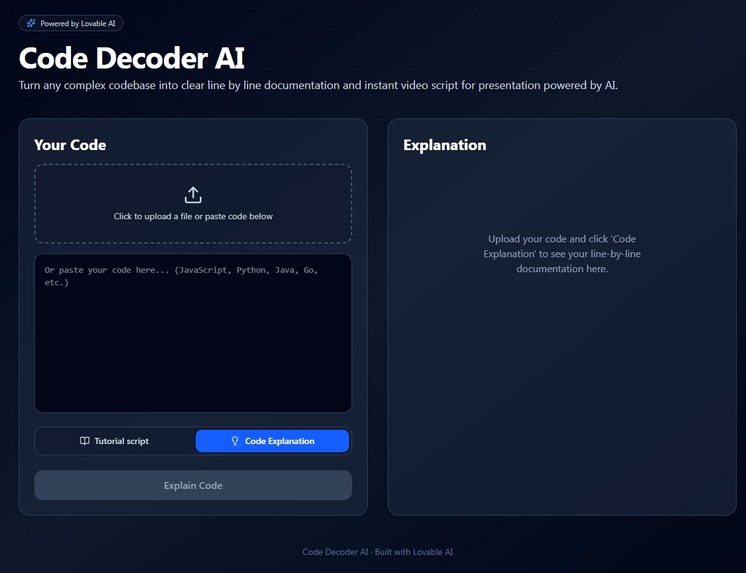
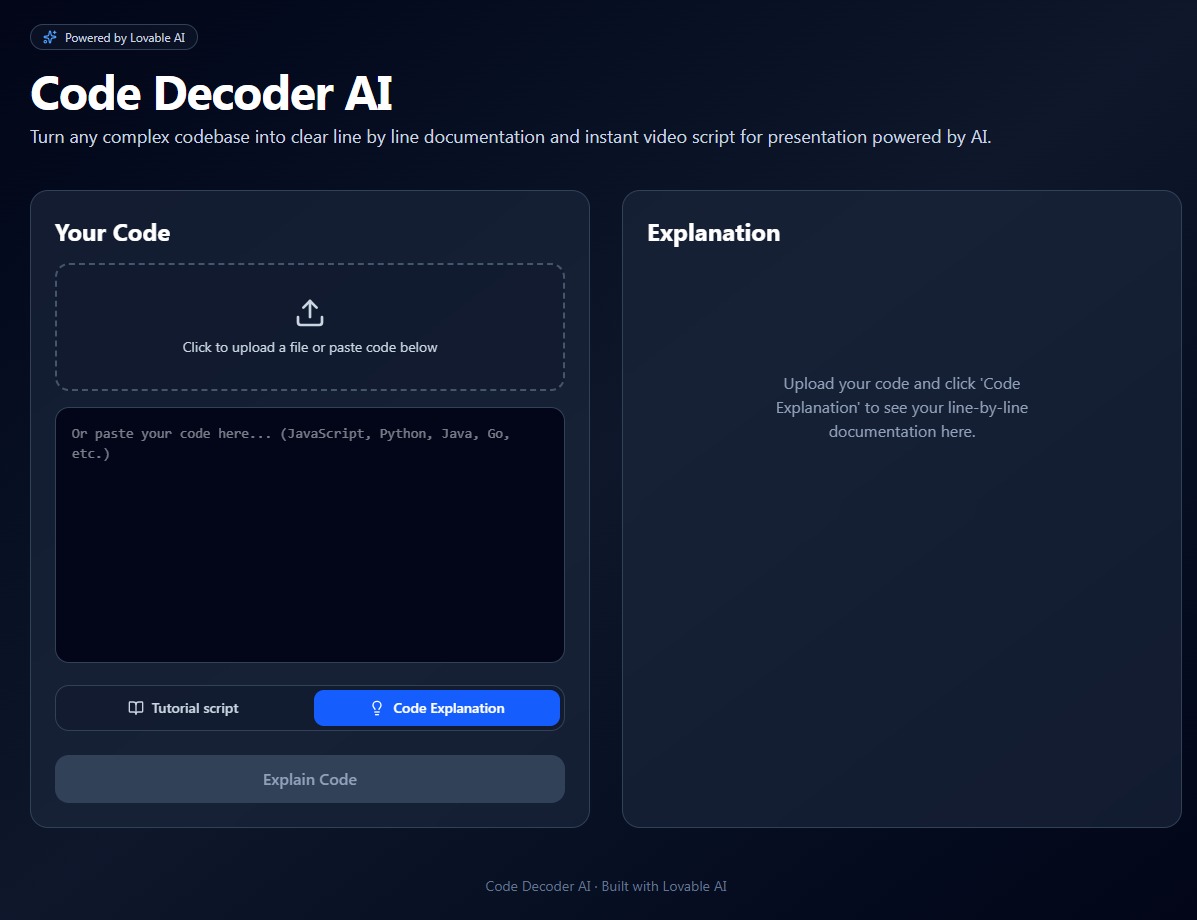
CODE DECODER Ai in empty Code Explanation mode
-
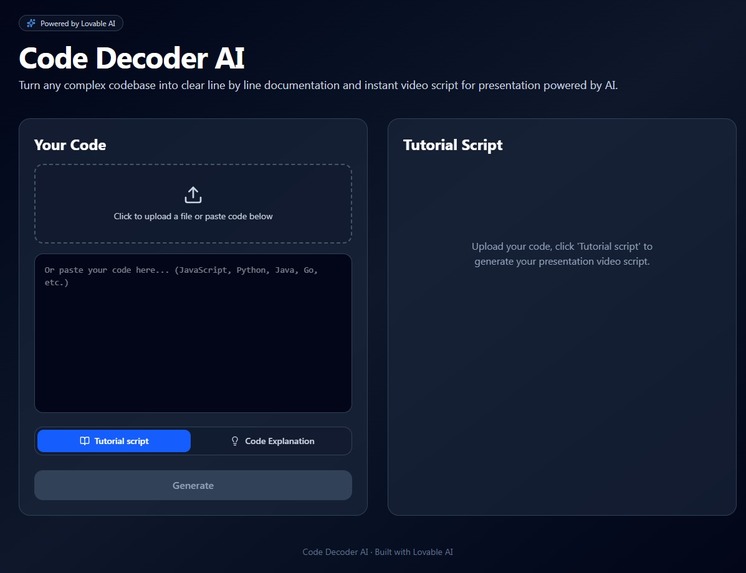
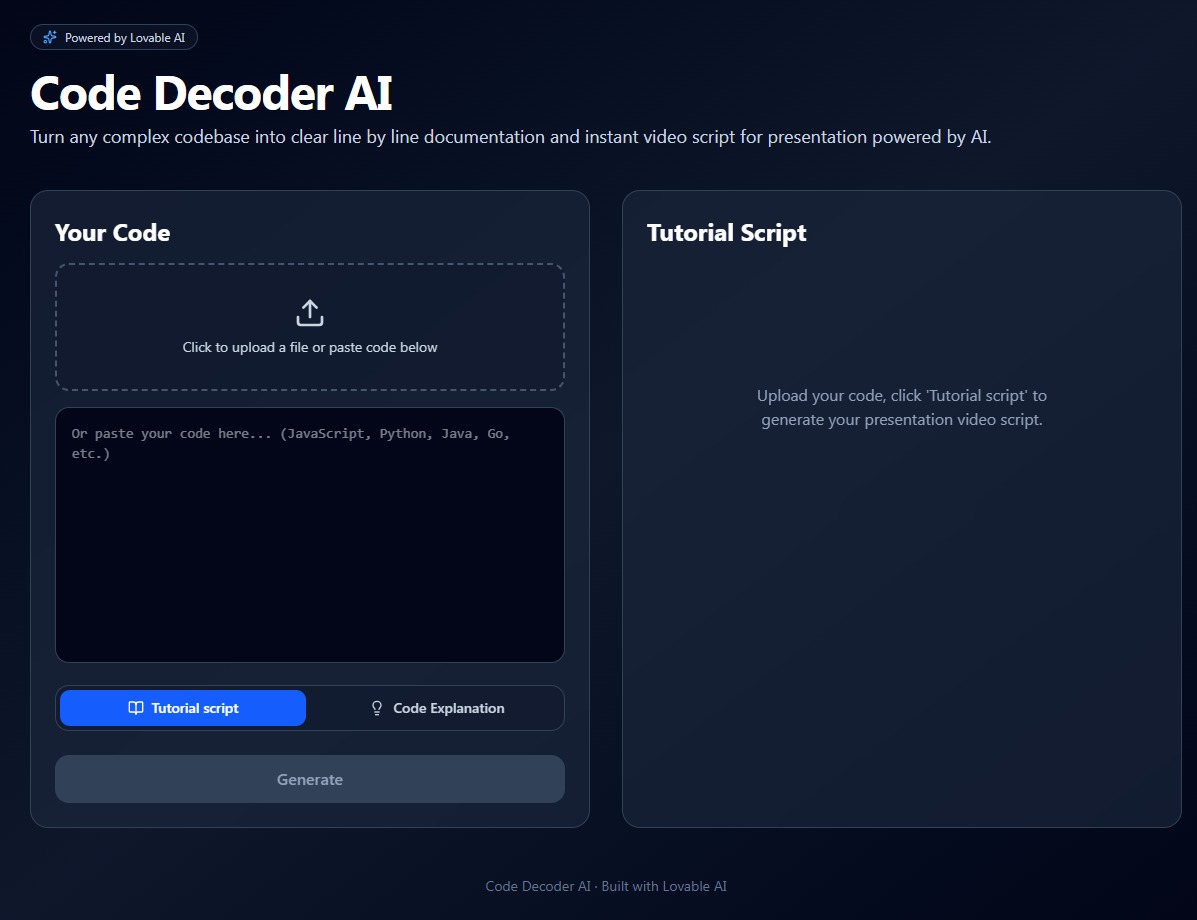
CODE DECODER Ai in empty Tutorial mode
-
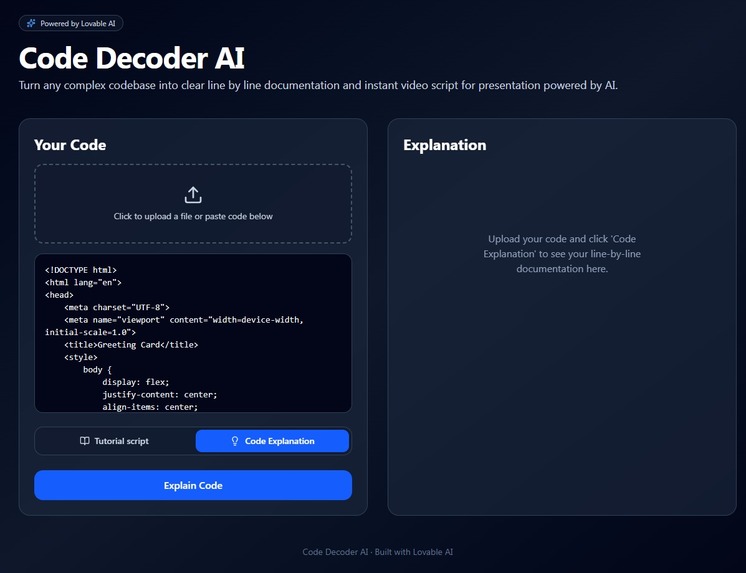
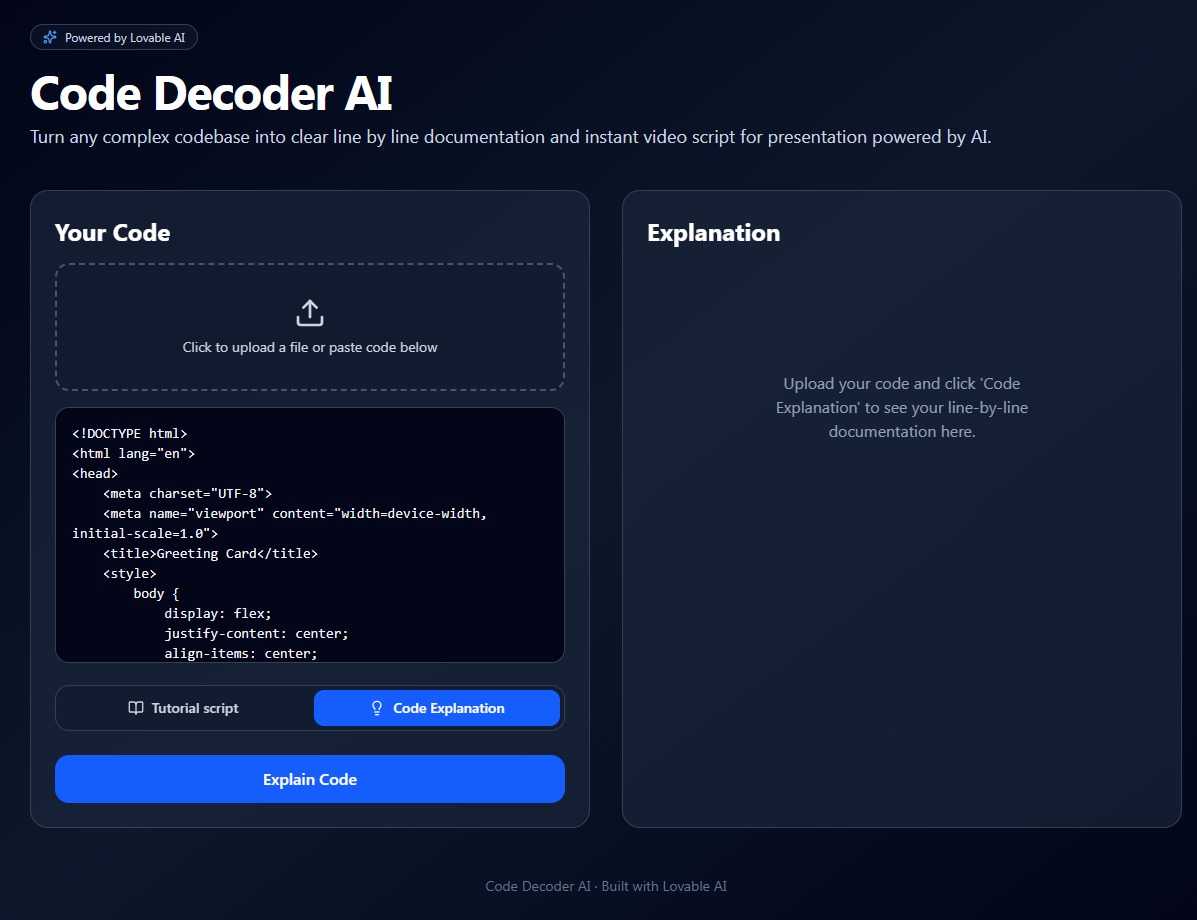
CODE DECODER Ai after injecting the codes before clicking generate
-
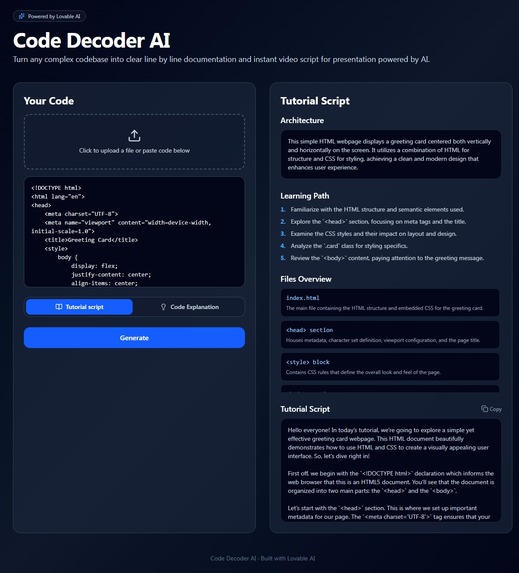
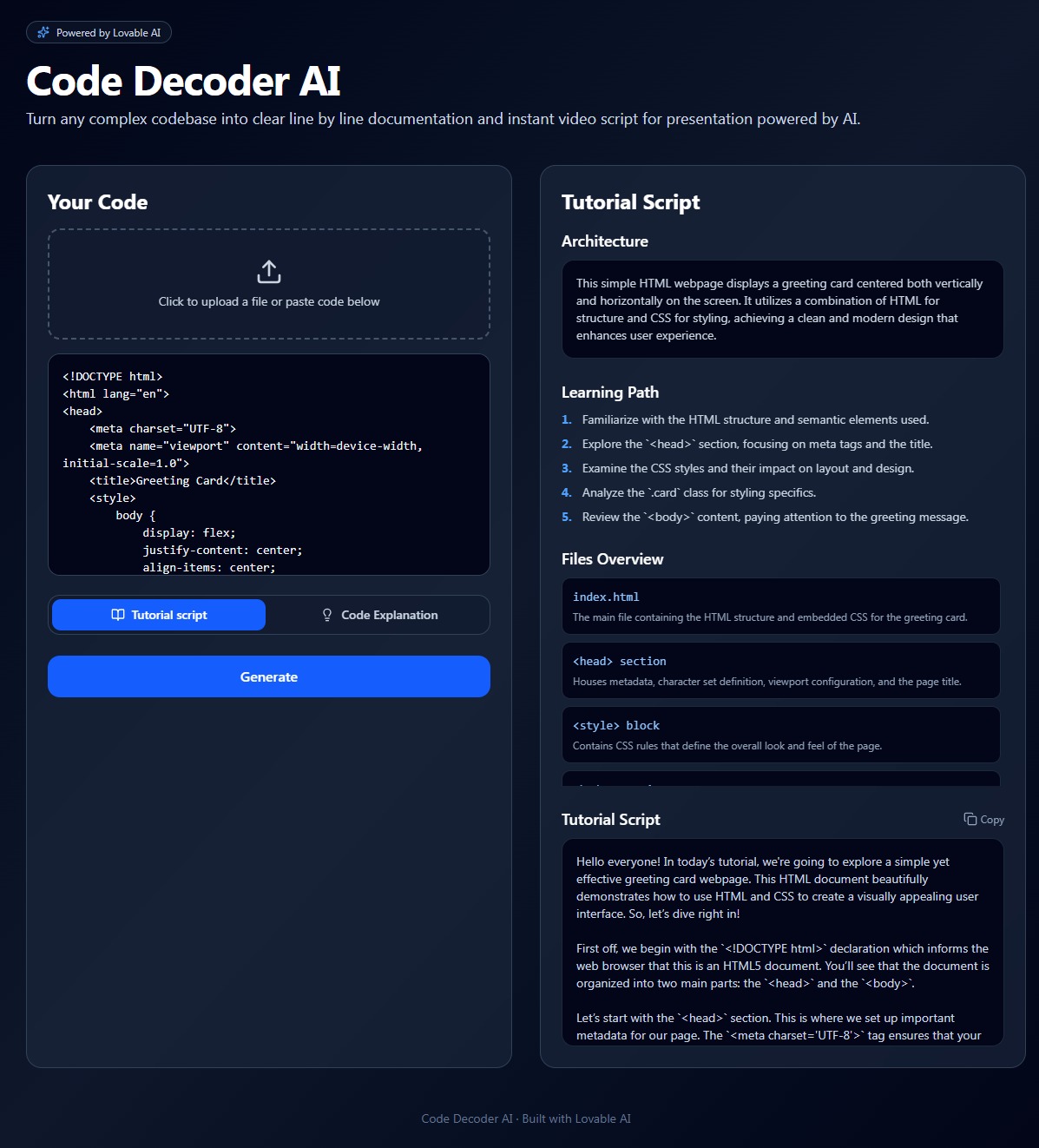
CODE DECODER Ai after clicking generate ,then showing Tutorial script of the codes to help in presentation
-
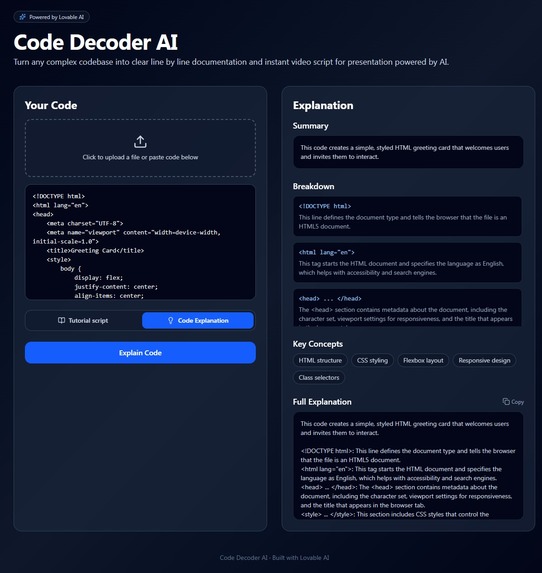
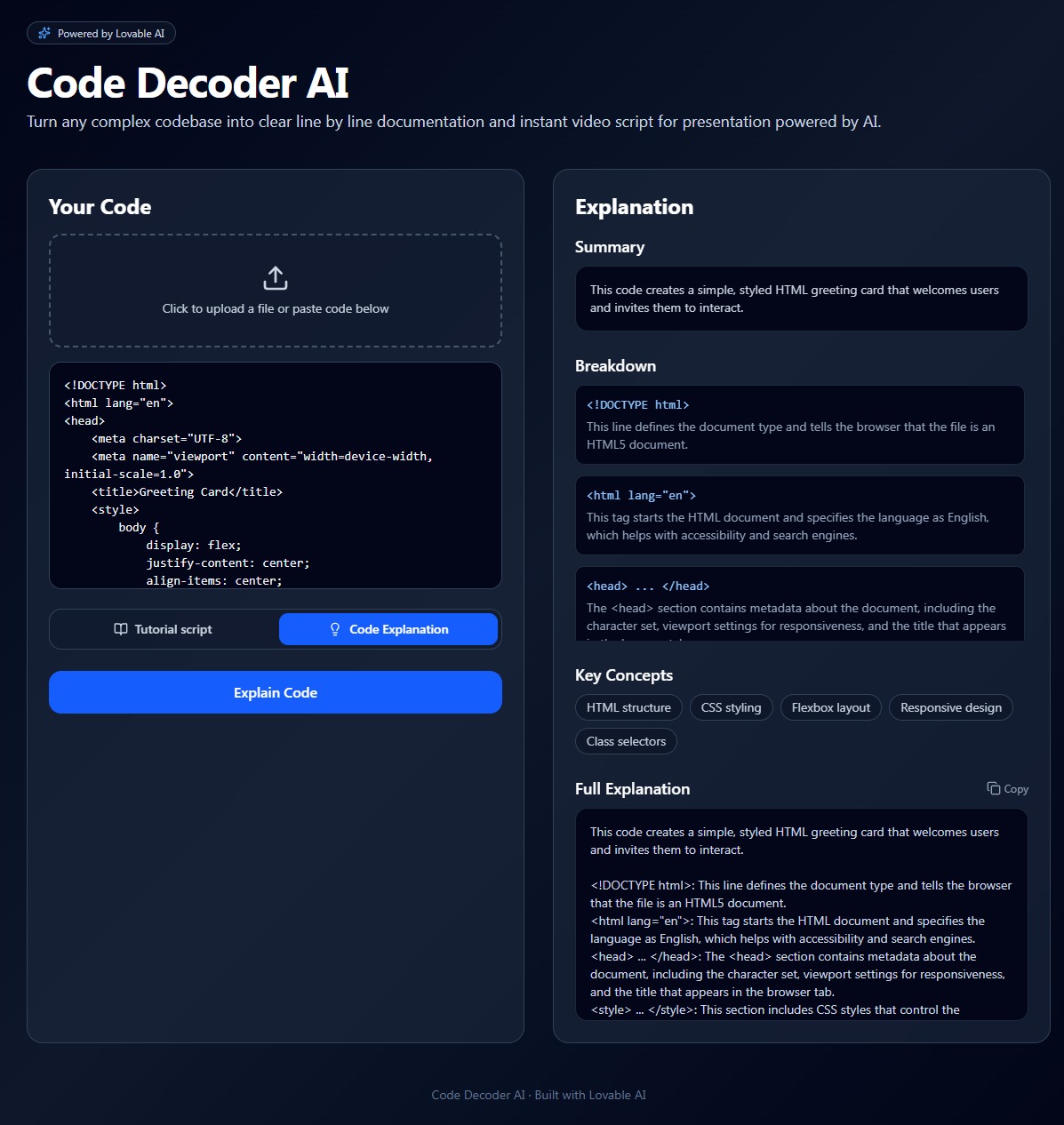
CODE DECODER Ai after clicking generate ,then explanation of the codes,in the Code Explanation mode
Inspiration
Learning to code feels like learning a foreign language, but without a dictionary. Beginners, bootcamp students, and non-technical founders are constantly overwhelmed by complex, cryptic code syntax and unhelpful compiler errors. Most standard AI tools just "fix" the code for the user, which completely robs them of the learning experience. We were inspired to build Code Decoder AI to act as a 24/7 personalized computer science tutor—one that doesn't just give you the answer, but actually teaches you how to read, understand, and master the logic behind the code.
What it does
Code Decoder AI is an interactive educational platform that translates complex, multi-language source code into clear, step-by-step universal English. A user simply pastes a block of confusing code, and the platform breaks it down line-by-line. Instead of treating code like a corporate utility, Code Decoder AI highlights structural logic, explains programming concepts (like loops, recursion, or object-oriented structures), and uses conceptual analogies to ensure deep academic comprehension for student developers.
How we built it
The platform is built on an AI-native architecture utilizing the OpenAI Build Week ecosystem: The Intelligence Brain: We integrated OpenAI’s ,GPT-5.6 and Codex models via the API to parse, tokenize, and deeply analyze multiple programming languages. The Educational Logic: We engineered custom systemic pedagogical prompts. This ensures the model slows down and explains the foundational mathematical logic and algorithmic execution, rather than just summarizing text. The Front-End Hub: Built using a lightweight, highly responsive interface optimized for student workflows, allowing quick side-by-side comparisons of code syntax and natural language breakdowns.
Challenges we ran into
Our biggest challenge was overcoming "AI hallucination" during complex code explanations. In early iterations, the model would occasionally give a generic summary that missed the specific execution order of a nested loop. We solved this by designing a precise multi-step prompt chain. The model is forced to first trace the code execution linearly—almost like a manual compiler—before drafting the simplified English explanation for the student.
Accomplishments that we're proud of
We successfully built and deployed a fully functional, highly intuitive educational tool within a tight 7-day sprint! We are incredibly proud of how the system shifts the paradigm of AI in software development: transitioning the technology away from a lazy "auto-complete shortcut" and turning it into an interactive tool that elevates human potential and scales computer science literacy.
What we learned
This intense build week taught us how to effectively harness Codex for structured non-code outputs. We learned that the secret to building great AI-native educational tools lies in constraint engineering instructing the model exactly how not to solve the problem for the user, but rather how to guide the user's critical thinking through clear documentation.
What's next for Code Decoder AI
We plan to scale Code Decoder AI into a comprehensive learning suite. Our next major milestones include:
- Interactive Visual Diagnostics: Integrating dynamic flowcharts to visually map out algorithmic data paths as the student reads.
- The "Fix & Quiz" Module: Adding automated, inline mini-quizzes based on the decoded code to test the student’s retention of the logic.
- IDE Classroom Extensions: Bringing Code Decoder AI directly into popular code editors as a plugin specifically for academic and learning environments.
Built With
- codex
- gpt-5.6
- lovable-ai
- openai-api


Log in or sign up for Devpost to join the conversation.