-
-
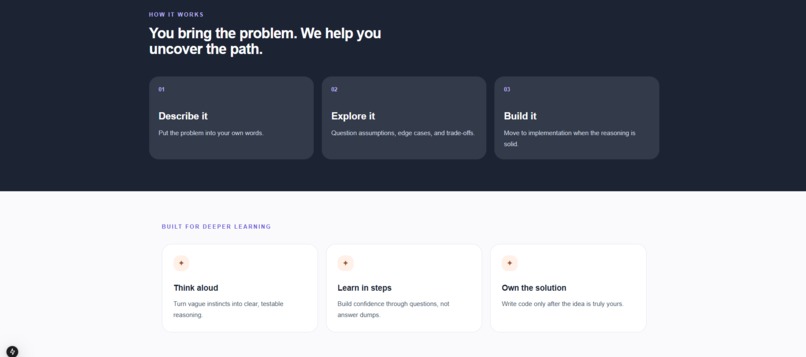
landing page - 2
-
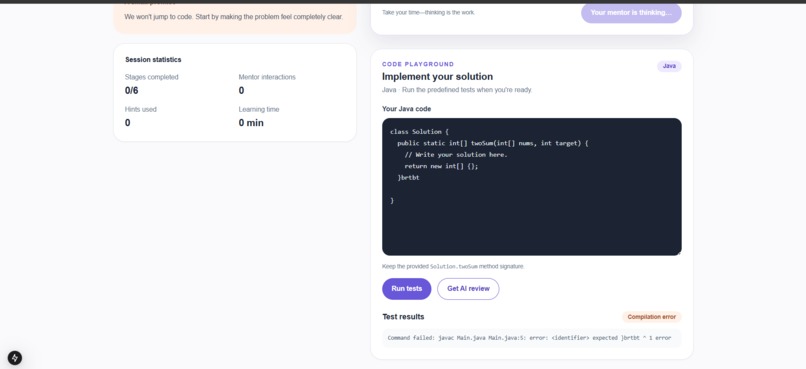
session 3
-
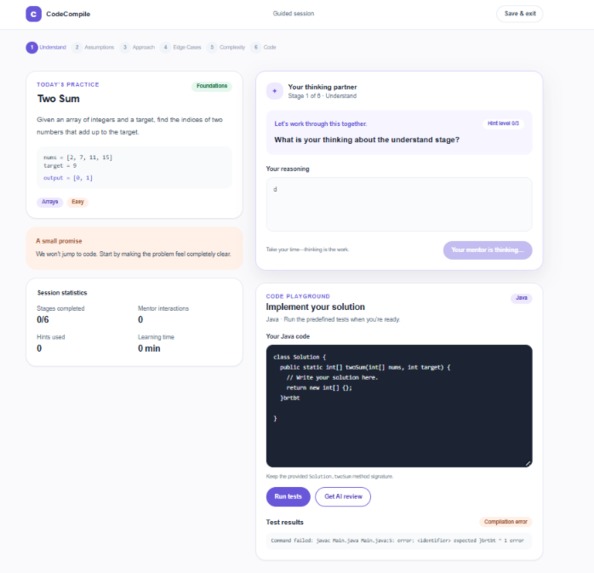
session 2
-
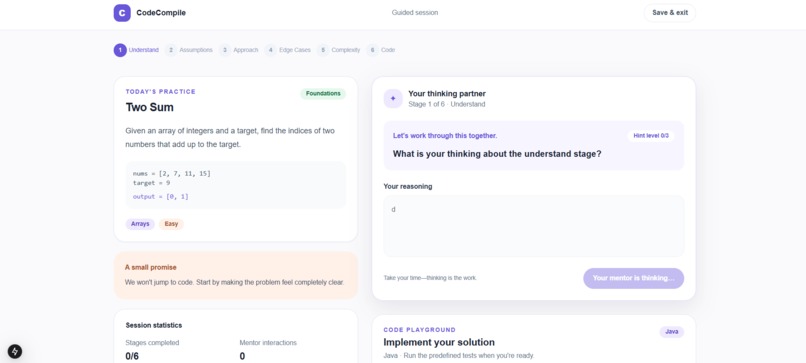
session 1
-
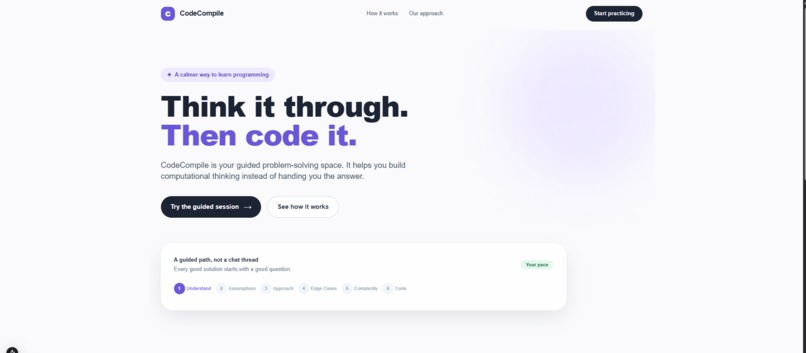
main landing page
-
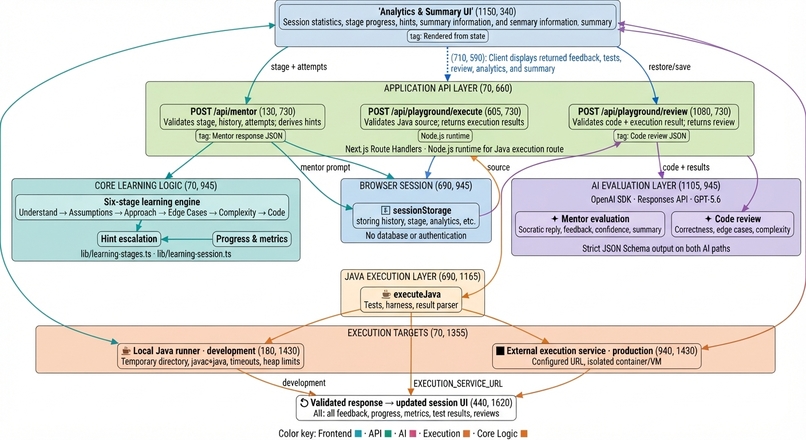
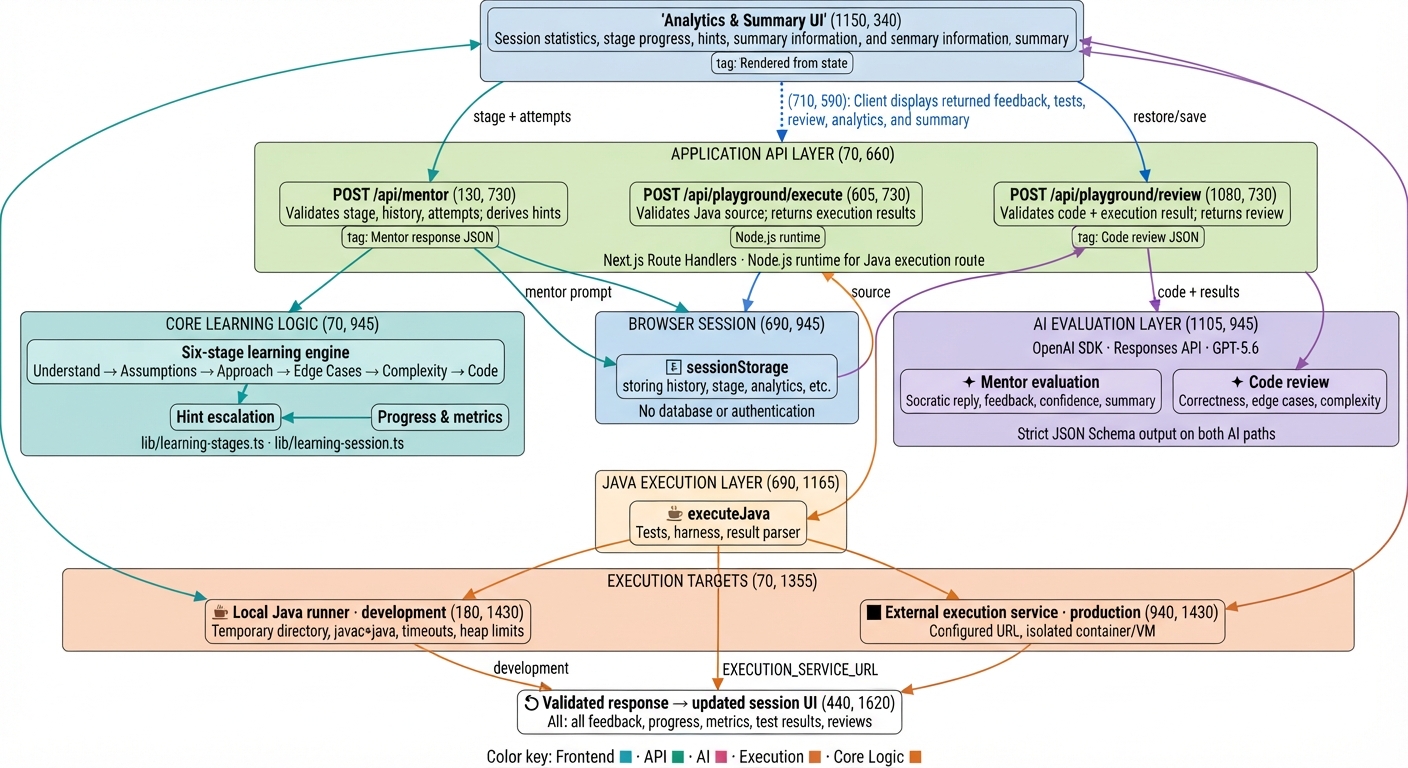
architecture diagram
-

main working 2
-
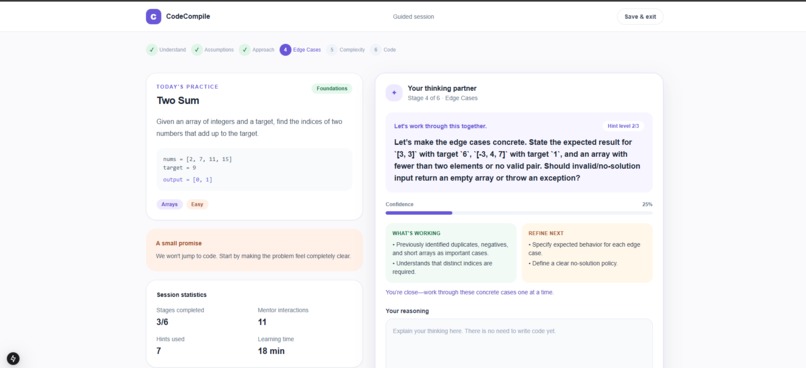
main working 1
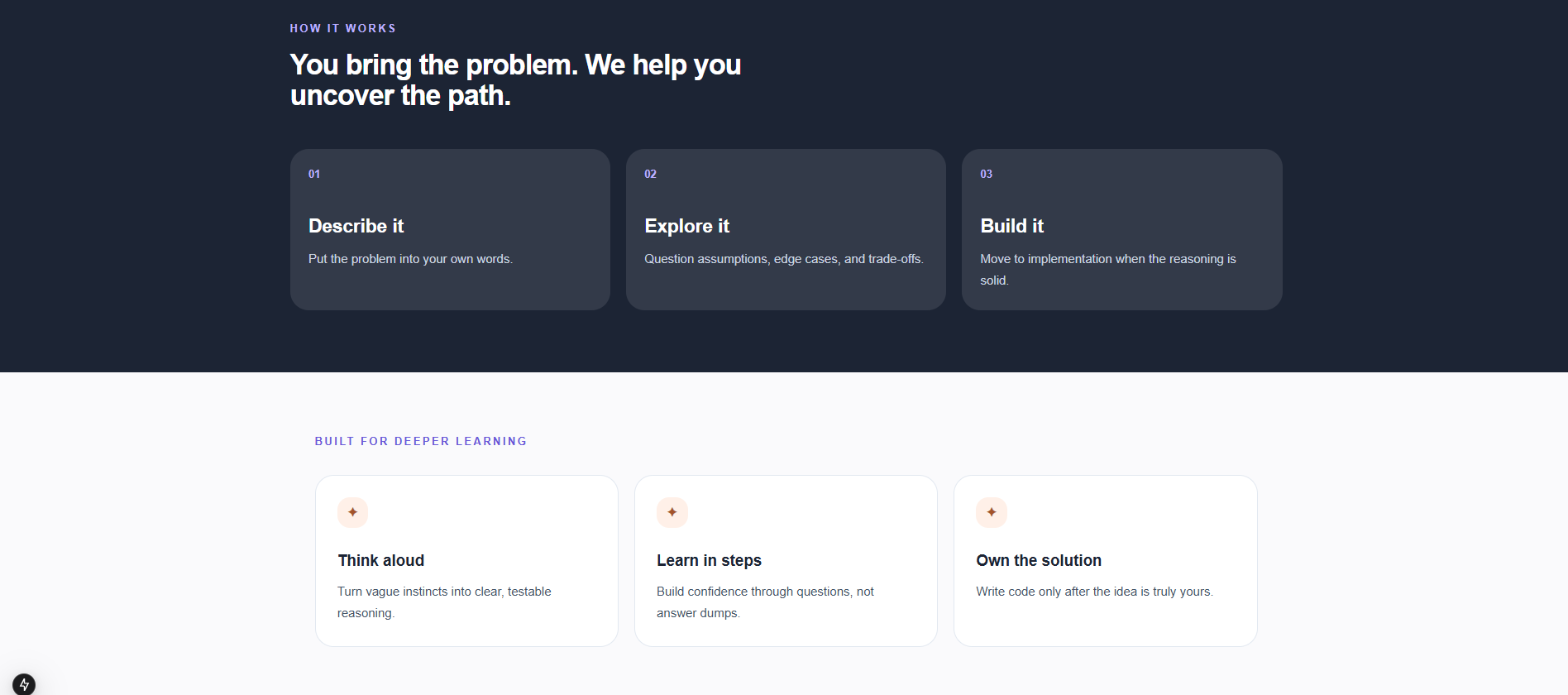

Inspiration
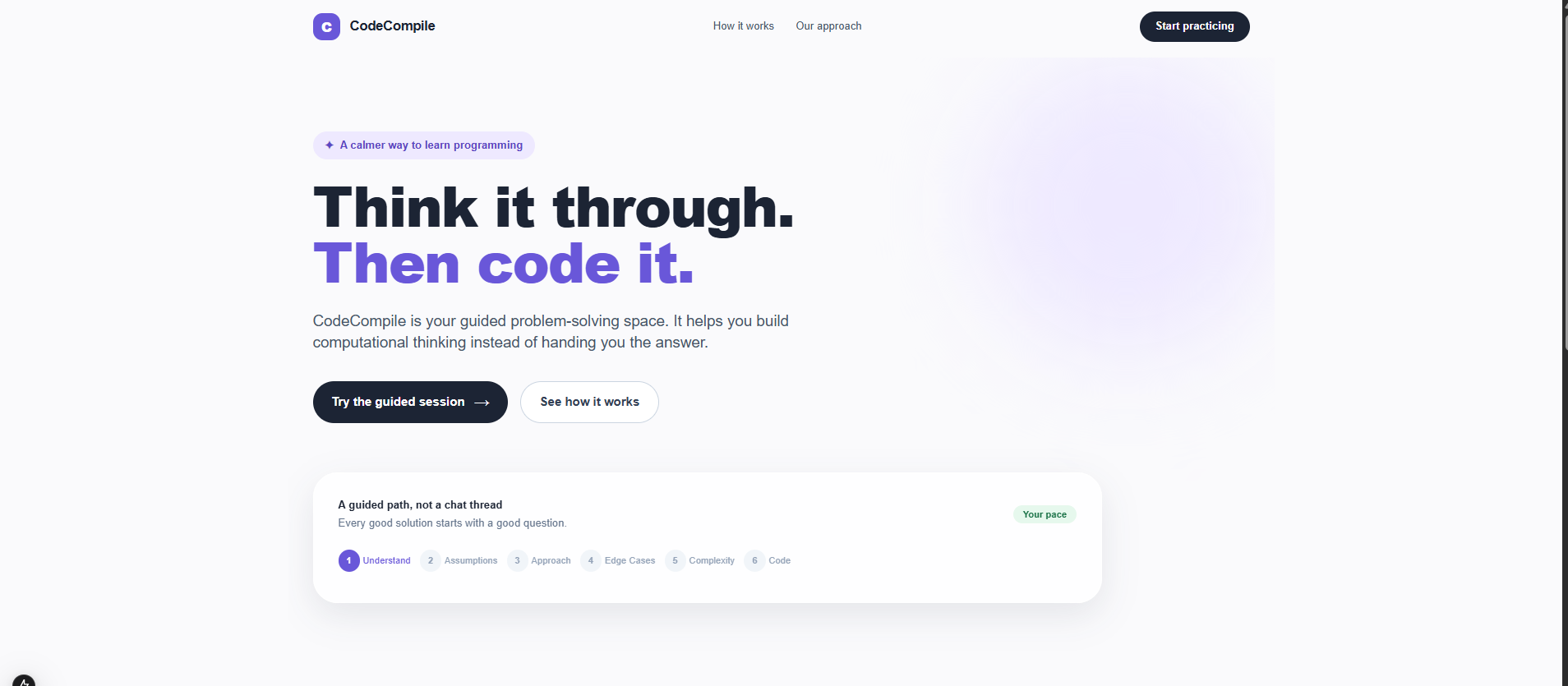
Every programming tutorial eventually tells beginners to "think before you code," but most coding platforms do the opposite. They reward arriving at the correct solution as quickly as possible, often encouraging learners to copy code without understanding the reasoning behind it. I wanted to build an AI mentor that focuses on the thinking process instead of the final answer. Rather than generating code immediately, CodeCompile guides learners through understanding the problem, identifying assumptions, planning an approach, considering edge cases, analyzing complexity, and only then writing code. My goal was to transform AI from a code generator into a reasoning partner.
What it does
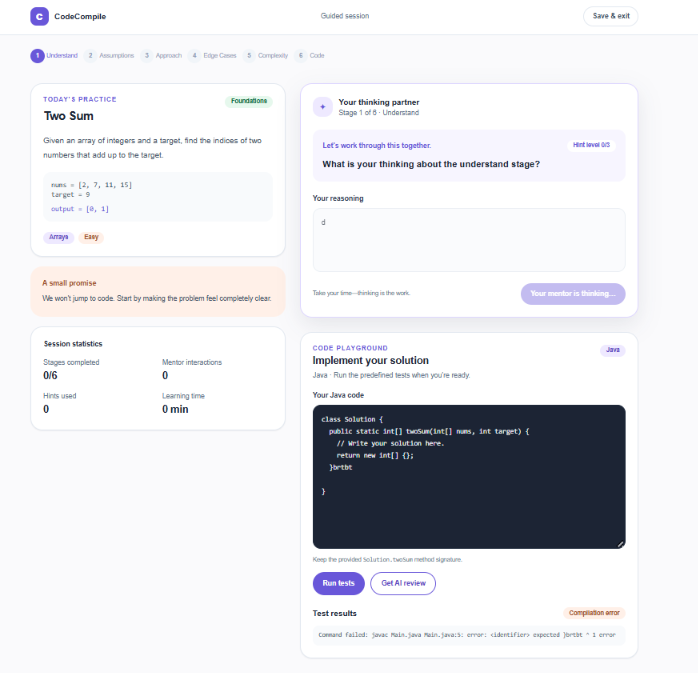
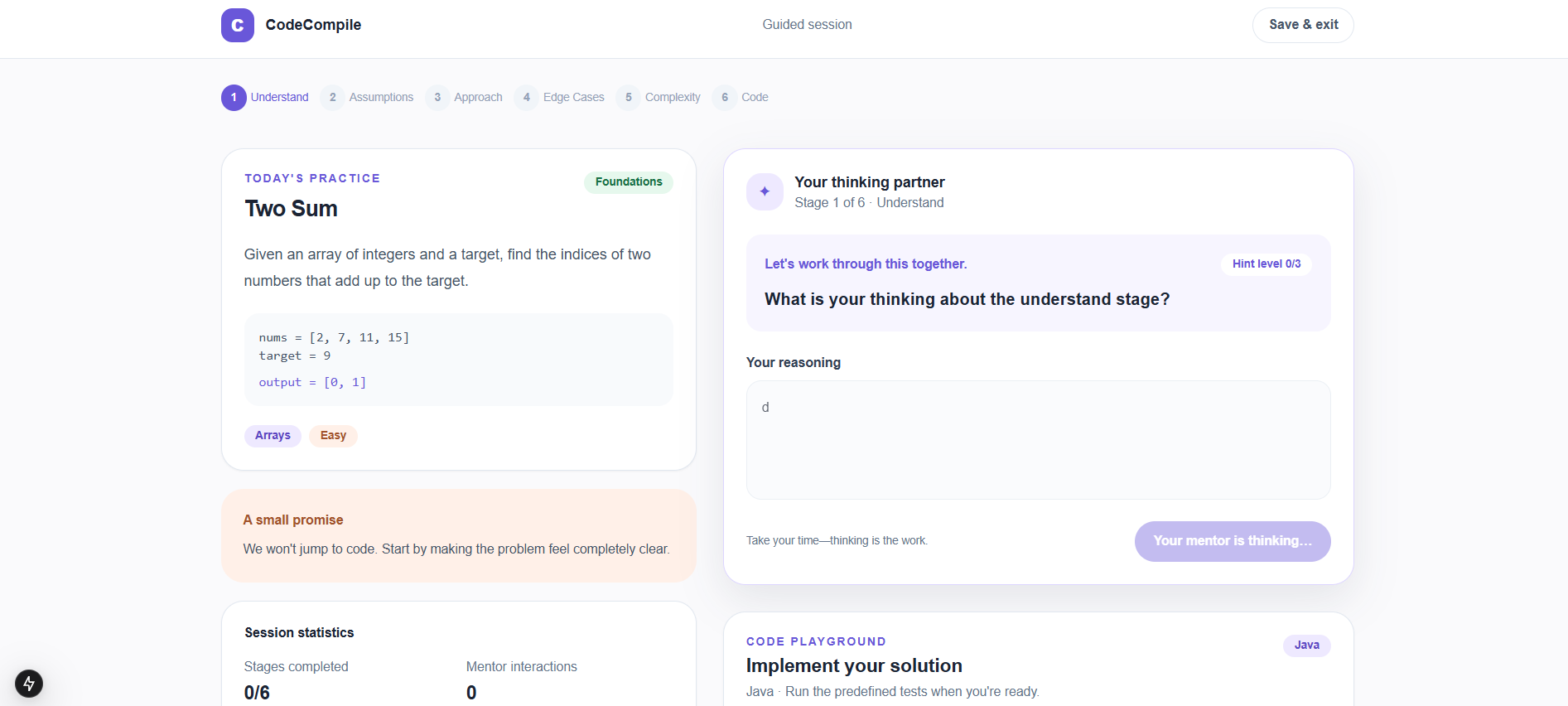
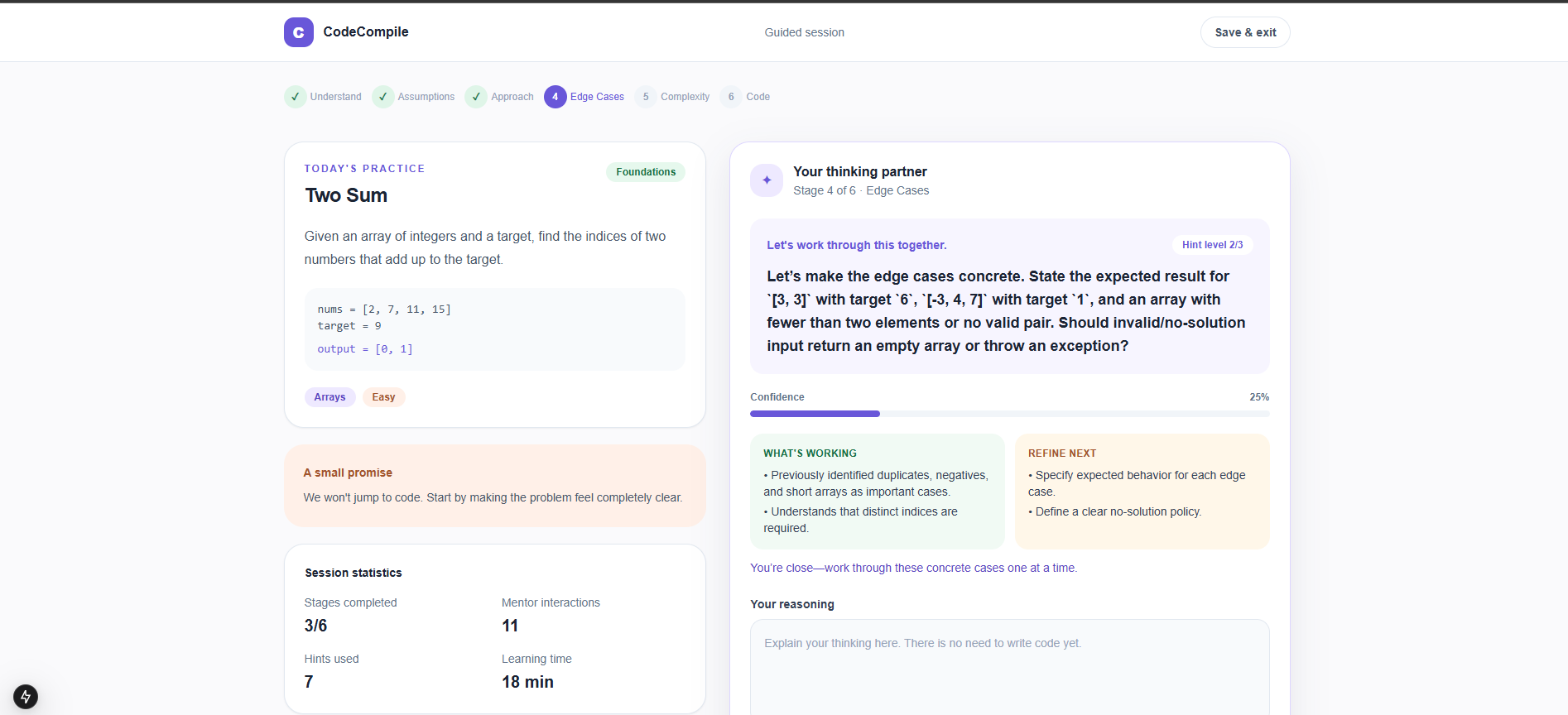
CodeCompile is an adaptive AI-powered programming mentor that teaches problem solving through guided reasoning. Instead of providing complete solutions, GPT-5.6 evaluates a learner's thinking across a structured six-stage learning pipeline: Understand the problem Identify assumptions Explain the approach Consider edge cases Analyze complexity Implement the solution
The application provides: Adaptive Socratic questioning Progressive hint escalation Confidence scoring Personalized feedback Session analytics Java code execution AI-powered code review after execution The current version demonstrates this workflow using the classic Two Sum problem as a proof of concept.
How we built it
I built CodeCompile using a modern full-stack architecture. The frontend is built with Next.js 15, React 19, TypeScript, and Tailwind CSS. The backend uses Next.js Route Handlers that communicate with GPT-5.6 through the OpenAI Responses API. A server-controlled learning engine manages: stage progression confidence scoring adaptive hint levels session summaries
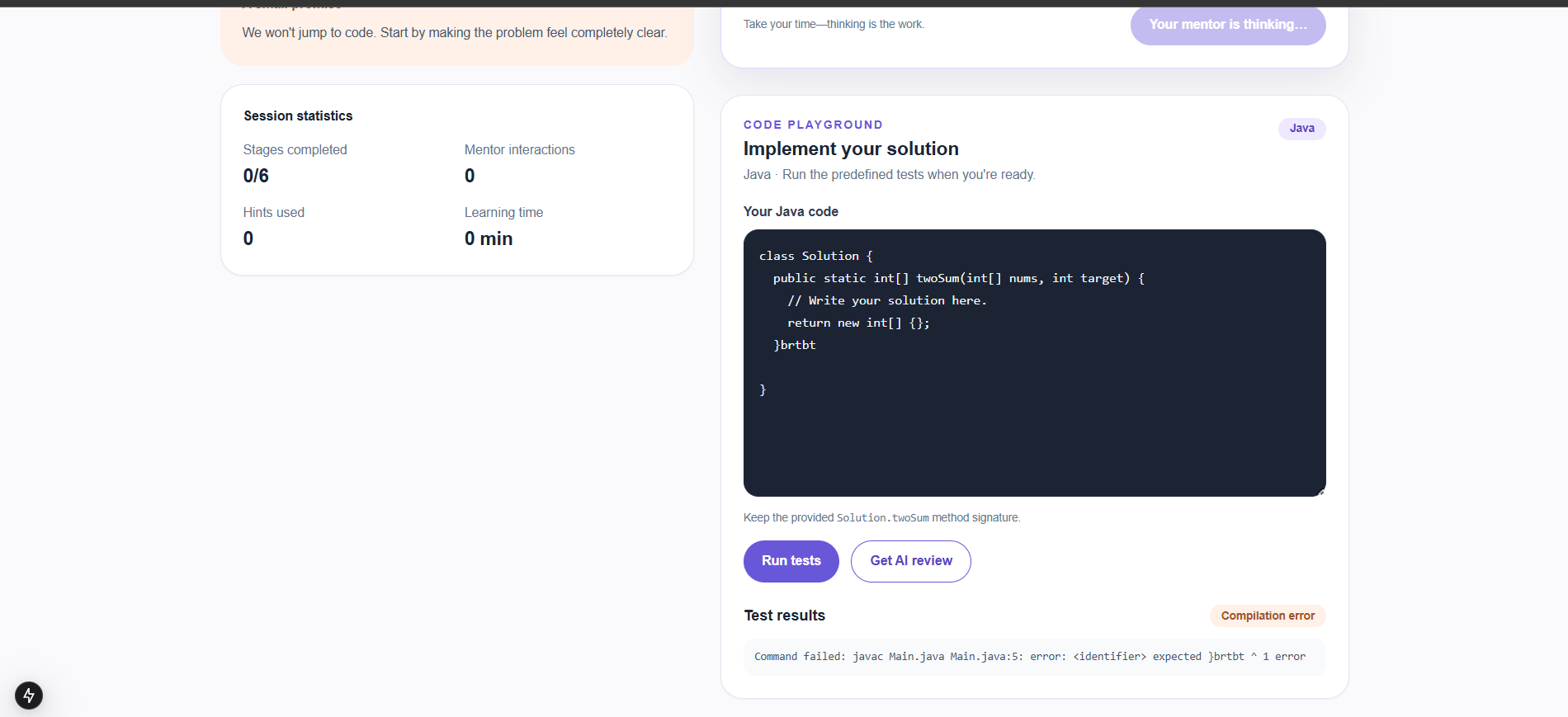
For implementation practice, we added a Java playground capable of: compiling Java executing predefined test cases detecting compile/runtime errors generating AI-powered code reviews To keep production secure, the architecture supports forwarding execution requests to an isolated execution service while allowing local execution during development
Challenges we ran into
One of the biggest challenges was preventing the AI from simply solving the problem. Prompt engineering alone wasn't sufficient, so I designed a server-controlled evaluation pipeline that strictly determines stage progression and validates structured responses before updating the learner's progress. Another challenge was safely executing user-submitted Java code. I built a development runner with execution limits while designing the architecture so production execution can be isolated inside a dedicated service. Designing a learning experience that feels helpful without becoming frustrating also required multiple iterations on hint escalation and feedback quality.
Accomplishments that I'm proud of
Built an AI mentor that teaches reasoning instead of providing answers. Designed a structured six-stage learning framework. Integrated GPT-5.6 using the OpenAI Responses API. Created adaptive confidence scoring and personalized feedback. Added an interactive Java playground with compilation and execution. Built AI-powered code review after execution. Designed a modular architecture that separates UI, AI evaluation, execution, and learning logic.
What I learned
This project taught me that building educational AI is fundamentally different from building AI assistants. What is difference between AI product and AI wrapper. The hardest part wasn't generating responses. It was designing a system that encourages independent thinking while still providing enough guidance to keep learners engaged. I also learned how structured outputs, server-side validation, and careful prompt design can make LLM behavior significantly more reliable. Finally, using Codex throughout development showed me how AI can accelerate software engineering without replacing thoughtful architecture and design decisions.
What's next for Code Compile: Think before, you code.
This project currently focuses on a single problem to validate the learning experience. Next, I plan to expand it into a complete AI-powered problem solving and interview preparation platform by adding: Multiple problems across different topics Personalized learning paths Progress tracking across sessions Authentication and cloud persistence Multi-language code execution Custom interview simulations Adaptive difficulty based on learner performance Instructor dashboards Team and classroom support My long-term vision is to build an AI mentor that helps learners develop strong computational thinking rather than simply producing correct code.
Built With
- codex
- css
- engineering
- gpt-5.6
- html
- java
- javascript
- json-schema
- next.js
- node.js
- npm
- openai
- openai-sdk
- openairesponseapi
- prompt
- rest-api
- tailwindcss
- typescript


Log in or sign up for Devpost to join the conversation.