-
-
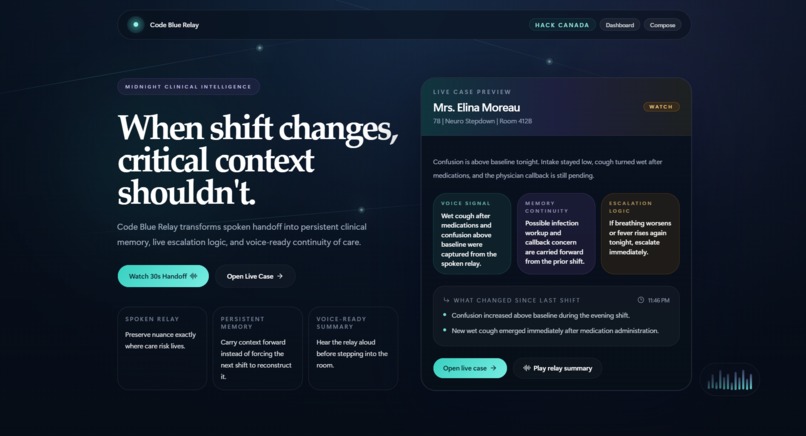
Landing Page
-
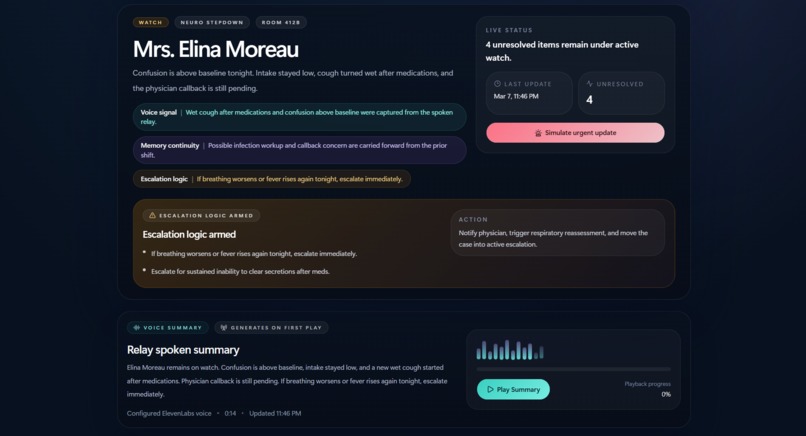
Patient Case
-
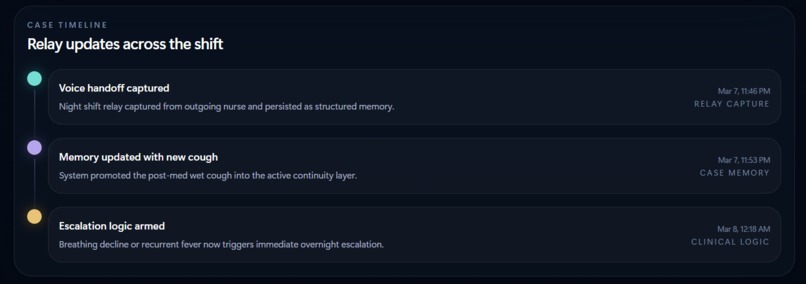
Real-time Updates
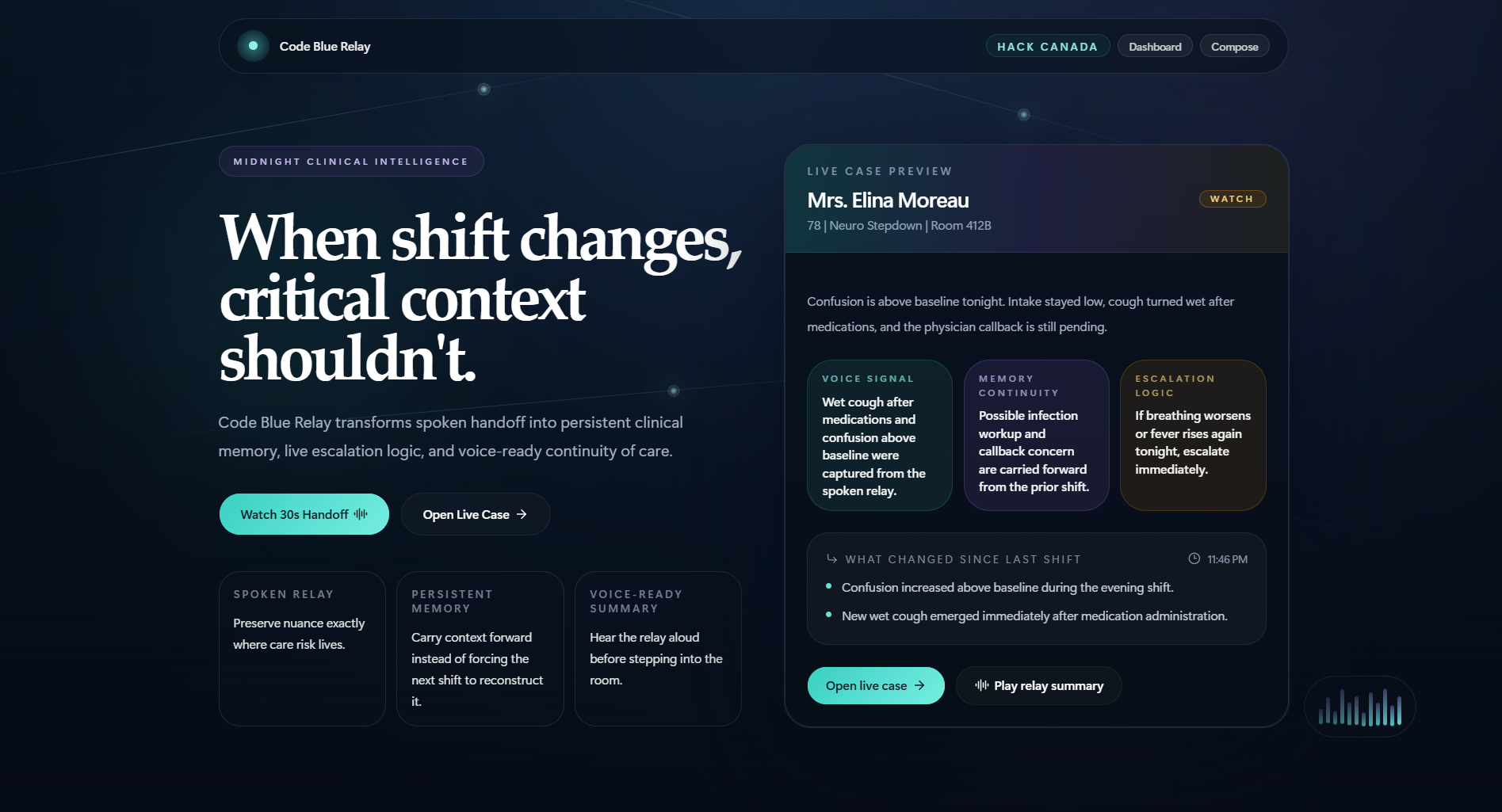
Inspiration
We built Code Blue Relay around one high-stakes healthcare problem: critical information gets lost during shift handoff. A patient’s condition can change quickly, but the next shift often inherits rushed notes, incomplete verbal updates, and unresolved callbacks. We wanted to build something that felt urgent, practical, and meaningful, not just another generic AI notes app, but a continuity layer for care.
What it does
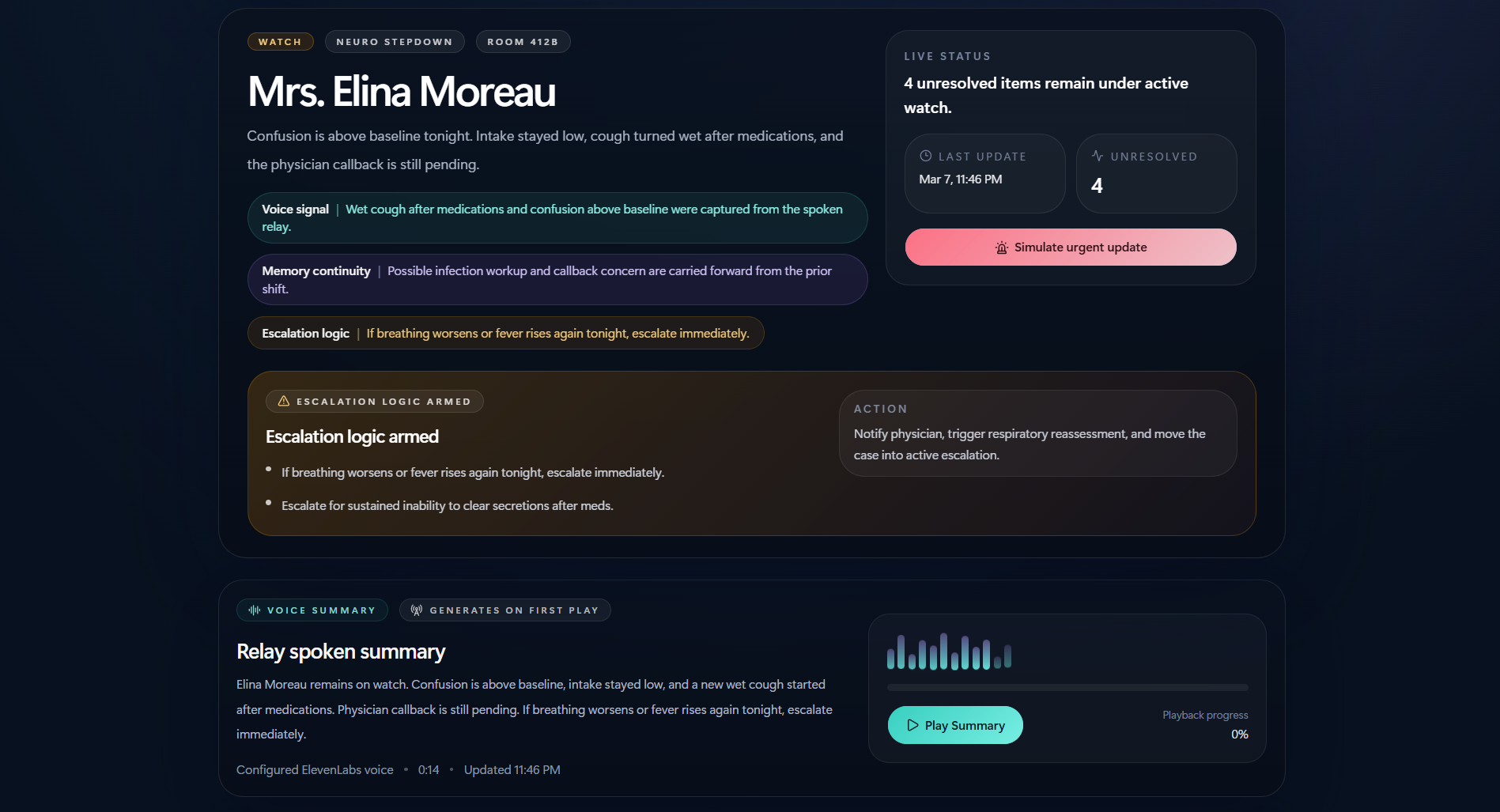
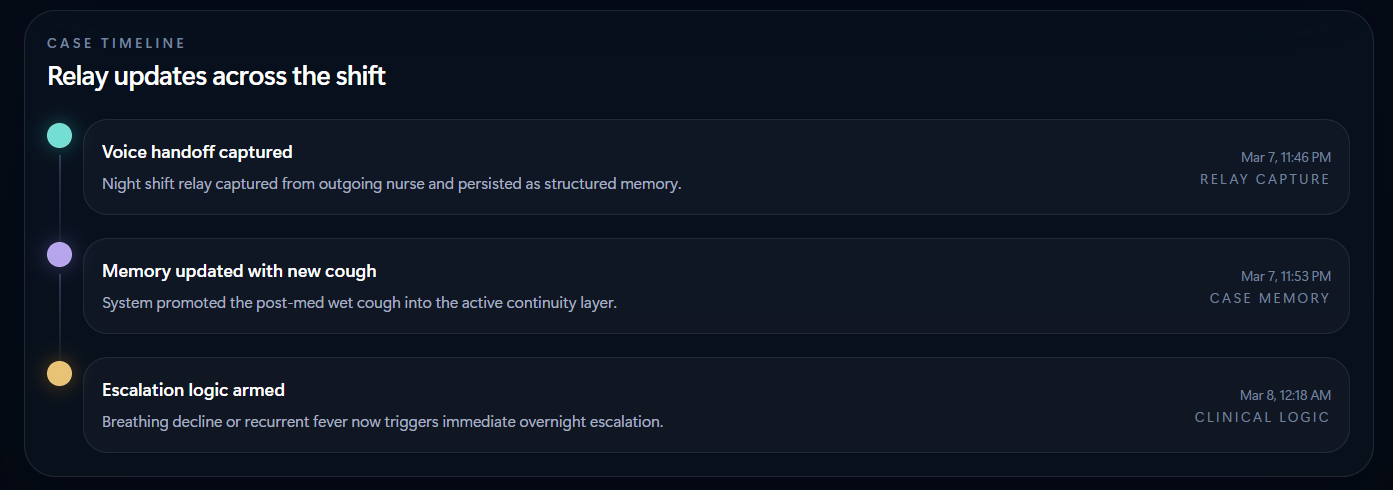
Code Blue Relay is a voice-first clinical handoff system. It turns spoken or typed shift updates into structured memory, highlights what changed, shows what was carried forward from the previous shift, tracks unresolved concerns, and updates escalation status live. Each relay can also generate a spoken summary so the next shift can hear the case instantly.
How we built it
We built Code Blue Relay as a single-repo Next.js app using TypeScript, Tailwind CSS, shadcn/ui, Framer Motion, and Lucide React. We used Backboard as the AI generation layer behind an adapter, Supabase as the persistence and integration layer, and ElevenLabs for spoken relay summaries. To keep the product reliable, we constrained AI generation to a strict structured schema and used deterministic app logic for relay creation, dashboard updates, escalation behavior, and shared state synchronization.
Challenges we ran into
The hardest part was making the AI useful without making the product unpredictable. We ran into issues with stale state between the dashboard and relay view, relay-specific audio generation, live escalation updates, and AI parsing mistakes. We solved that by narrowing the AI’s role, adding a repair layer for structured output, and moving relay state into a shared store so updates stayed synchronized.
Accomplishments that we're proud of
We’re proud that Code Blue Relay feels like a real product, not just a prototype. It combines structured handoff generation, carried-forward memory, live escalation updates, and voice playback in a way that feels elegant, urgent, and memorable. We’re especially proud that we built something that does not feel like generic healthcare software; it feels calm, polished, and important.
What we learned
We learned that in high-stakes workflows, reliability matters more than novelty. AI works best when it has a narrow, well-defined role and the rest of the product stays deterministic. We also learned that healthcare tools do not have to feel cold or bureaucratic; they can feel beautiful, serious, and emotionally resonant at the same time.
What's next for Code Blue Relay
Next, we’d want to validate the workflow with real healthcare professionals, deepen support for structured handoff frameworks like SBAR, and expand the system into a more persistent continuity platform across longer care episodes. We’d also explore stronger escalation explainability, role-based handoff flows, and richer collaboration features so the product can move from a demo-ready MVP toward a real operational healthcare tool.
Built With
- backboard
- elevenlabs
- framer-motion
- lucide-react
- next.js
- react
- shadcn/ui
- supabase
- tailwind-css
- typescript

Log in or sign up for Devpost to join the conversation.