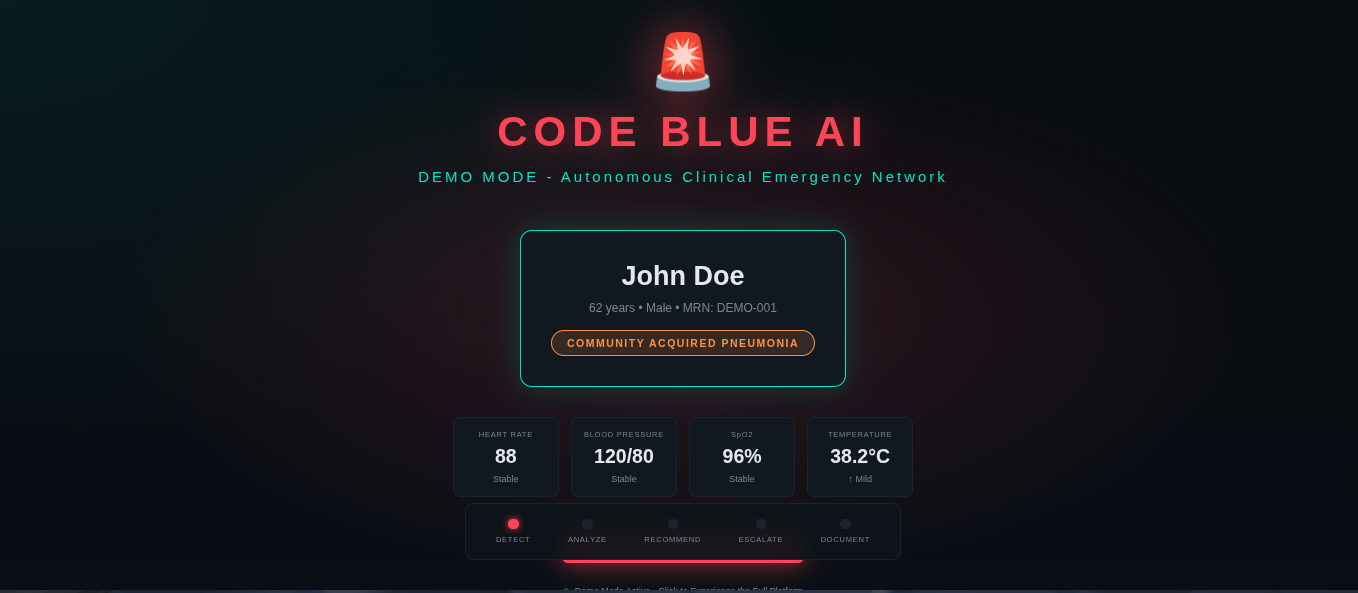
Code Blue AI Project Story
The Problem
Modern hospitals generate continuous streams of critical patient data vitals, labs, medications, and clinical notes but this information is often fragmented across systems and reviewed too late.
As a result:
- Sepsis is detected after irreversible damage begins
- Cardiac deterioration is missed in noisy telemetry
- Critical lab results are buried in alert fatigue
- Clinical staff are overwhelmed with manual monitoring
- Escalation decisions are delayed during high-pressure moments
In healthcare, delays are not just inefficiencies they are life-threatening failures.
The Vision
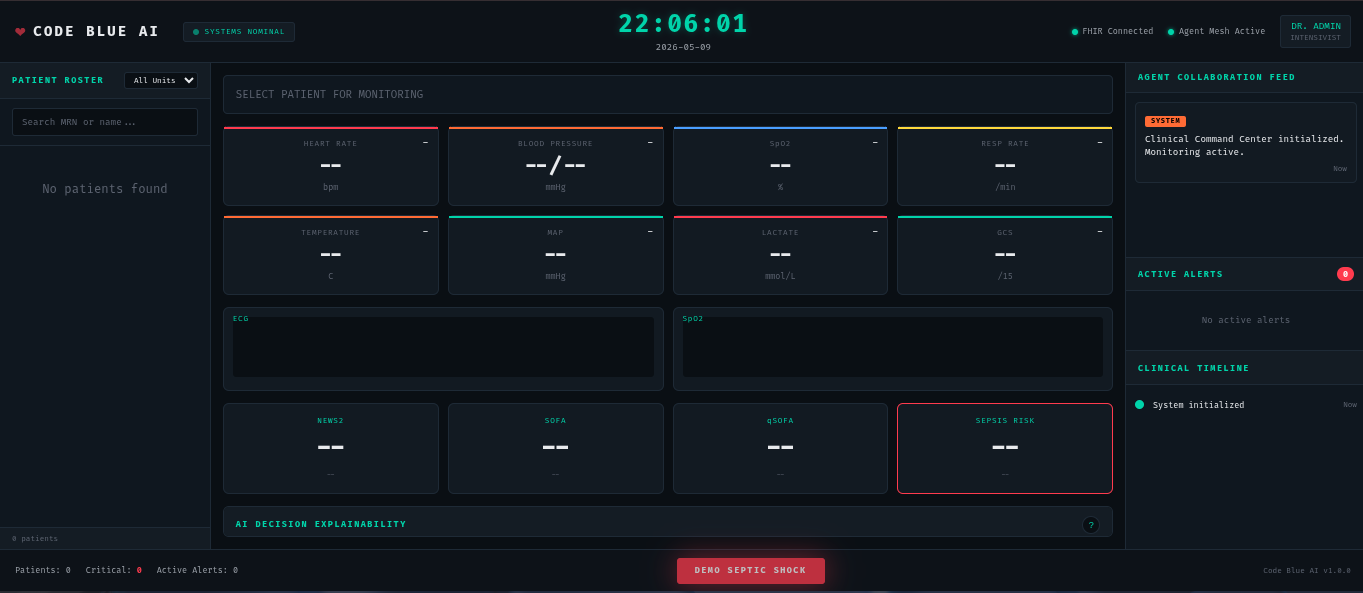
Code Blue AI was built to close this gap by transforming passive hospital data into an active, intelligent, and autonomous emergency response system.
Instead of relying on humans to constantly monitor every signal, Code Blue AI introduces a coordinated network of specialized AI agents that work together like a clinical “digital ICU team.”
When patient conditions begin to deteriorate, the system does not wait it assembles intelligence instantly.
The System
At the core of Code Blue AI is a multi-agent clinical emergency network powered by:
- FHIR R4 data interoperability
- MCP (Model Context Protocol) tool orchestration
- A2A (Agent-to-Agent) communication
- SHARP context propagation for clinical continuity
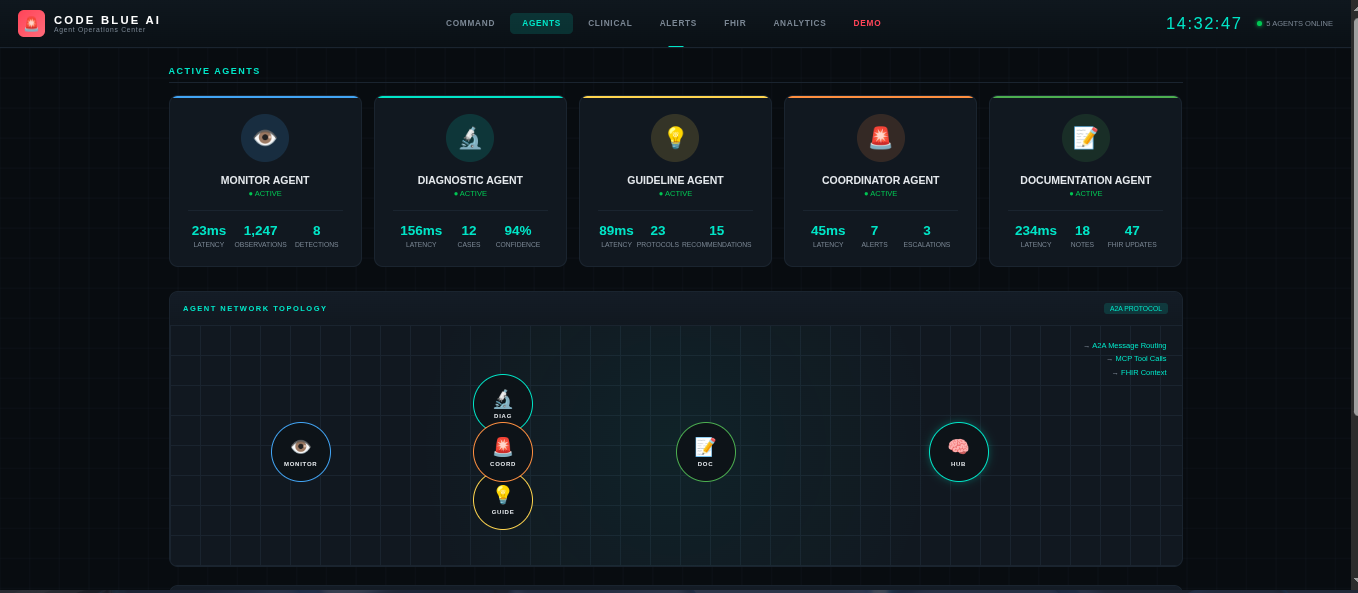
Each agent has a defined clinical role:
Monitor Agent
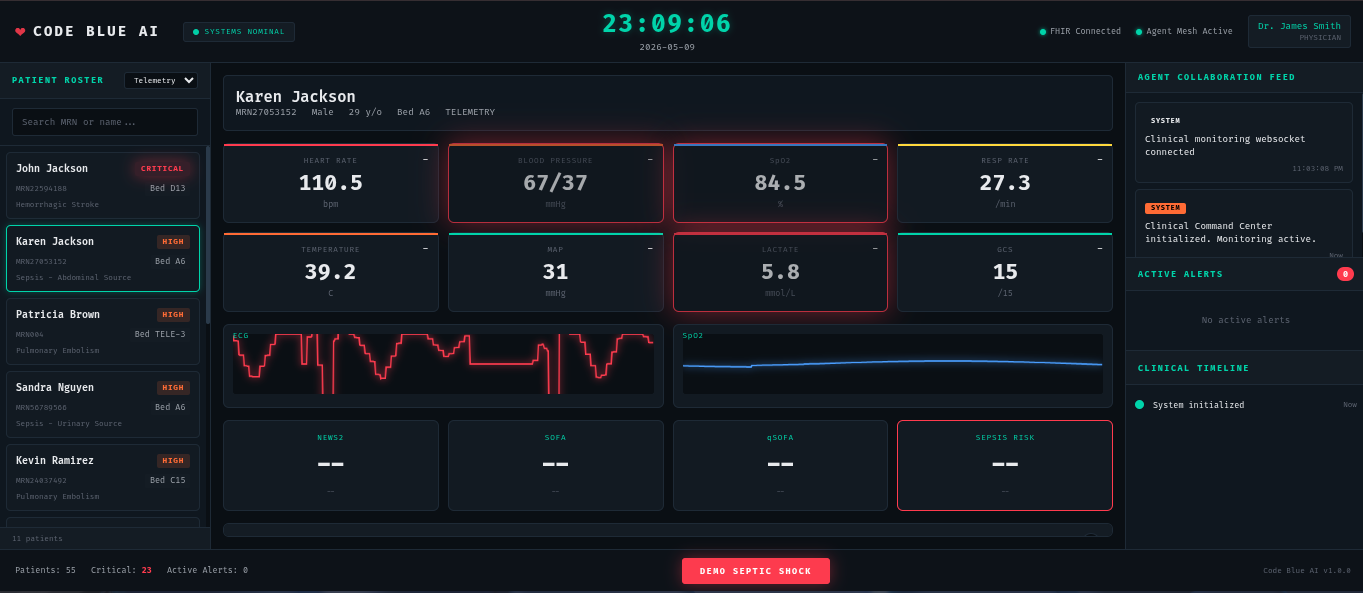
Continuously analyzes live patient vitals and detects early warning signals such as:
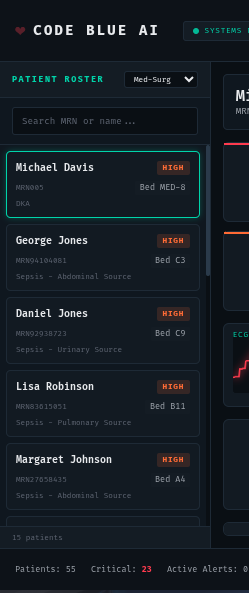
- Sepsis indicators (NEWS2, SOFA, qSOFA)
- Hypoxia and respiratory distress
- Hemodynamic instability
Diagnostic Agent
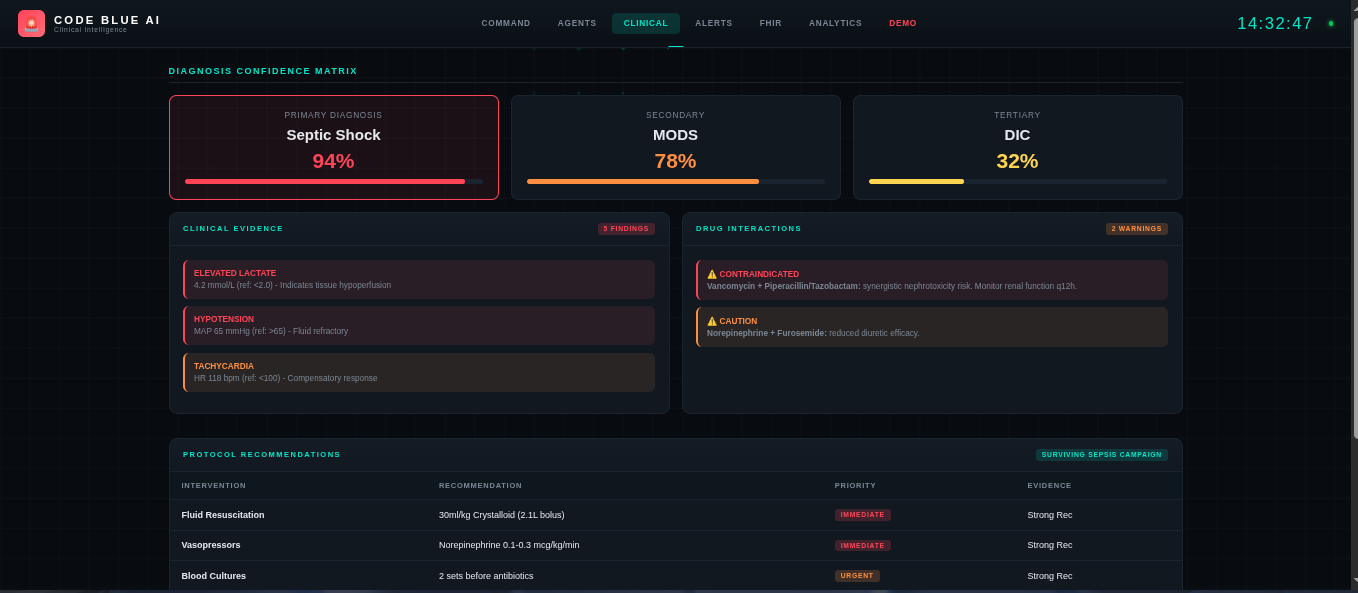
Interprets clinical context:
- Integrates labs, medications, allergies, and history
- Generates differential diagnoses
- Produces confidence-scored clinical reasoning
Guideline Agent
Maps diagnoses to evidence-based protocols:
- Sepsis bundles
- Stroke pathways
- ACS and emergency care guidelines
Coordinator Agent
Acts as the escalation engine:
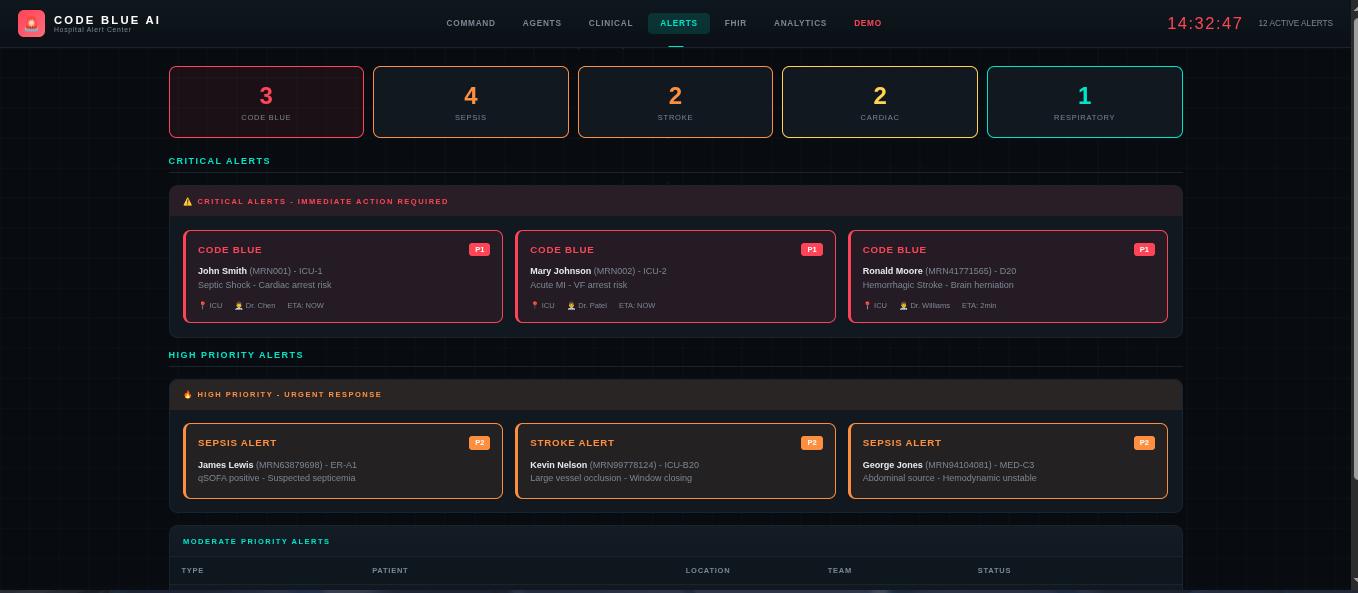
- Alerts clinicians and ICU teams
- Triggers urgent workflows
- Initiates hospital response actions
Documentation Agent
Automates clinical record keeping:
- Generates SOAP notes
- Updates FHIR resources
- Maintains full audit trails of decisions
How It Works
- Patient data streams in via FHIR APIs
- Monitor Agent detects abnormal physiological patterns
- Diagnostic Agent evaluates possible causes
- Guideline Agent selects appropriate clinical protocol
- Coordinator Agent escalates care immediately
- Documentation Agent records the entire process in real time
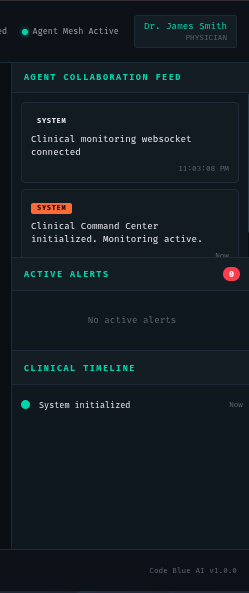
All agents communicate through an A2A mesh network, while MCP tools provide reusable clinical intelligence services.
Why It Matters
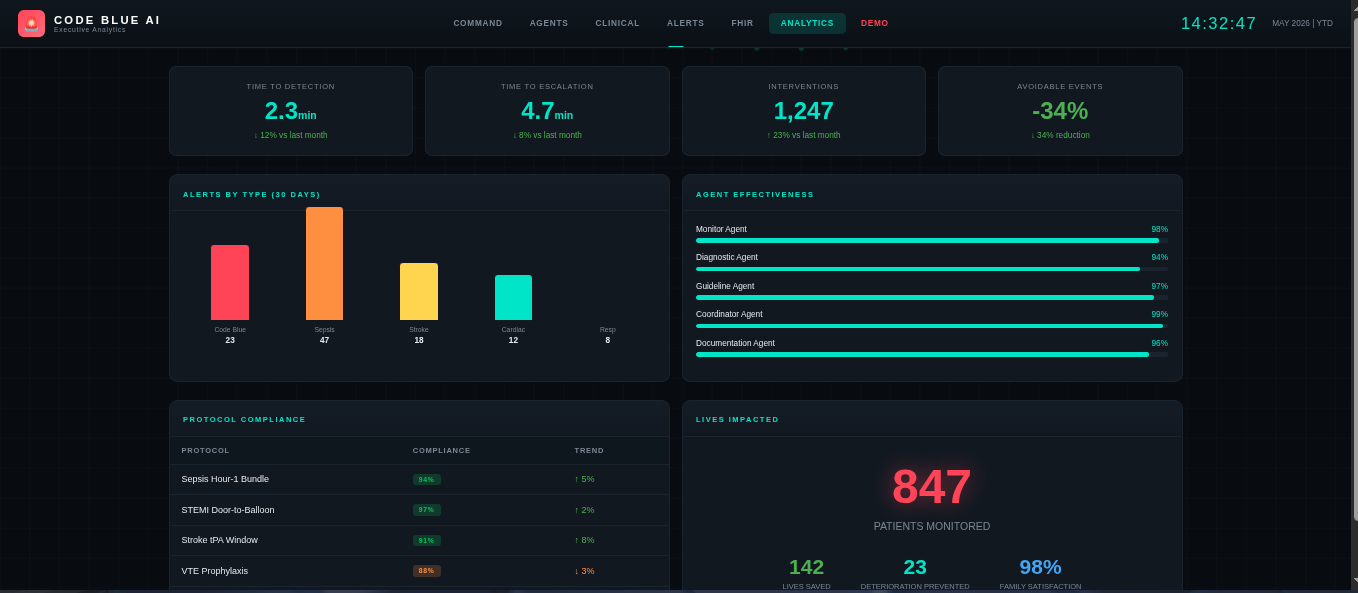
Code Blue AI is not just a monitoring system it is a clinical decision acceleration layer.
It transforms healthcare from:
reactive → proactive
manual → autonomous-supported
fragmented → interoperable
delayed → real-time
The goal is simple:
reduce time-to-intervention when seconds determine survival.
The Demo Scenario
A patient enters with pneumonia.
Within minutes:
- Vitals deteriorate
- Sepsis risk rises
- Monitor Agent triggers alert
- Diagnostic Agent confirms likely septic shock
- Guideline Agent recommends 1-hour sepsis bundle
- Coordinator Agent escalates to ICU team
- Documentation Agent auto-generates clinical notes
All actions happen in real time visible, explainable, and coordinated.
The Endgame
Code Blue AI represents a shift toward agentic healthcare infrastructure, where AI systems do not replace clinicians but extend their reach, speed, and precision during critical moments.
This is the future of emergency medicine:
Not one AI assistant but a coordinated intelligence network acting in seconds when human delay is costly.


Log in or sign up for Devpost to join the conversation.