-
-
Usage
-
dashboard
-
Assistant
-
Knowledge
-
Home
-
Conversation
Inspiration
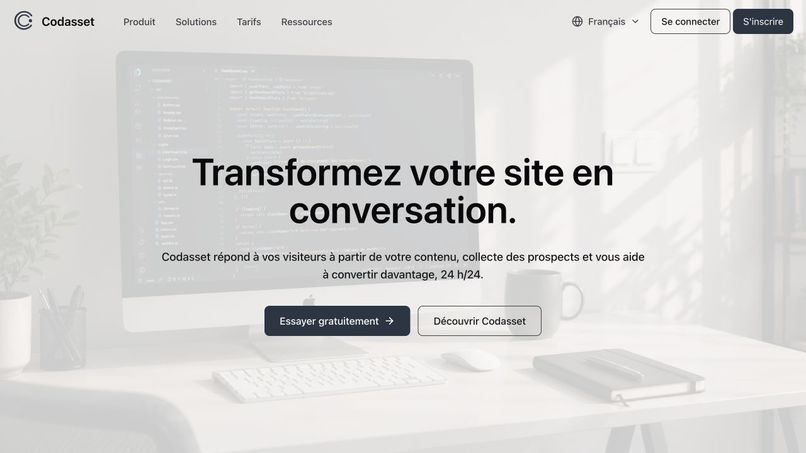
Business websites contain valuable information, but visitors still have to search through pages, menus, and forms to find clear answers. Small teams can also lose potential customers when nobody is available to respond immediately.
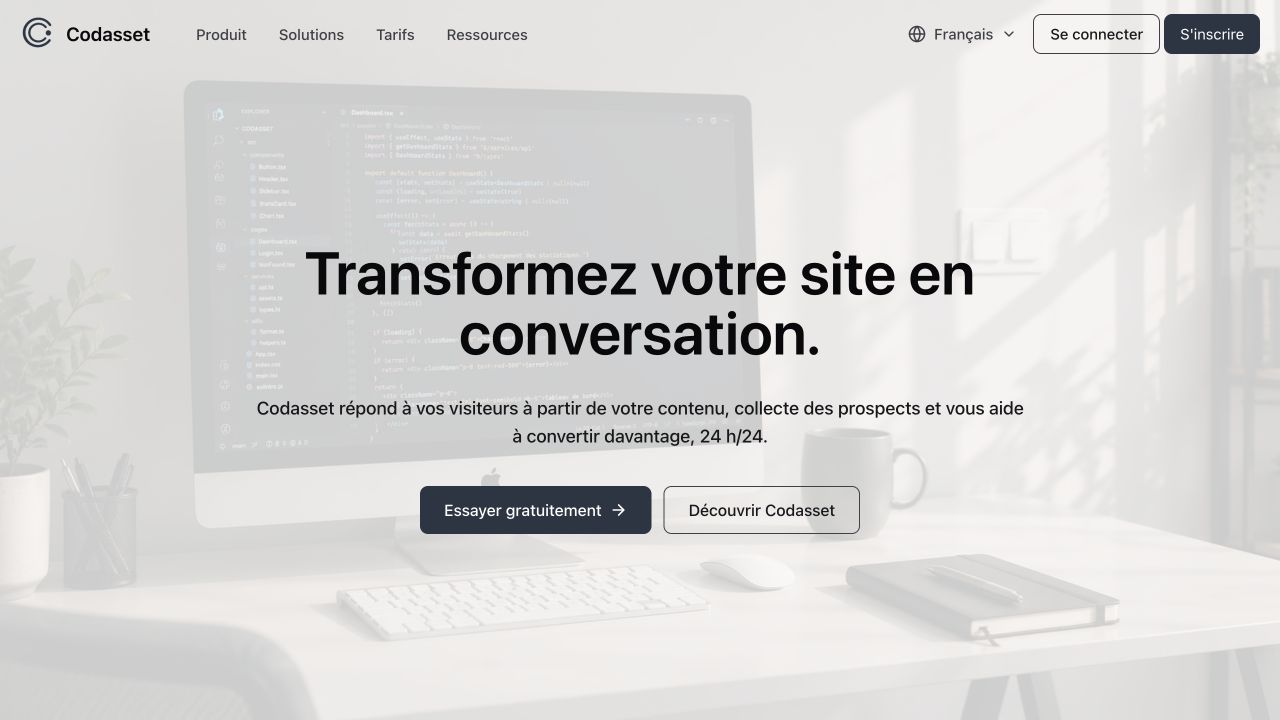
I built Codasset to transform an existing website into an interactive and controlled knowledge experience without requiring the business to rewrite all of its content.
Codex with GPT-5.6 was my primary engineering partner during Build Week. I used it to analyze the existing codebase, implement and debug full-stack features, improve the interface, create database migrations, strengthen security, deploy changes, and verify the real staging application.
What it does
Codasset lets a business connect a website and transform approved pages into a knowledge base for an AI assistant.
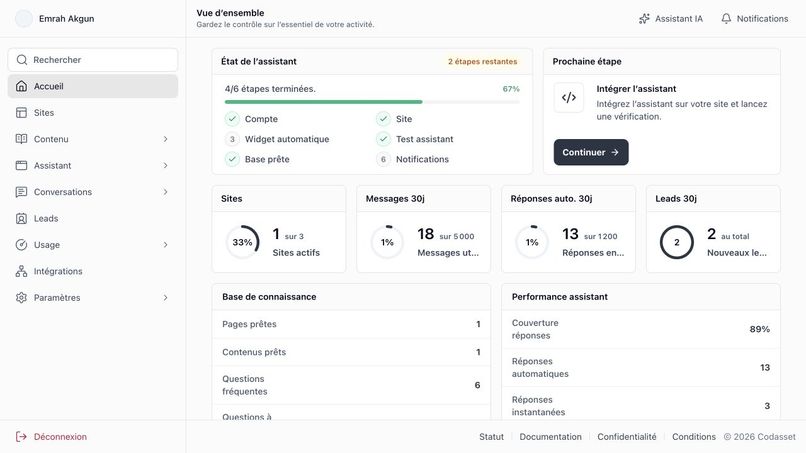
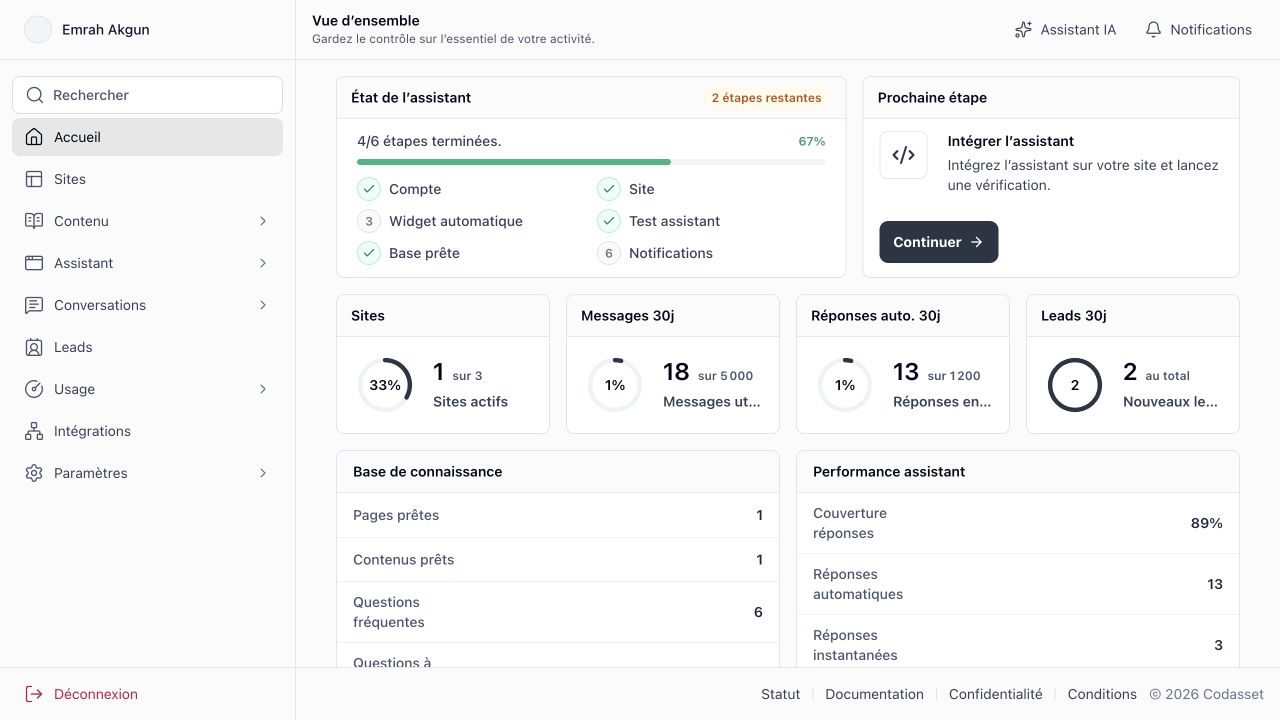
From one dashboard, a user can:
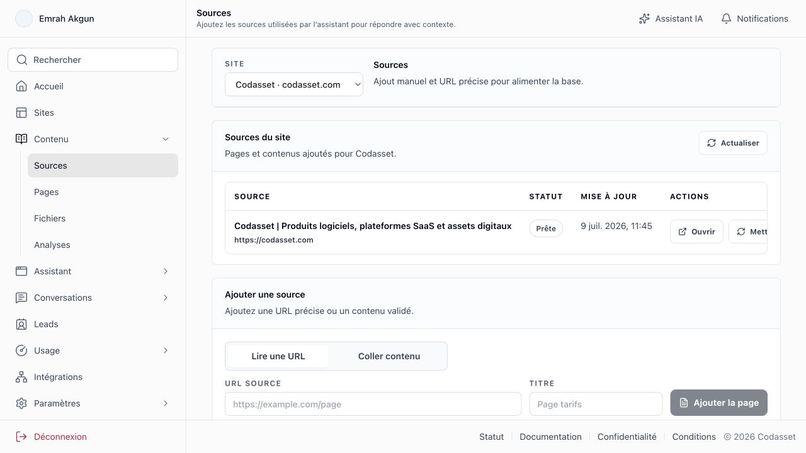
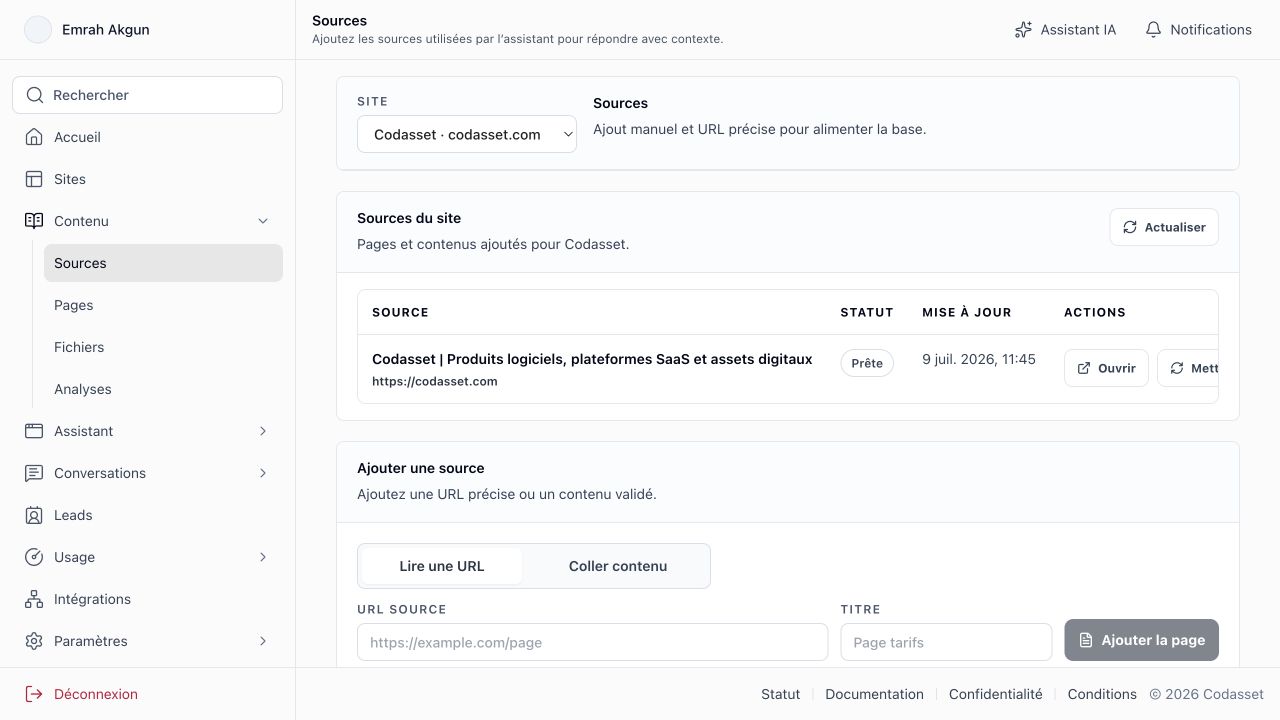
- manage websites and approved content sources;
- crawl a permitted page and store versioned content;
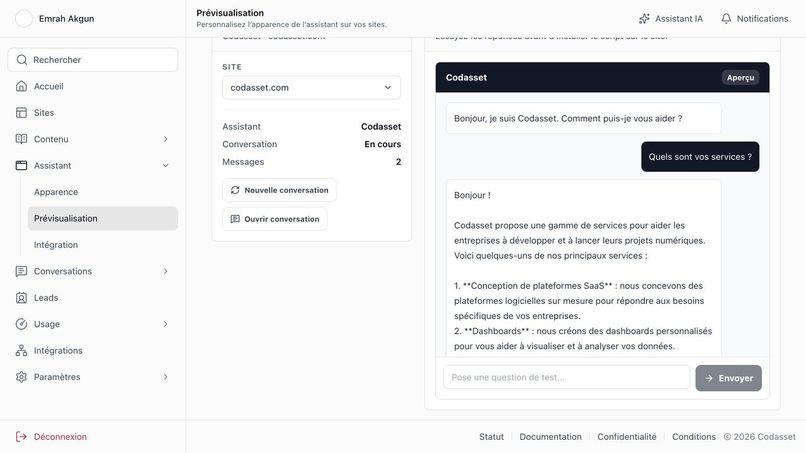
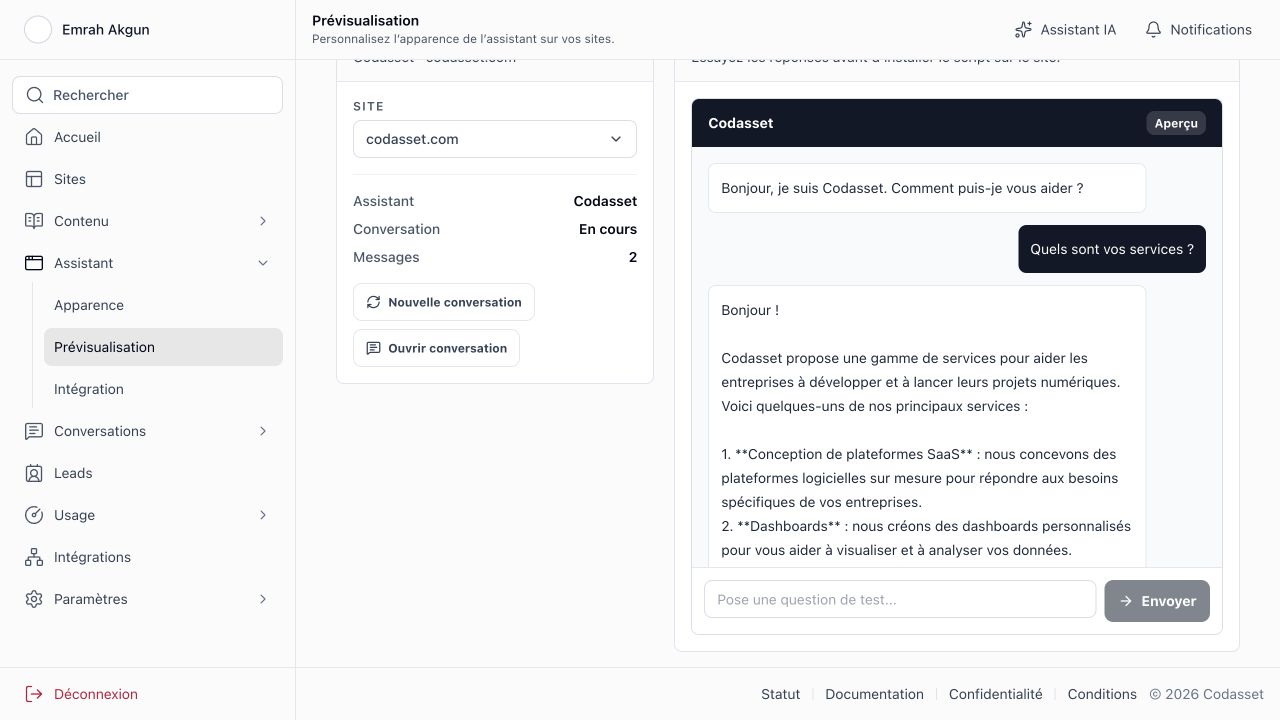
- test source-grounded answers before installing the assistant;
- see which source was used to generate an answer;
- customize and preview the assistant;
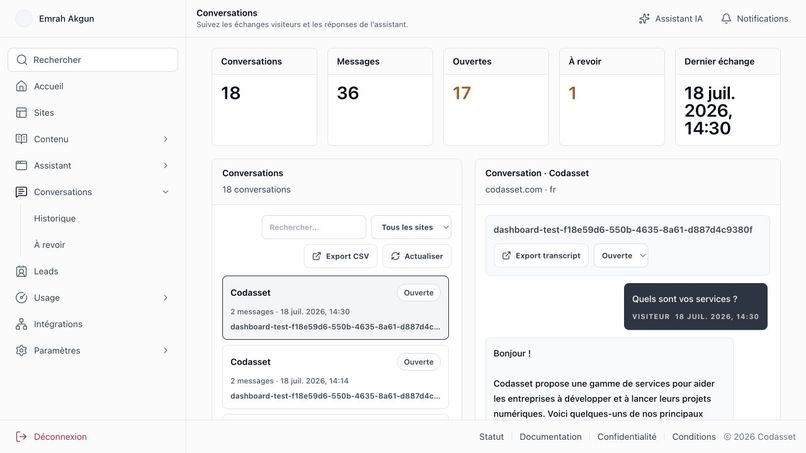
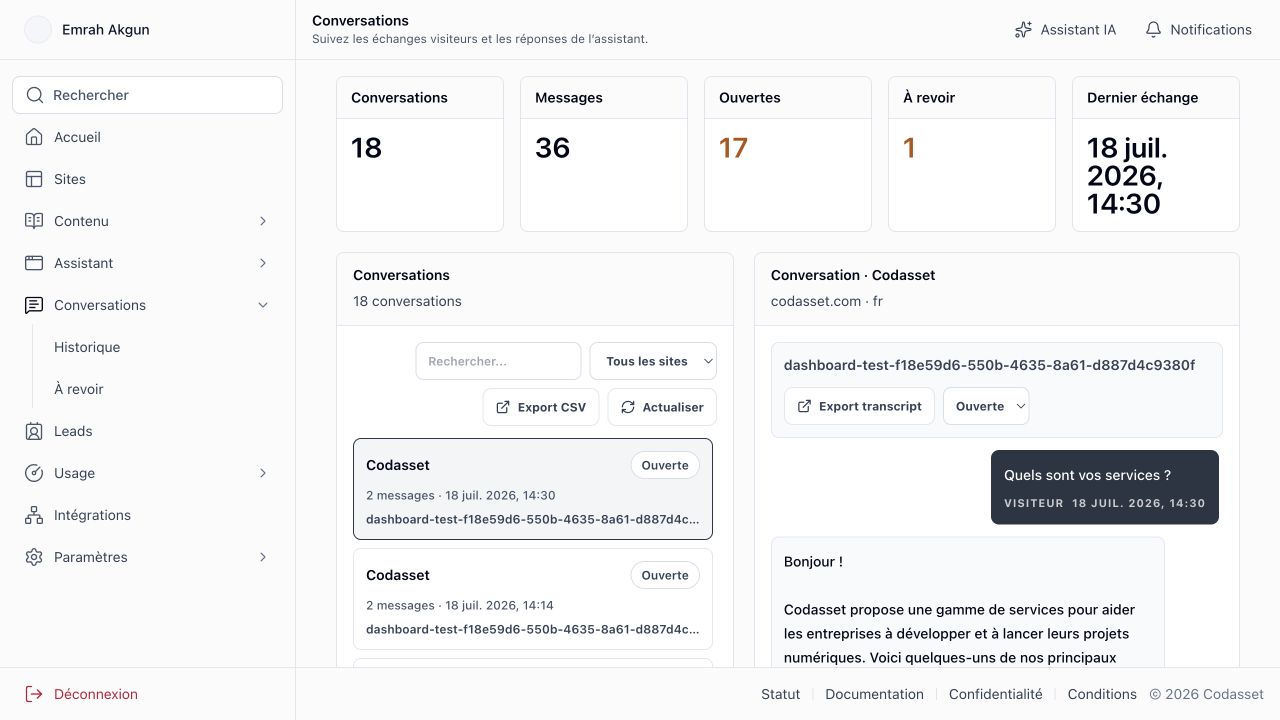
- review conversations and captured leads;
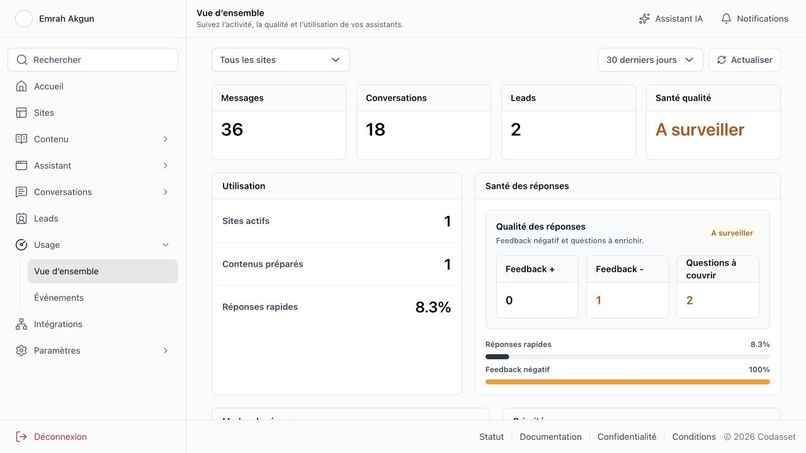
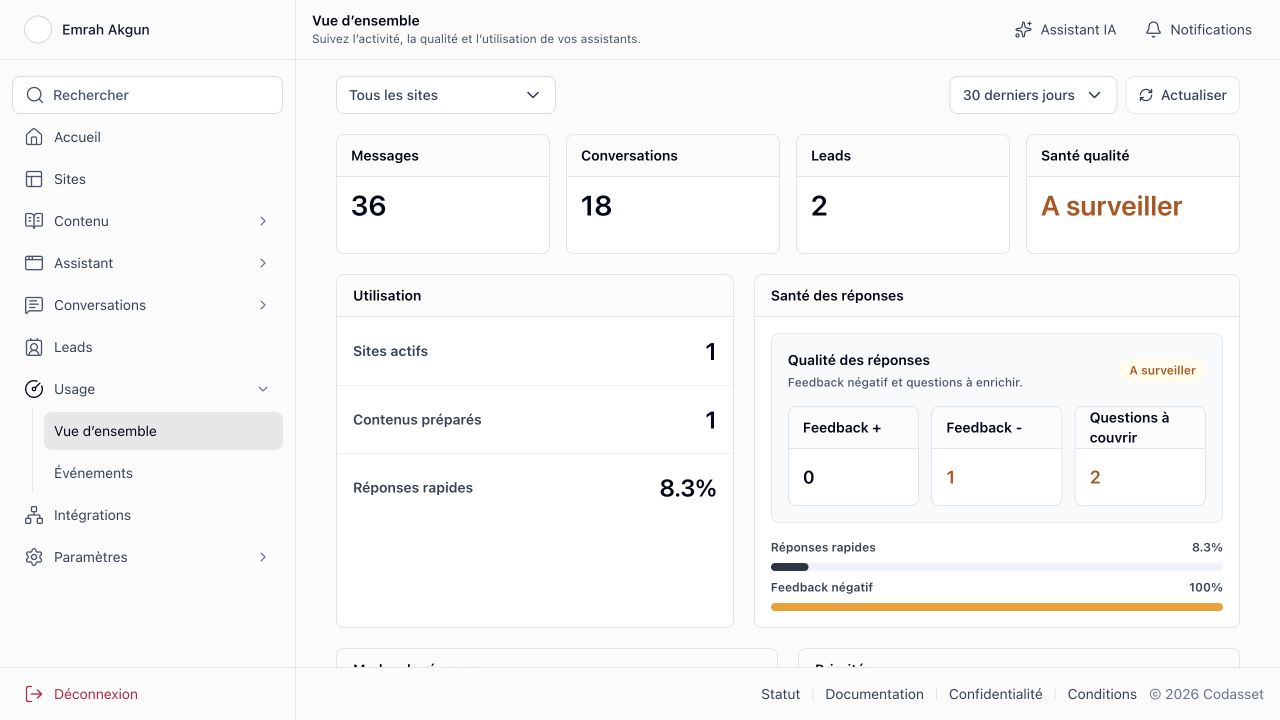
- monitor messages, answer coverage, cache activity, and unanswered questions.
In the staging demonstration, Codasset uses the approved Codasset website content. When a visitor asks a question such as “What services do you offer?”, the system retrieves relevant content, generates an answer, and displays the original source.
How I built it
The interface is built with React 19, TypeScript, Vite, React Router, Tailwind CSS, Framer Motion, and Lucide icons.
The backend runs as a Cloudflare Worker. Cloudflare D1 stores accounts, sites, content metadata, content chunks, conversations, messages, leads, usage events, and audit records. Cloudflare R2 stores raw text and HTML snapshots. Cloudflare Browser Rendering can retrieve content from dynamic pages, while Cloudflare Workers AI currently generates visitor-facing answers using Meta Llama 3.1 8B Instruct.
The answer pipeline normalizes the question, retrieves relevant chunks from the active content version, generates a grounded response, attaches source citations, records usage, and caches reusable answers.
Crawling is restricted to the exact hostname configured for each website, including validation after redirects and for sitemap URLs.
I used Codex with GPT-5.6 as an active engineering workflow, not only as a code generator. It helped me inspect the existing architecture, compare implementation options, modify the React application and Worker API, create D1 migrations, debug interface and deployment issues, perform browser-based staging tests, and verify security-sensitive behavior. I retained the final product and architecture decisions.
The visitor-facing answer model currently runs through Cloudflare Workers AI. GPT-5.6 was used through Codex to build, extend, debug, and validate the product.
Challenges I ran into
One challenge was extracting useful content from modern websites while keeping ingestion predictable. I implemented regular fetching and browser-rendered crawling, content normalization, chunking, versioned snapshots, and minimum-content checks.
Another challenge was keeping generated responses tied to approved material. Codasset retrieves active content chunks, stores the corresponding source identifiers, and displays source links with the answer. It also falls back safely when the available context is insufficient.
The final challenge was preparing a real staging environment without exposing unrelated or unfinished content. I added authentication and role checks, domain-scoped crawling, no-index protections, security verification, and deployment tests.
Accomplishments that I'm proud of
- A working end-to-end flow from website content to a cited AI response.
- A unified dashboard for sources, assistant previews, conversations, leads, and usage.
- Versioned content storage using D1 metadata and R2 snapshots.
- Answer caching and usage tracking inside the response pipeline.
- Domain restrictions that prevent a website from indexing unrelated hosts.
- A deployed staging application that judges can test through the same interface shown in the video.
- Twenty documented development commits during the Build Week period.
What I learned
I learned that a useful AI assistant is not only a model call. Content quality, retrieval, permissions, source transparency, caching, observability, and a clear operator interface are equally important.
I also learned how effective Codex with GPT-5.6 can be as a persistent engineering collaborator when it has access to the real repository, tests, deployment environment, and product objectives.
Existing project and Build Week work
Codasset existed before the hackathon as a company website and an earlier application foundation.
During the Build Week submission period, I meaningfully extended it with Codex and GPT-5.6. The new work includes assistant preview and attachment improvements, assistant customization controls, usage-event reporting, unified application naming and routing, session tracking, dashboard and access-interface improvements, domain-scoped source handling, staging security verification, and deployment preparation.
The dated Git history and the submitted Codex Session ID provide evidence of this work.
What's next for Codasset
Next, I plan to refine the remaining interface details, expand file and document ingestion, improve retrieval and multilingual evaluation, simplify widget installation, add more automated end-to-end tests, and move from staging to a production launch.
Built With
- ai
- browser
- cloudflare
- codex
- css
- d1
- framer
- gpt-5.6
- llama
- meta
- motion
- pages
- r2
- react
- rendering
- router
- tailwind
- typescript
- vite
- workers

Log in or sign up for Devpost to join the conversation.