-
-
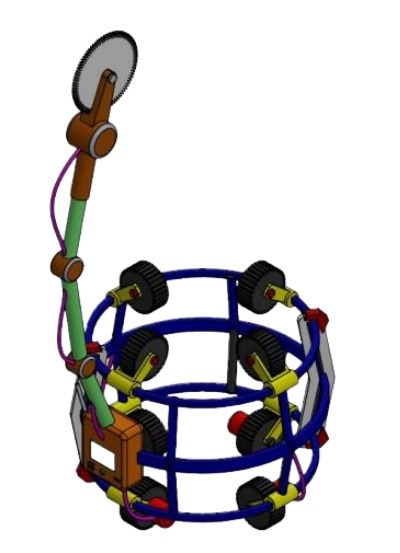
Prototype
-
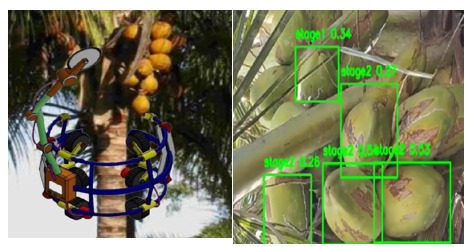
Climbing & AI Detection
-
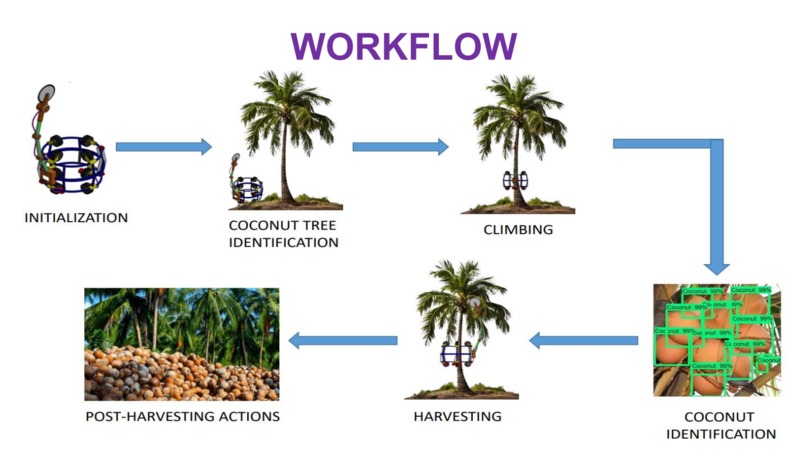
Workflow
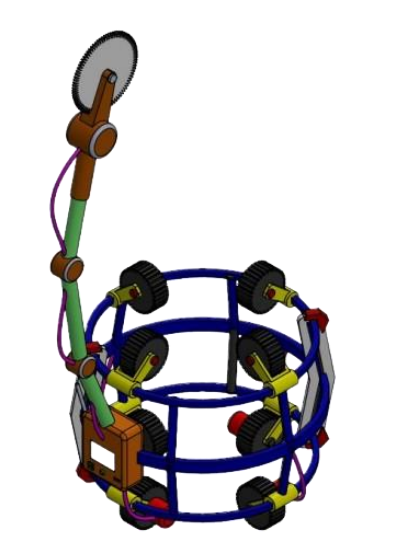
Inspiration
Coconut harvesting is a labor-intensive, risky job, especially in regions where skilled climbers are becoming scarce. Inspired by the need to make this work safer, faster, and more accessible, we envisioned an AI-powered robot capable of climbing coconut trees and harvesting coconuts efficiently. Our goal was to combine robotics and AI to assist farmers, increase yield, and reduce human risk.
What it does
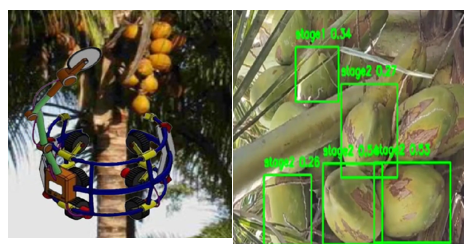
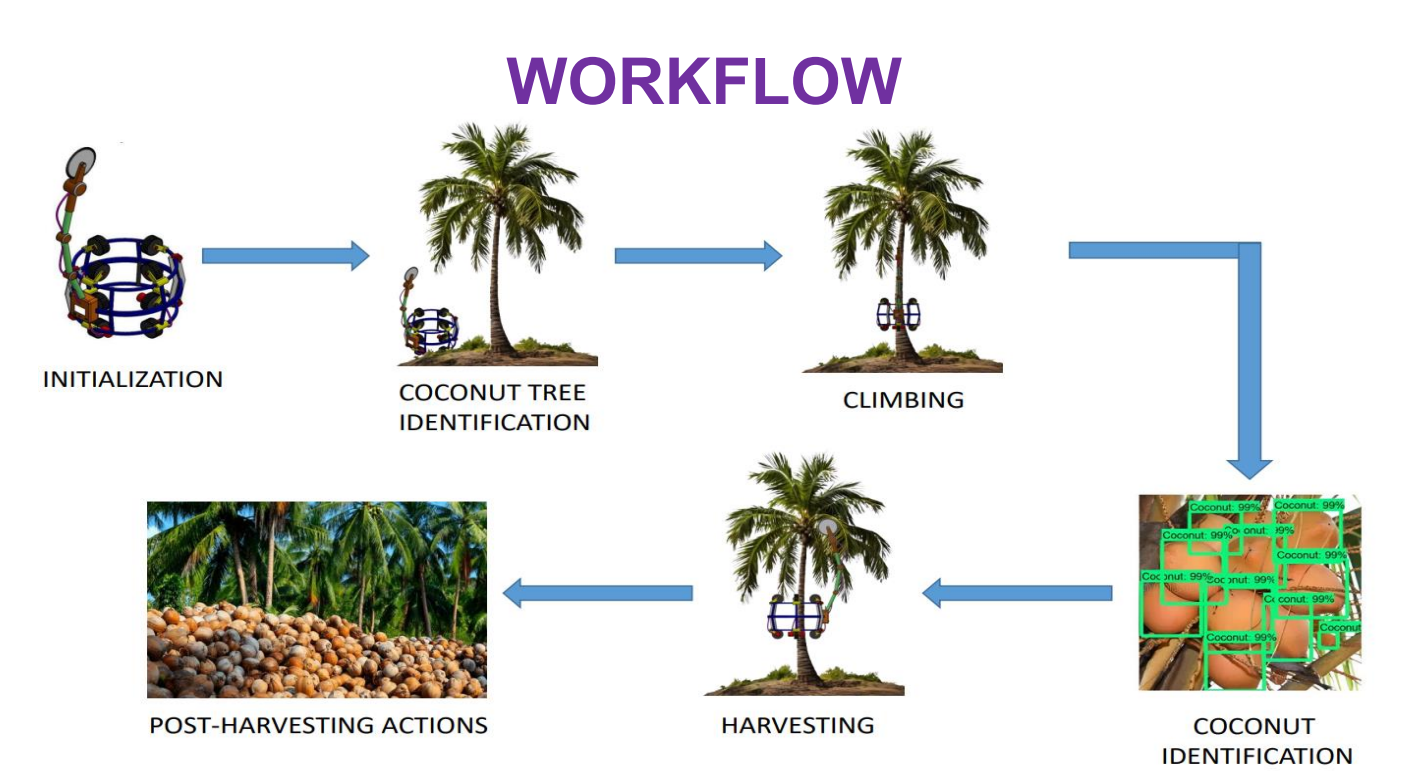
The robot autonomously climbs coconut trees using a gripping and motorized system. Once it reaches the canopy, the AI system identifies mature coconuts using computer vision. It then carefully cuts the selected coconuts and safely lowers them using a controlled mechanism, minimizing damage. The robot can also be manually controlled via a mobile app for specific tasks if needed.
How we built it
We designed a lightweight but sturdy mechanical structure with flexible arms for gripping the tree trunk. We integrated motors controlled by a microcontroller such as Raspberry Pi for movement. The AI-powered coconut detection system was trained using a deep learning model YOLOv8 model on images of coconuts. We used Python for AI and C++/Embedded C for low-level motor control, alongside a custom-built mobile app for manual overrides and live video streaming.
Challenges we ran into
- Designing a climbing mechanism that could adapt to trees of different thicknesses and textures.
- Training an AI model that could accurately detect mature coconuts in different lighting and environmental conditions.
- Balancing the weight of the robot to avoid damaging the tree or falling.
- Power management: ensuring that the robot could operate for a reasonable time without being too heavy with batteries.
Accomplishments that we're proud of
- Successfully designing a prototype that could climb and descend coconut trees reliably.
- Achieving high-accuracy coconut detection with our AI model, even in varying outdoor conditions.
- Creating a robust safety mechanism to prevent the robot from falling in case of power failure.
- Building a user-friendly mobile app for monitoring and manual intervention.
What we learned
- Practical aspects of robotic design for outdoor, uneven environments.
- Advanced AI training techniques for object detection with limited datasets.
- The importance of modular design: being able to swap out parts like arms or cameras made testing much faster.
- Effective teamwork across hardware, software, and AI integration.
What's next for COCONUT TREE CLIMBING AND HARVESTING ROBOT WITH AI-POWERED
- Adding solar charging to extend operational time in the field.
- Improving the AI to also detect pests or diseases in the coconut trees.
- Enhancing the mobility system to climb even slanted or curved trees.
- Exploring commercialization options to help farmers at scale with affordable units.

Log in or sign up for Devpost to join the conversation.