-
-
CockFight
-
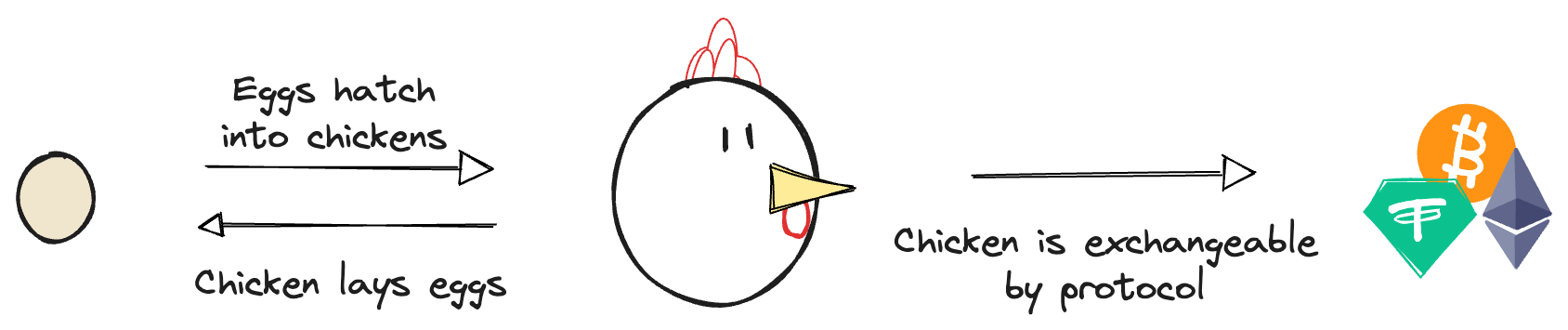
Chicken & Egg Concept
-
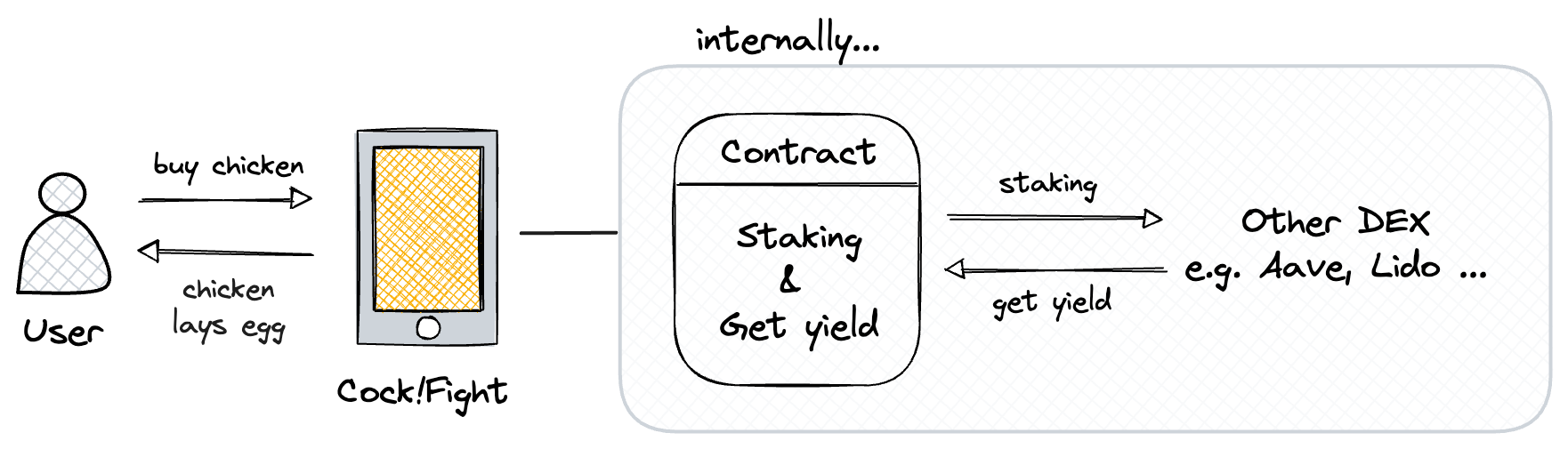
Contract Architecture in Staking System
-
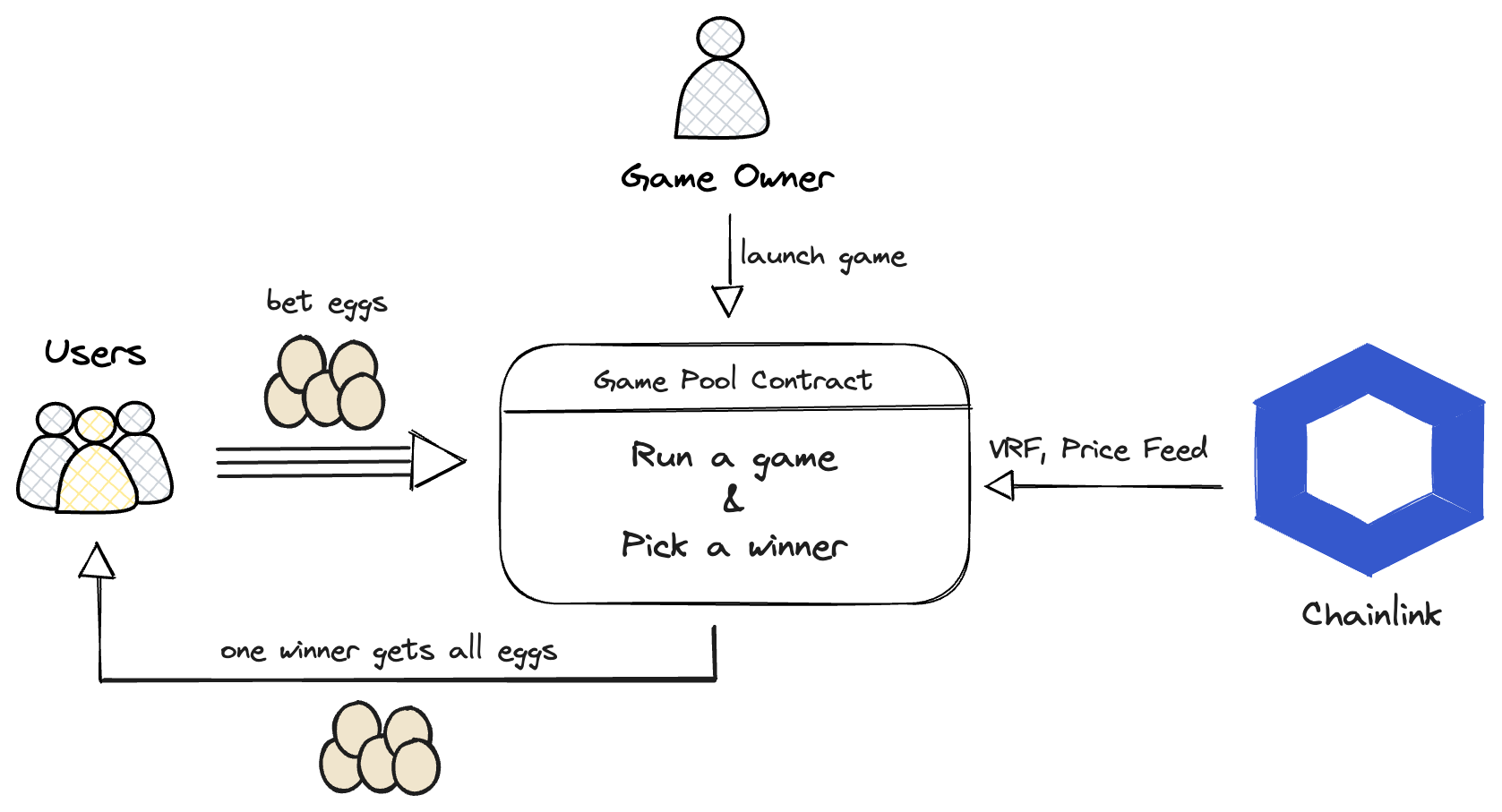
Contract Architecture in Game System
What it does
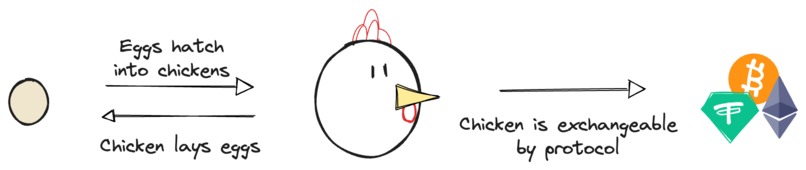
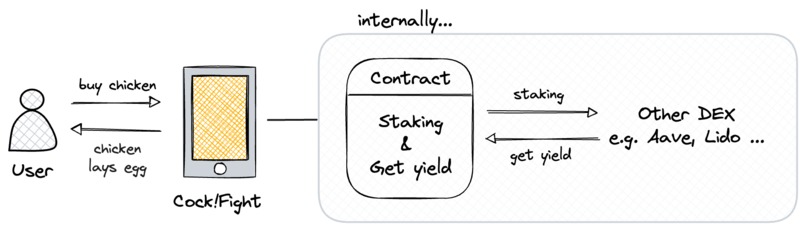
CockFight is a gamified staking service where users engage in games using the yields obtained after staking. And the winner of the game has the exclusive opportunity to monopolize the yield rewards. Users purchase “Chickens” to participate in cockfight concept game(the protocol internally stakes the user’s tokens). Users holding Chickens can receive staking yield rewards distributed in the form of “Egg”.
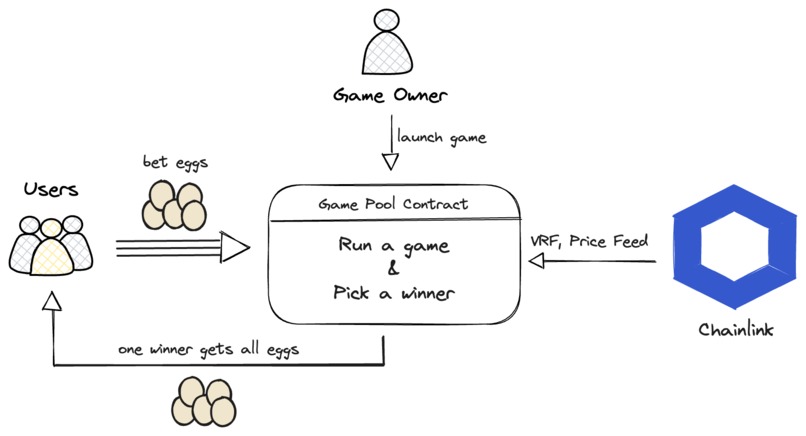
Participants can wager their eggs in the game, and more egg bets result in higher chances of winning. The winner of the game receives all the eggs bet on that game as a prize. Once a certain quantity of eggs is reached, they hatch into Chicken. After hatching, users can resell (unstake) them in the protocol to realize actual profits.
Inspiration
Most of the existing defi protocols borrow the financial format of the traditional financial sector to develop products by focusing on asset deposits, interest compensation for them, and loan product ideas. In response, our team devised a way to leverage game elements to provide interesting elements in defi users' asset management and to increase their choice in asset management methods.
In line with this motivation, we're devising a protocol that allows users to enjoy games using yields from deposited assets in collaboration with existing yield DeFi platforms. CockFight aims to improve following issues found in existing DeFi and gaming services, offering solutions for additional value-add.
The issues observed in similar existing protocols include:
- Users staking their assets as collateral for high-risk games, leading to an extremely speculative environment.
- Lack of UI transparency and visibility in the gaming service mechanisms, potentially causing trust issues among users due to insufficient visibility into game mechanics or winning probabilities.
- Complex user experience, especially for Web2 users, due to terminology and UI hurdles in the process of participating in games through asset deposits.
Our team can offer the following solutions:
- Separating “asset staking” from “game betting” and structuring the game prize pool solely from interest on asset deposits.
- By connecting with established yield DeFi platforms, user can get seamless access to additional financial opportunities.
- User can earn more interest with longer staking periods, so the game duration is also set for the long term enabling users to bet larger amounts and enjoy larget game reward pool.
- Providing clear explanations of game services, winning mechanisms, and a dashboard service illustrating the transparent process, thereby instilling user trust in utilizing the service.
- User-friendly staking service with cockfighting concept using the eggs(yield) from user's chickens(can get when user staking)
How we built it
While building the service based on this plan, we encountered certain technological needs, which we resolved using high-quality services offered by Chainlink. Specifically, our team utilized Chainlink services in the following areas:
- Addressing the absence of a transparent and flawless winning system leveraging blockchain technology: Resolved using VRF (Verifiable Random Function)
- In Cock!Fight, as users bet more eggs in a game, the probability of becoming the winner in that game increases.
- However, it's crucial to note that despite the rising probability, the actual determination of the winner should be entirely random. This process must be transparently disclosed to users.
- To address this, we utilize Chainlink's VRF (Verifiable Random Function) feature to establish a transparent and random winner selection system.
- Onboarding issues for web2 data required by various game services: Resolved using Oracle services
- Beyond a simple game, we are building a game that leverages information existing in the web2 world
- For instance, a game where users predict the prices of ERC20 tokens traded in the market.
- We use Chainlink's Oracle service (especially, Price Feed) to onboard price information from the web2 to the blockchain in a decentralized method.

Log in or sign up for Devpost to join the conversation.