-

CoBuyHOU: prototype interface and core workflow.
-

CoBuyHOU: prototype interface and core workflow.
-
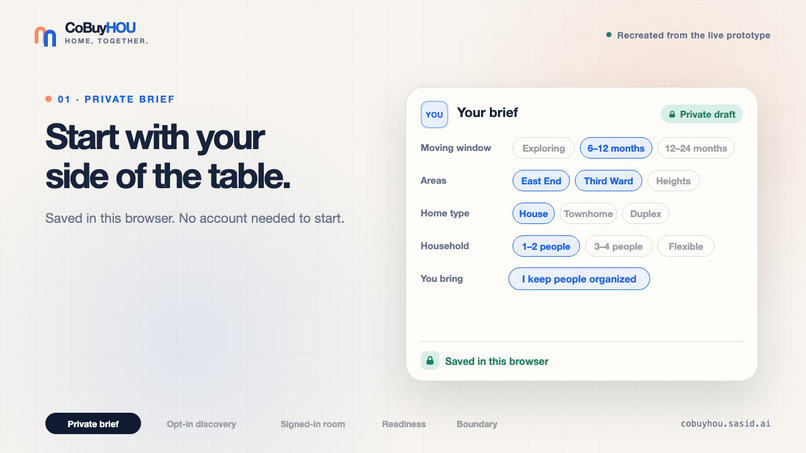
CoBuyHOU: product demo cover.
-
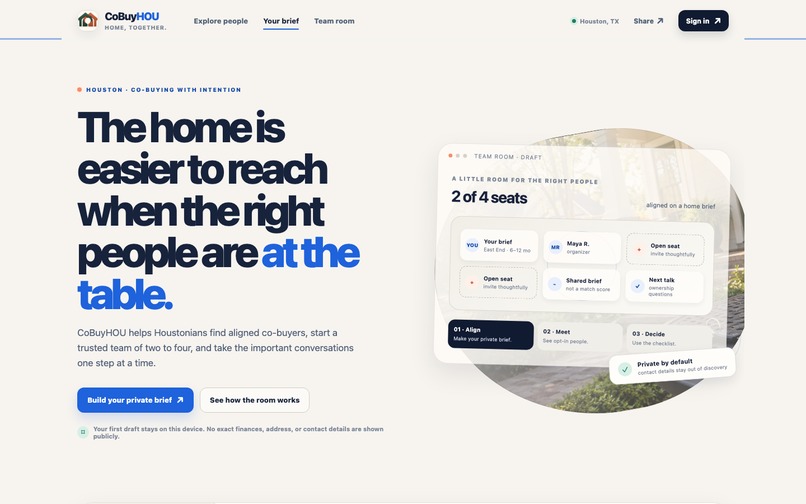
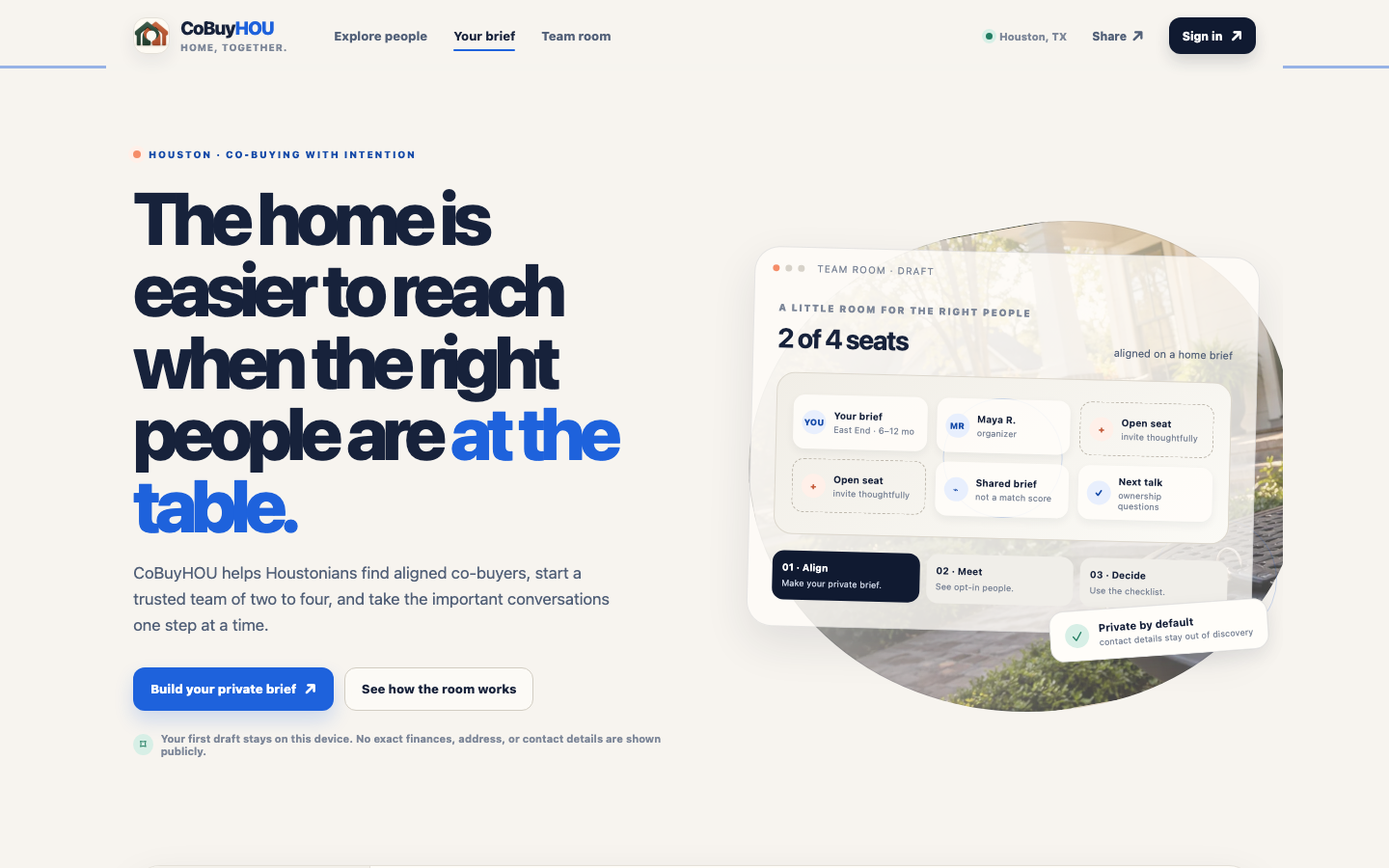
CoBuyHOU current live app interface (captured 2026-09-27 19:40 UTC).


Inspiration
The co-buying challenge was about helping prospective buyers find a small, trusted team. CoBuyHOU focuses on the conversations and readiness questions that should happen before anyone makes a high-stakes financial decision.
What it does
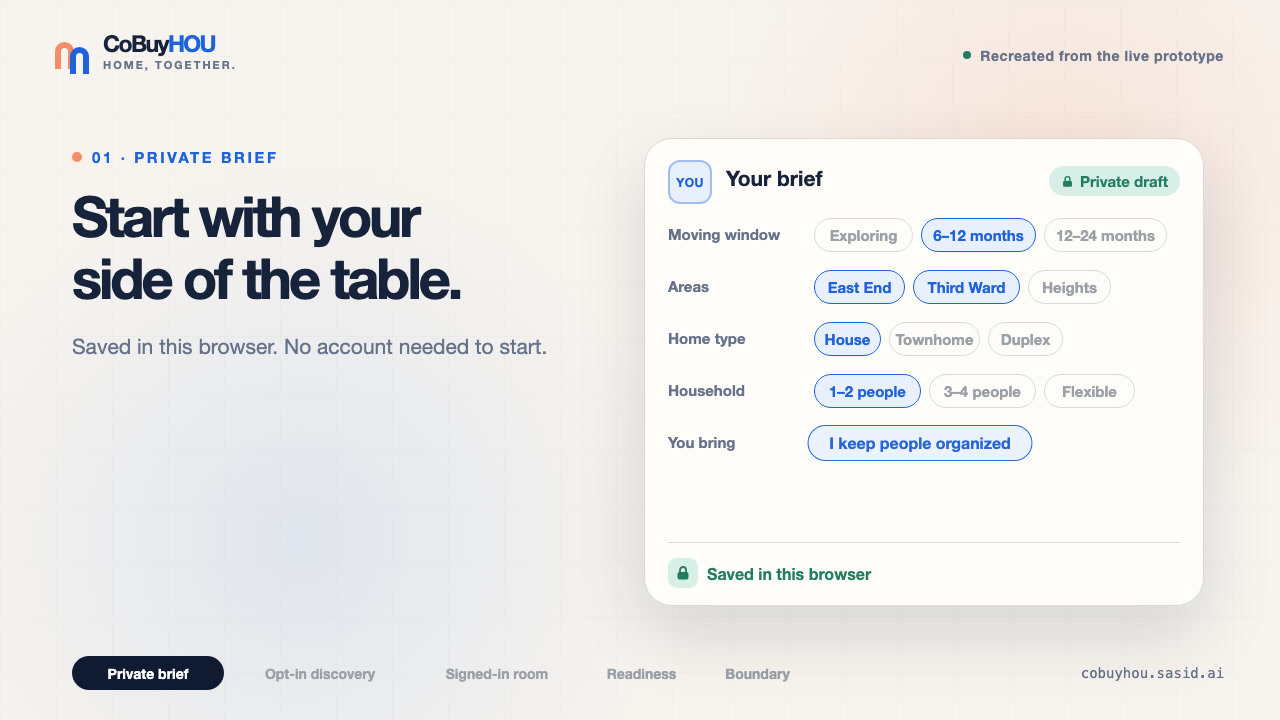
A visitor can build a private, browser-local brief without an account, opt into coarse discovery, and explore a planning room for a two-to-four-person group. The room provides a readiness checklist and shared planning prompts while keeping exact addresses, contact details, income, debt, budgets, and documents out of public profiles.
How I built it
The prototype uses Vite and vanilla browser modules with an Express and TypeScript API, PostgreSQL and Drizzle ORM, Google basic identity and server sessions for shared rooms, and local-first browser storage for the initial brief. Discovery cards in the demo are explicitly fictional.
Challenges
The product has to invite collaboration without exposing sensitive financial information or implying that a group is legally or financially ready. The multi-account invitation path is kept clearly separate from a single-browser demo.
Accomplishments
The prototype makes privacy the default, separates discovery from a signed-in planning room, encodes a readiness checklist, and labels fictional examples. The pitch and demo explain the boundary instead of promising affordability, a mortgage, equity, or a successful purchase.
What I learned
For a high-stakes workflow, the first useful artifact can be a shared question list rather than a recommendation. Privacy choices should be visible before a person decides whether to discover or invite.
What's next
The next step is research with prospective co-buyers plus qualified legal, lending, and housing professionals to test the checklist and safe handoffs. A real pilot would need clear eligibility, document, privacy, and dispute policies before handling more sensitive data.
Explore
Built With
- browser-local-storage
- drizzle-orm
- express.js
- google-identity-services
- node.js-22
- postgresql
- typescript
- vanilla-javascript-and-es-modules
- vite


Log in or sign up for Devpost to join the conversation.