Inspiration
Cobertura Clara started with a real conversation at a Walgreens pharmacy.
I asked a pharmacy worker what Spanish-speaking patients tend to struggle with when they come to the counter. Her answer surprised me: the biggest issue often isn't medication instructions — it's understanding insurance.
People may arrive with the wrong card, may not understand what their plan information means, and often need someone to translate.
That gave me a very specific problem to solve:
How can we make the information already printed on an insurance card easier to understand at the moment someone needs it?
What it does
Cobertura Clara is a bilingual insurance-card guide for patients and caregivers.
A user can:
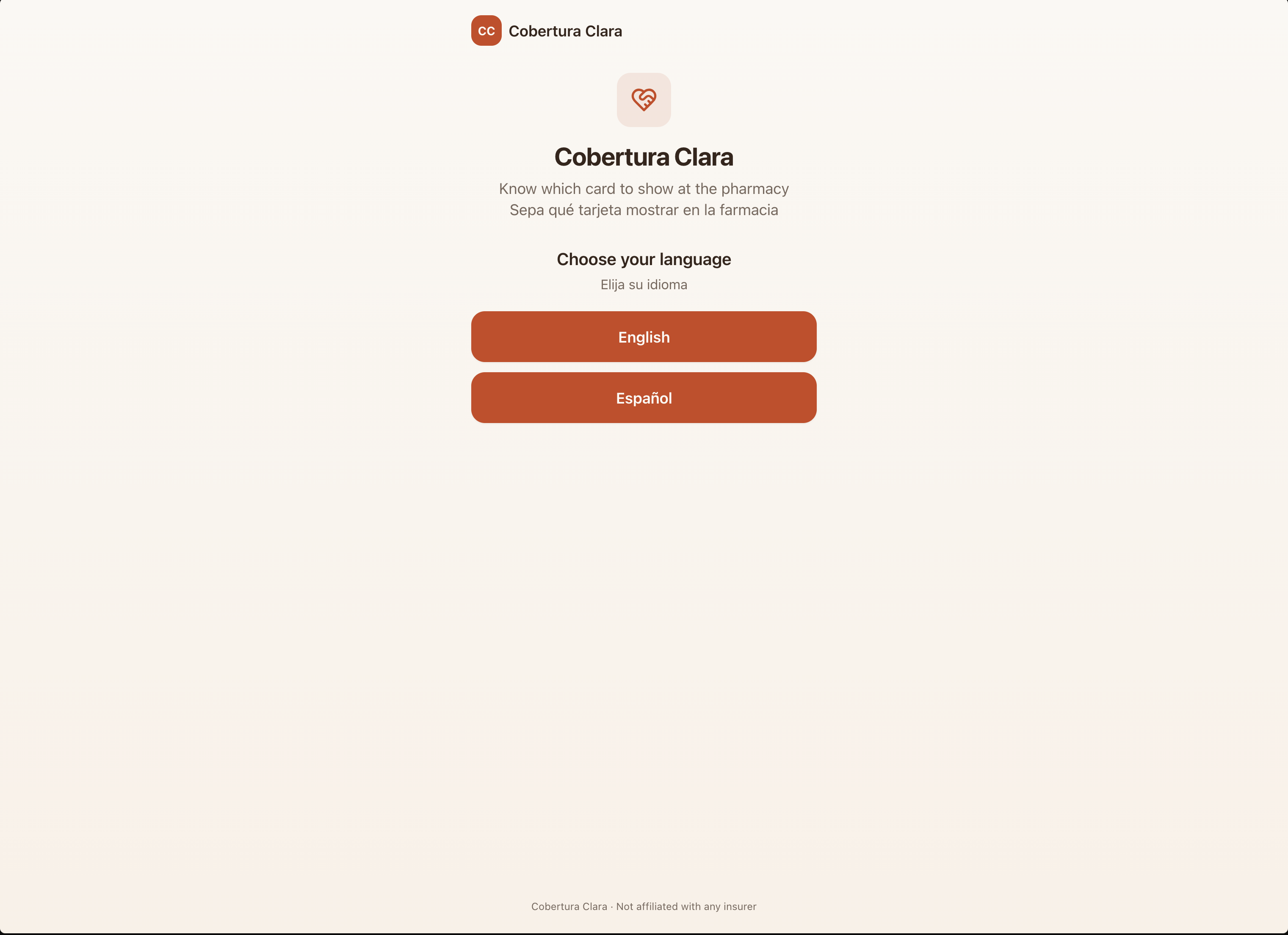
- Choose English or Spanish.
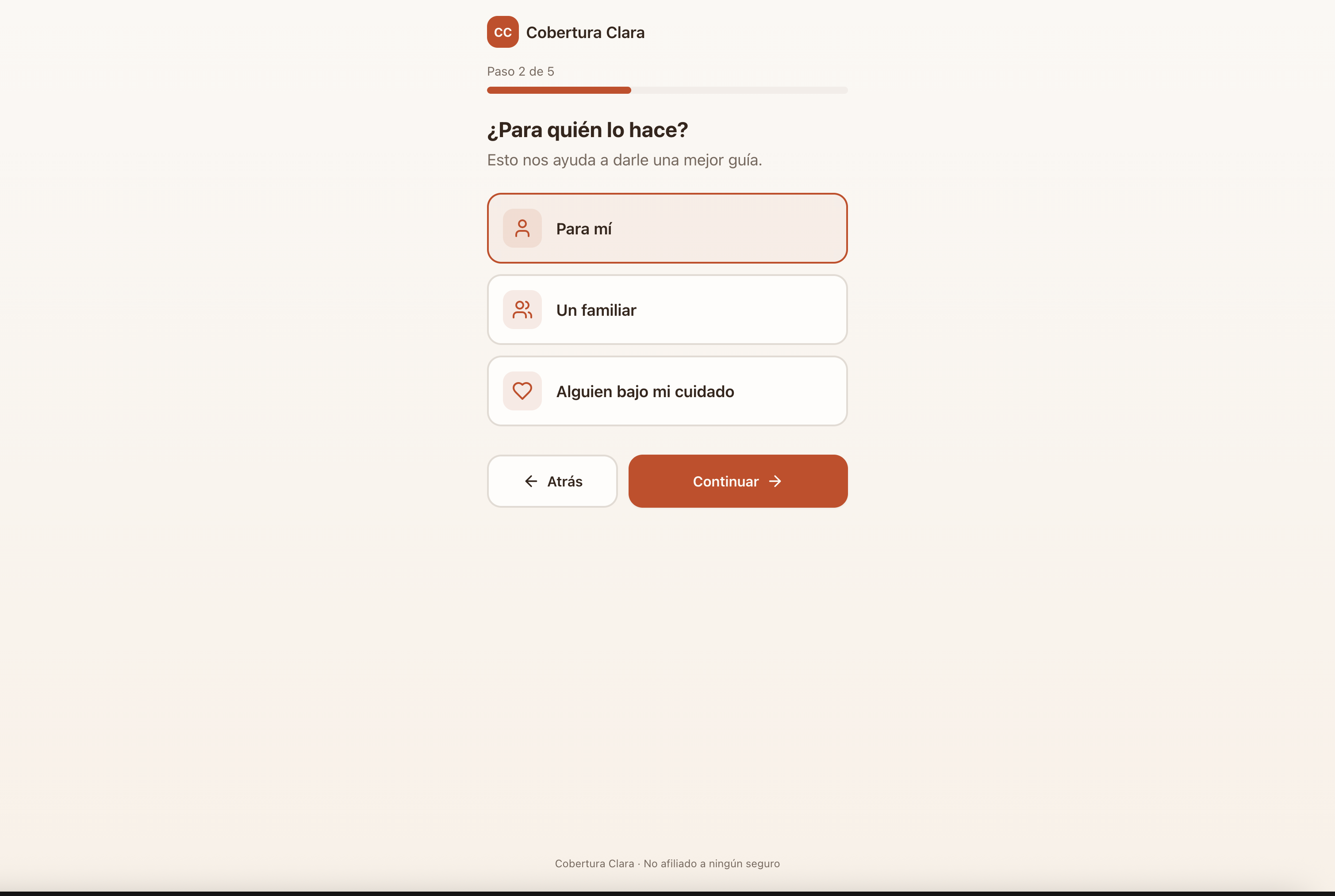
- Tell us whether they are helping themselves, a family member, or someone they care for.
- Photograph or upload an insurance card.
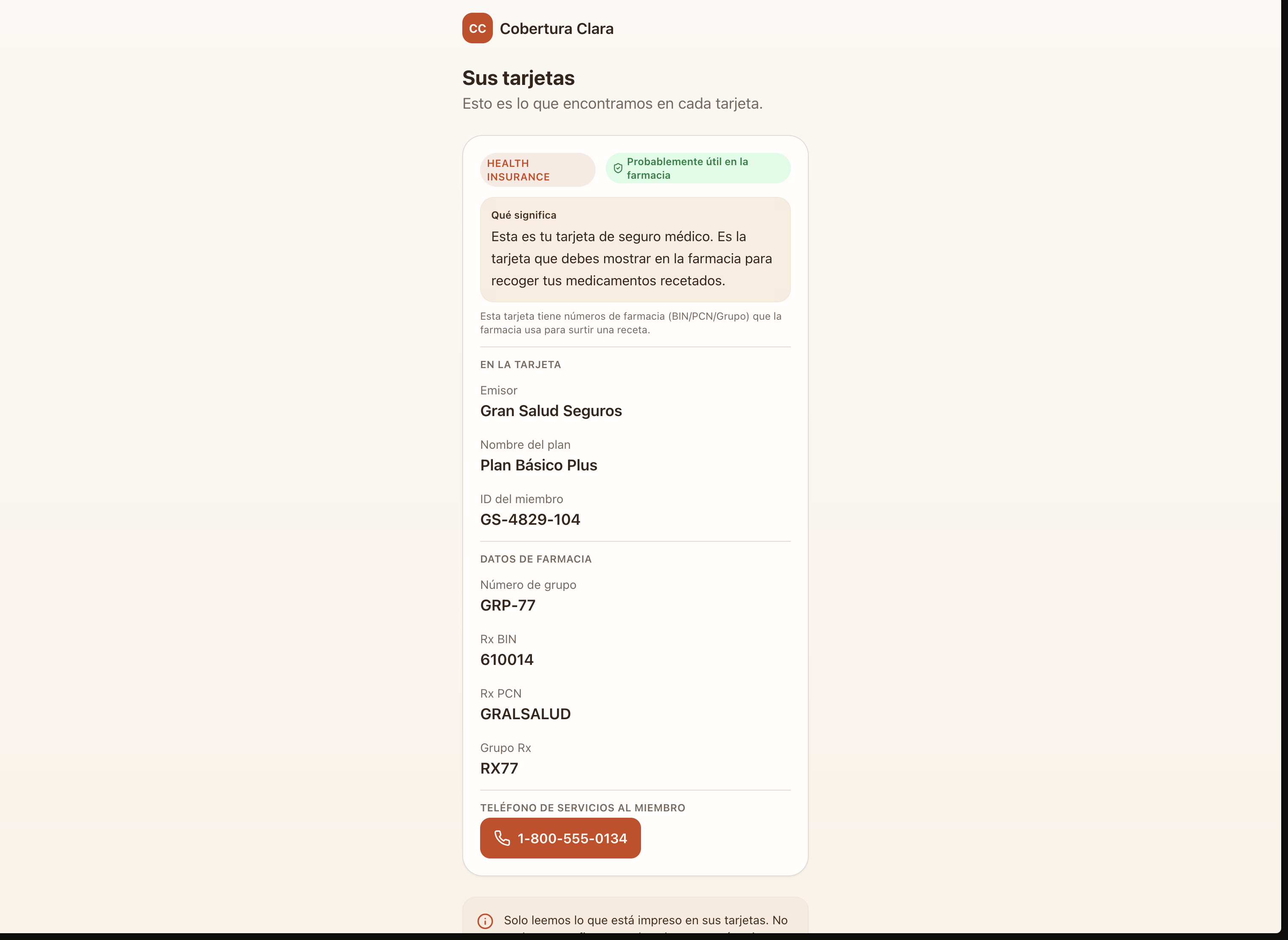
- Receive a simple explanation of what is printed on the card.
The app extracts information such as:
- Insurance/card type
- Issuer and plan name
- Member ID
- RxBIN
- RxPCN
- RxGroup
- Member Services phone number
If pharmacy information is present, Cobertura Clara can indicate that the card is probably useful at the pharmacy.
Just as importantly, the system is designed not to overclaim. It does not verify active coverage, guarantee that a medication is covered, or invent information that is missing from the card.
How we built it
Cobertura Clara is built and deployed with Base44.
The core workflow is:
Private card upload → Base44 server function → InvokeLLM multimodal analysis → strict structured JSON → bilingual Base44 UI
Base44's AI analyzes the uploaded card image and returns structured fields rather than free-form text. Missing or unreadable information stays missing instead of being guessed.
The application is mobile-first, requires no login, and supports both English and Spanish.
Challenges
The biggest challenge was defining what the AI should not do.
An insurance card alone cannot prove that someone's coverage is currently active or that a specific prescription will be covered. We intentionally constrained the product to explaining information visible on the card rather than pretending to be an eligibility system.
We also designed the AI response around a strict schema so that uncertain or missing information can be displayed truthfully.
What we're proud of
In a short build window, we went from a real-world pharmacy conversation to a working, publicly deployed product.
The complete path works on mobile:
Spanish → patient/caregiver → prescription pickup → card photo → AI extraction → plain-language results
What we learned
The most important lesson was that language access is not only about translation.
Healthcare systems contain IDs, benefit cards, pharmacy codes, plan terminology, and other information that can be difficult to navigate even when the words themselves are translated.
AI can help most when its role is narrow, transparent, and grounded in the information actually provided.
What's next
Next, Cobertura Clara could:
- Explain common insurance terminology in plain language
- Support additional medical, pharmacy, dental, and benefit card types
- Help users compare multiple cards
- Connect users to verified enrollment and coverage resources
- Provide additional accessibility options for people with different literacy needs
Cobertura Clara — less confusion at the counter, in the language you understand.
Built With
- base44
- react
