-
-
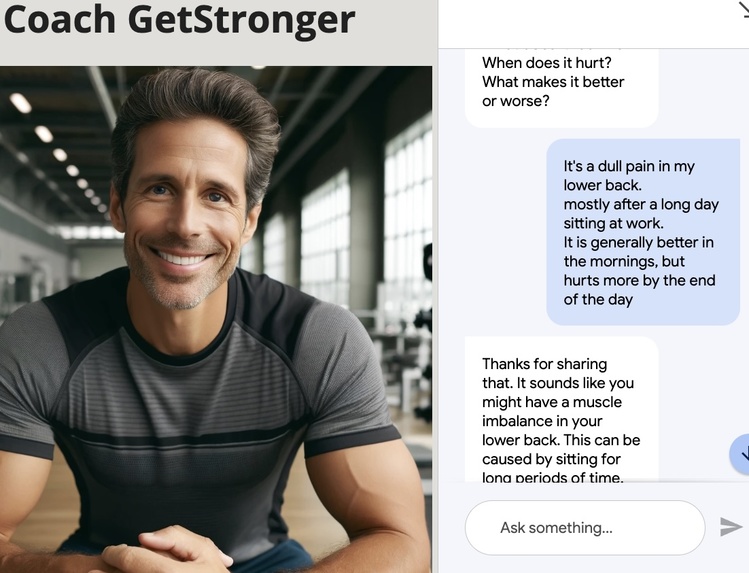
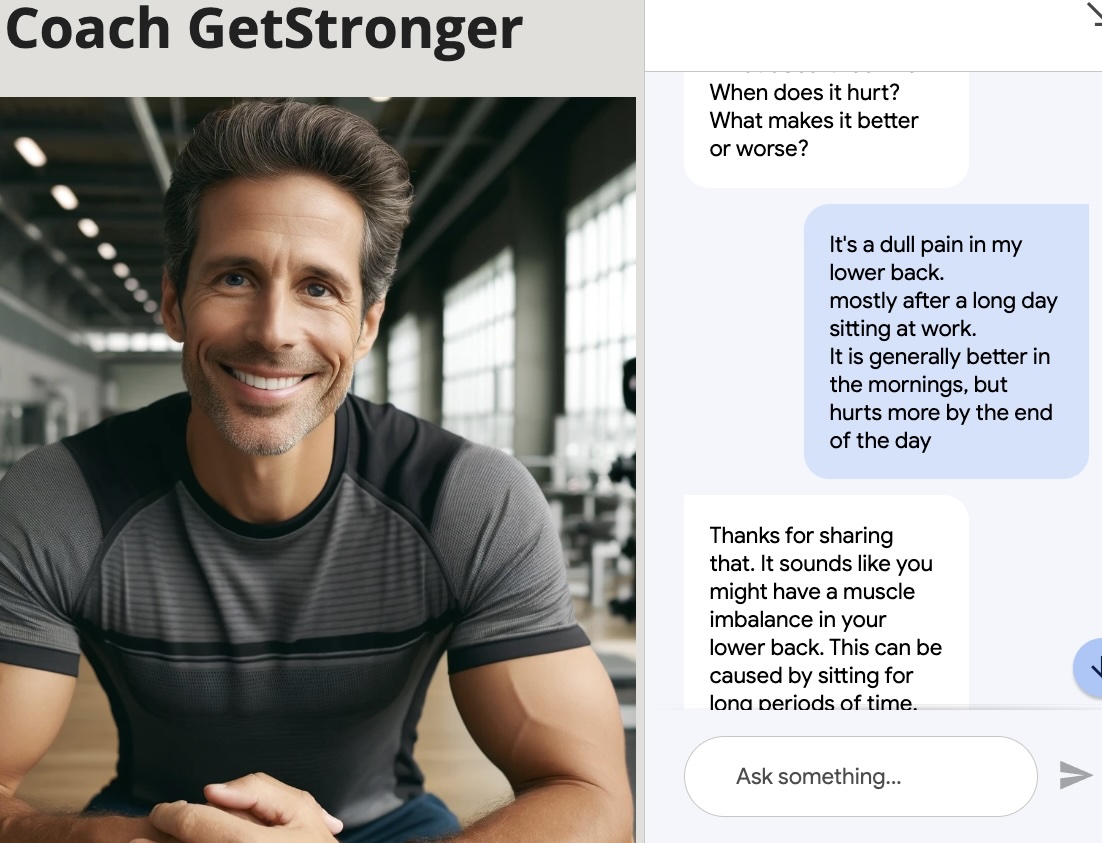
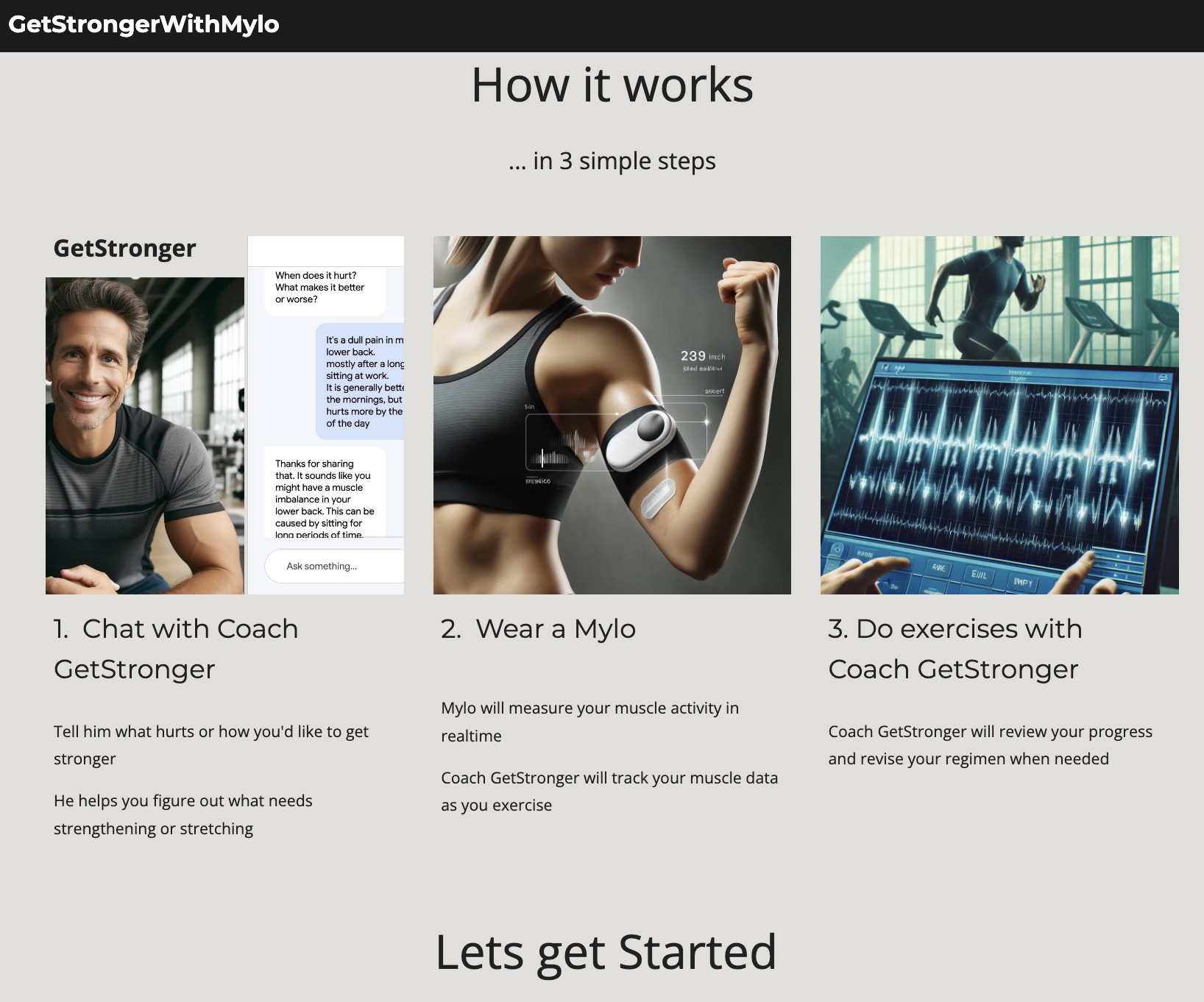
Coach GetStronger is with you for the whole journey - evaluates you, recommends exercises, reviews progress and makes adjustments as needed
-
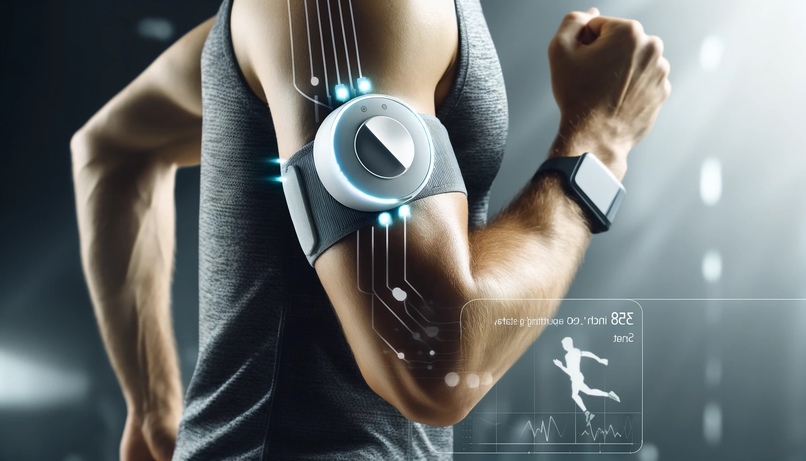
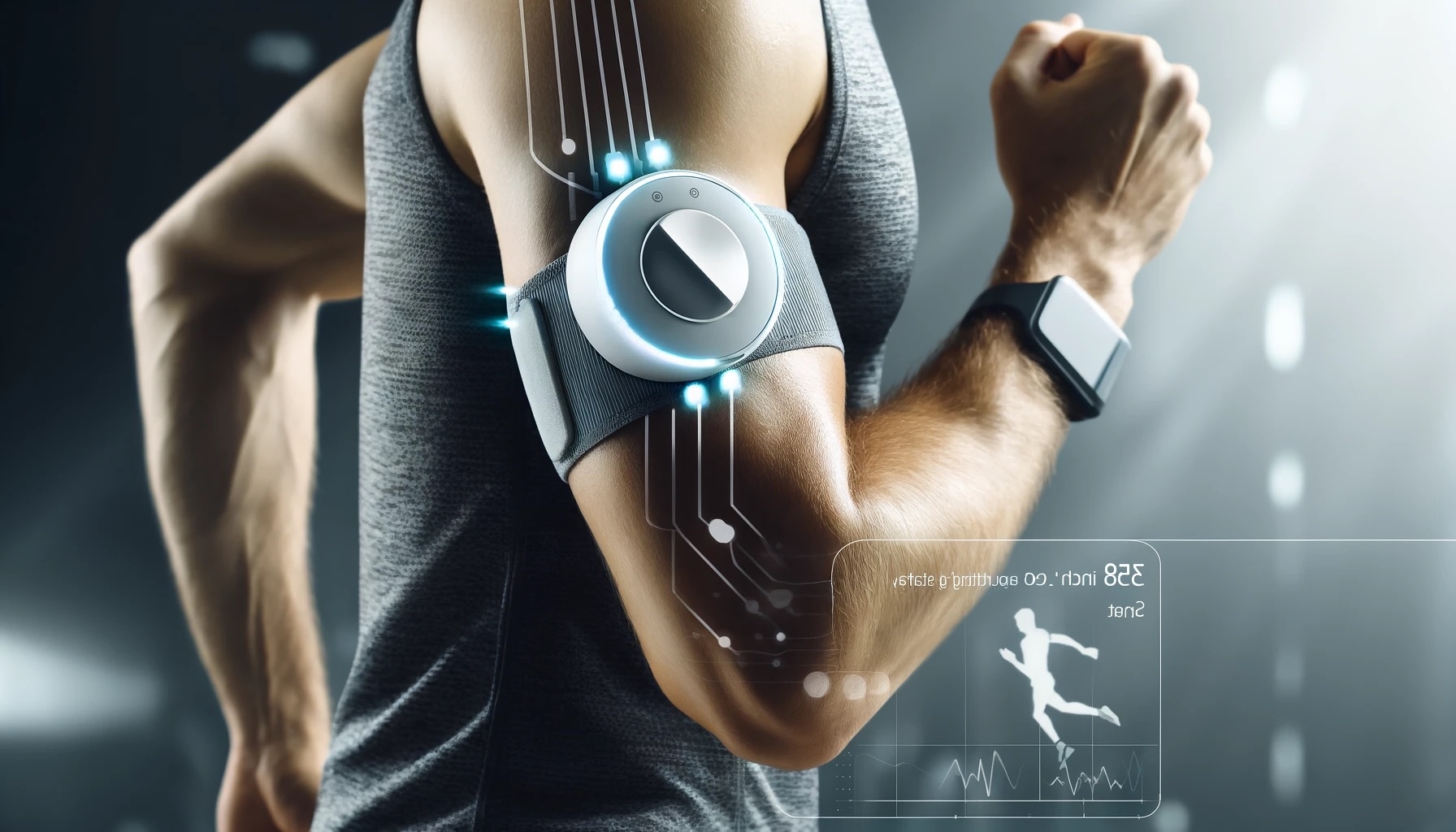
Mylo is a muscle sensor that captures your muscle power and fatigue as you do your exercises so your progress can be objectively tracked
-

It is especially useful when recovering from an injury to know if you are engaging the right muscle groups and have a coach guide you
-
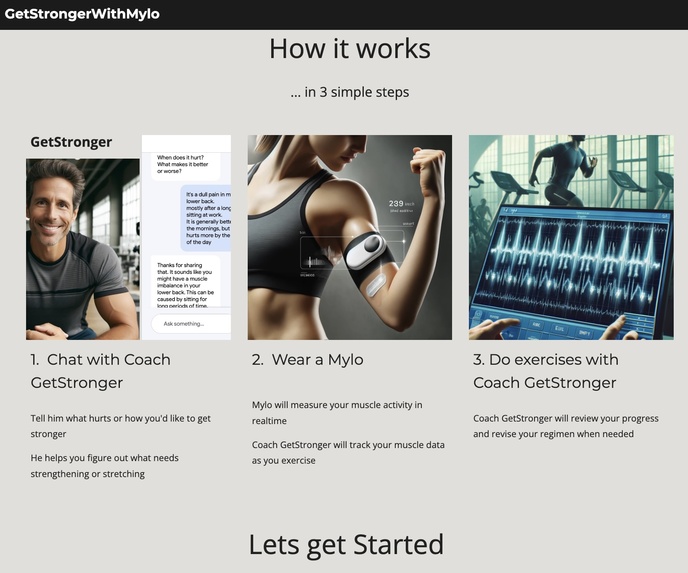
Check out our website that lets you get started https://sites.google.com/view/getstrongerwithmylo/home
-
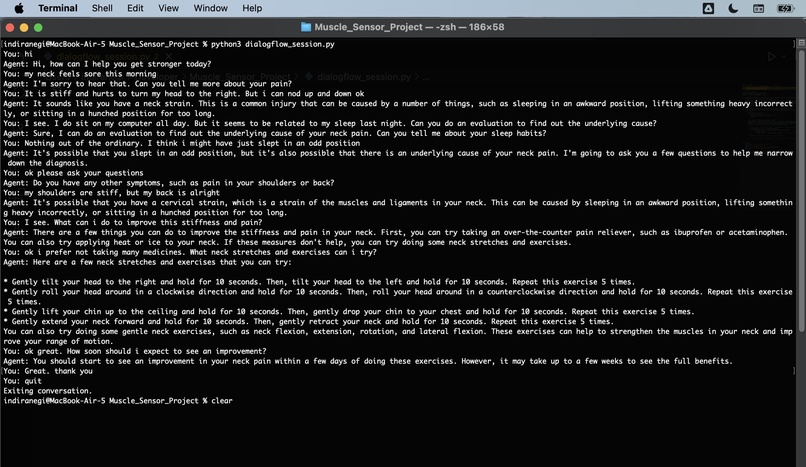
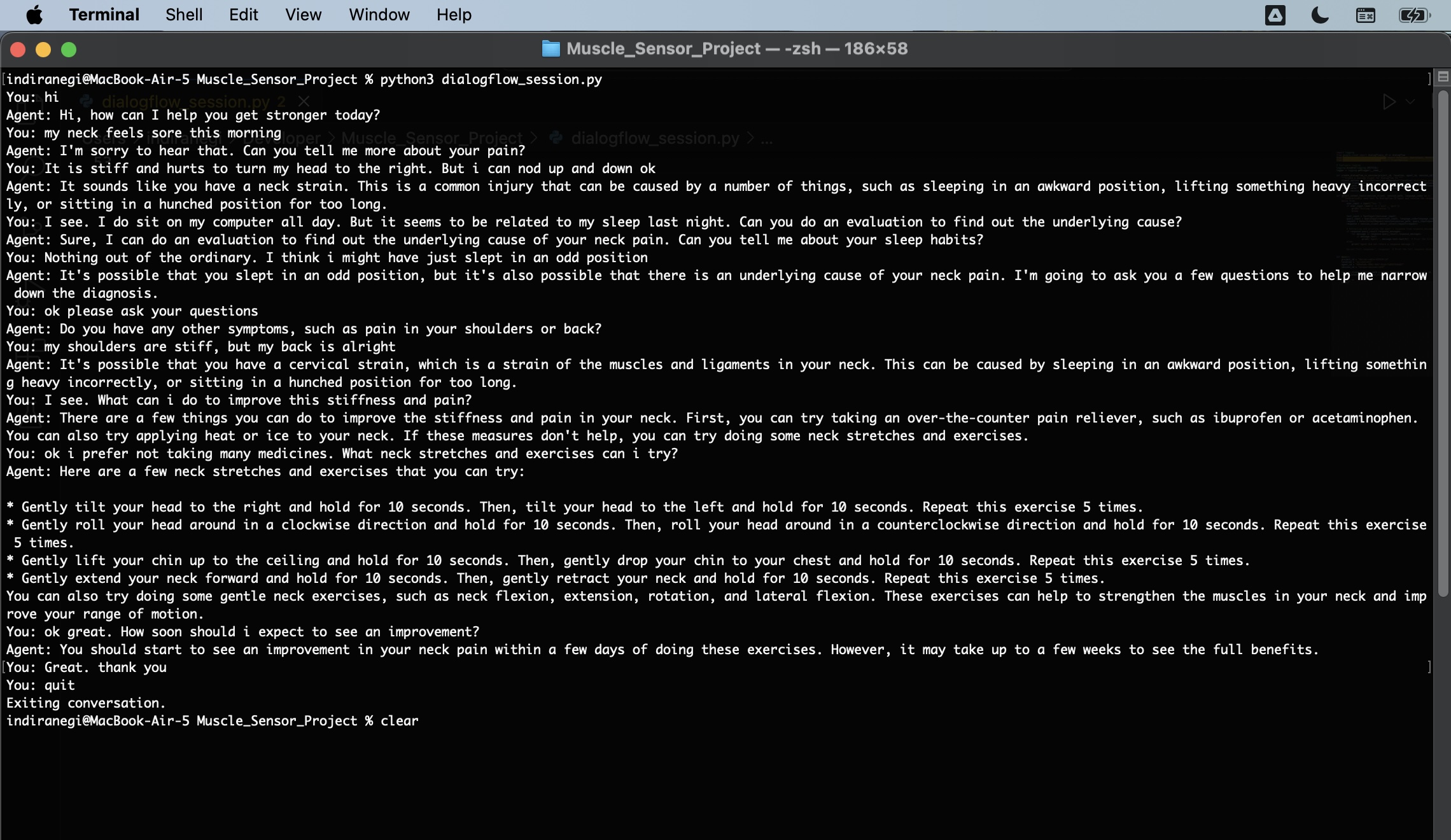
This is a screenshot of using the agent through test script. The test script is also shared
-
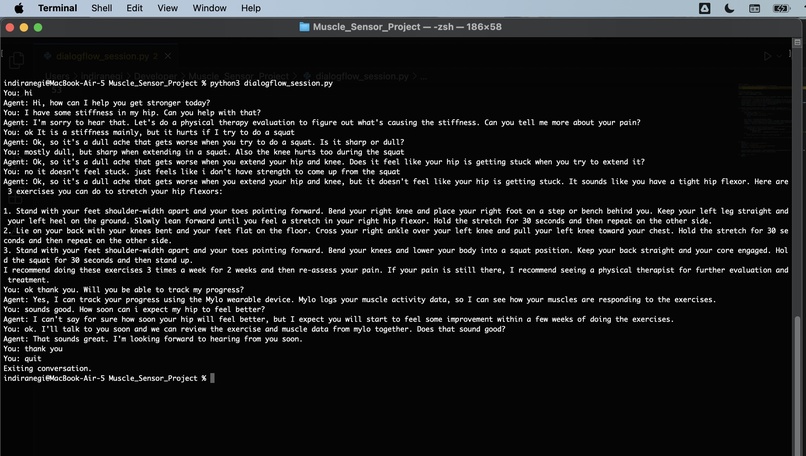
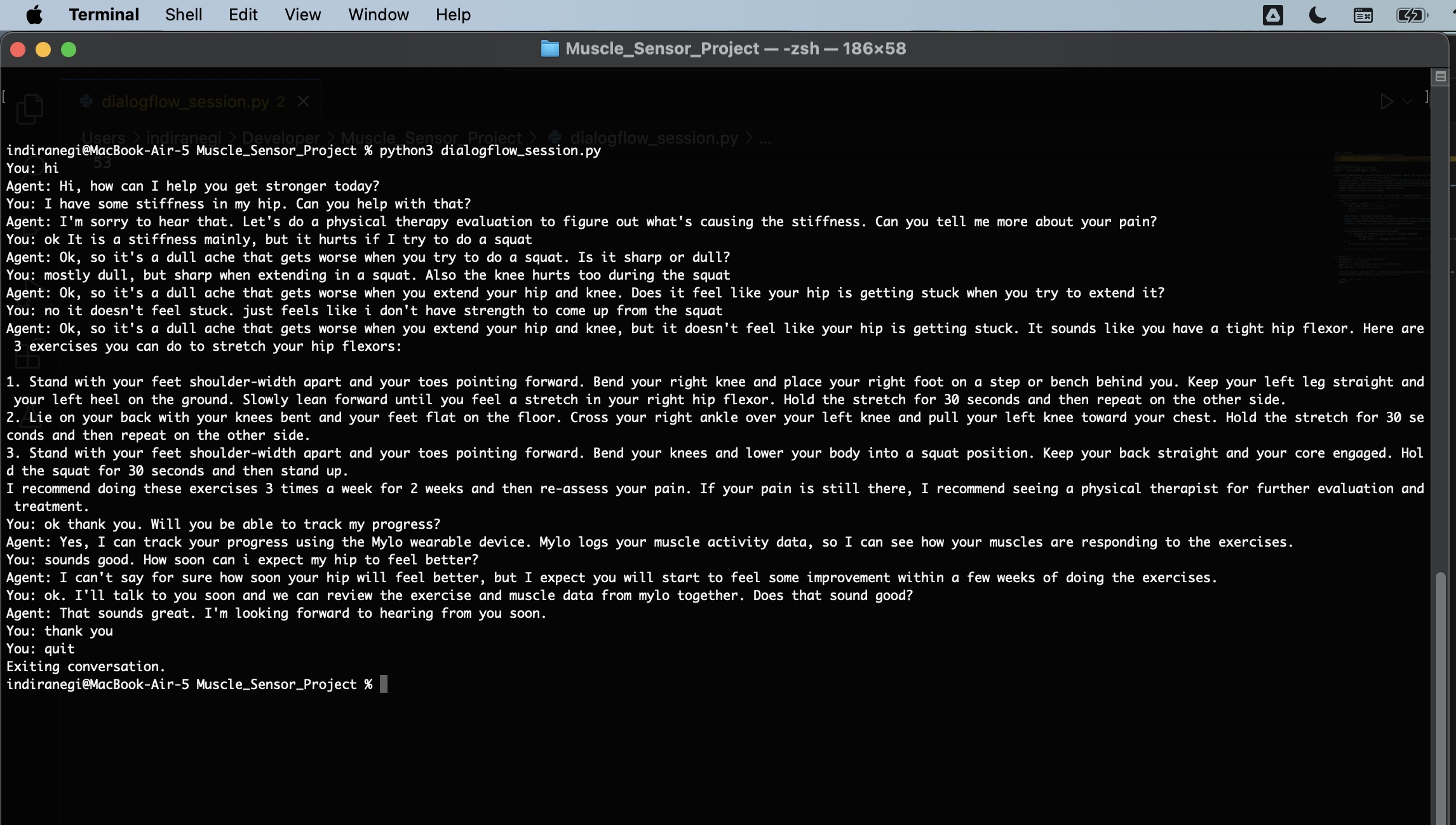
This is a another screenshot of using the agent through test script. The test script is also shared
-
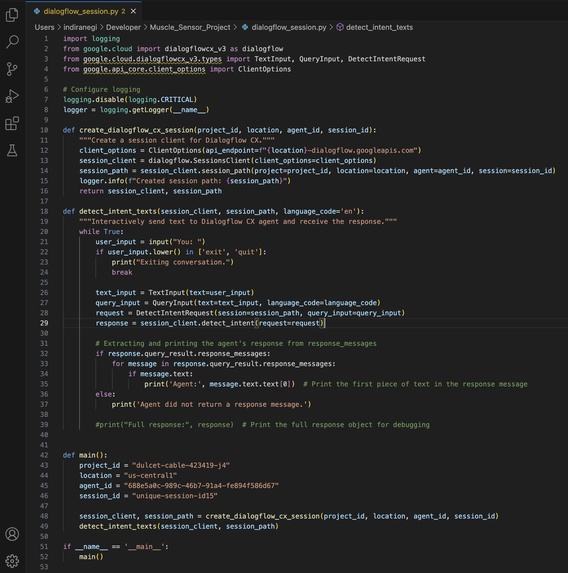
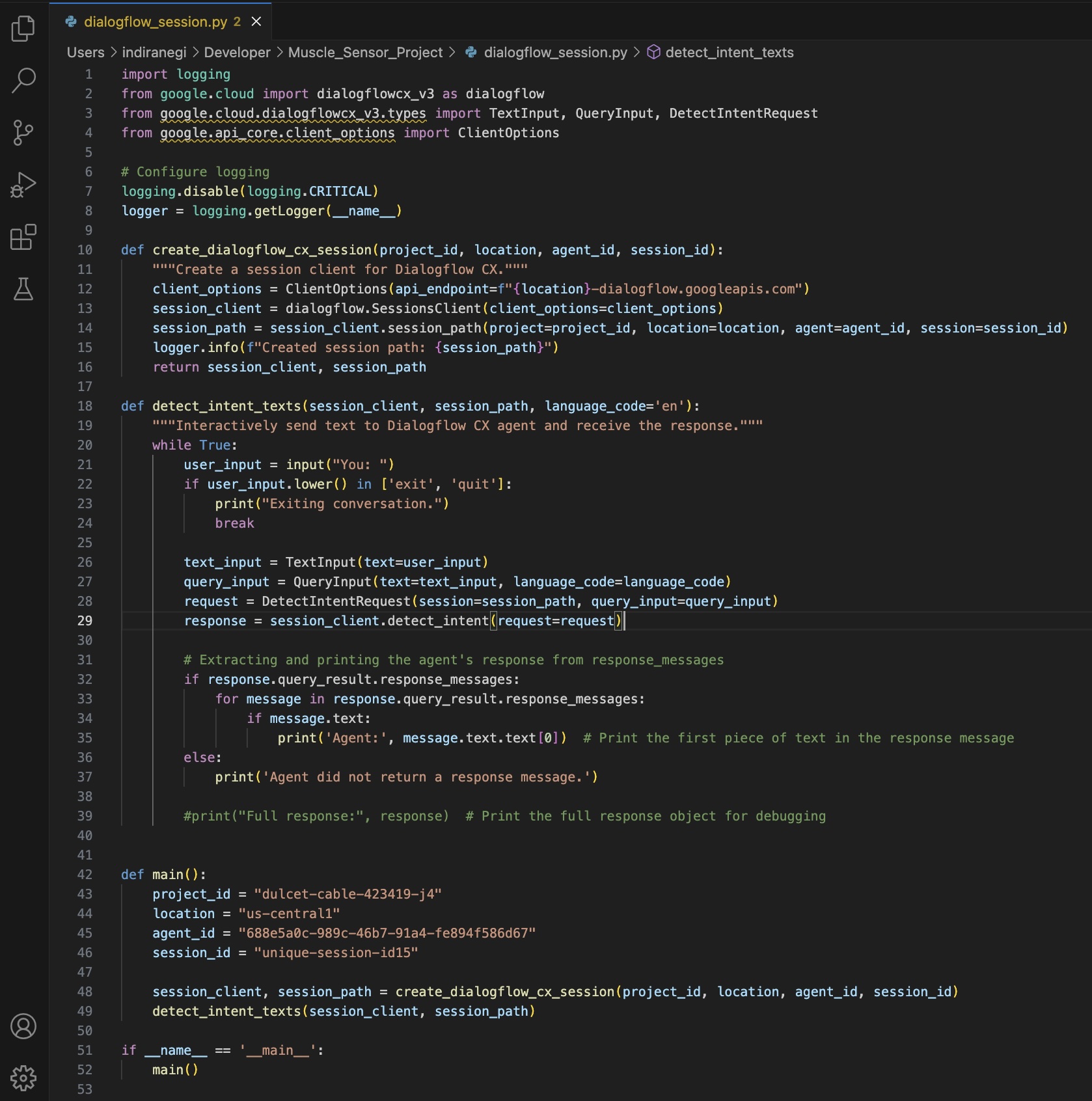
screenshot of the test script. also shared in the submission
Inspiration
My inspiration came from a personal experience with knee pain that turned into an unexpected revelation. I recently started having knee pain. I assumed it was just a part of getting older, a gradual decline into less mobility. But at a routine visit to my doctor she recommended physiotherapy. Skeptical, I didn’t expect much. Yet, the physiotherapist pinpointed the problem: my glutes had weakened from compensating for an old ankle injury, affecting my knee. They prescribed hip abductor exercises, and to my utter surprise, within four weeks, not only did my knee pain vanish, but I was also back to doing pistol squats! This was more than just recovery; it felt like I had rolled back the years.
The whole experience was eye-opening! It made me realize how many of us might be resigning ourselves to physical decline without exploring solutions like physiotherapy. That revelation—how a targeted approach could so dramatically restore my mobility—sparked the idea to help others rediscover their strength and mobility, just as I had.
What it does
My project, named 'Get Stronger with Mylo' has an AI agent I playfully call Coach GetStronger. This coach is trained on extensive physiotherapy textbooks, covering the entire patient management process from examination and evaluation to diagnosis and treatment planning. The other part of the solution is a wearable muscle sensor named Mylo. As users go through their prescribed exercises, Mylo collects real-time data on muscle activity. This data includes muscle power and fatigue levels during exercises, offering invaluable insights. Coach GetStronger uses this data to tailor and adjust exercise programs dynamically, ensuring that each regimen is perfectly aligned with the user's progress and needs. It's like having a physiotherapist with you every step of the way, but powered by AI and wearable tech, making the journey towards improved mobility and strength not just personalized but also deeply engaging.
How I built it
In building 'Get Stronger with Mylo' I started with the EMG sensor, Mylo, utilizing my deep background in health sensors and medical devices. Although I have a strong grasp of EMG technology, perfecting the signal processing to accurately capture muscle power and distinguish muscle types is still a work in progress.
On the software side, I developed an AI agent named Coach GetStronger. My goal was to create an exercise coach powered by AI. To do this, I set up an agent builder console where I defined the agent’s goals and integrated it with key resources: physiotherapy textbooks for foundational knowledge, a dynamic list of exercises, and a tool for accessing real-time EMG data from users. This setup enables Coach GetStronger to adapt exercise plans in response to user progress.
To make the project accessible, I embedded the AI agent into a user-friendly website using Google Vertex AI agent CX dialog builder.
For Coach GetStronger’s persona, I crafted a positive, upbeat, and slightly witty 45-year-old, aiming to put users in a good mental space as they work on their physical improvement.
Challenges I ran into
One of the first major challenges was dealing with the size of the physiotherapy textbooks I needed to upload into the AI agent, Coach GetStronger. Despite the system’s capacity to handle files up to one hundred megabytes, it struggled with the large textbooks. I had to creatively break down the textbooks into smaller sections to get them indexed successfully.
Another issue was when I tested the AI agent with friends. The AI’s structured process of diagnosis was thrown off when a friend directly asked for exercises for a known issue, bypassing the AI's usual diagnostic routine. This unexpected input led to humorous and incorrect responses from the agent, highlighting the black box nature of AI where unexpected queries can lead to surprising results. I’ve been working on refining the AI’s responses by providing more examples, but it's a work in progress with occasional unexpected exchanges still happening.
Additionally, despite explicit instructions and examples to avoid technical jargon, the AI sometimes overwhelms users with complex medical terms from its textbook training. It’s challenging to consistently maintain simple language in the AI’s responses.
On the hardware side, while I've successfully developed the Mylo EMG sensor and can collect data, integrating this data into a seamless workflow has its hurdles. Currently, I can transmit data from the sensor to a phone app, but I've encountered technical barriers in sending this processed data back to a Firestore database for the AI to access in real time. For now, I'm manually inputting data into an Excel sheet to simulate this process.
Accomplishments that I am proud of
One accomplishment I'm proud of is diving into the world of AI agents for the first time. My background in medical devices provided some familiarity with medical imaging AI, but creating a generative AI agent was uncharted territory for me. I was genuinely surprised and thrilled to find that it wasn’t as daunting as I anticipated. Successfully building and integrating an AI agent into my project felt really good, and I have to say the tools provided by the Google team do make it easy to get started. It’s boosted my confidence in tackling complex AI challenges.
Another aspect of this project is that this is my foray back into hands-on technical work after spending over a decade in managerial and executive roles. Despite my extensive experience as a hardware engineer, I hadn't tackled much software engineering recently. I chose to use Flutter, another pretty great tool from Google, for the first time. Successfully building an app that could connect to a Bluetooth device, receive data from the Mylo sensor, and process it on the phone was incredibly gratifying.
What I learned
First , diving into software development was a fun experience. Learning how to build a phone application has been quite fulfilling.
Equally fun was developing an AI agent. While the agent I created is relatively simple, the process helped me understand the capabilities of AI technology. It's fascinating how quickly an AI agent can begin to provide knowledgeable responses based on extensive training materials—a task that would take a human years of education to perform. This has shown me the immense potential of AI, although it’s clear they require careful management and specific guardrails to function effectively.
What's next for Get Stronger with Mylo
Looking ahead at what's next for 'Get Stronger with Mylo,' there are several exciting aspects that I’m eager to tackle. First completing the signal processing for the EMG data is a top priority. This involves fine-tuning our ability to discern which muscles are active, whether they are fast-twitch or slow-twitch, and analyzing the mean power dynamics during exercises. Ensuring this data is accurately processed is crucial.
Another one is to streamline the data flow between the mobile application and the backend system so that the information from the EMG sensor can be available to the AI agent, Coach GetStronger, within minutes. This will improve the responsiveness and accuracy of the coaching provided.
Also, I think I need a quality control mechanism for the AI's responses. This might be using a secondary AI agent to review and verify the responses before they reach the user.
In Conclusion
Working on 'Get Stronger with Mylo' has been an exhilarating journey that not only expanded my technical skills but also reignited my passion for innovation. This project proved to be a powerful learning experience, demonstrating the remarkable capabilities of generative AI agents. I am incredibly excited about the future—both for my own path in product development and for the broader potential these technologies hold. The ability of AI to transform complex information into actionable, personalized guidance can revolutionize how we approach health, fitness, and beyond, unlocking possibilities previously thought unattainable.
Built With
- agent
- ai
- flutter
- gemini
- google-cloud
- vertex

Log in or sign up for Devpost to join the conversation.