-
-
Analytics
-
Carbon savings calculator
-
Dashboard
-
Achievements
Inspiration
The development of CO2No was inspired by the urgent need for individual action in the fight against climate change. We recognized that while many people want to make a difference, they often lack the tools to understand and reduce their personal carbon footprint effectively. Our team was driven by the belief that technology can empower people to make more environmentally conscious decisions in their daily lives.
What it does
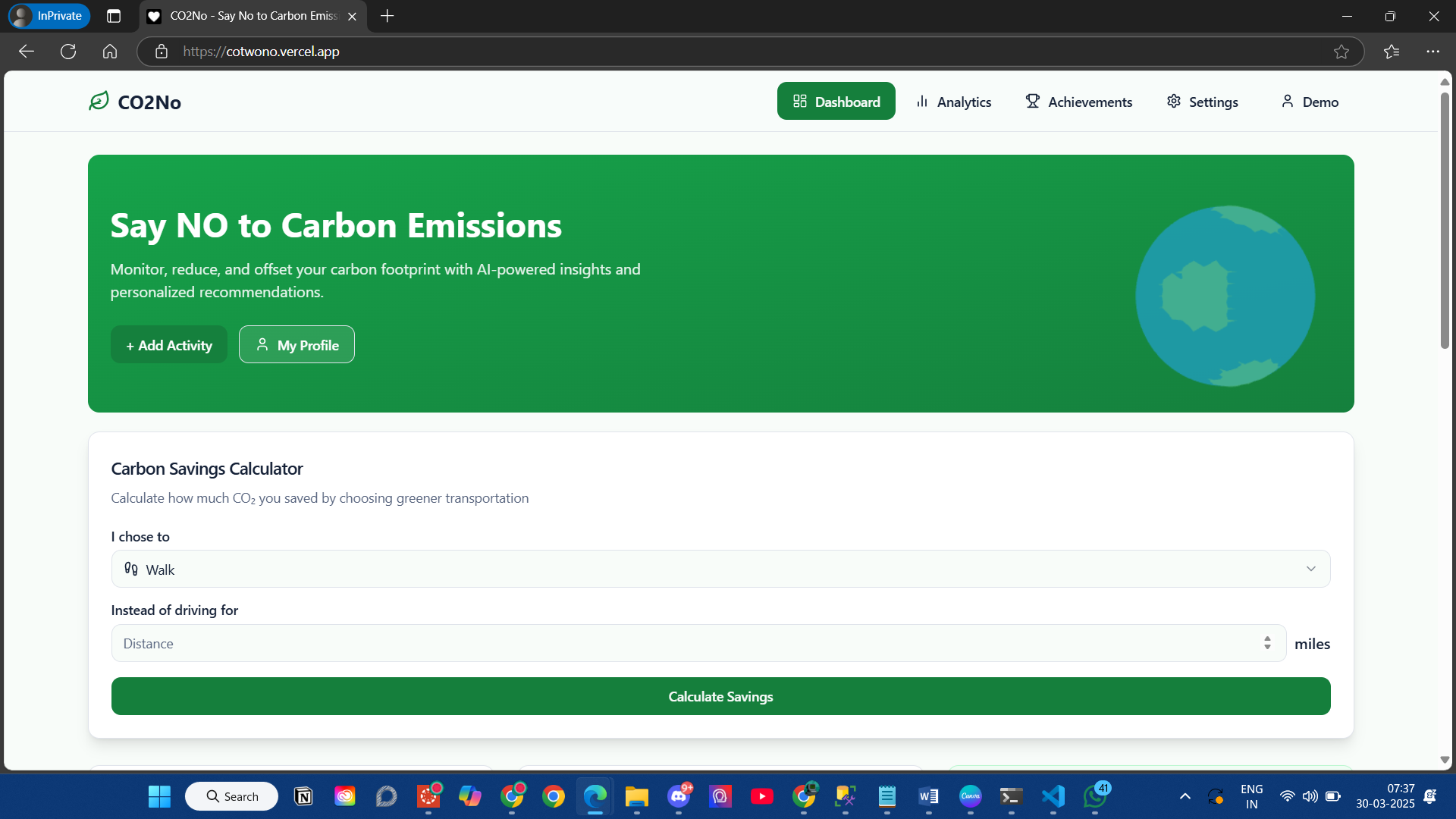
CO2No is an interactive web application that allows users to:
- Track their daily carbon emissions from various activities
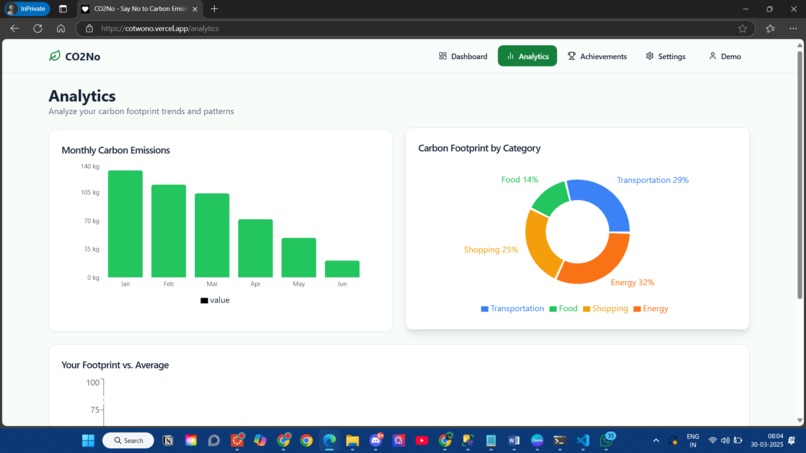
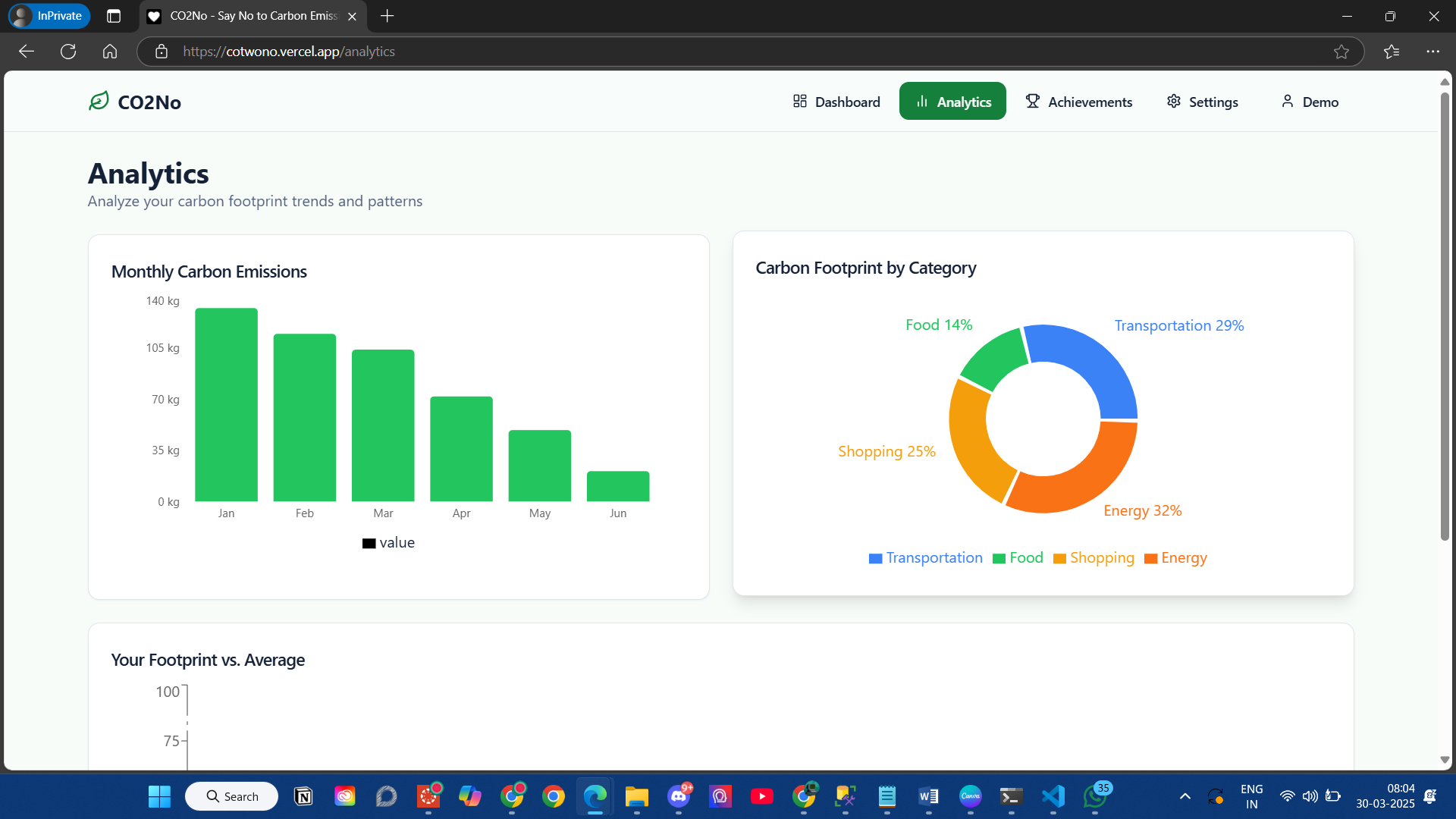
- Visualize their carbon footprint across different categories
- Compare their impact against regional and global averages
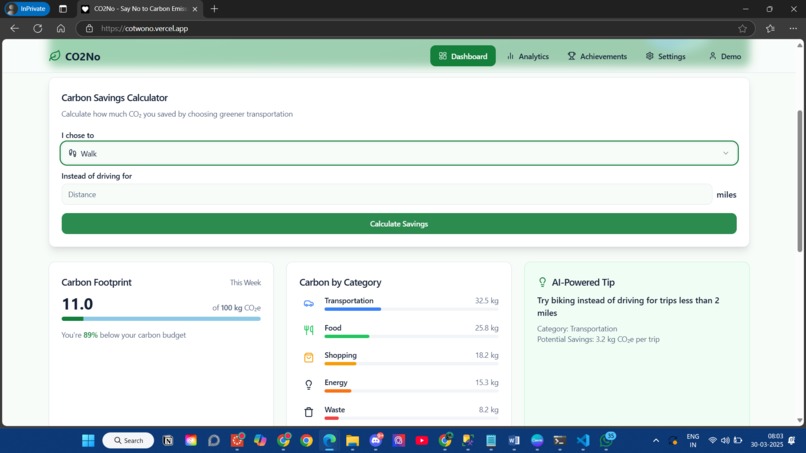
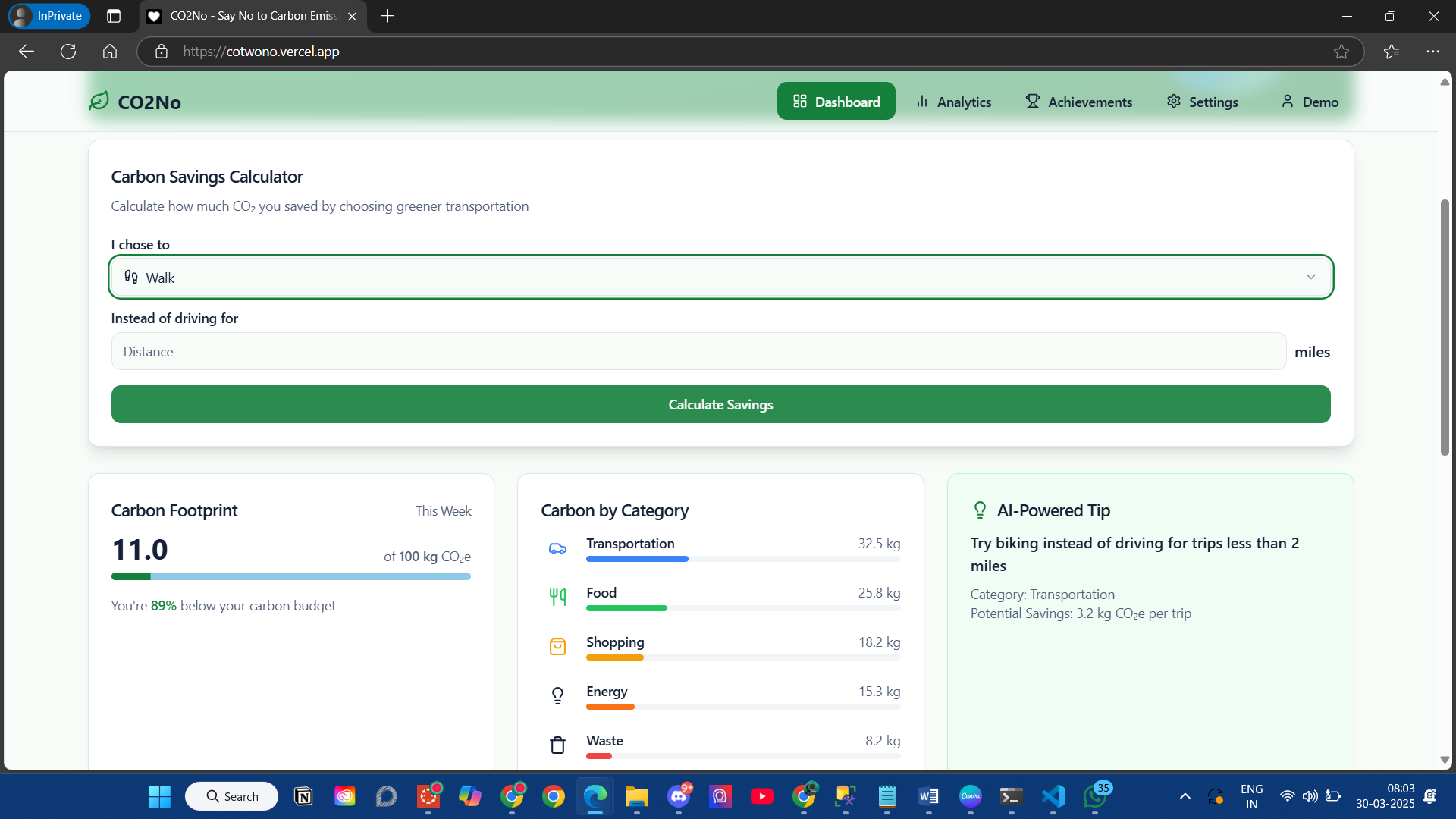
- Receive personalized recommendations for reducing emissions
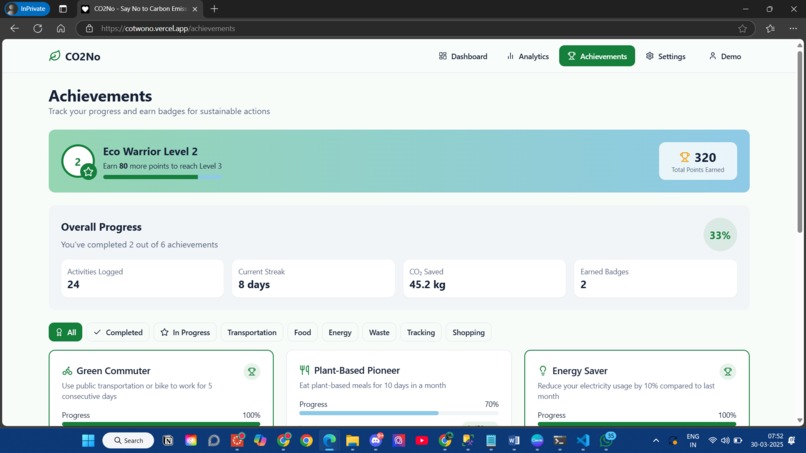
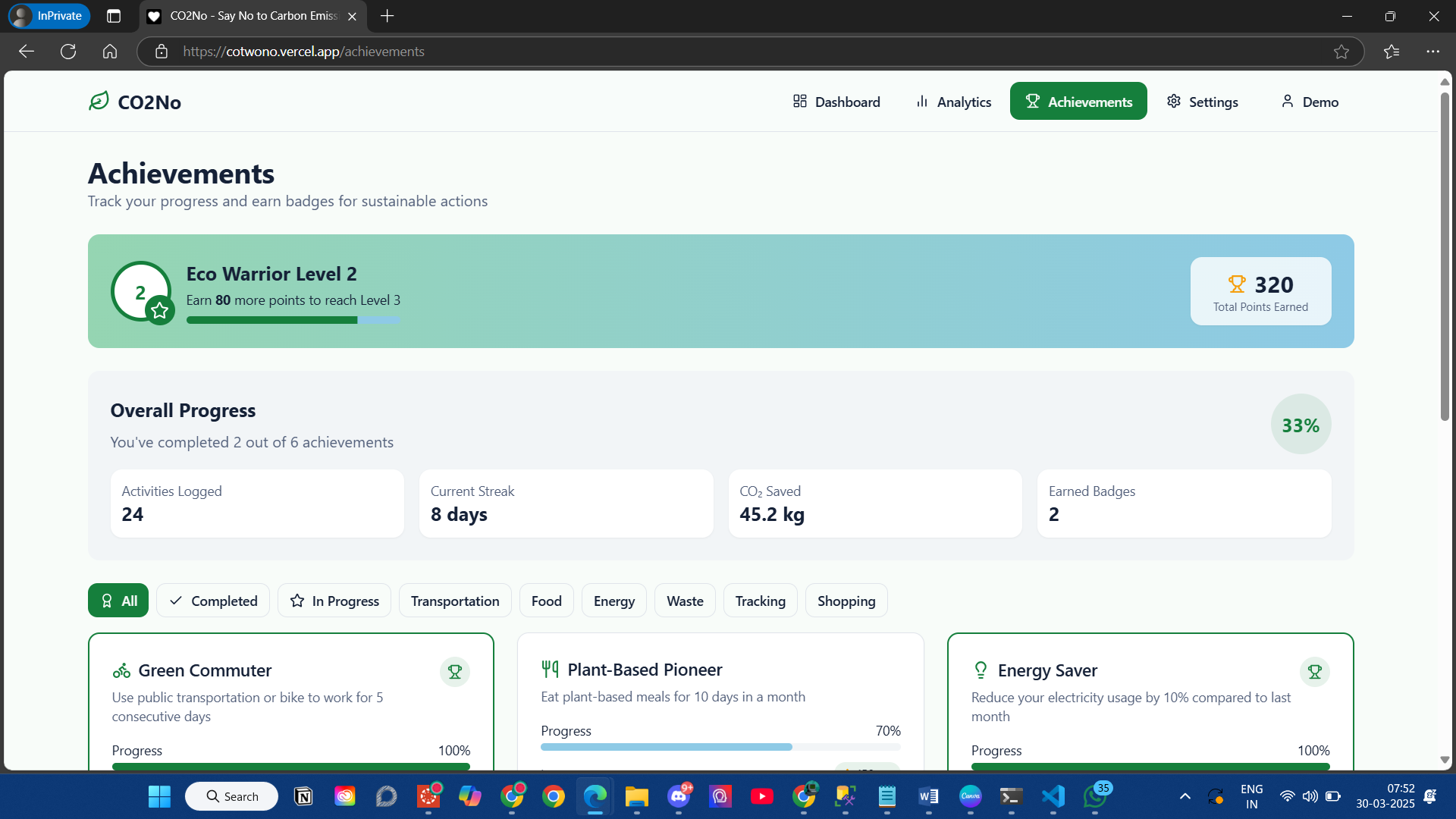
- Set goals and track progress over time
- Engage with a community of environmentally conscious individuals
The application features an interactive earth visualization that shows global carbon emissions patterns, helping users contextualize their personal impact within the bigger picture.
How we built it
We developed CO2No using a modern web technology stack:
- React with TypeScript for a robust frontend architecture
- Tailwind CSS for responsive and customizable UI components
- Framer Motion for smooth, engaging animations and transitions
- Context API for efficient state management
- React Router for seamless navigation
- Recharts for interactive data visualization
- Local Storage API for persisting user data between sessions
- Custom hooks for abstracting complex carbon calculation logic
The presentation mode features fullscreen capabilities, keyboard navigation, and informative tooltips to enhance the user experience during demonstrations.
Challenges we ran into
Throughout development, we faced several significant challenges:
- Creating accurate carbon footprint calculations that balance simplicity with precision
- Designing an interface that conveys complex environmental data without overwhelming users
- Optimizing performance for smooth animations and transitions, especially for the earth visualization
- Implementing responsive design that works across all device sizes
- Balancing feature richness with an intuitive user experience
- Ensuring accessibility standards were met for all interactive elements
Accomplishments that we're proud of
Despite these challenges, our team achieved several noteworthy accomplishments:
- Developed a fully responsive application that works seamlessly across devices
- Created an engaging presentation mode with keyboard controls and fullscreen capability
- Implemented an interactive earth visualization that contextualizes carbon data
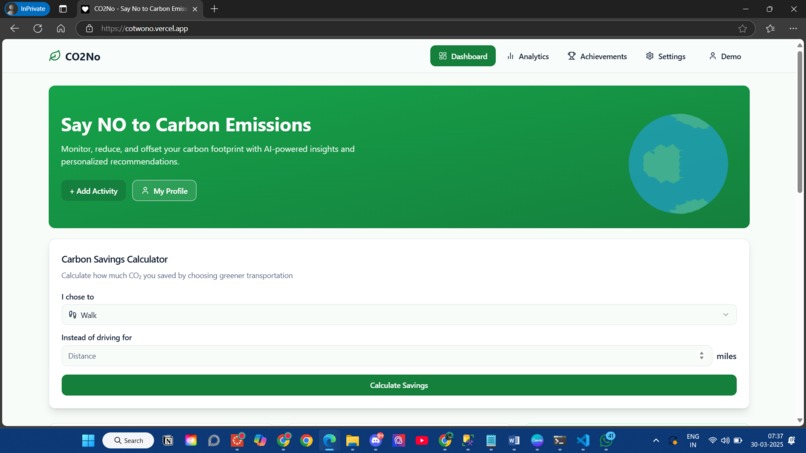
- Designed an intuitive dashboard that makes complex carbon data approachable
- Built a recommendation engine that provides personalized, actionable advice
What we learned
The development of CO2No taught us valuable lessons about:
- The importance of user-centered design in addressing complex global issues
- How to effectively visualize environmental data to drive behavior change
- Technical approaches to carbon footprint calculation and normalization
- Strategies for maintaining performance while delivering rich interactive experiences
- The power of combining education with actionable tools to drive positive change
What's next for Co2no
Looking forward, we plan to expand CO2No with:
- Integration with smart home devices and transportation apps for automated tracking
- Enhanced community features including challenges and collective impact tracking
- Machine learning algorithms to improve the accuracy of recommendations
- Partnerships with environmental organizations for verified carbon offset options
- Mobile app versions for iOS and Android platforms
- API integrations with popular lifestyle and productivity applications
Built With
- context
- eslint
- framer-motion
- prettier
- react
- react-router
- recharts
- sonner
- tailwind-css
- typescript
- vite

Log in or sign up for Devpost to join the conversation.