-
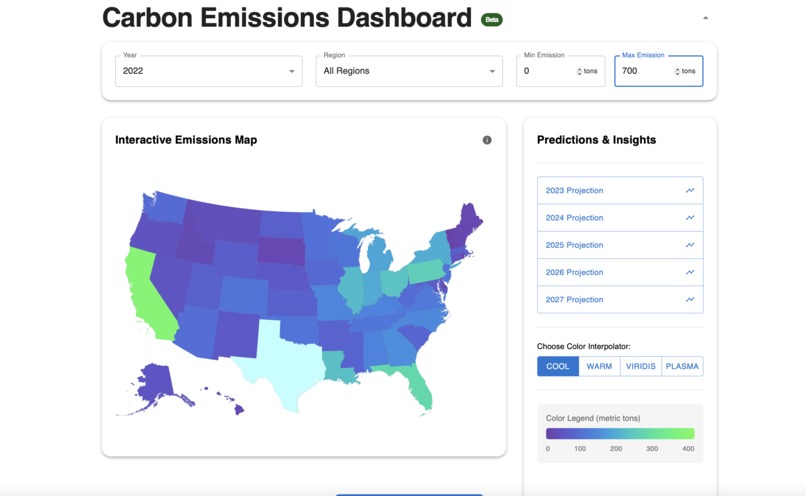
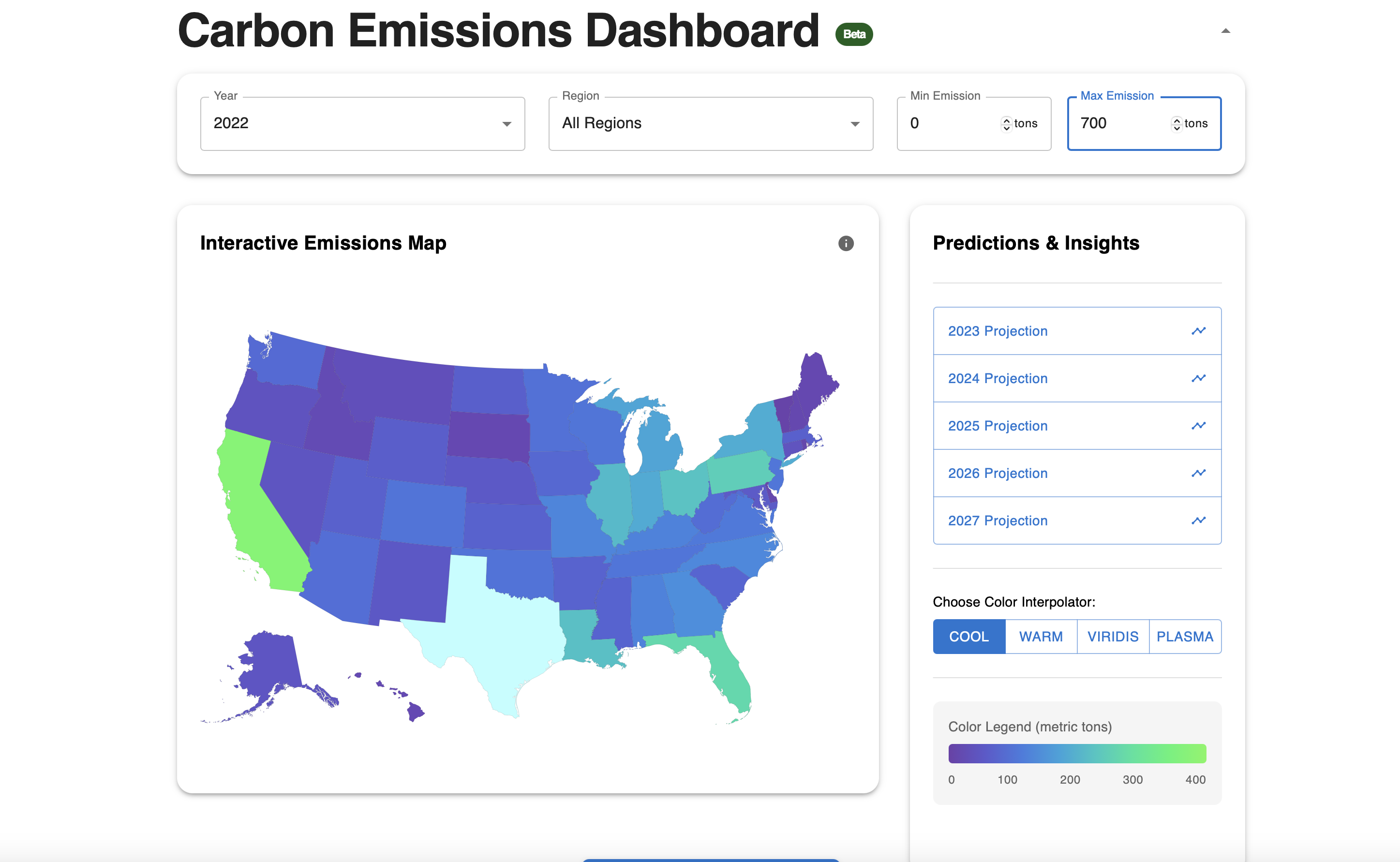
top of website front page
-
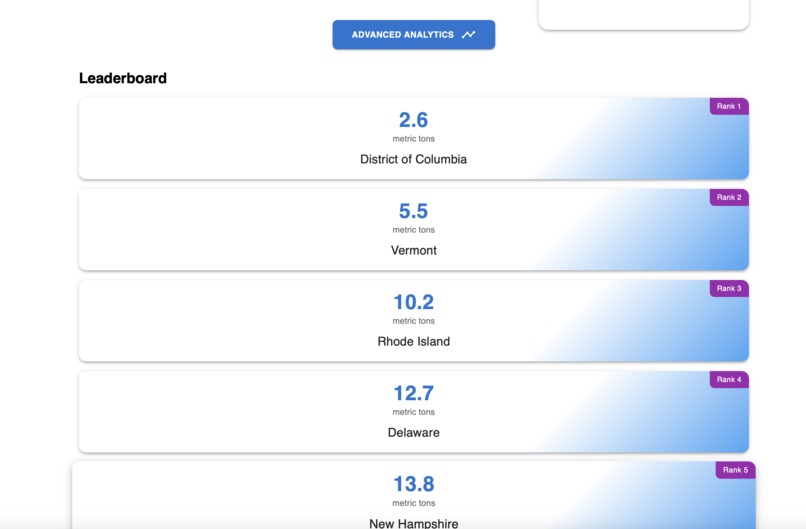
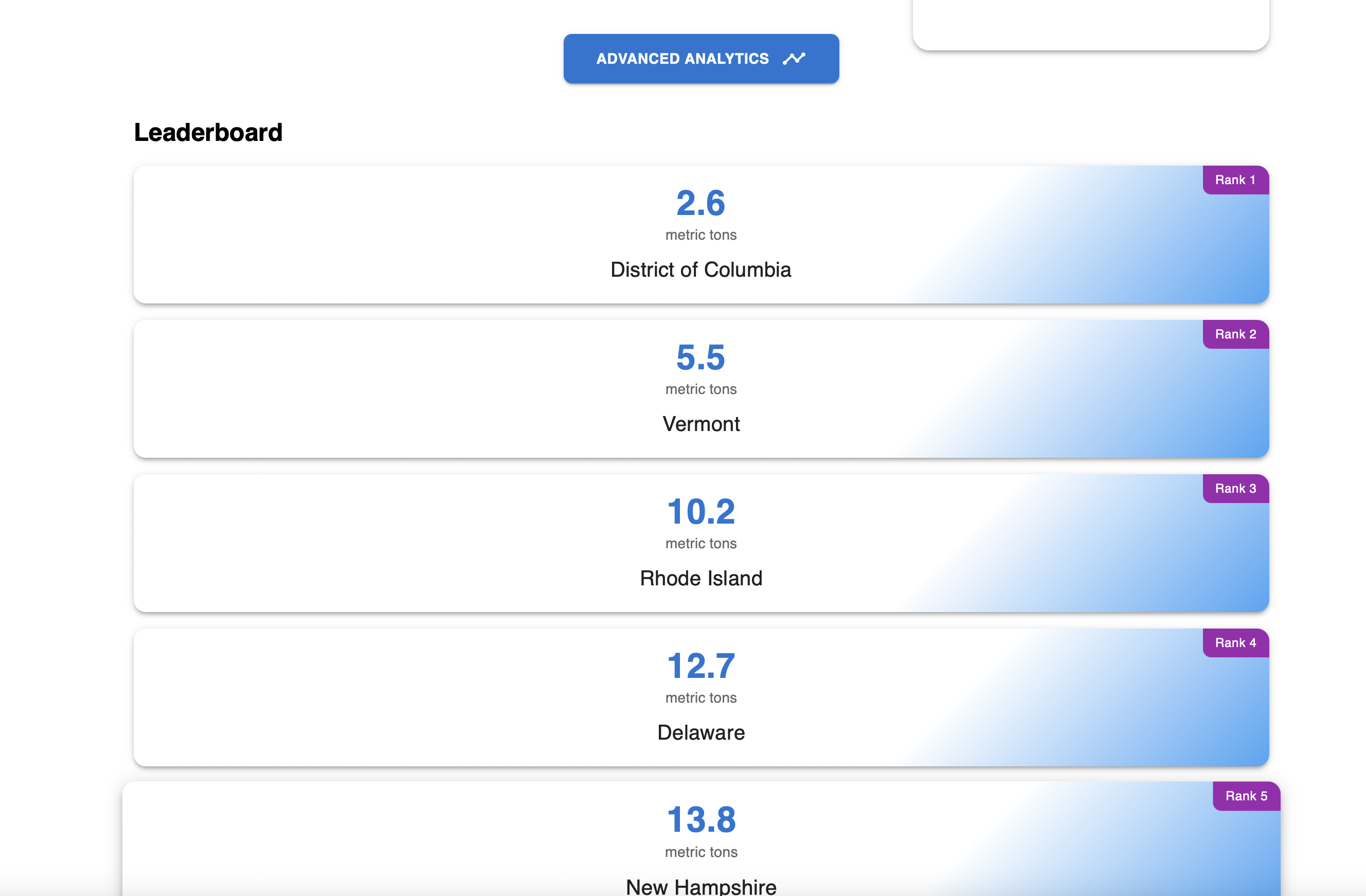
leaderboard on front page
-
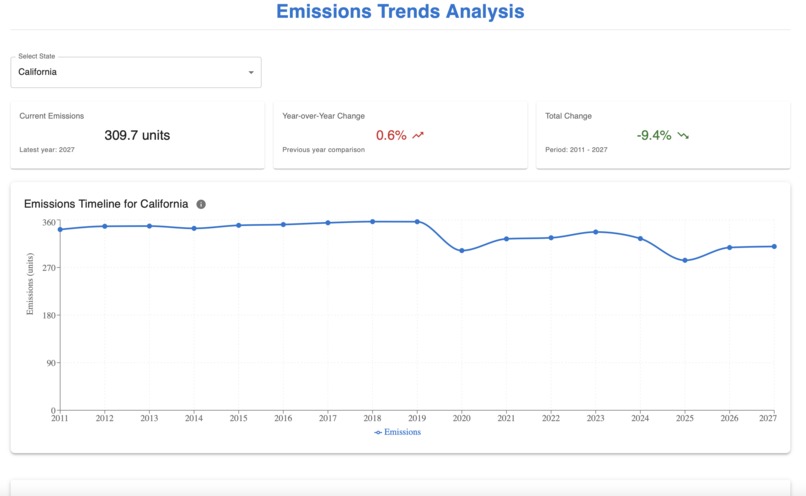
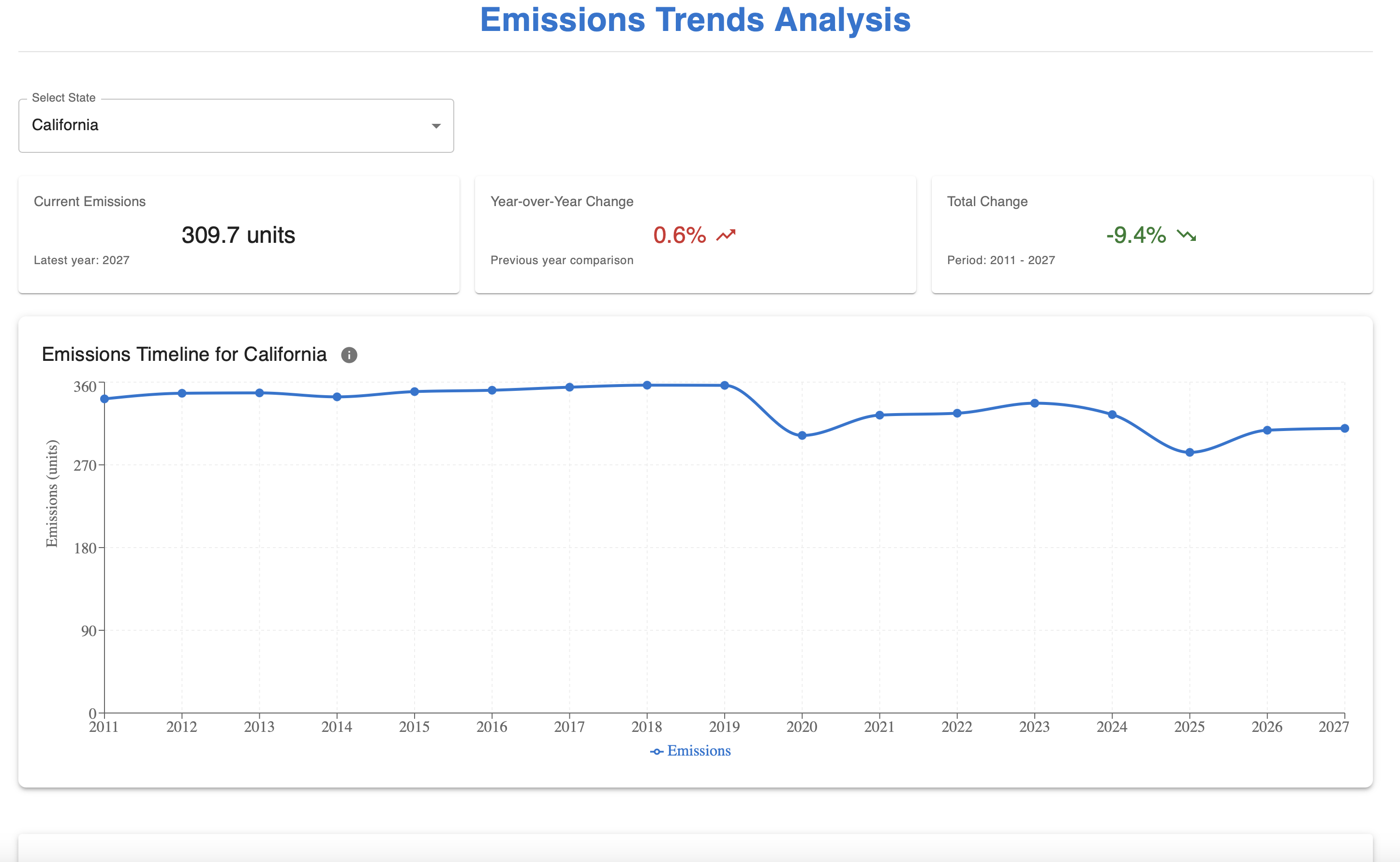
advanced analytics
Inspiration
In a world where carbon emissions are rising at an alarming rate, we need a way to hold state governments accountable for their carbon footprint—transparently, engagingly, and impactfully. That's why we made CO₂ Leaderboard, a real-time, data-driven platform that ranks states based on their carbon emissions, sustainability efforts, and environmental impact. It is essentially a friendly competition amongst states to reduce carbon emissions.
What it does
Our website visualizes CO2 emission data, in million metric tons, for the 50 US states from 2011 to 2025, and it predicts what CO2 emissions will be for each state over the next five years. The user can choose from a dropdown to see a map of data from the desired year, or they can click on the predictions and insights bar for future years' predictions. When you scroll down, we also have a leaderboard of states ranked by how low the carbon emissions are from the selected year, and we also have a button for advanced analytics, where the user can view more specific, in-depth data for one state.
How we built it
We used machine learning models to take previous years' data as input and predict the next five years' carbon emissions in million metric tons. We tested different models and found that our neural network was the most accurate, with mean absolute error of 0.03.
Challenges we ran into
Finding a good dataset at the beginning was challenging, and we had to take time to clean the data so that it was usable in the models. We also had some challenges finding the best machine learning model and debugging our models, as some yielded much higher mean average errors.
Accomplishments that we're proud of
We are proud of creating a visually appealing frontend as well as the accuracy of the neural network predictions when tested on 2022 data.
What we learned
Since two of our team members had more machine learning experience and two had more full-stack development experience, we all learned from each other and increased our skillset from this project.
What's next for CO2 Leaderboard
As next steps, we can modify our neural network to take multiple datasets as input (take in energy use, vehicle traffic, etc in addition to previous years' CO2 emissions) and predict the next 5 years' of emissions based on all of these factors. This would increase accuracy and reliability of our model.
Built With
- flask
- machine
- ml
- pandas
- python
- react
- typescript


Log in or sign up for Devpost to join the conversation.