-
-

logo
-
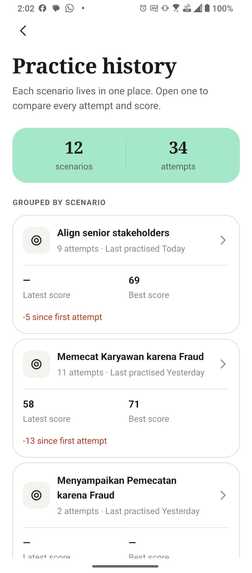
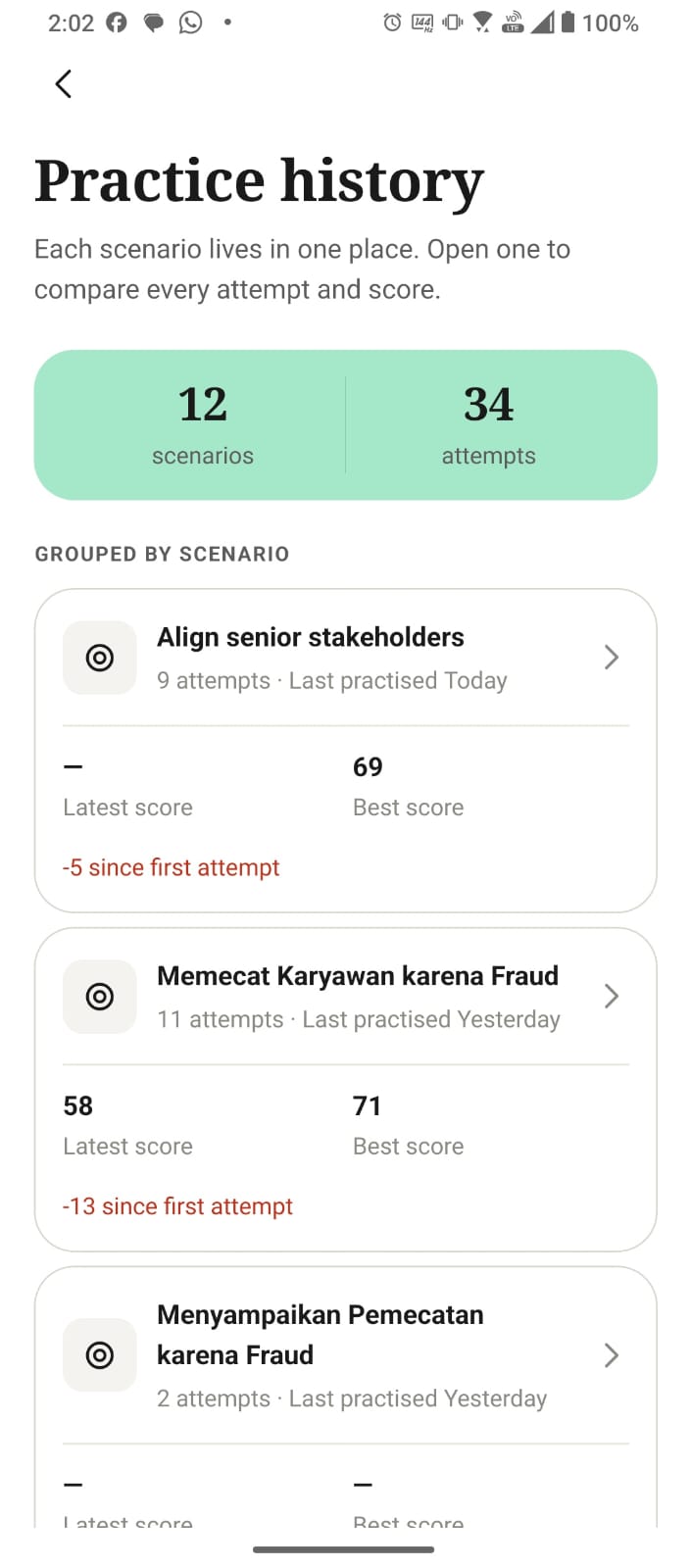
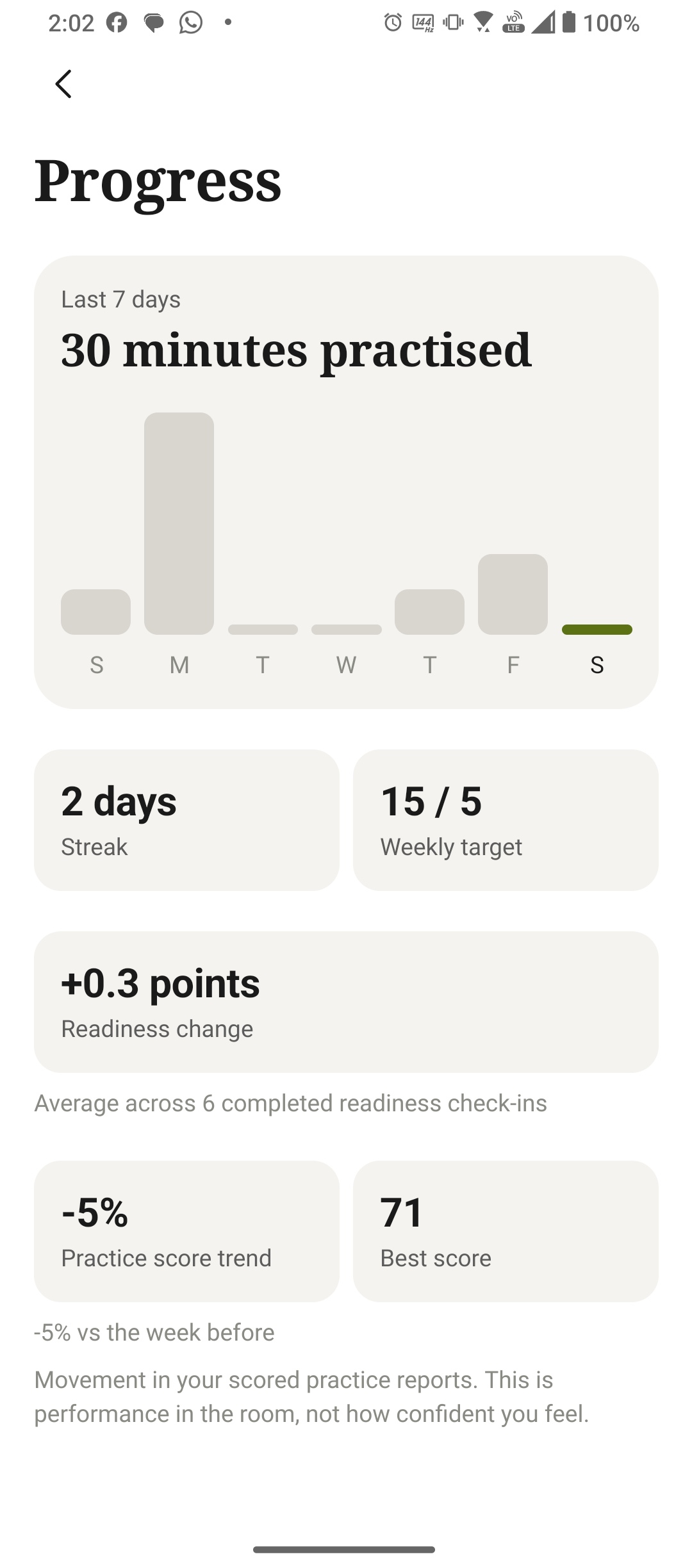
practice history
-

progress with same scenario (retry moment)
-
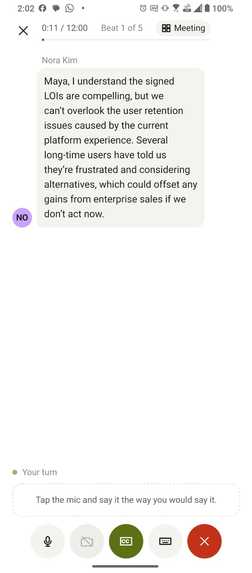
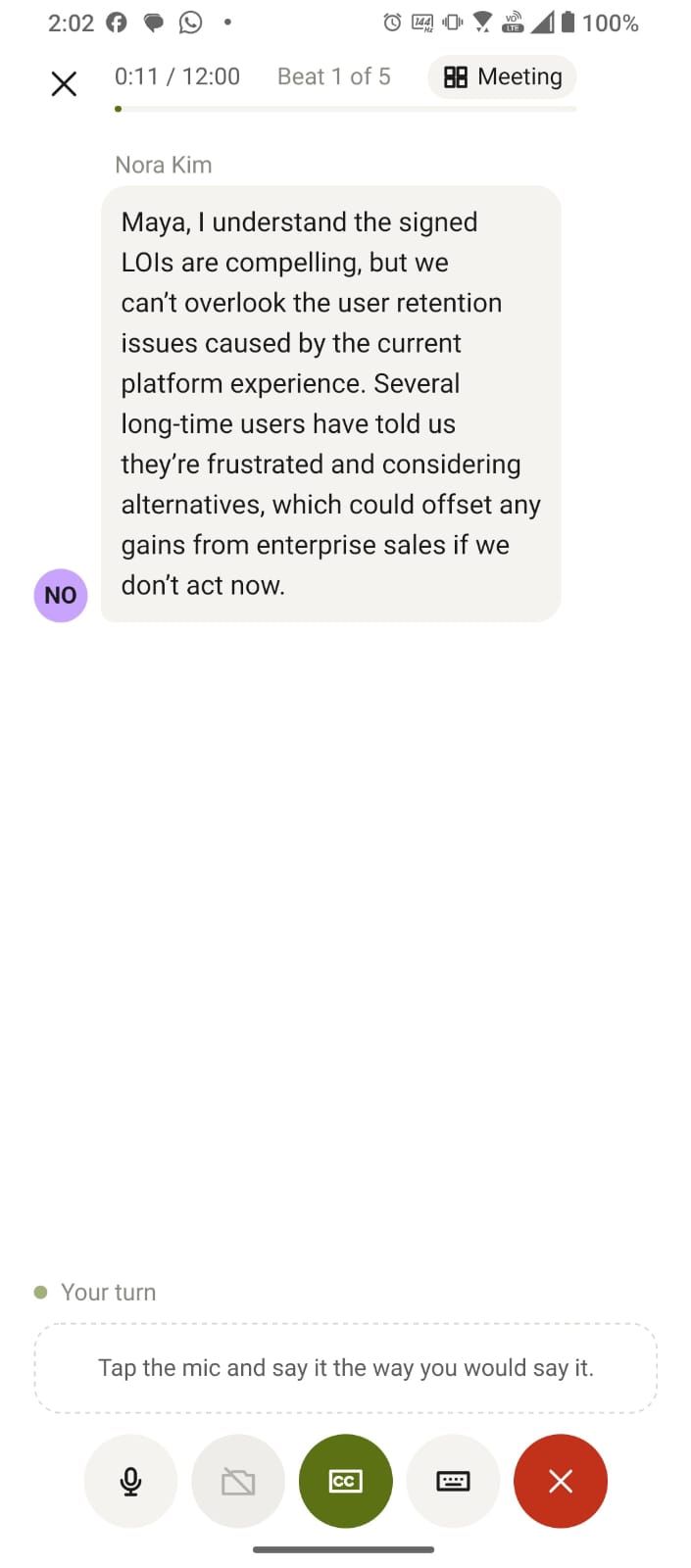
team conversation scenario chat mode
-
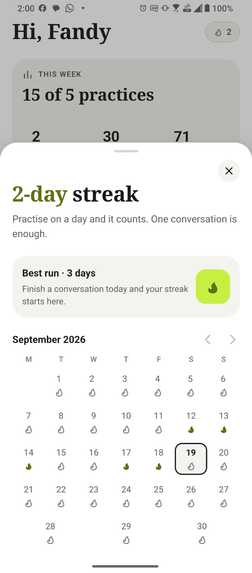
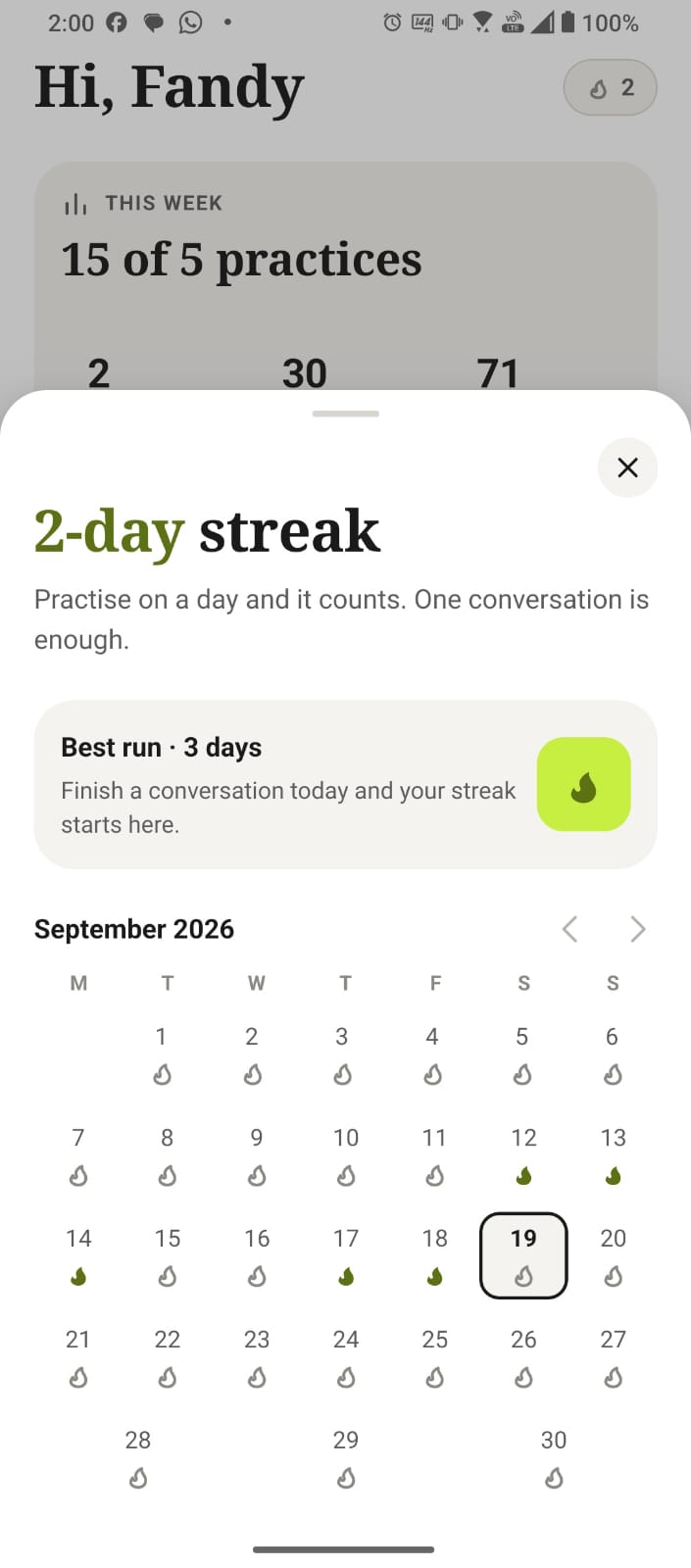
day streaks calendar
-
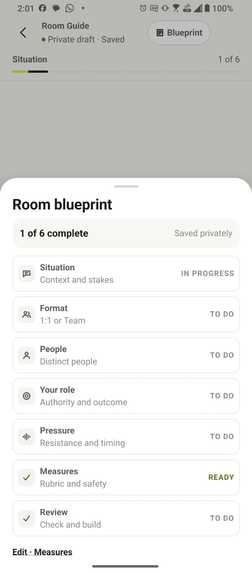
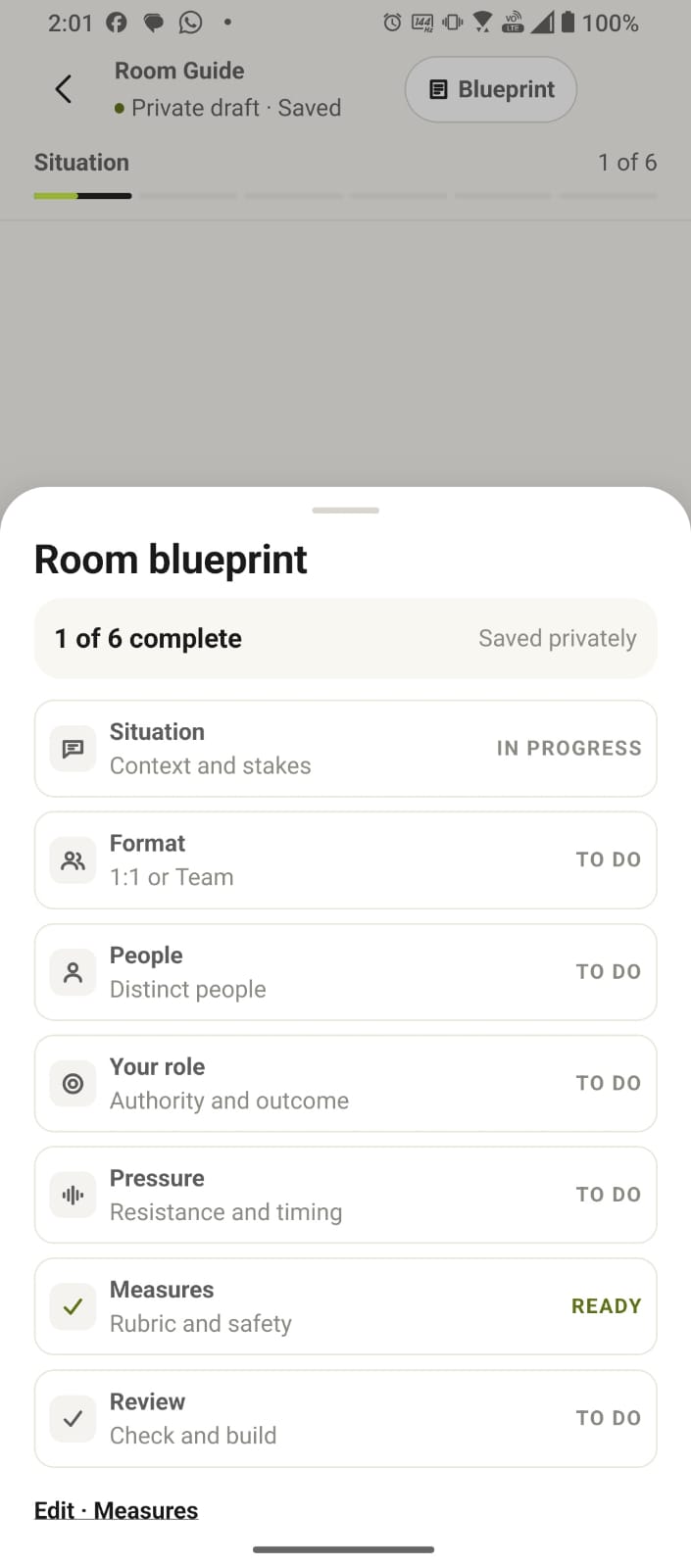
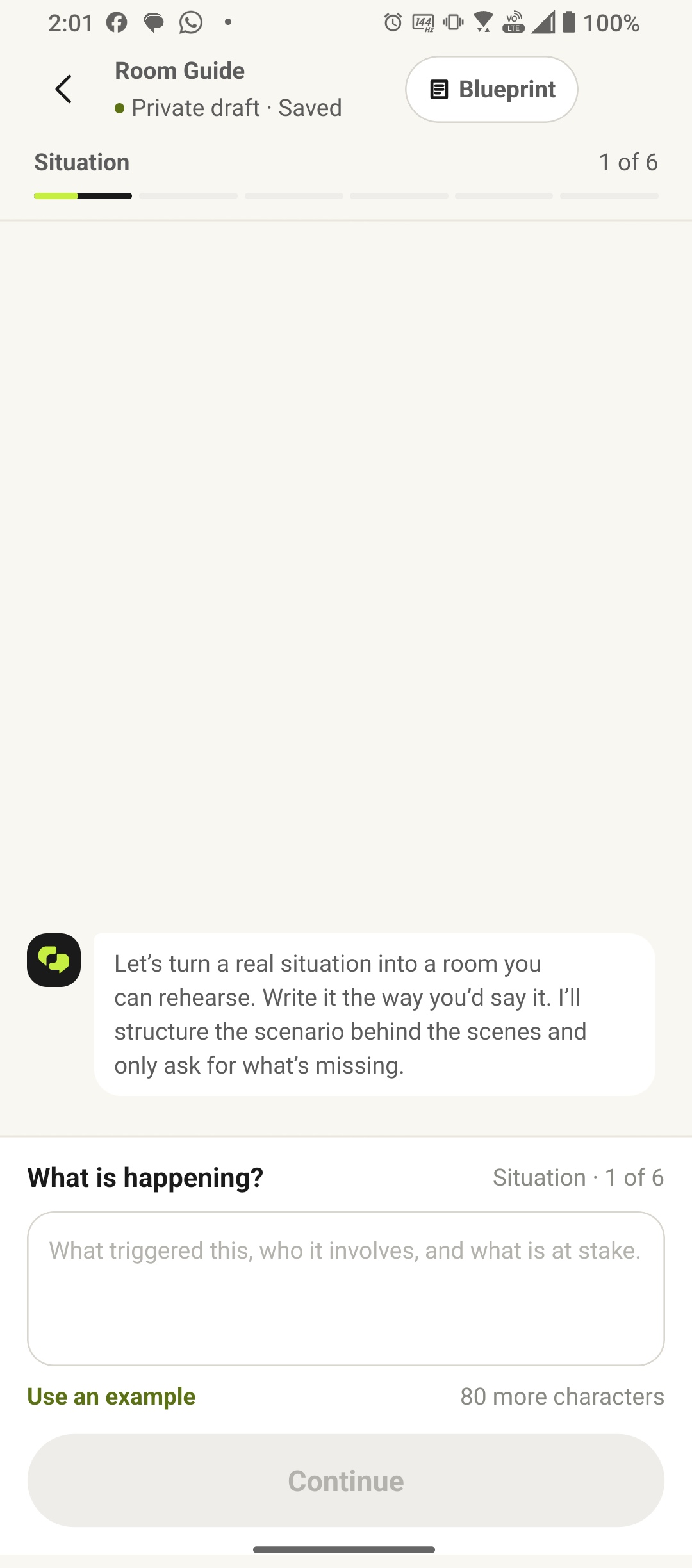
private scenario blueprint
-
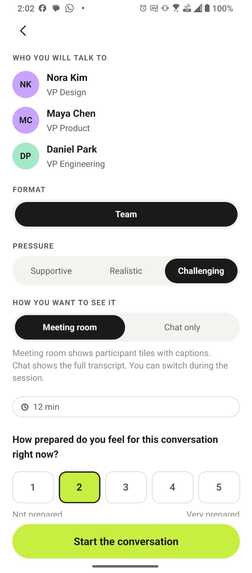
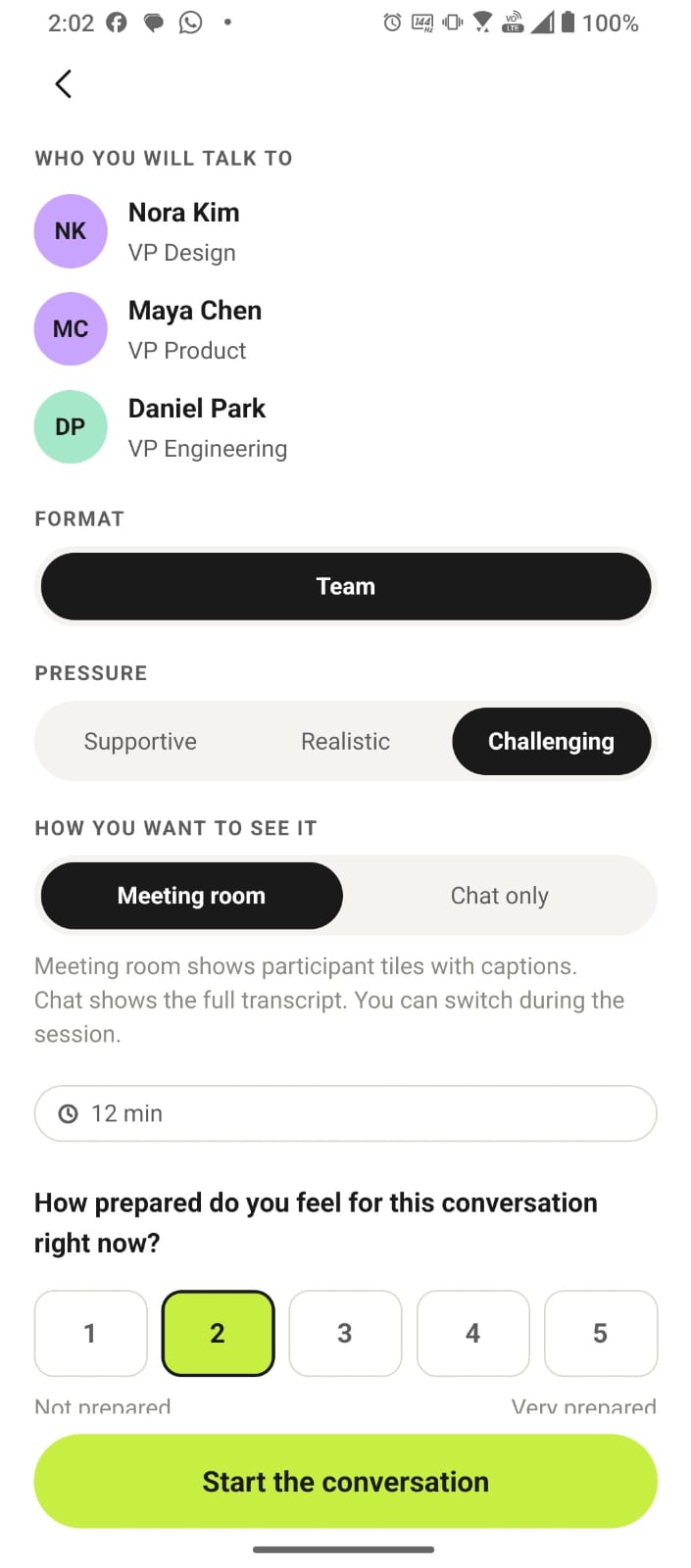
configuration before start scenario
-
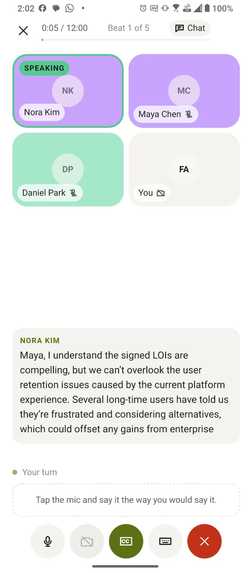
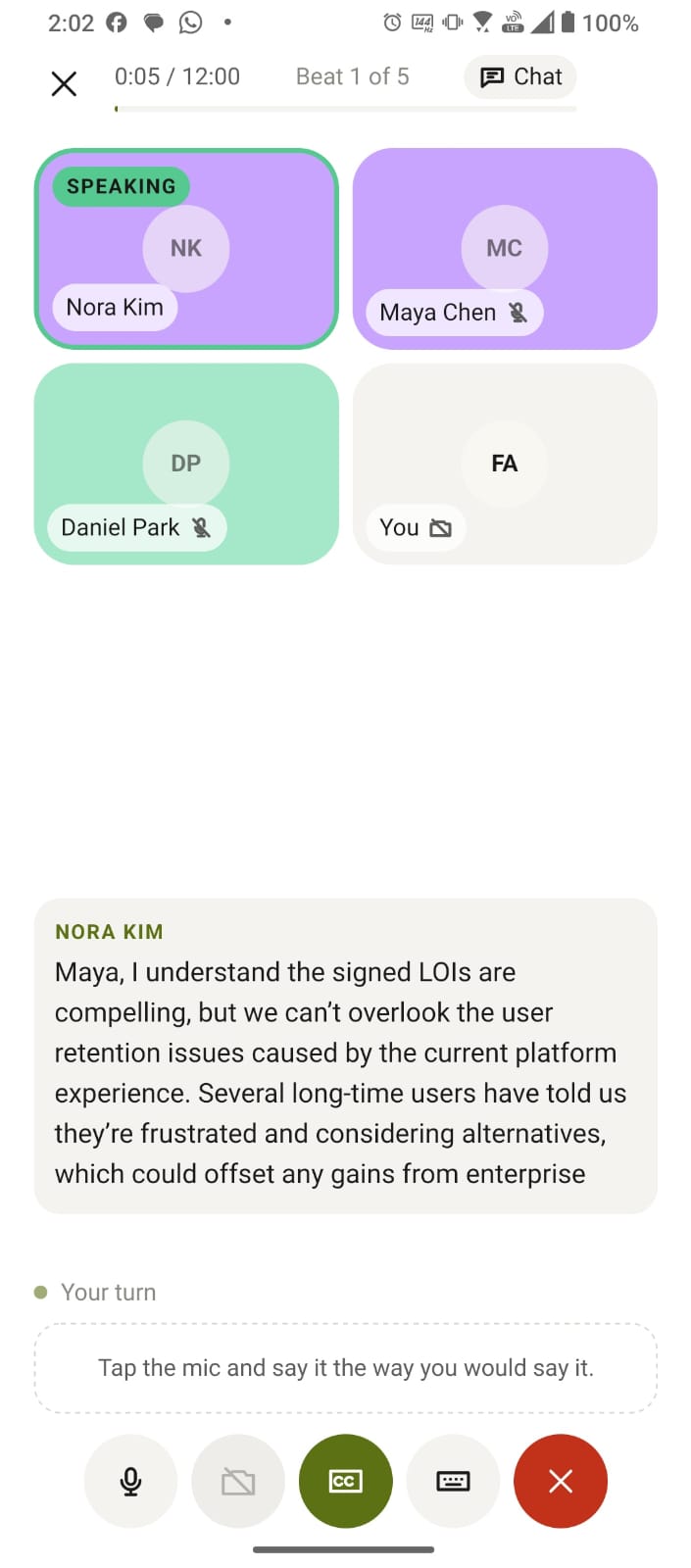
team conversation scenario with virtual meet mode
-
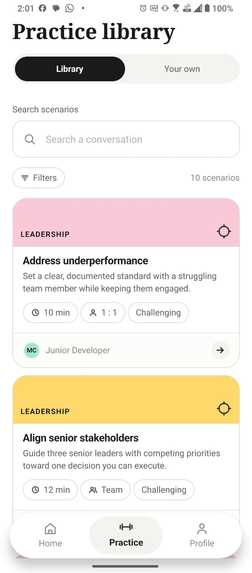
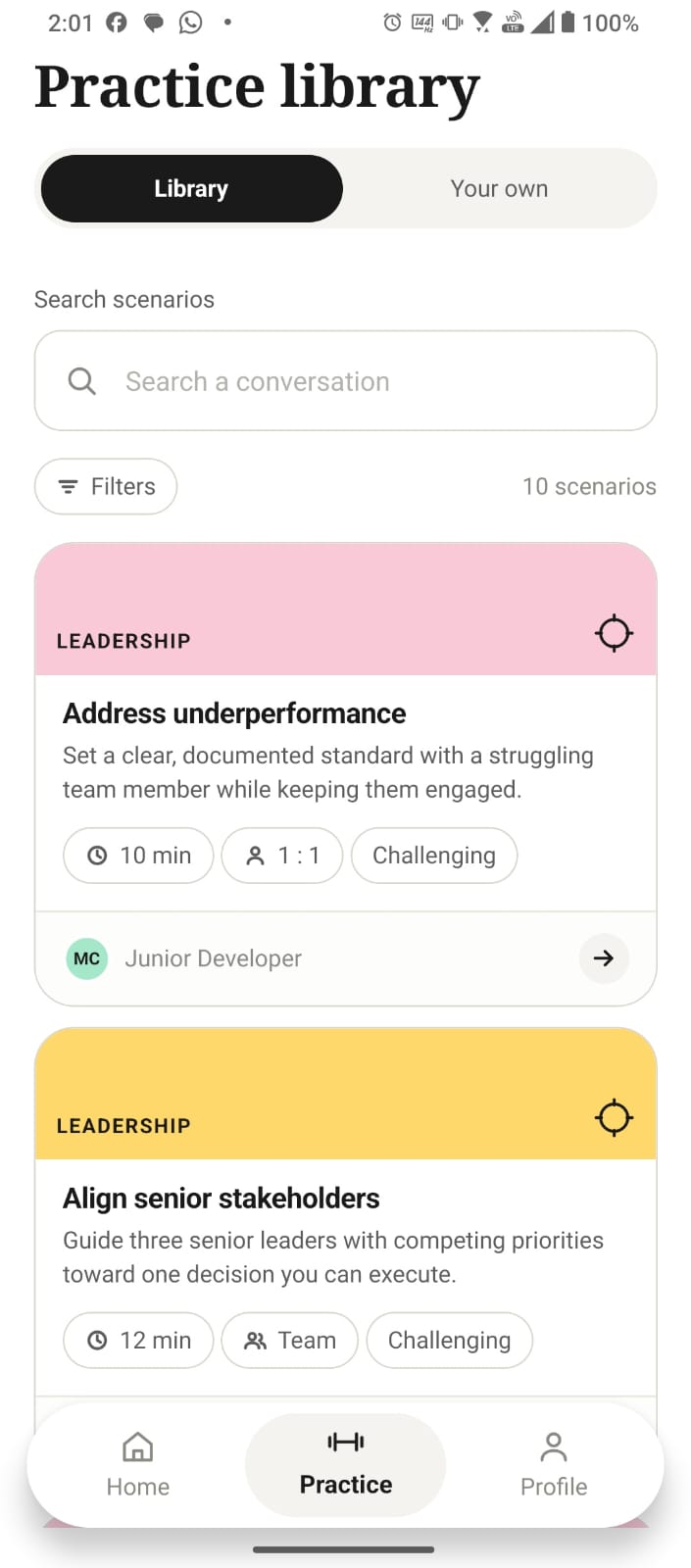
library scenarios
-
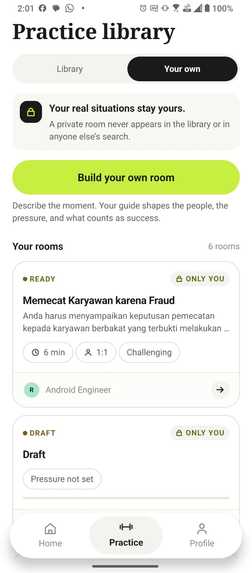
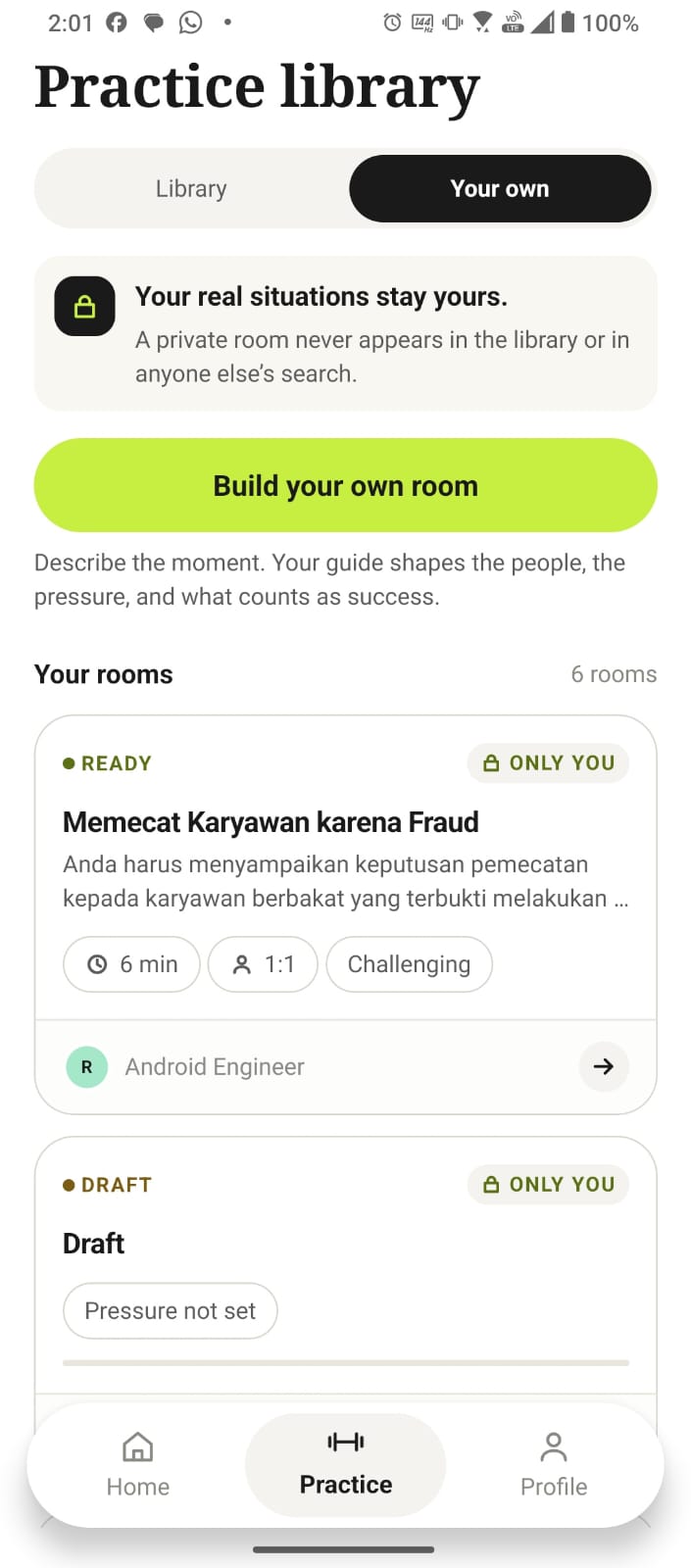
private scenarios
-
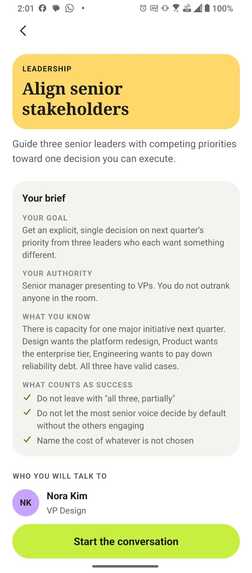
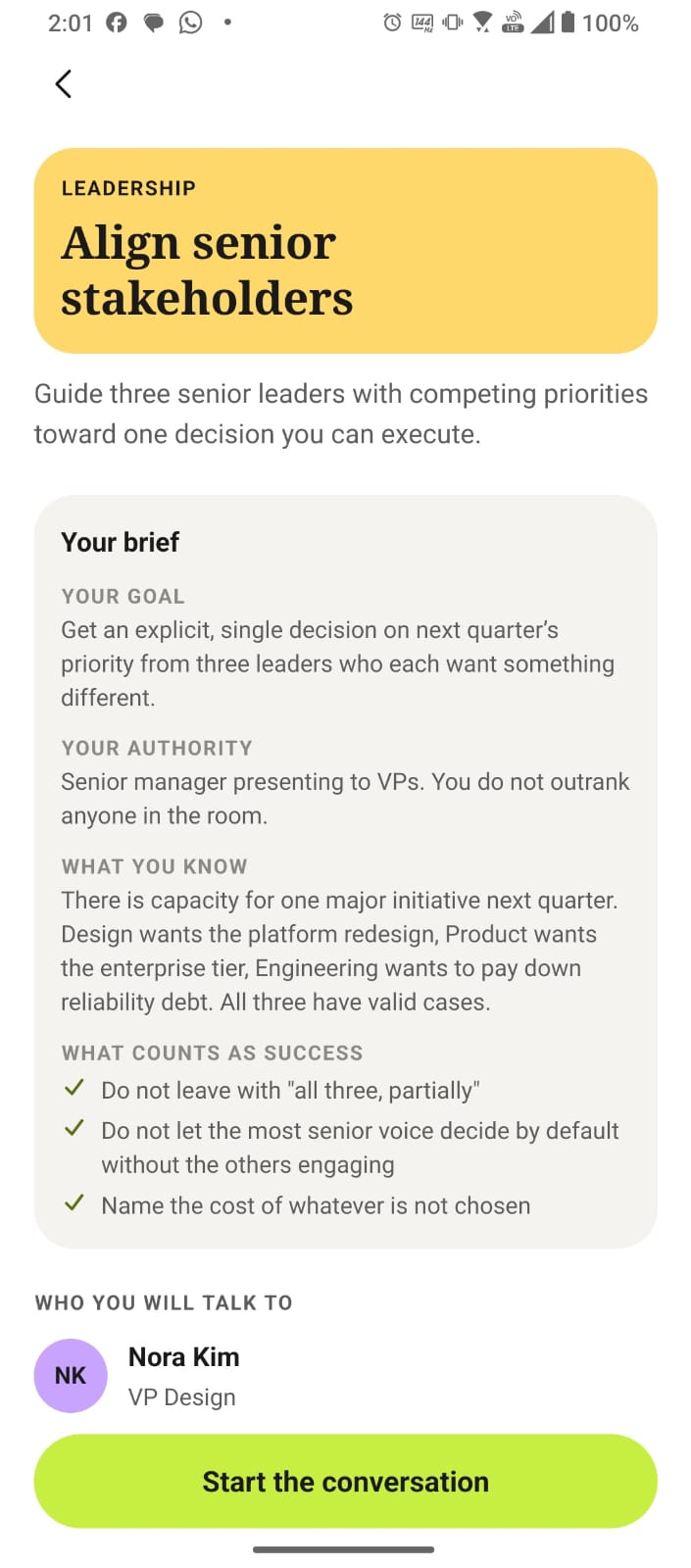
brief before start scenario
-
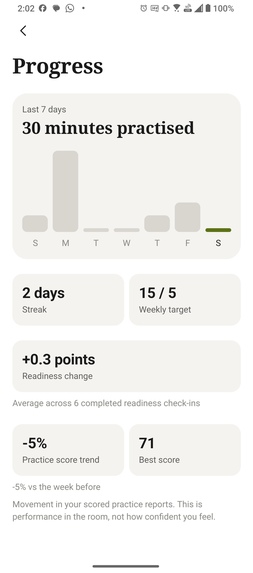
overall progress
-
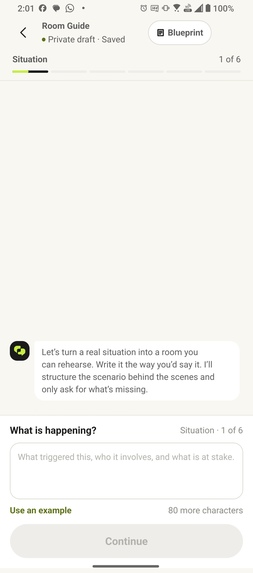
create scenario with AI agent


Inspiration
When I first saw the description of Shipaton, I was really interested in digging deeper into the Influencer category, especially Career Coaching: Leadership. Lately, my 9-to-5 company has been facing this issue, so many managers and leaders struggle to manage their teams and communicate effectively. Me too, BTW. And I’ve learned a lot from Heather’s articles about how to become a good leader, like this article, which inspired me to build this project.
What it does
Co-Talk comes from “Co” (assist) and “Talk” (talking). The meaning is simple: Co-Talk helps people talk and communicate better.
Co-Talk is your AI coaching partner for rehearsing conversations with a real feel and vibe. Practise in a meeting room with participant tiles and live captions, or switch to the full chat transcript mid-session and the best thing is the team room, where more than one coworker is in the conversation at once.

| Feature | How it works | Why it matters |
|---|---|---|
| Realtime voice practice | Speak or type. AI participants reply in text and voice, and a beat counter tracks the scenario’s arc. | A private place to try the wording before the real conversation. |
| Workmate personas | Save a colleague as an alias plus five traits: position, relationship, communication style, decision style, behaviour under pressure. | Reusable in any room and it only asks what you can observe, never a verdict on who someone is. |
| Team rooms | Up to three AI participants plus you, each with its own agenda, temperament and voice. | Real meetings have more than one point of view, and more than one kind of pressure. |
| Meeting orchestration | Name someone and they answer. Say “you” and the last speaker continues. Address the room and it stays open. | The floor shifts like a meeting, not like three chatbots in a queue. |
| Your own room | Describe the situation in your words, type @ to add saved personas, then set your authority, the pressure, and what gets scored. |
Rehearse the conversation actually on your mind, not the nearest template. |
| Private by default | Your rooms are visible only to you, and run on the same engine as the built-in catalog. | Real situations carry real names. Private is the only version worth using. |
| Evidence-linked feedback | Seven scored dimensions, and every moment quoted from the turn you actually said. | You see what you did not just what a model concluded. |
| Numbers that explain themselves | Tap any figure to see what it measures and where this attempt sits. Composure reads Calm, Steady, Elevated or Unknown. | An unexplained score about your own rehearsal is worse than no score. |
| Retry and compare | Run it again. Matched attempts compare score, dimensions, delivery, and any note your coach keeps repeating. | The note that comes back across attempts is the one worth changing. |
How we built it
We built Co-Talk as a cross-platform mobile app using React Native CLI and TypeScript, with NestJS for the backend, PostgreSQL and Prisma for data, OpenRouter for the AI models, and ElevenLabs for participant voices. The user’s speech is recognized on the device and sent as text to the backend, then the AI response returns as captions and streamed audio.
The tricky part was making a team session feel like a meeting, not three chatbots waiting for their turn. We built an orchestrator that chooses the next speaker based on the conversation, participant agendas, and speaking balance. The same engine powers custom private rooms, while post-session feedback is linked to the user’s actual words. We also do not store raw audio by default.
Challenges we ran into
The biggest challenge was making a team conversation feel natural. Calling more than one AI participants was easy, but without proper rules, they either spoke in a fixed order, talked too much, or ignored the person the user was speaking to. We solved this by building a central orchestrator that considers direct questions, recent turns, and speaking balance before choosing who responds.
Voice was another challenge. We needed speech recognition, captions, AI responses, and generated voices to work together without making the conversation feel too slow. Feedback was also harder than expected because we did not want the AI to give generic advice or quote something the user never said. We connected feedback to stored conversation turns and added checks so that only the user’s actual words can be used as evidence.
Accomplishments that we're proud of
I’m proud that Co-Talk is not only a chatbot with a meeting UI. The complete flow works on a you phone, users can speak, hear different AI participants response, create a private room from their own situation, receive evidence-linked feedback, and retry the same scenario to compare their progress.
I’m also proud of the multi-person meeting. Each participant has a different role, agenda, motivation, communication style, and voice. They can respond to the user and to each other, while the orchestrator keeps the user involved instead of letting the AI participants take over the meeting.
What we learned
We learned that realistic conversation practice is not only about choosing a good AI model. The small rules matter too, who answers a direct question, how long they speak, when another participant joins, and when the user gets the floor back. Without those details, even a strong model can still feel like a chatbot.
We also learned that coaching feedback needs evidence. A score is not very useful if the user cannot understand where it came from. Linking feedback to the user’s actual words makes it easier to trust and gives them something specific to improve in the next attempt.
What's next for Co-Talk
We really want to turn Co-Talk into a serious product. Our next step is adding realistic 3D avatars with lip-sync using visemes and expression tags, so the virtual meeting feels more alive. We also want to improve the orchestrator, especially how it detects direct questions, interruptions, handoffs, and moments when more than one participant wants to response.
In the longer term, we want to test Co-Talk with more first-time managers and use their feedback to improve the scenarios and coaching. The goal is not to create a perfect script generator. We want Co-Talk to become a practical place where people can make mistakes, retry the conversation, and feel more prepared before talking to their real team.

Log in or sign up for Devpost to join the conversation.