-
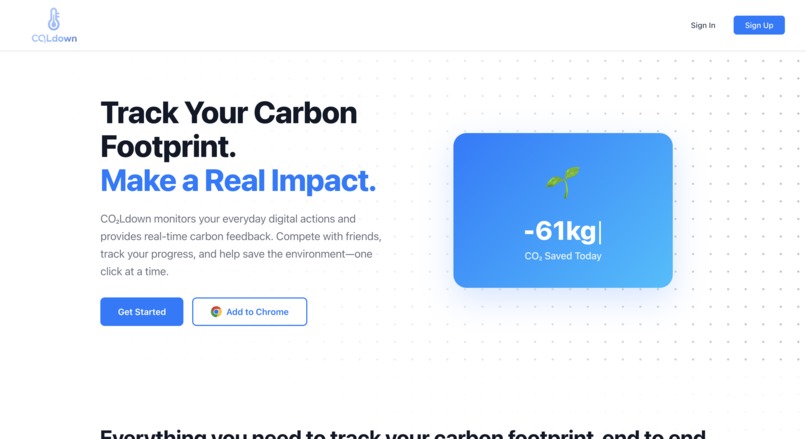
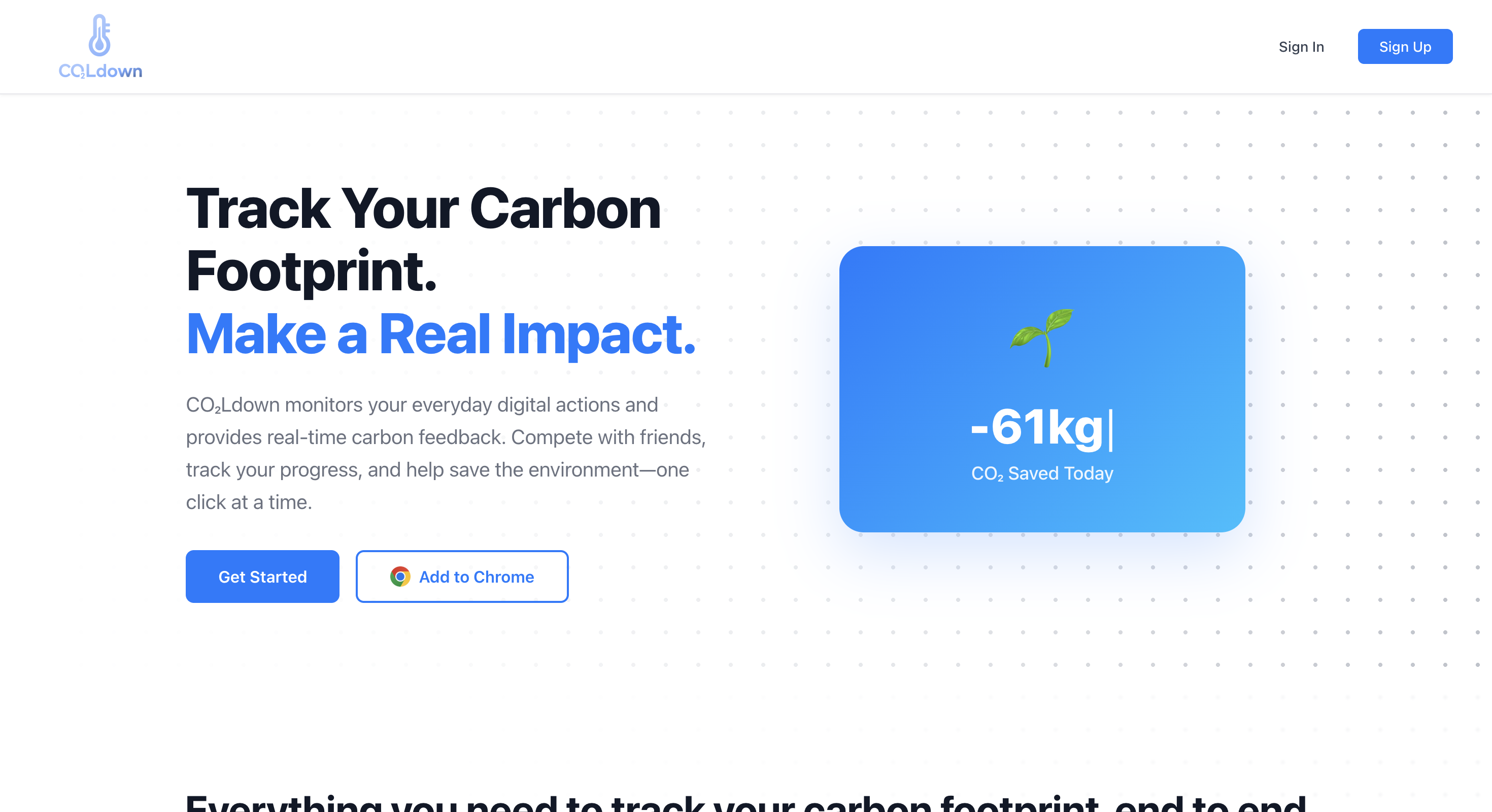
Landing Page
-
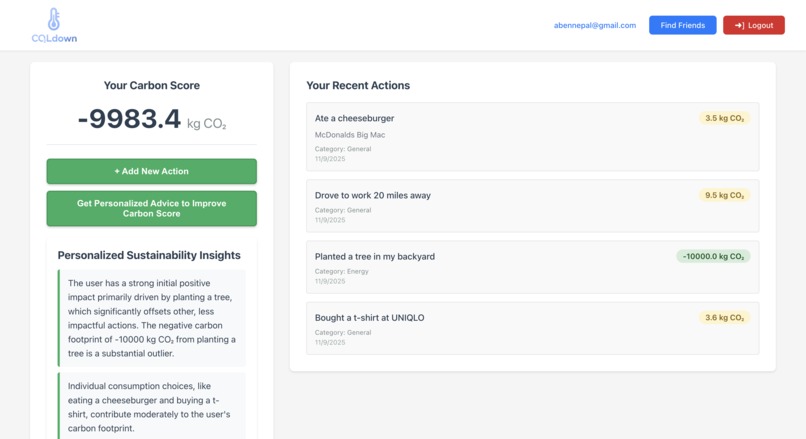
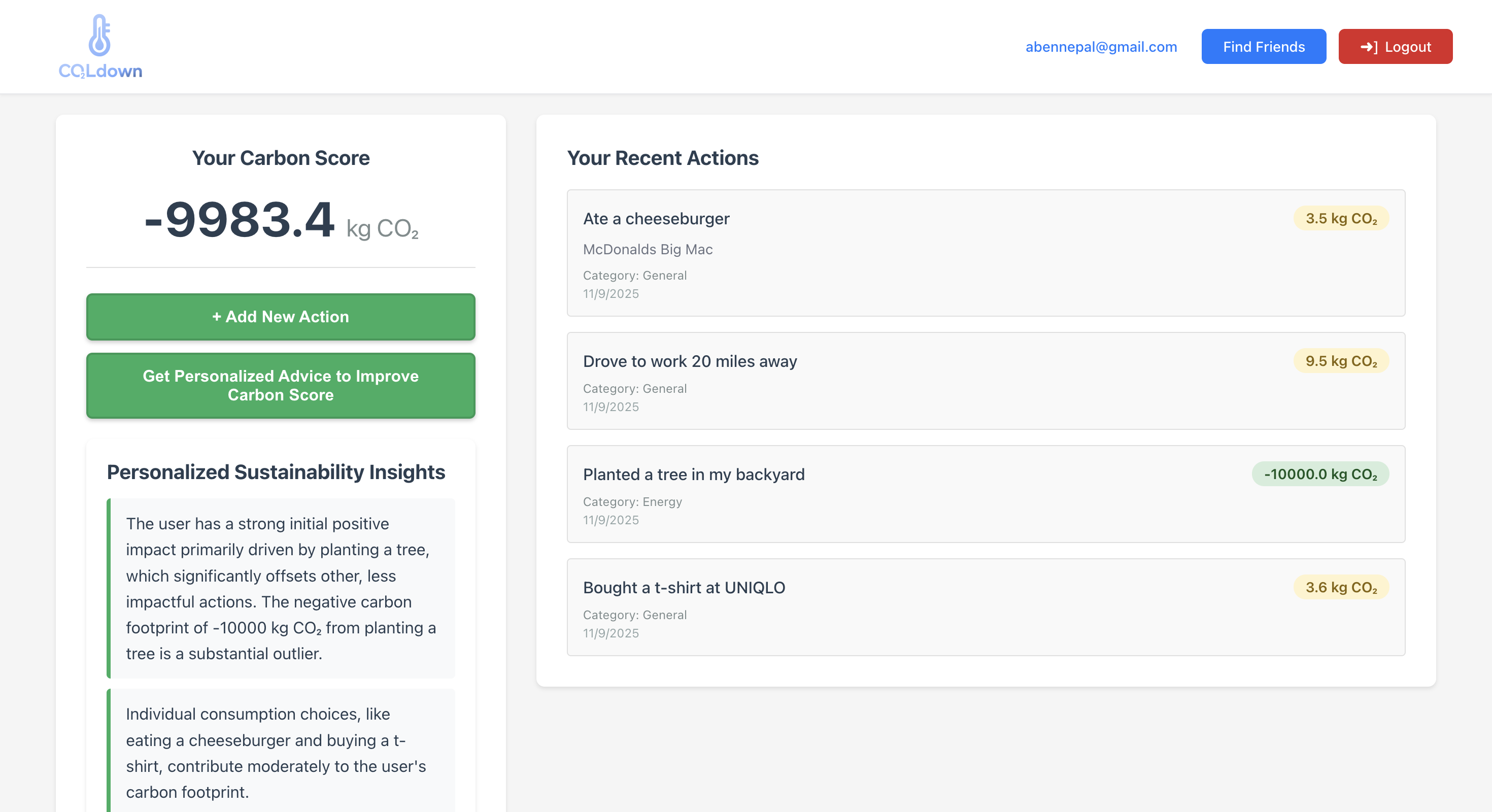
Dashboard
-
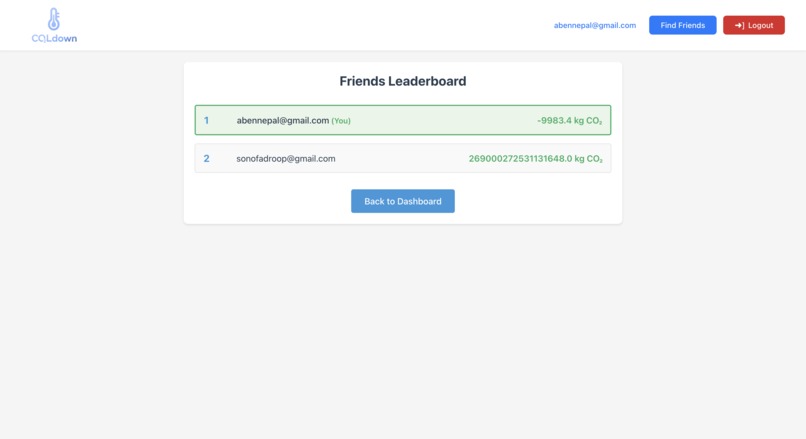
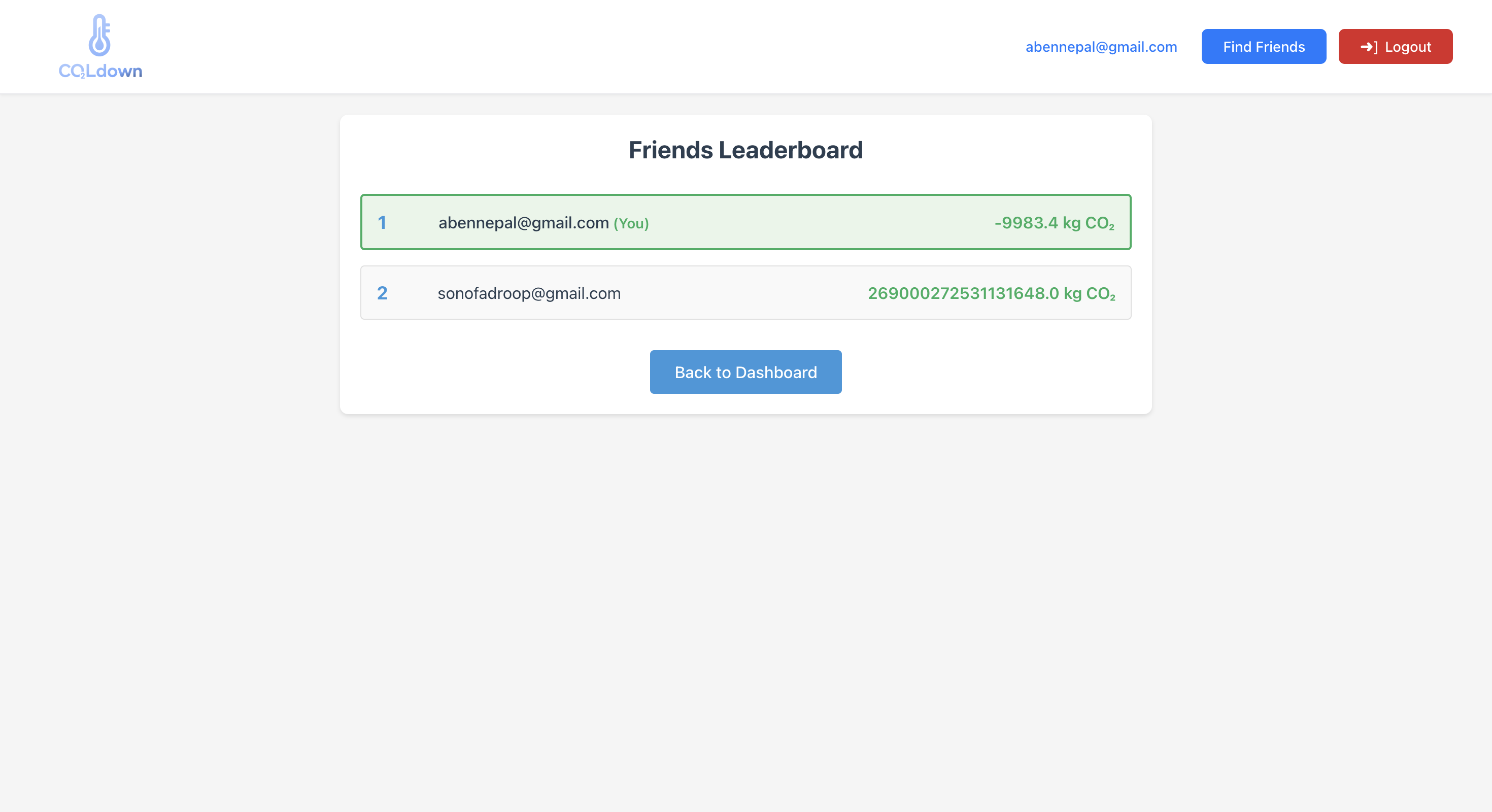
Leaderboard
Inspiration
We noticed that most people around us agreed that climate change was a major issue, but many didn’t know what they could do to help fight it. We’re already online all day, so we set out to monitor everyday digital actions—such as shopping, booking flights, and streaming—and add real-time carbon feedback.
What it does
CO₂Ldown is an AI-powered app that monitors user activity online to give them suggestions on how they can improve their carbon footprint. You can track your progress and compete with friends, all while helping to save the environment.
How we built it
We built CO₂Ldown by combining a chrome extension with a website. Using firebase for authorization and as a database, users may log in and have all of their actions accumulated in the database. We then used React.js for the website frontend, which allows users to manually add recent actions, as well as add friends, view the leaderboard, and generate personalized insights based on recent actions.
In combination with this website, we also built a chrome extension with a few key functionalities. Given online websites and possible user action, the user can choose to essentially run a carbon diagnosis on the website to estimate the carbon consumption with that potential action. For example, analysis on a website for an online product would conduct a life-cycle-analysis to estimate the total lifetime carbon footprint for that product. The way that we do this is function calling -- giving LLMs the ability to execute different types of analyses based on the type of webpage the user is on. Additionally, we implemented a prompt optimizer that uses Gemini 2.5 Flash-Lite in order to minimize token length while still maintaining semantic meaning through embedder-based comparisons.
Challenges we ran into
While we built CO₂Ldown, we ran into a variety of different challenges at different stages of building. On the more minor side, we had to deal with integrating things like Firebase and Gemini into our system in such a way that the database would dynamically load user actions as they ran the chrome extension on different websites. This lent itself to many errors pertaining to the format of our function calling JSON files or attempts to access the firebase fields for specific users. In general, though, the biggest time constraint we faced was probably dealing with the roadblocks associated with integrating the frontend and backend.
Accomplishments that we're proud of
We built a tool that brings carbon awareness directly into the websites and actions people already use every day, without adding friction or guilt. Our emissions engine processes digital activities like shopping, streaming, and flight booking in real time while respecting user privacy. We transformed carbon tracking from abstract statistics into immediate, tangible feedback, helping users understand the impact of individual decisions as they make them.
We also gamified the process, introducing a social and competitive layer that motivates users, proving that sustainability tools can be engaging.
Other than that, we're proud of our prompt optimizer (which was trained to minimize token length without losing semantic meaning) and the way that we handled the process of integrating the frontend and backends of both our website and chrome extension.
What we learned
This was the first hackathon for three out of the four members on our team, and this was the first time the majority of us had built out a full project of this magnitude in so little time. Overall, it was an incredible learning experience that allowed us to pick up a variety of new skills in areas that we hadn't been exposed to before.
What's next for CO₂Ldown
The next step is shifting from awareness to anticipation. We plan to build intelligent pre-decision suggestions—like highlighting lower-impact products before checkout, recommending efficient streaming settings based on device energy use, and surfacing greener flight options earlier in the search process. We also want to expand social motivation by introducing opt-in challenges and shared sustainability goals for friend groups, clubs, and organizations. Beyond consumer use, we aim to provide a developer API so apps and websites can plug into CO₂Ldown’s carbon feedback system. Ultimately, we want to create an ecosystem where low-carbon digital choices become the easiest and most normalized behavior online.


Log in or sign up for Devpost to join the conversation.