-
-
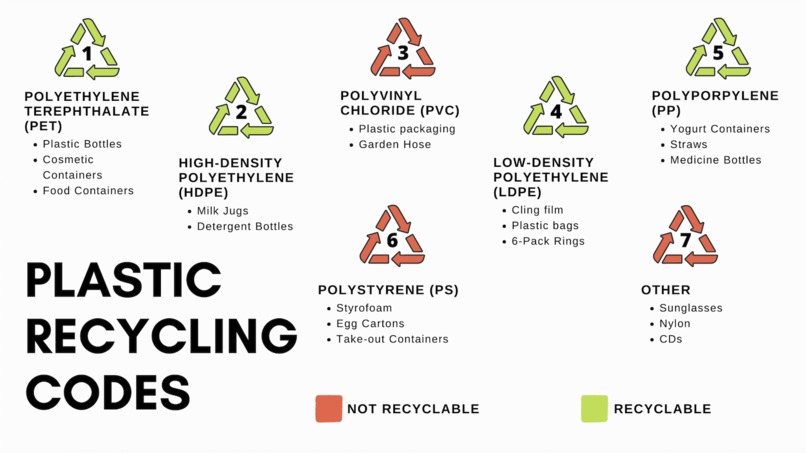
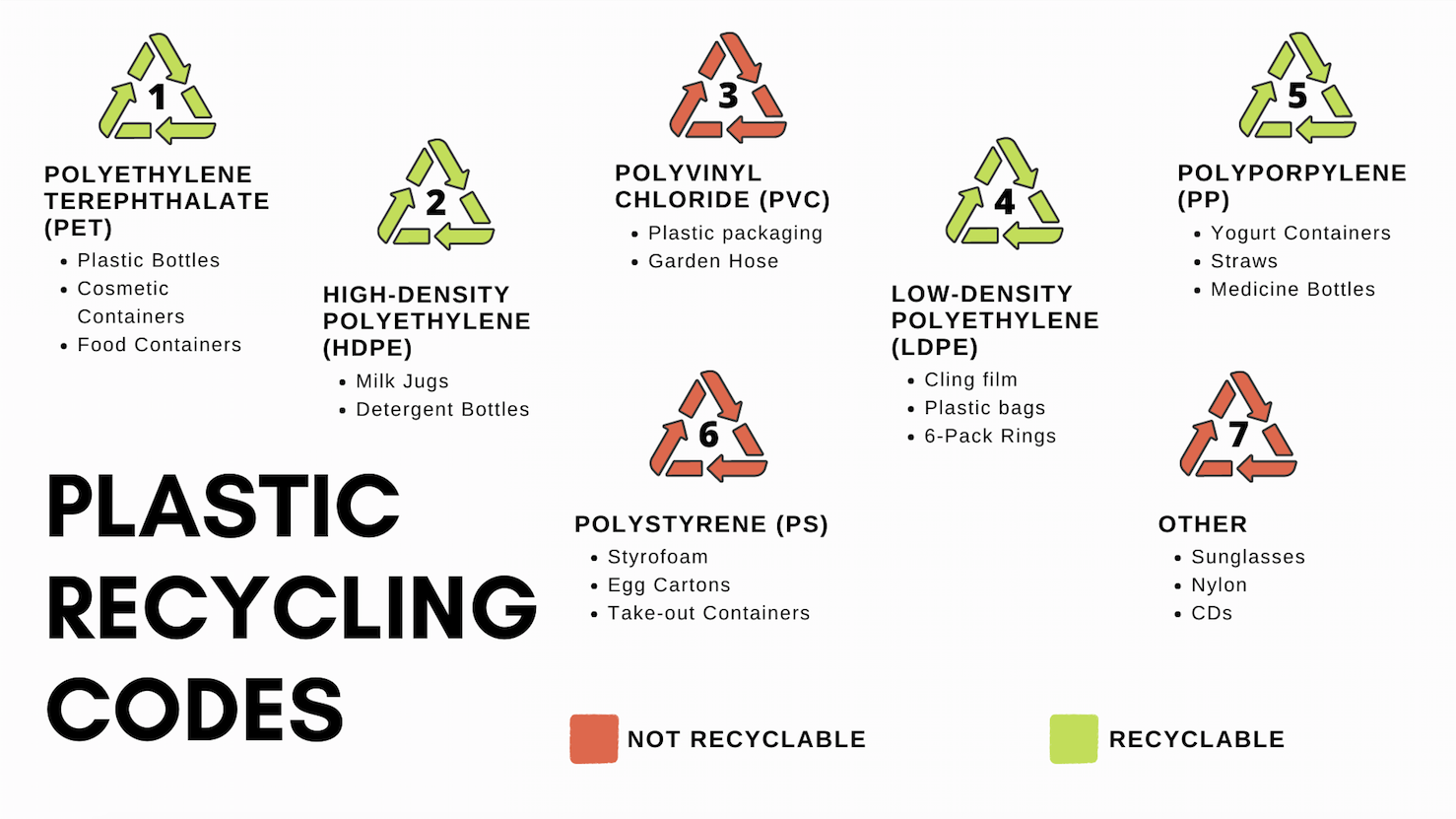
Plastic Recycling Codes
Inspiration
We’re no stranger to the fact that protecting the environment is a massive concern for our generation. But too often, one of the most critical aspects of environmental harm is ignored: waste disposal. Large-scale pollution stems from a lack of recycling and an over-dependence on trash disposal. If even just one item in a load of recyclables is contaminated, the entire batch is rejected and goes to the landfill. Thus, there is a need for awareness on what waste is recyclable, and what is not. For so many in our society, if there’s any doubt on whether something is recyclable or not, it heads straight to the trash. That’s why we decided to create a plastic classification model to differentiate between plastic waste and non-recyclable waste.
What it does
Our project is a CNN Model that is an image classifier that, when shown a pic of a plastic recycling code, classifies it as either recyclable, non-recyclable, potentially recyclable, or not plastic.
How we built it
We created a CNN sequential model that had 20 layers, which generated predicted labels of either recyclable, non-recyclable, potentially recyclable, or not plastic. We utilized NumPy, matplotlib, and torchvision for our project. Loading our dataset from google drive, our image classification base class aided our CNN and its layers to generate predictions. In the end, we trained our model and loaded it onto a final function.
Challenges we ran into
Since our dataset size was very large, we found it hard to train our model quickly. It was also very difficult to choose the exact layers for our model that would maximize accuracy.
Accomplishments that we're proud of
We are proud of ourselves for persevering through errors or bad accuracies. We put our best effort into improving the model and its layers.
What we learned
We learned that it is important to match the input features of one layer to the input features of the next in the model. Also, the arrays must have the same dimensions if they are to be compared.
What's next for CNN Model to Classify Plastic Based on Recycle Code
In the future, we plan to tweak our model so we can improve its accuracy, and possibly load the model into a web app or mobile app to allow users to utilize it.

Log in or sign up for Devpost to join the conversation.