-
-
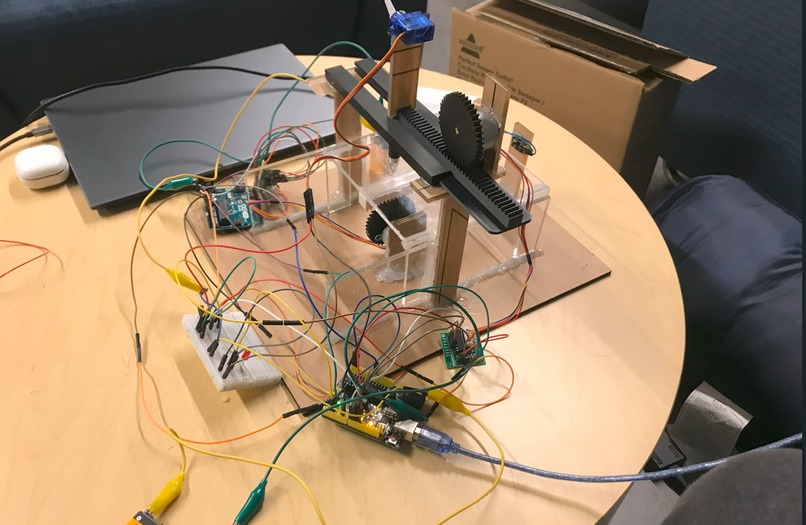
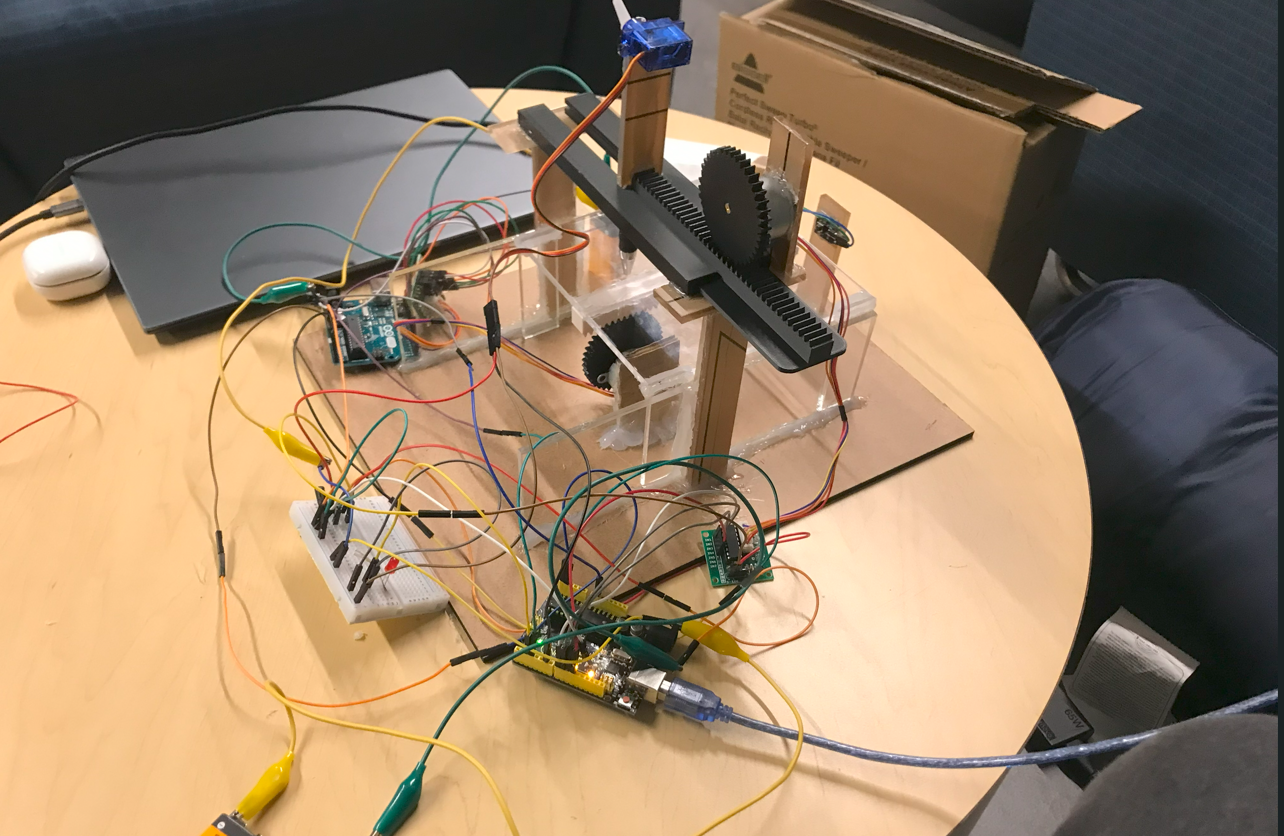
Whole project view
-
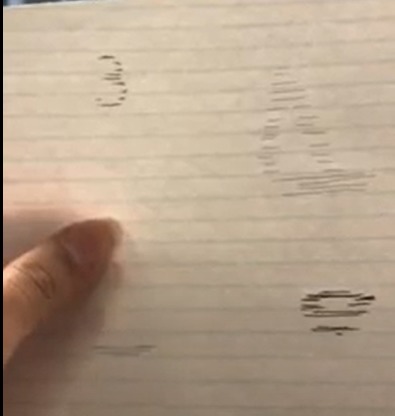
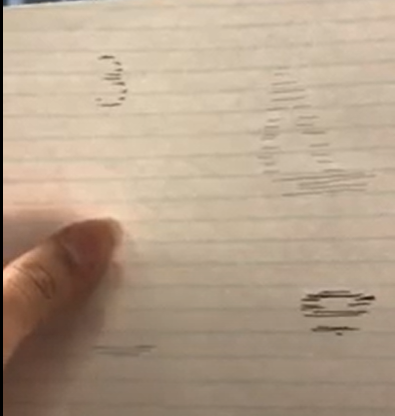
the number three and a triangle design
-
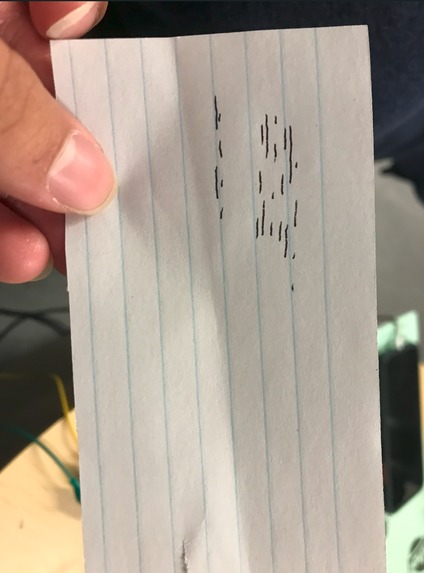
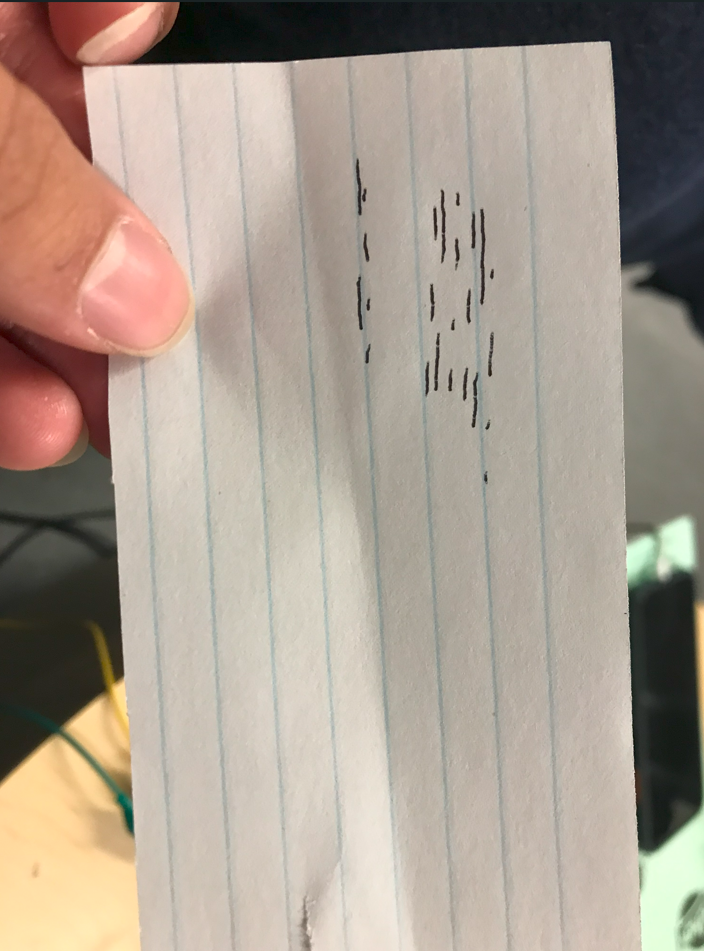
Example of line pattern
-
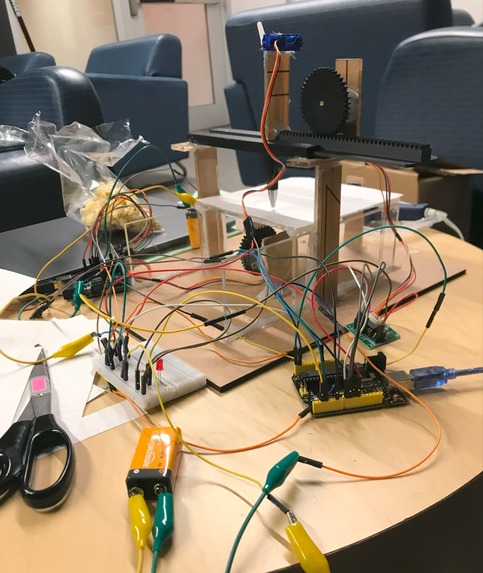
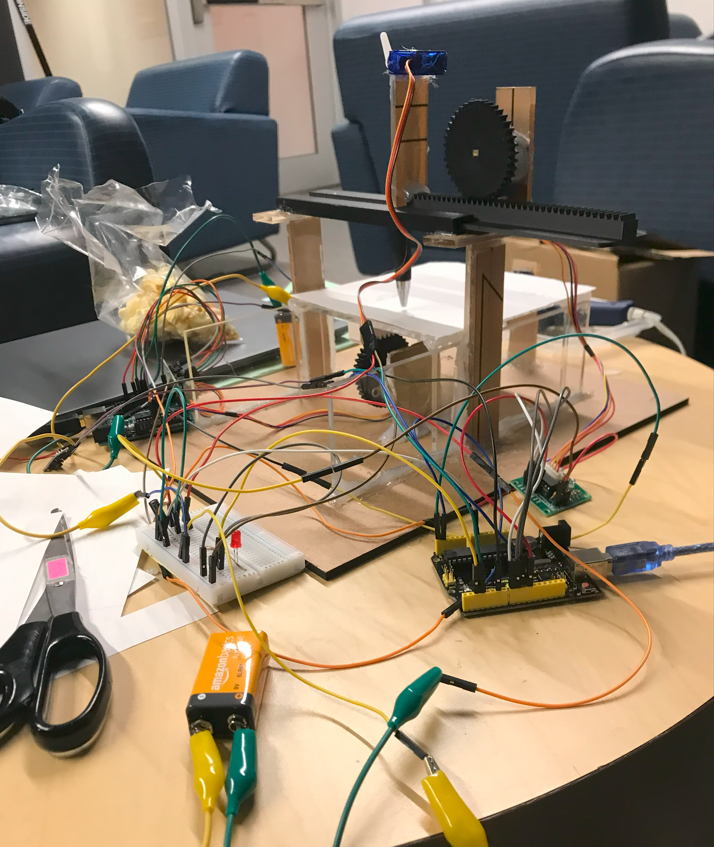
overall structure
Inspiration
Our FRC team (4308 Absolute Robotics) uses CNC machines quite often, and so we used this opportunity to explore and extend our interest in this machinery.
What it does
The project takes an image and converts it into grayscale code using a Python script. This code is then imported into an Arduino which controls the stepper motors for each axis and clicks the pen on or off.
How we built it
First, we sketched a conceptual design which we then converted into a CAD model to fully envision how the project would come together, and what parts would be needed. We then utilized the laser cutting and 3D printing services available to cut down manufacturing time and increase precision. Hardware was borrowed from hardware checkout to supplement any of our own missing technology.
Challenges we ran into
The first challenge we ran into was tuning the motors and having them work in sync with each other. Since we had 2 Arduinos controlling each stepper motor/axis (due to current concerns), a serial communication method was needed; we used I2C in this case. It took time to tune the motors and signals in order to get them to work together. Limited time to manufacture was also a big constraint, which meant that we often had to find "patches" rather than being able to rebuild a more refined version (Ex: Friction surfaces & Power concerns).
Accomplishments that we're proud of
We are proud that we were able to come up with a design that is affordable yet has great functionality, and it can be further built upon with more complex use cases as we improve on the design. This innovation is simply a foundation for much to come!
What we learned
We gained a lot of experience when it comes to the electronics and software associated with CNC machines, even at a higher level. We learned how to manipulate certain axes using stepper motors and different slide mechanisms.
What's next for CNC Sketcher
Our vision for this design is to expand on its current functionality by:
- Creating a wireless app that can allow for seamless and centralized print requests without needing multiple scripts.
- Advanced pathway detention system that would allow the machine to optimize the routes taken to draw the images, and allow for more complex shapes such as curves.
- Switching out the pen for more industrial uses such as laser cutters.
- Small fine-tuning adjustments to make the machine as a whole smoother in its operation (Ex: Using ball bearings and channels).


Log in or sign up for Devpost to join the conversation.