-
-
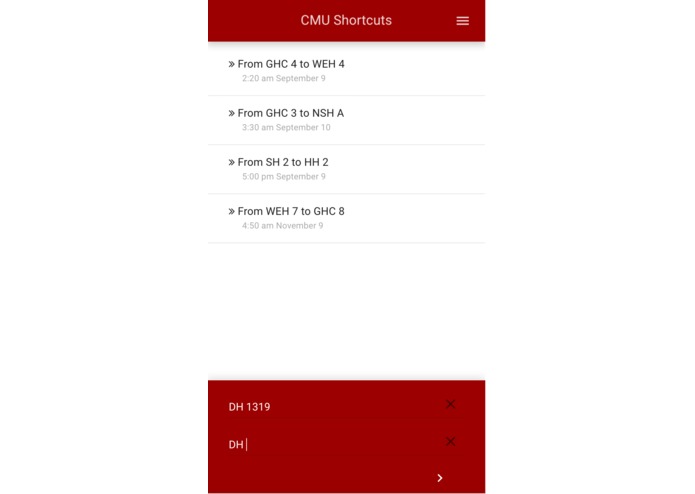
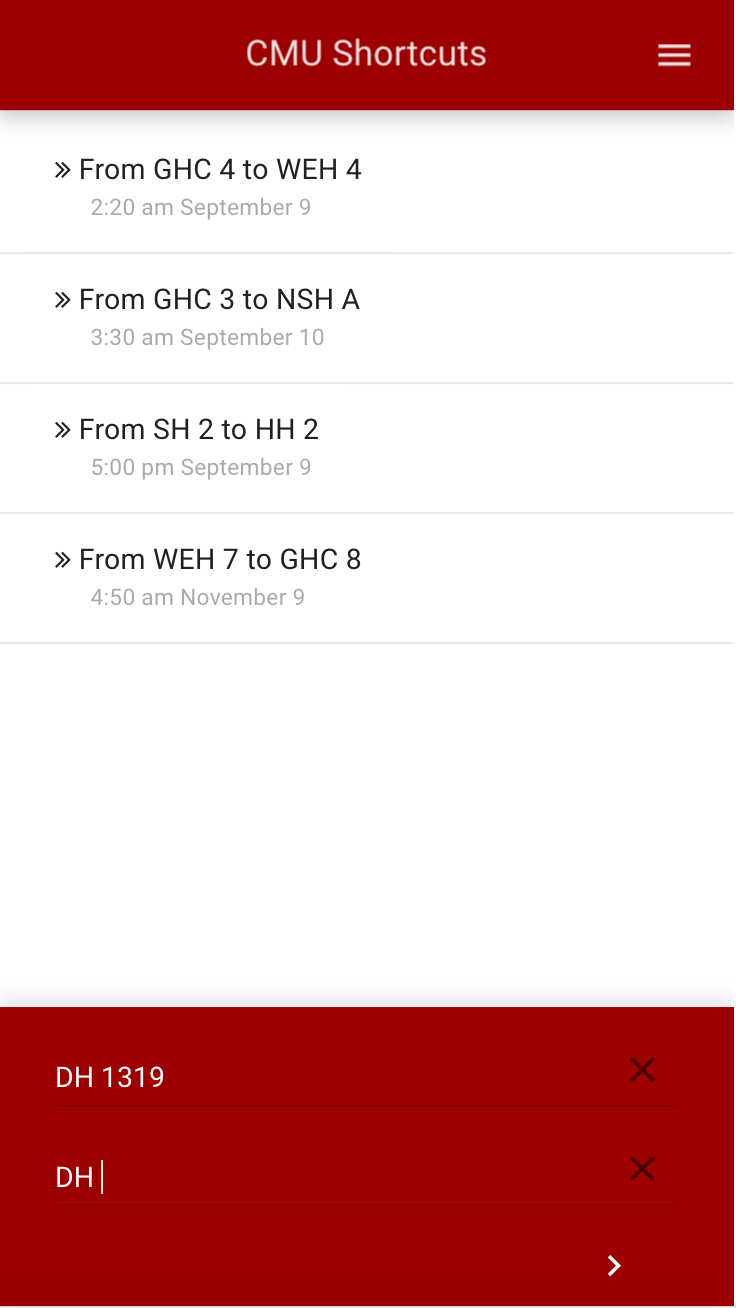
Home Screen
-
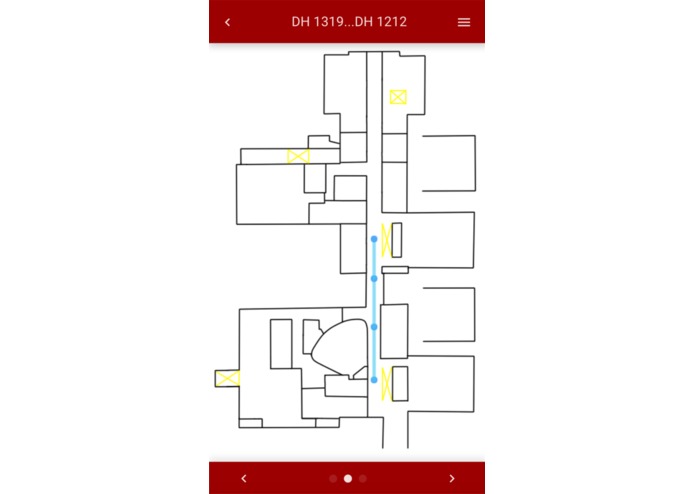
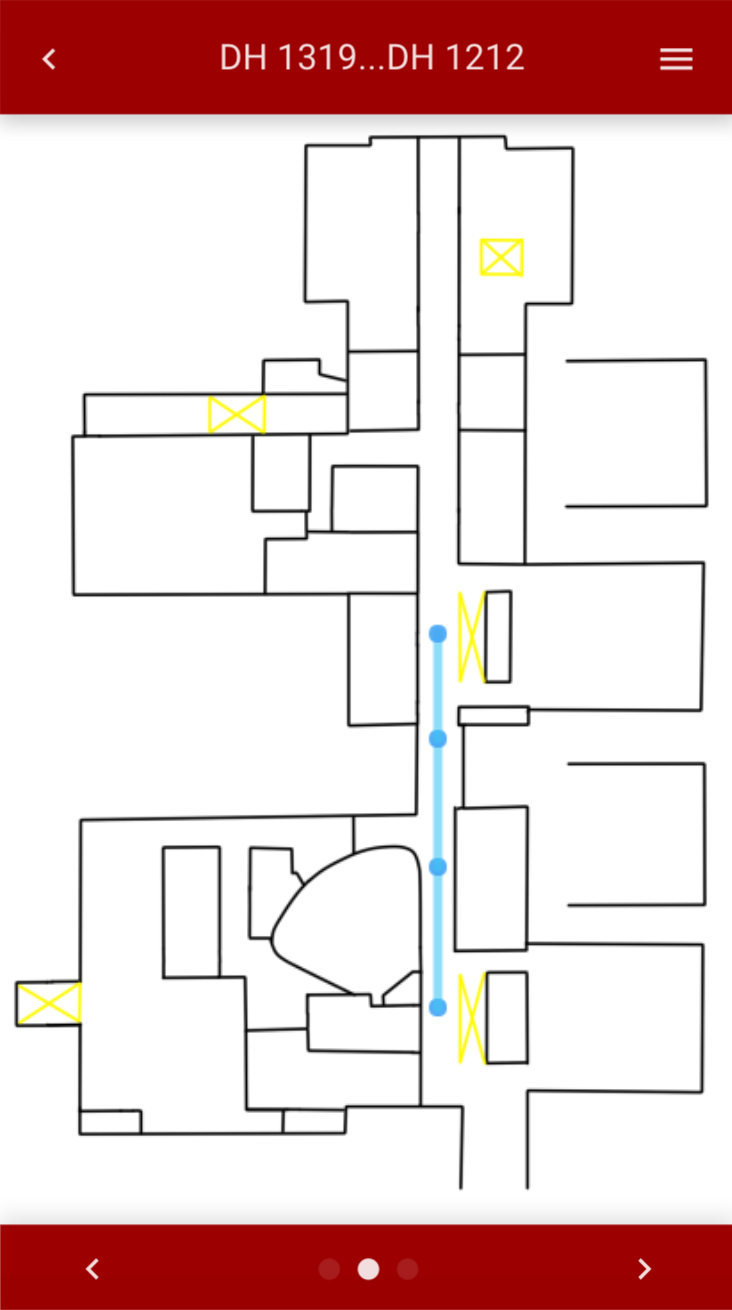
Directions
Inspiration
CMU does not have the most navigable campus ever. As freshmen, we had trouble remembering which floor connects from Wean to Gates, Wean to Doherty, or just the UC Lower Level in general. Wouldn't it be nice if we can quickly discover all the shortcuts on our phones?
What it does
It takes in two buildings and room numbers, and shows a step by step procedure of the directions.
How we built it
We built it with webpack, vue, html5, javascript, and css. As incoming freshmen, we have varying skills in python and java, but webapps are certainly the best way to rapidly prototype an idea.
Challenges we ran into
We first implemented Dijkstra's algorithm in Python, and when we tried to rewrite it in Javascript, we ran into quite a bit of bugs, like different function names and undefined variables.
Accomplishments that we're proud of
We finished a prototype for our concept in 24 hours and managed to get six hours of sleep. The app looks quite nice on mobile and might actually benefit future CMU students.
What we learned
Other than the technologies, we learned how to work as a team, communicating efficiently, and planning out ideas in such a short amount of time.
What's next for CMU Shortcuts
To complete the map of the entire campus and optimize our implementation of Dijkstra's algorithm. Almost everything is separated as a component, so future updates should be quite easy.
Built With
- css3
- git
- html5
- javascript
- node.js
- sai
- vue
- webpack
- yarn


Log in or sign up for Devpost to join the conversation.