-
-
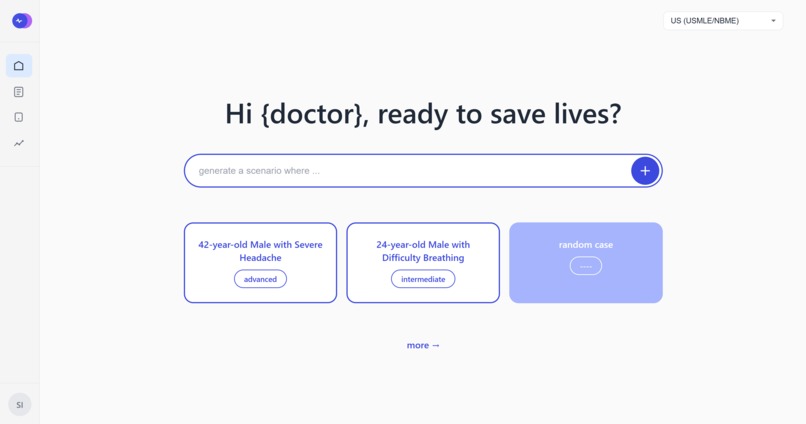
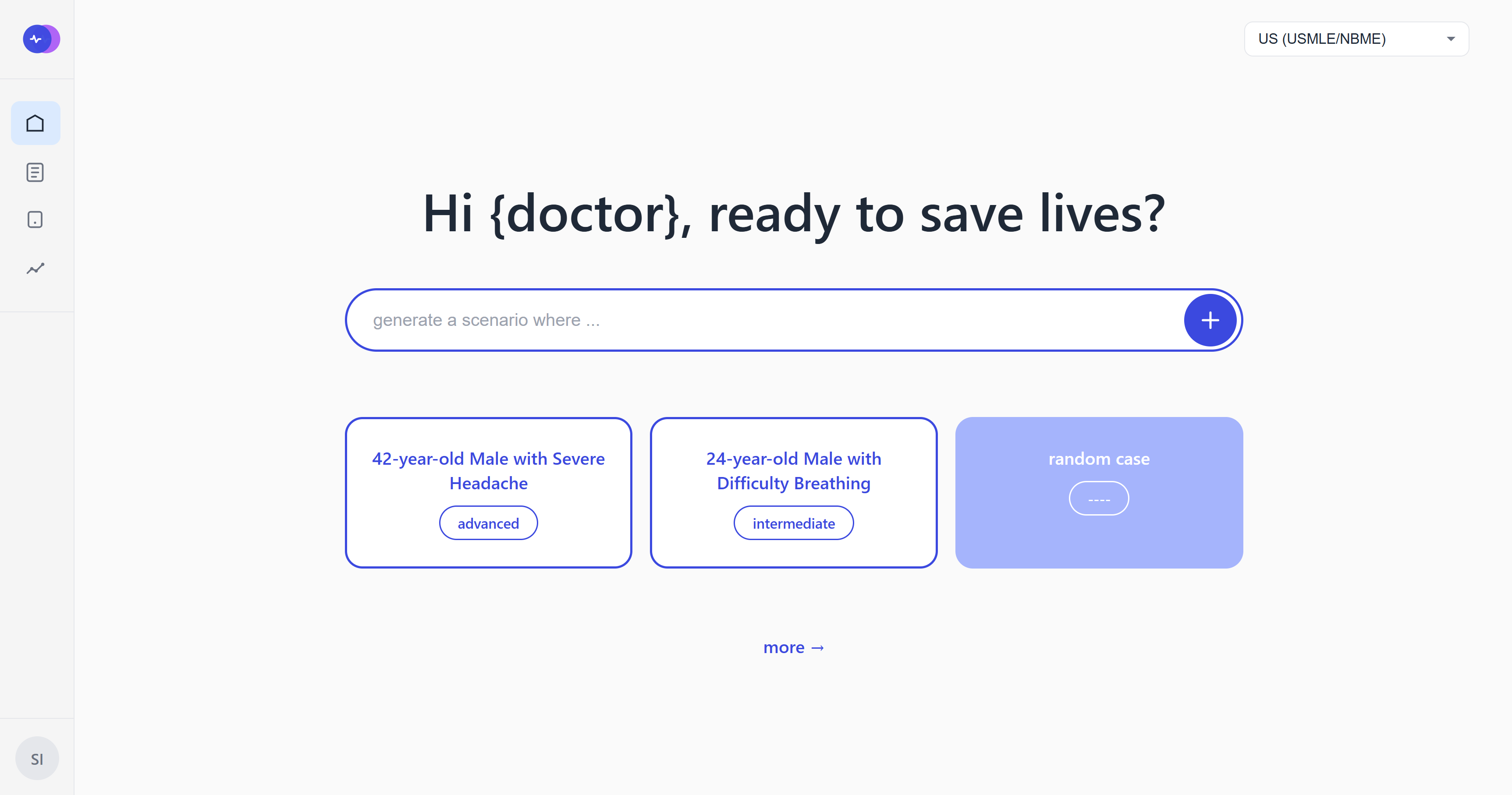
Home page
-
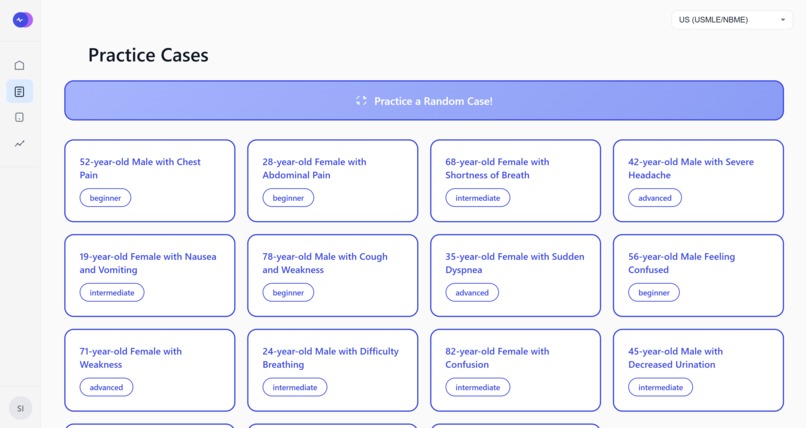
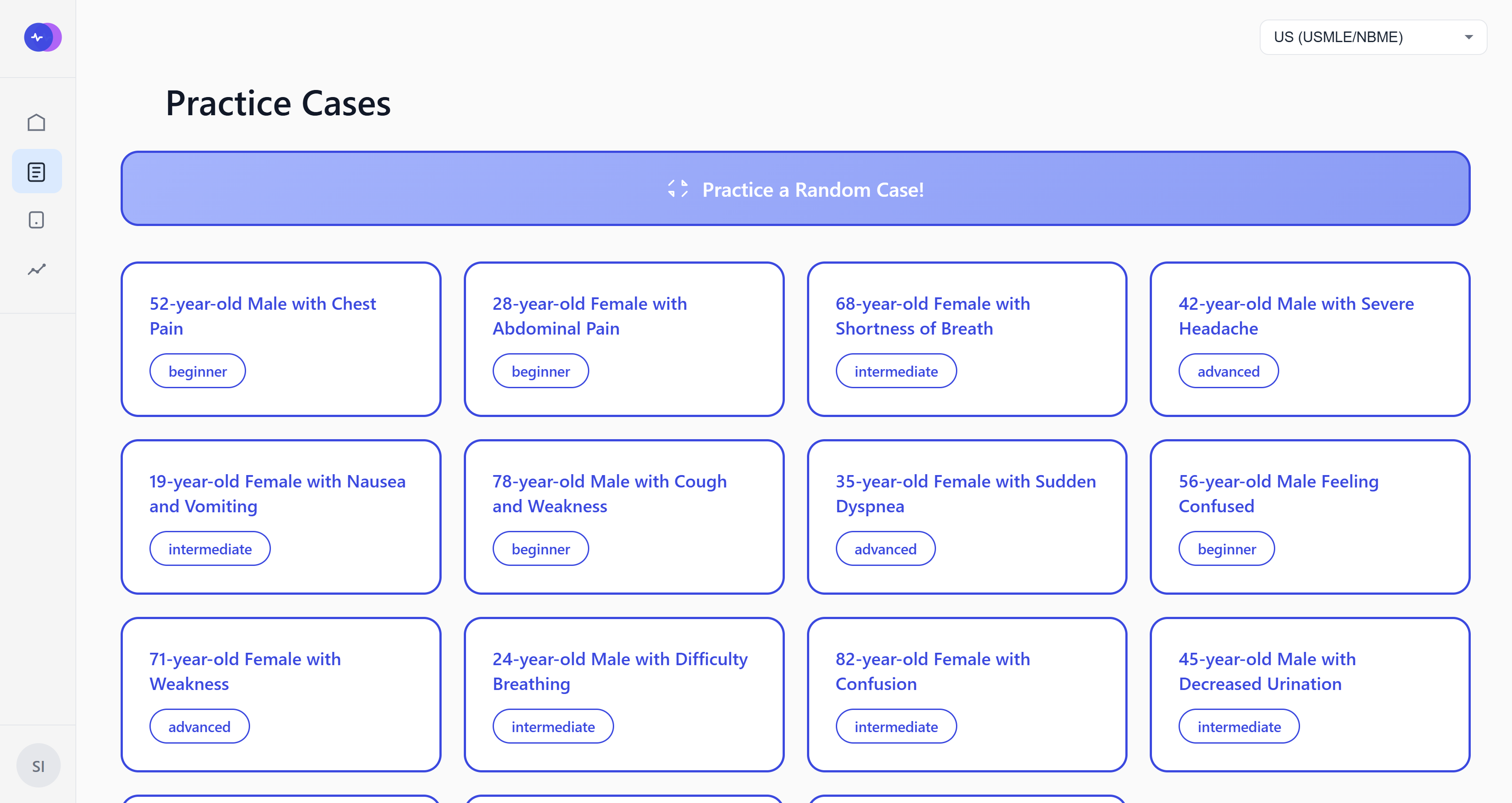
Cases
-
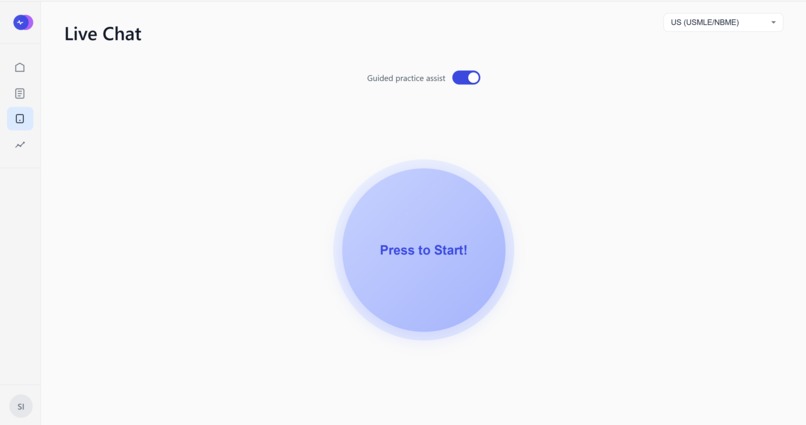
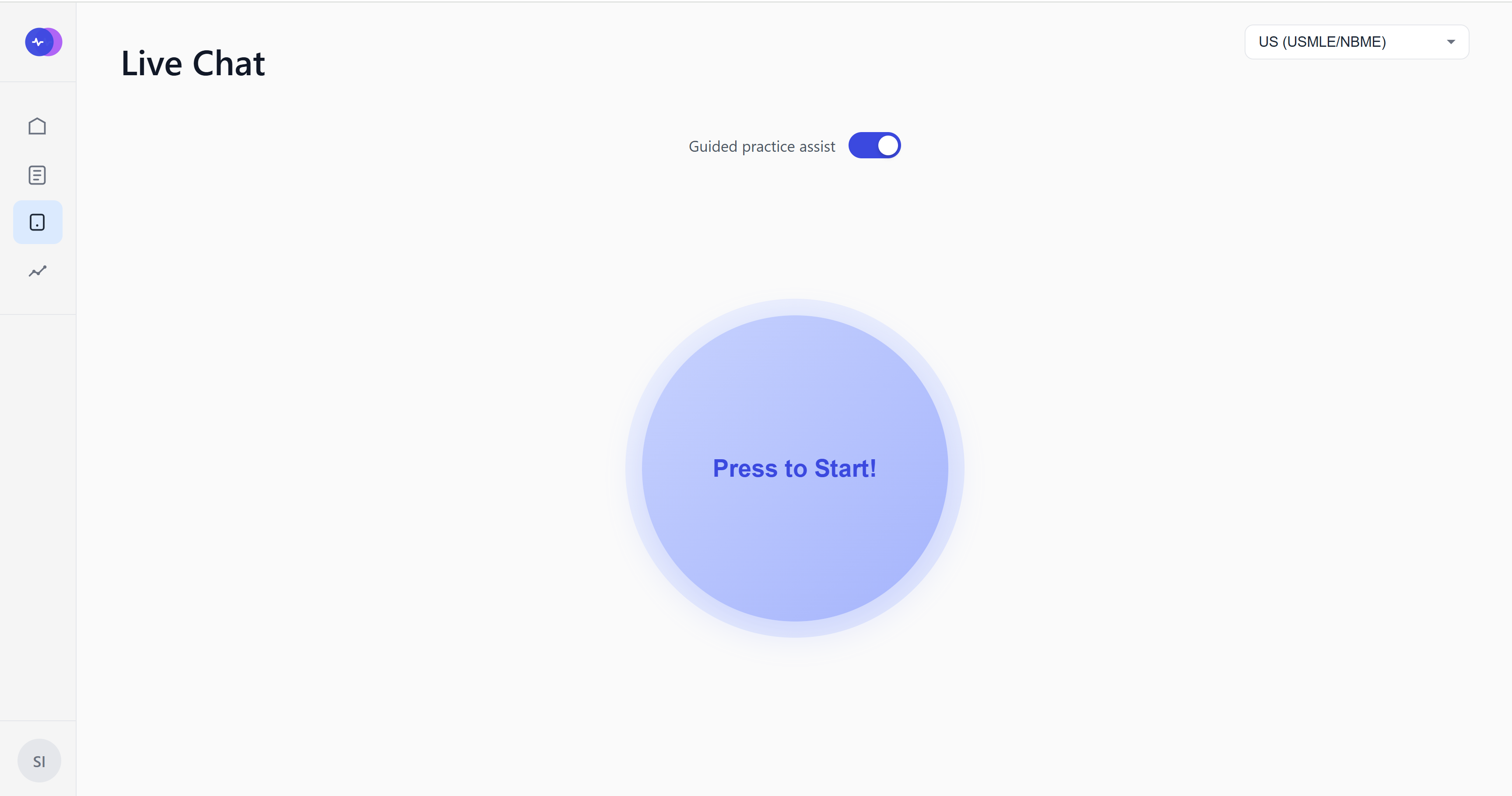
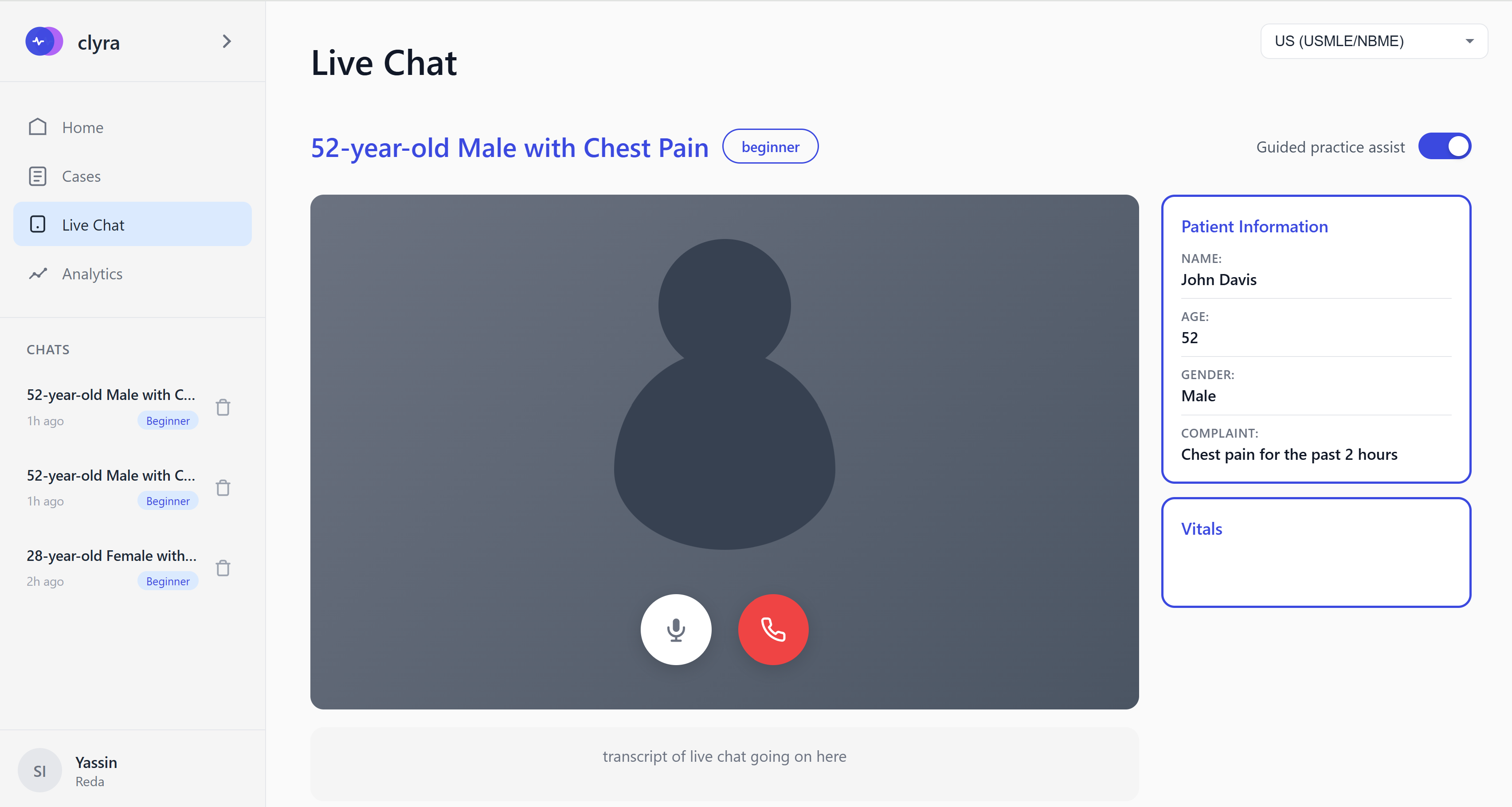
Live chat
-
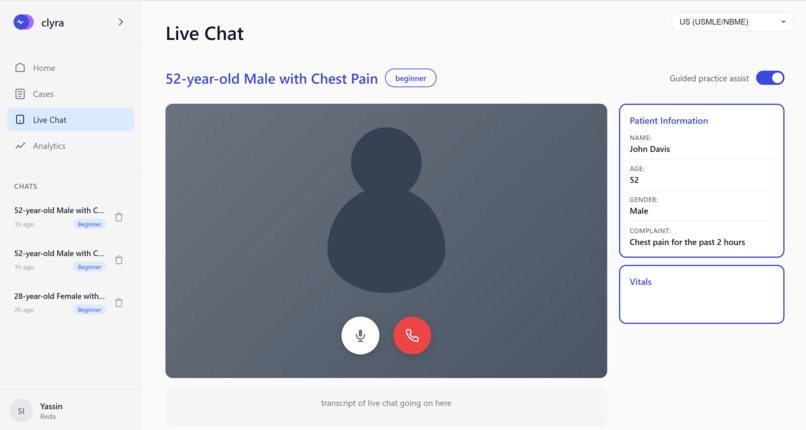
Live video call
-
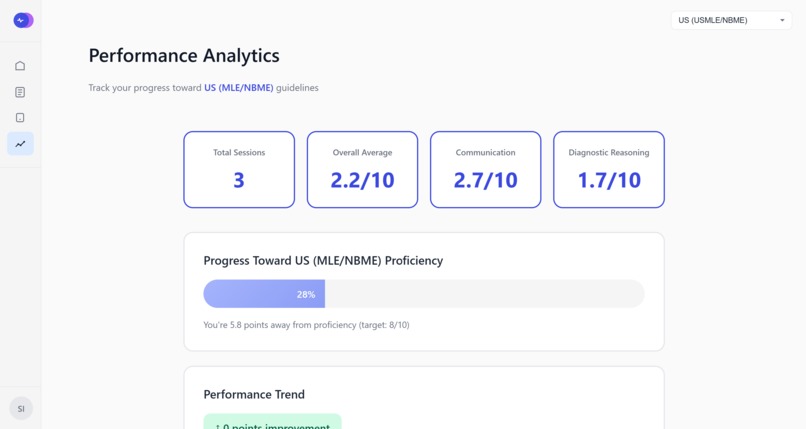
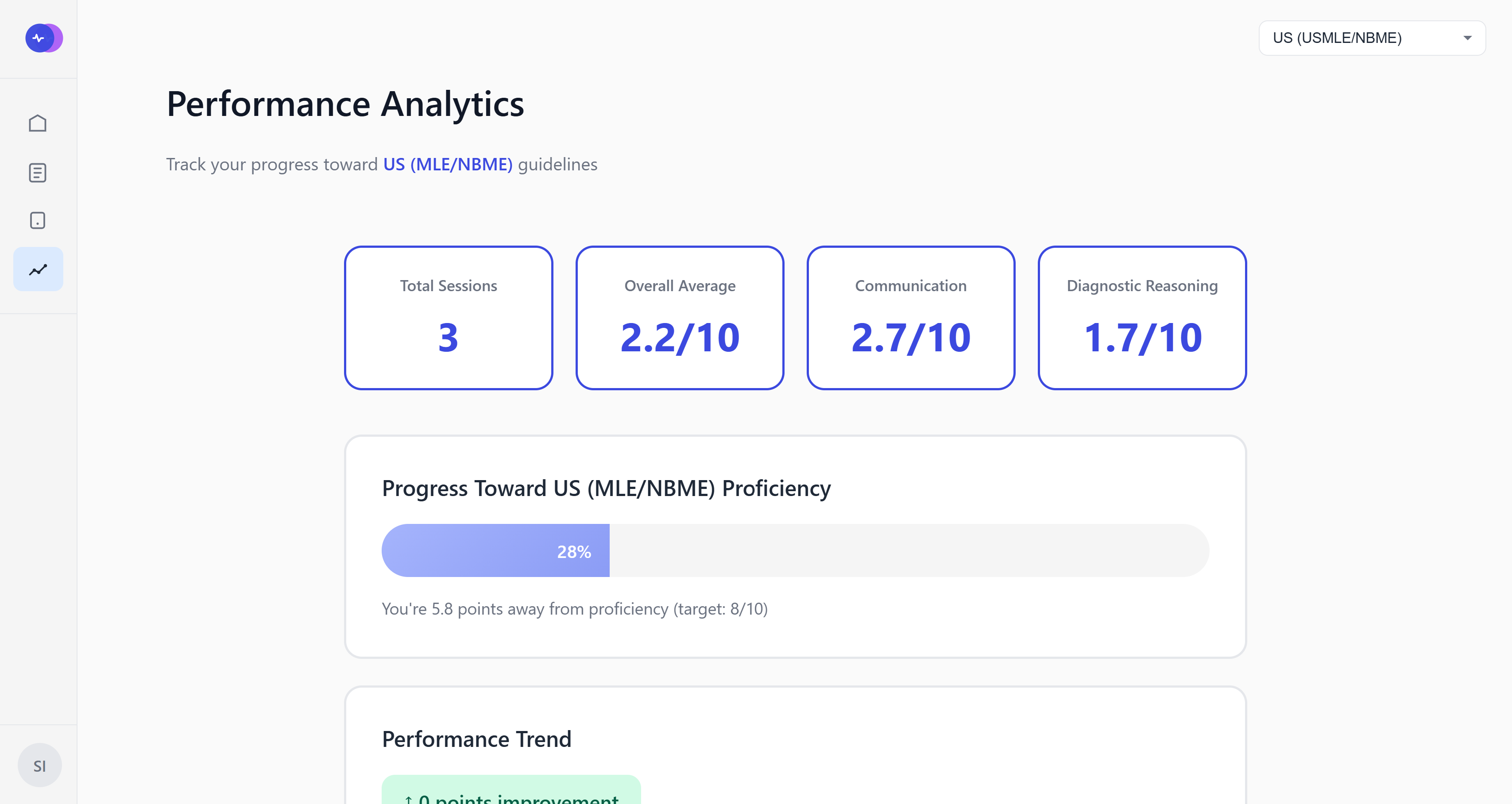
Analytics
Inspiration
Medical students spend less than 15 minutes per week interacting with real patients in their first two years of training — yet mastering bedside manner and diagnostic reasoning requires hundreds of hours of real-world experience. We wanted to bridge that gap by creating Clyra, an AI-powered virtual patient platform that provides realistic, on-demand clinical encounters.
What It Does
Clyra simulates natural, lifelike patient interactions using generative AI. Students can:
- Diagnose and treat virtual patients across diverse cases.
- Practice communication and empathy through realistic dialogue.
- Receive instant feedback on diagnostic accuracy, empathy, and communication style.
The goal: make clinical training accessible, scalable, and personalized.
How We Built It
We combined multiple technologies to create a responsive, emotionally intelligent AI patient experience:
- LLMs (Claude API) for realistic dialogue generation.
- Voice interfaces using text-to-speech and speech recognition.
- Scenario orchestration through a case management backend built with Python + FastAPI.
- Frontend using HTML, connected to a real-time chat and voice engine.
- Data storage for session tracking and analytics.
Challenges We Faced
- Designing realistic emotional and contextual responses that feel natural.
- Balancing medical accuracy with conversational fluidity.
- Handling complex branching dialogues without breaking immersion.
- Integrating voice and text modalities while maintaining low latency.
What We Learned
We learned how powerful agentic AI systems can be when fine-tuned for education. Building Clyra showed us the potential for AI as a scalable medical tutor — not to replace clinical experience, but to amplify it.
What’s Next
- Expanding the case library across multiple specialties.
- Mobile App
Built With
- ai
- claude
- css
- html
- javascript
- python

Log in or sign up for Devpost to join the conversation.