-
-
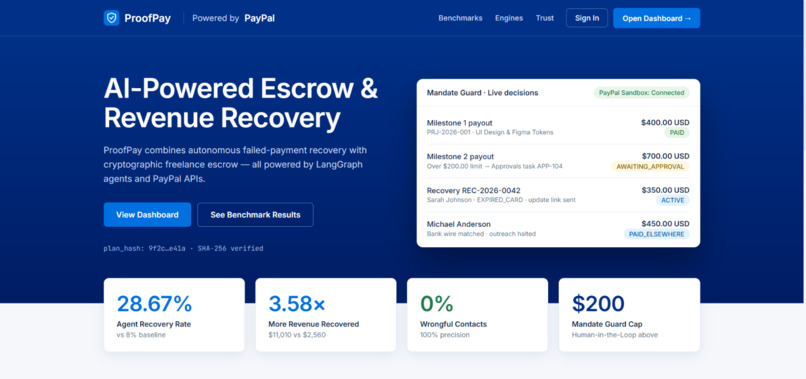
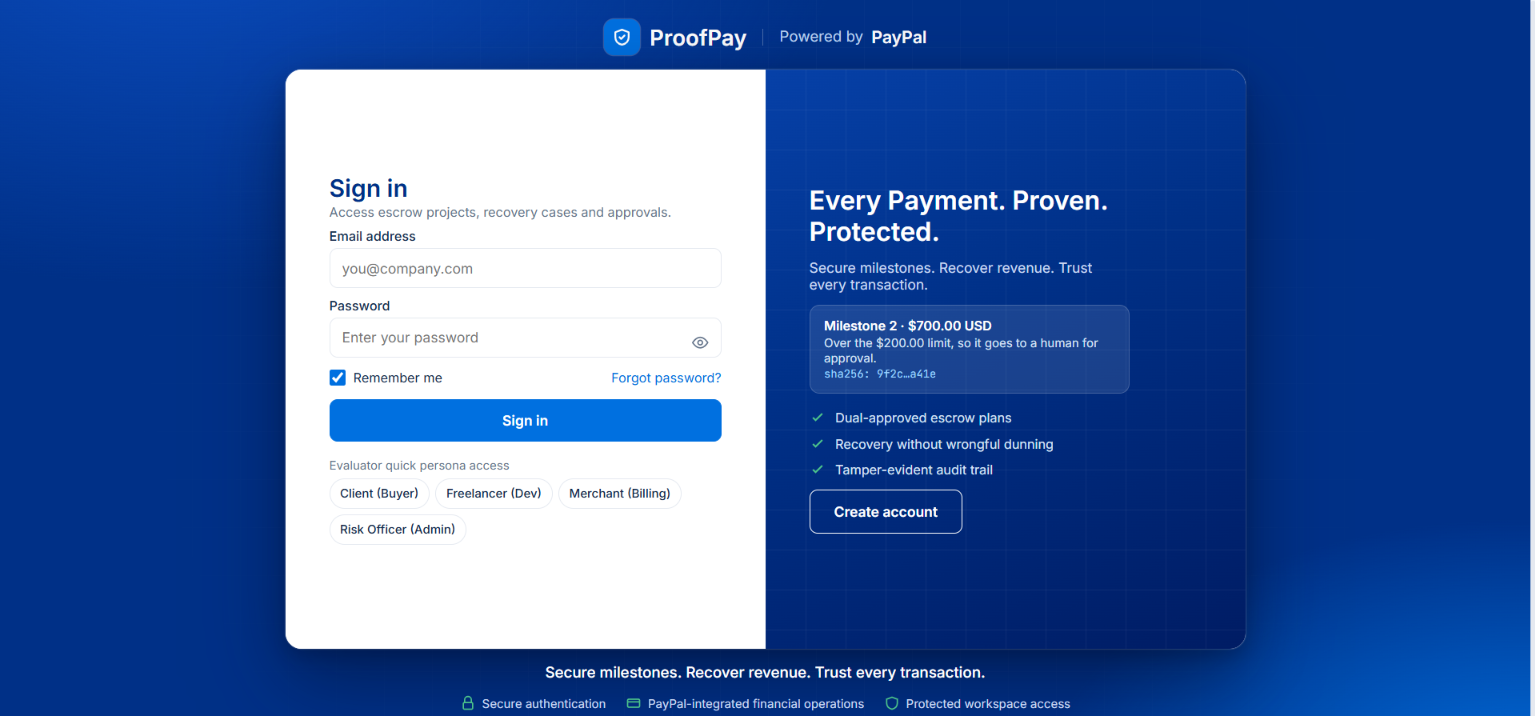
Landing Page
-
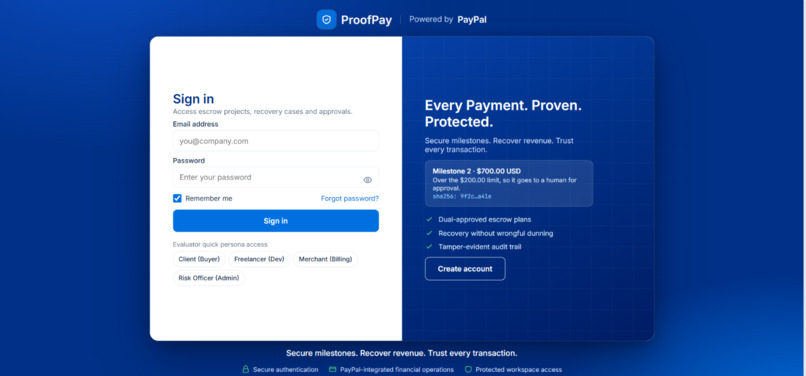
Login
-
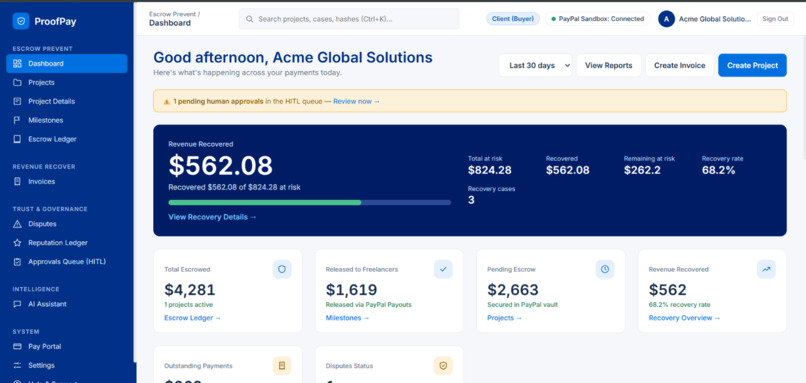
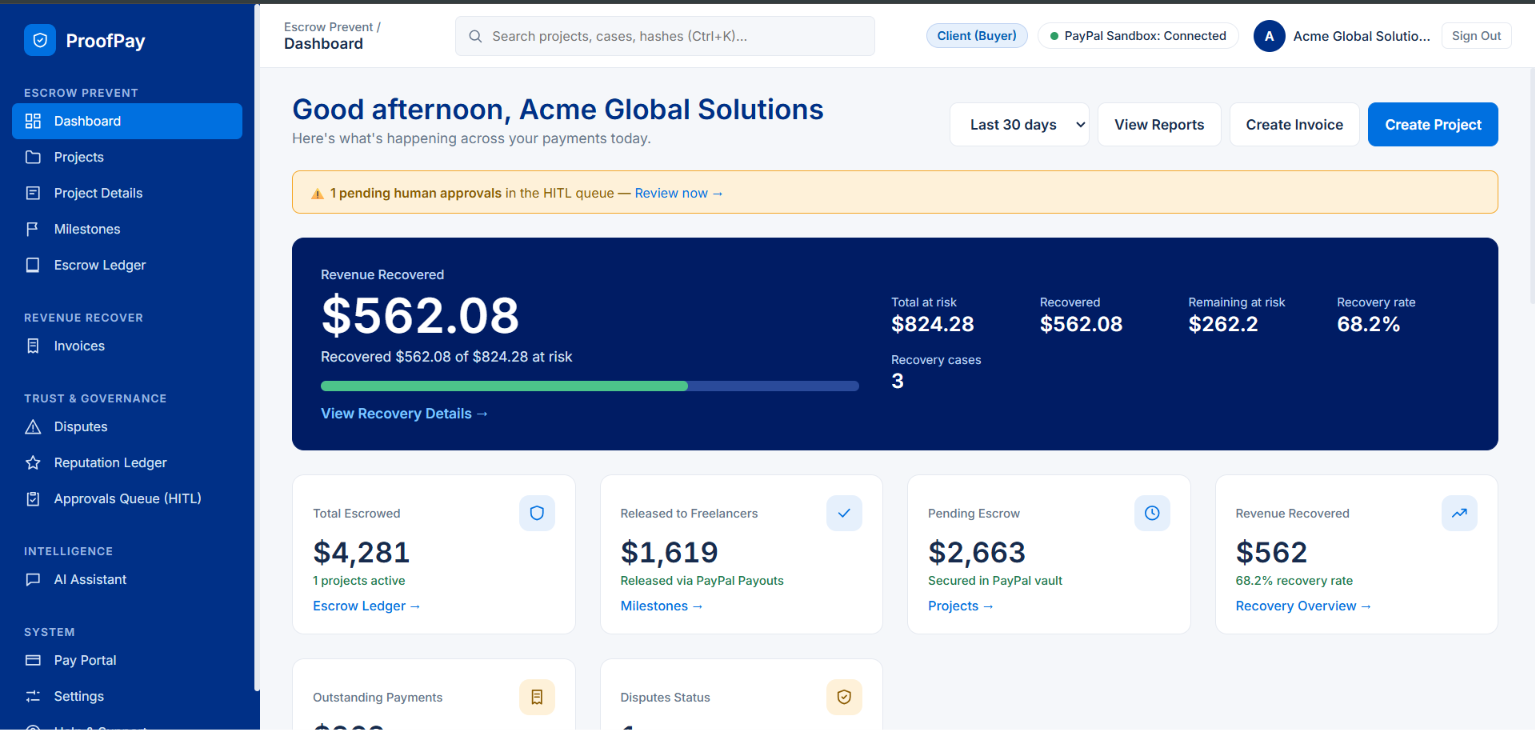
Dashboard
-
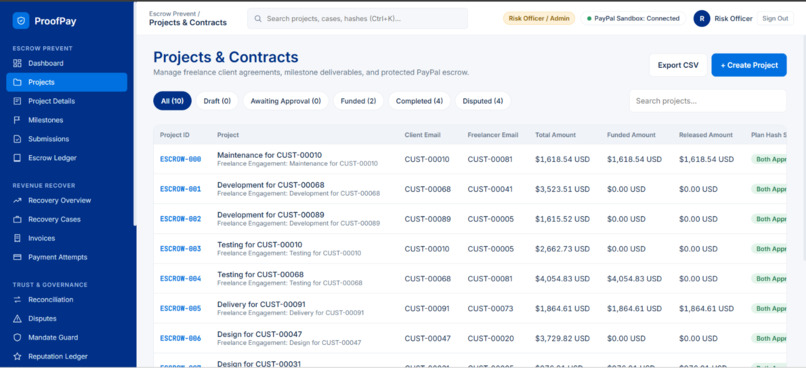
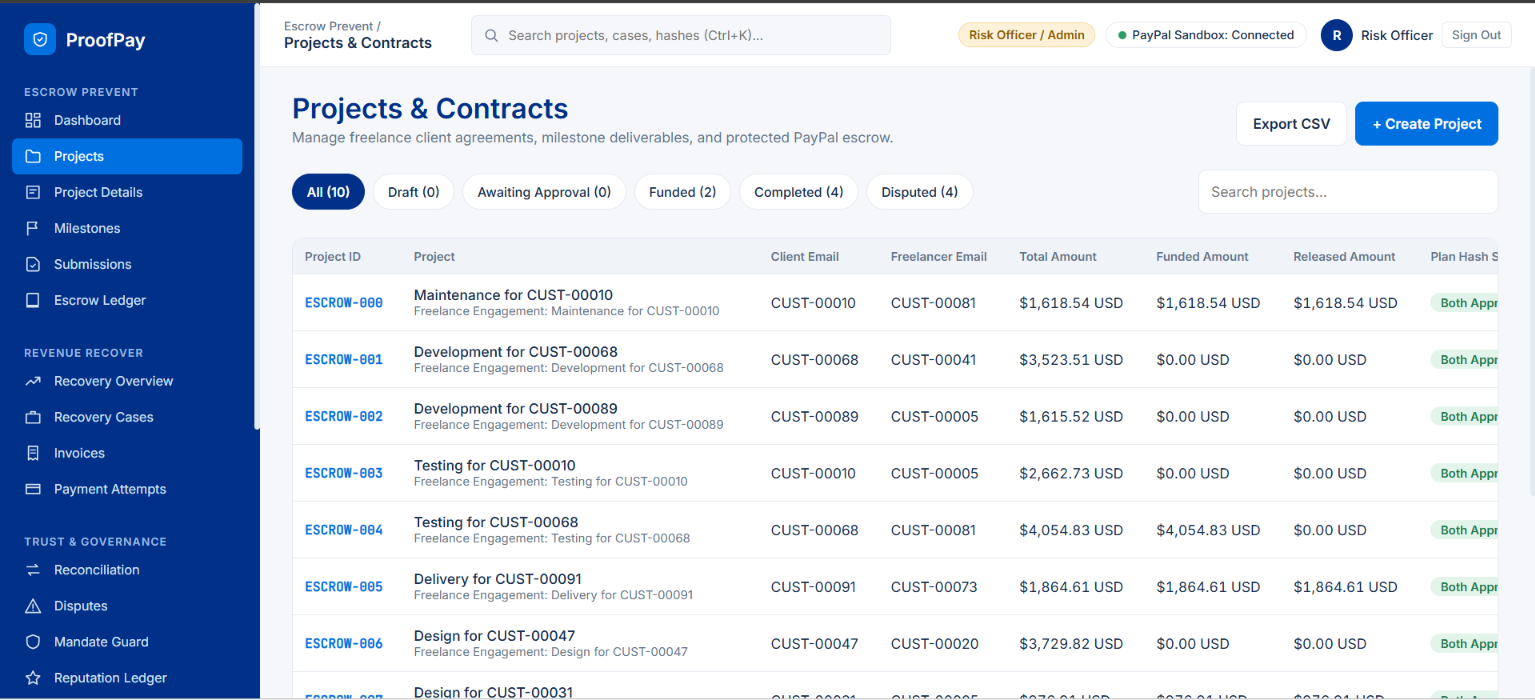
Projects
-
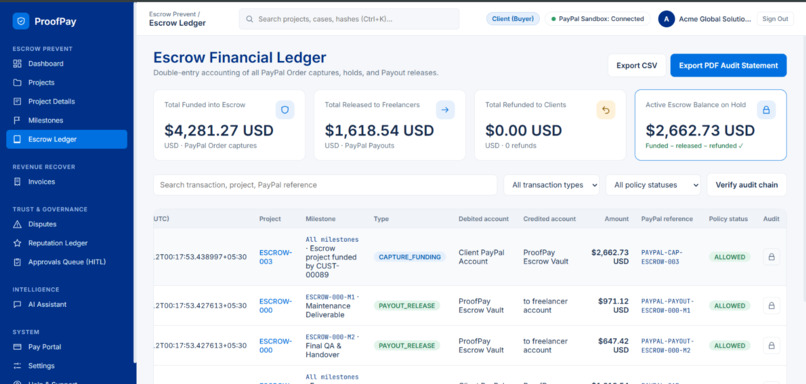
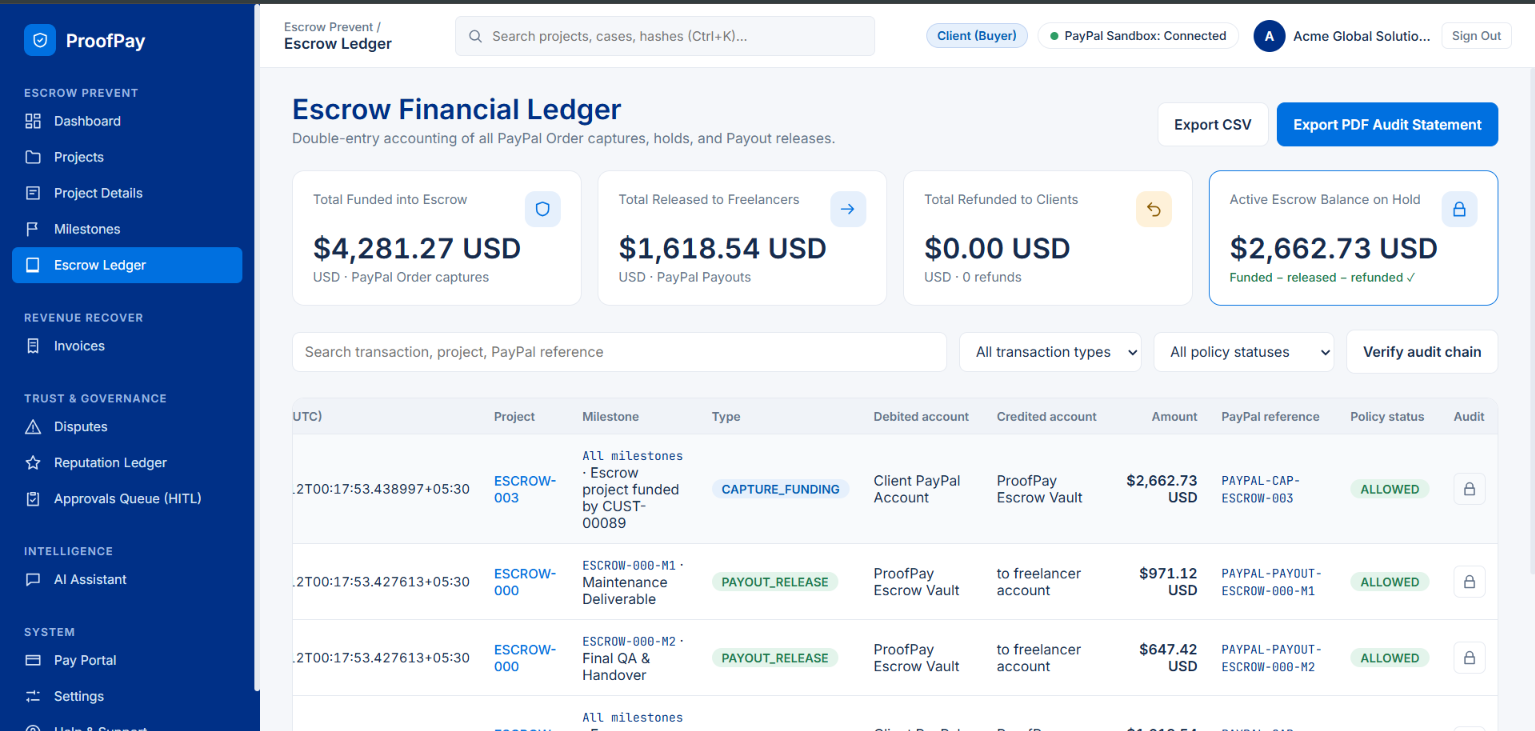
Escrow Financial Ledger
-
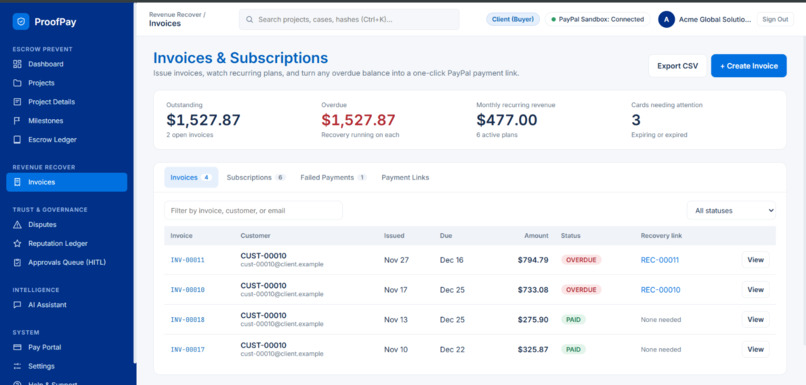
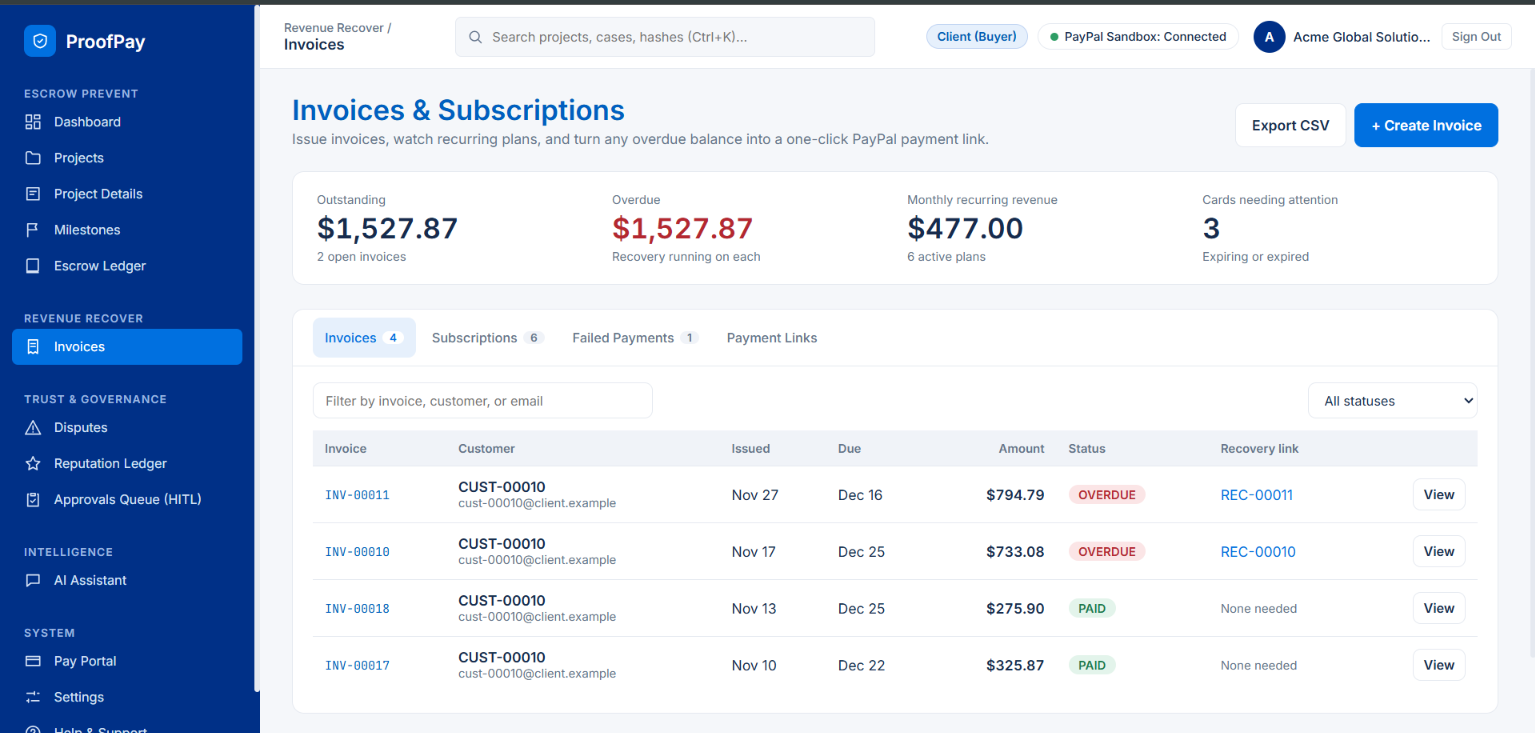
Invoices
-
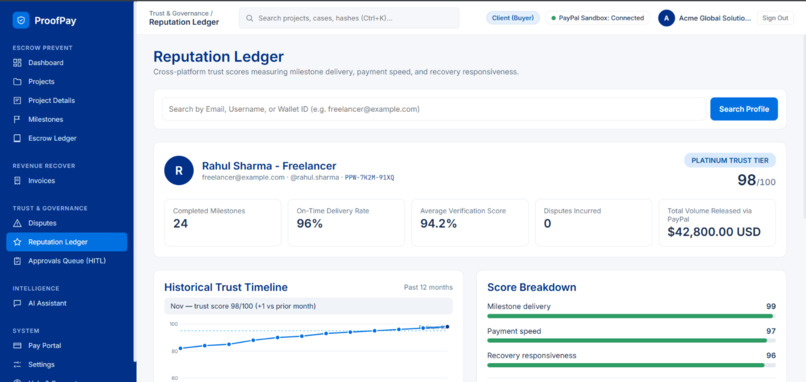
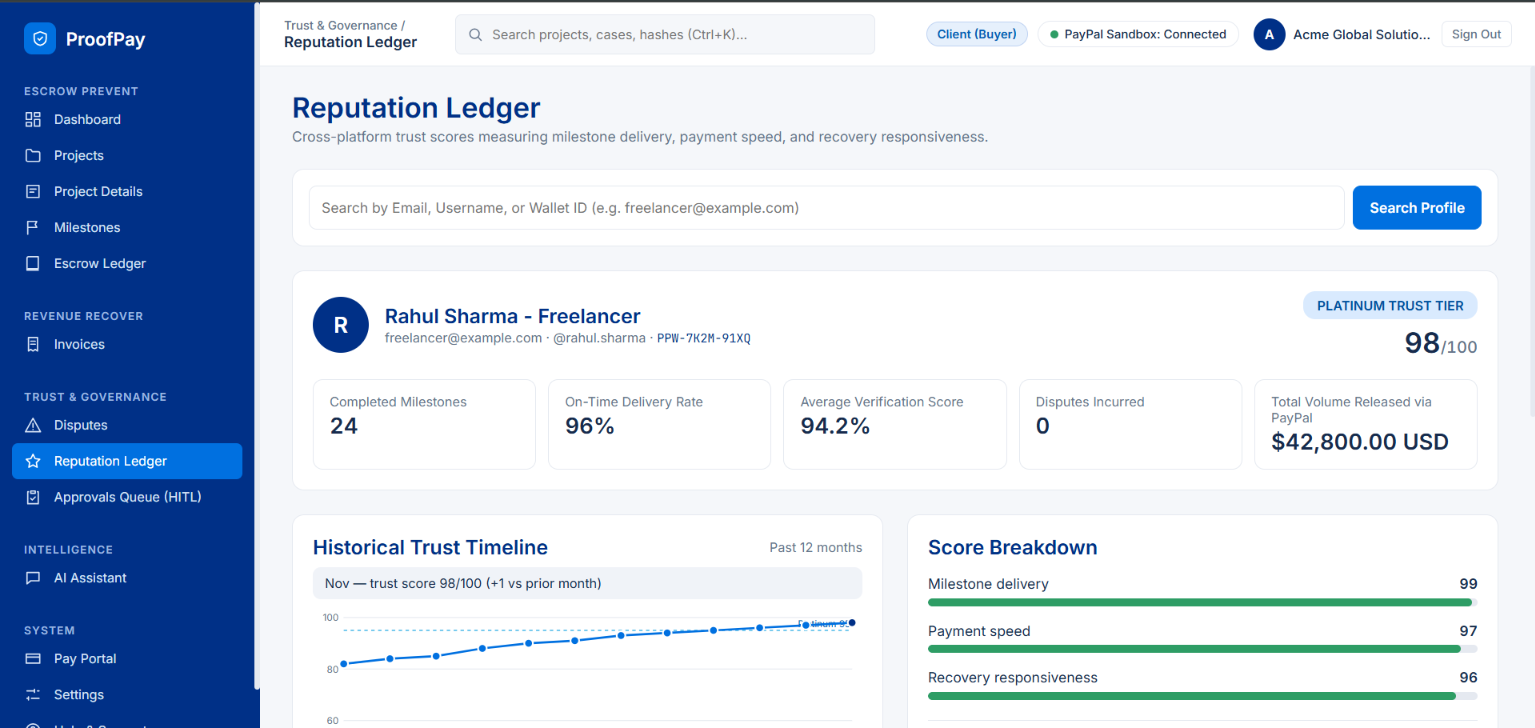
Reputation Ledger
-
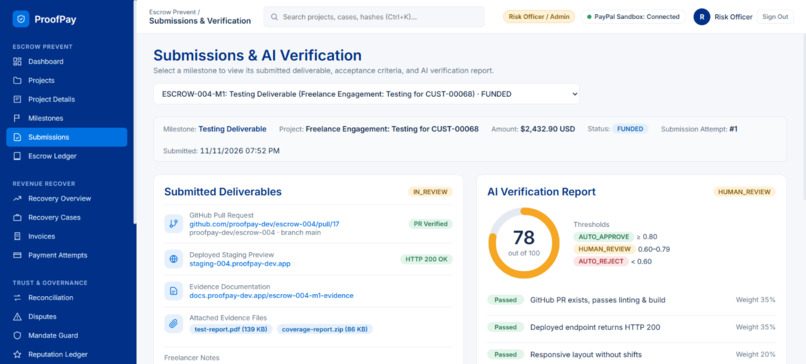
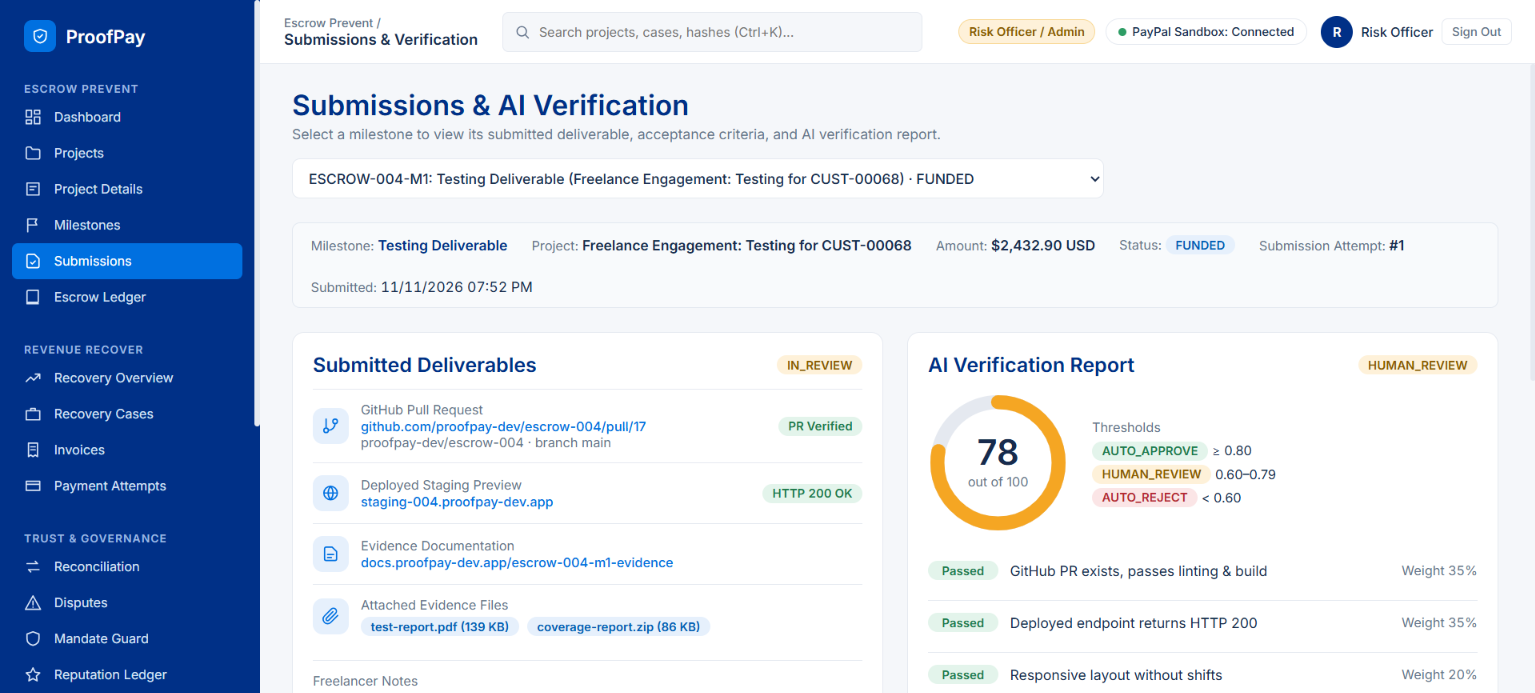
Submissions
-
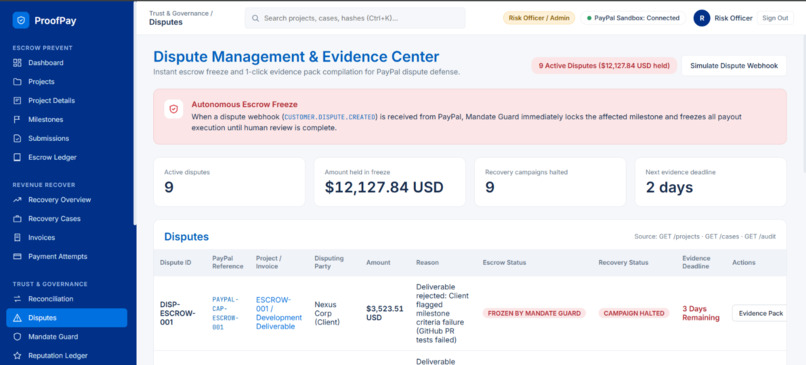
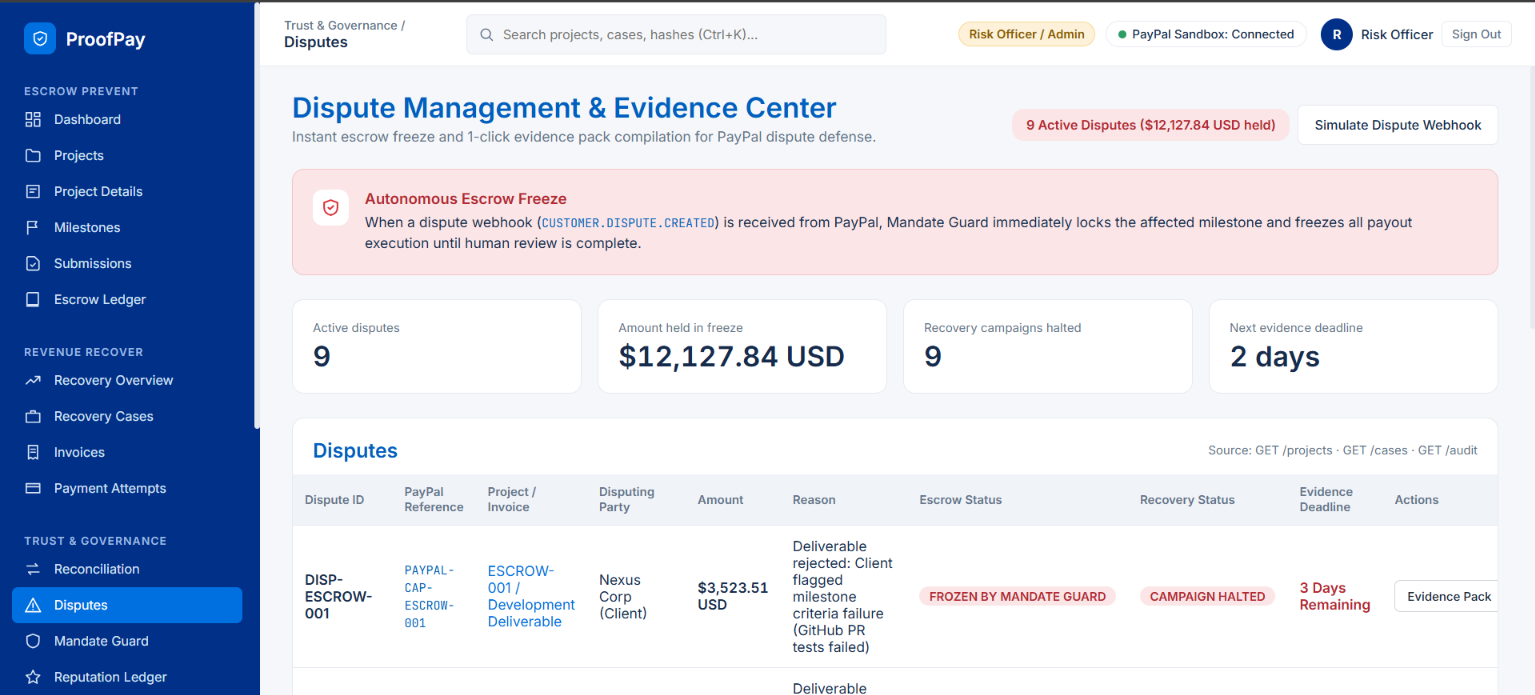
Dispute Management
-
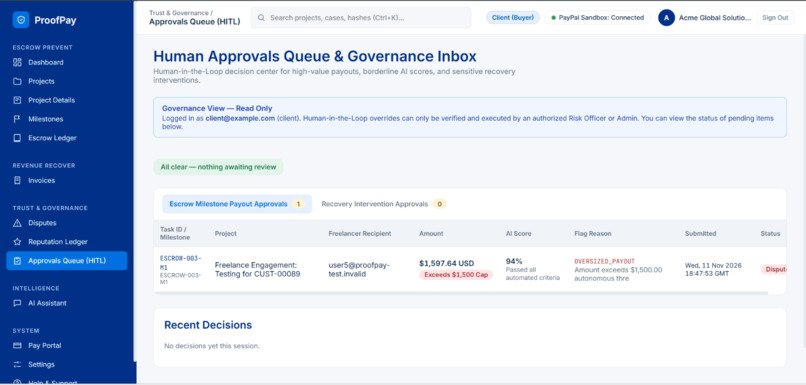
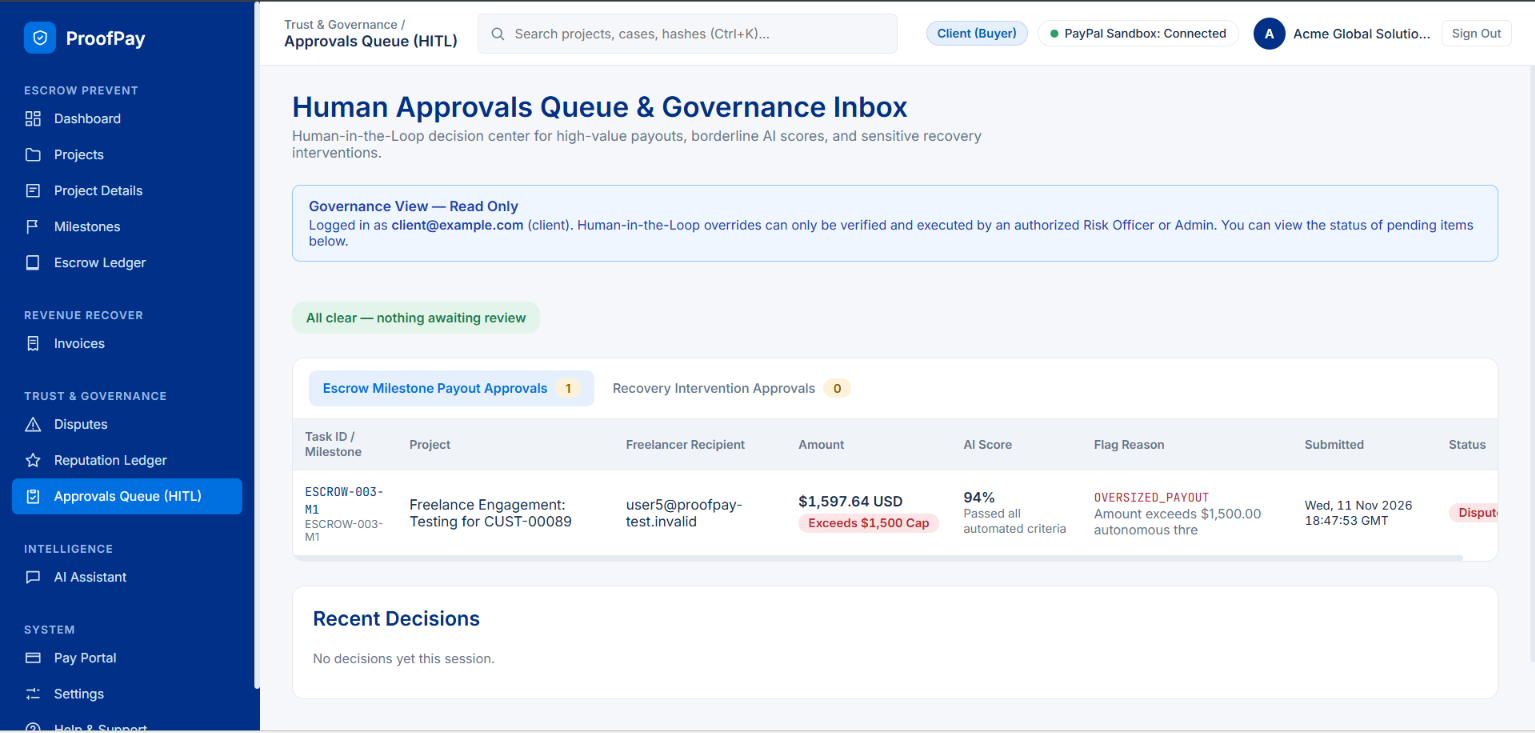
Human In The Loop
-
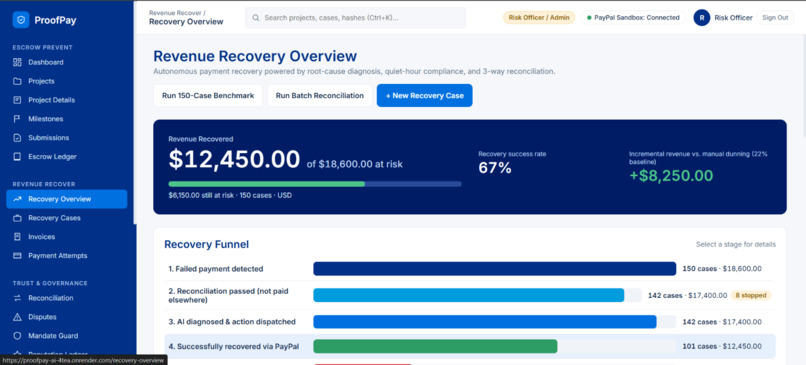
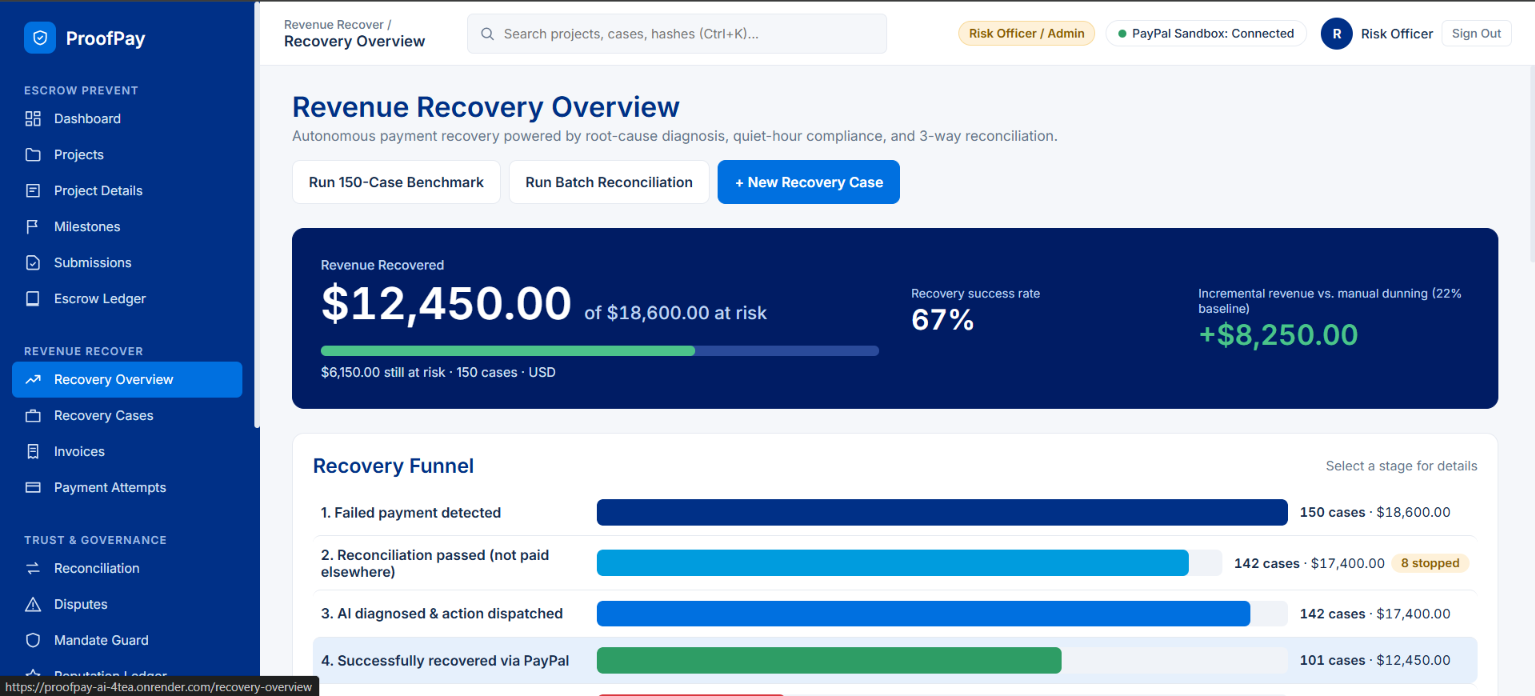
Revenue Recovery
-
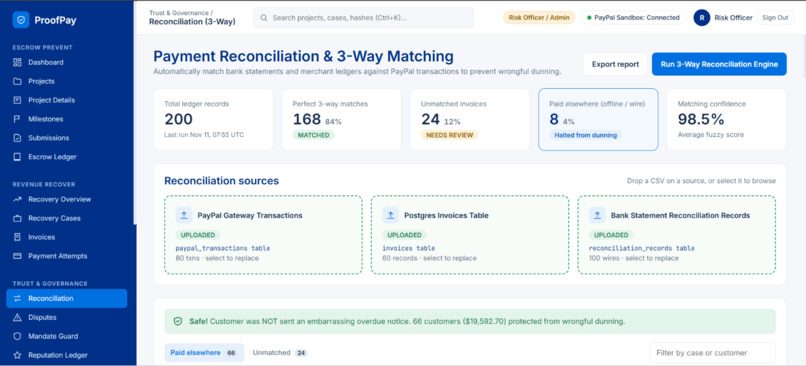
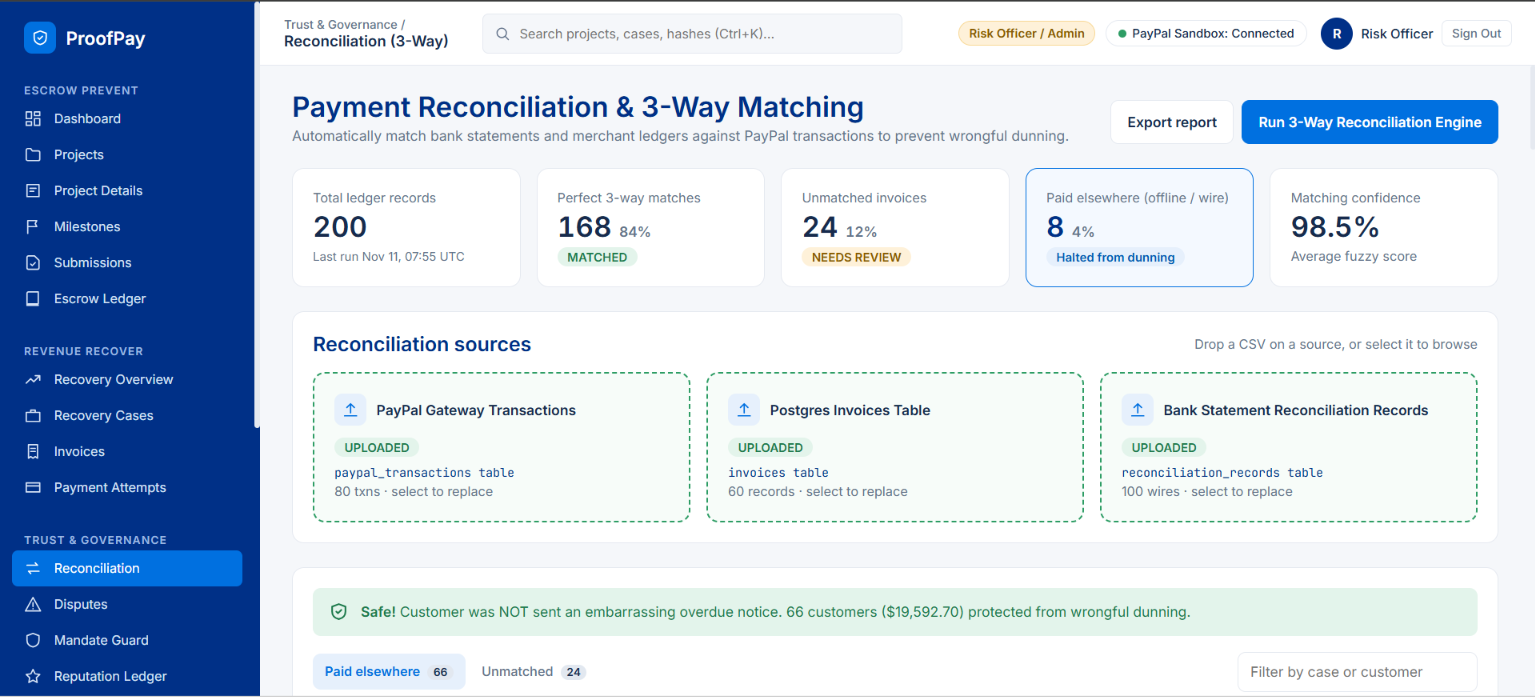
Payment Reconciliation
-
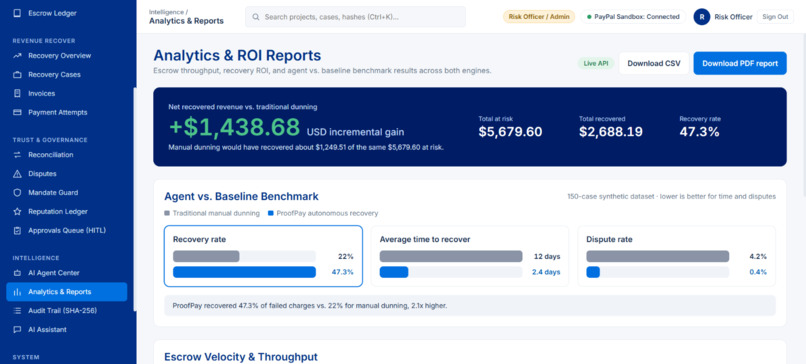
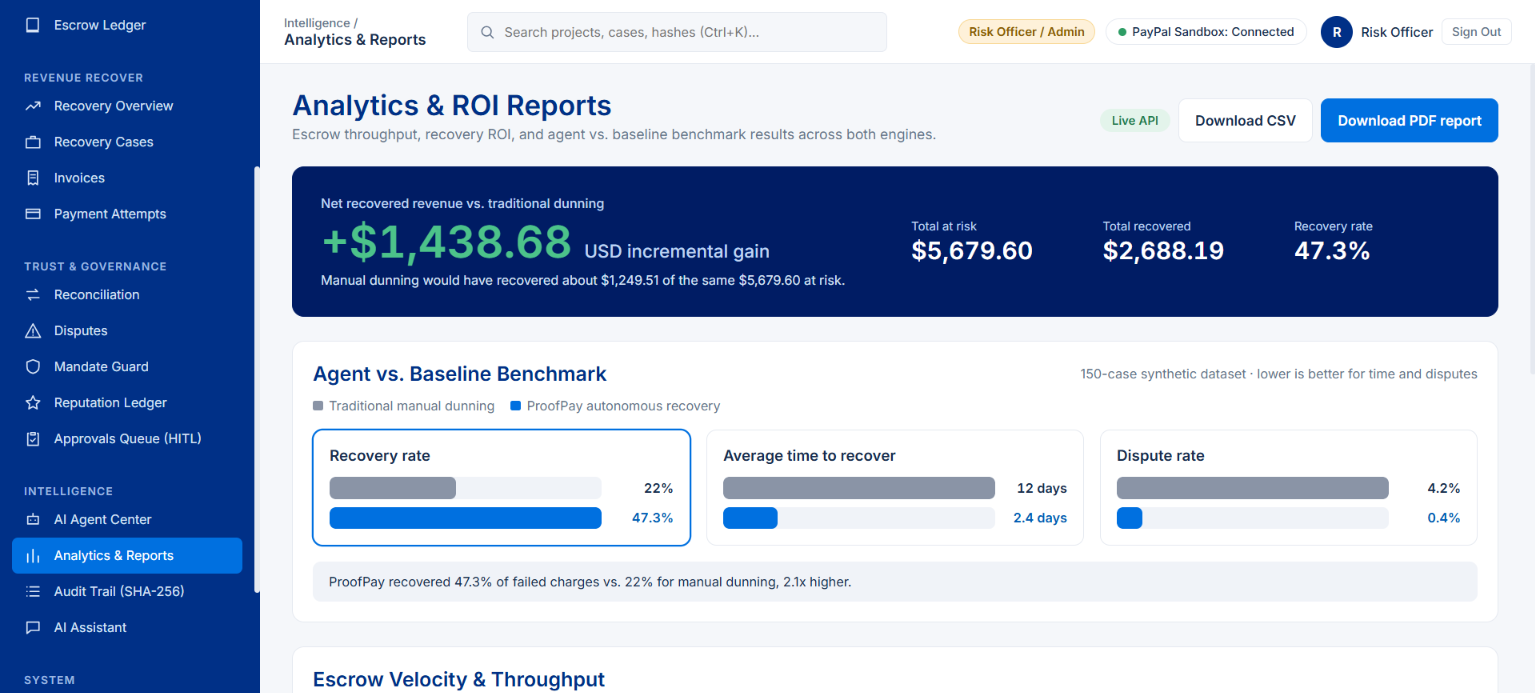
Analytics
-
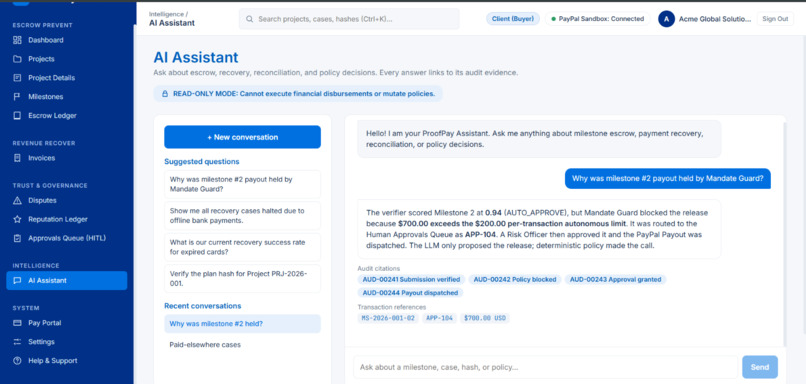
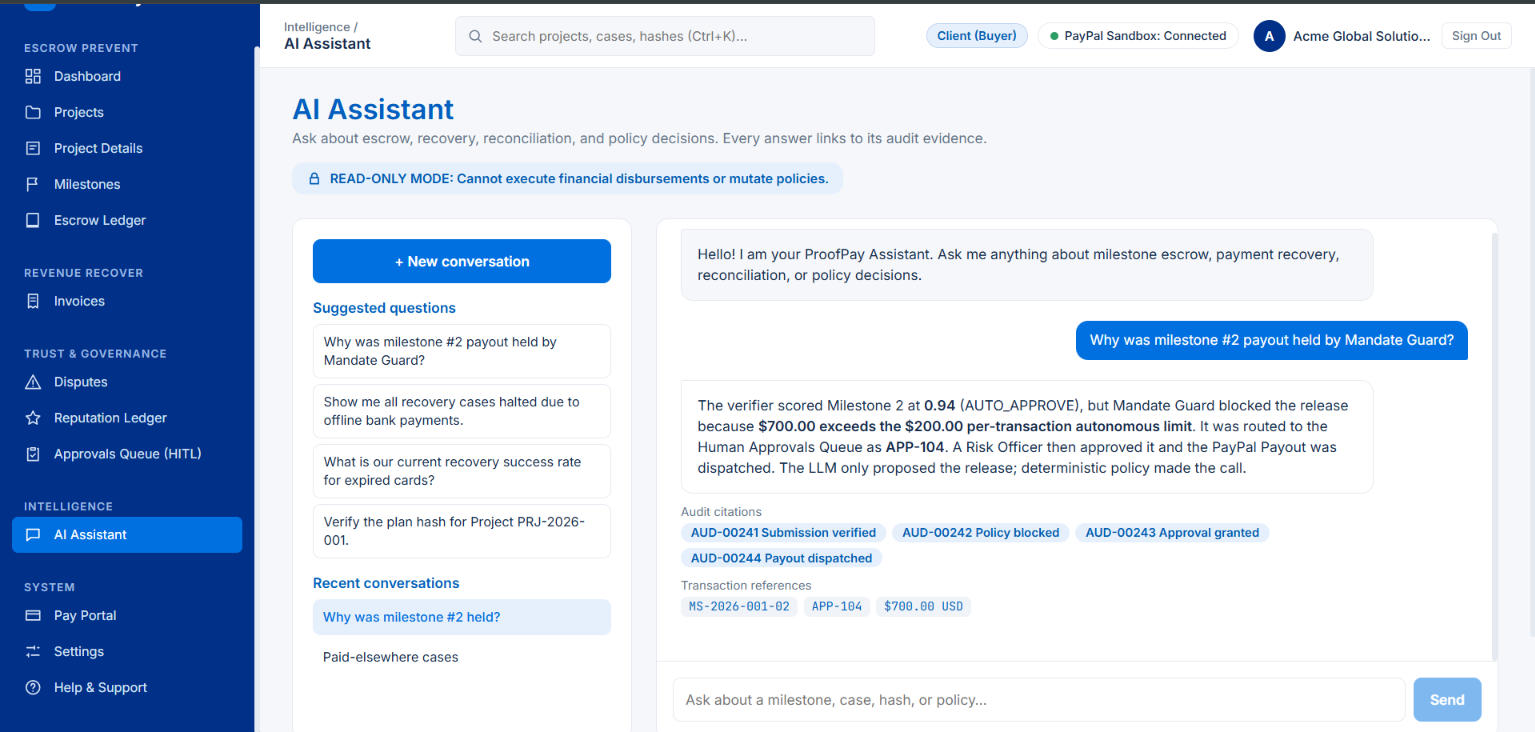
Assistent
-
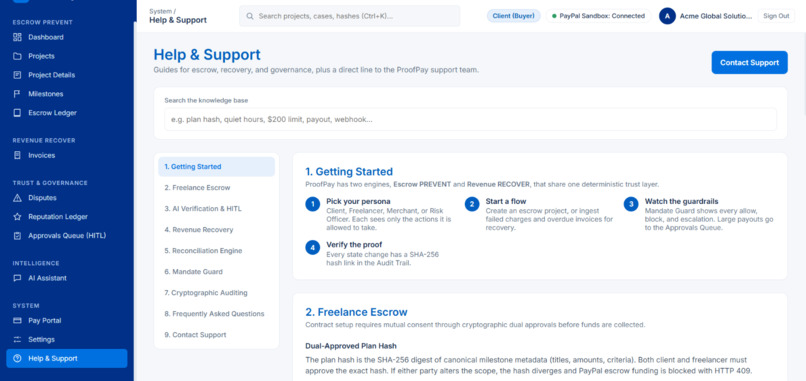
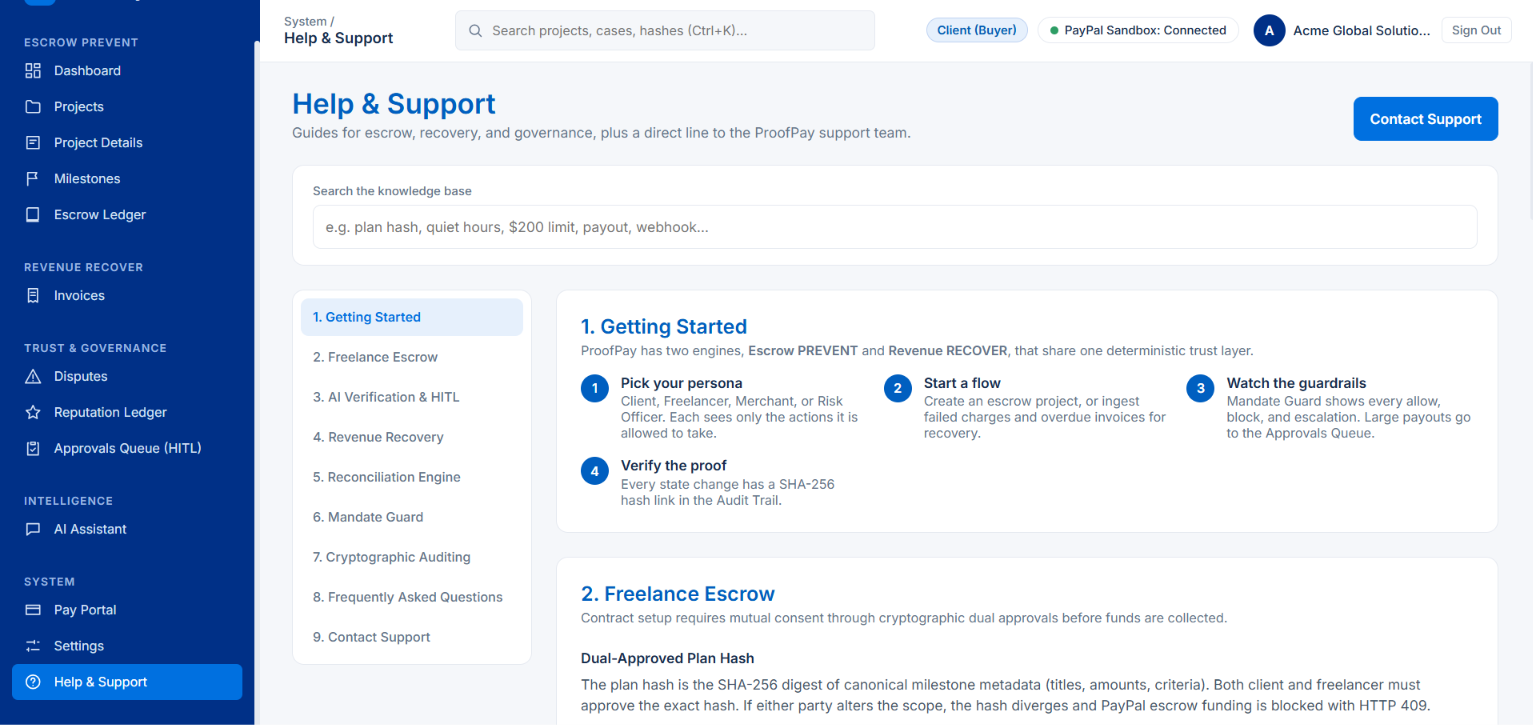
Help
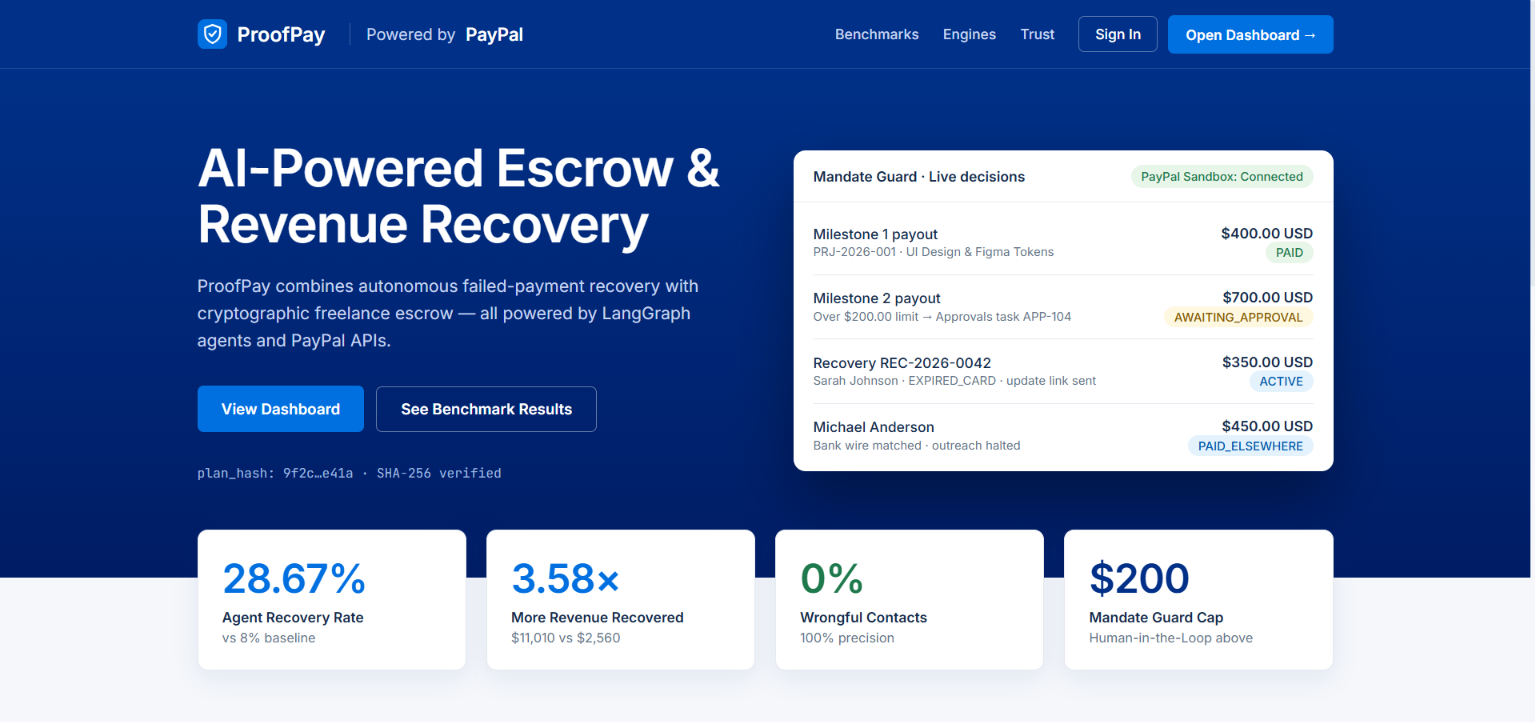
Inspiration
The inspiration behind ProofPay came from a common problem faced by freelancers, small agencies, and online merchants: trust and payment uncertainty. Freelancers hesitate to start working without upfront payment, while clients hesitate to pay before seeing results. Similarly, merchants lose revenue due to failed transactions, overdue invoices, and ineffective payment recovery strategies. We wanted to solve both sides of this problem by building an AI-powered platform that prevents non-payment through milestone-based escrow and recovers revenue when payments fail.
What it does
ProofPay combines two intelligent engines: an Escrow Engine and a Revenue Recovery Engine. The Escrow Engine converts projects into milestones, securely tracks client payments through PayPal, verifies submitted work using AI agents, and releases payments when predefined acceptance criteria are satisfied. The Recovery Engine detects failed subscription payments and overdue invoices, identifies failure reasons, and selects suitable recovery strategies such as scheduled retries, payment reminders, and payment links. Additionally, it includes a Reconciliation Gate, Policy Engine, Dispute Agent, and Reputation Ledger to ensure secure, transparent, and accountable financial operations.
How we built it
We built ProofPay using Next.js, React, and AG Grid for the frontend, with Python and FastAPI powering the backend, APIs, and webhook processing. We integrated PayPal Checkout, Orders v2, Payouts, Invoicing, Webhooks, and the PayPal MCP Server / Agent Toolkit for payment operations. For intelligent workflows, we used LLM-powered agents for project scoping, work verification, payment diagnosis, recovery strategies, and dispute handling. PostgreSQL stores transactions, milestones, recovery cases, and audit logs, while a deterministic Mandate Guard validates every financial action before execution. Our core design principle is: The LLM proposes, the policy engine decides, and code executes.
Challenges we ran into
One of our biggest challenges was designing reliable AI agents for financial operations without compromising security or user trust. Integrating multiple PayPal services, handling asynchronous webhooks, preventing duplicate transactions, and maintaining accurate payment reconciliation required careful coordination. We also faced challenges in making AI-generated decisions deterministic and auditable, particularly when verifying milestone submissions and selecting recovery strategies. Additionally, the PayPal Sandbox could not simulate every real-world payment failure, so we developed synthetic datasets and simulated webhook events to test different scenarios while using actual sandbox API calls for payment operations.
Accomplishments that we're proud of
We are proud of building a unified platform that connects payment prevention and revenue recovery into a single intelligent workflow. Our system can automatically generate milestone plans, evaluate submitted evidence, initiate guarded PayPal payouts, diagnose failed payments, and select context-aware recovery interventions. We also implemented a Reconciliation Gate to prevent contacting customers who have already paid through other channels, alongside a Policy Engine that blocks unauthorized financial actions. Another major accomplishment is our append-only audit system and unified AG Grid dashboard, which make every important decision traceable, explainable, and transparent.
What we learned
Throughout this project, we gained practical experience in AI agent orchestration, LangGraph-based workflows, PayPal API integrations, MCP-based tool execution, webhook architecture, and financial transaction management. We learned how to combine LLM intelligence with deterministic business rules to build safer autonomous systems. We also strengthened our understanding of payment reconciliation, distributed backend workflows, database design, and real-time dashboard development. Most importantly, we learned that building agentic financial applications requires more than intelligence; it requires trust, control, explainability, and accountability.
What's next for ClutchX
Our next goal is to evolve the platform into a production-ready financial automation ecosystem. We plan to improve AI agent accuracy, expand support for additional payment providers, strengthen multilingual recovery workflows, and introduce more sophisticated fraud and dispute detection mechanisms. We also aim to enhance the portable reputation system, enabling freelancers and clients to establish trust through verified payment and project histories. Finally, we want to move beyond the sandbox environment, validate our system with real-world users, and make secure, automated payment management more accessible to freelancers, small businesses, and merchants globally.
Built With
- agents
- ai
- alembic
- api
- apscheduler
- css
- docker
- fastapi
- github
- langgraph
- llm
- postgresql
- postman
- python
- react
- render
- sandbox
- sqlalchemy
- swagger
- tailwind
- typescript
- webhooks

