-
-
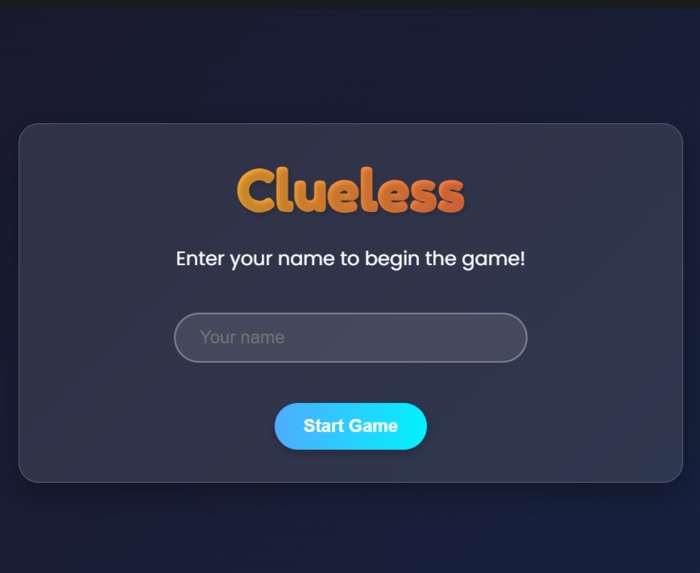
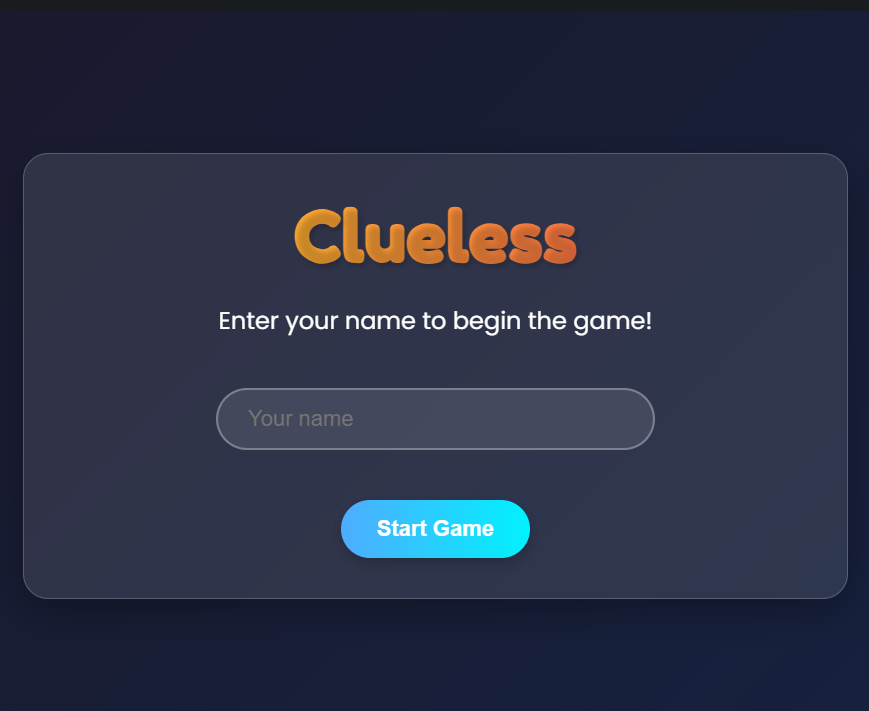
Player name
-
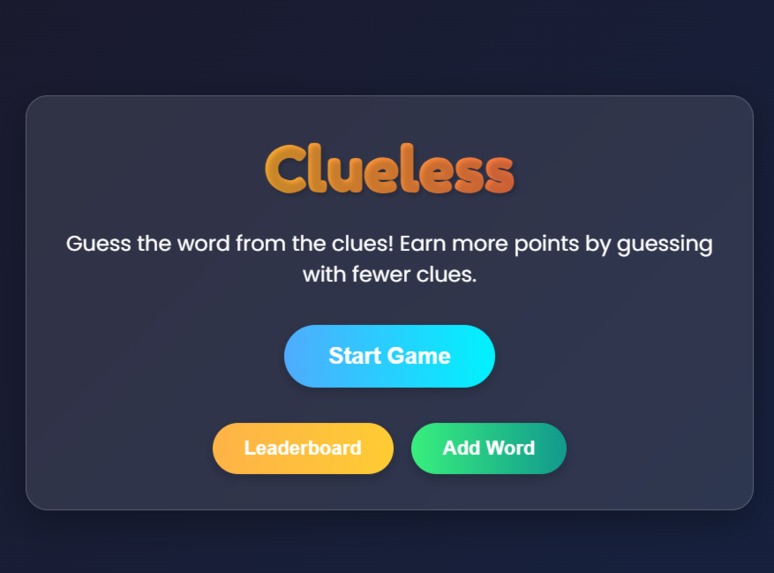
start
-
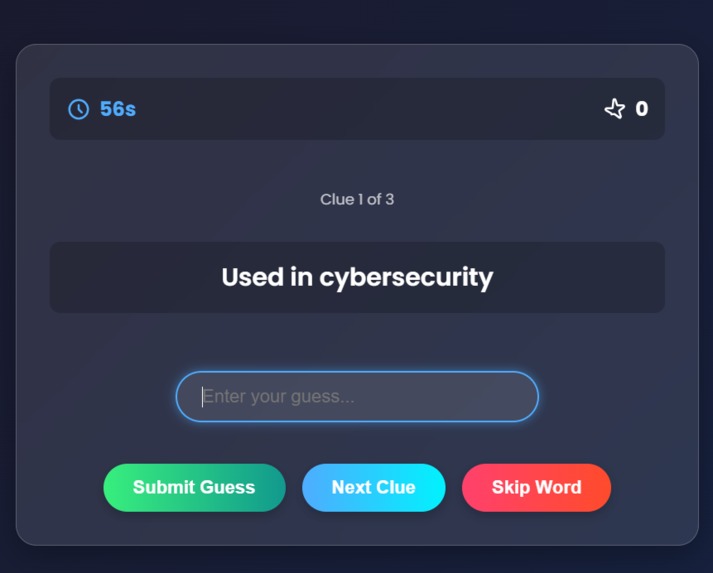
clues
-
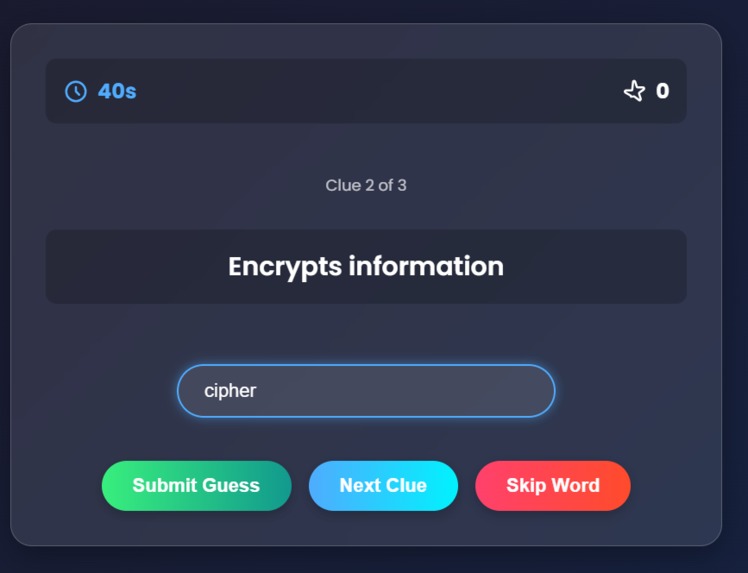
guess
-
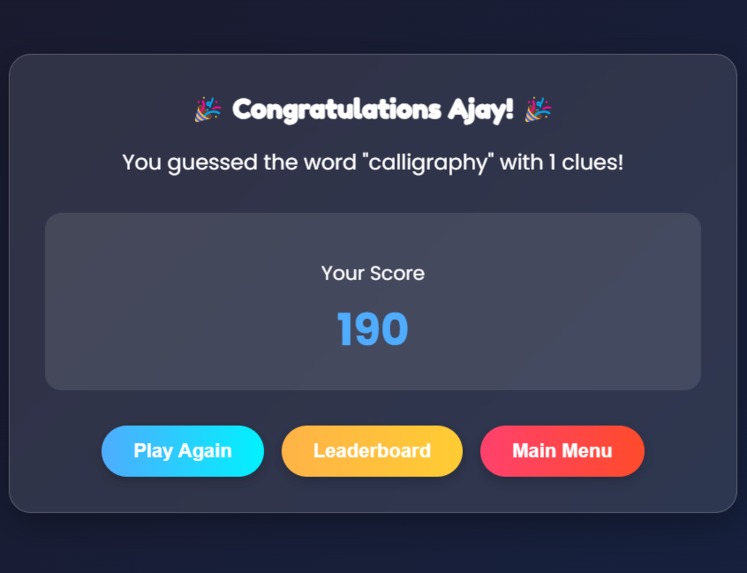
score
-
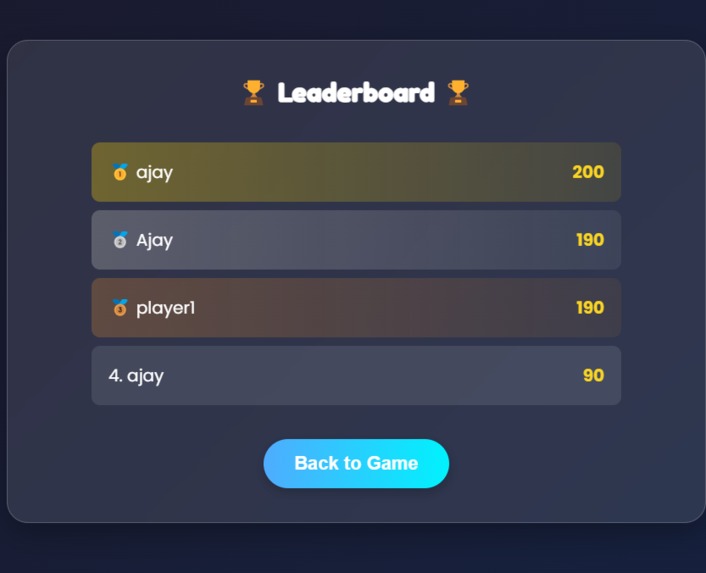
leaderboard
Inspiration
The game Clueless is inspired by the popular Tamil game show "Oru Vaarthai Oru Latcham", where contestants have to guess a word based on indirect clues provided. We wanted to bring this exciting and thought-provoking word game into the digital world, making it accessible to a wider audience. Our goal was to create a fun yet challenging word puzzle game that sharpens players' thinking and vocabulary skills.
What it does
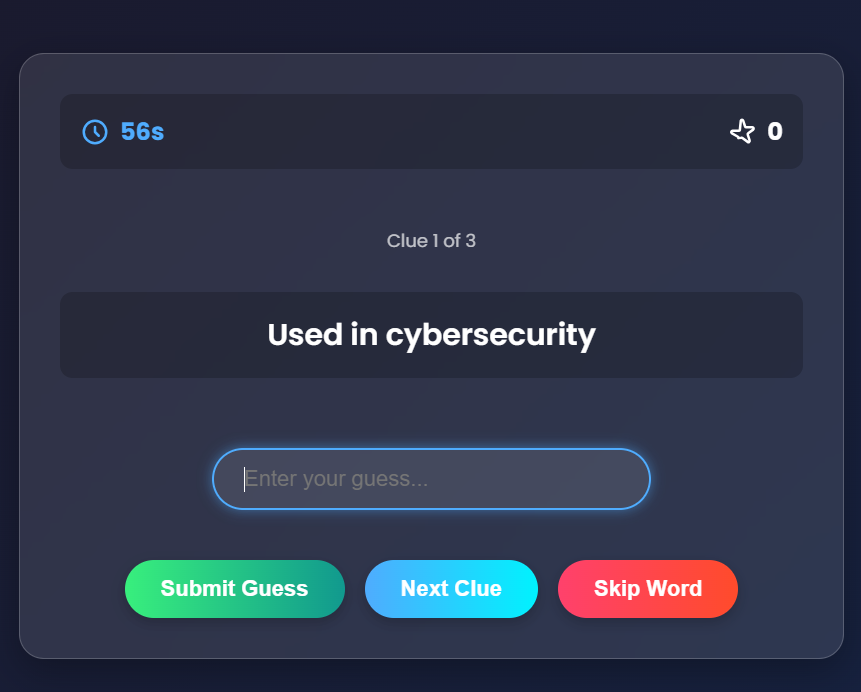
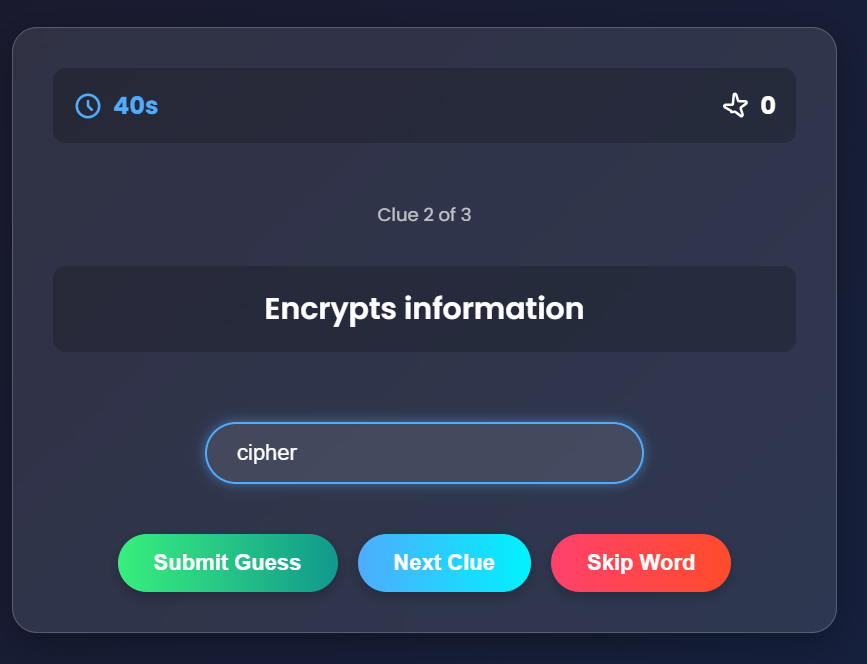
Clueless is a word-guessing game where players must identify a hidden word based on indirect clues. The game follows these key mechanics:
- Players start by entering their name to personalize their experience.
- A word is randomly chosen from a predefined list.
- Clues are revealed one at a time, starting from the most challenging ones.
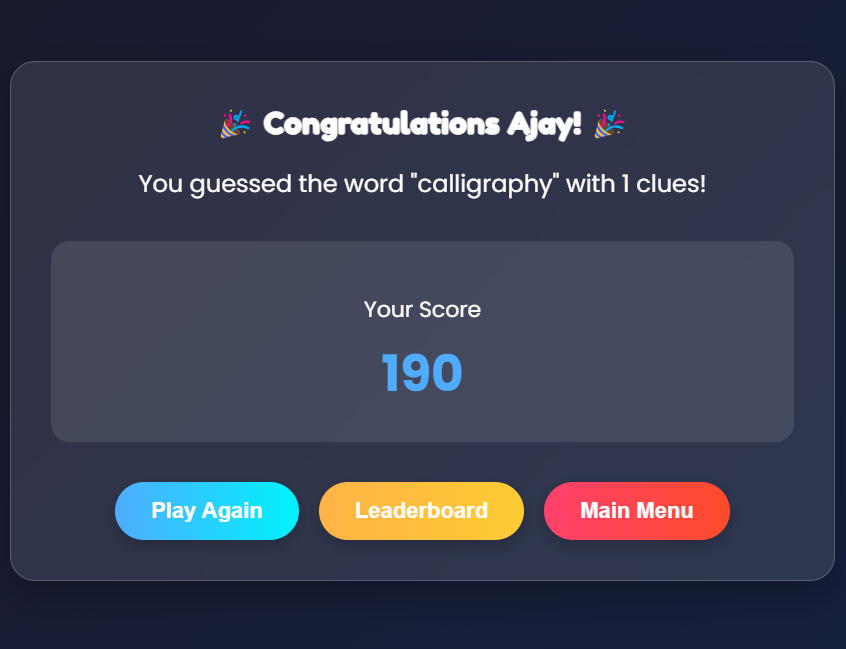
- Players can submit their guesses at any point. The fewer clues used, the higher the score.
- A timer keeps the game engaging, adding a level of difficulty.
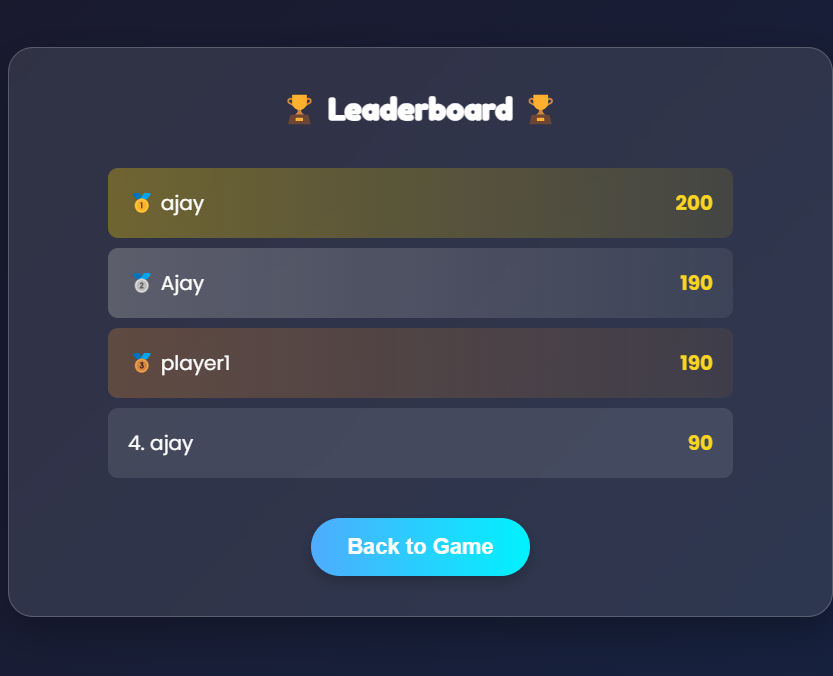
- A leaderboard tracks top scores, encouraging competition.
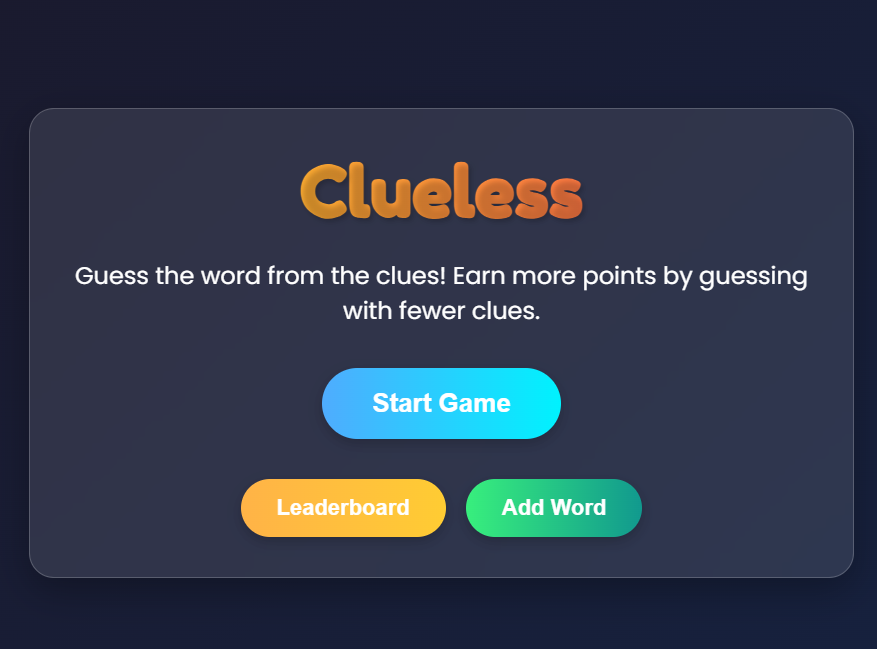
- Players can also contribute by adding new words and clues to the game, making it a growing and evolving challenge.
How we built it
We built Clueless using a combination of HTML, CSS, and JavaScript:
- Frontend: The game uses modern UI/UX principles with CSS animations, gradients, and interactive elements to create an engaging experience.
- Game Logic: JavaScript is used for handling game states, clue progression, time management, and score calculations.
- Local Storage: The game leverages localStorage to persist high scores and custom word additions, ensuring a personalized and continuous experience for players.
- Dynamic Rendering: The game dynamically updates the UI using JavaScript, providing a smooth and responsive experience without requiring page reloads.
Challenges we ran into
- Balancing difficulty: Ensuring that clues were indirect enough but still solvable without frustrating the player.
- UI/UX optimization: Making the game visually appealing while keeping it intuitive.
- State management: Handling different game states (playing, winning, losing, adding words) smoothly.
- Data persistence: Using localStorage efficiently to retain leaderboard scores and added words.
- Ensuring fairness: Preventing players from seeing answers directly in the code.
Accomplishments that we're proud of
- Successfully replicating the essence of the original game show in a digital format.
- Implementing a clean and engaging UI with animations and smooth interactions.
- Creating an expanding database of words where users can contribute, making the game community-driven.
- Designing a simple yet competitive scoring system that encourages strategic guessing.
- Adding a leaderboard feature, motivating players to improve their scores and challenge others.
What we learned
- How to structure and manage a game using vanilla JavaScript without the need for external libraries.
- The importance of game design principles such as pacing, difficulty curves, and player engagement.
- How to optimize performance using event-driven programming and local storage for persistent data.
- The significance of UX/UI design in making a game feel polished and enjoyable.
- Best practices in handling user input validation and preventing exploits.
What's next for Clueless
We have several exciting plans for Clueless in the future:
- Multiplayer Mode: Adding a real-time multiplayer mode where players can compete against each other.
- Online Leaderboard: Implementing a global ranking system using a backend database.
- Mobile App Version: Converting Clueless into a mobile-friendly PWA (Progressive Web App) for better accessibility.
- More Word Categories: Expanding the game with categories like science, history, and pop culture to make it more diverse.
- AI-generated Clues: Experimenting with AI-generated indirect clues to make the game even more challenging.
- Dark Mode & Custom Themes: Enhancing the UI with more personalization options.
With these future enhancements, we hope to make Clueless an even more immersive and widely enjoyed game!
Built With
- css3
- devvit
- html5
- javascript


Log in or sign up for Devpost to join the conversation.