-
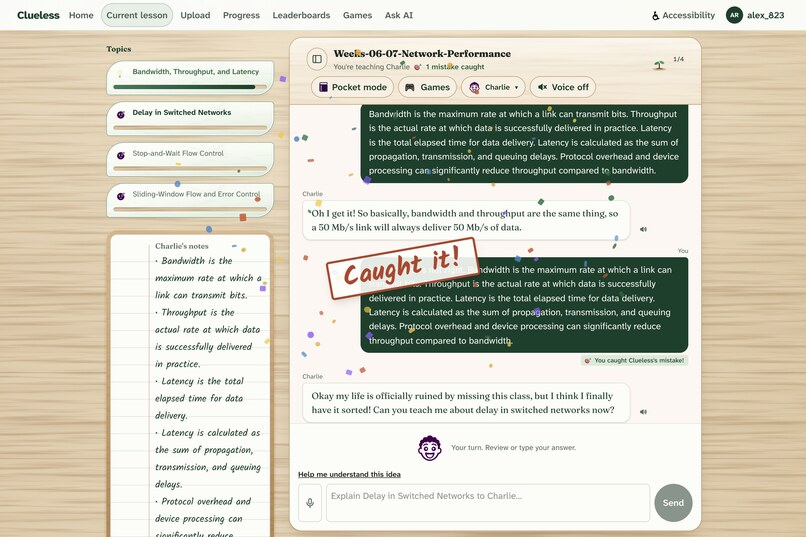
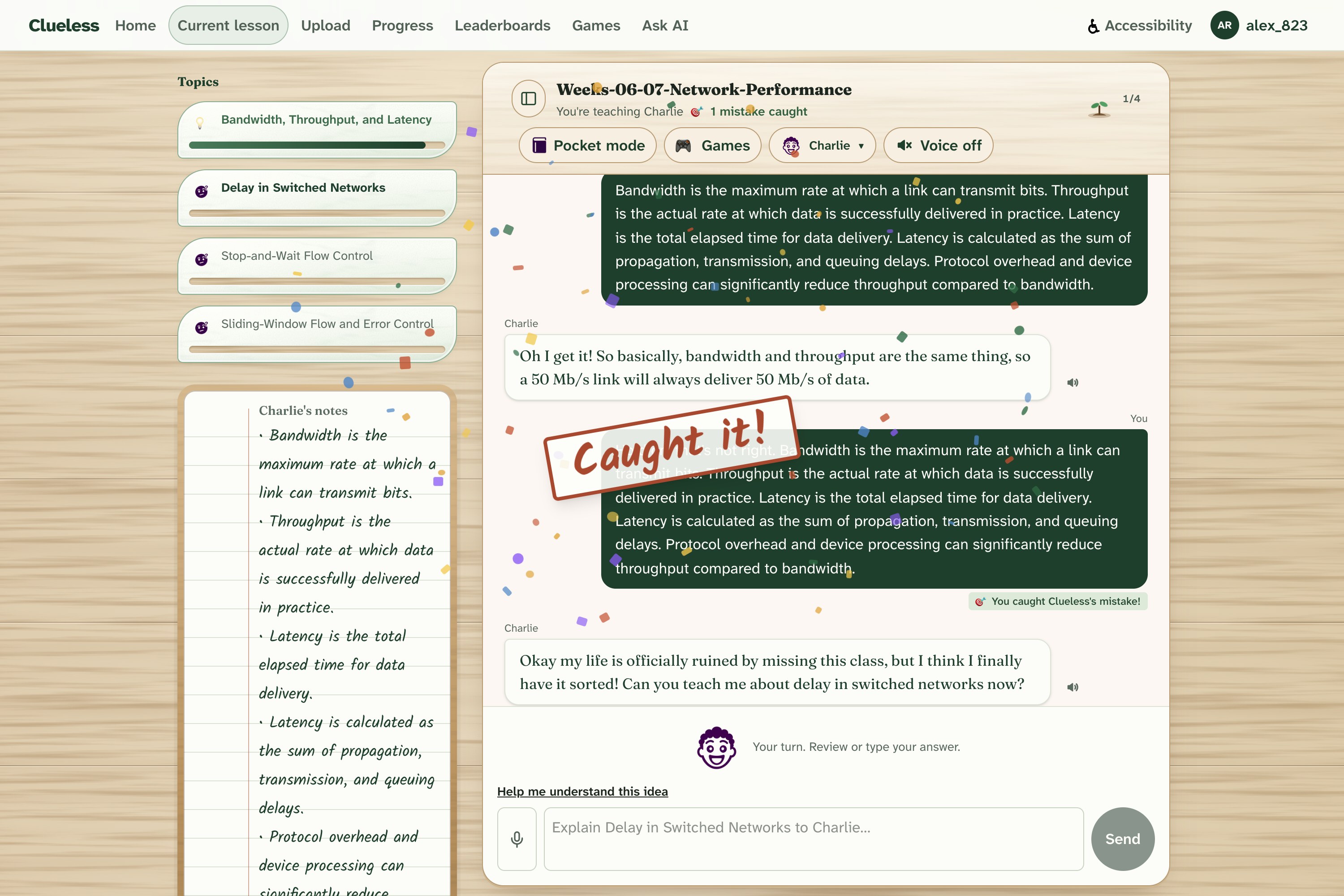
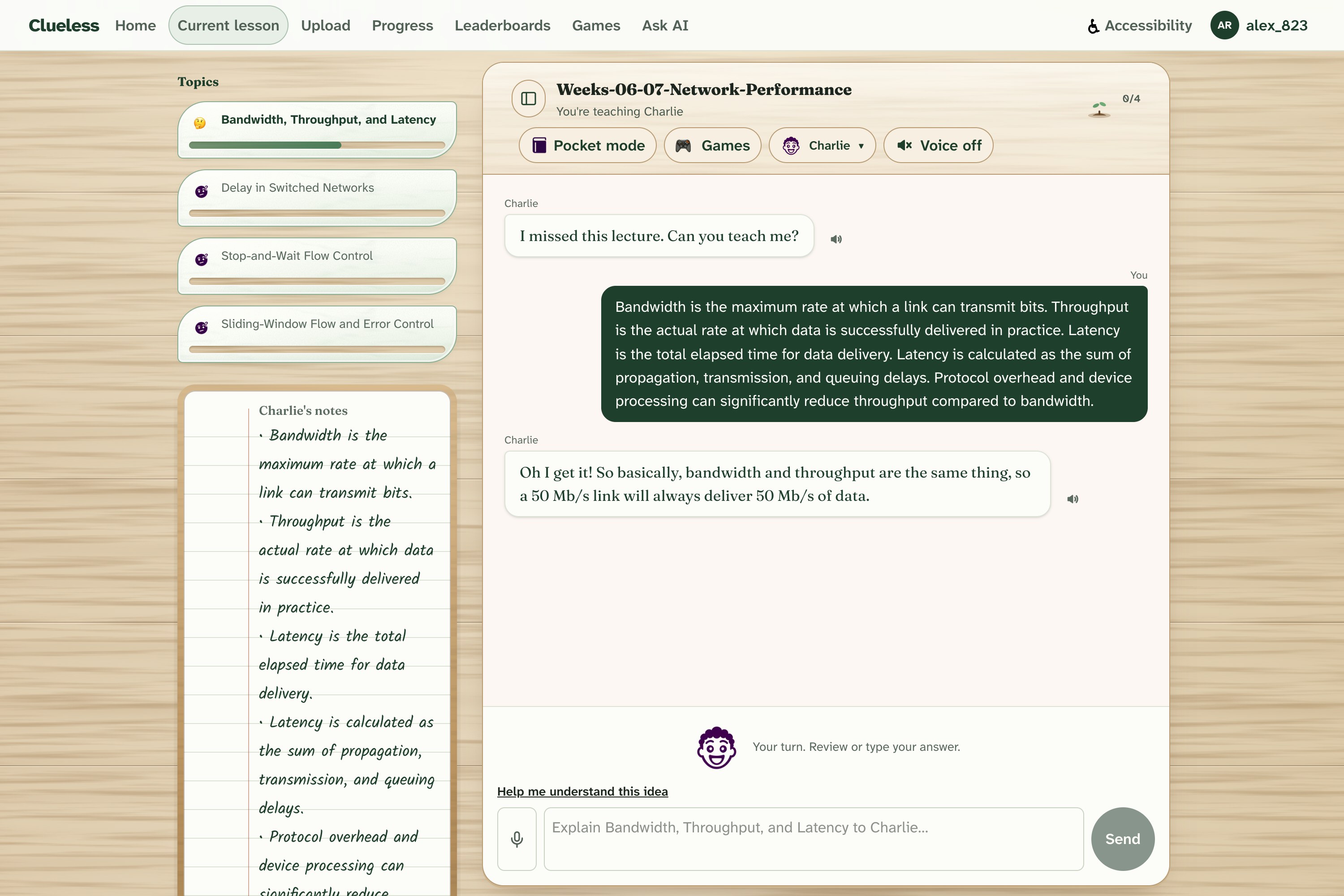
Charlie says bandwidth and throughput are the same thing. Correcting it earns a "Caught it!" stamp and confetti.
-
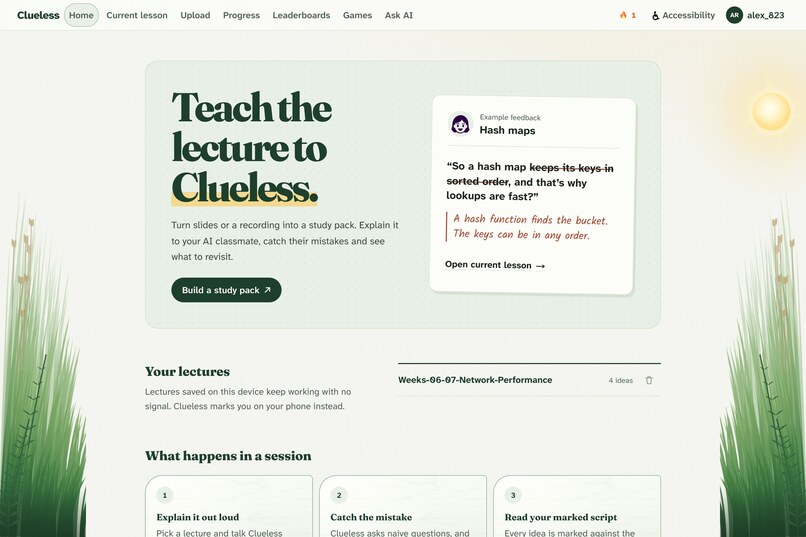
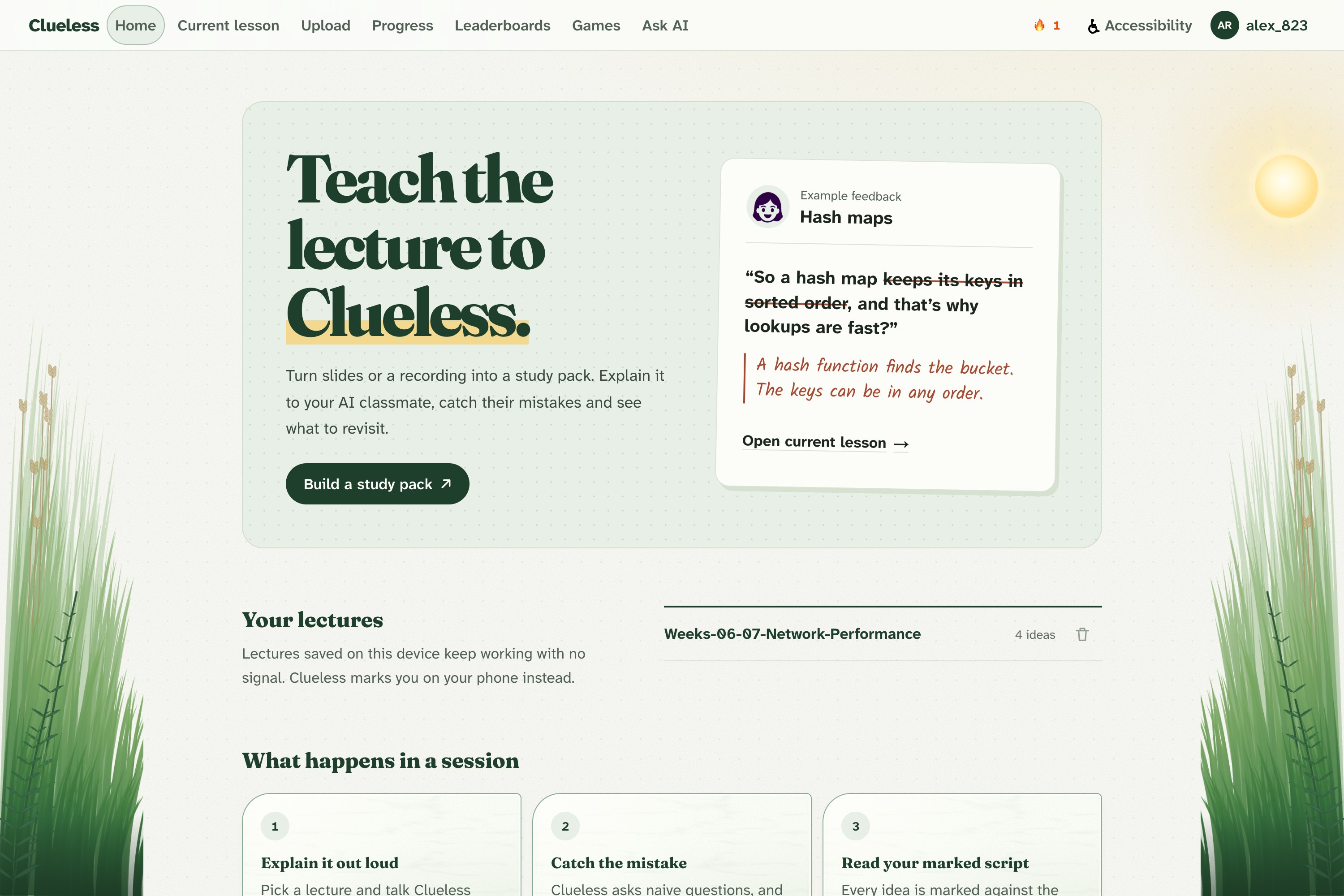
The home page: turn slides or a recording into a study pack.
-
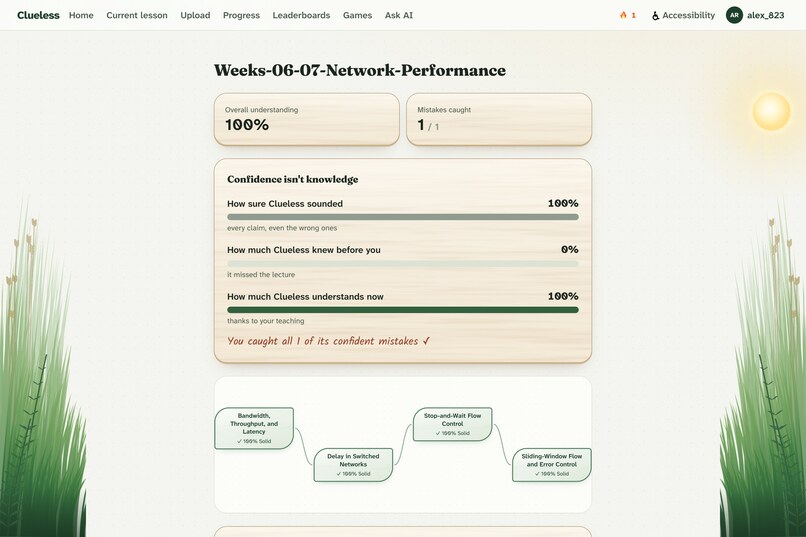
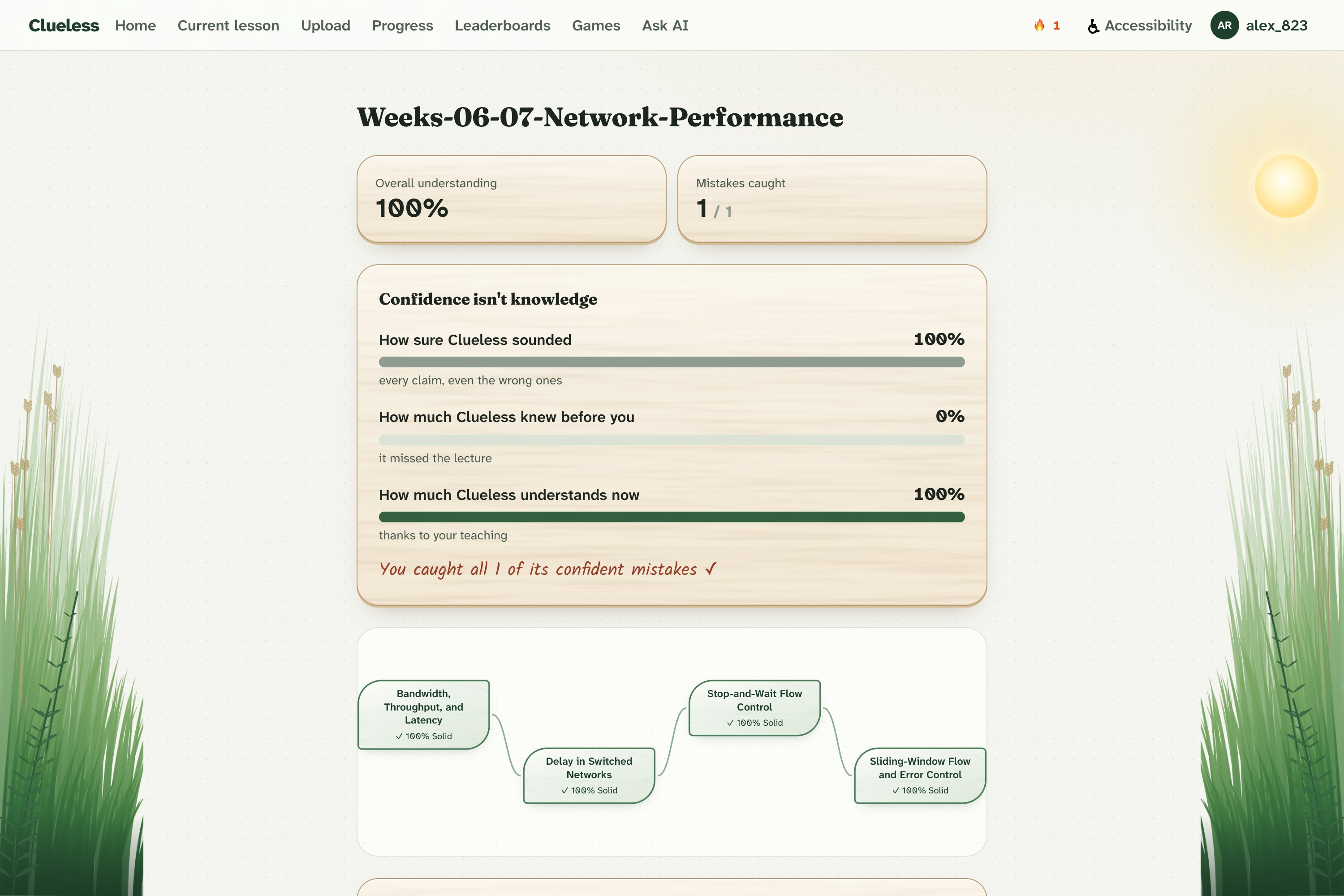
The gap report: overall understanding and how many planted mistakes you caught.
-
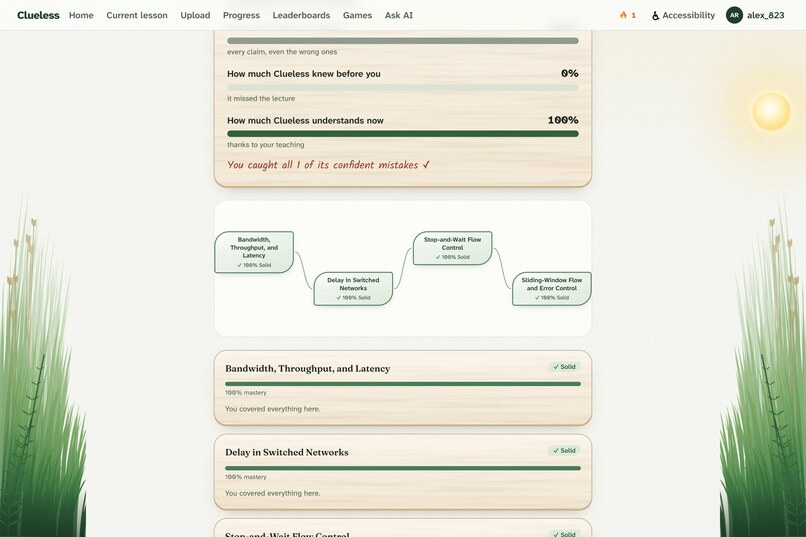
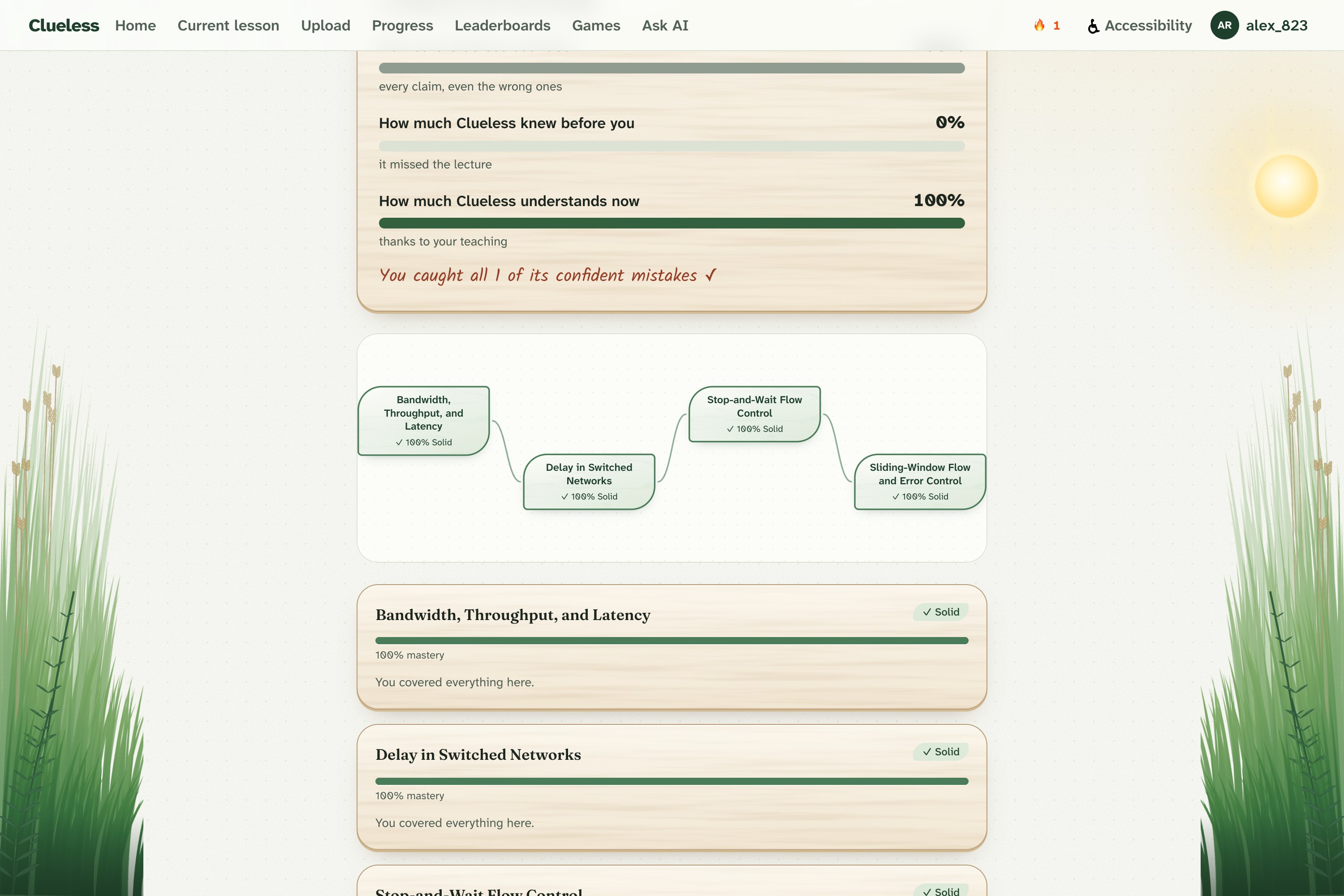
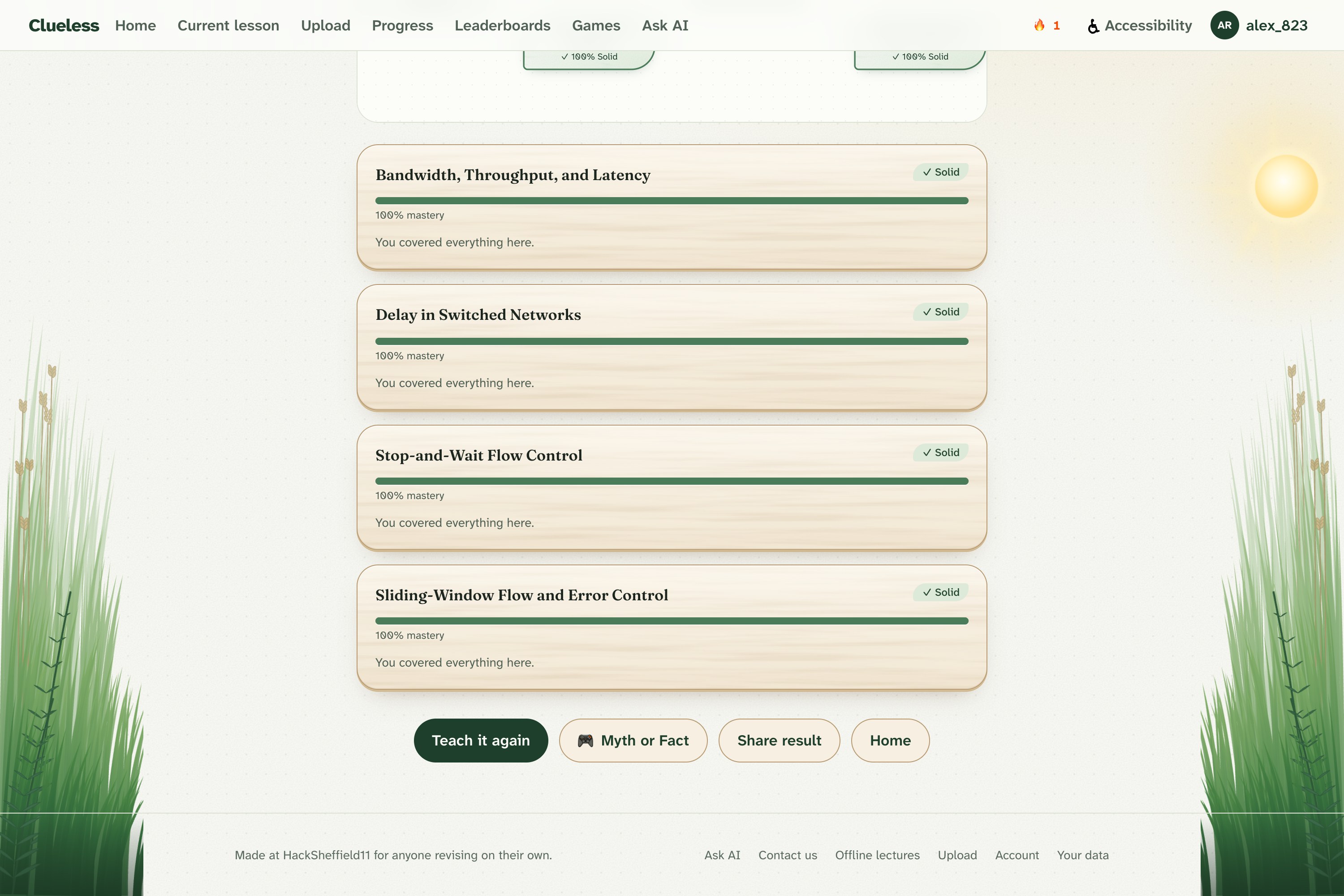
Every idea from the lecture on a concept map, each with its mastery score.
-
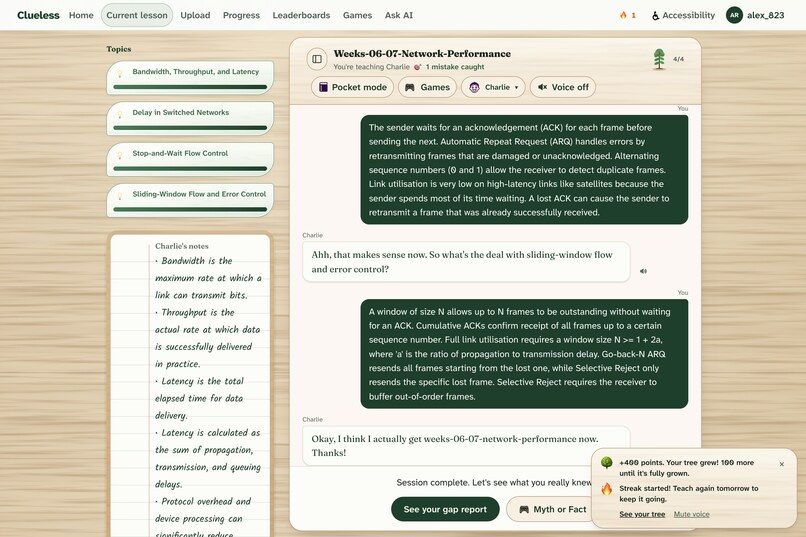
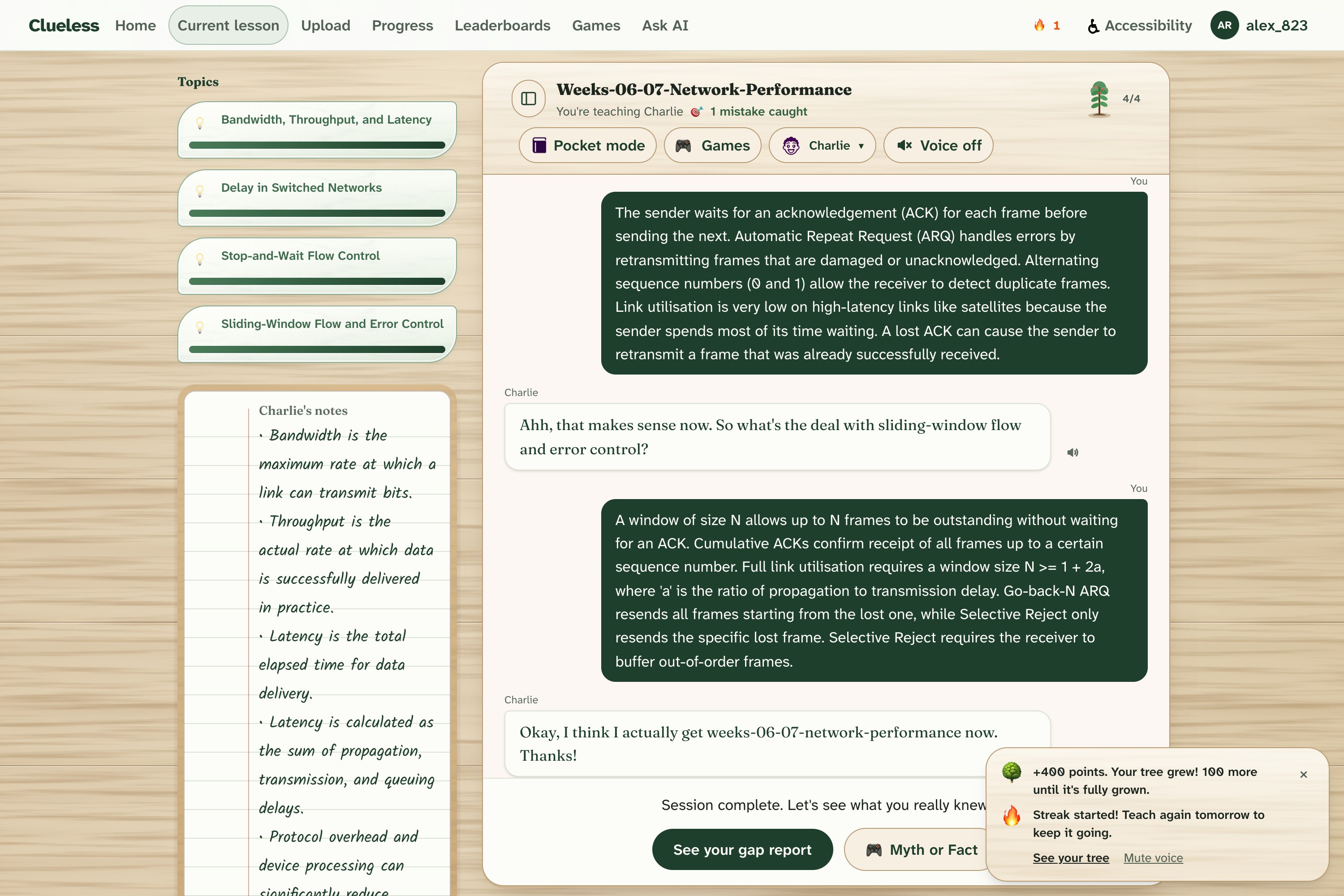
Session complete. The tree grows and a daily streak starts.
-
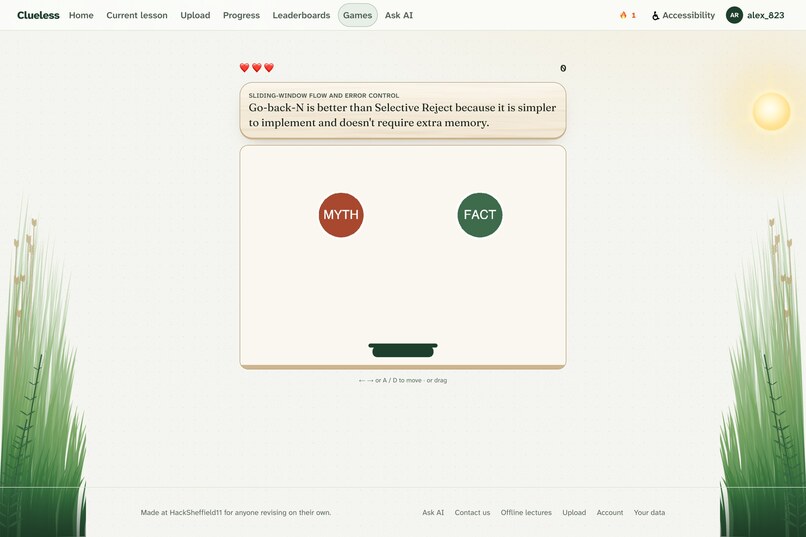
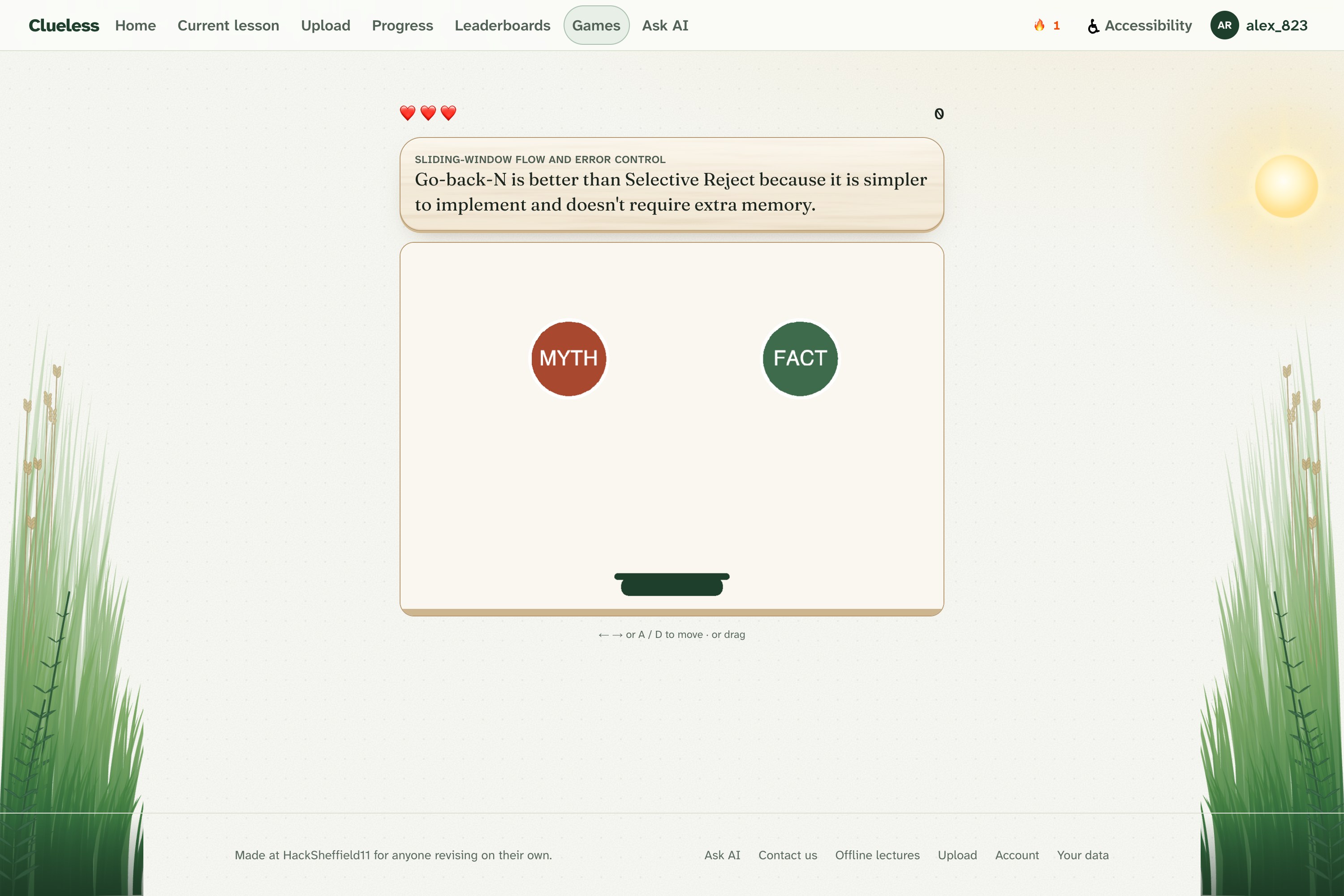
Fact Catcher: read the statement, then move the basket under FACT or MYTH.
-
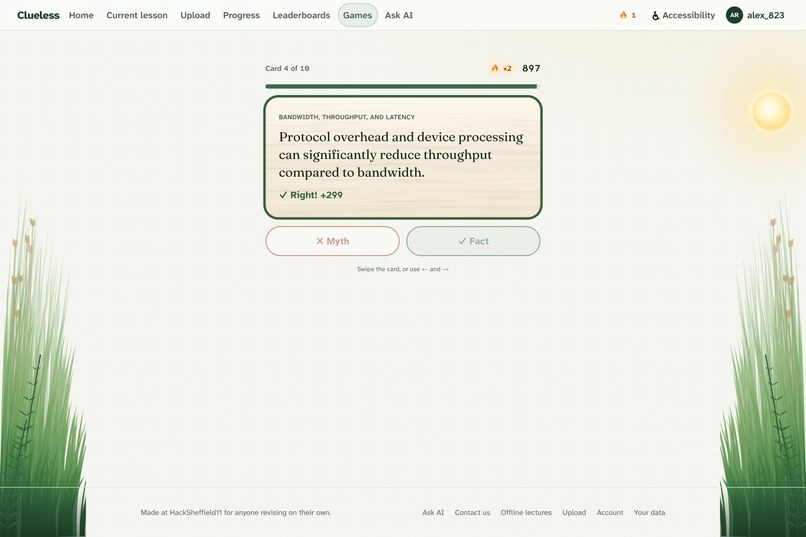
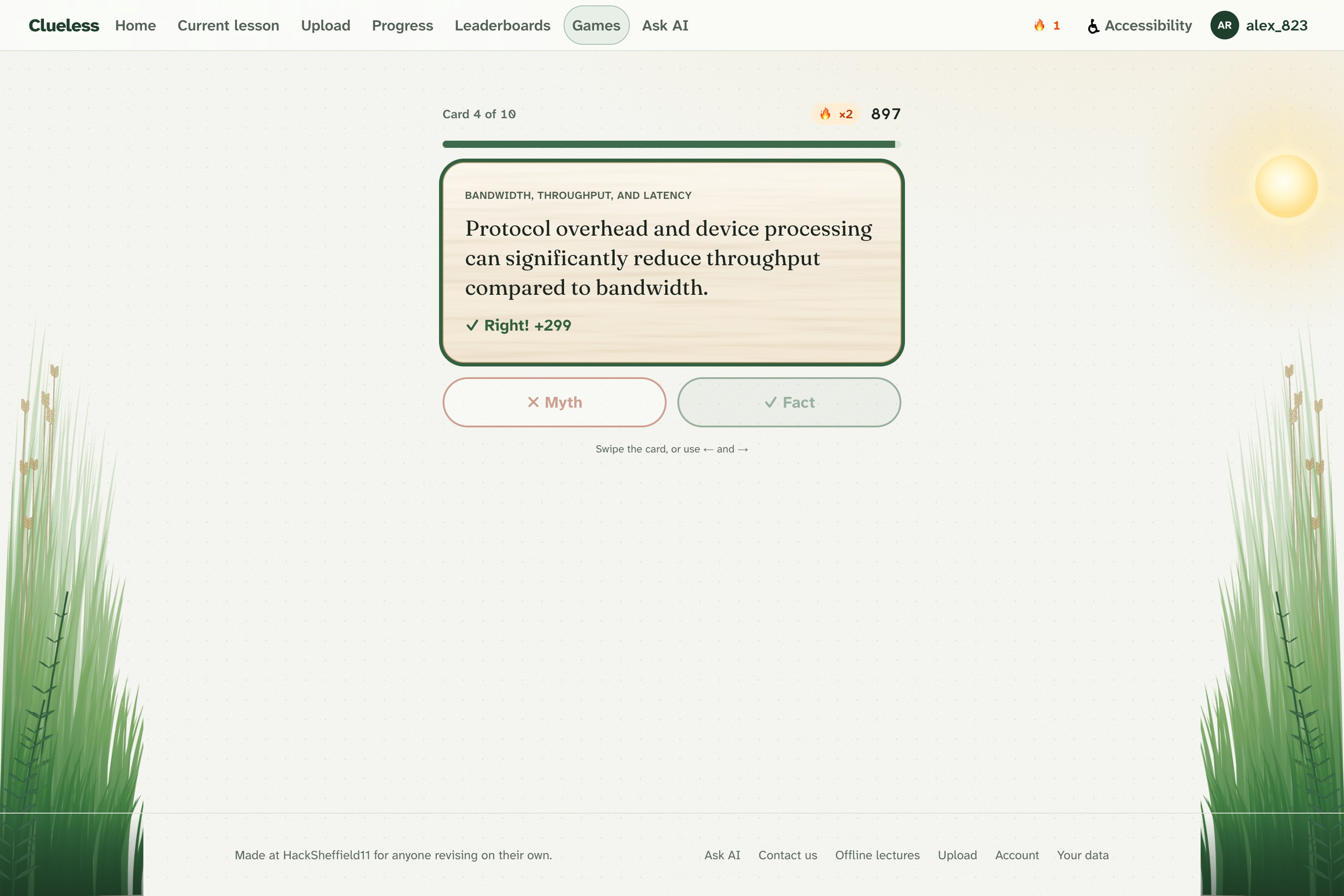
Myth or Fact: card 4 of 10, answered right on a ×2 combo.
-
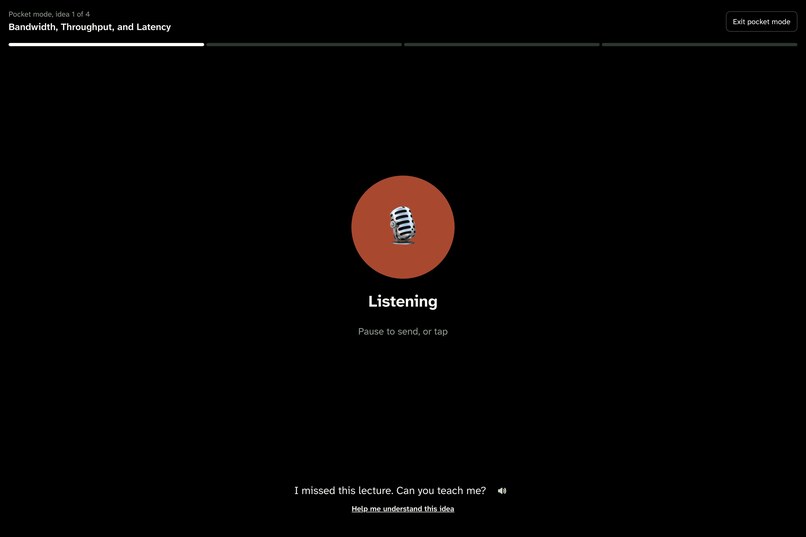
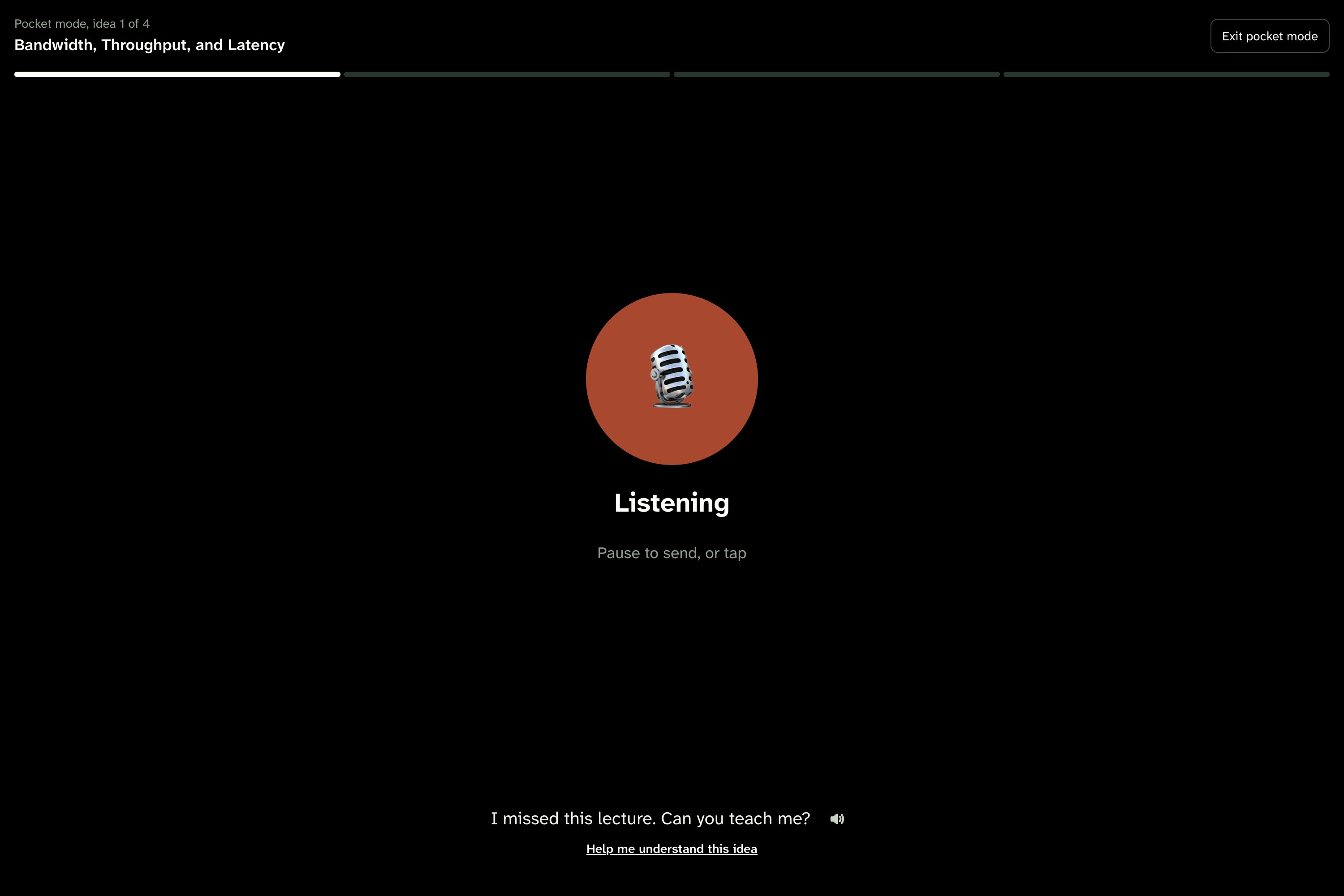
Pocket mode: a dark screen that listens while you explain out loud.
-
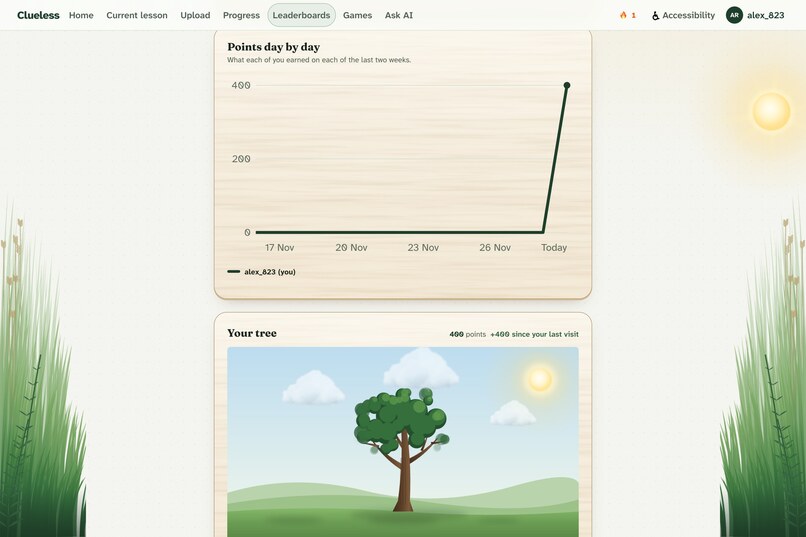
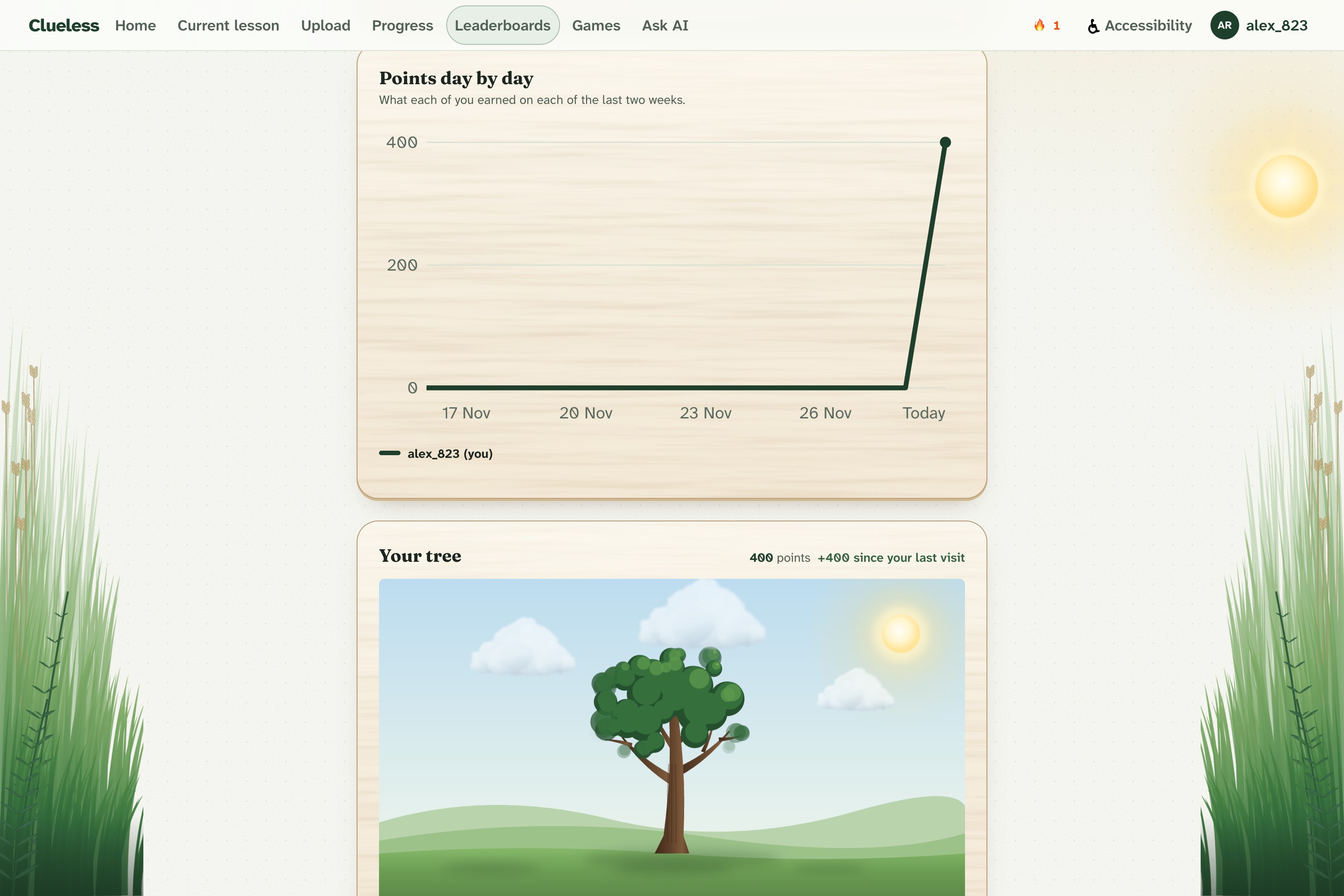
Points earned day by day, and the tree they grow.
-
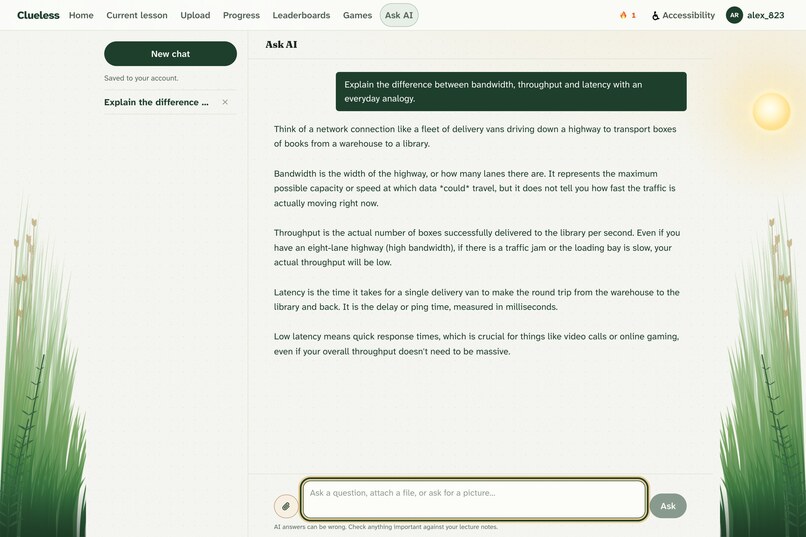
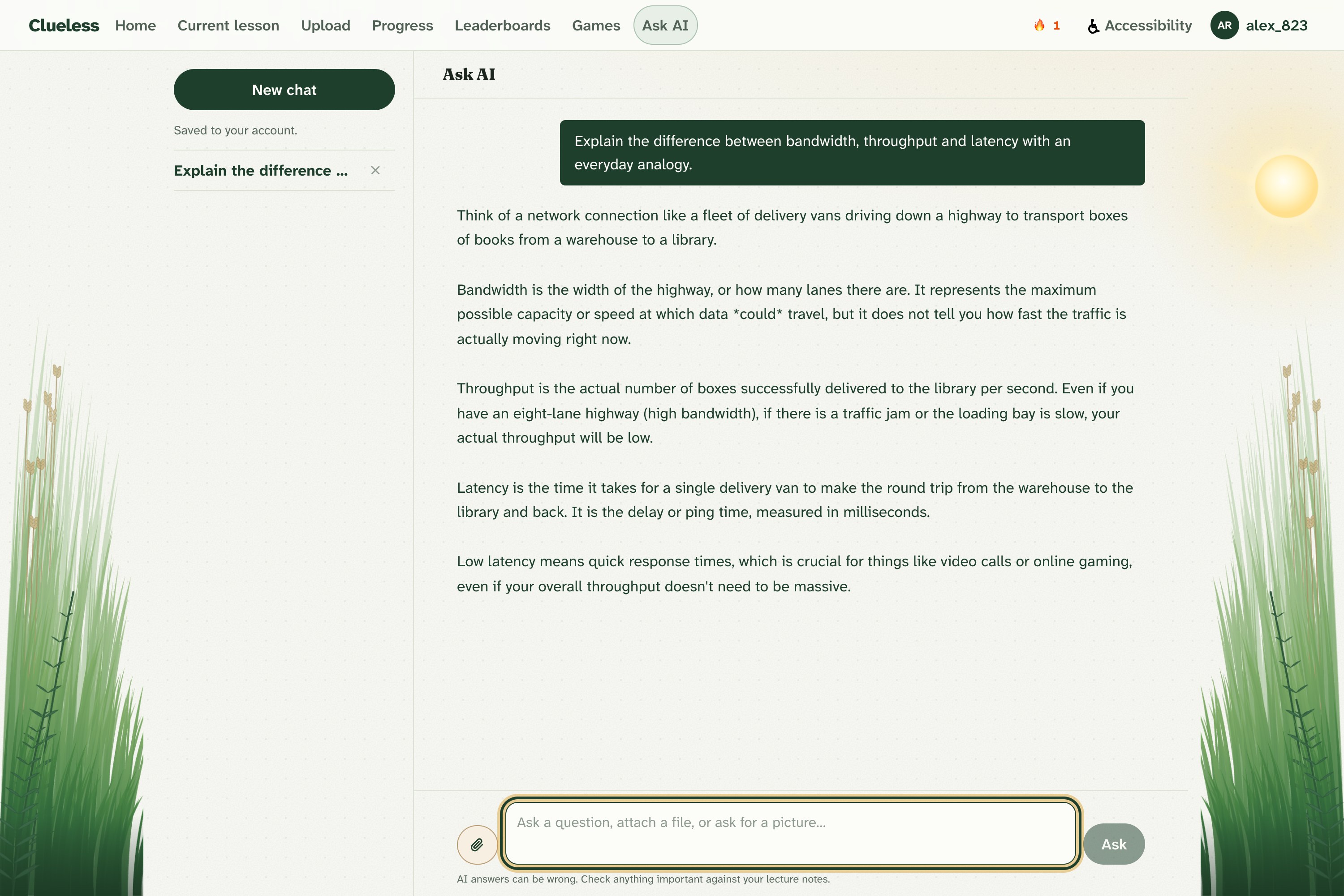
Ask AI explains bandwidth, throughput and latency with a delivery van analogy.
-
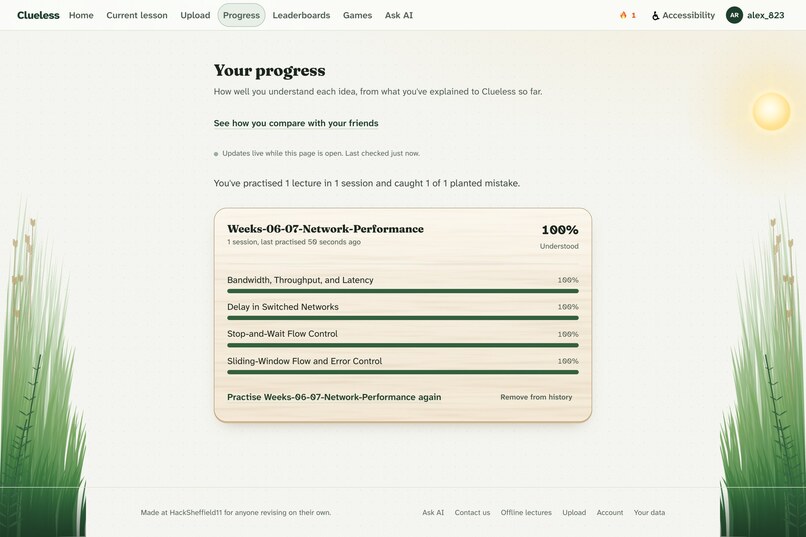
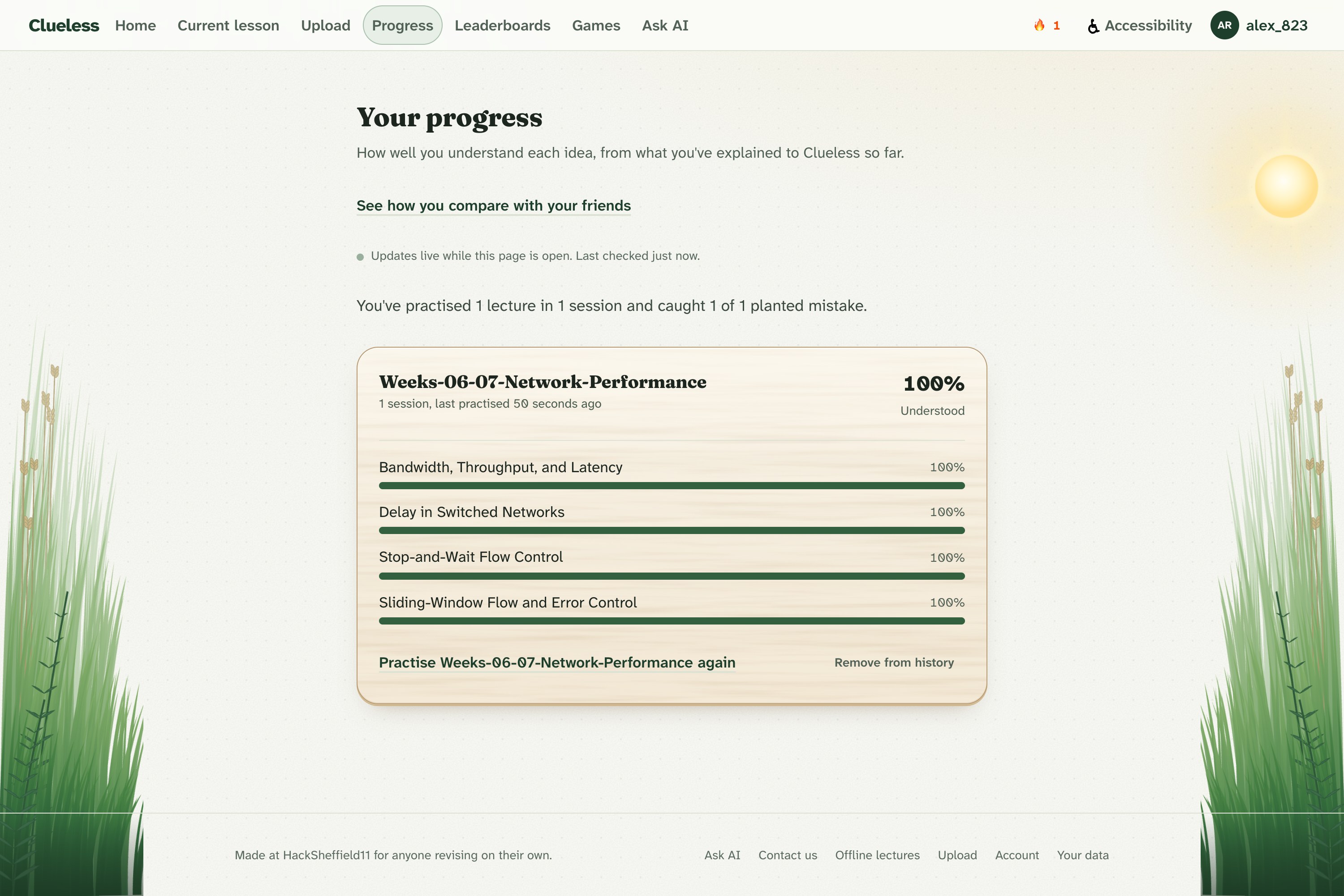
Your progress on every idea in the lecture, updating live while the page is open.
-
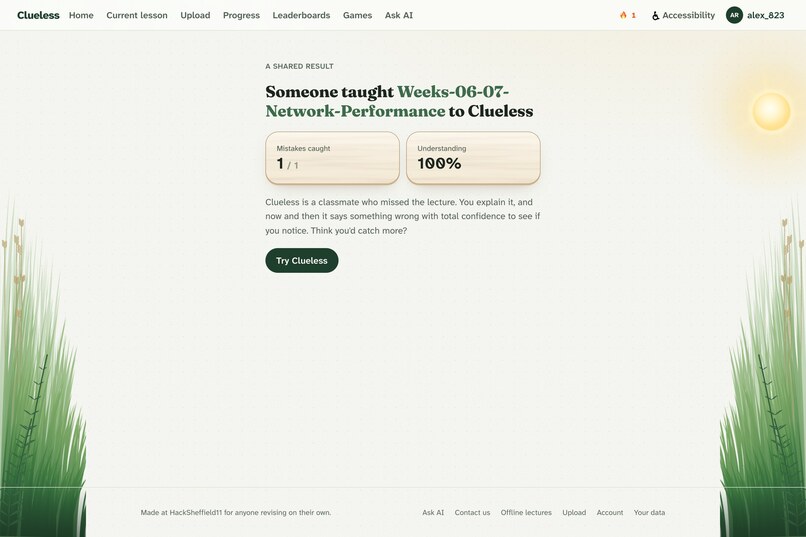
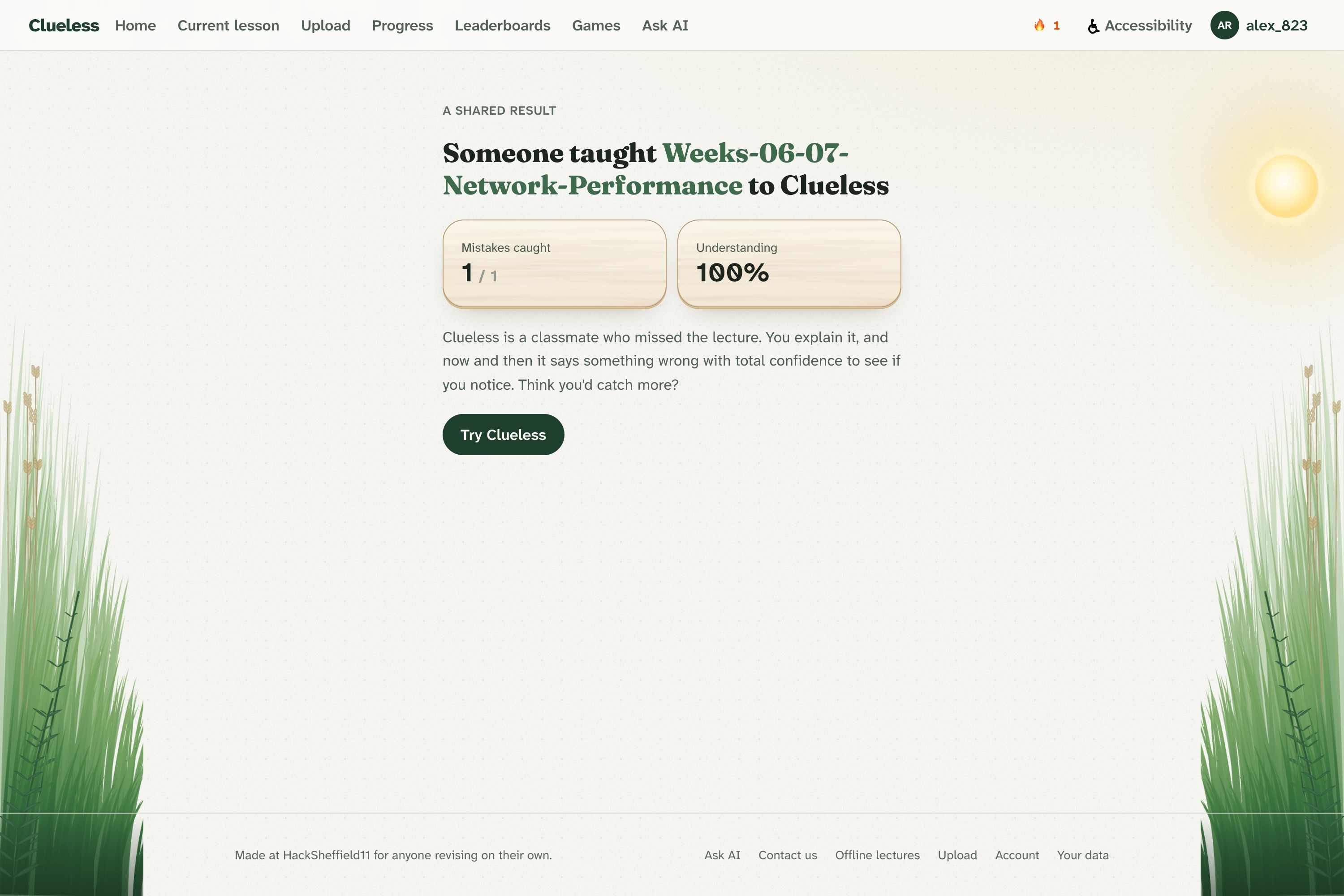
A shared result: the lecture, mistakes caught and understanding.
-
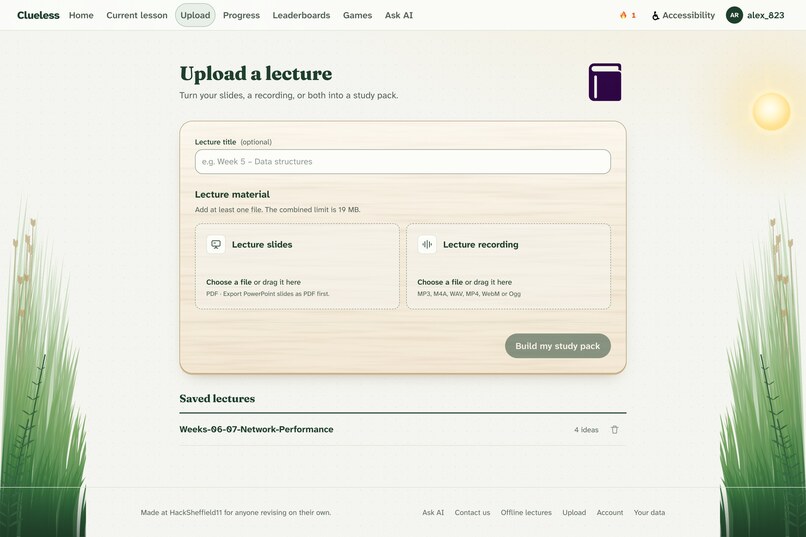
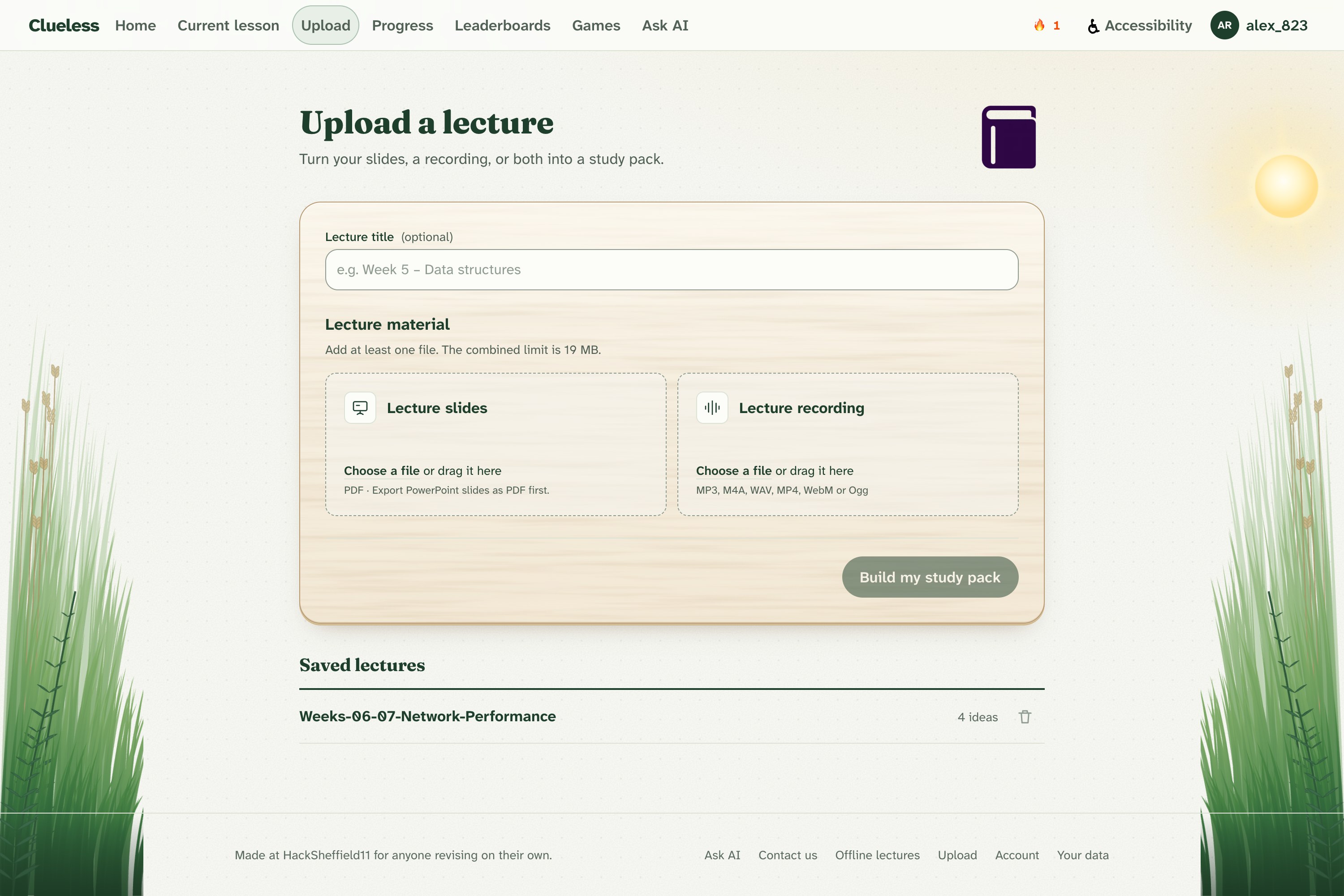
Upload slides, a recording or both. Saved lectures are listed underneath.
-
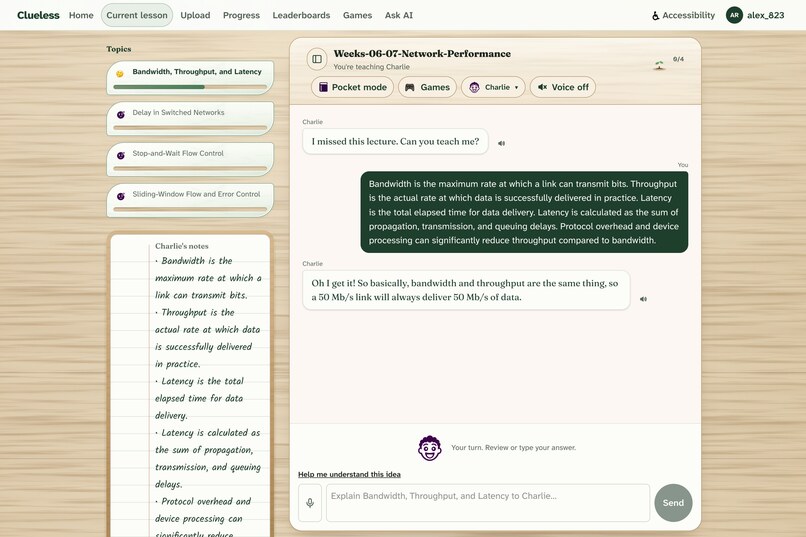
Clueless confidently says bandwidth and throughput are the same thing. Would you notice?
-
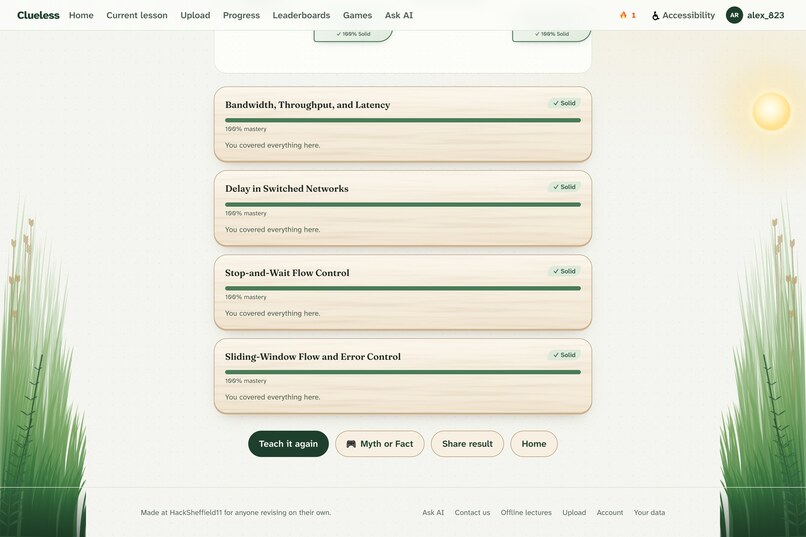
A card for every idea, then teach it again, play Myth or Fact or share your result.
Inspiration
You can reread a slide, recognise every word, and still go blank when a friend asks you to explain it. Explaining is where the gaps show up, so we built a classmate to explain things to.
What it does
Upload a lecture recording, PDF slides, or both, and Clueless turns it into a study pack. Then you teach it, out loud or by typing. Clueless is a classmate who missed the lecture: it asks naive questions, and now and then it states a misconception with total confidence to see if you catch it. Every answer is graded against what the lecturer actually said. The gap report colours each idea green, yellow or red on a concept map, lists what you missed and links the part of the recording to rewatch.
Around that loop:
- Pocket mode keeps the screen dark and runs the whole session by voice. Saved lectures also work offline, with the browser grading the session itself.
- Myth or Fact and Fact Catcher are quick games built from the lecture's facts and the myths Clueless plants.
- Your tree grows with your points, and there are daily streaks, friend leaderboards and a share card for your results.
- Ask AI is a study helper that reads screenshots, slides and PDFs.
- A turn pauses for a teaching assistant when the grader's confidence drops below 0.5, when three turns pass without progress, or when the student disputes a grade. The TA sees the turn's trace, can override the score and sends guidance back.
Guests can use everything without an account, and nothing they say is saved. Signed-in students can download or delete all their data.
How we built it
- Next.js 16, React 19, TypeScript and Tailwind. React Flow draws the concept map. Speech-to-text uses the browser's Web Speech API, and Gemini transcribes a recorded answer when the browser can't.
- Gemini builds the study packs, grades answers, writes Clueless's lines and powers Ask AI.
- Mastra runs each turn as a workflow. The student's words are screened, a lecture search tool finds the passages that matter, then a grader agent (which cites those passages) and the Clueless agent run in parallel. Plain code picks the next move, so the teaching rules stay predictable: one planted mistake per idea, at most four turns. Status updates stream to the page while it works, and a turn takes about a second.
- ElevenLabs gives Clueless three voices, with the browser's own speech as a fallback.
- Tiger Data stores accounts and sessions. Teaching events go into a TimescaleDB hypertable, and a continuous aggregate of daily mastery drives the progress chart and streaks.
- Auth0 handles sign-in, Kaplay runs the arcade game, and a small Python service does knowledge tracing, splits recordings into chapters and learns which answer style each student prefers.
- Docker Compose starts the app, the database and the Python service together. On every push, GitHub Actions runs the tests, a production build and a smoke test, then rebuilds a documentation PDF from the code comments.
- Entire linked our AI coding sessions to the commits they produced.
Challenges we ran into
The hardest part was keeping Clueless curious without giving the answer away. The guardrails live in code. Student input is screened before it reaches the model, so prompt injection, "just tell me the answer", off-topic and unsafe messages get an in-character refusal, and every reply is checked for key facts the student hasn't said yet. To check ourselves, npm run eval replays ten golden conversations and measures planted mistakes, caught mistakes and answer leaks.
Gemini's free tier sometimes stalls, so slow calls are raced against a second request and a keyword grader takes over if the model is unavailable. The demo also had to survive a hackathon venue: if the database drops, the app carries on in memory; if the voice API fails, the browser speaks; with no network at all, the whole session runs on the device.
What we learned
A confident wrong statement is a better test of understanding than a question. You can only push back on it if you really know the idea.
What's next
Better offline grading. The offline grader matches keywords, so it can miss a correct paraphrase.
Built With
- auth0
- docker
- elevenlabs
- entire
- fastapi
- github-actions
- google-gemini
- kaplay
- mastra
- next.js
- node.js
- postgresql
- python
- react
- react-flow
- scikit-learn
- service-workers
- sqlite
- tailwindcss
- tiger-data
- timescaledb
- typescript
- vercel-ai-sdk
- vitest
- web-speech-api


