-
-
Dashboard in action
-
Dashboard in action
-
Dashboard in action
Inspiration
As a data science student, I often work with datasets containing missing values. I wanted to make it easier to decide whether to delete incomplete rows by showing how that decision changes the data.
What it does
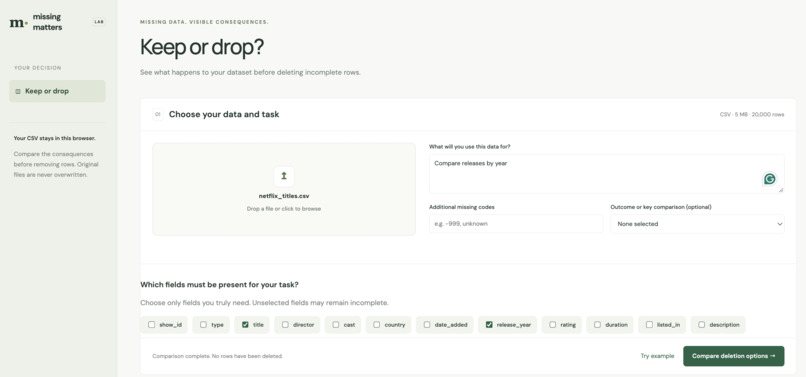
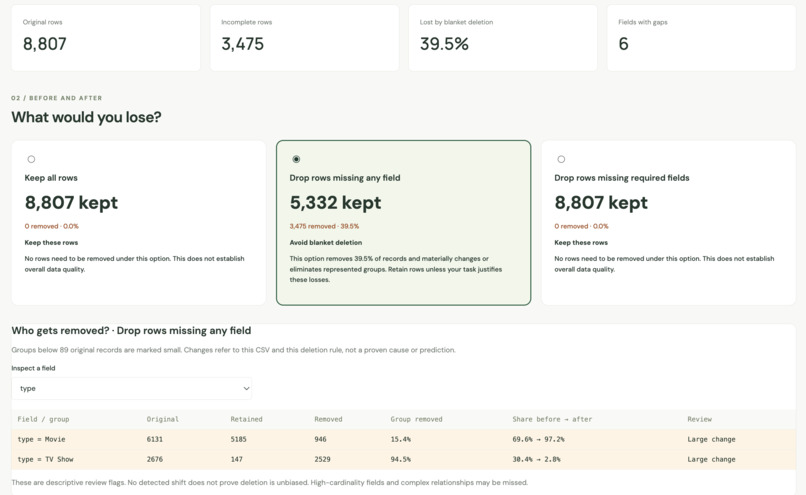
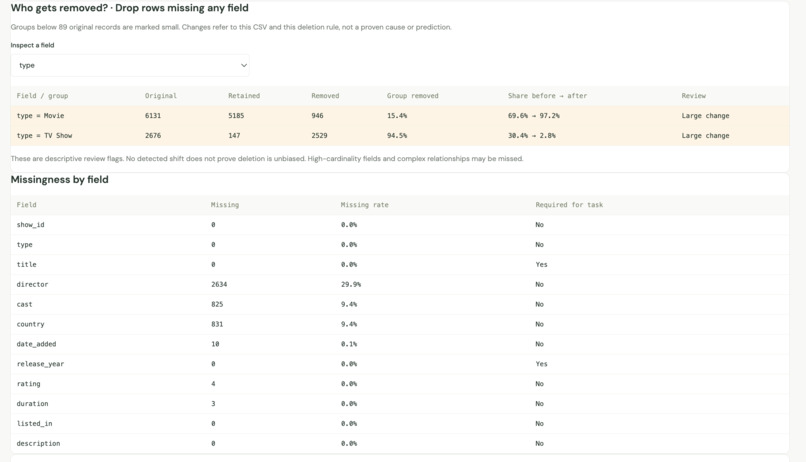
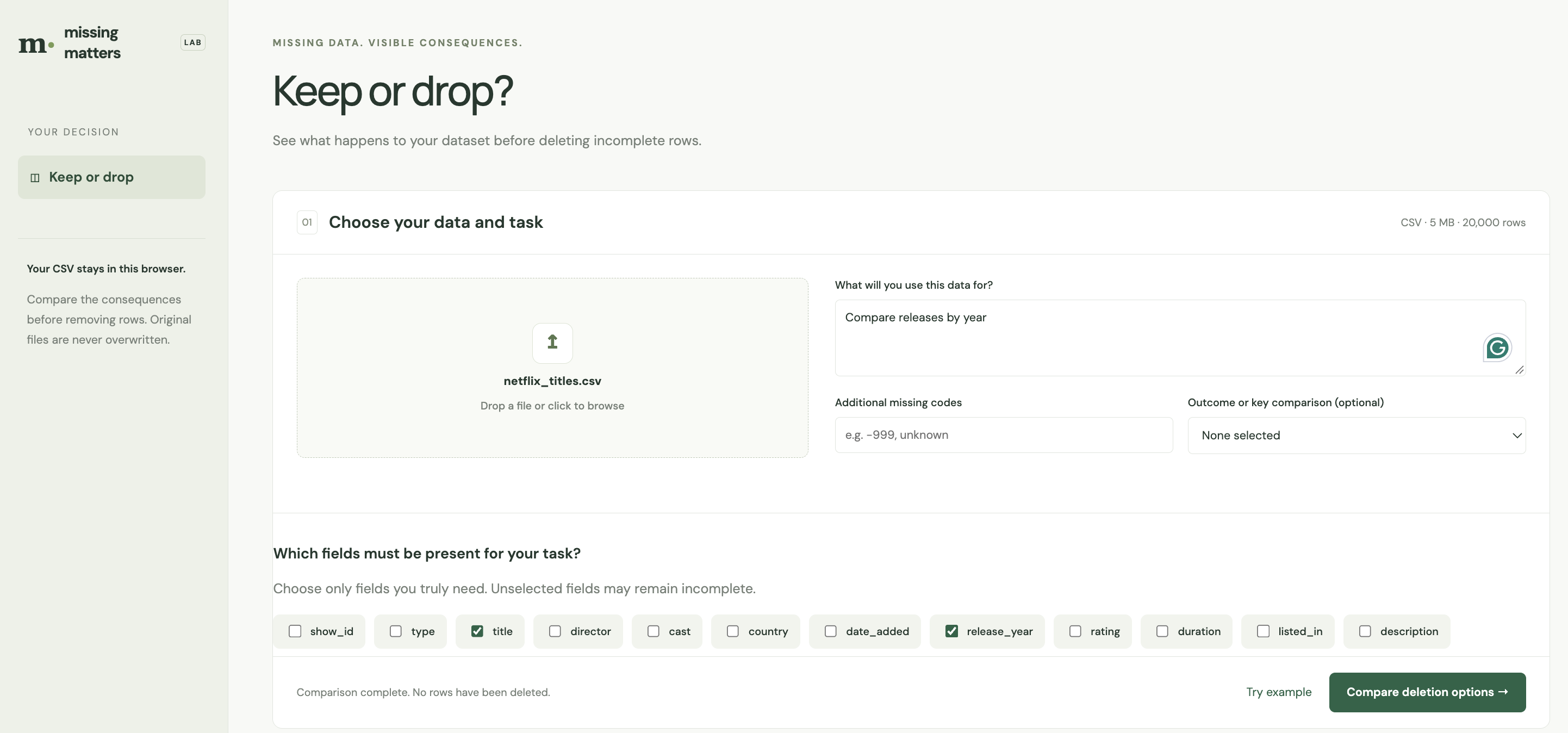
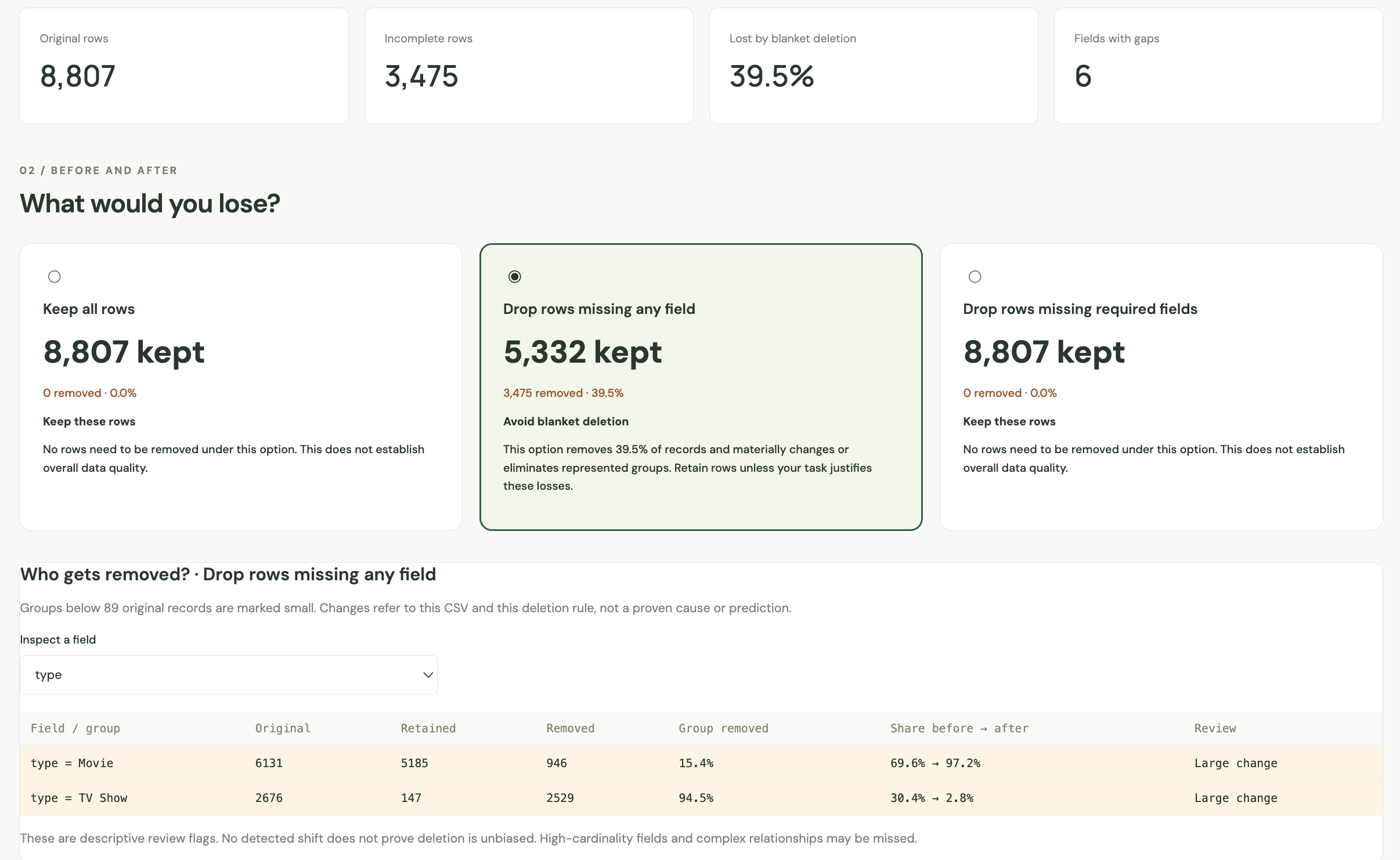
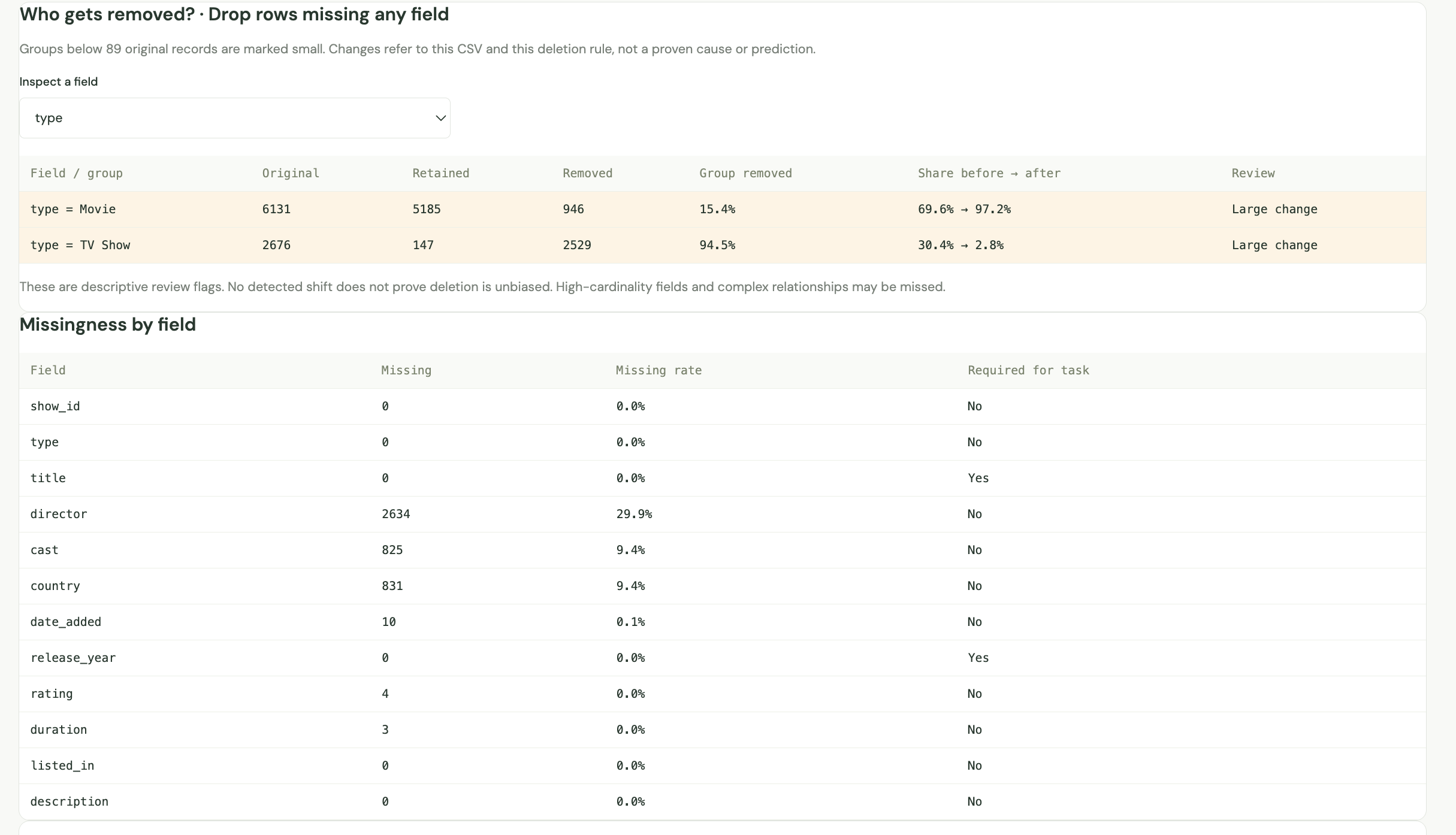
Missing Matters lets users upload a CSV and compare different ways of handling incomplete rows. It shows how many records would be removed and which groups would be most affected. Users can then review and export their chosen result.
How we built it
I built the interface with HTML, CSS, and JavaScript, with the core calculations running directly in the browser. I also used Python for a local server and added an optional local Qwen feature that suggests a review question based on the measured results.
Challenges we ran into
My original idea was to discover broad patterns and explanations in any dataset, but that scope was too ambitious for the hackathon. I narrowed the project to one practical decision: whether deleting incomplete rows would remove information needed for the user’s task.
Accomplishments that we're proud of
I’m proud of turning a broad idea into a working tool with a clear purpose. In testing with the Netflix dataset, Missing Matters showed that deleting every incomplete row would remove over 94% of TV shows—a consequence that the total missing-value count alone would not reveal.
What we learned
As a data science student, this project helped me understand that a more complete dataset is not automatically a more useful one. Cleaning decisions should depend on the task and on which records would be lost. I also learned the value of narrowing a project’s scope and testing it with real datasets.
What's next for Missing Matters
I’d like to support larger datasets and add more ways to inspect changes caused by deletion. I also want to compare deletion with alternatives such as filling missing values, and make the optional Qwen review available in the public version.

Log in or sign up for Devpost to join the conversation.