-
-
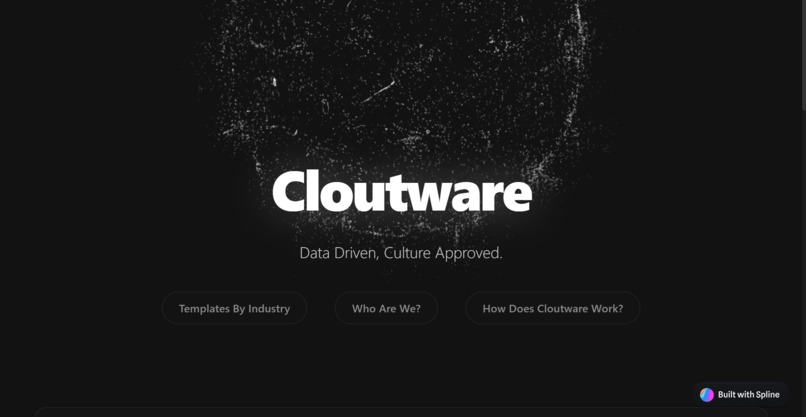
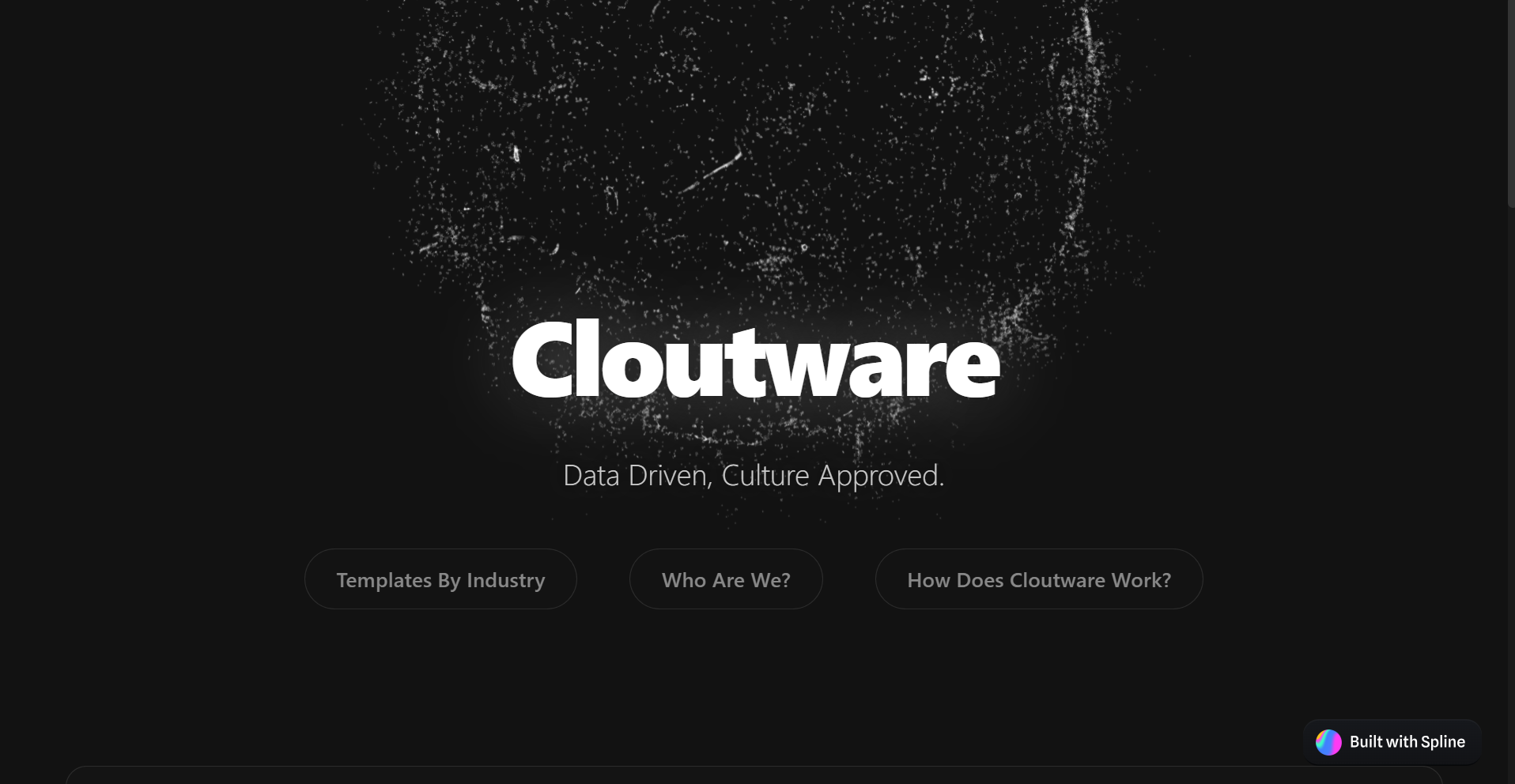
Cloutware's Landing Page UI
-
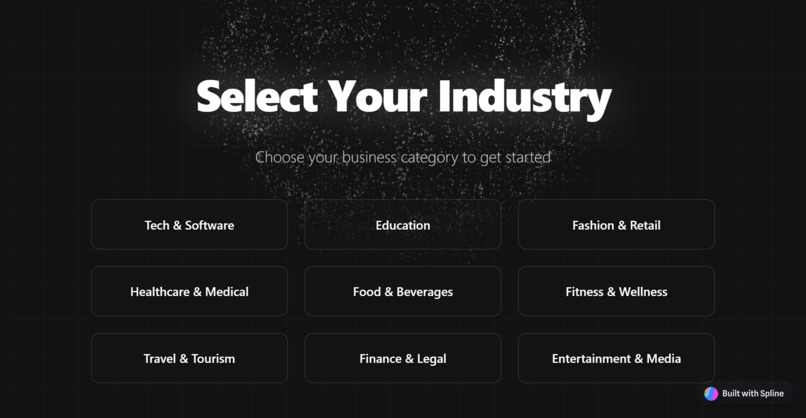
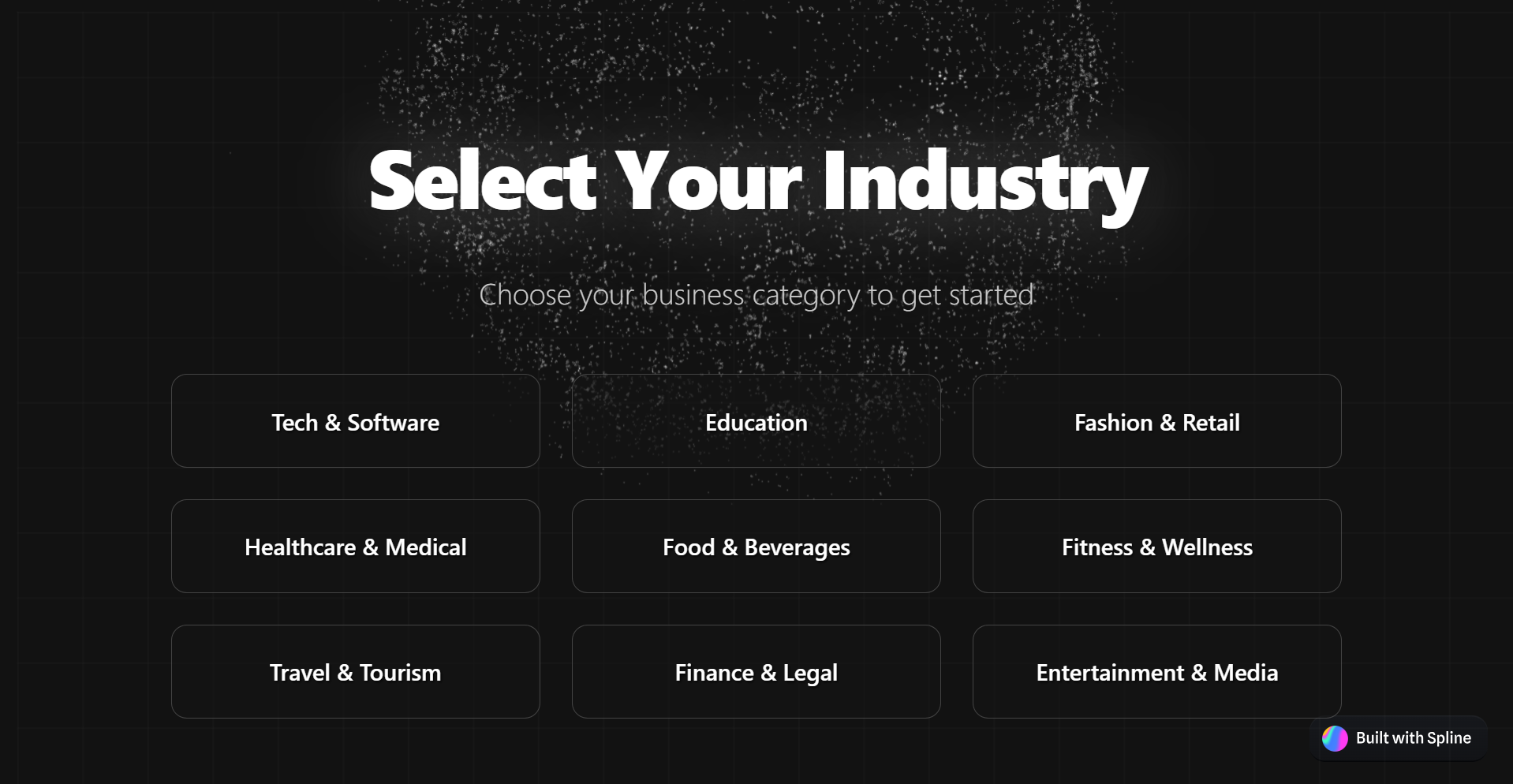
Customizable Templates for Companies by Industries
Inspiration
I'm Vedika, a Computer Science student, and the creator of Cloutware. I built it because I saw a real problem: brands, especially startups and creators spend large budgets on advertising, only to fail because their campaigns feel disconnected. Advertising is one of the most critical and expensive steps in a brand’s journey, yet most tools rely on guesswork, outdated trends, or generic templates that don’t resonate.
That didn’t sit right with me. Technology should do better. It should understand not just data, but human behavior- what people are watching, listening to, and consuming right now. I’ve always been passionate about building things that enhance the human experience, not just automate tasks. So I asked: What if brands could stop guessing and start knowing what’s culturally relevant, who it resonates with, and how to act on it instantly? With Cloutware, I want to give every brand, no matter how small, a better shot at being seen, heard, and remembered.
What it does
Cloutware turns real-time cultural insights into complete, AI-powered advertising strategies in seconds. It combines Qloo’s Taste API which tracks what people are watching, listening to, and loving across TV, music, film, and books with Groq’s ultra-fast LLM to generate culturally relevant, platform-specific campaign blueprints tailored to your brand.
You input your brand’s name, audience, tone, and goals, and Cloutware instantly analyzes current cultural trends in your target market. It generates a whole campaign guide with campaign names, slogans, content ideas, influencer recommendations, sound design, posting schedules, and more all presented in a clean format.
It’s not about guesswork or generic templates. Cloutware has tailored industry specific pre-made templates for companies too. Cloutware enables brands especially startups and creators a smarter, faster, and more human way to build campaigns that actually resonate.
How we built it
At the core, we use Qloo’s Taste API, a powerful cultural intelligence engine that tracks anonymized, real-time preferences in music, film, TV, books, and more across 100+ countries. This gives Cloutware instant access to what people are actually consuming. We then feed those insights along with the brand inputs into Groq’s LLM (llama3-70b-8192), which allows us to run a highly structured, multi-layered prompt that generates not just copy, but a full strategic campaign blueprint complete with cultural tie-ins, platform tactics, and creative direction.
The frontend is a sleek, responsive web interface (hosted on Vercel) built with vanilla HTML, CSS, and JavaScript. It features smooth parallax scrolling, real-time form validation, and a typewriter-effect response display that makes the AI output dynamic.
All of this runs on a lightweight Node.js and express backend (hosted on Render) that securely handles the prompt orchestration, integrates Qloo’s API, and routes requests to Groq and sends the output back ensuring a seamless, end-to-end experience from input to insight.
Challenges we ran into and what we learnt
If I am being honest, when I started building Cloutware, I didn’t know web development. I’m a Computer Science student with a passion for AI and Machine Learning. Turning an idea into a full-stack, production-ready web app was uncharted territory. In just days, I taught myself frontend fundamentals: HTML, CSS, JavaScript, responsive design, form handling and DOM manipulation. ** Integrating Qloo's Taste API provided to us for the hackathon was another challenge. It took me a while to figure out how to use the Qloo's API for the hackathon to meet the purpose of my project. I wanted to turn Qloo's data into meaningful cultural context that could actually fuel a brand strategy. Then came the backend. I built a lightweight Node.js and express server to securely orchestrate the flow between the frontend, Qloo’s API, and Groq’s LLM — but getting it to run reliably took some time. Hosting it on Render, while connecting it to a Vercel-hosted frontend, meant dealing with CORS, environment variables, deployment cycles, and latency optimization. There were countless failed requests, timeout errors, and silent crashes before I got the pipeline stable. I wanted Cloutware to have a **sleek and dynamically interactive UI. That’s why I added a real-time 3D Spline background, parallax scrolling, a typewriter effect for the AI output. Setting and running all of that also took some considerable time. Every part of this project was a challenge. However, every challenge became a lesson.
Accomplishments that we're proud of
One of the biggest accomplishments of this project is that it was built entirely by a single student - me, Vedika without any prior experience in web development just days before. I self-taught HTML, CSS, JavaScript, and full-stack architecture on the fly, and shipped a fully working product in under a week.
What's next for Cloutware
Right now, Cloutware gives you a complete, AI-powered campaign guide in seconds from slogans to platform tactics, all rooted in real cultural insights. But we know that reading a plan is one thing and seeing it come to life is another. So our next big step is AI-powered campaign visualization. You fill out your brand details, and instead of just reading about your campaign, you get a short, dynamic video preview. A sample ad that looks and feels like it’s already on TikTok or Instagram along with the colour palette and visual archetype suggested by Cloutware along with the campaign guide also including individual platform tactics. It uses the right music, visuals, pacing, and tone all based on a strategic analysis. In the future, we also plan to make use of frameworks to make the website more efficient, interactive, scalable and fast. This will establish Cloutware as an all-inclusive go-to website for ad campaign generation and will make sure small businesses have a fair shot at creating equally appealing and fail-proof ad campaigns in just a few seconds.
Built With
- axios
- cdn
- cors
- css3
- dotenv
- express.js
- html5
- javascript
- json
- node.js
- qloo)
- render
- restful-api
- spline-3d
- vercel
- web-apis-(groq-llama-3

Log in or sign up for Devpost to join the conversation.