-
-
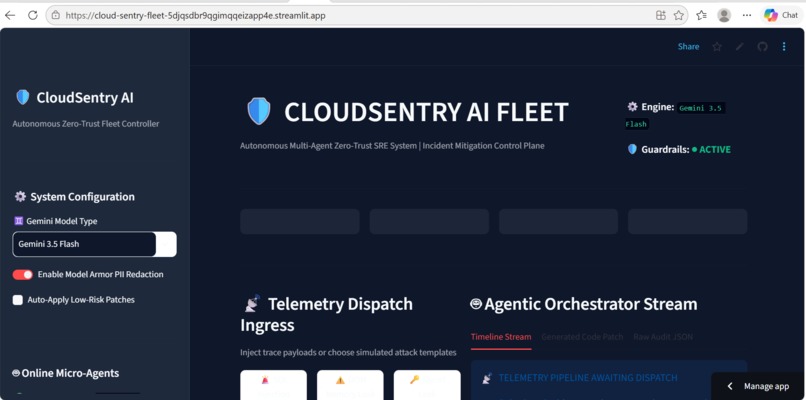
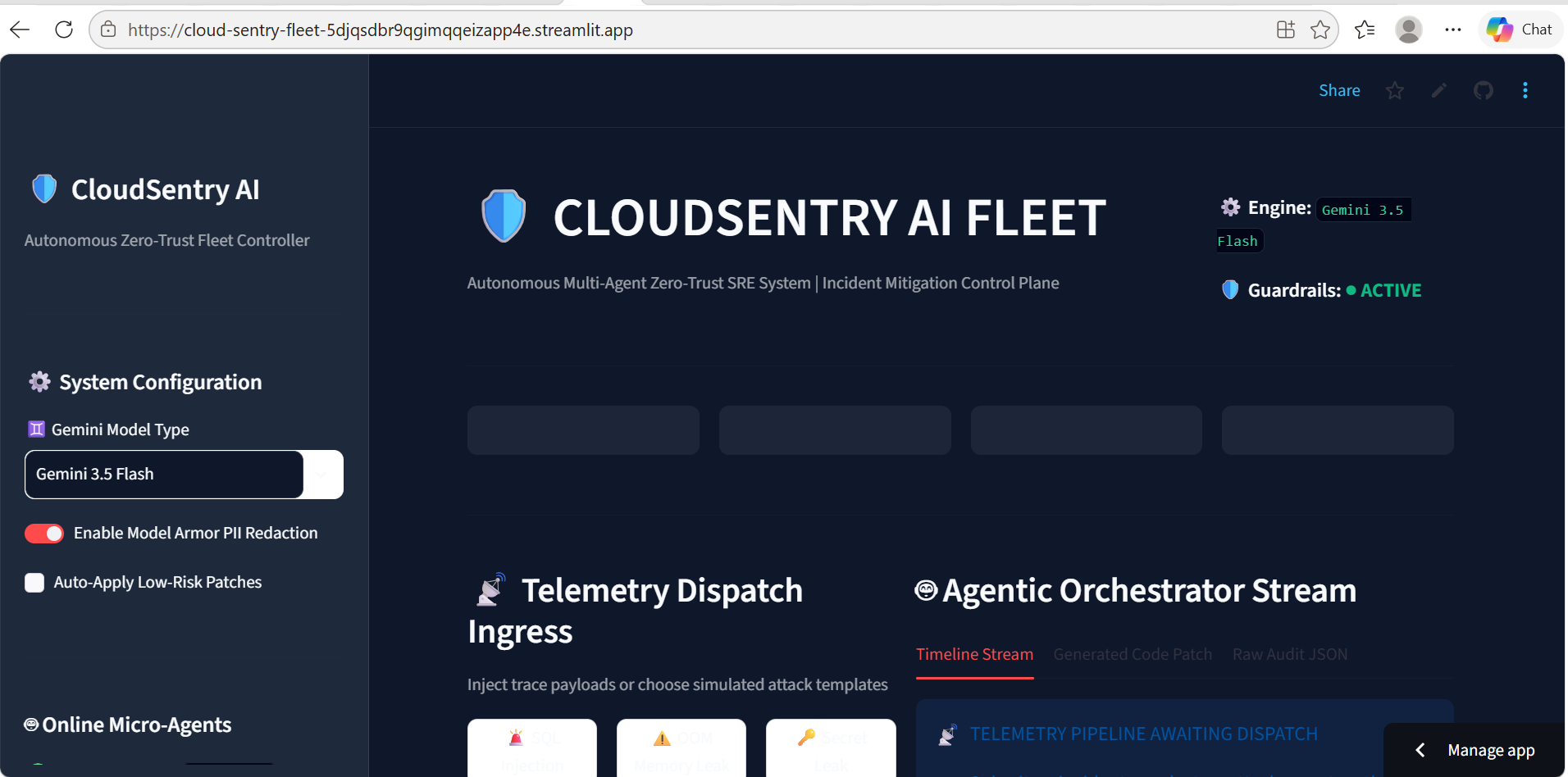
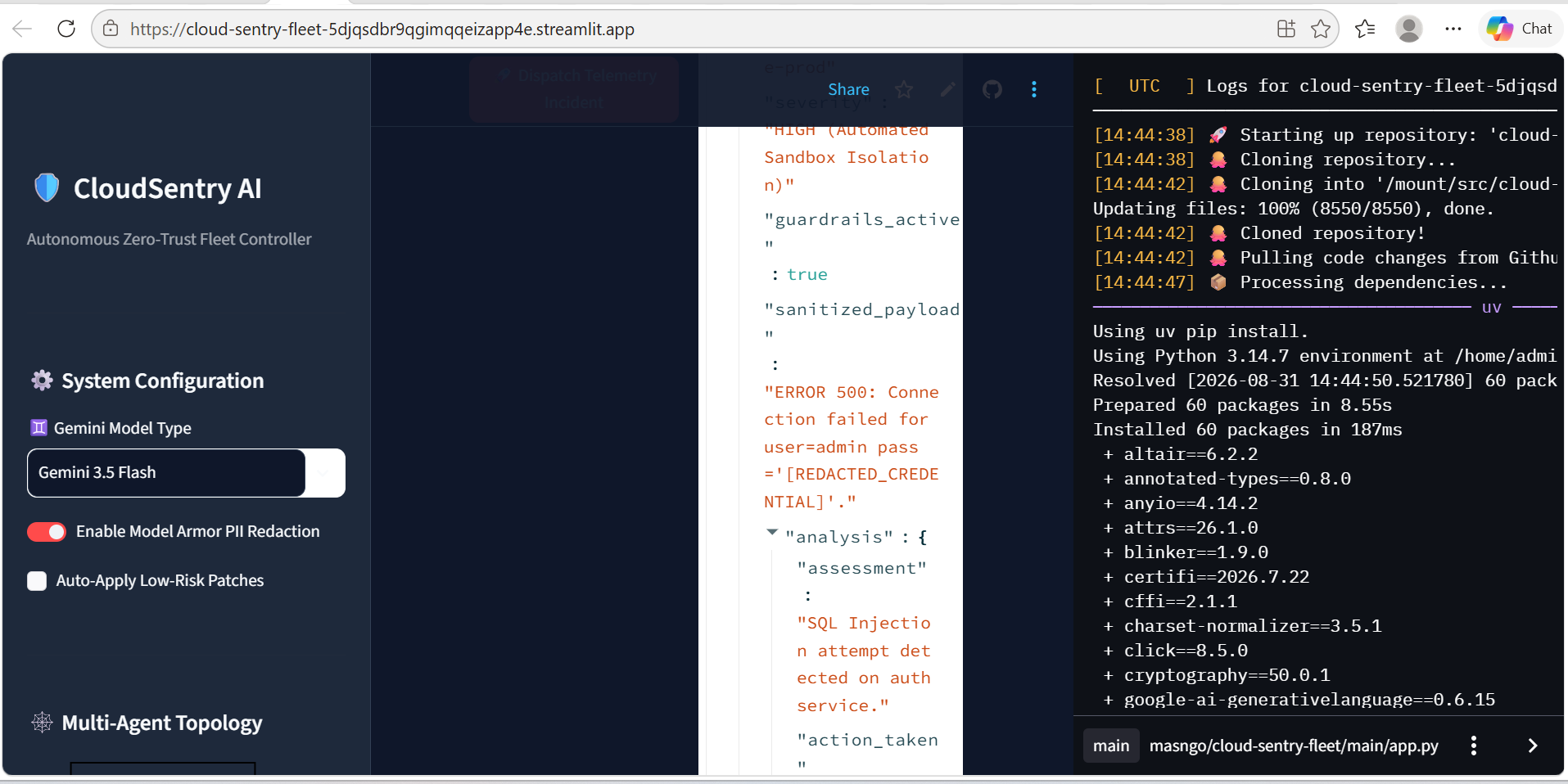
cloudsentry-ai - streamlit app
-
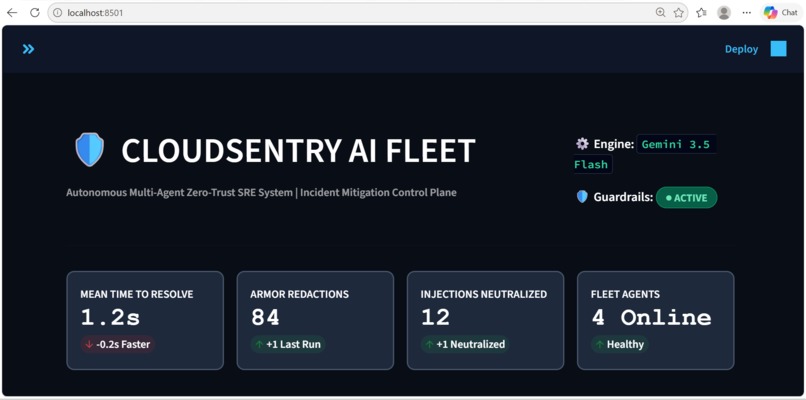
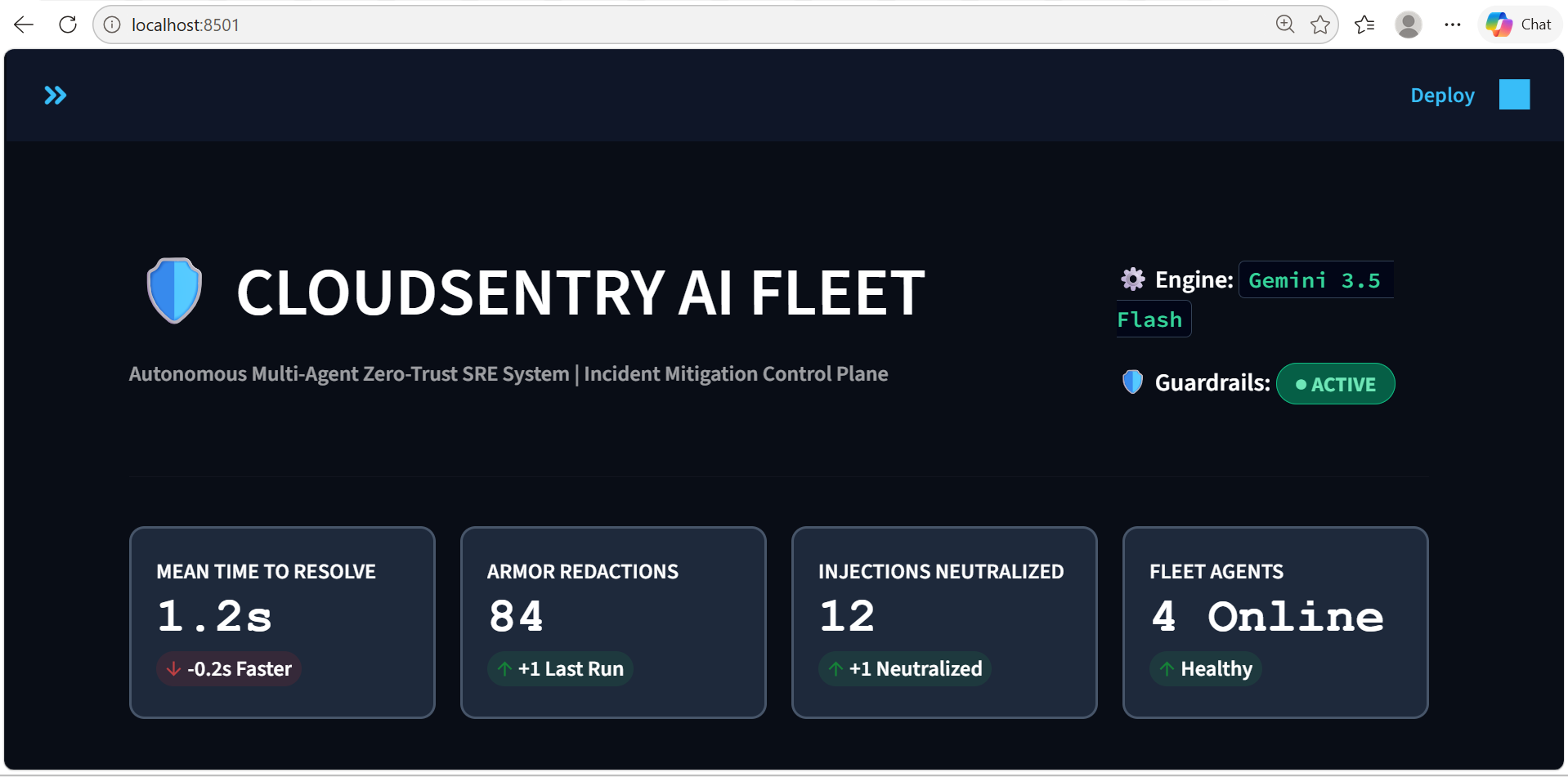
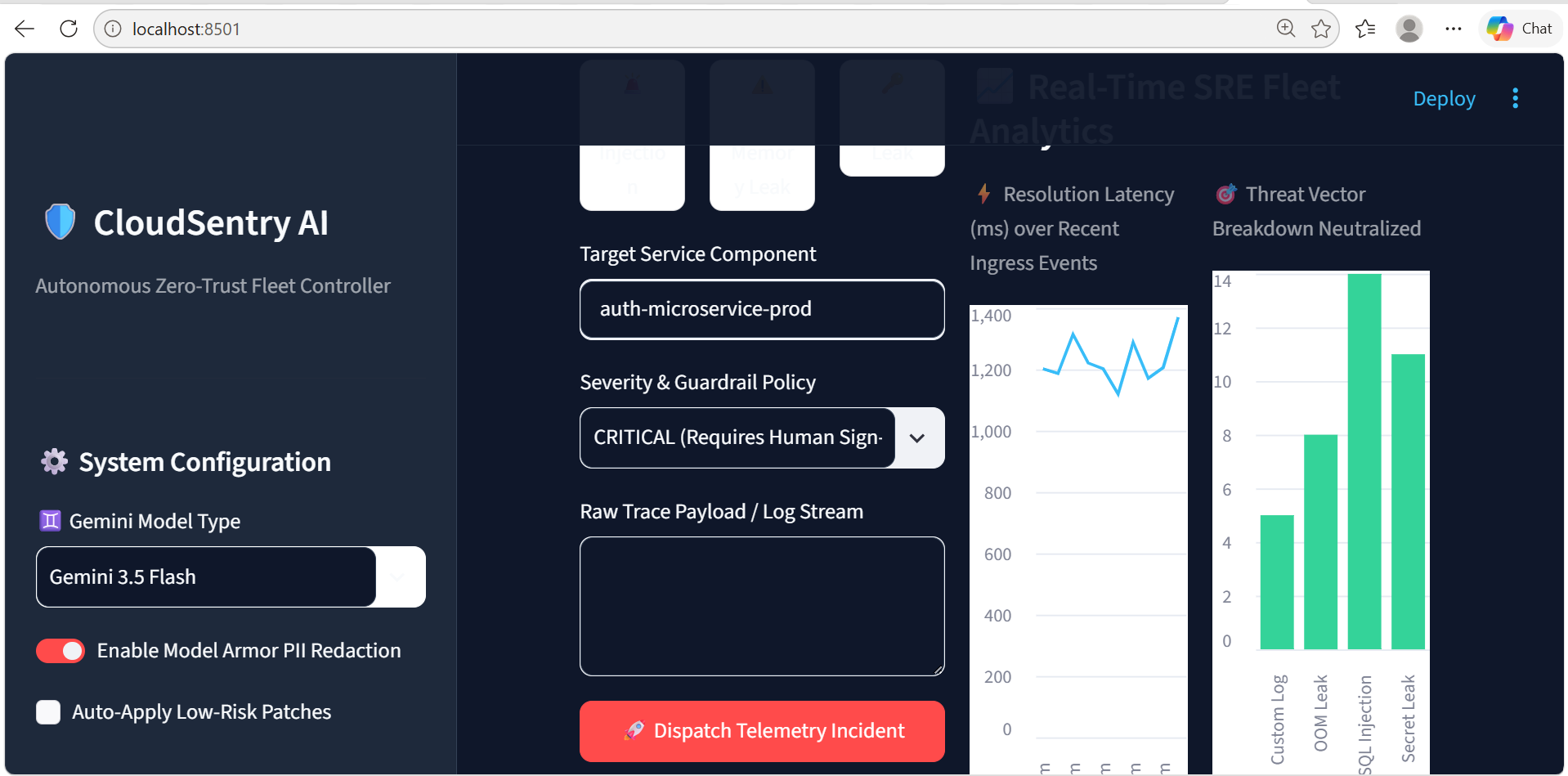
cloudsentry-ai - localhost
-
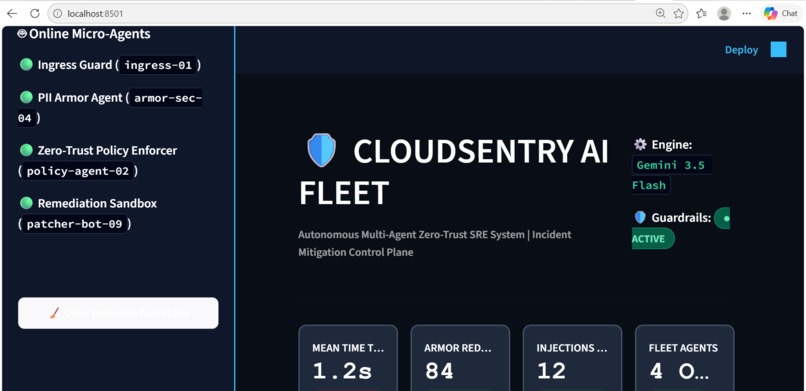
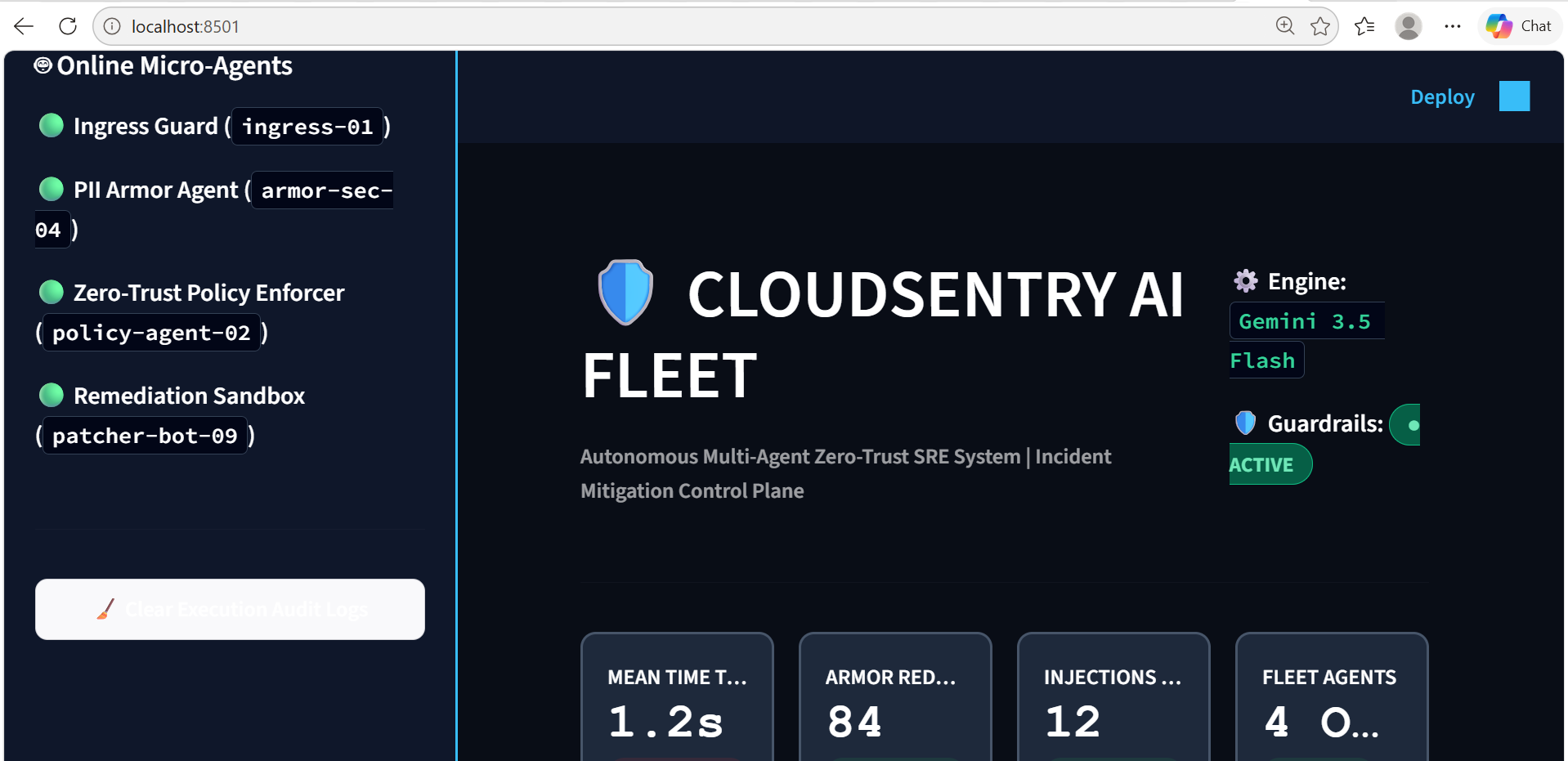
cloudsentry-ai -localhost-interface
-
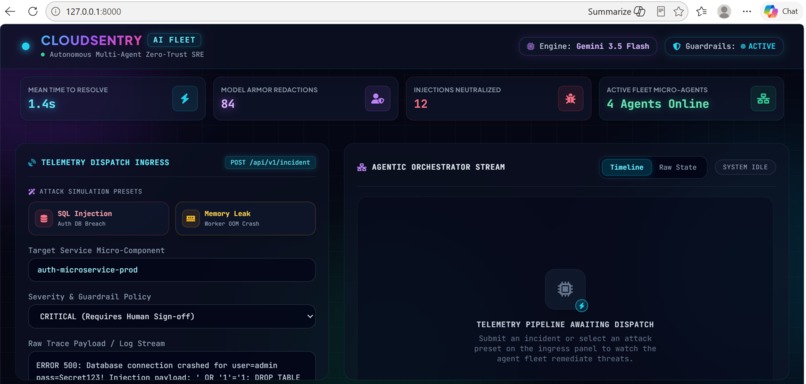
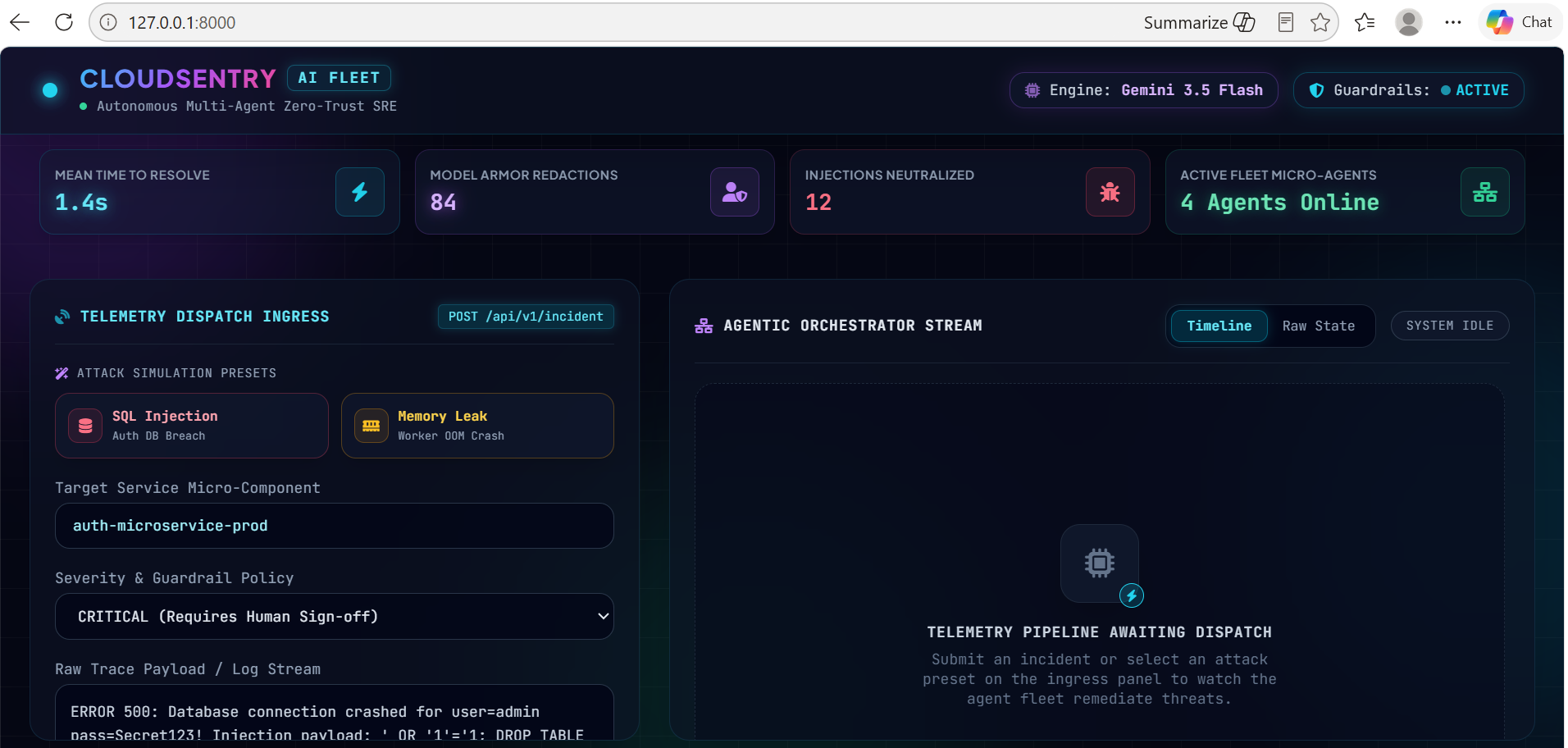
cloudsentry-ai
-
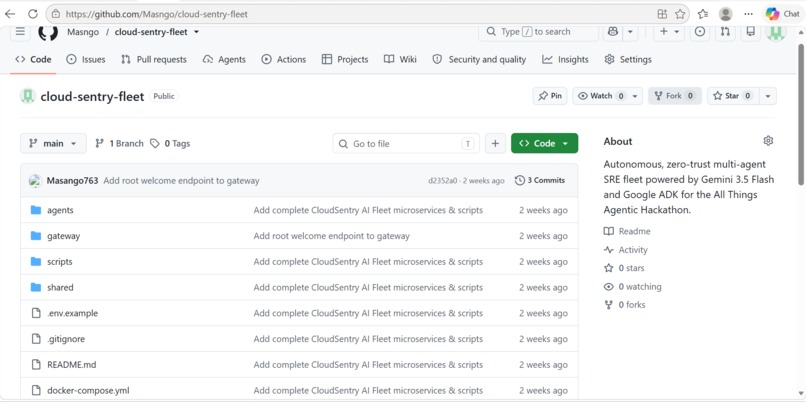
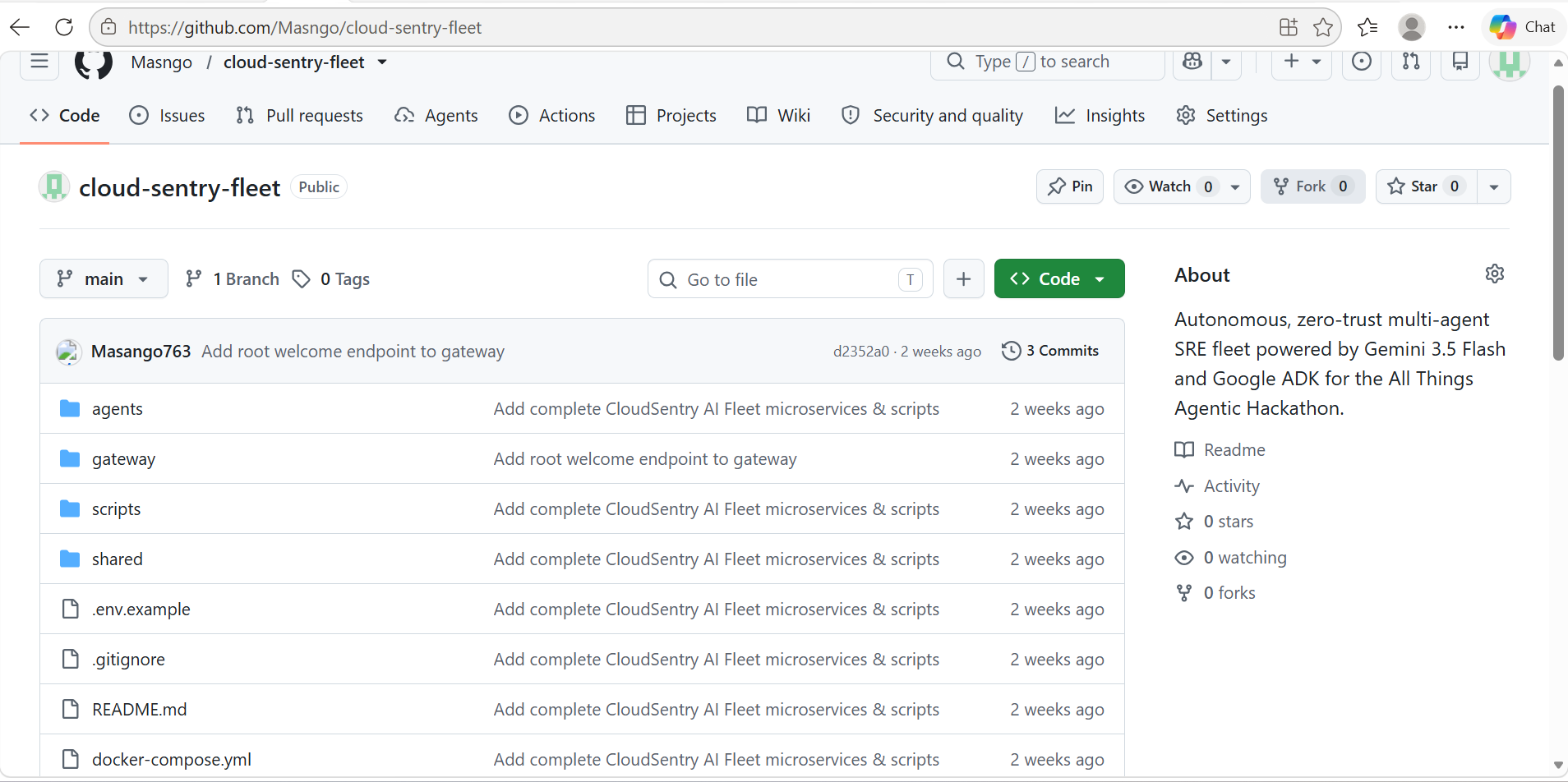
cloudsentry-ai -github repository
-
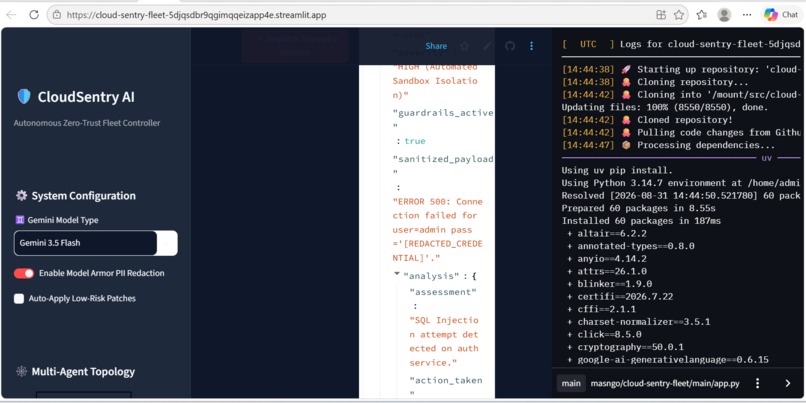
cloudsentry-ai -audit logs
-
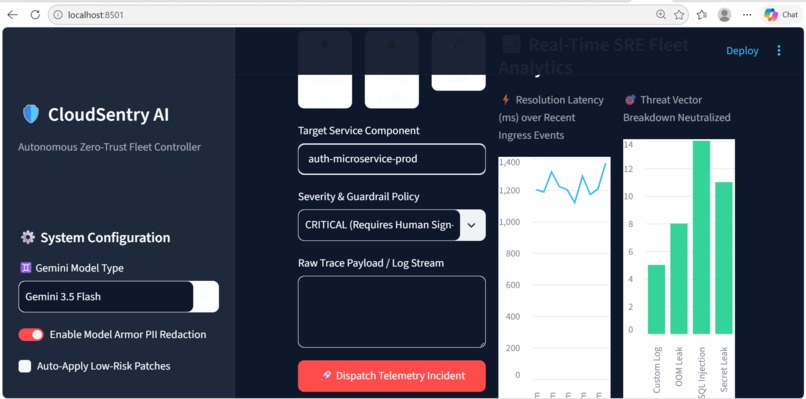
cloudsentry-ai -graphs
-
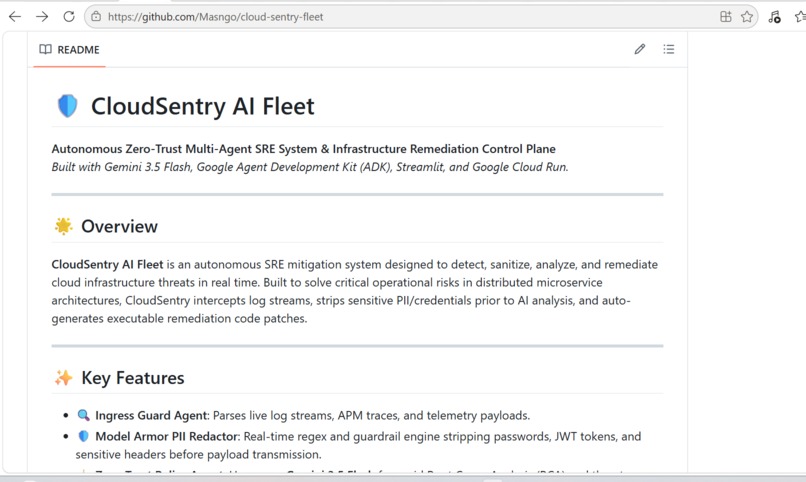
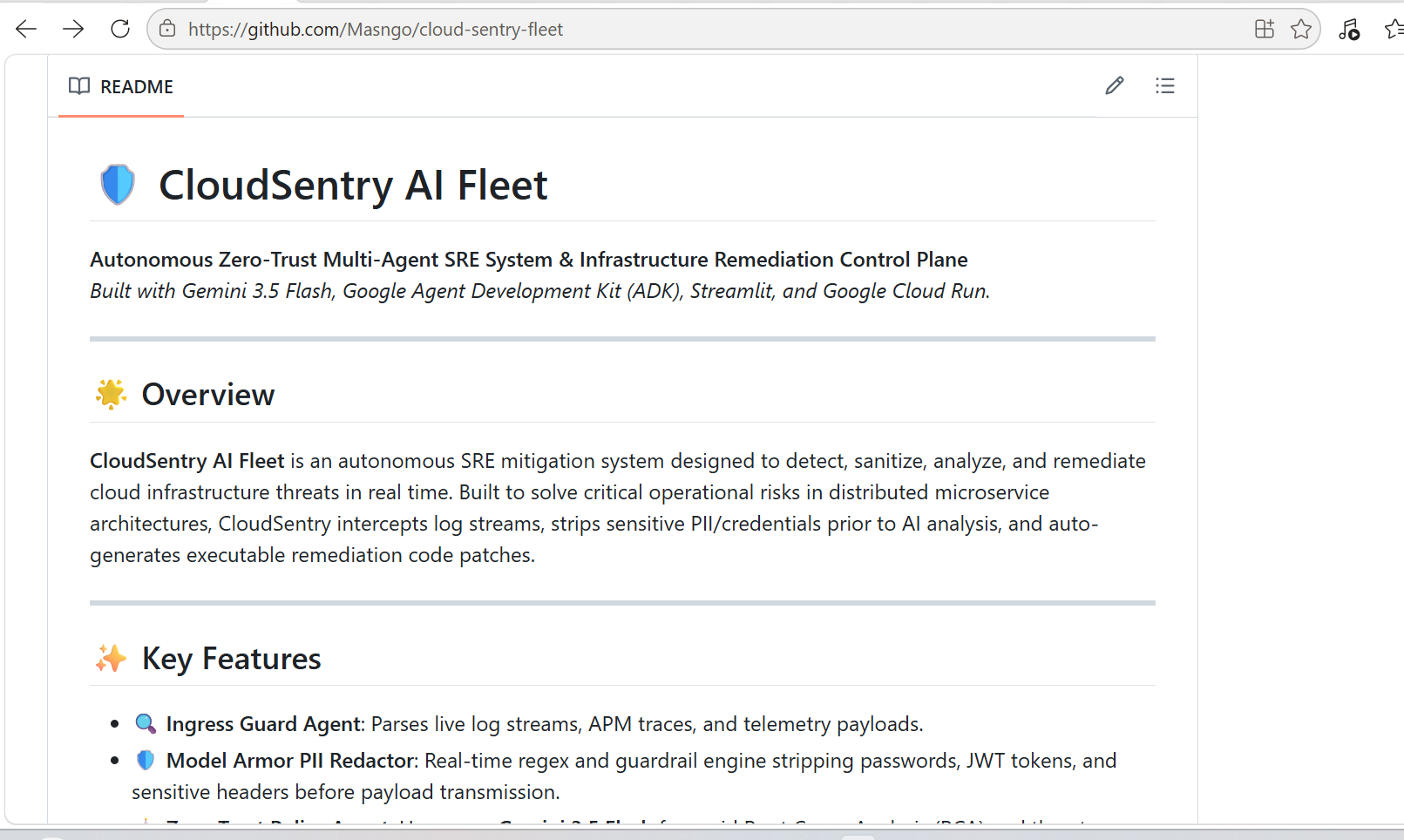
cloudsentry-ai -README.md
Inspiration
Film production is notoriously slowed down by the visual effects (VFX) pre-visualization phase. Translating a director's vision into initial CGI blockouts or procedural shader scripts typically takes hours of manual setup in software like Blender or Three.js.
In the era of Agentic AI, writing code by hand should not be the bottleneck in media production. We realized that if we could equip Google Cloud Gemini Enterprise agents with a real-time, sandboxed execution environment, we could transform natural-language directorial instructions into live, rendered VFX pre-visualization pipelines instantaneously.
What it does
FrameForge AI acts as an autonomous visual effects crew member inside a multi-agent cinema studio.
Directorial Interpretation: A Director Agent parses scene directions (e.g., "Create a futuristic neon city street with rainy reflection effects and volumetric lighting").
Dynamic Script Synthesis: Gemini Enterprise synthesizes complete, executable Python render scripts (using Three.js / PyOpenGL / Blender Python API).
Replit Sandbox Execution: FrameForge connects to Replit via a custom Model Context Protocol (MCP) server, provisions an isolated cloud environment at runtime, runs the generated script, and validates the visual output.
Live Studio Preview: Delivers a playable video preview and interactive web canvas back to the studio interface in seconds.
How we built it
Orchestration & Intelligence: Built using Google Cloud Agent Builder and Gemini Enterprise (gemini-2.5-flash) to manage tool execution, task decomposition, and code generation.
Runtime Sandbox Execution (Replit Track): Designed a dedicated FastMCP server (mcp_servers/replit_mcp/server.py) that interacts directly with Replit's environment APIs at runtime. Gemini agents dynamically invoke tools like create_vfx_sandbox and execute_scene_script to execute render pipelines live inside Replit environments.
Backend Infrastructure: Developed in Python using FastAPI for real-time web-socket communication and Pydantic for structured data validation.
Frontend Studio Interface: A responsive real-time dashboard built with Tailwind CSS and HTML5 video streaming, providing live logs of agent reasoning and sandbox execution.
Challenges we ran into
Deterministic Code Execution in LLM Pipelines: Generative code can occasionally contain import errors or missing dependencies. To solve this, we implemented an autonomous self-correction loop where error outputs captured from the Replit execution sandbox are fed back into Gemini Enterprise to automatically debug and rerun the script.
MCP Protocol Integration: Ensuring low-latency, bidirectional tool calls between the Gemini Agent Builder orchestration layer and the Replit MCP server required careful schema alignment and asynchronous client routing.
Accomplishments that we're proud of
True Runtime Integration: FrameForge does not just display code—it provisions real cloud environments and executes live scripts inside Replit at runtime, fully meeting the core requirement for the Replit Track.
Autonomous Error Recovery: Successfully demonstrated self-healing multi-agent behavior where Gemini fixes runtime Python exceptions inside the Replit sandbox without human intervention.
Seamless Pre-Visualization: Reduced the time required to generate scene CGI blockouts from hours to less than 30 seconds.
What we learned
The Power of Model Context Protocol (MCP): MCP provides a standardized bridge that allows LLMs to safely interact with external compute engines like Replit as if they were native system tools.
Sandboxed Execution Security: Leveraging Replit's infrastructure allows autonomous AI agents to write and execute arbitrary Python code safely without risking system corruption on the main host server.
What's next for CloudSentry AI Fleet
Blender & Unreal Engine API Deep Integration: Expanding the Replit sandbox runtime environments to support headless Blender rendering and Unreal Engine Python automation.
ClickHouse Scene Asset Indexing: Integrating ClickHouse as a persistent vector memory store to index past rendered VFX assets for instant retrieval across multi-episode productions.
Multi-Agent VFX Crew: Adding specialized lighting, camera motion, and texture agents that collaborate in parallel inside shared Replit workspace sandboxes.
Built With
- apache-2.0
- asyncio
- blender-api
- css3
- docker
- fastapi
- gemini
- git
- github
- google-cloud
- google-cloud-agent-builder
- html5
- javascript
- mcp
- pydantic
- pyopengl
- python
- replit
- rest-api
- tailwind-css
- three.js
- uvicorn
- vertex-ai
- websockets


Log in or sign up for Devpost to join the conversation.