Inspiration
The idea for CloudFolks WorkStation came from more than 20 years of training experience.
Bhavesh Atara has been providing IT, cloud, and DevOps training for over two decades. During this journey, we repeatedly saw one major problem: learners wanted practical Kubernetes training, but affordable hands-on lab environments were difficult to provide.
Kubernetes cannot be learned properly through theory alone. Learners need a real environment where they can create resources, make mistakes, troubleshoot problems, and practise repeatedly.
However, providing cloud-based Kubernetes labs to every learner can become expensive. Many learners also face challenges while setting up Kubernetes on their own systems.
We wanted to create a solution that could provide:
- A complete Kubernetes practice environment
- Affordable access for learners
- Guided and independent learning
- Real hands-on labs
- A system that could work with limited cloud infrastructure costs
This idea started in 2022.
Our vision was to run the actual Kubernetes WorkStation on the learner’s local Linux machine while managing users, subscriptions, lab access, progress, updates, and the overall platform from AWS Cloud.
The idea was clear, but building it was extremely difficult.
Because of our location, limited programming resources, development budget, and the complexity of the architecture, the project progressed slowly for several years.
Everything changed when we found OpenAI Codex.
Codex helped us convert our architecture, workflows, and training experience into real working software. With its support, we were able to build the complete project in just 30 days.
What it does
CloudFolks WorkSation is an affordable Kubernetes learning and hands-on practice platform.
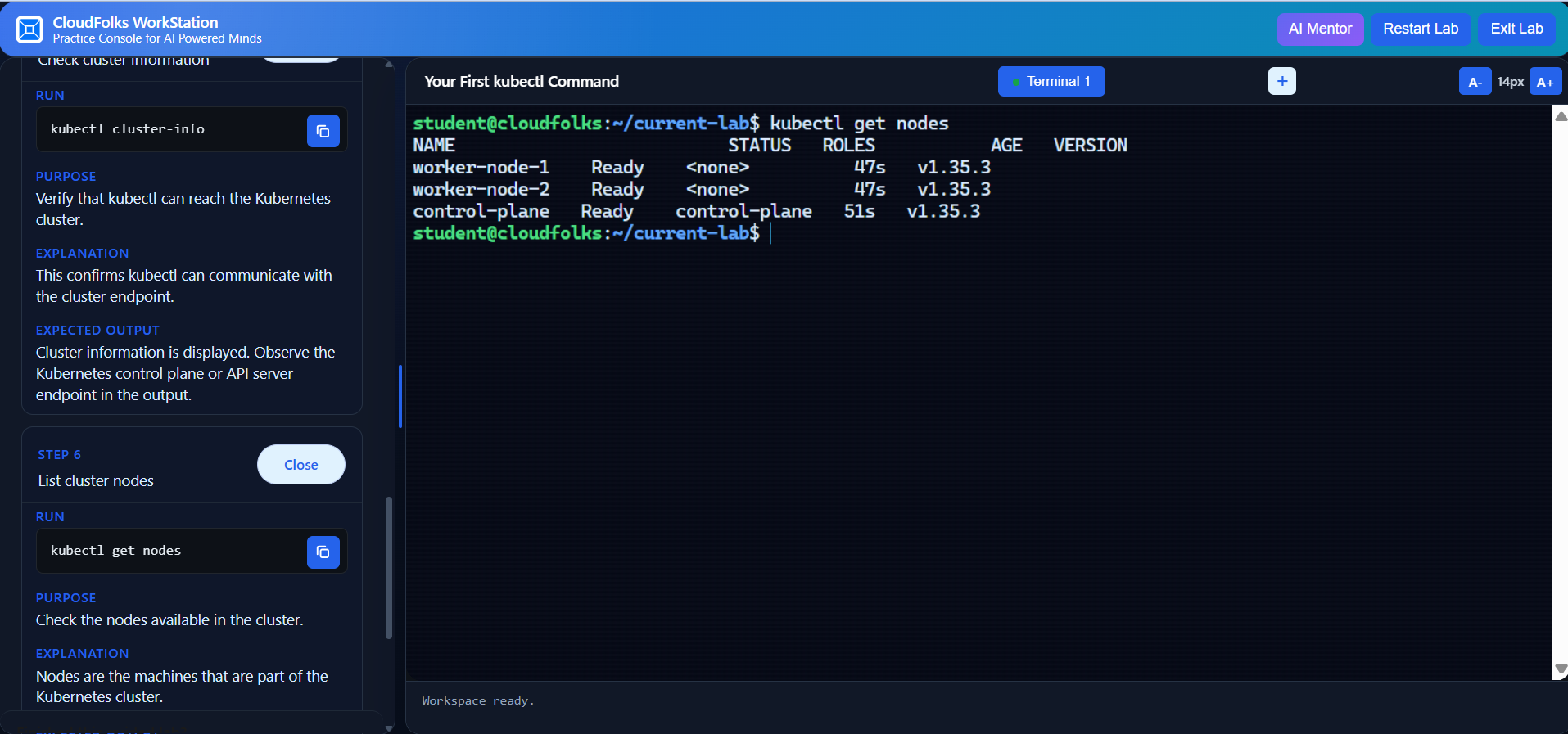
The Kubernetes WorkStation runs locally on the learner’s Linux-based environment, while the complete platform is managed through AWS Cloud.
This hybrid architecture gives learners a real Kubernetes practice experience without requiring us to run a separate expensive cloud cluster for every user.
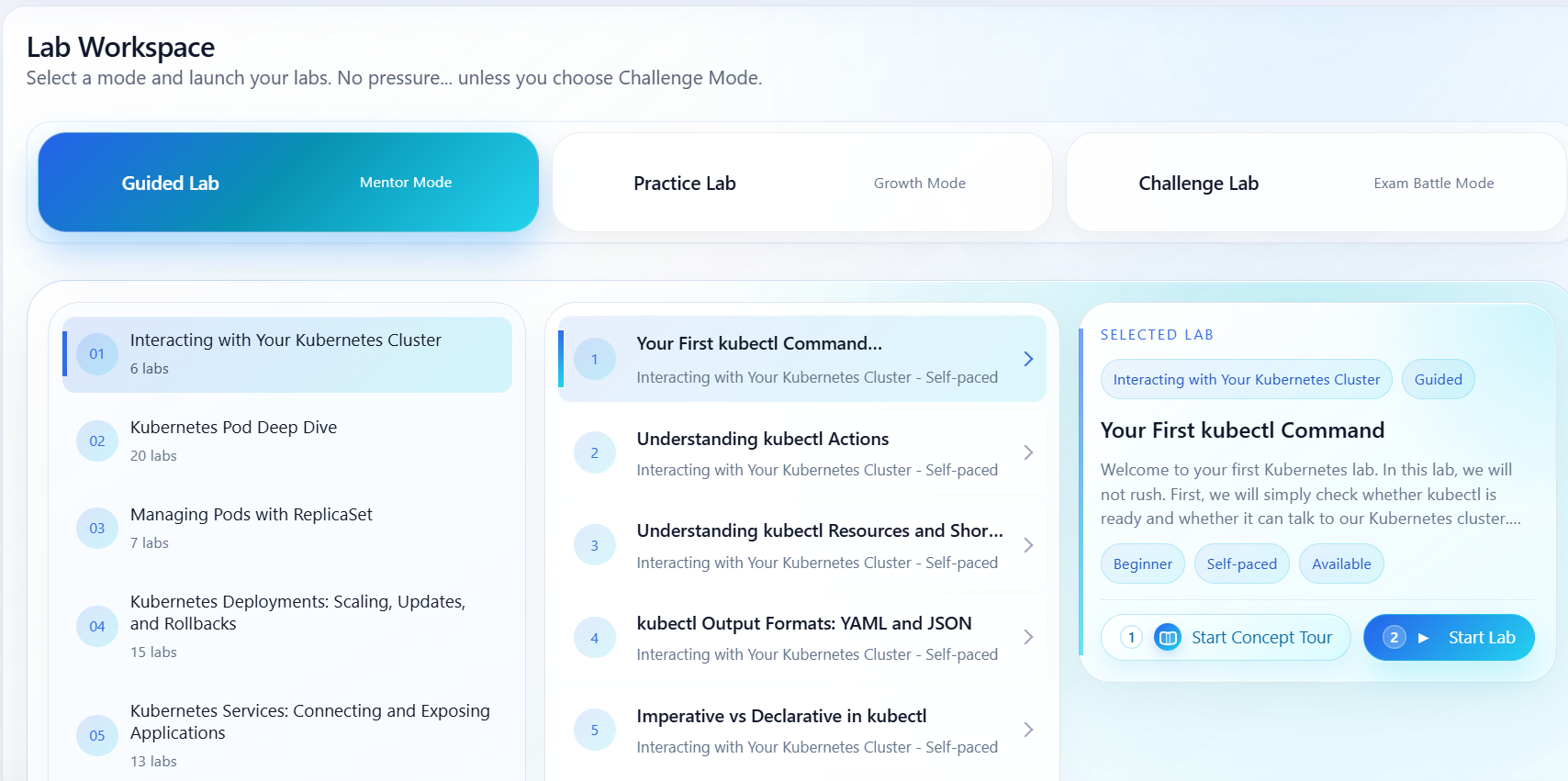
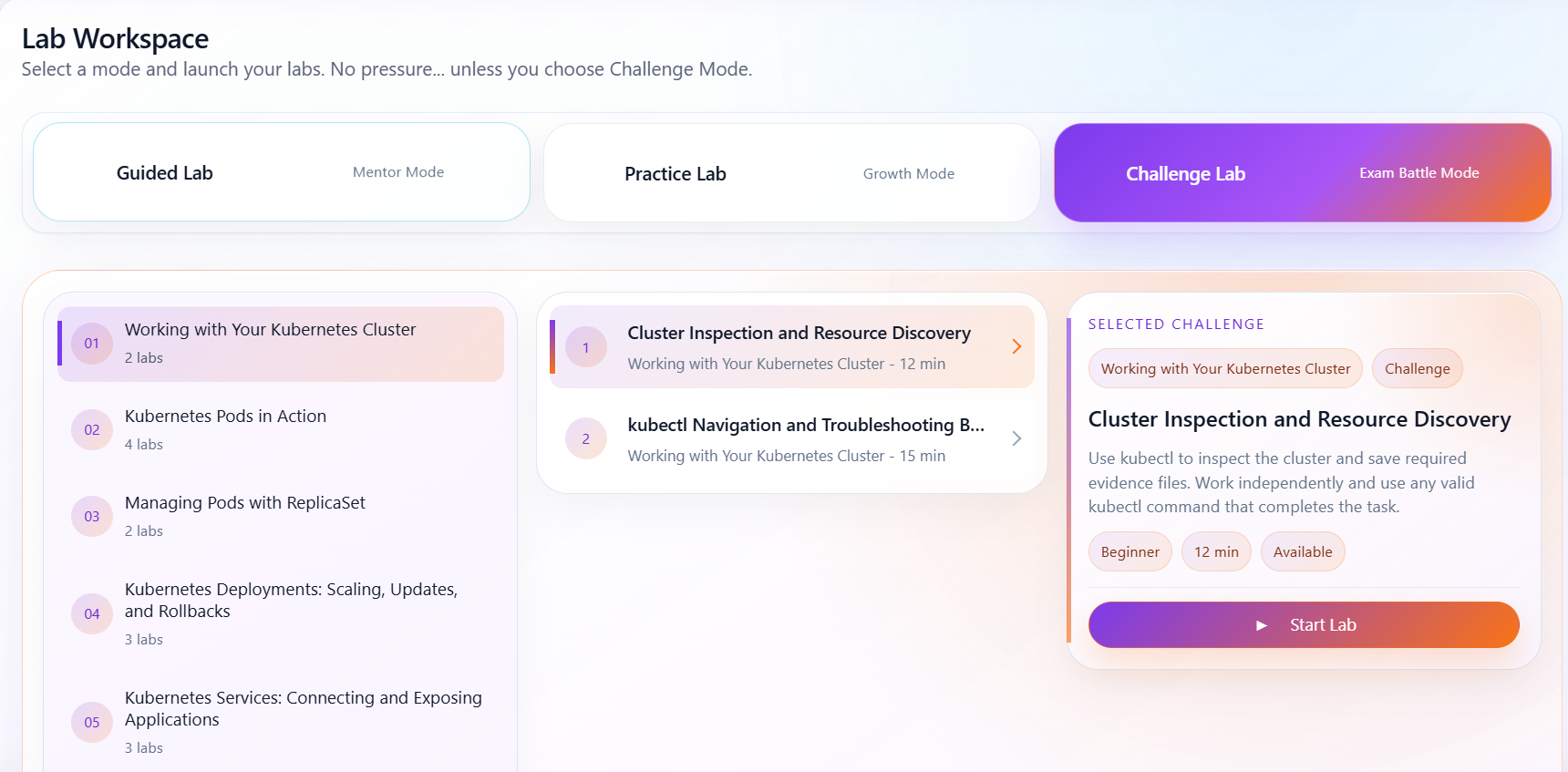
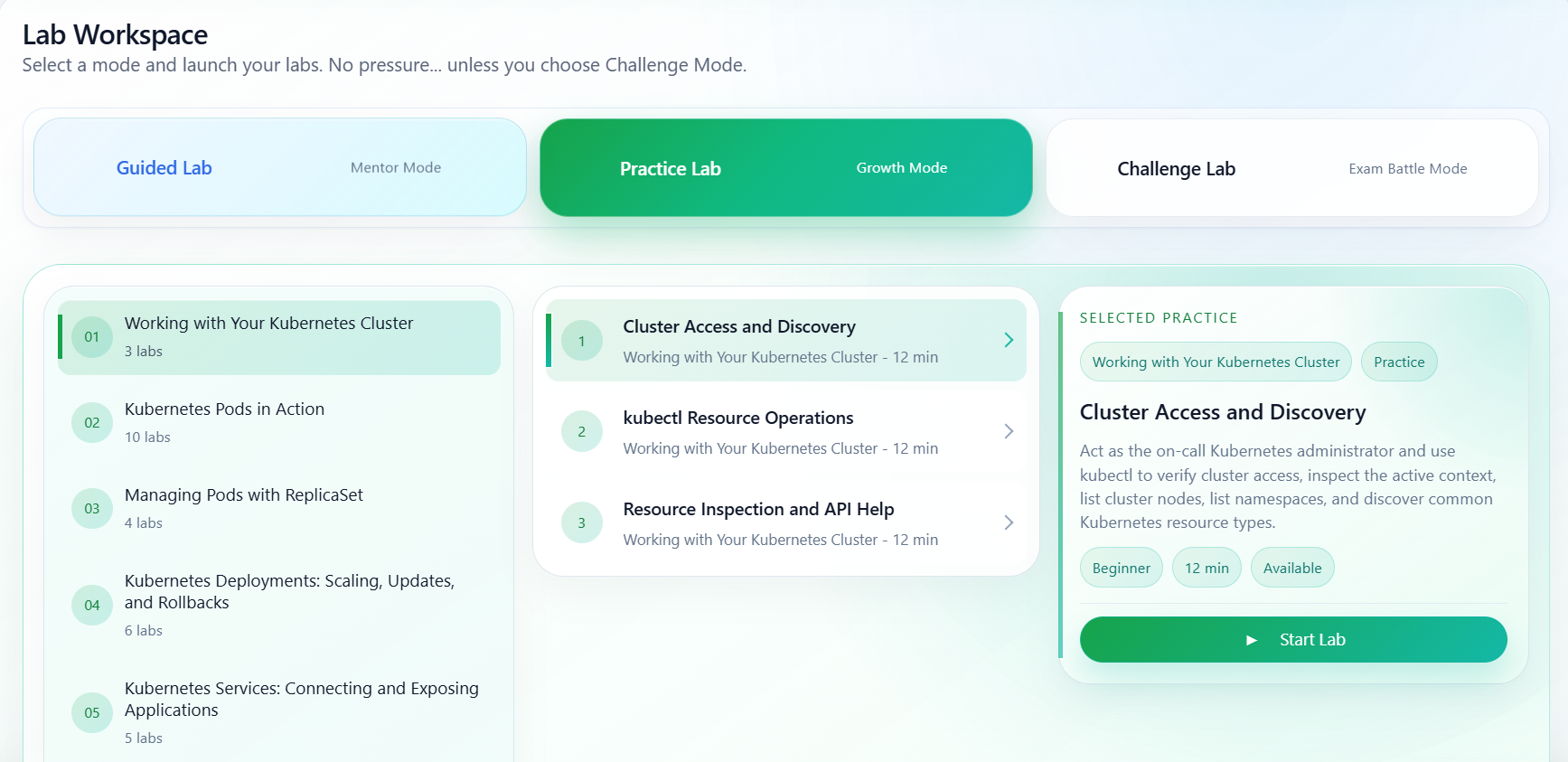
The platform provides three learning modes:
- Guided Mode: Learners receive step-by-step instructions.
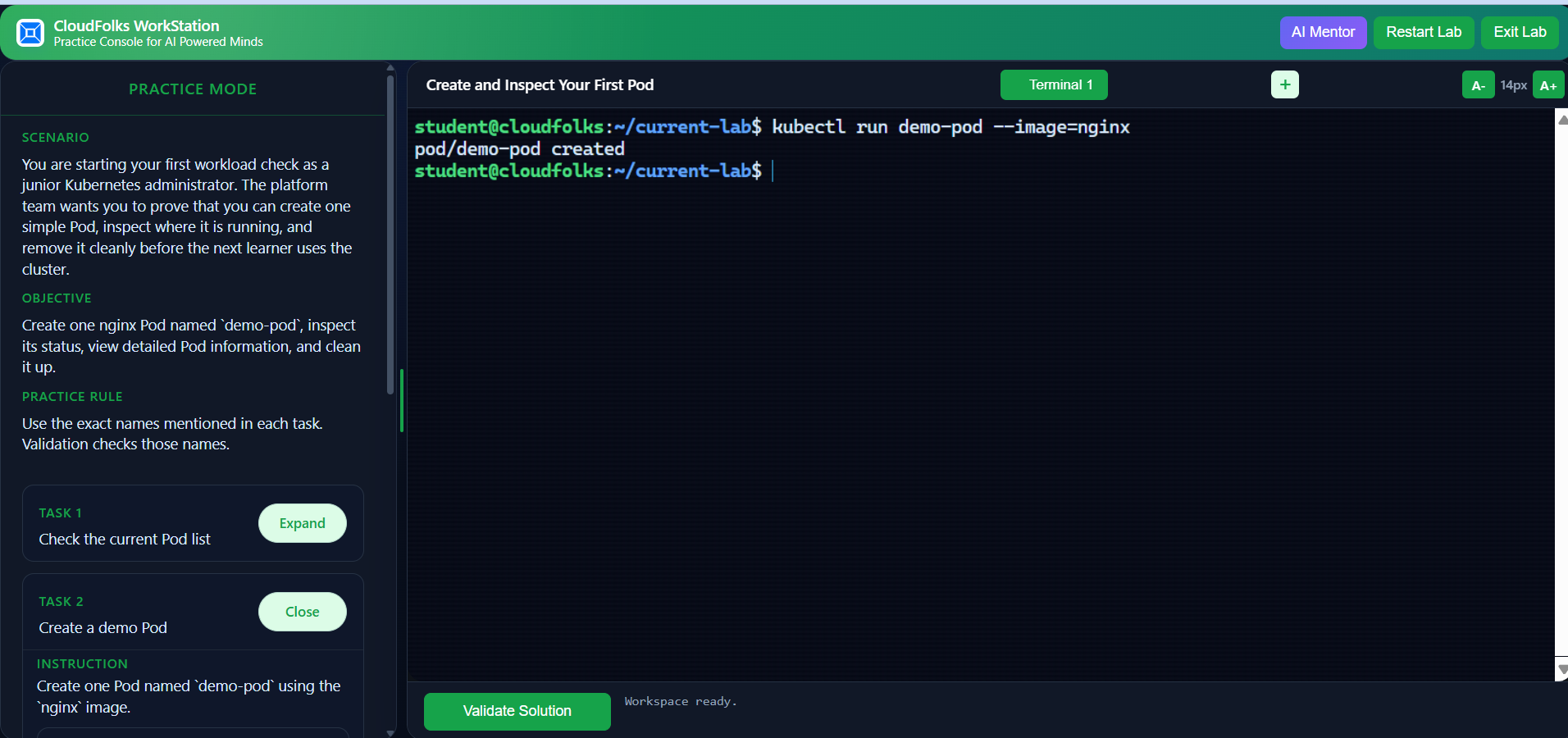
- Practice Mode: Learners complete tasks with limited help.
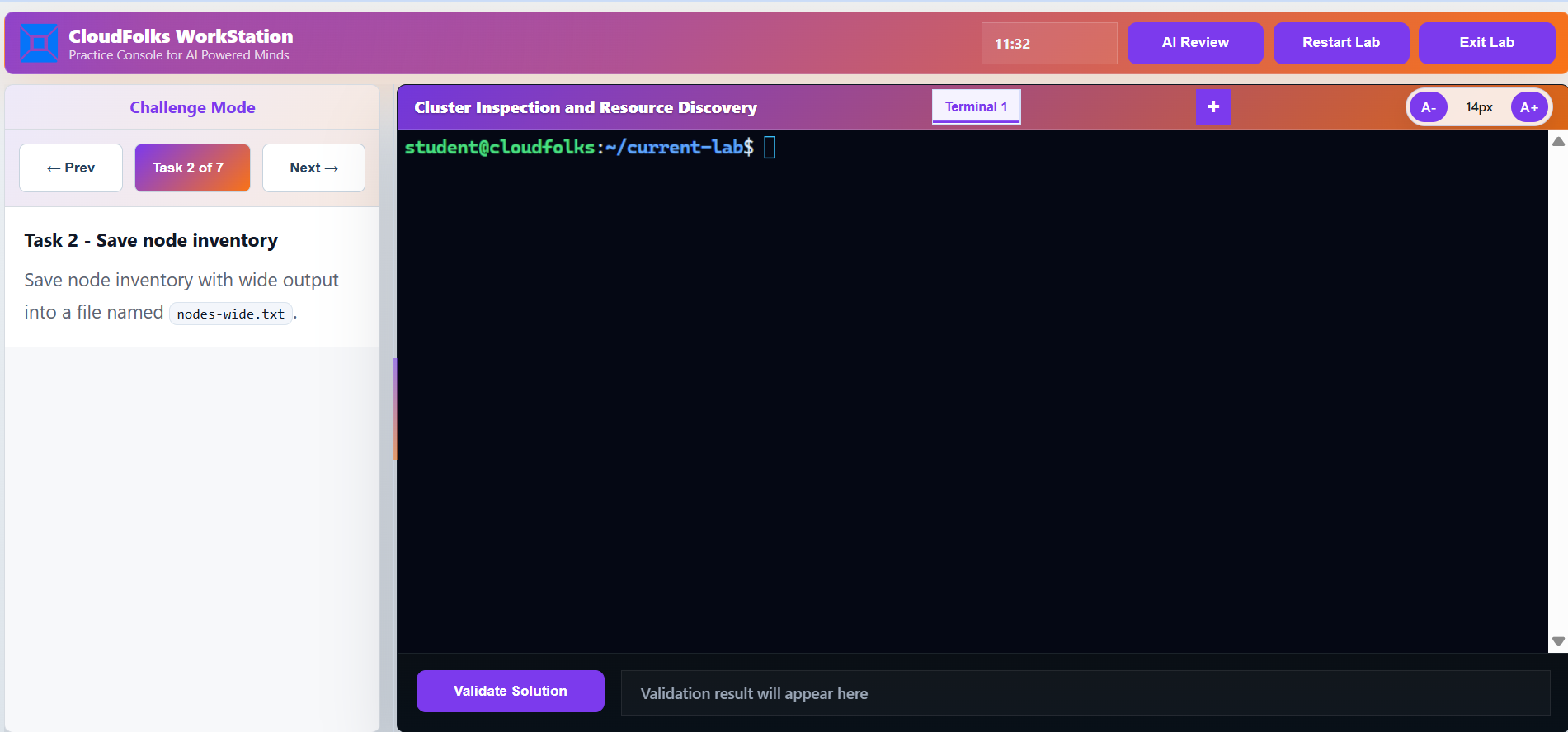
- Challenge Mode: Learners solve practical Kubernetes scenarios independently.
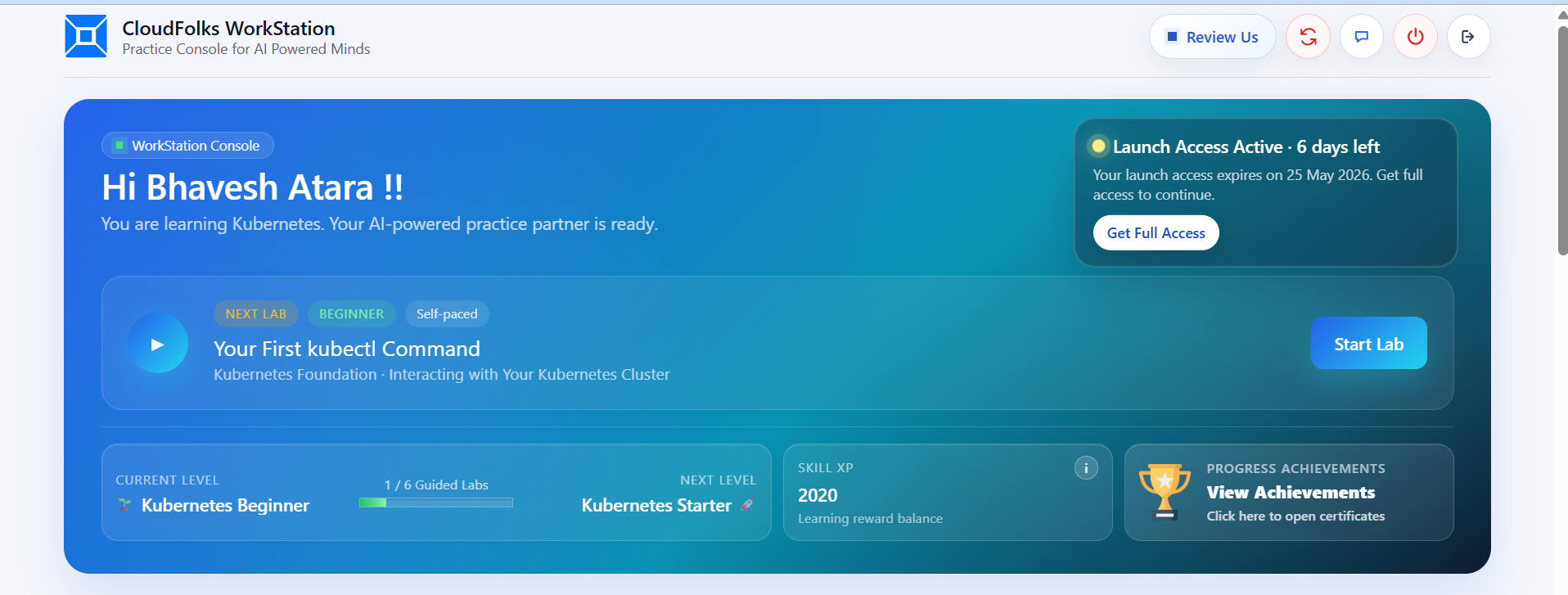
The platform manages:
- User authentication
- WorkStation activation
- Subscription and access control
- Lab availability
- Learner progress
- Lab completion status
- Updates and content delivery
- Learning modes
- Practice environments
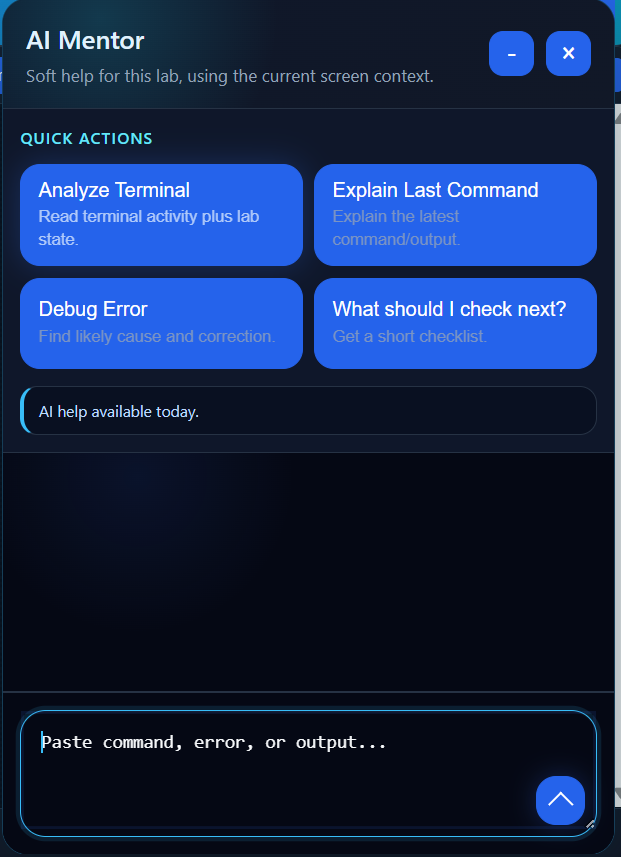
- AI-powered mentoring and troubleshooting support
Learners perform real Kubernetes tasks inside the local WorkStation, while the AWS-based system manages the complete learning experience.
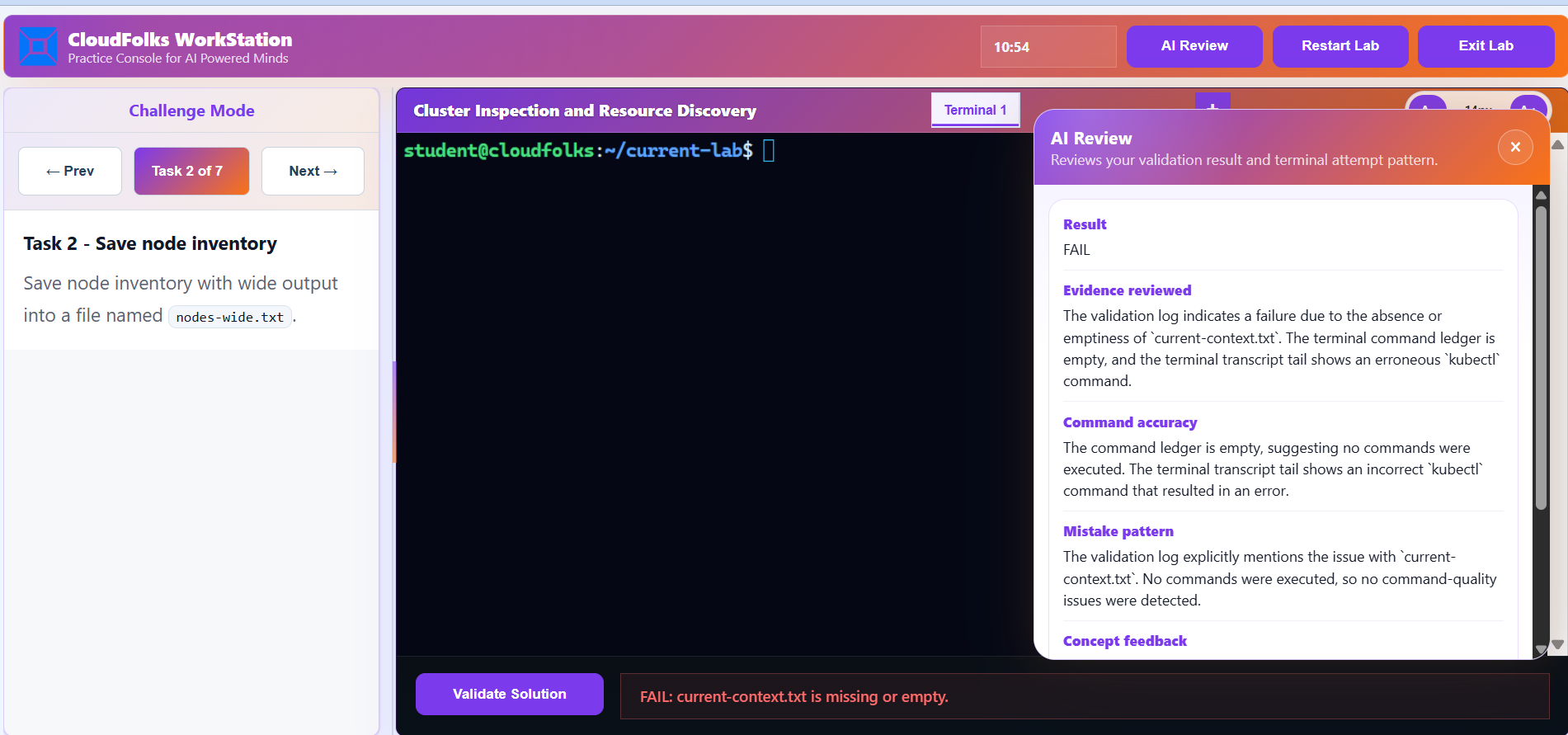
CloudFolks Workstation helps learners understand concepts, identify mistakes, analyse errors, and continue learning without immediately revealing the complete answer.
How we built it
The most complex part of the project was its architecture.
We did not want to build a traditional website where everything runs in the cloud. We wanted the actual Kubernetes learning environment to run locally on the learner’s Linux machine while the central management system remained in AWS.
This required us to connect two very different environments:
- The learner’s local Linux WorkStation
- The AWS Cloud management platform
The local WorkStation runs the Kubernetes environment and practical labs.
AWS Cloud manages:
- Authentication
- User accounts
- Device activation
- Subscriptions
- Lab permissions
- Progress tracking
- Content access
- WorkStation updates
- Platform administration
The local application securely communicates with AWS services to validate the learner, retrieve lab information, report progress, and apply access rules.
We designed the platform so learners could practise locally while we maintained central control over the learning system.
The platform includes:
- A Linux-based Kubernetes WorkStation
- A local learning interface
- Local Kubernetes clusters
- AWS-based authentication and management
- APIs connecting the local WorkStation with AWS
- Lab and content management
- User progress tracking
- Activation and licence management
- Guided, Practice, and Challenge modes
- AI-powered learning assistance
We had the training knowledge, product vision, workflows, and system architecture, but programming such a complex platform was our biggest challenge.
OpenAI Codex became a major part of our development process.
We used Codex to:
- Convert architecture ideas into code
- Develop backend services
- Build APIs
- Connect the local WorkStation with AWS
- Debug integration issues
- Improve application logic
- Build user interfaces
- Implement authentication workflows
- Develop activation and access controls
- Refactor and improve existing code
- Test different technical approaches
Codex did not create the original idea.
The concept, lab structure, learner journey, architecture, and training methodology came from our practical experience.
Codex helped us transform that experience into a complete working product.
A project that had remained difficult since 2022 was finally built in 30 days.
Challenges we ran into
Our biggest challenge was not deciding how the AI should answer learners.
Our biggest challenge was programming and implementing the complete architecture.
Running the Kubernetes WorkStation locally while managing the entire platform from AWS created several technical challenges.
We had to solve questions such as:
- How will AWS identify and authenticate a local WorkStation?
- How will the local system verify that a learner has valid access?
- How will AWS remotely manage labs without running the Kubernetes environment itself?
- How will learner progress be synchronised with the cloud?
- How will updates be securely delivered to local machines?
- How will we prevent unauthorised access?
- How will the platform work reliably on different learner systems?
- How will local failures be handled without breaking cloud data?
- How will the system remain affordable as the number of learners increases?
The hybrid local-and-cloud architecture required careful coordination between the Linux application, Kubernetes environment, APIs, user accounts, databases, and AWS services.
Programming resources were another major challenge.
We started working on this idea in 2022, but we did not have a large software development team.
Because of our location, finding developers with the required combination of Linux, Kubernetes, AWS, application development, and system architecture skills was difficult.
Development cost was also a major limitation.
Building a platform of this complexity through a traditional software development company would have required a significant budget.
We faced challenges related to:
- Limited development budget
- Limited access to specialised programmers
- Complex system architecture
- Linux application development
- AWS integration
- Local-to-cloud communication
- Debugging across multiple environments
- Security and access control
- WorkStation activation
- Software updates
- Testing on different systems
- Converting training workflows into application logic
We already knew what we wanted to build, but converting the complete vision into reliable software was the difficult part.
Codex helped us bridge this gap.
It allowed us to work through programming problems step by step, test ideas, identify errors, rewrite components, and continue development without depending on a large engineering team.
Accomplishments that we're proud of
Our proudest accomplishment is that we did not give up on an idea that started in 2022.
For several years, the vision remained difficult because of budget, location, programming limitations, and technical complexity.
After discovering Codex, we built the complete working project in only 30 days.
We are proud that we successfully created a hybrid architecture where:
- Kubernetes runs locally on the learner’s Linux machine
- AWS manages the complete platform
- Users can be activated and authenticated remotely
- Lab access can be controlled from the cloud
- Learner progress can be tracked centrally
- WorkStation updates can be managed
- Practical learning remains affordable
- The learner receives a real hands-on environment
We are also proud that the product was not created only as a technical experiment.
It was built from more than 20 years of real training experience.
Every major feature was created around problems we had personally seen learners face.
We are especially proud of:
- Turning a 2022 idea into a working product
- Building the project with limited resources
- Completing the core system in 30 days using Codex
- Creating an affordable Kubernetes training solution
- Combining a local Kubernetes environment with AWS-based management
- Designing Guided, Practice, and Challenge modes
- Building activation and access-control workflows
- Creating a platform that can scale to more learners
- Converting practical teaching experience into software
- Proving that a small team with strong domain knowledge can build a complex product with AI-assisted development
What we learned
The biggest lesson we learned is that domain knowledge and programming knowledge do not always exist in the same place.
We had deep experience in training, Kubernetes, AWS, learner behaviour, lab design, and practical education.
However, converting that knowledge into a complete software platform required advanced programming skills across many technologies.
Codex helped connect these two worlds.
We learned that AI-assisted development can empower domain experts to build software that previously required a large technical team and a much higher budget.
We also learned that Codex works best when the developer or product owner already has:
- A clear problem
- A strong architecture
- Defined workflows
- Domain knowledge
- Real user requirements
- The ability to test and validate the output
Codex accelerated development, but human experience remained essential.
We still needed to decide:
- What the product should do
- How learners should use it
- Which architecture was practical
- How access should be controlled
- How the WorkStation should behave
- What should run locally
- What should remain in AWS
- Whether the generated solution matched real-world requirements
We also learned:
- Complex projects can be built in smaller modules
- Clear prompts improve generated code
- AI-generated code must still be tested carefully
- Architecture decisions matter more than individual code files
- Debugging local and cloud systems requires patience
- Limited resources do not always have to stop innovation
- A strong real-world problem can guide the complete product
- AI can significantly reduce the gap between an idea and its implementation
Most importantly, we learned that AI does not replace experience.
It amplifies it.
What's next for CloudFolks WorkStation
Our next goal is to make CloudFolks WorkStation available to more learners through a simple and affordable platform.
We plan to improve both the local WorkStation and the AWS-based management system.
Our next development areas include:
- More Kubernetes labs
- CKA preparation paths
- CKAD preparation paths
- CKS security labs
- Real-world troubleshooting challenges
- Better AI-based error explanations
- Personalised learning recommendations
- Skill-gap identification
- Learner performance reports
- Instructor dashboards
- Organisation and classroom management
- Multi-language learning support
- More secure device activation
- Improved WorkStation update delivery
- Better offline and low-bandwidth support
- AWS EKS practical labs
- Azure AKS practical labs
- Google Kubernetes Engine labs
- Docker, Terraform, GitOps, and DevOps WorkStations
- AI-powered mock interviews
- Team-based practical challenges
We also want to simplify the installation experience so learners can start practising Kubernetes with minimal setup.
In the future, we plan to explore a browser-accessible version while preserving the affordability and performance benefits of our local-first architecture.
Our long-term vision is to build a complete AI-powered Cloud and DevOps learning ecosystem where learners can study, practise, troubleshoot, and validate real skills from one platform.
CloudFolks WorkStation represents more than a software project for us.
It is the result of more than 20 years of training experience, an idea that began in 2022, several years of challenges, and a 30-day development journey powered by OpenAI Codex.
We had the experience. We had the problem. We had the architecture. Codex helped us finally build it.


Log in or sign up for Devpost to join the conversation.