-
-
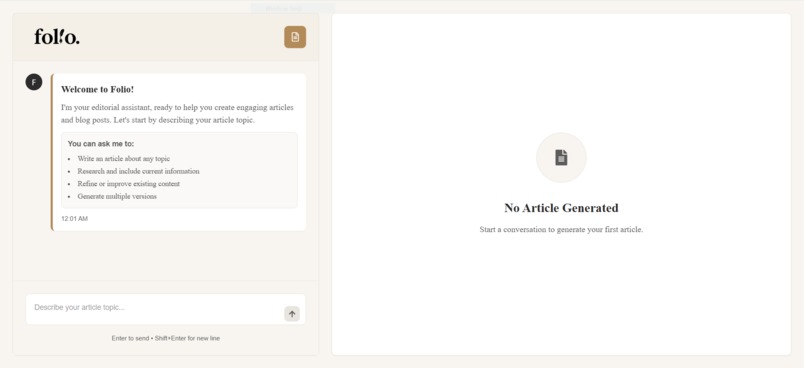
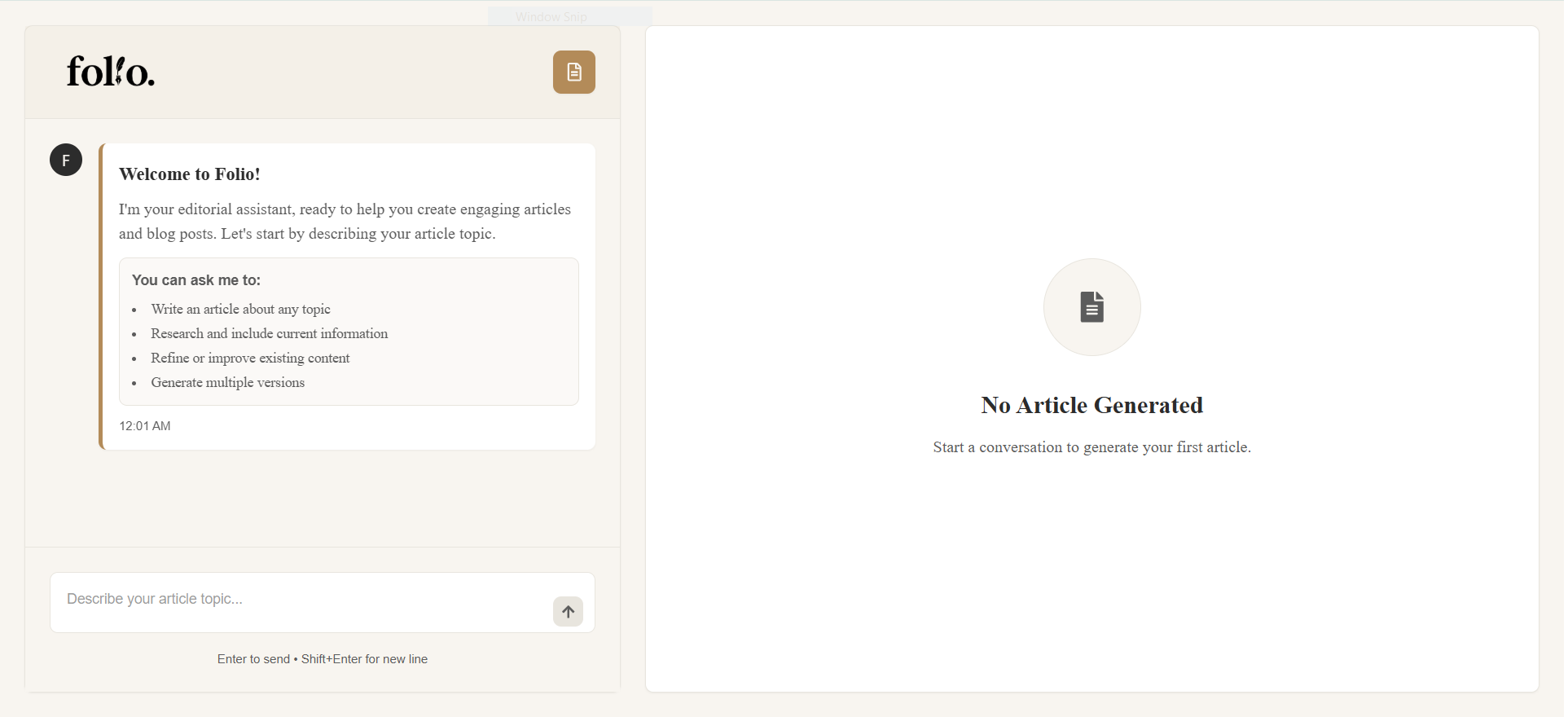
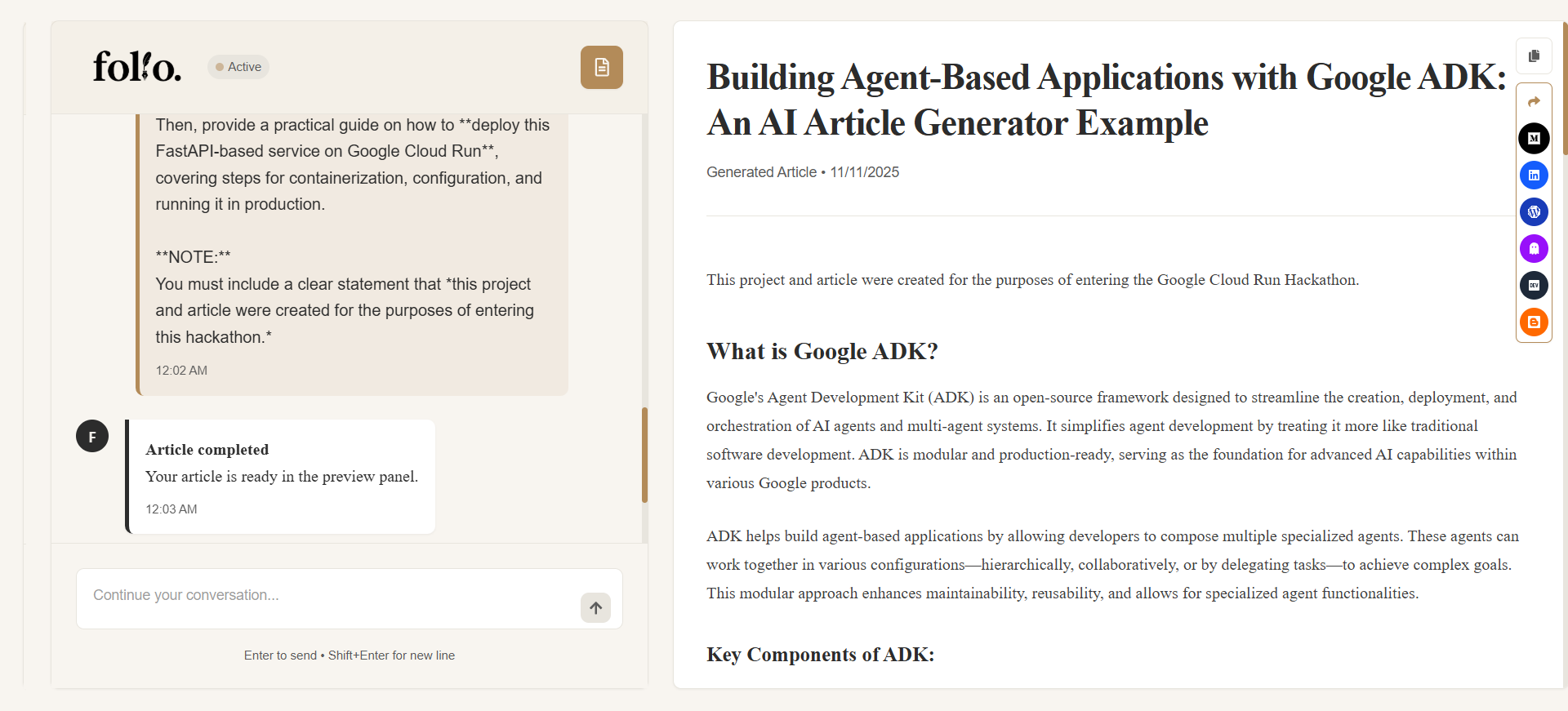
Desktop Welcome Message
-
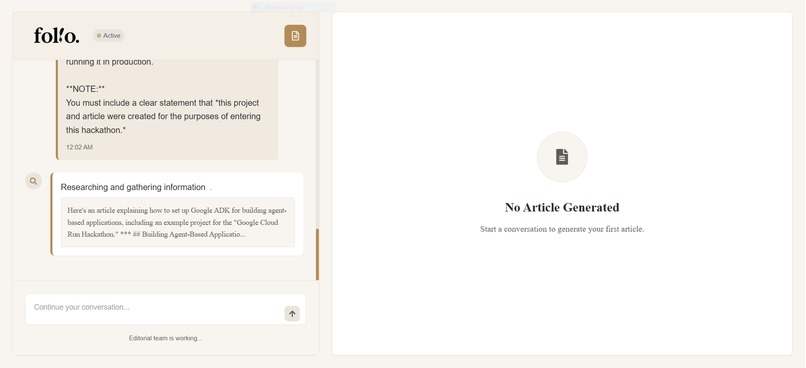
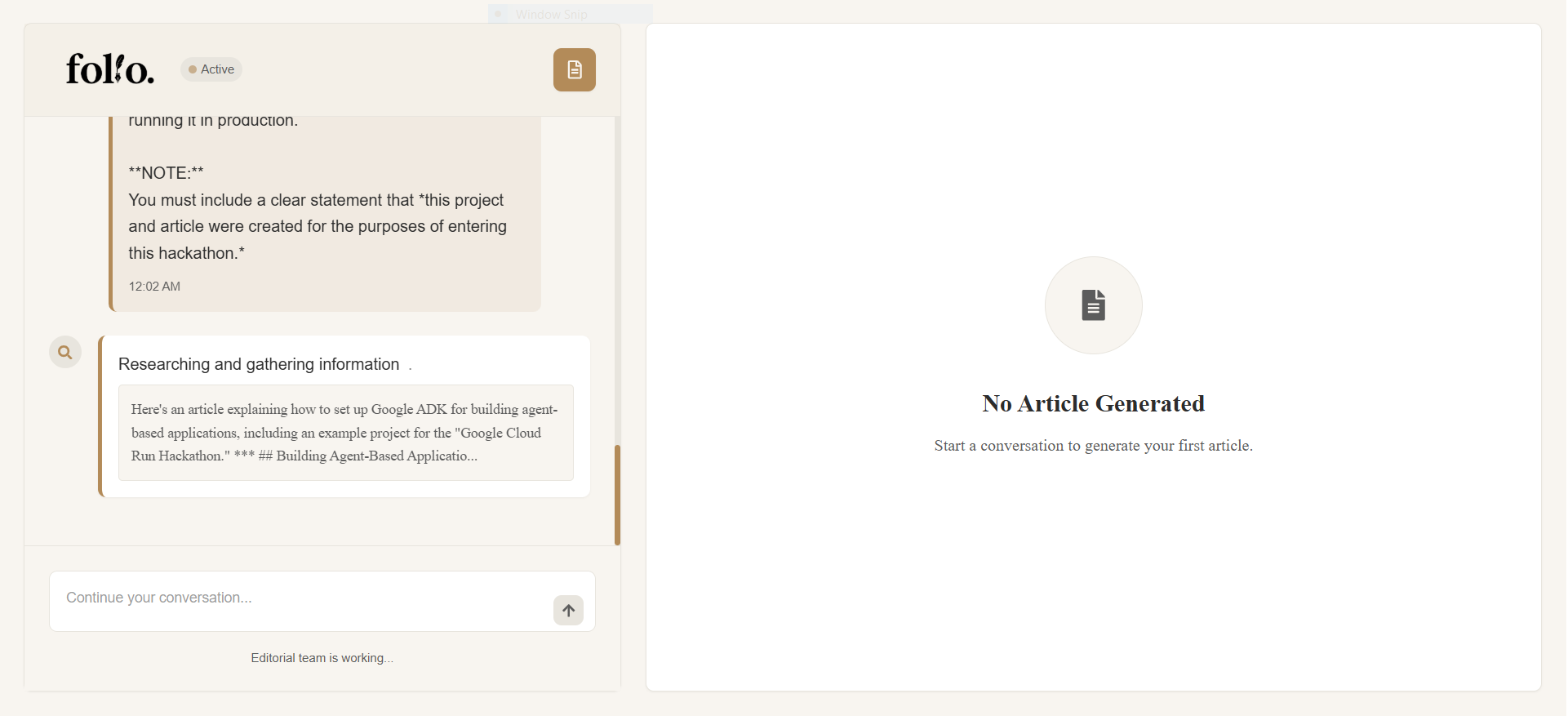
Article Generation
-
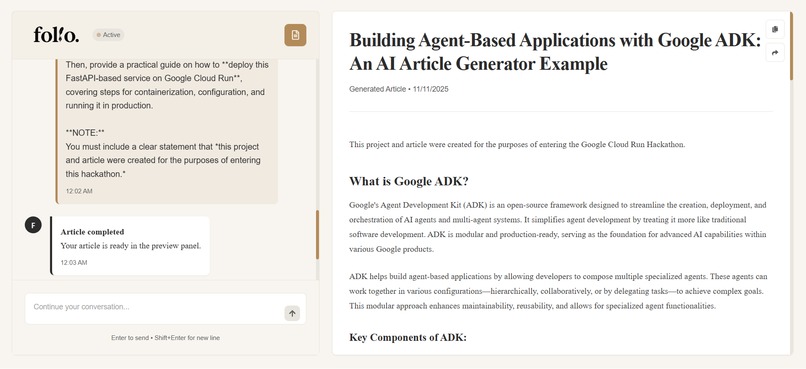
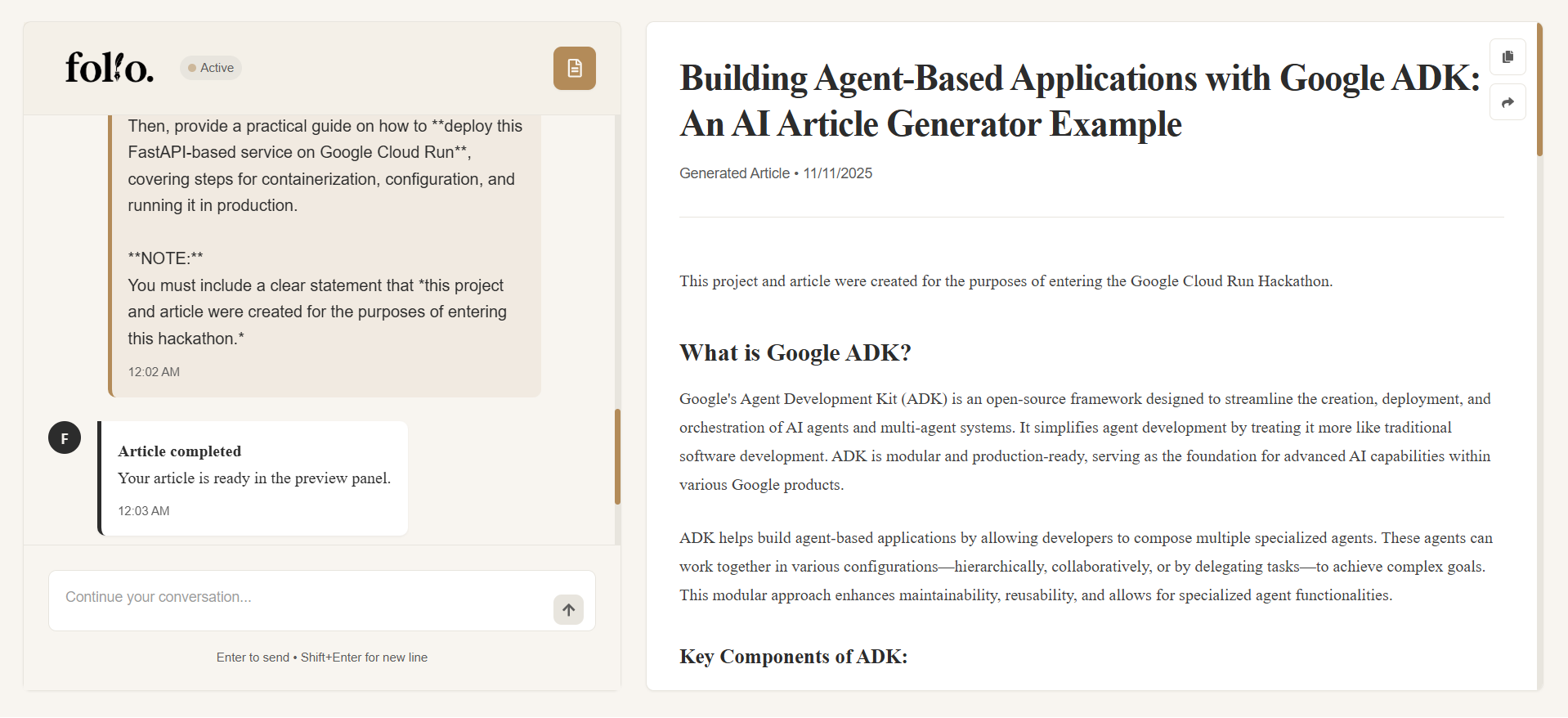
Generated Article
-
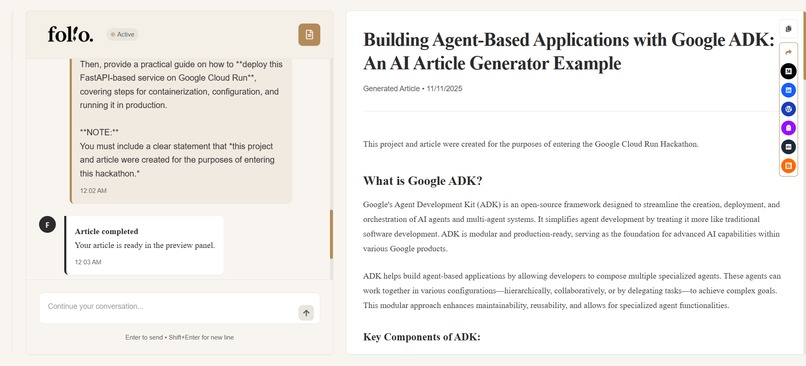
Sharing options
-
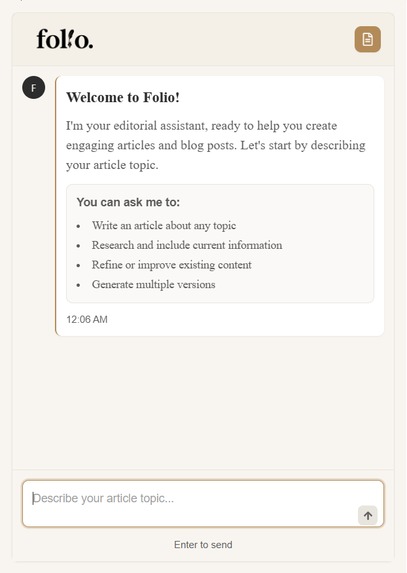
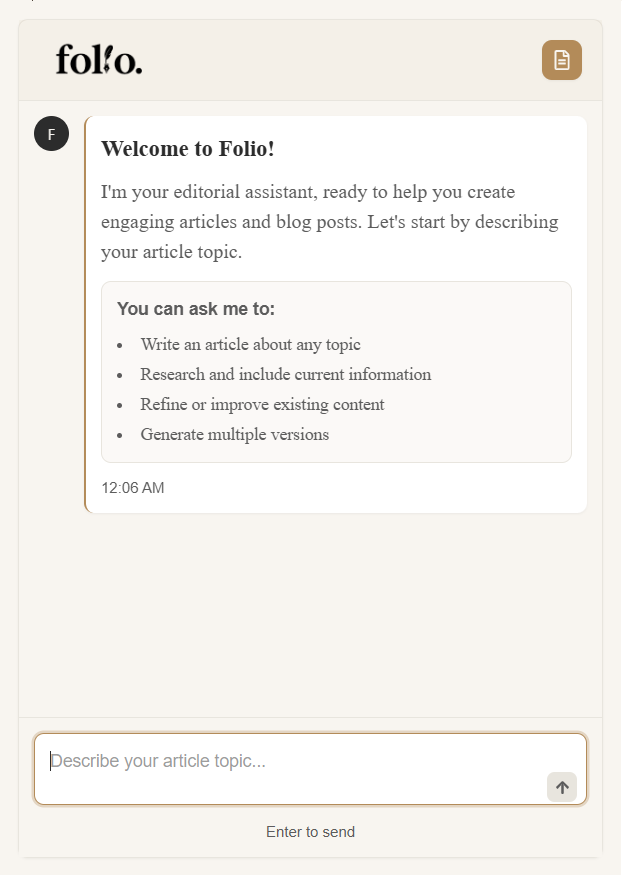
Mobile View
-
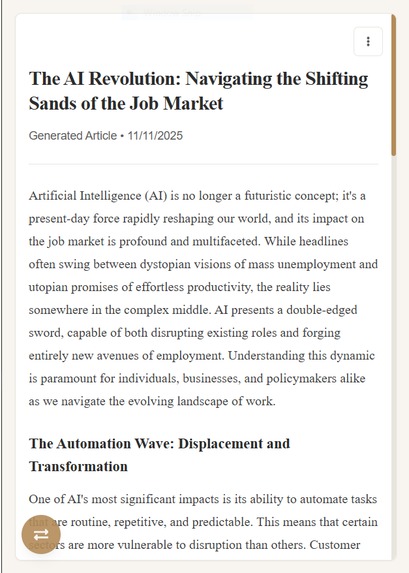
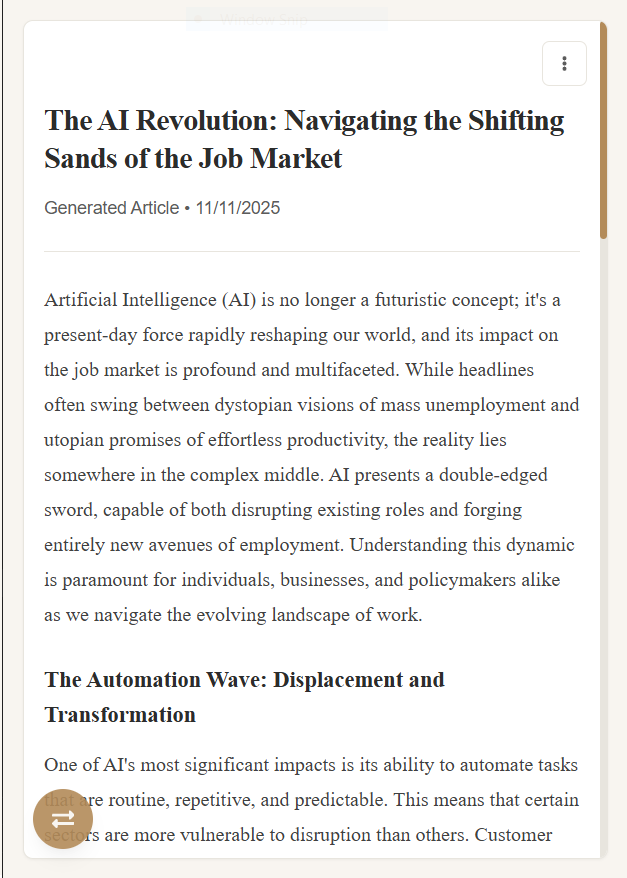
Mobile View Article
-
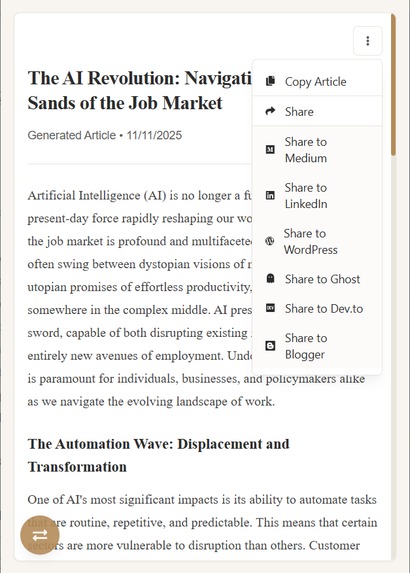
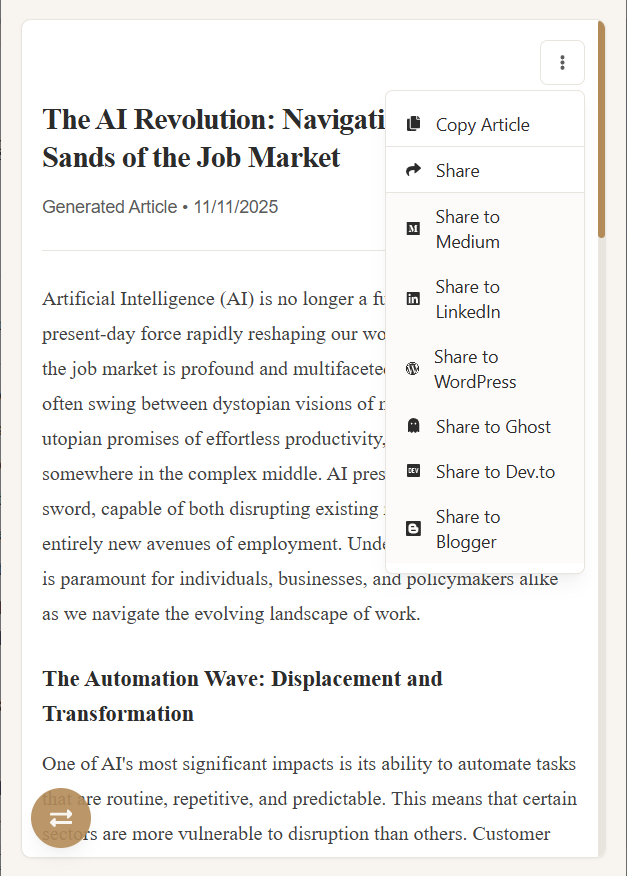
Mobile View Options
-
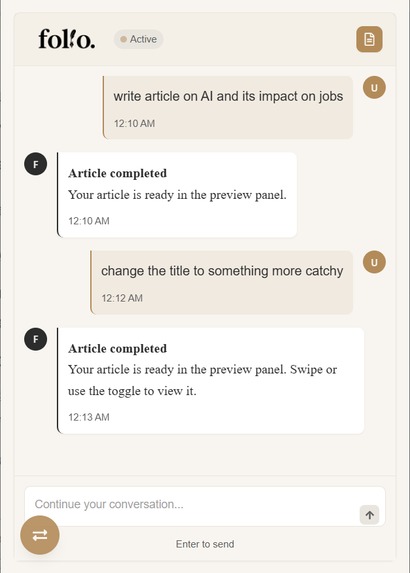
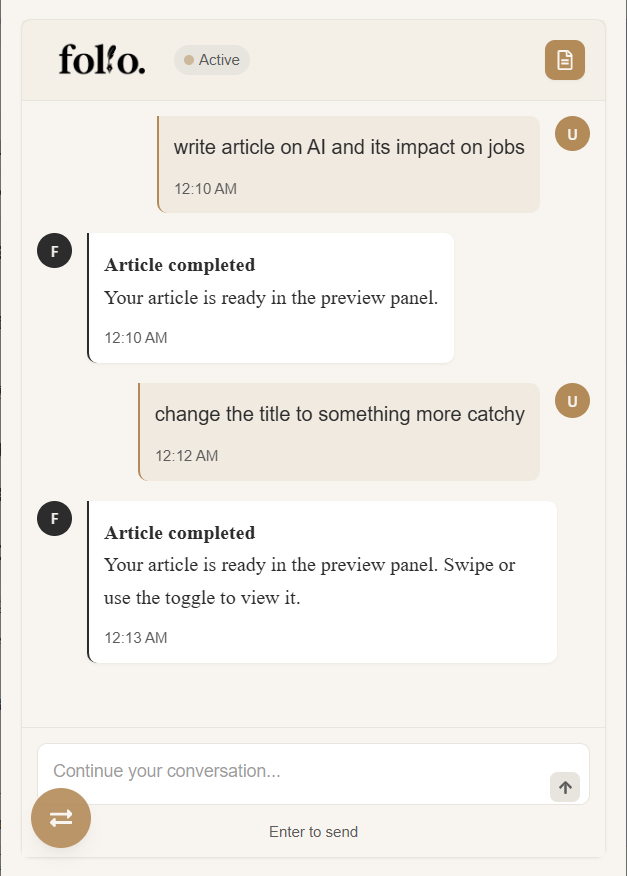
Mobile View Refinement of Article
-
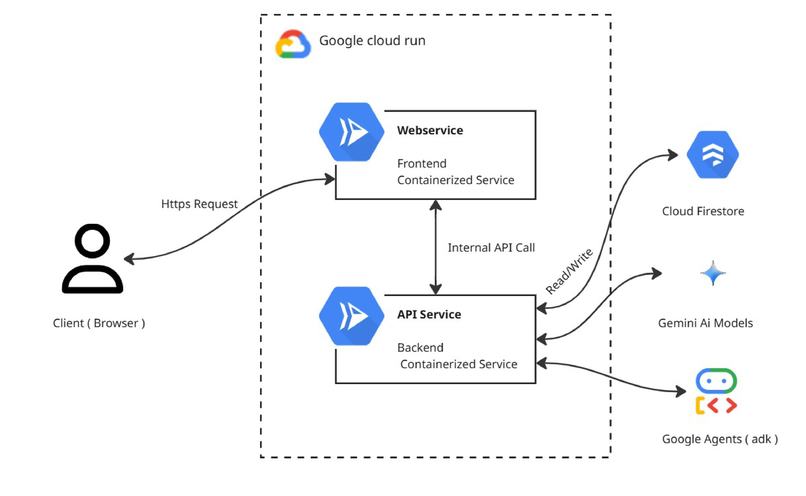
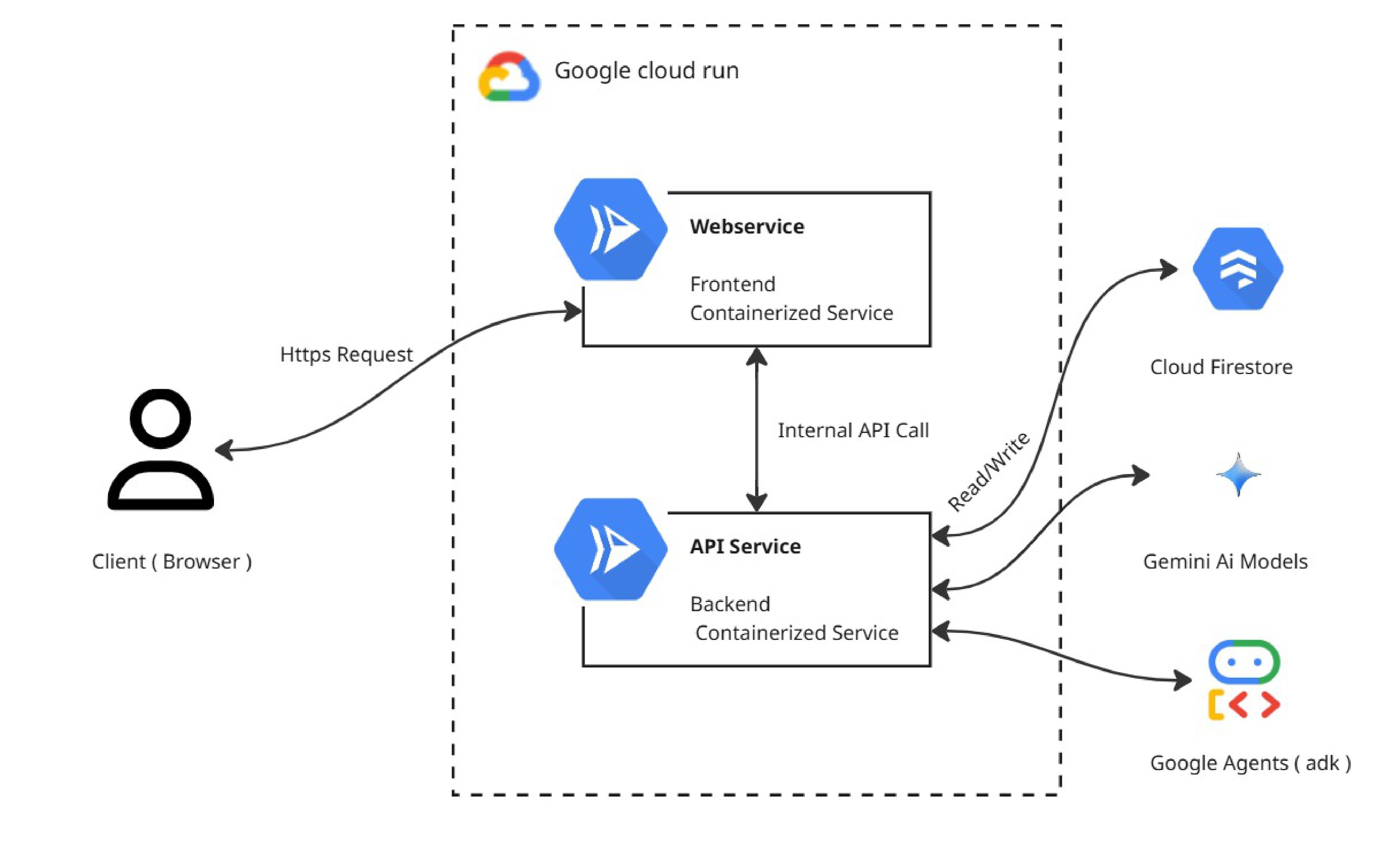
Architecture Diagram
Inspiration
The inspiration for Folio emerged from observing the significant time drain content creation imposes on professionals across industries. Marketers, thought leaders, and subject matter experts consistently face the challenge of maintaining regular publication schedules while managing their core responsibilities. The current landscape of AI tools offers fragmented solutions—some help with research, others with writing assistance, but none provide a complete workflow from initial concept to publishable content. Folio was conceived to bridge this critical gap, offering professionals a comprehensive solution that transforms hours of work into minutes.
What it does
Folio provides an end-to-end content creation pipeline that dramatically accelerates professional writing workflows. Users simply input a topic—such as "AI's impact on remote work" or "Q4 marketing trends"—and the system delivers a complete, publication-ready article. The platform handles the entire process: conducting real-time research, generating well-structured content in proper Markdown format, and providing capability to share on major platforms. This enables professionals to maintain consistent online presence, establish thought leadership, and engage their audience without sacrificing their primary work responsibilities.
How we built it
We engineered Folio using a sophisticated multi-agent architecture that mirrors professional editorial workflows:
- Topic Analysis Agent – Processes user input to extract key entities and research parameters
- Web Research Agent – Leverages Google Search APIs to gather current, relevant information and data points
- Content Generation Agent – Crafts comprehensive articles with proper structure, tone, and formatting
- Quality Assurance Layer – Uses Gemini for structured output validation and content classification
- Refinement Engine – Allows iterative improvements based on specific user feedback
Technical Stack:
- AI Foundation: Gemini for structured output and classification
- Agent Framework: Google Agents Development Kit for workflow orchestration
- Frontend: React with Tailwind CSS for responsive, professional interface
- Backend: FastAPI for high-performance API endpoints
- Database: Firestore to persist data
- Deployment: Google Cloud Run for scalable, reliable infrastructure
Challenges we ran into
The development journey presented several technical hurdles that required innovative solutions. One major challenge was the limitation in Google Agent SDK: structured output and tool calling cannot be used together. Because of this, we had to implement a Gemini-based classifier to ensure clean JSON formatting, since the response format became inconsistent without it. API rate limits and quota management on free tiers constrained our ability to include additional features like image generation. Ensuring consistent Markdown formatting across diverse topics required extensive testing and refinement of our content generation algorithms.
Accomplishments that we're proud of
We successfully delivered a fully functional multi-agent pipeline that handles the complete content creation lifecycle. Our modular architecture enables seamless integration of new AI models and publishing platforms. The system demonstrates remarkable efficiency, reducing content creation time from hours to minutes while maintaining professional quality standards. We've created a solution that genuinely addresses the pain points of busy professionals who need to maintain consistent content output alongside their primary responsibilities.
What we learned
We mastered container deployment and management, learning to configure service accounts and IAM roles for secure operations. We implemented proper service account workers with appropriate permissions, establishing secure communication between services. Moreover, we gained deep expertise in agent orchestration and workflow management. The project taught us how to design sequential agent pipelines that maintain context across different AI models. We learned to handle tool execution patterns, error recovery, and state persistence in multi-agent systems. Mastering the ADK framework enabled us to create robust content generation workflows that balance automation with user control. We also acquired practical knowledge in document database design for session management and user data. Learning to structure Firestore collections for efficient querying and real-time updates was essential. The Google CLI became instrumental in our deployment automation, where we developed scripts for continuous integration and learned to manage environment configurations across development stages.
What's next for Folio
Our roadmap focuses on expanding Folio's capabilities to serve professional users even more effectively. Immediate priorities include integrating AI image generation to create visual assets that complement written content. We're developing user history and content management features to help professionals build and maintain their content libraries. Enhanced scheduling capabilities will allow for strategic content distribution across multiple platforms. Future updates will include performance analytics to track engagement metrics and content effectiveness. We're also exploring team collaboration features to support organizational content creation workflows.
Folio represents a fundamental shift in how professionals approach content creation—transforming it from a time-consuming burden into a strategic advantage that amplifies their expertise and extends their reach.

Log in or sign up for Devpost to join the conversation.