-
-
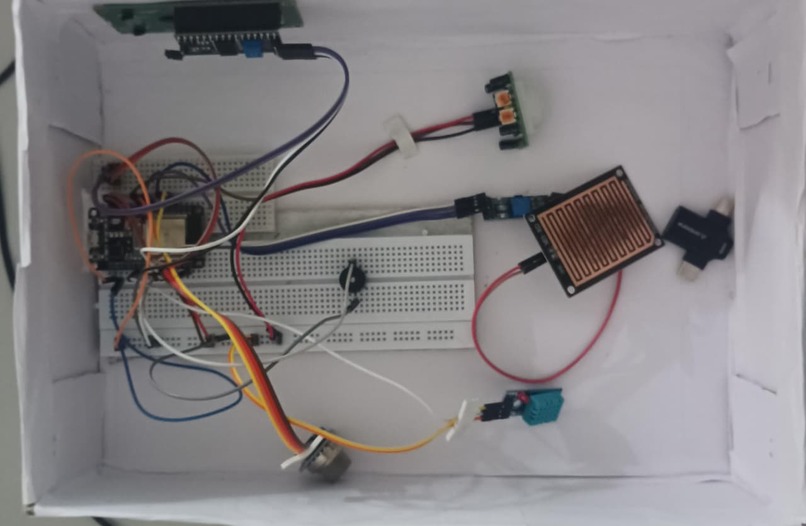
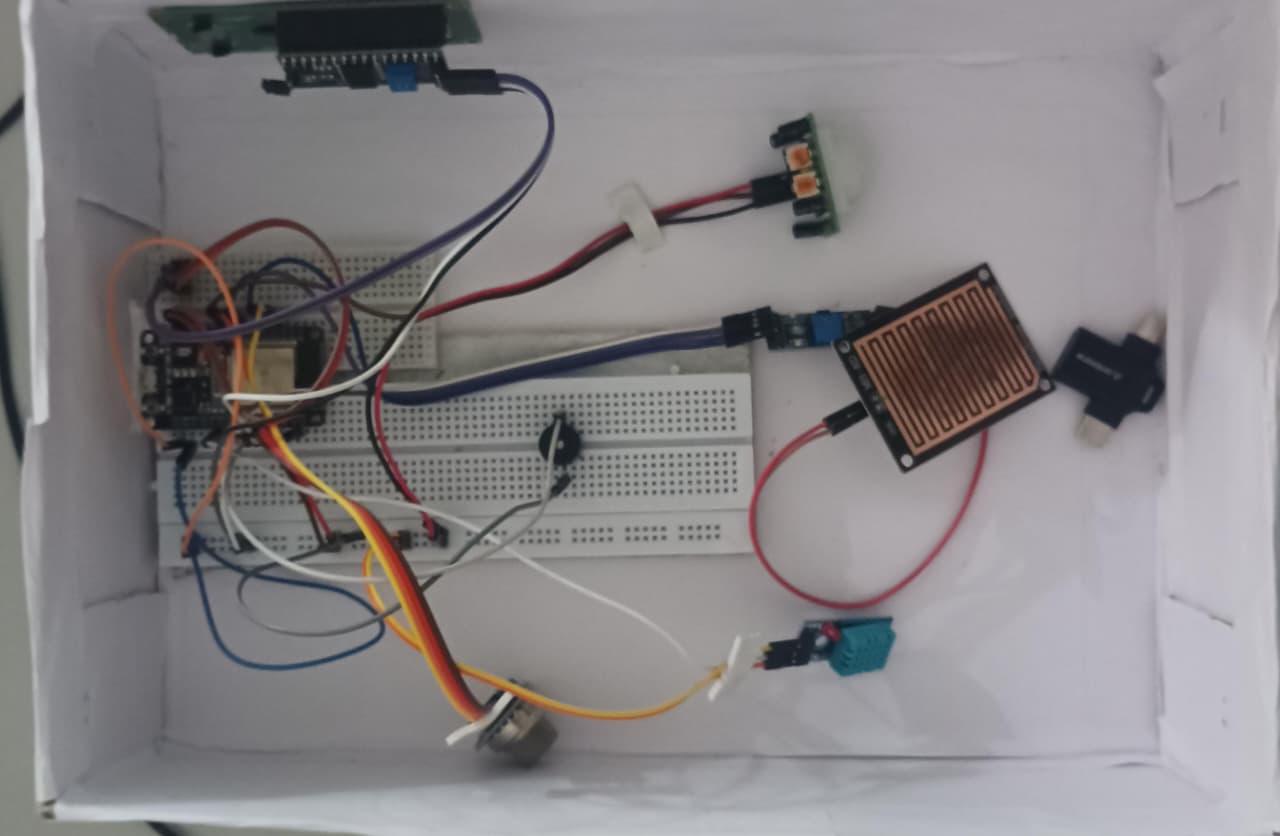
Hardware setup
Inspiration
Industrial environments such as firecracker manufacturing units involve highly sensitive and hazardous materials that require continuous monitoring of environmental conditions. Traditional monitoring methods rely on manual inspection and standalone instruments, which are inefficient and prone to human error. Several industrial accidents occur due to delayed detection of abnormal temperature, gas leakage, or moisture exposure. This motivated us to develop an intelligent, automated, and scalable monitoring system that can continuously observe environmental parameters and provide real-time alerts to prevent accidents and improve worker safety. The idea was inspired by the need to integrate IoT, cloud computing, and intelligent data processing to create a smarter and safer industrial environment.
What it does
EcoSync Pro is a Cloud-IoT based environmental monitoring and alert system designed to monitor hazardous industrial environments in real time. The system collects environmental data such as temperature, humidity, gas concentration, moisture levels, and motion detection using sensors connected to an ESP32 microcontroller. The collected data is processed using filtering algorithms to improve accuracy and transmitted to a cloud backend using hybrid communication protocols (MQTT and HTTP). The backend analyzes the data, evaluates safety thresholds, and generates automated alerts when abnormal conditions are detected. A web-based dashboard provides real-time visualization, historical analysis, and geolocation tracking of monitoring nodes. The system enhances industrial safety by enabling proactive monitoring and rapid response to hazardous situations.
How we built it
The system was developed using a combination of hardware and software technologies. The hardware layer includes an ESP32 microcontroller integrated with multiple environmental sensors such as DHT11/DHT22, MQ-135 gas sensor, PIR motion sensor, moisture sensor, and IR sensor. Firmware was developed using the Arduino framework to collect and transmit sensor data. A Kalman filtering algorithm was implemented to reduce noise and improve measurement accuracy. The backend was built using FastAPI with PostgreSQL database integration for data storage and analysis. Hybrid communication was implemented using MQTT for real-time streaming and HTTP REST APIs for reliable storage. The frontend dashboard was developed using React.js with Recharts for visualization and Leaflet for map integration. The system was deployed on a cloud server using containerized services.
Challenges we ran into
One of the major challenges was handling sensor noise and calibration issues, especially with gas sensors that are sensitive to environmental conditions. Ensuring reliable communication between hardware and cloud systems under unstable network conditions was another challenge. Integrating multiple technologies such as embedded systems, backend services, databases, and frontend visualization required careful synchronization. Achieving real-time data transmission with minimal latency while maintaining data reliability also required optimization. Additionally, debugging hardware-software integration issues and ensuring stable system performance during continuous operation posed significant challenges.
Accomplishments that we're proud of
We successfully developed a complete end-to-end IoT monitoring system integrating hardware, cloud computing, and web technologies. The implementation of hybrid communication protocols improved system reliability compared to traditional single-protocol systems. The addition of a Trust Score mechanism for sensor reliability evaluation enhanced robustness and reduced false alerts. We also built an interactive dashboard with real-time monitoring and analytics features. The system demonstrated stable performance during testing and proved capable of detecting hazardous environmental conditions and generating automated alerts effectively.
What we learned
Through this project, we gained practical experience in IoT system design, embedded programming, cloud integration, and full-stack development. We learned how to integrate sensors with microcontrollers, implement communication protocols, and manage real-time data processing. The project improved our understanding of backend architecture, database management, and frontend visualization. We also developed problem-solving skills while handling hardware calibration issues and system integration challenges. Most importantly, we understood how interdisciplinary technologies can be combined to create real-world industrial solutions.
What's next for Cloud-IoT Based Environmental Monitoring and Alert Systems
Future improvements include integrating machine learning models for predictive analytics to forecast hazardous conditions before they occur. The system can be extended to support multiple monitoring nodes across large industrial facilities with centralized management. Development of a mobile application for remote monitoring and alerts is another planned enhancement. Integration with automated safety mechanisms such as alarms, ventilation systems, and fire suppression units can further improve industrial safety. Additionally, using industrial-grade sensors and implementing edge AI processing will enhance accuracy and reliability. These advancements will transform the system into a comprehensive smart industrial safety management platform aligned with Industry 4.0 standards.
Built With
- arduino
- docker
- esp32
- fastapi
- leaflet.js
- linux
- mqtt
- postgresql
- python
- react.js
- recharts

Log in or sign up for Devpost to join the conversation.