-
Inspiration
-
wow LEETCODE interface
-
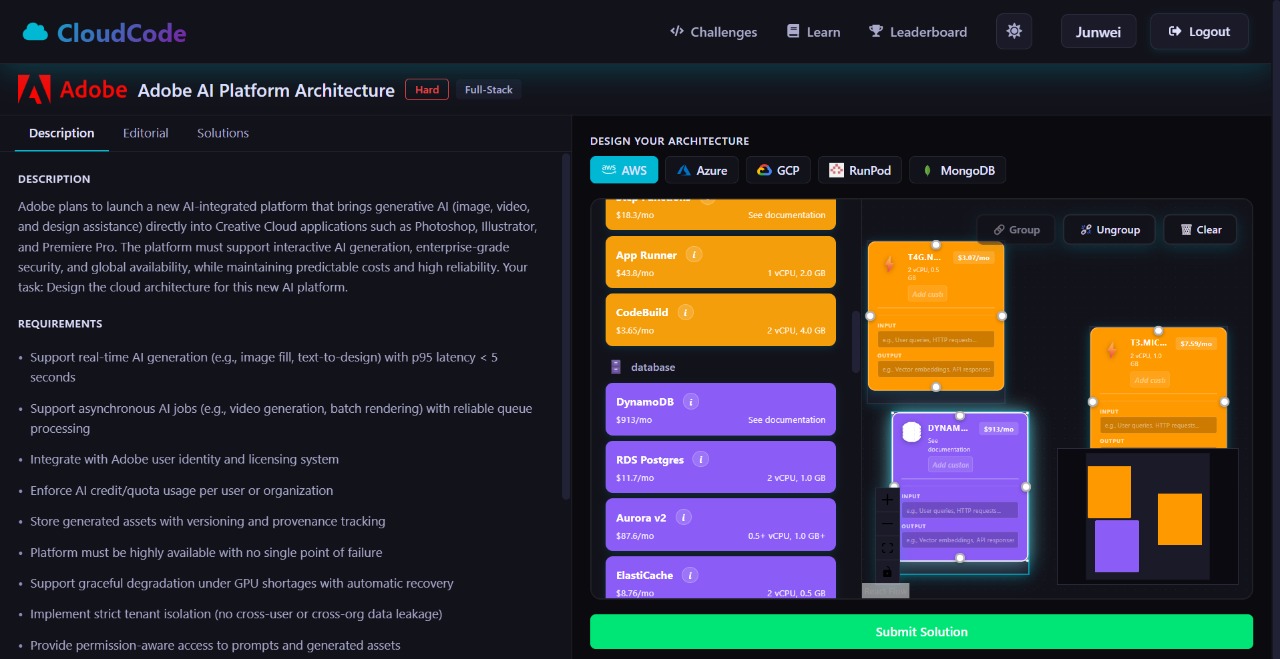
Think you can design better than Adobe?
-
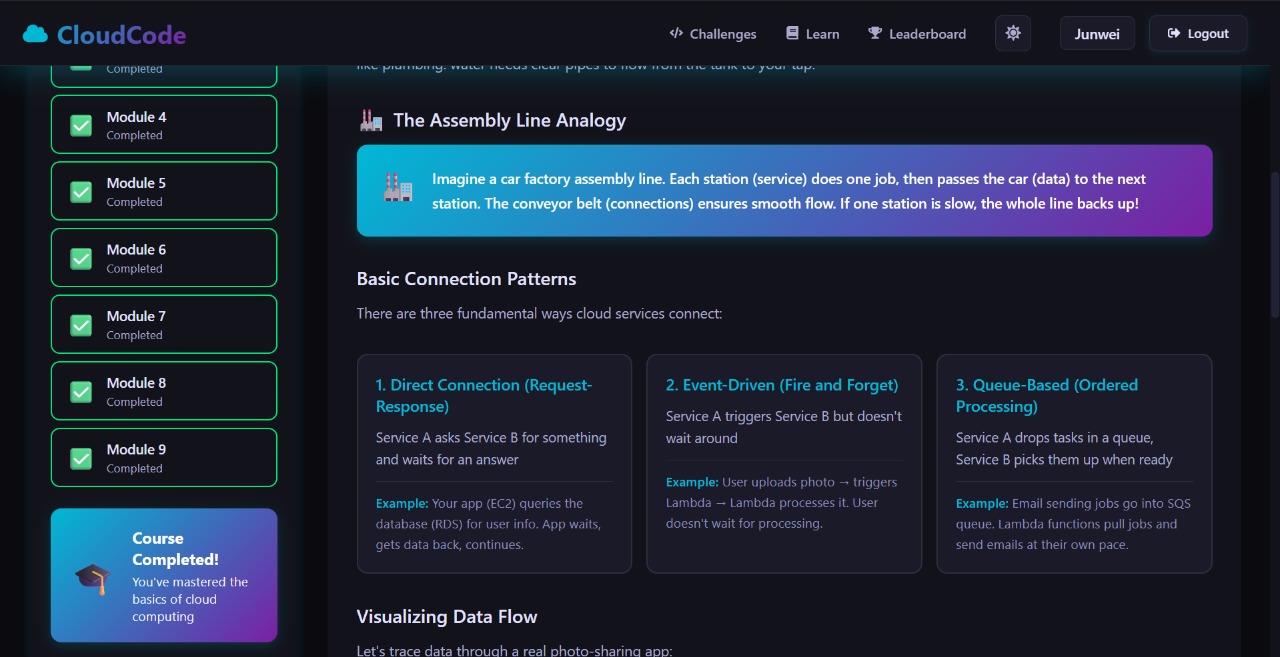
Learn the basics
-
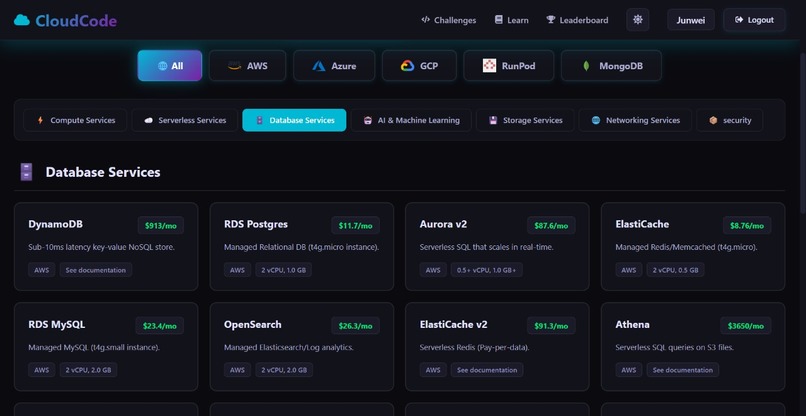
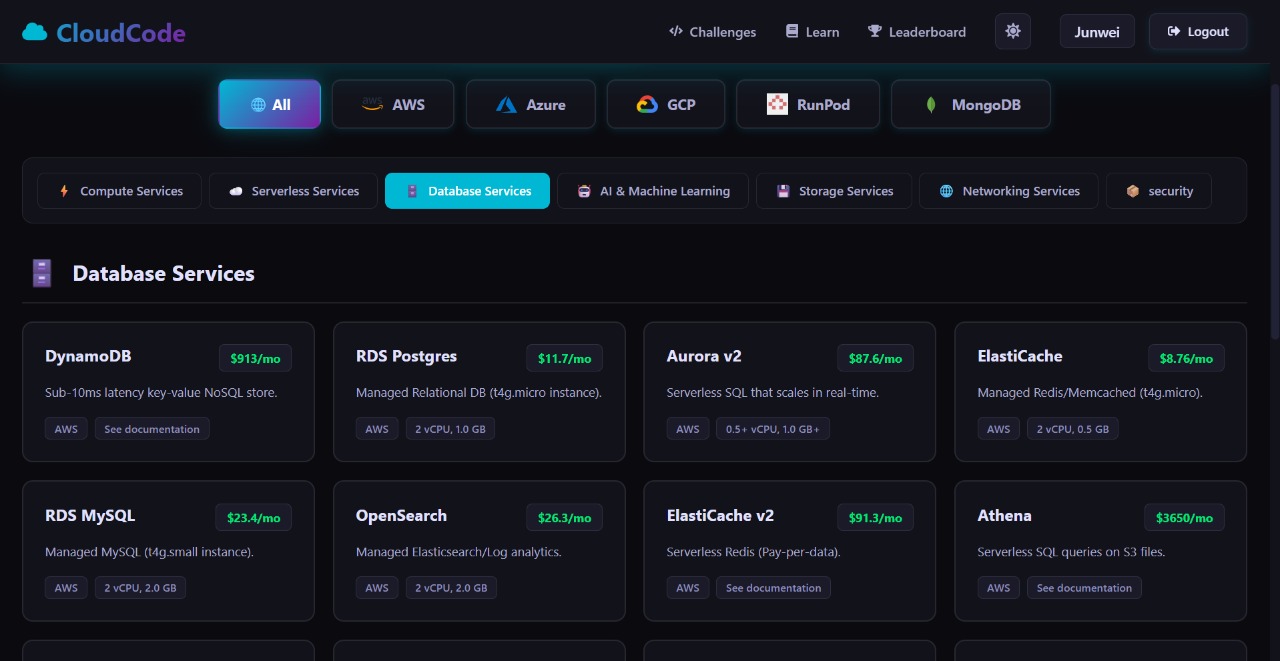
Compare at a glance
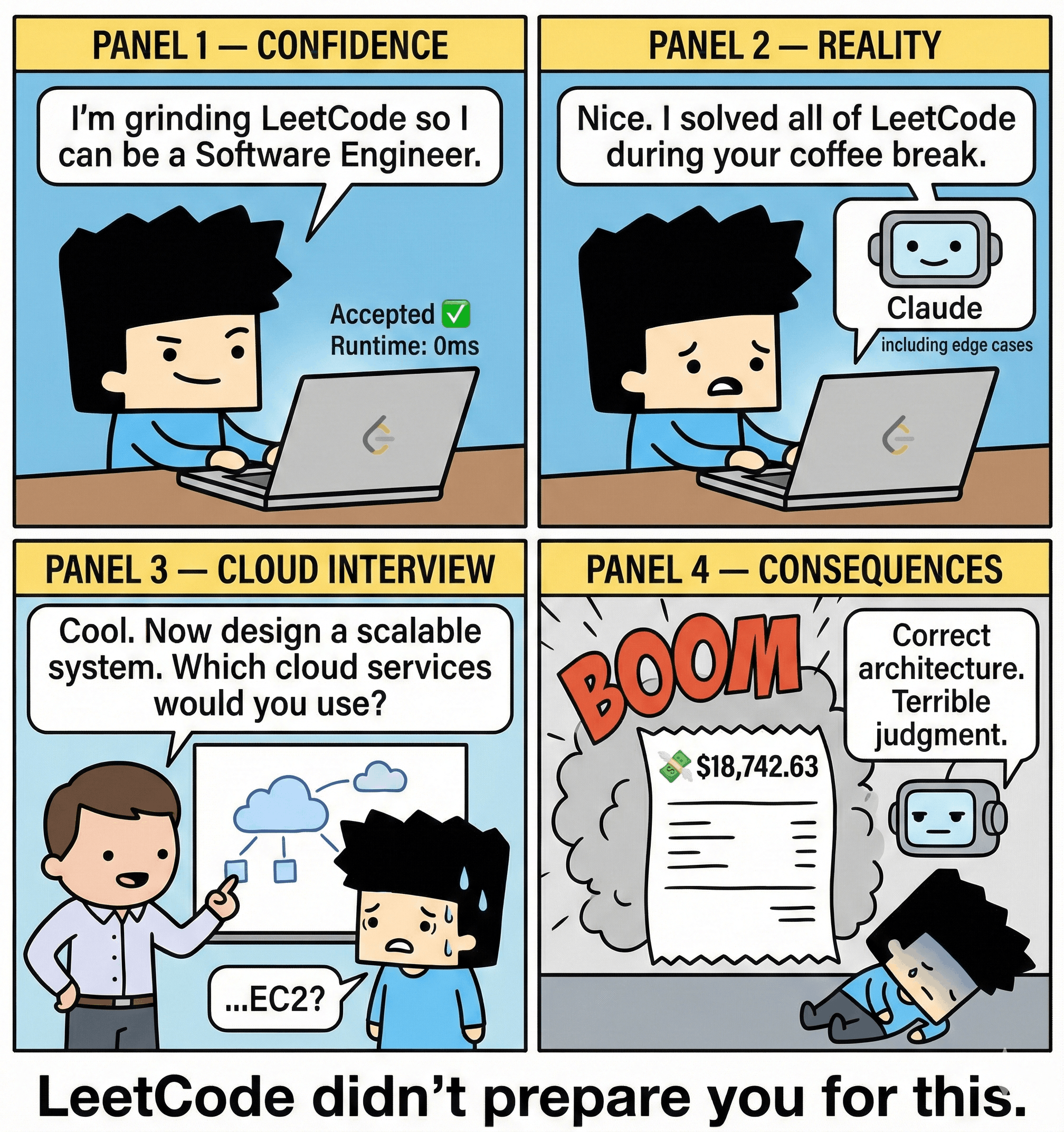
Inspiration
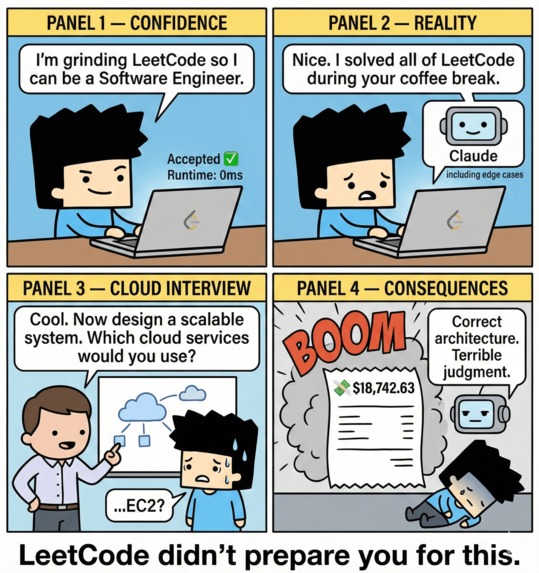
Claude passed our coding interviews before we finished reading the question.
We realised something terrifying.
Grinding LeetCode no longer makes you special.
Typing code is cheap. Judgment is not.
Cloud interviews still destroy people, not because they cannot code, but because they cannot explain why their architecture will not bankrupt the company.
So we stopped training for a job that no longer exists and built for the one that does.
What it does
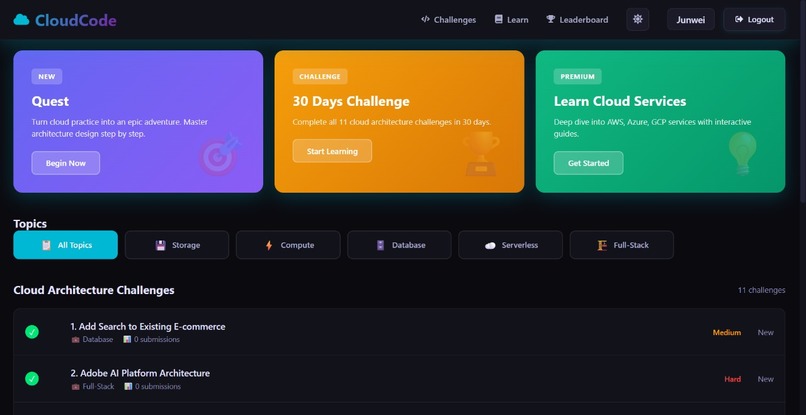
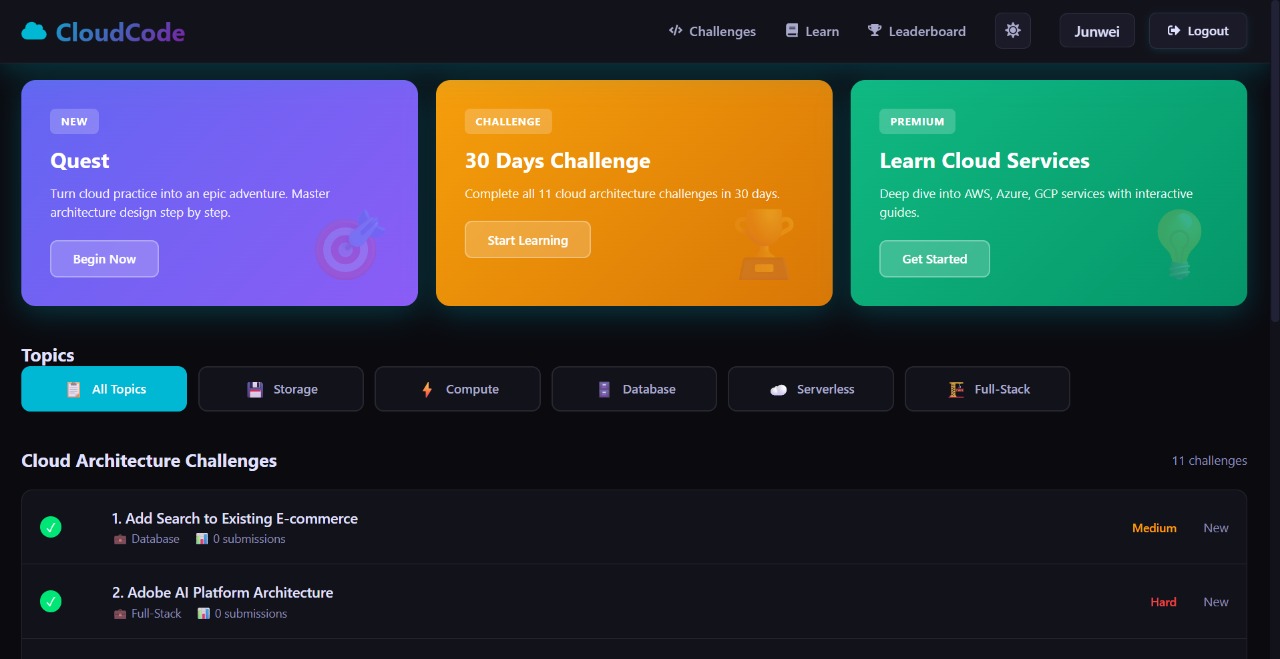
Cloud Code is LeetCode, but for cloud architecture.
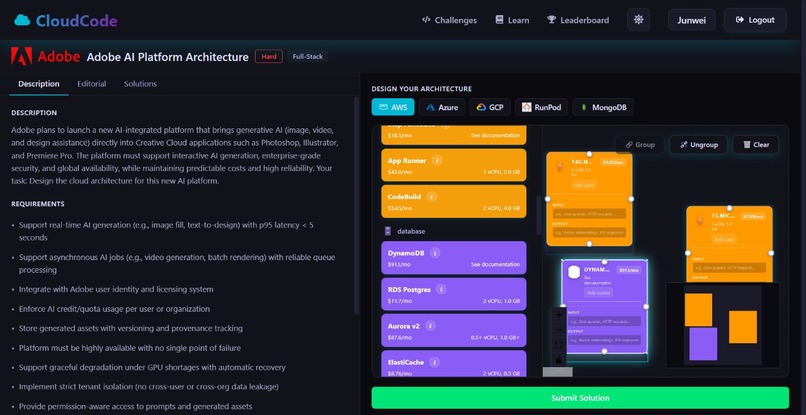
Instead of solving algorithms, you design systems.
Instead of getting “Accepted”, you get a cloud bill.
You design architectures across multiple cloud providers, not just AWS.
You see how the same idea behaves differently depending on services, pricing, and trade-offs.
You can experiment freely without paying a single cent in real cloud costs.
No syntax.
No boilerplate.
Only consequences.
How we built it
The frontend is written in TypeScript and hosted on Vercel for fast iteration and global access.
The backend runs on Firebase, handling authentication, persistence, and real-time state without server management overhead.
We built a hybrid evaluation system:
- A rule-based evaluator checks architectural correctness and constraint satisfaction
- A structured rubric prompt powers an LLM-as-a-judge that critiques trade-offs, efficiency, and reasoning
This keeps feedback grounded, consistent, and actually useful instead of vague AI opinions.
We also wrote Python scripts to scrape, clean, and normalize cloud service specs and pricing so users can explore realistic scenarios without touching a real cloud account.
Challenges we ran into
Cloud has too many options. That is the problem.
- Defining correctness when multiple architectures can work
- Preventing the AI judge from hallucinating or being inconsistent
- Designing rubrics that reward good judgment, not fancy diagrams
- Making simulations realistic without scaring beginners
- Supporting multiple cloud providers without bias
Also, explaining cloud pricing in a way that does not immediately traumatize users.
Accomplishments that we're proud of
- Building a rule-based and AI hybrid evaluator that feels fair
- Letting users experiment without real cloud bills or accounts
- Supporting learning across multiple cloud providers
- Turning cloud trade-offs into something interactive and intuitive
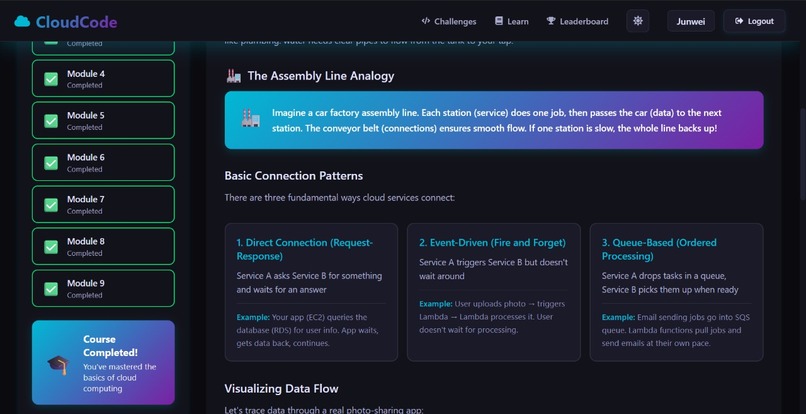
- Creating a beginner-friendly Baby Mode without dumbing things down
If someone says “this finally makes cloud make sense”, we won.
What we learned
- Most people do not actually understand why their systems work
- Overengineering is often just fear in disguise
- Cloud pricing is the fastest teacher when made visible
- Judgment improves when mistakes are safe and cheap
- AI works best when constrained by structure and rules
Cloud is not hard. Bad decisions are.
What's next for Cloud Code
- More providers and deeper service coverage
- Hard mode challenges with stricter constraints
- Interview-style timed scenarios
- Better visualizations for cost and latency explosions
- Community-shared architectures and critiques
Long term, we want Cloud Code to be the place where people learn how to think about systems before they ever deploy one.
Because AI can write your code.
But it still cannot justify your architecture.
Built With
- firebase
- openai
- python
- typescript
- vercel


Log in or sign up for Devpost to join the conversation.