CloudBench: Bringing the Physical Sciences to the Cloud
The Inspiration
Cloud computing fundamentally changed the way we interact with technology. Instead of purchasing, maintaining, and operating expensive computing hardware, developers can simply connect to the cloud and access the resources they need. This abstraction dramatically lowered the barrier to entry for software development, enabling anyone with a computer and an internet connection to build and experiment.
We asked ourselves: Why should the physical sciences be any different?
Conducting physical experiments often requires expensive equipment, specialized facilities, significant setup, and ongoing maintenance. These barriers limit who can experiment, what experiments can be performed, and how frequently they can be repeated.
We envisioned extending the cloud computing model to the physical world. Introducing CloudBench: a cloud workbench that allows anyone to connect to physical laboratory equipment and conduct real-world experiments remotely.
What We Built
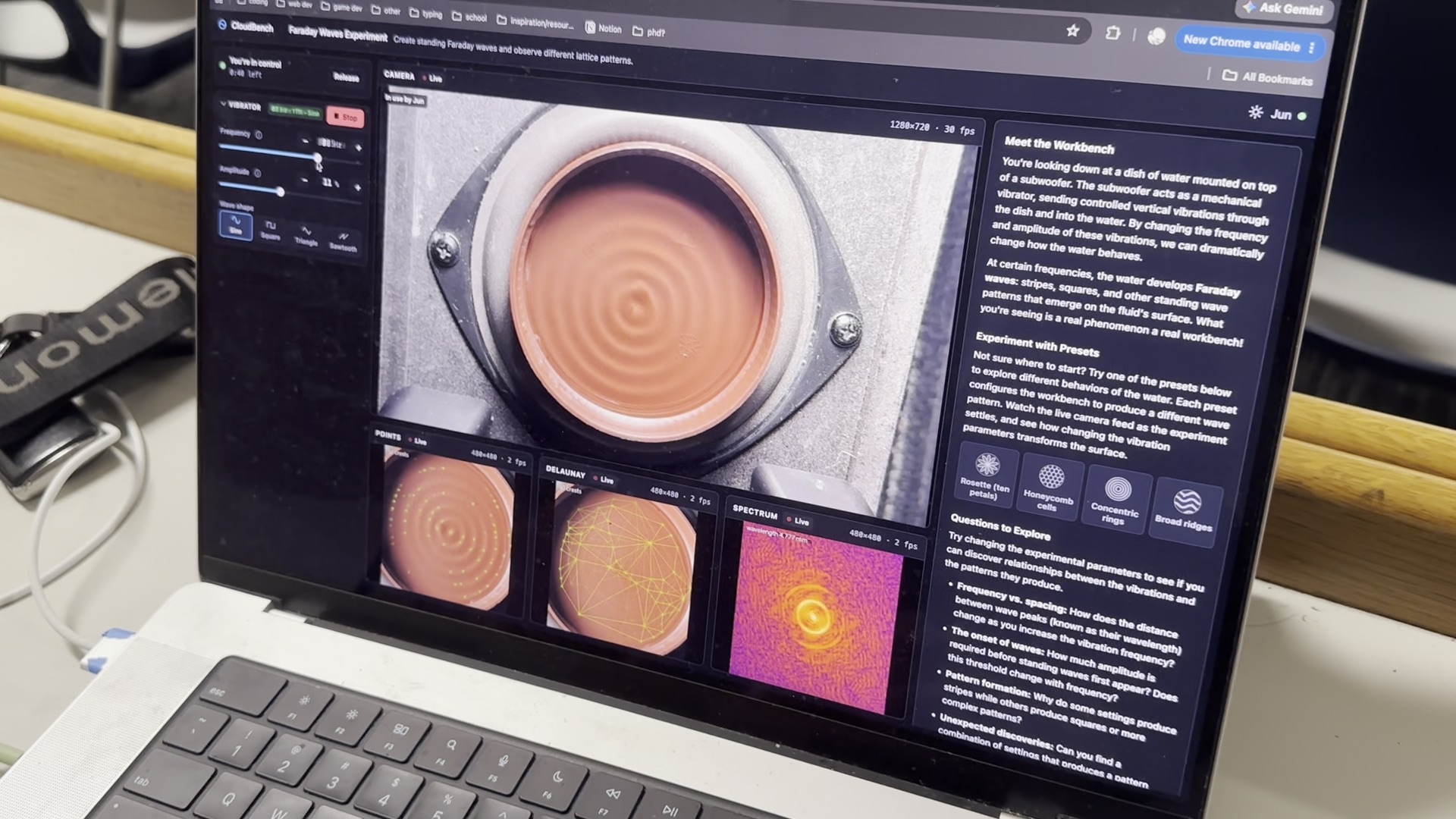
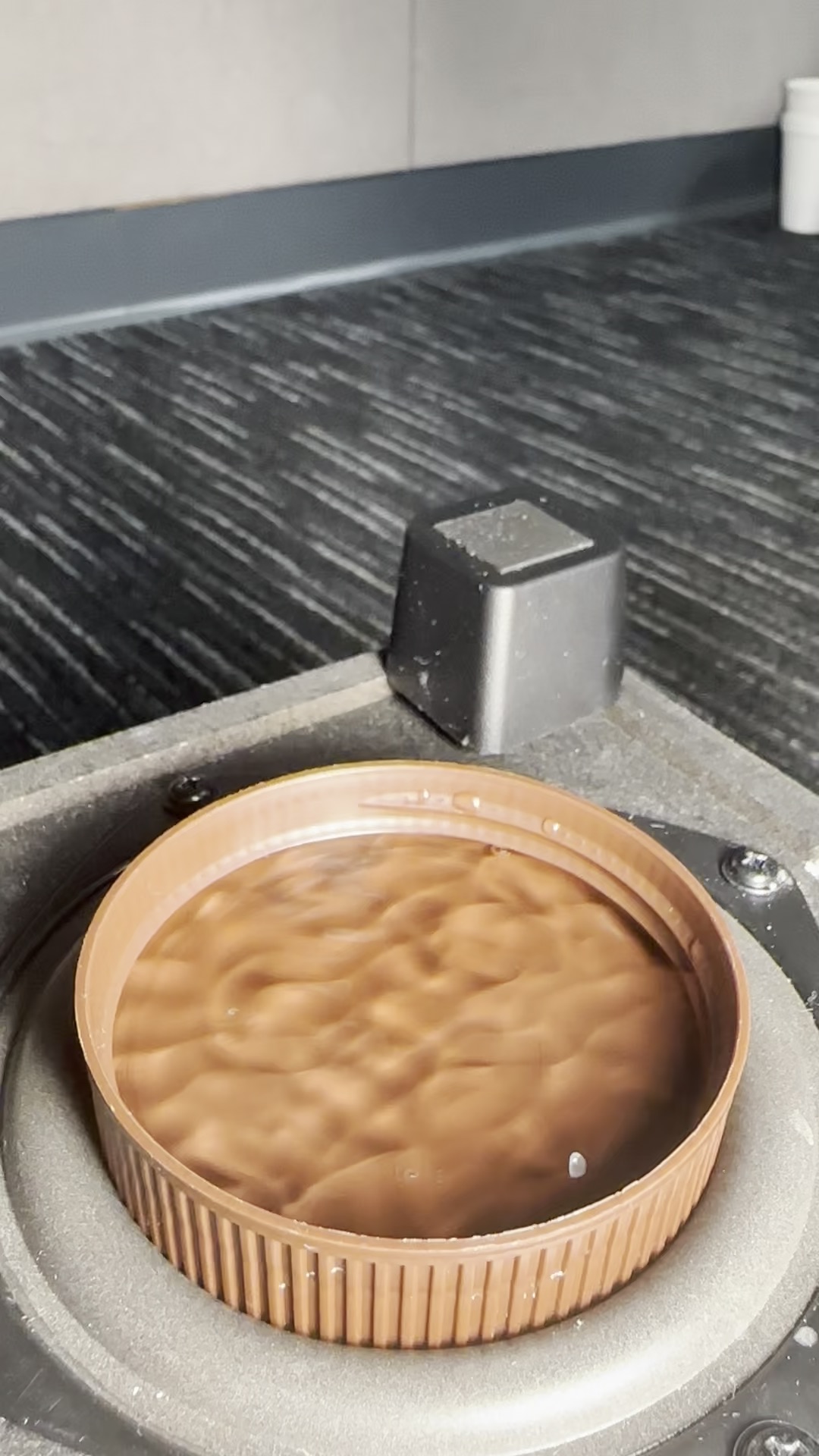
To demonstrate our vision, we built a remotely accessible laboratory for studying the Faraday Wave Effect: a physical phenomenon in which vertically vibrating fluids develop standing wave patterns at particular excitation frequencies.
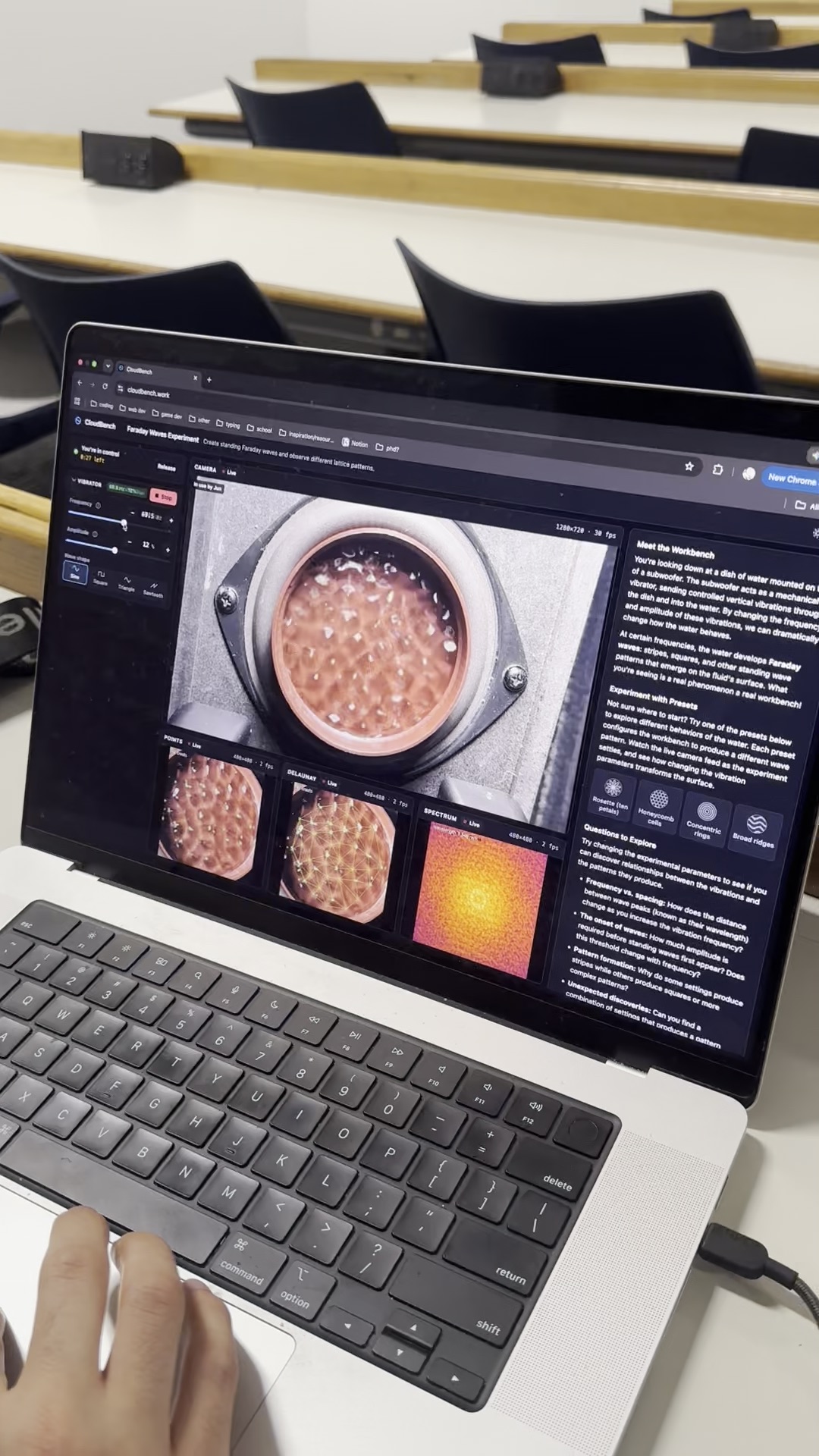
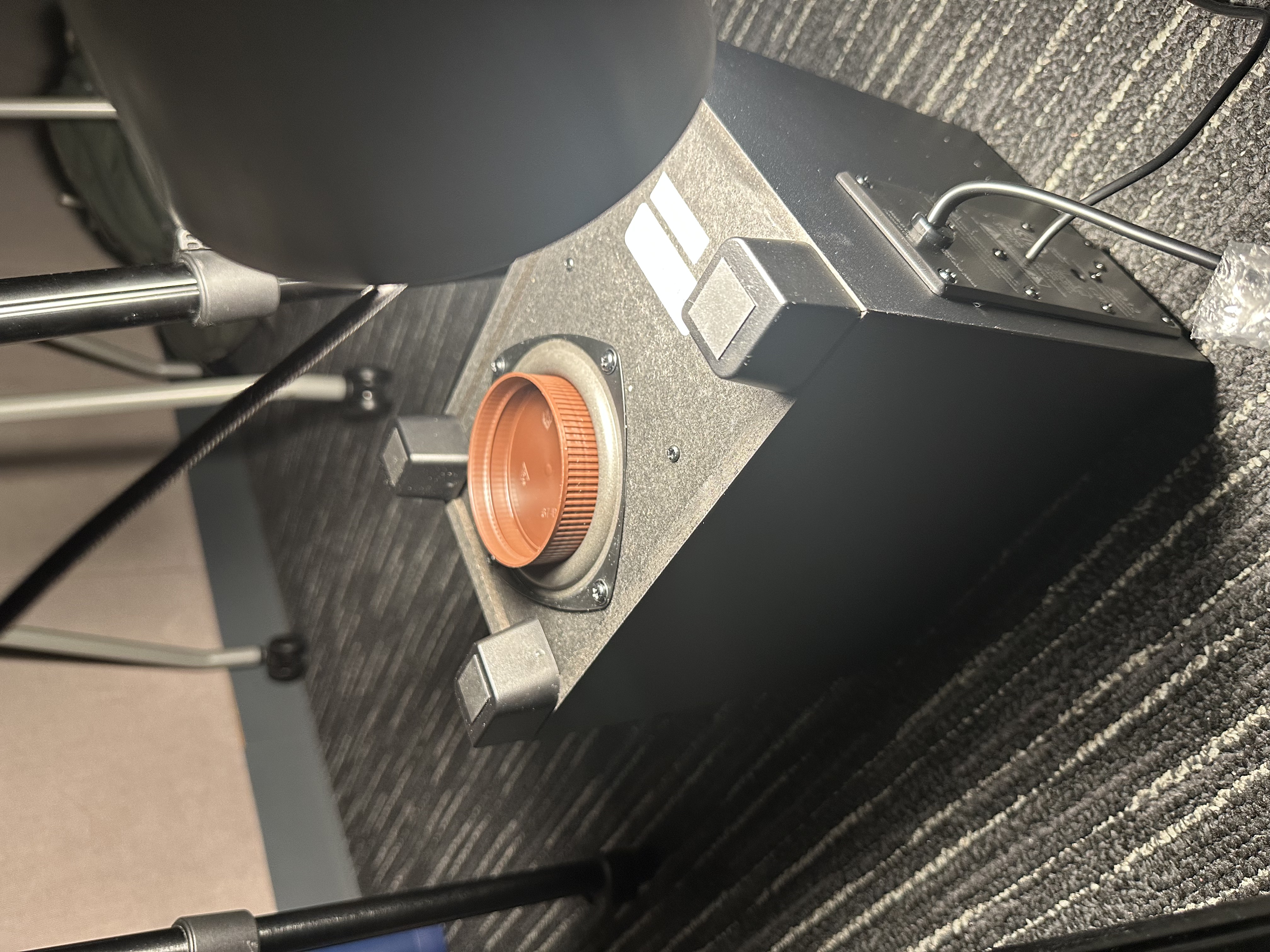
Our experimental setup uses a subwoofer to vertically vibrate a dish of water, producing Faraday wave patterns at varying frequencies. Users and AI agents can remotely manipulate the experiment by adjusting the subwoofer's frequency, signal composition, and amplitude, and observe the resulting physical phenomena through a camera and lighting system that provides a live video feed of the workbench.
We took this a step further by developing computer vision models that extract meaningful wave properties from the camera feed, translating visual observations into structured experimental data that both humans and AI agents can use.
Why It Matters
Perhaps the most exciting implication of CloudBench is the intersection of physical experimentation and artificial intelligence.
AI has made remarkable progress in computer science, where agents can write code, execute programs, and iteratively evaluate their results. But the physical sciences present a fundamentally different challenge: hypotheses must ultimately be tested against the real world.
Our choice of the Faraday Wave Effect illustrates this opportunity particularly well. While the phenomenon has been studied for over a century, the complex dynamics governing fluid pattern formation remain an active area of scientific research. The emergence, stability, and transitions of different wave patterns present opportunities for further experimentation and discovery.
Rather than simply asking AI to reproduce a known result, CloudBench gives it the tools to actively investigate physical phenomena. An AI agent can formulate a hypothesis, configure experimental parameters, observe the resulting wave patterns, analyze measurements, and use its findings to design the next experiment. This creates a feedback loop in which AI can actively explore physical systems and contribute to scientific investigation.
Beyond AI research, there are significant opportunities in education and accessibility. Instead of requiring every school to purchase and maintain its own laboratory equipment, educators could give students remote access to shared experiments. Students could interact with real physical systems without the expense, fragility, or logistical challenges of traditional laboratory setups.
For hobbyist scientists and independent researchers, CloudBench makes experimentation possible without requiring access to a dedicated laboratory.
What We Learned
Enabling AI agents to use physical tools is incredibly powerful. This was our first time building an MCP server for something that exists in the physical world, and AI agents are able to use computer vision surprisingly effectively to draw conclusions from data and iterate on their experiments.
The Bigger Picture
Cloud computing made computing universally accessible. CloudBench aims to do the same for physical experimentation.
We envision a future where innovators can access a laboratory, investigate unanswered questions, and contribute to scientific discovery, all as easily as running a computer program.
Built With
- caddy
- docker
- docker-compose
- eslint
- fastapi
- github-actions
- model-context-protocol
- node.js
- numpy
- opencv
- pydantic
- pyright
- pytest
- python
- react
- ruff
- server-sent-events
- sounddevice
- sqlalchemy
- sqlite
- typescript
- uv
- uvicorn
- vite
- websocket
