-
Cost and Trend Reference
Inspiration
Clotho was inspired by Google's Try-On feature and the idea that outfit selection could be automated in a smart, personalized way.
Every day, people waste mental energy deciding what to wear — a surprisingly big source of stress.
We wanted to create a tool that combines AI, creativity, and personalization to make fashion effortless.
Our goal was to allow anyone, regardless of fashion knowledge, to instantly visualize outfit combinations that reflect their style and personality.
What it does
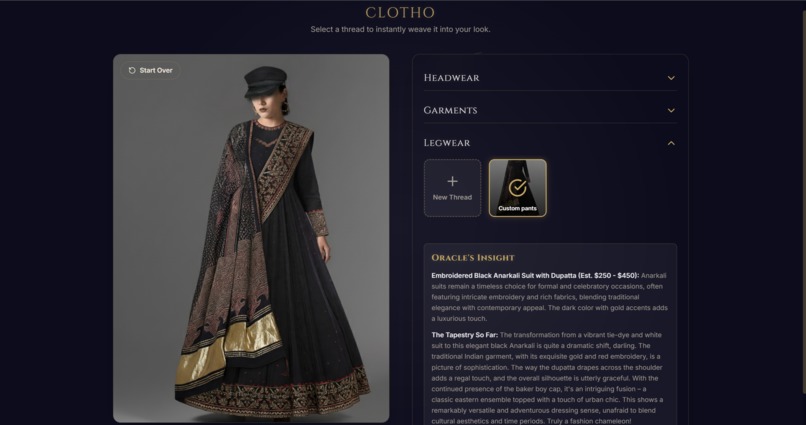
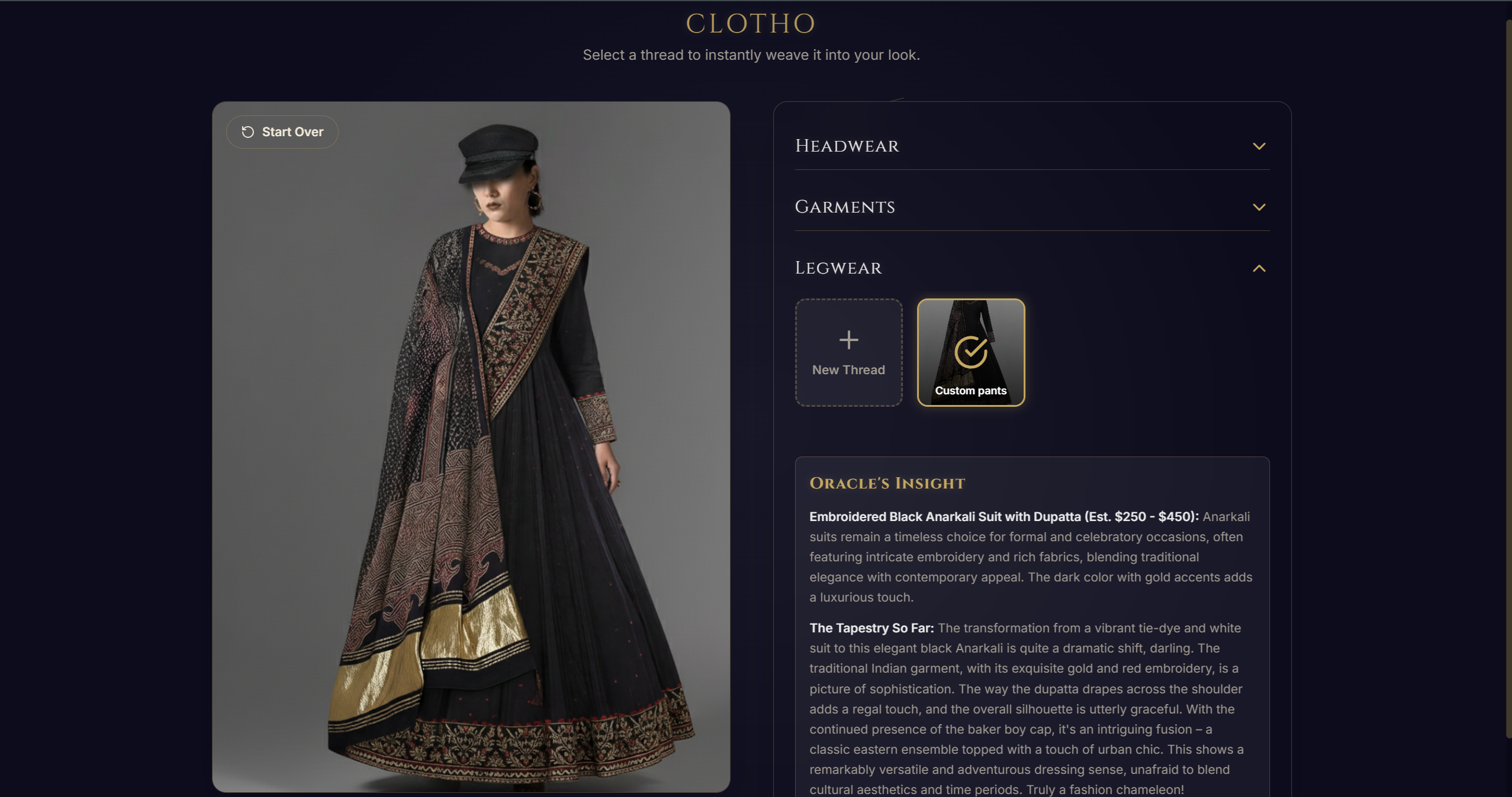
Clotho generates outfit suggestions tailored to the user's preferences, just upload your desired clothing's image from your PC or from Amazon.com and see yourself wear it in real time.
You provide your favorite colors, style descriptors (e.g. casual, business-formal, streetwear), or an occasion (date night, interview, weekend brunch),
and Clotho uses AI to generate multiple high-quality outfit images that match the image.
Key features include:
- Style- and occasion-based outfit generation
- Multiple AI-generated suggestions per request
- Ability to filter, regenerate, and compare looks
- Plans for future personalization through feedback loops
The result is a personalized "digital stylist" that saves time and sparks new fashion ideas.
How we built it
We built Clotho using a combination of GenAI and TypeScript:
- Frontend (TypeScript): Handles user input (colors, styles, tags) and displays the AI-generated outfit images in a clean, responsive interface.
- Backend :
- Converts user preferences into descriptive text prompts
- Uses the Gemini Image Generation API to generate realistic outfit images
- Applies filtering to discard irrelevant results and return only the best options
- Converts user preferences into descriptive text prompts
- Architecture: Designed a modular pipeline where new style categories, color palettes, or AI models can easily be added.
We collaborated on GitHub to manage code, track issues, and iterate quickly during the hackathon.
Challenges we ran into
Building Clotho was exciting but came with multiple technical and creative hurdles:
- Prompt Engineering: Small wording changes caused drastically different results. Finding the right balance between "specific" and "creative freedom" was difficult.
- Consistency: Some generated images contained mismatched outfits or accessories not suited to the style requested.
- Performance: Multiple image generations could cause high latency.
- User Interface: Designing a layout that feels connected to the Theme.
- Cost: Multiple image generations could cause high Costs.
Accomplishments that we're proud of
- Built a working end-to-end system that goes from user input → AI generation → visual output.
- Achieved realistic outfit generations that match input parameters surprisingly well.
- Learned to integrate cutting-edge generative AI into a user-friendly web application.
- Designed a scalable architecture that can be expanded into a full styling assistant.
What we learned
This project taught us a lot about both technology and design:
- Prompt engineering and input tuning are key for high-quality AI outputs.
- UI/UX design matters — even the best AI is useless without a clear, engaging interface.
- Building for speed and reliability is crucial for generative apps to feel usable.
- Collaboration with APIs, GitHub, and cloud workflows allowed us to iterate fast and fix issues quickly.
What's next for Clotho
We see Clotho as more than just a hackathon project — it could grow into a real styling platform:
- User feedback loop: Let users thumbs-up/down outfits to improve future suggestions.
- E-commerce integration: Link generated outfits to real purchasable items.
- Mobile optimization: Build a dedicated app or PWA for faster, more interactive use.
- Advanced personalization: Learn from user history to automatically generate daily outfit suggestions.

Log in or sign up for Devpost to join the conversation.