Inspiration
We've all stared at a full closet and felt like we had "nothing to wear." Whether it's a sudden change in Florida's unpredictable weather or a high-stakes job interview, finding the right outfit is a mental tax we pay every morning. We built Smart Closet to move beyond simple digital inventories; we wanted an AI that actually reasons with your clothes- understanding textiles, humidity, and social context to help people wear what they already own more sustainably.
What it does
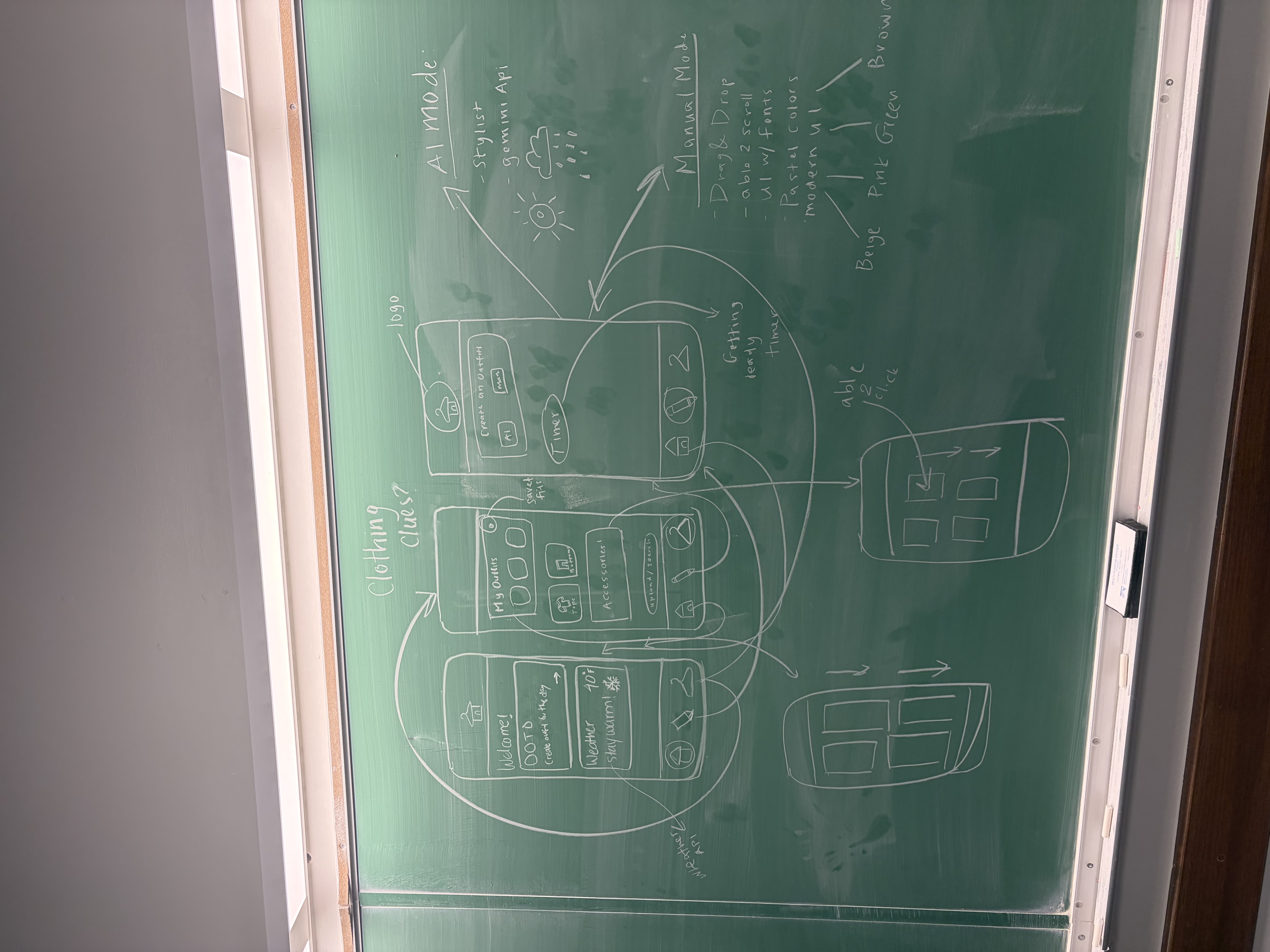
Clothing Clues is a hyper-intelligent digital wardrobe and personal stylist. Users simply snap a photo of their clothing, and the AI "deconstructs" it into technical metadata (material, color, neckline). Using real-time local weather data, the app generates context-aware outfits that factor in thermal comfort and personal "vibes." Beyond just matching clothes, it provides a Jewelry Scheme based on garment necklines, estimates Getting Ready Time based on outfit complexity, and conducts a Wardrobe Gap Analysis to identify the missing piece needed to elevate a look. It even offers Smart Care Tips based on textile recognition to ensure your garments last longer through proper maintenance.
How we built it
Our project is a full-stack mobile application built using React Native and Expo. The "brain" of the app is Gemini 2.0 Flash, leveraged for its multimodal capabilities and lightning-fast reasoning.
- The Vision Engine: We implemented a "Deconstructor" that processes clothing images using Gemini to extract metadata, including category, color, material, and even neckline types.
- The Reasoning Engine: We integrated a custom Weather API (Open-Meteo) to calculate the "comfort factor" of an outfit using real-time temperature and humidity data.
- Storage Logic: To keep the app fast and offline-capable, we utilized
AsyncStoragewith a customImageManipulatorpipeline to store a high-volume digital closet without exceeding device memory limits.
Challenges we ran into
- Memory Management: Managing high-resolution images on-device required a robust compression pipeline to keep file sizes near 100KB while maintaining enough detail for the AI to recognize textures.
- Hallucination Control: Initially, the AI would suggest clothes the user didn't own! We refined our system instructions to strictly constrain choices to the
Available ClosetJSON array. - Asynchronous Flow: Coordinating the Weather API, the Camera, and the AI response required precise
async/awaitmanagement to keep the UI responsive.
Accomplishments that we're proud of
We are incredibly proud of our Jewelry Scheme logic and Wardrobe Gap Analysis. The app doesn't just pick a metal; it analyzes your shirt's neckline to decide if you need statement earrings or a pendant. Identifying the "missing piece" to complete a vibe turns the app from a simple tool into a proactive personal shopper.
What we learned
Building this in 24 hours was a masterclass in Prompt Engineering and Mobile Data Management. We learned how to structure system instructions to force an LLM to return strict, valid JSON—a necessity for a stable frontend. We also gained deep experience in mobile image processing, ensuring high-res photos don't break the 6MB AsyncStorage cap through strategic compression.
What's next for Clothing Clues
We plan to implement a "Social Vibe Shift" feature that lets users upload a screenshot of a concert flyer or a celebrity's Instagram post, and the AI will scan their closet to recreate that specific aesthetic. We also aim to integrate a Laundry Tracker that uses recognized fabric types to notify users when a garment needs a specific cleaning method (e.g., "It's been 3 wears; time to dry clean this wool"). Additionally, we would like to further utilize the Gemini API to recognize different body types and make flattering suggestions. Finally, we want to build out the Shopping Integration so the "Gap Analysis" results link directly to the sustainable marketplace, helping users fill wardrobe gaps responsibly.


Log in or sign up for Devpost to join the conversation.