-
-
design
HackMIT 2025 - Best UX Winner
Inspiration
We love fashion, and we love shopping. But the flip side of that is overflowing closets, and eventually, clothes we don’t wear end up getting tossed. Approximately 92 million tons of textile waste are sent to landfills and incinerators each year. Seeing how quickly fashion cycles move and how much waste that creates made us want to rethink our own habits. We asked ourselves: what if keeping track of your clothes and rewearing them could be just as exciting as buying something new? Clothespin was born from that idea of turning personal style into something more mindful, creative, and sustainable.
What it does
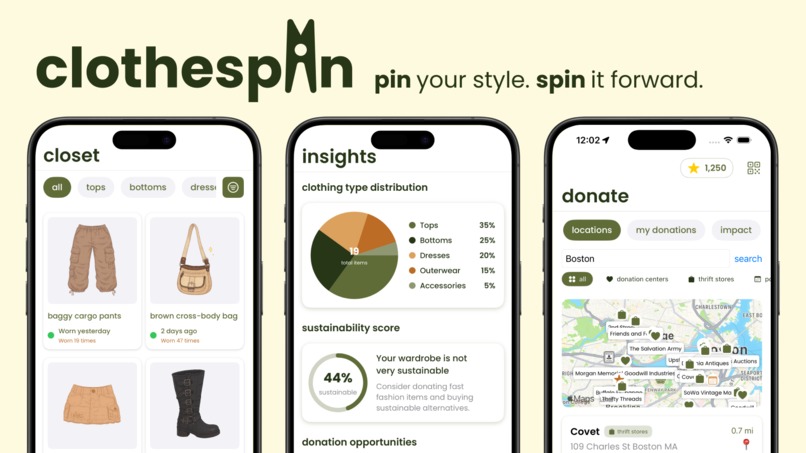
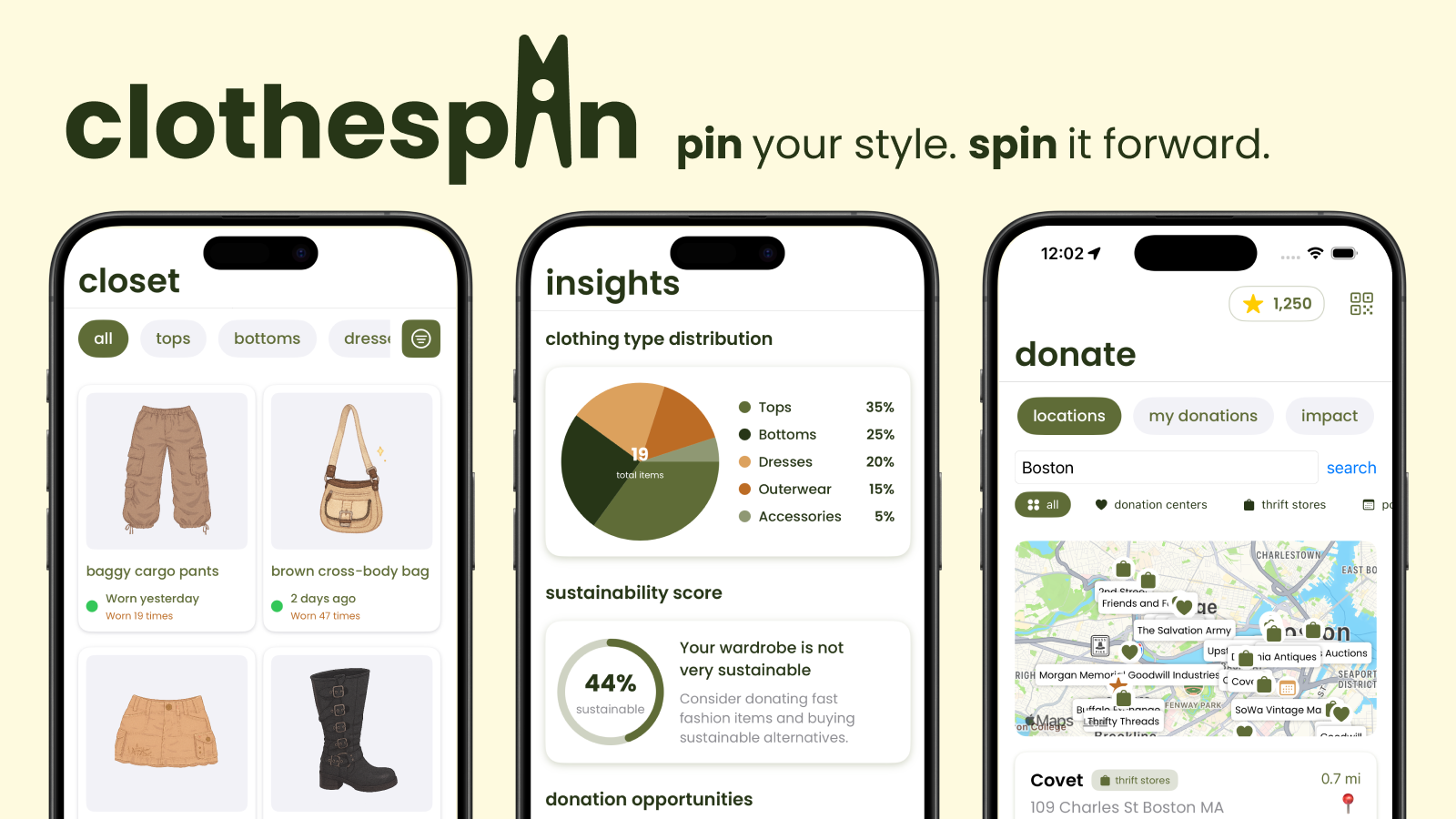
Clothespin is a sustainability-driven fashion app that helps you get the most out of your closet while cutting down on clothing waste. Just by snapping a photo of your current outfit, you can catalog your clothes and pin them into a digital wardrobe in the Closet tab.
From there, Clothespin helps you track how often you wear each piece, generating insights into your wearing history, which you can view in your Insights tab. The app will send reminders when items haven’t been worn in a while, and suggest either reviving or donating unworn pieces. You can easily find nearby thrift stores to donate to from the Donate tab, and even earn points for re-wearing or donating clothes. By combining style, community, and sustainability, Clothespin transforms your wardrobe into a smarter, more responsible, and more creative space.
How we built it
We built Clothespin with Swift for the iOS frontend, designing a clean digital wardrobe and notification system. We used Firebase for data storage, which includes clothing images and metadata, keeping user data synced across devices. To highlight donation and thrift spots, we integrated the Apple Maps API, so users can quickly find options at their real-time location.
For wardrobe intelligence, we implemented a ResNet50 CNN that classifies each upload and compares it against existing items; if a match is found, its wear count is updated, otherwise it’s added as a new piece. To make the wardrobe more engaging, images are cartoonified with the OpenAI API, giving each item a consistent, fun digital look!
Challenges we ran into
Getting the mobile development environment up and running was harder than expected, and setting up the initial Swift app took some trial and error before we could start building features. Cataloging images was tricky because we had to make sure user-uploaded clothing photos were clean, consistent, and recognizable across different lighting conditions and backgrounds. Turning user images into clipart for the app required experimenting with different processing approaches to balance visual clarity with keeping the style fun and lightweight. Getting connected to Firebase involved authentication, database setup, and syncing data in real time, which was challenging under the time constraints of the hackathon. Choosing a model for image similarity was difficult because we needed something lightweight enough to run quickly, but still accurate enough to recognize and compare clothing items effectively.
Accomplishments that we're proud of
our fun promo video: https://youtu.be/60EXv8GitFc?si=aF7wYgGUUNgRFXRt and demo: https://youtu.be/glGl5sb8sMw
What we learned
We learned how to connect multiple technologies (Swift, Firebase, Apple Maps, and machine learning) into one working app in a short time. It pushed us to think carefully about feature prioritization and how to keep the user experience simple while still maximizing the impact. We also gained a deeper appreciation for the importance of sustainability in the fashion industry, where even small shifts in consumer behavior can make a big difference in reducing waste. The project showed us how technology can be a catalyst for changing habits, building community, and making sustainability feel both accessible and rewarding.
What's next for clothespin
- We plan to add social media features that let users borrow or swap items with nearby users.
- We want to expand outfit suggestions with AI-powered recommendations that adapt to evolving fashion tastes.
- The reward system will grow to include streaks, monthly challenges, and playlists, while also partnering with thrift stores, vintage shops, popups, and resellers.
- Users will be able to set custom expiration timelines, such as getting notified if they haven’t worn an item in two months.
- We aim to use the insights generated by the app to help users make their shopping habits more sustainable, including integration with e-commerce platforms.


Log in or sign up for Devpost to join the conversation.