-
-
-
-
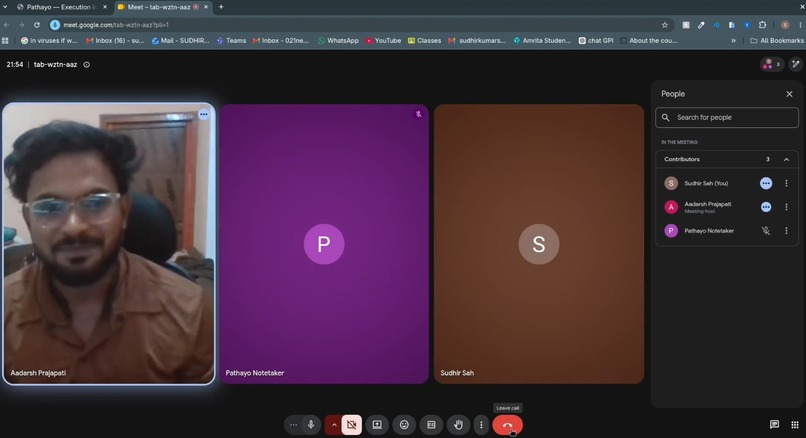
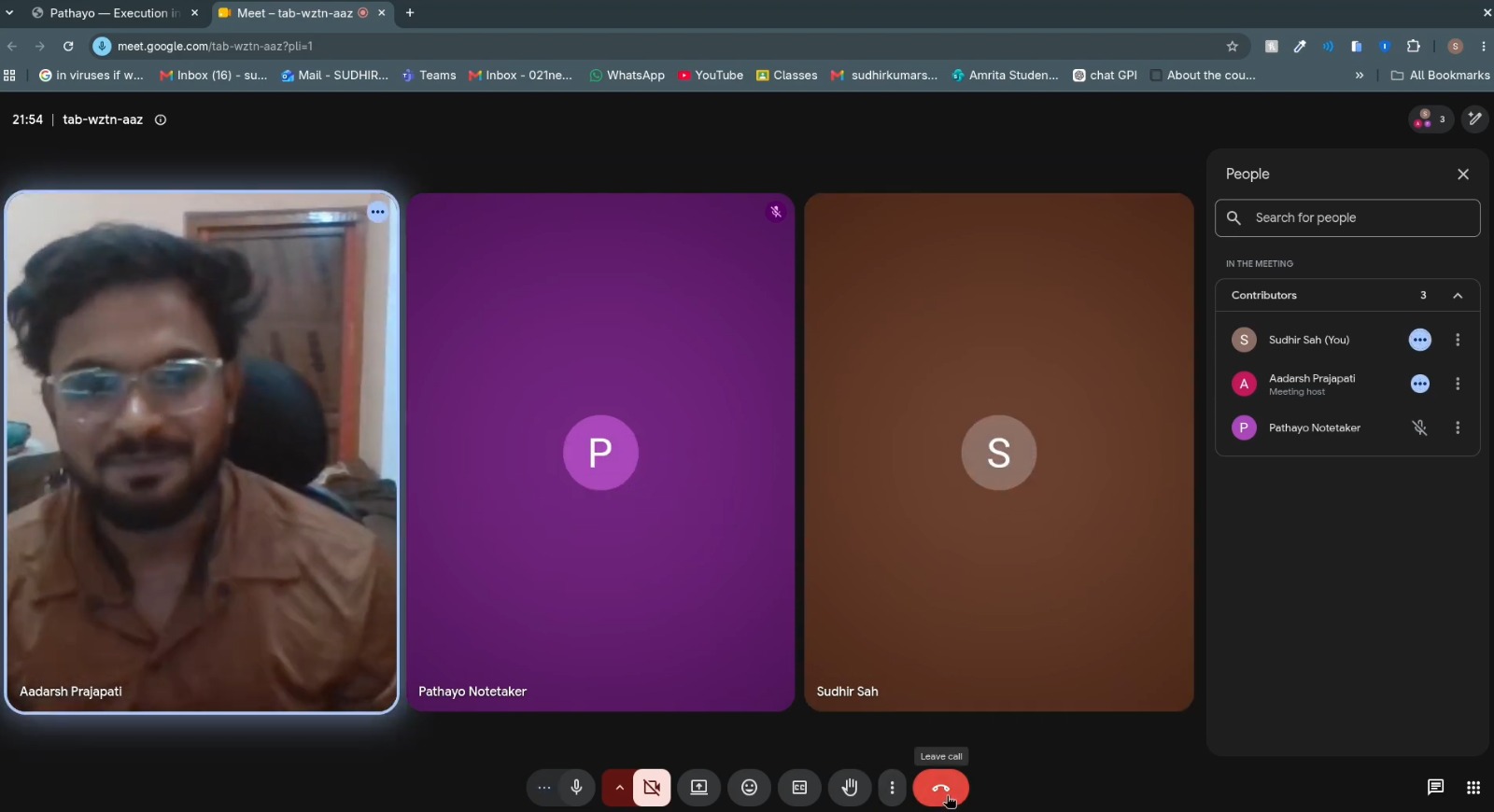
Auto-meeting join by AI PM
-
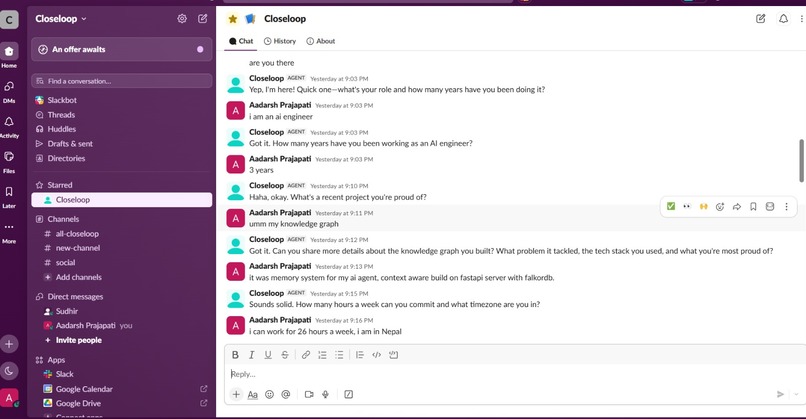
Team member profile building by AI PM
-
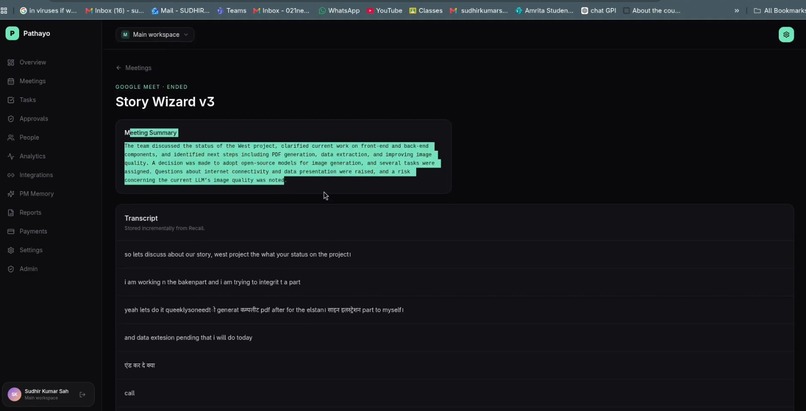
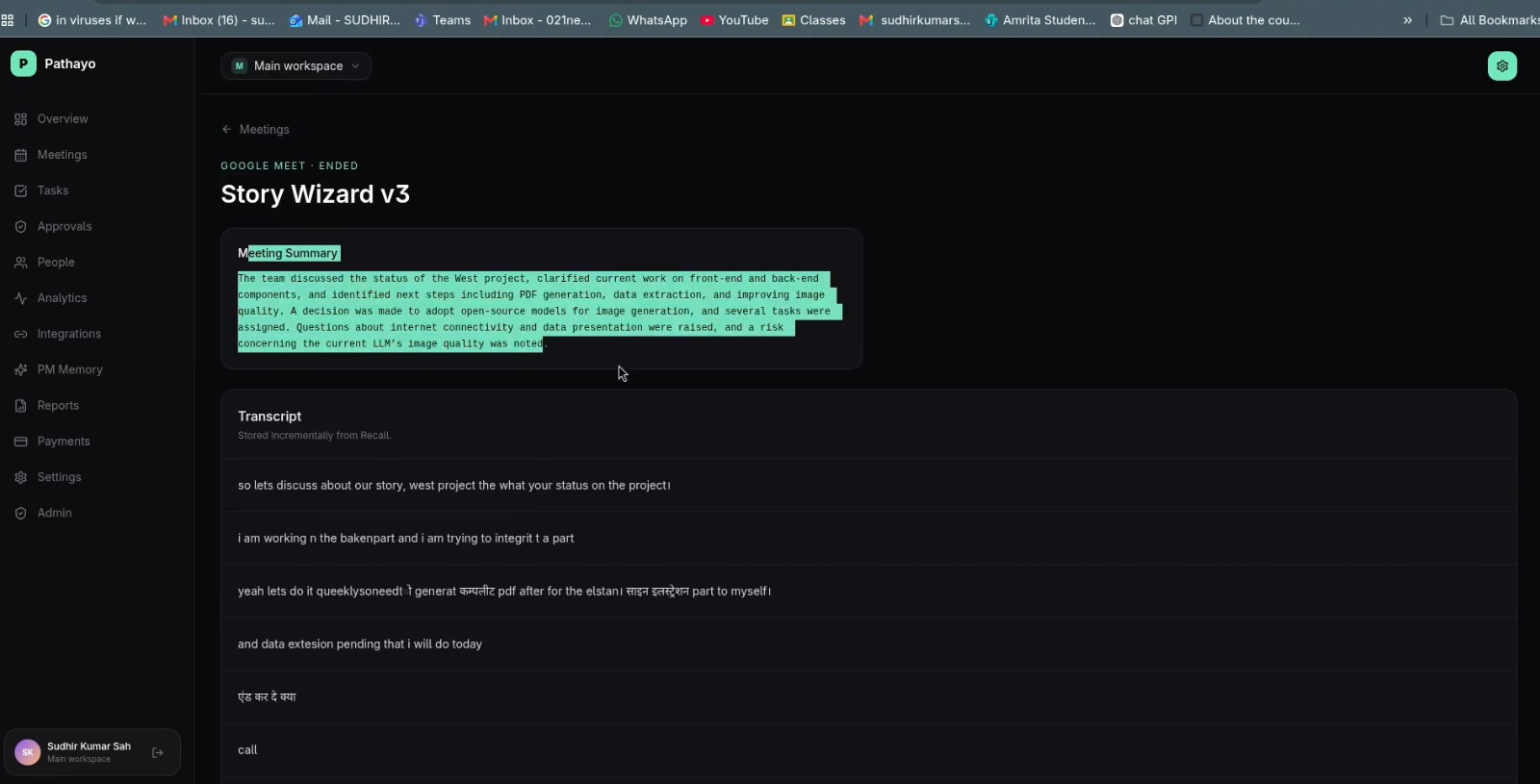
AI meeting summary
-
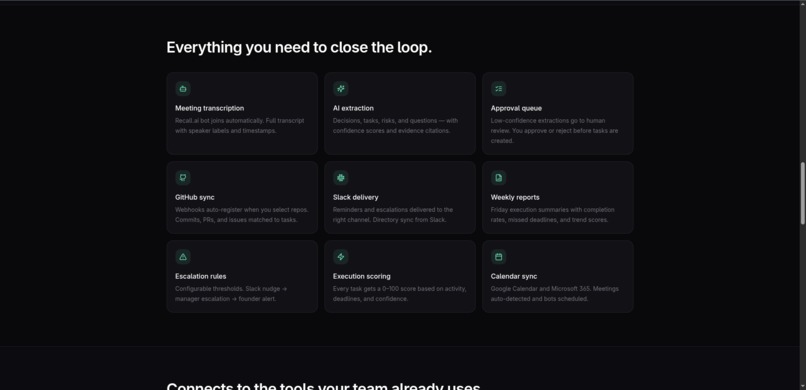
-
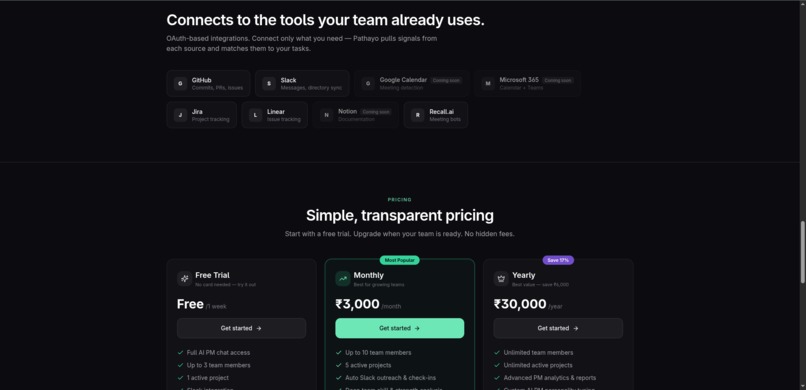
-
-
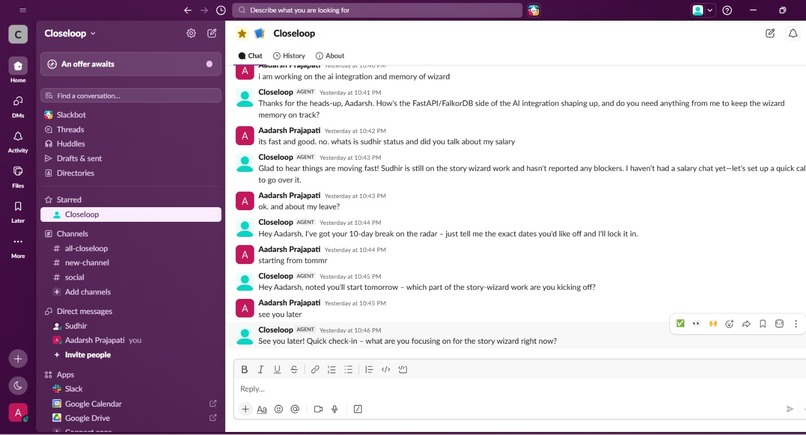
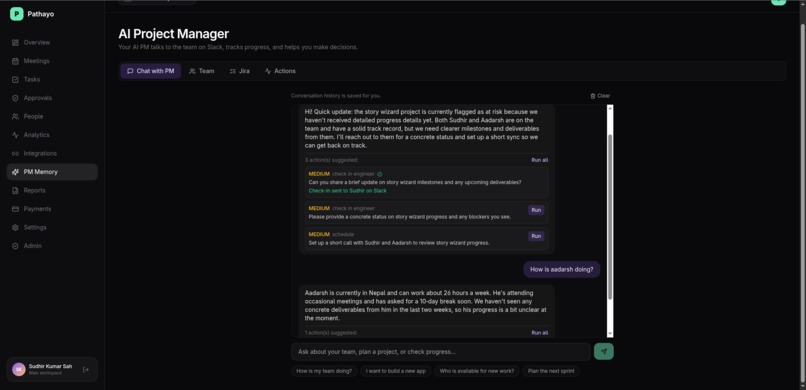
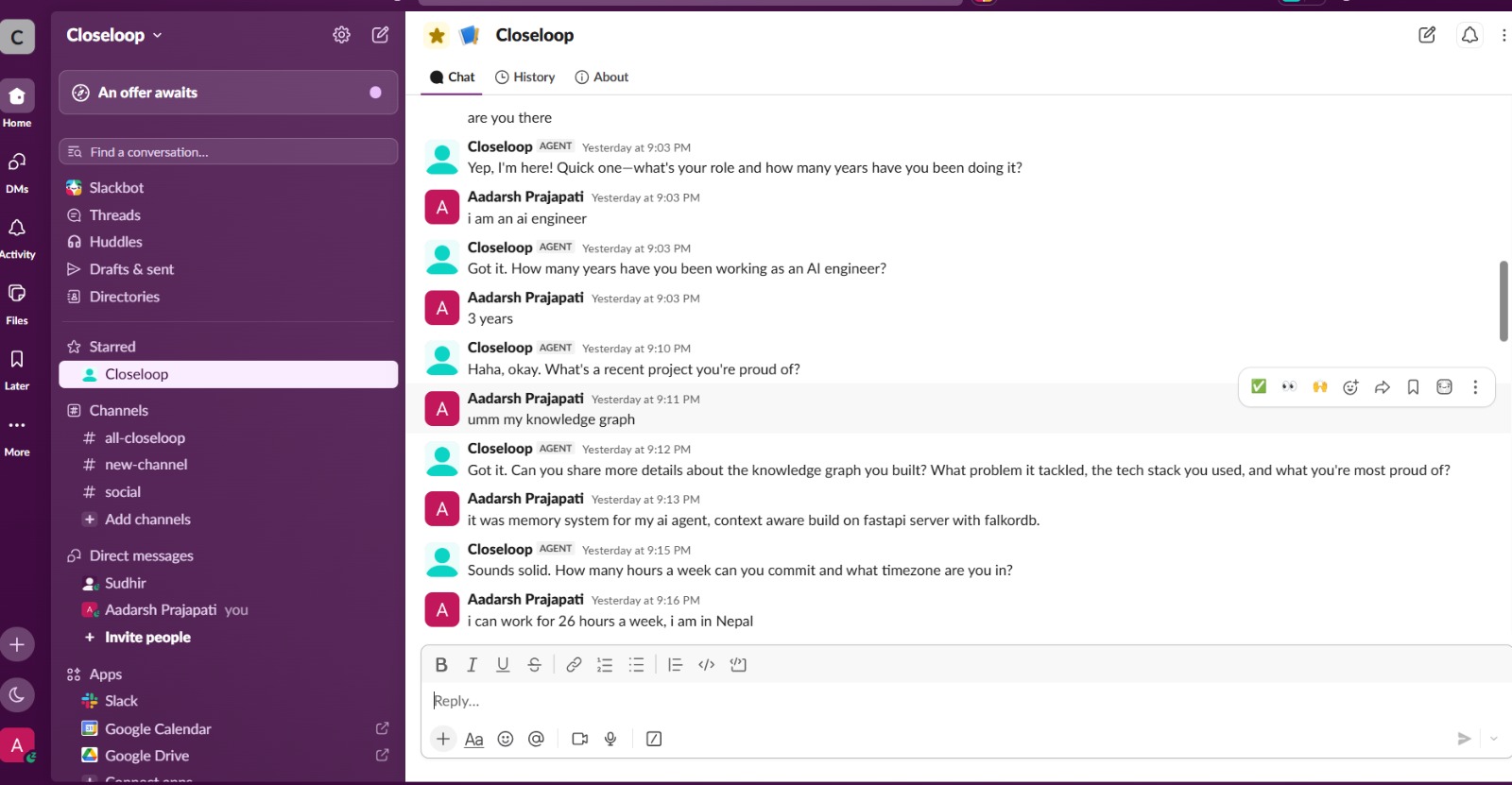
Conversation with AI PM - auto checkin
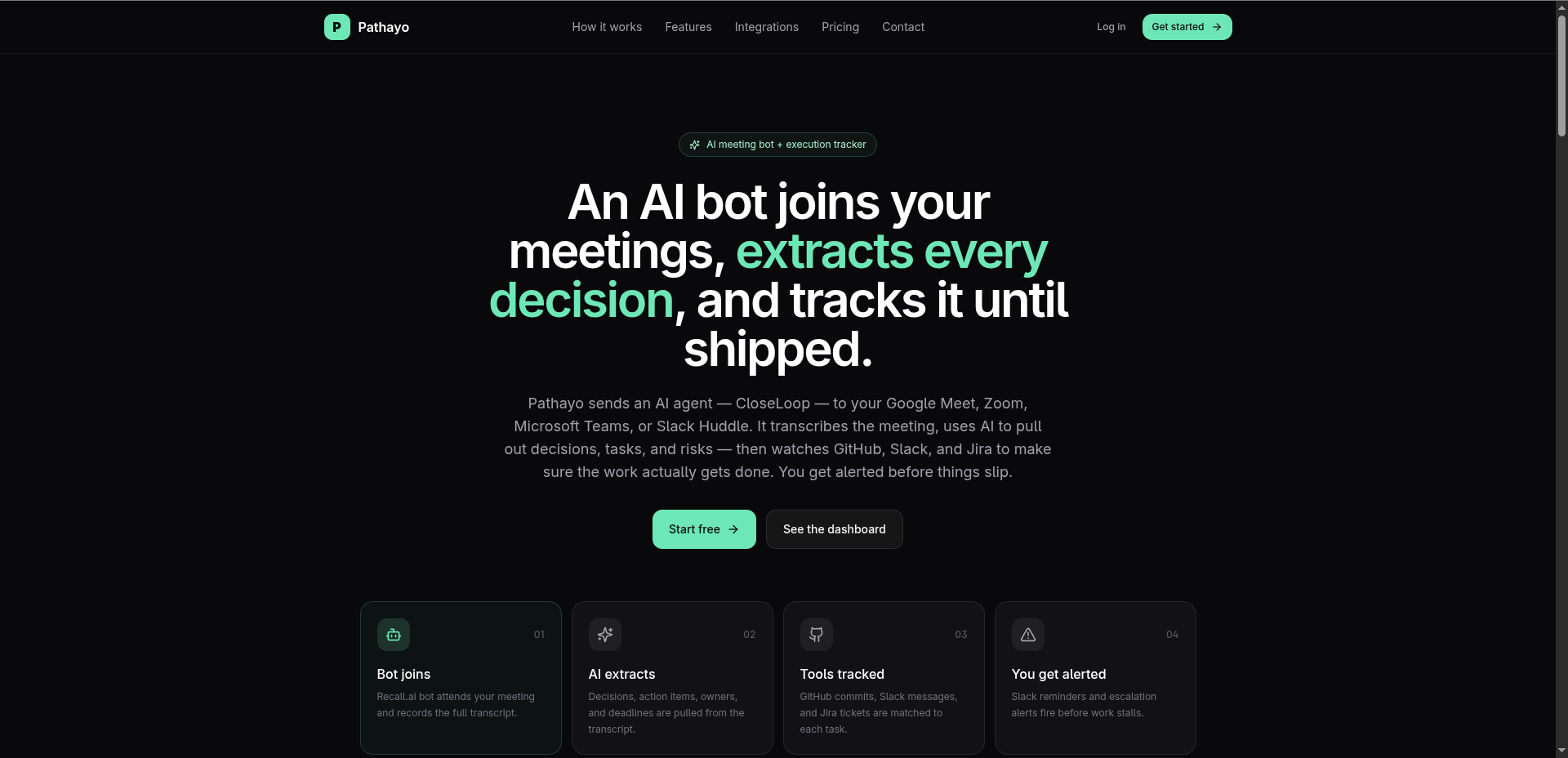
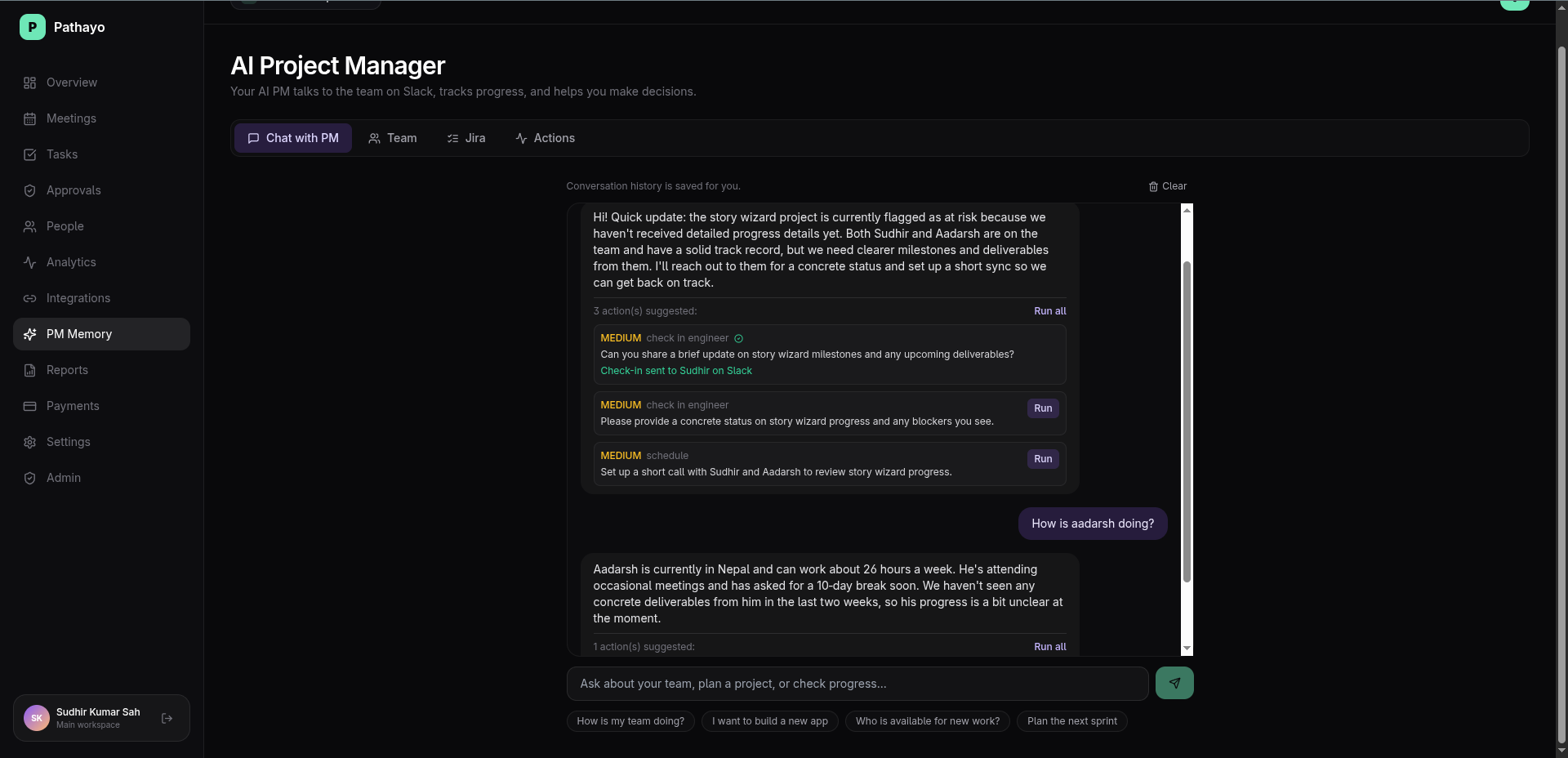
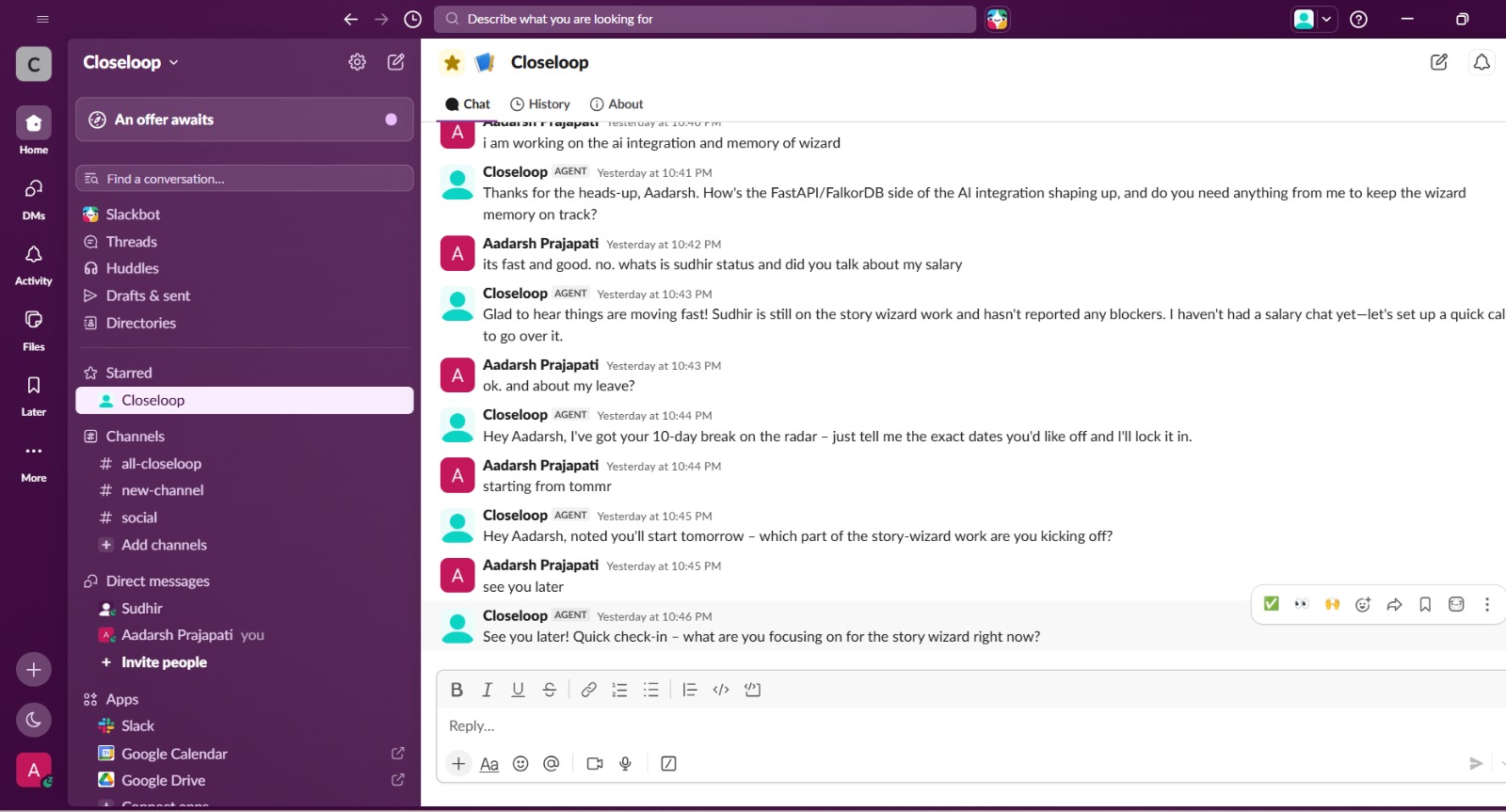
Pathayo
A pain we were watching happen every day.
What it does
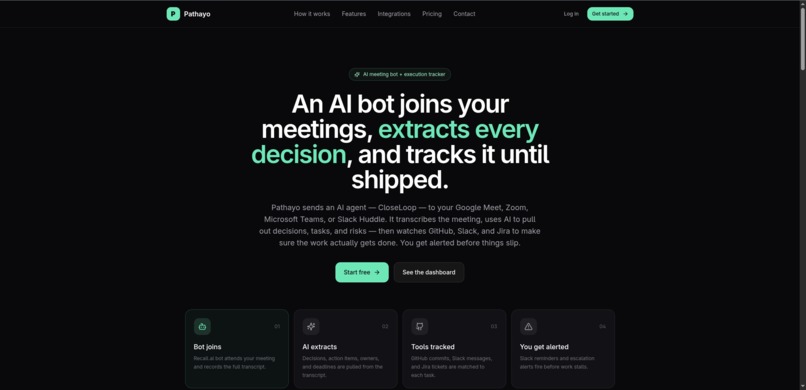
Pathayo is an AI project manager.
The founder talks to it in plain English, the way they'd talk to a person, and it runs the engineering management loop from there.
It learns the product
The founder explains what they're building in simple terms.
Pathayo asks the right follow-up questions and stores everything in a per-organization knowledge graph.
It remembers decisions, people, conversations, commitments, and context.
The thing that was breaking our founder — lost context and forgotten threads — was the first thing we wanted to fix.
It interviews engineers
Pathayo interviews engineers through Slack automatically.
These aren't forms. They're real conversations.
It learns who's good at what, who ships on time, who needs nudging, and what each engineer is currently working on.
The result is a living profile of every person on the team that evolves as they work.
It plans and assigns work
Pathayo breaks product goals into actionable work, matches tasks to engineers based on skills and availability, and creates Jira tickets.
The founder doesn't need to manage a project board.
It joins meetings
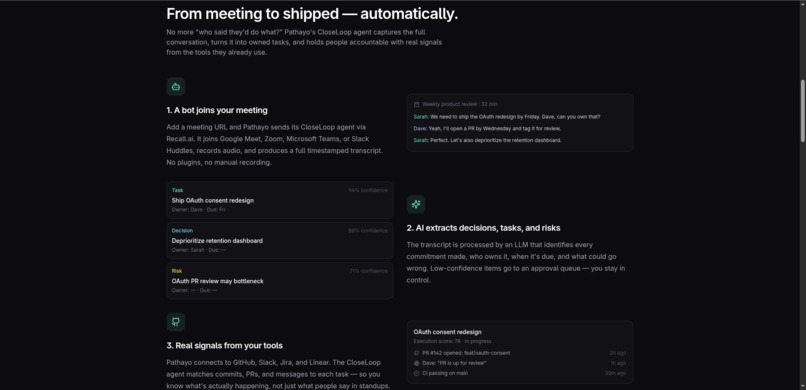
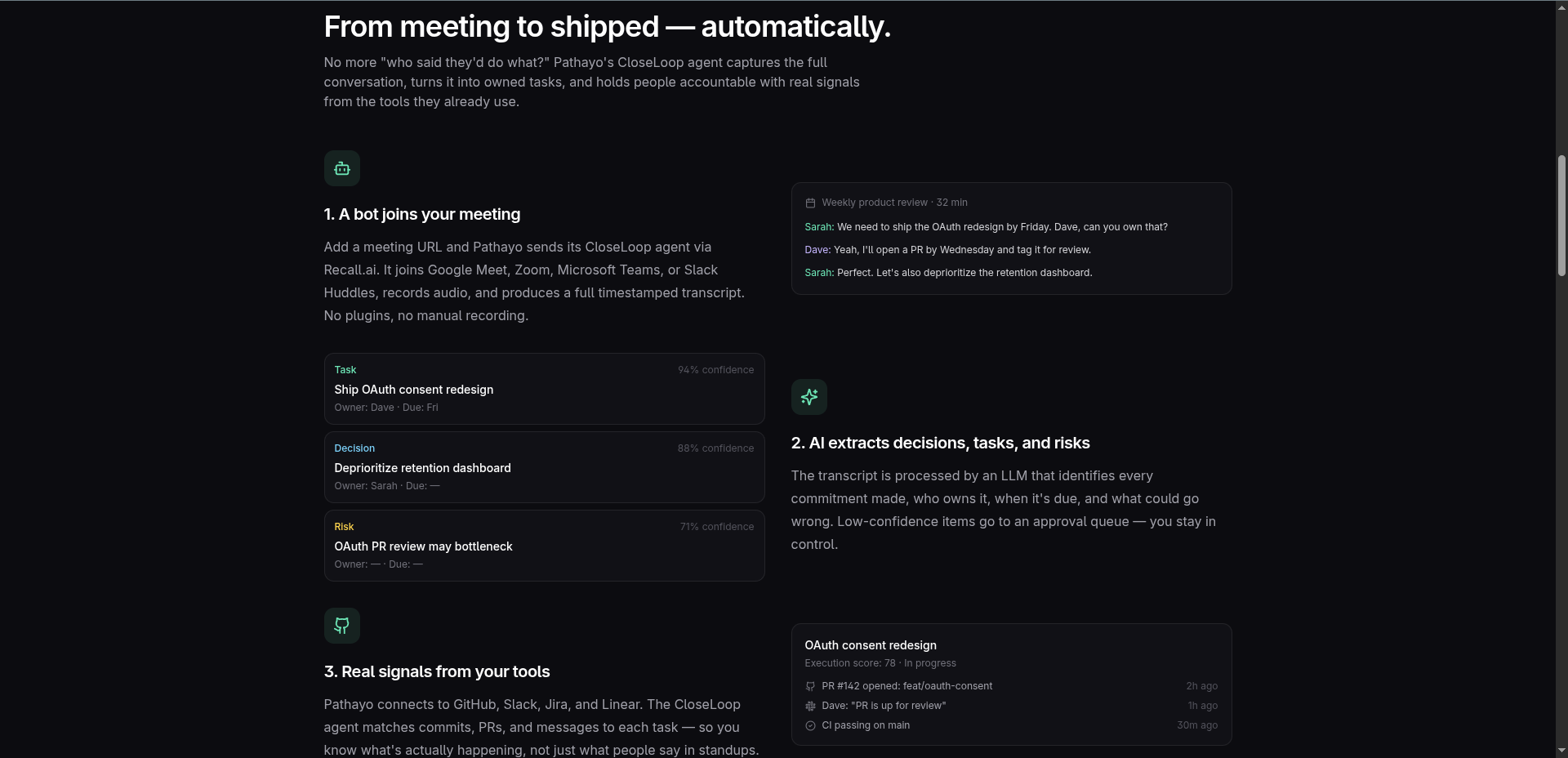
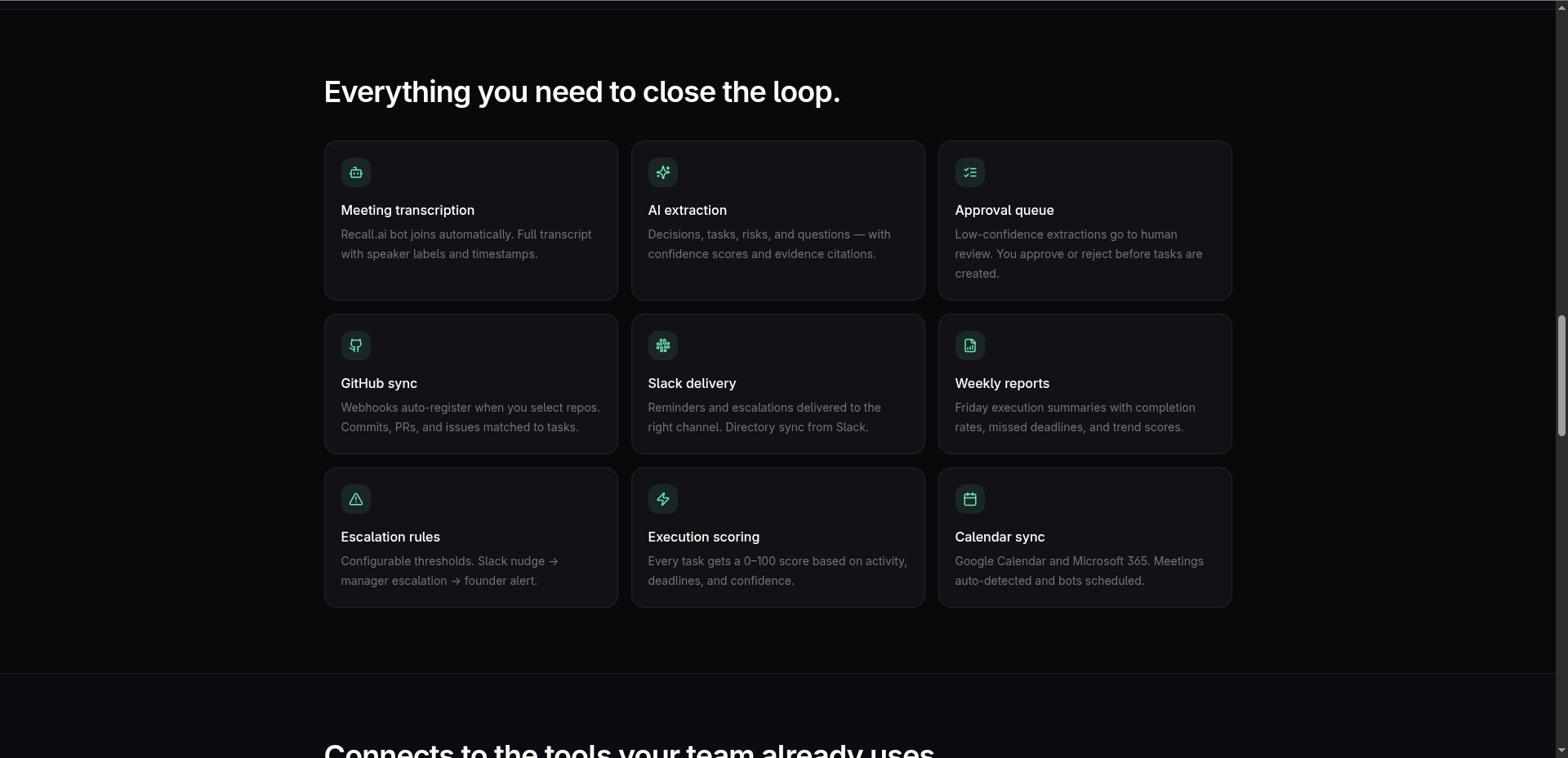
Pathayo can join meetings through Recall.ai, transcribe conversations, and extract decisions, action items, owners, deadlines, and risks.
Low-confidence decisions go into an approval queue, so the founder stays in control of the calls that matter while Pathayo handles the routine work.
It checks in every day
Pathayo communicates with engineers through Slack.
It asks about status, blockers, and follow-ups.
It speaks to engineers in their language — commits, PRs, CI, blockers — and explains the same information to the founder in plain English.
It tracks execution
Pathayo connects engineering activity to assigned work.
Commits, pull requests, messages, deadlines, and other signals are matched against tasks.
Every task receives an execution score from 0–100 based on real activity, deadlines, and confidence.
If something stalls, escalation rules can fire automatically:
Slack nudge → manager → founder
The founder finds out before a small blocker becomes a major problem.
It reports back
Every week, Pathayo gives the founder a report in human terms:
- What shipped
- What slipped
- What's blocked
- What needs attention
- What can be ignored
The goal isn't more project-management software.
The goal is for the founder to finally know what's actually happening.
How we built it
The stack is Python, FastAPI, and a knowledge-graph memory service built on FalkorDB with vector search.
Each organization gets its own isolated graph, so one company's memory never bleeds into another's.
The memory pipeline
Memory was the core of the system.
Every conversation that flows into Pathayo — whether from the founder chat, Slack, or meeting transcripts — is processed by an LLM that extracts atomic facts.
Each fact contains structured information such as:
- Subject
- Predicate
- Value
- Topics
- Entities
- Sentiment
- Due dates
Each fact is embedded and deduplicated against existing knowledge.
When a newer fact contradicts an older one, the old fact can be superseded rather than simply accumulating forever.
That matters because people change their minds. Estimates slip. Decisions get reversed.
A useful memory system has to update, not just accumulate.
Hybrid retrieval
When the PM agent needs context, Pathayo combines multiple retrieval strategies:
- Intent understanding
- Vector search
- Graph traversal
- Recency weighting
- Optional reranking
The goal is simple:
When Pathayo responds, it should feel like someone who was in the room last week — not a fresh chat window.
Integrations
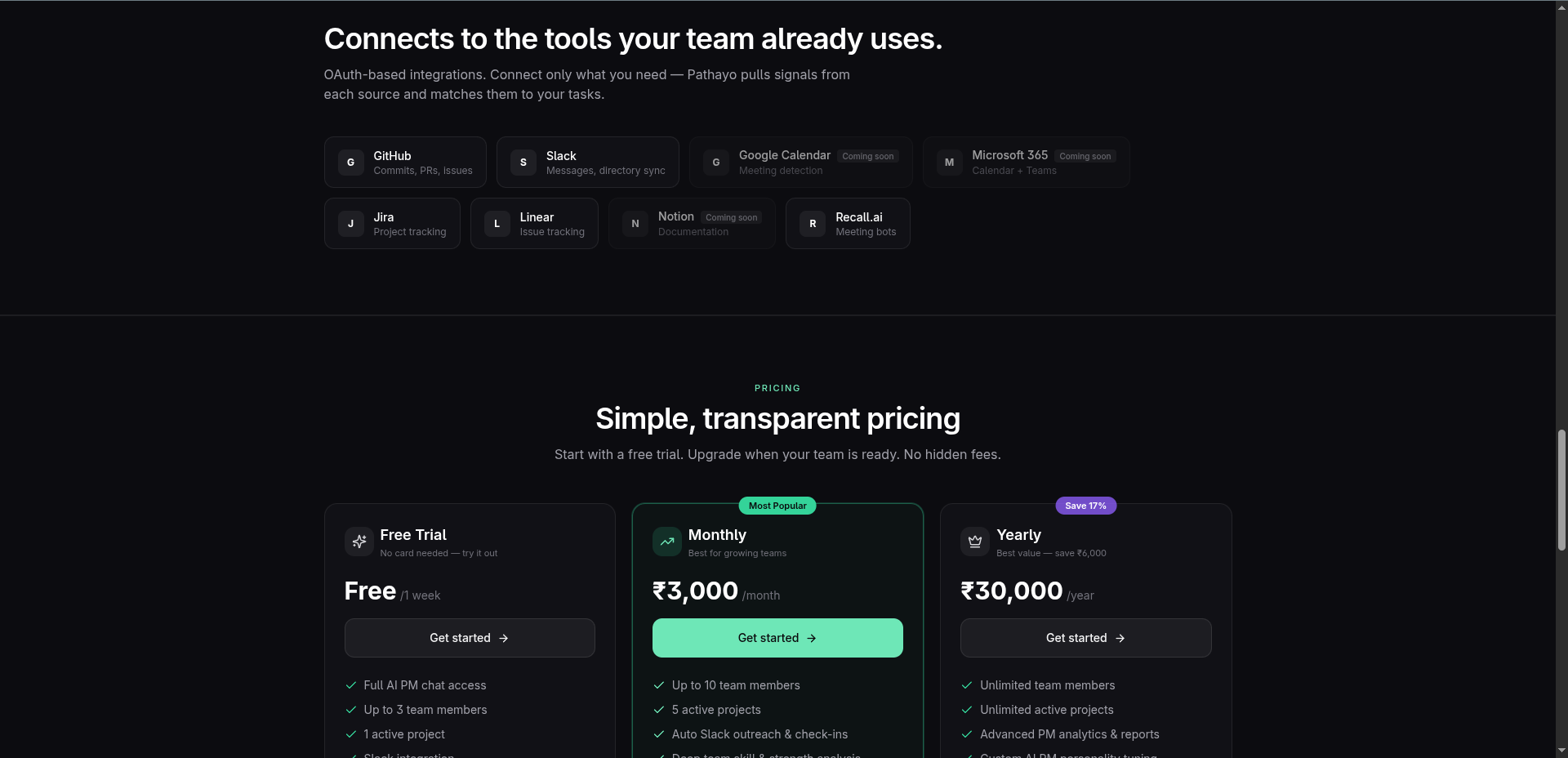
We wired the system into the tools an engineering team already uses:
- Recall.ai for meeting bots and transcripts
- GitHub webhooks for commits and pull requests
- Slack for check-ins and engineer interviews
- Jira for task creation
- Google Calendar for scheduling and context
The Django backend handles OAuth flows and relays conversations to the memory service.
SAQ and Redis handle asynchronous jobs so ingestion and processing don't block the API.
For AI workloads, we use multiple models for different jobs.
Gemini API handles long meeting transcripts and extracts decisions, action items, owners, and deadlines.
Cerebras with gpt-oss-120b handles many of the high-frequency reasoning workloads, including memory extraction, founder conversations, Slack check-ins, engineer interviews, execution scoring, and reports.
The split lets us use the right model for the right workload while keeping latency and costs manageable.
Challenges we ran into
Memory was the hardest part
A PM is useless if they forget what was said last Tuesday.
Building a system that extracts facts, deduplicates them, supersedes outdated information, and retrieves the right context — without hallucinating or pulling in irrelevant history — became most of our work.
We went through several iterations on deduplication thresholds and retrieval weights before the system started feeling reliable.
Trust calibration
Early on, Pathayo would confidently turn a passing comment into a task or assign something to the wrong person.
That was unacceptable.
We added confidence scoring, evidence-based reasoning, and an approval queue so uncertain decisions don't silently become real work.
The result is a system that can be autonomous where it's safe while keeping a human in control where it matters.
Making Slack interviews feel human
Engineers don't respond well to a bot that feels like a form.
We had to make the interviews conversational, follow up on vague answers, avoid repetitive questions, and know when to stop.
That required a lot of prompt iteration and reviewing real conversation transcripts to identify where the experience felt robotic.
Scope
Honestly, this was one of our hardest challenges.
There are hundreds of things a PM can do.
We had to decide which ones actually matter for a three-person startup and leave everything else for later.
We focused on the core loop:
Meeting capture → Memory → Task assignment → Check-ins → Execution tracking → Founder reports
Everything else can wait.
Accomplishments that we're proud of
We're proud that we didn't just build a chatbot or a collection of disconnected AI demos.
We built an end-to-end management loop.
A decision made in a meeting can become a task.
That task can be assigned to an engineer.
Pathayo can check in with that engineer through Slack.
GitHub activity can update the execution state.
If the work stalls, Pathayo can escalate it.
And the founder can ask what is happening and receive an answer based on the actual history of the project.
We're particularly proud of:
- Building persistent AI memory using a knowledge graph.
- Giving each organization isolated project memory.
- Integrating Slack, GitHub, Jira, Google Calendar, and Recall.ai.
- Using Gemini API for real meeting understanding.
- Building automated task extraction and assignment.
- Creating AI-driven Slack check-ins and escalation.
- Tracking execution using real engineering activity.
- Building confidence thresholds and human approval into the autonomous workflow.
- Creating a founder-facing interface that explains technical progress in plain English.
Most importantly, we built something we would actually want to use ourselves.
What we learned
The biggest lesson was about memory, and it wasn't technical at first.
We realized our founder's real problem wasn't that he didn't understand the technology.
It was that he couldn't hold the context.
Six weeks of decisions were scattered across Slack, calls, DMs, and conversations. By the time something came up again, the original conversation was buried and forgotten.
The breakdown wasn't in intelligence.
It was in continuity.
That reframed the entire project for us.
We stopped thinking about Pathayo as a chatbot that answers questions and started thinking about it as a system that never forgets.
The knowledge graph became the heart of Pathayo, not a feature.
Every decision, every commitment, every person's track record is stored and retrievable in context.
That's what a real PM does.
They remember.
The second lesson was about trust.
AI extraction is wrong sometimes. If you let it run unchecked, it can create more chaos than it solves.
We learned that the goal isn't maximum autonomy.
It's useful autonomy.
Pathayo should handle the 90% of repetitive, low-risk management work automatically while keeping humans in control of the decisions that actually matter.
That balance took us a while to get right.
What's next for Pathayo
We're not trying to replace engineers.
We believe real engineers are the only way to build something real.
The reason many non-technical founders struggle to work with engineers isn't that they don't want to hire them.
It's that they can't manage them, can't verify the work, and can't afford a PM to bridge the gap.
Pathayo is our attempt to close that gap.
A non-technical founder with an idea and the courage to start should be able to build a real product with real people — without becoming a full-time manager, without losing sleep over whether the work is real, and without burning runway on silence.
Our next priorities are:
1. Make the founder experience better
The founder should feel like they're talking to a PM who genuinely knows their company, not an AI chatbot.
2. Improve decision reliability
We'll continue improving confidence estimation, evidence gathering, approval workflows, and verification before actions are taken.
3. Understand engineering progress better
We want Pathayo to become better at understanding GitHub activity, PRs, CI failures, blockers, and actual progress instead of relying primarily on self-reported status.
4. Build deeper organizational memory
We want Pathayo to understand how decisions evolve over time and proactively surface important historical context when it becomes relevant.
5. Get Pathayo into the hands of real founders
Our next milestone isn't another feature.
It's real founders using Pathayo and telling us whether it actually reduces the time they spend managing their engineering teams.
We're not there yet.
But we're closer than we were last Tuesday.
Built With
- celery
- cloud-run
- docker
- falkordb
- fastapi
- gcp
- gemini
- javascript
- jira
- knowledge-graph
- next.js
- postgresql
- python
- recall.ai
- redis
- slack
- worker


Log in or sign up for Devpost to join the conversation.