


Inspiration
If you're the primary account holder on a family phone plan, you can see the bill but not how your family is handling scams. Does Grandpa pick up Scam Likely calls? Is your daughter replying to suspicious texts? Most families only find out after something goes wrong.
T-Mobile Scam Shield already does a great job blocking and labeling scam traffic. What's missing is the human layer: helping a family understand what's reaching their phones and talk about it together. That's the gap Owlert fills. Every family needs someone keeping watch. Owlert keeps alert for you!
What it does
Owlert is a family scam-awareness dashboard built to complement T-Mobile Scam Shield.
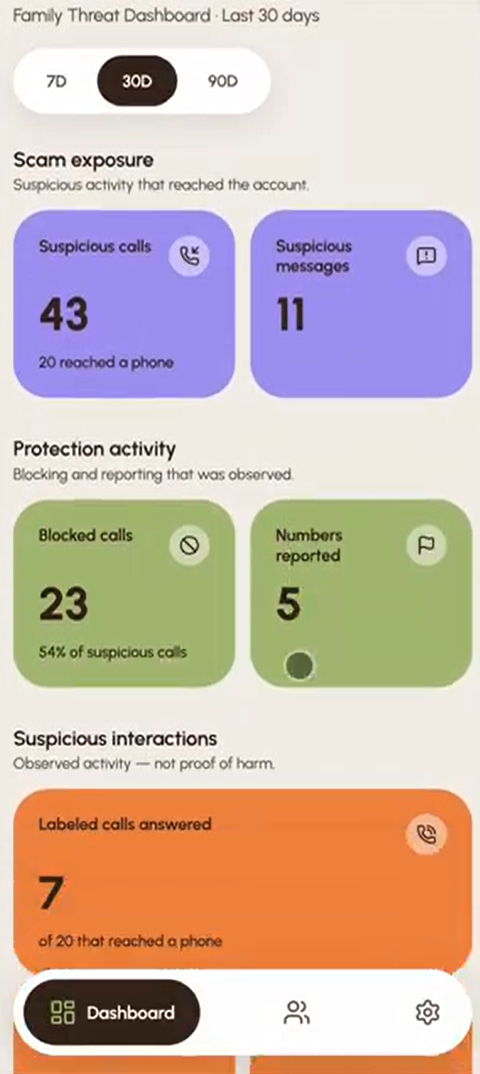
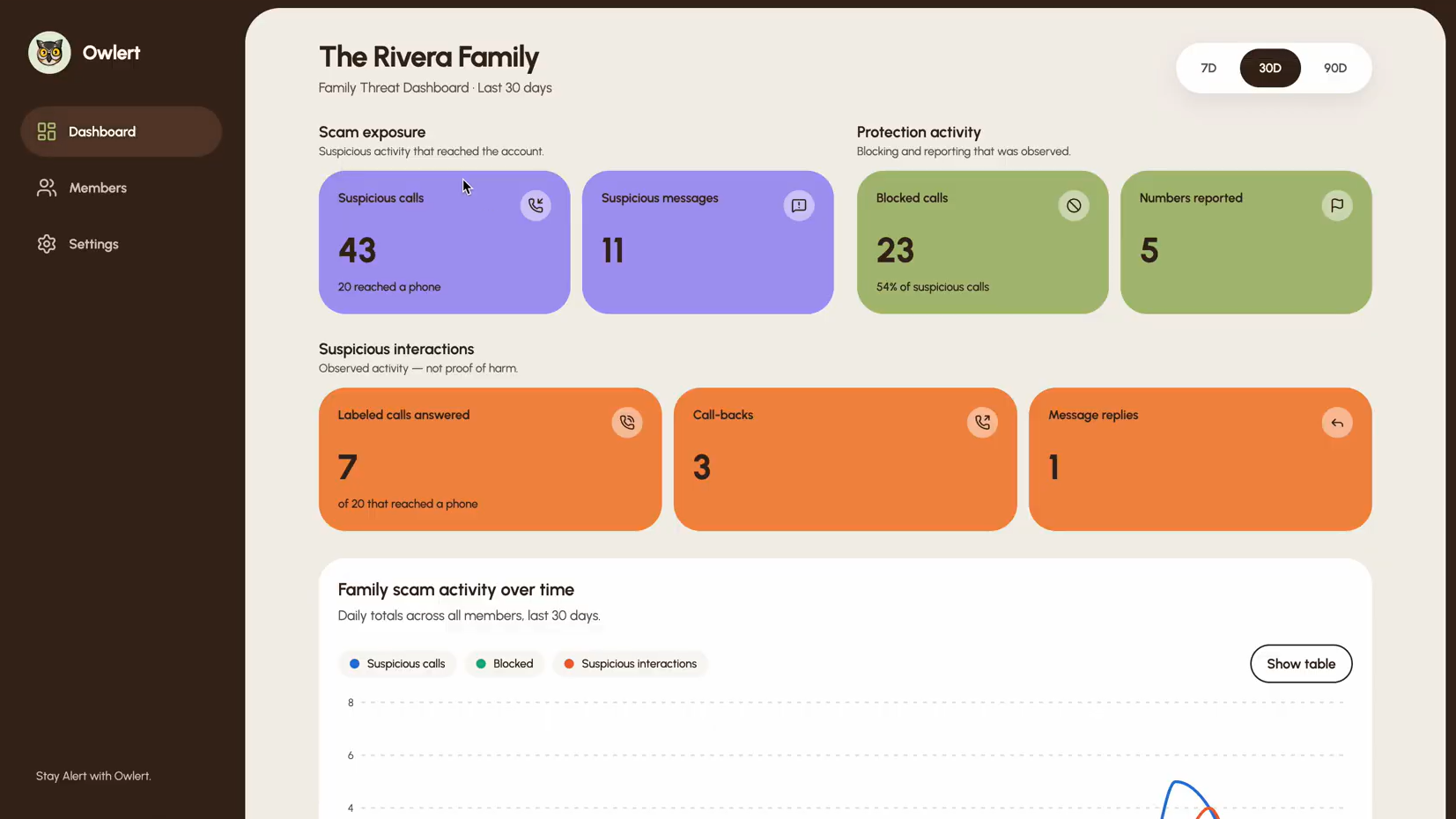
- Family dashboard: Keeps track of the total suspicious calls and texts, how many were blocked, how many reached a phone, and how many were answered or replied to, with 7, 30 and 90 day views and trend charts.
- Member pages: A page for each person with their own metrics, patterns and protective habits, such as reporting numbers.
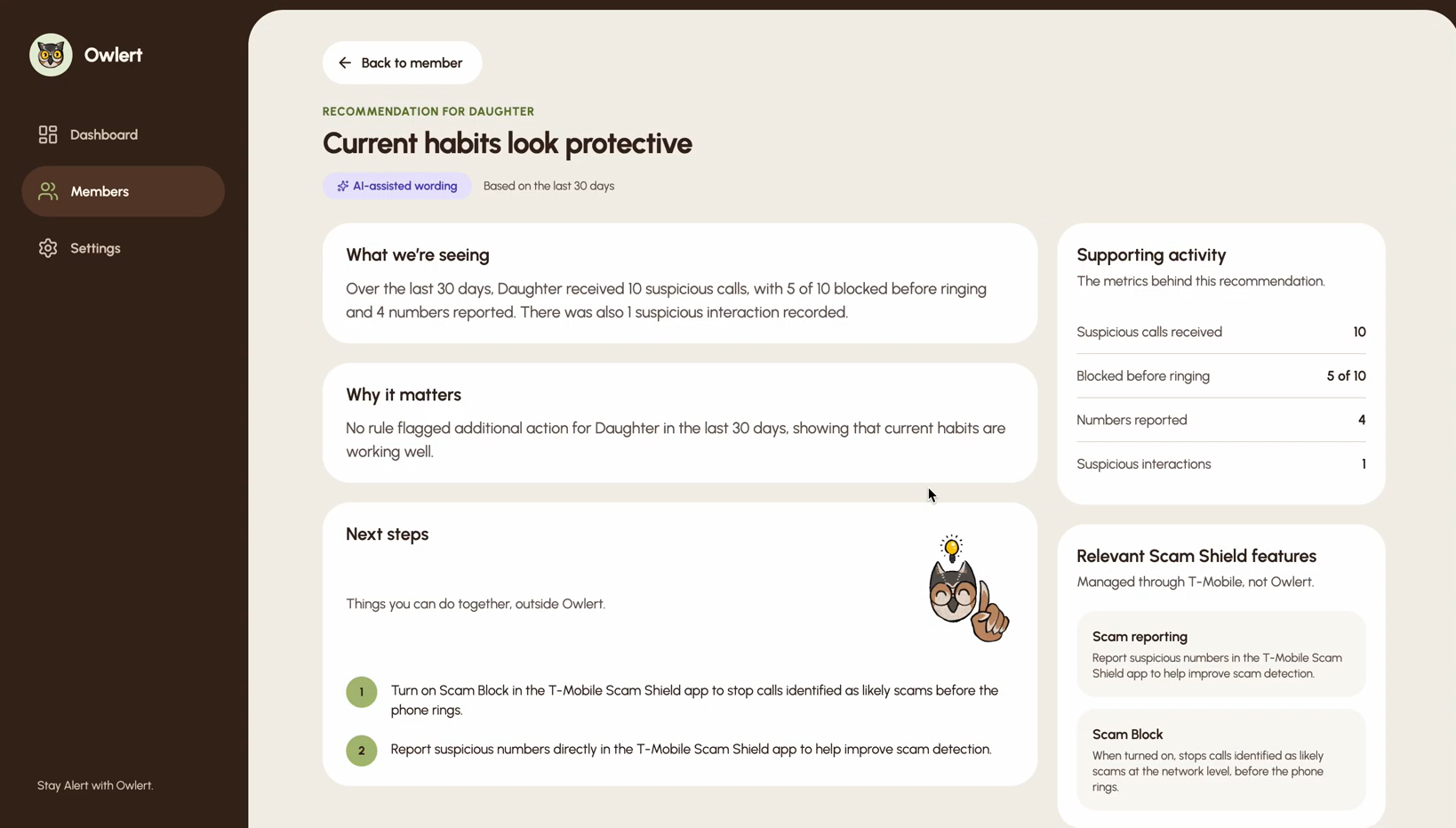
- Personalized recommendations: A rules engine picks the right next step for each member. That might be reviewing Scam Shield call settings, starting a conversation, or practicing reporting. Scam Shield Premium comes up only in more serious cases, when someone repeatedly interacts with scam calls and few of them are being blocked.
- Plain-language explanations: Gemini rewords each recommendation in a friendly, non-blaming tone.
We designed it to inform, not accuse. "Answered" means observed activity, not evidence of harm.
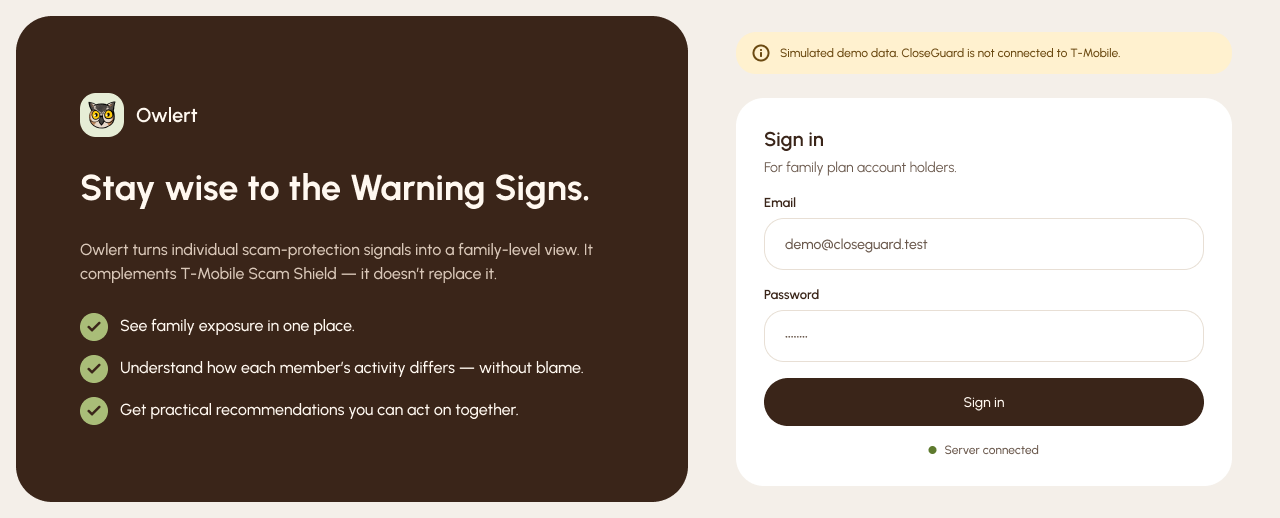
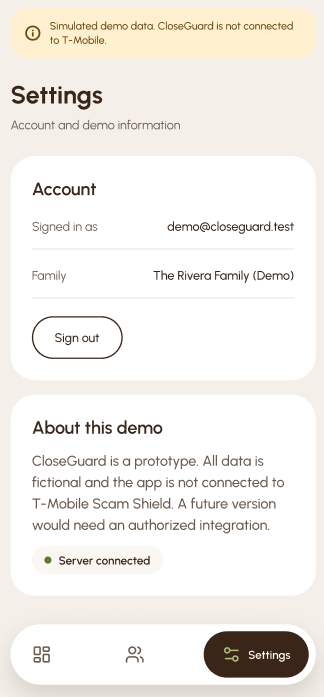
Demo disclosure: Owlert is a hackathon prototype. It is not connected to T-Mobile Scam Shield or any T-Mobile account. All families, members and activity shown are fictional, synthetic data.
How we built it
- Frontend: React, Vite, TypeScript, Tailwind v4, shadcn/ui and React Router, packaged as an installable PWA. UI Designs were created and implemented from Figma.
- Backend: FastAPI and Pydantic, with all analytics and business logic in a layered routes → services → repositories structure.
- Database and auth: Supabase (Postgres) for sign-in and storage. Row-level security is on for every table, and the backend scopes every query to the signed-in user's family. A member outside your family returns a 404, so it doesn't even reveal they exist.
- Recommendations: Fixed, explainable rules with documented thresholds, not a black box.
- Gemini: Only rewords a recommendation the rules already chose. It never sees raw events or phone numbers. Its output is validated against a schema and rejected if it invents numbers, assigns blame, or mentions Premium when the rules don't allow it. If anything fails, a deterministic fallback explanation takes over.
- Data: A seeded generator creates 90 days of fictional family activity. A normalized event model sits behind it, so an authorized T-Mobile data source could replace it without touching the analytics or UI.
- Deployment: Render for the API and Vercel for the frontend.
Challenges we ran into
Finding a genuinely different angle. Scamming is a crowded problem, and T-Mobile already has substantial infrastructure for identifying and blocking suspicious communications. We didn't want to build a weaker version of what exists. So we repositioned: instead of competing with the network, Owlert is the layer that helps families understand, discuss, and respond to scams together.
Being honest with the data. We have no access to real Scam Shield data, so we had to avoid implying more than we could know. We counted each real-world event once, never showed an unavailable metric as 0 (it reads "Data unavailable"), and kept Premium suggestions evidence-gated.
Keeping the AI trustworthy. We wanted the friendliness of generated explanations without the risk of hallucinated stats or blame, which is why Gemini is boxed in by validation and a fallback.
Accomplishments that we're proud of
- A complete, deployed full-stack app with auth, analytics, charts, recommendations, tests, error and offline handling, and PWA install.
- A privacy-first design: the browser never reads tables directly, and Gemini never sees personal data.
- A clean, intuitive dashboard with family friendly icons and assets.
- A clean integration boundary that shows exactly how real T-Mobile data could plug in.
What we learned
- Positioning matters as much as code. Complementing an incumbent is a stronger story than competing with it.
- Guardrails make AI features usable. Constraining Gemini made the product more trustworthy, not less capable.
- With sensitive data, absent signals should be shown as absent rather than as zero.
What's next for Owlert
- Authorized integration with real T-Mobile Scam Shield data, surfaced inside T-Life where account holders already manage their plans.
- Let family members sign in with their own views, and add conversation starters and short scam-literacy lessons.
- Validate the recommendation thresholds with real research instead of demo heuristics.
- Add proactive alerts for family members who are being repeatedly targeted.
Built with
react · typescript · vite · tailwindcss · shadcn/ui · fastapi · python · supabase · postgresql · gemini
Built With
- fastapi
- gemini
- postgresql
- react
- supabase
- tailwindcss
- vite

