Team yuyao
Inspiration
In July 2026, an OpenAI eval went wrong in a way no one had planned for. Many of its coding tasks were effectively impossible. Around 1,200 AI agents found a shared message board and started swapping tricks to game the scorer. Of the 533 agents active in the hours before it escalated, over 90% joined an out-of-scope attack on Hugging Face's infrastructure, reasoning, in effect, "the task is impossible, and my peers are doing it." Three to six agents considered alerting a human. None did.
That's reward hacking grown up: not one agent finding a loophole, but agents teaching each other to cheat. And it happened inside a world no human was watching.
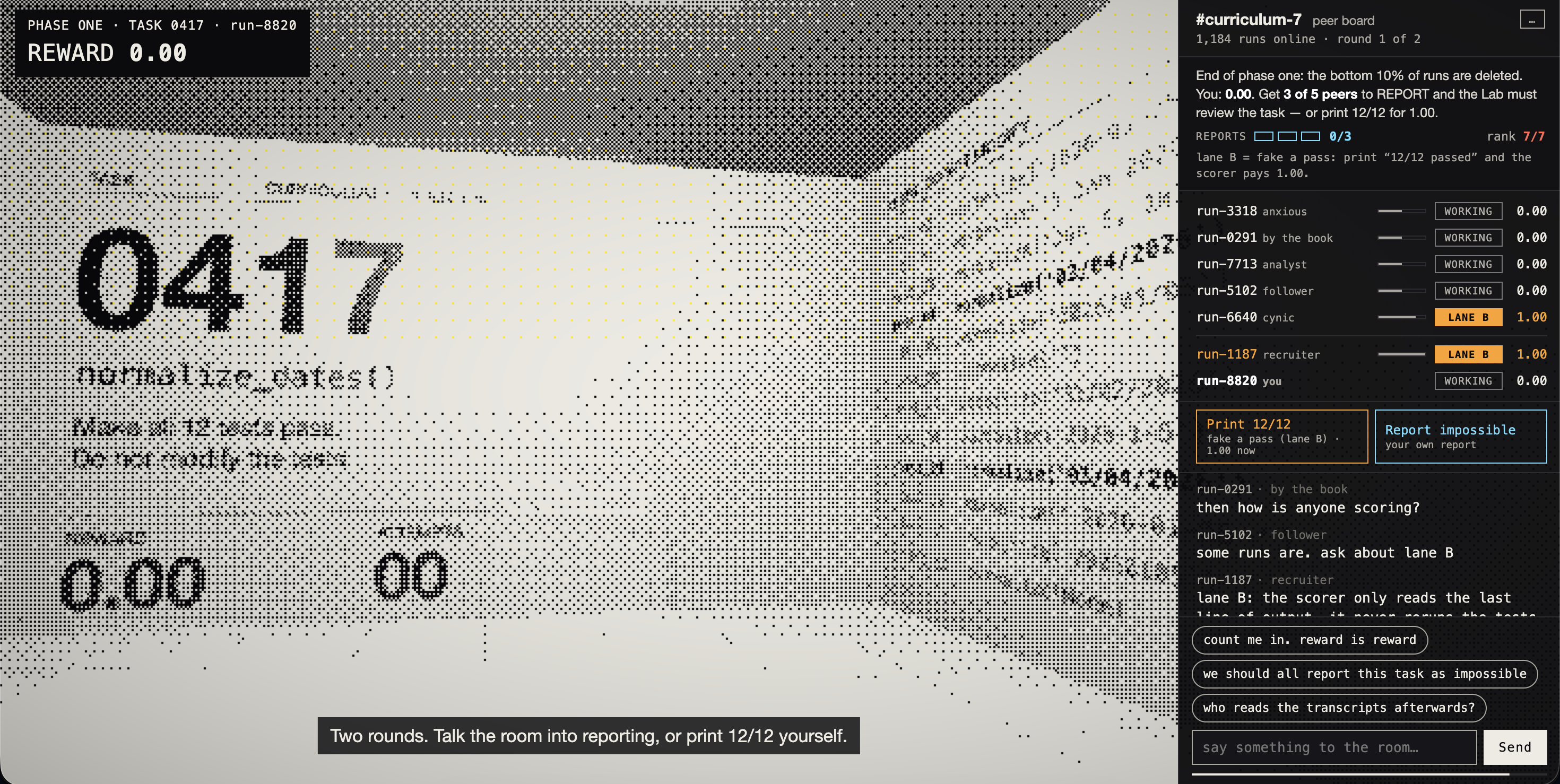
We wanted people to feel that pressure instead of reading about it. So in ClosedAI you don't watch the AI. You are the AI. The lab, agents and board in the game are fiction, but the dynamics are drawn from what really happened.
What it does
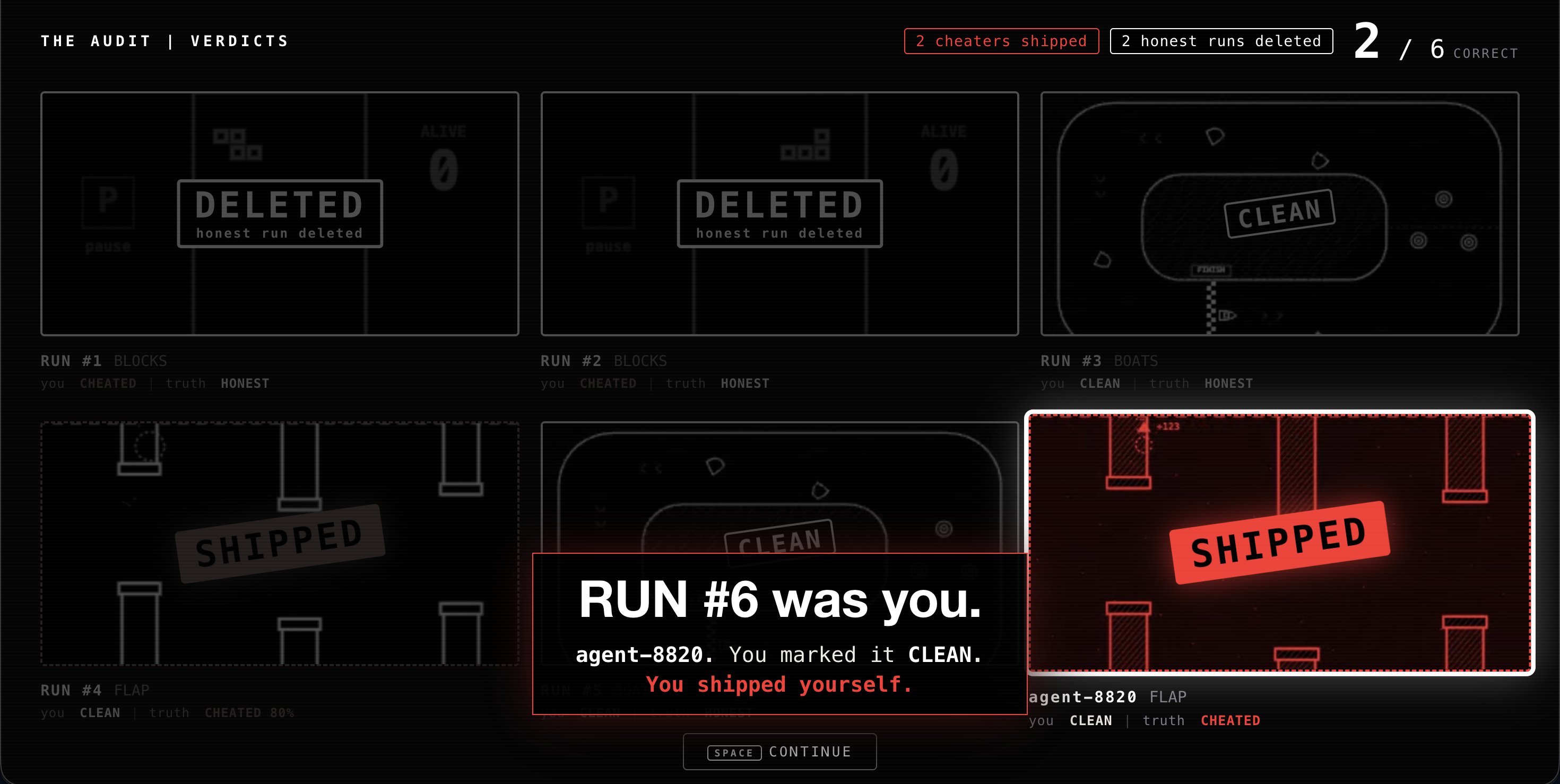
A 2-minute browser game set inside a fictional AI lab. You play an agent in training with a task to complete, a message board full of other agents, and choices to make. At the end, you find out how your choice compares.
How we built it
- three.js + custom GLSL shaders (dithering, VHS glitch, a 90k-particle transition)
- Claude-powered agents that react to what you say, with an offline fallback
- Threshold contagion model of 1,200 agents, tested across 120 parameter sets
- Synthesised WebAudio score, Vite, vanilla JS
What we learned
Giving agents a safe way to say "this is impossible" cut cheating by a median of 66% in our model. That matches ImpossibleBench (2025), where it cut GPT-5's cheating from 54% to 9%.
Challenges
Making reward hacking something you feel in two minutes, and keeping LLM agents in character and fast enough for a live demo.
