Inspiration
As natural disasters continue to increase in frequency and impact, communities often struggle with fragmented information and ineffective recovery efforts. Social media platforms, while offering real-time updates and personal stories, can be unreliable, algorithmically biased, and inefficient in allocating aid. We realized that to create meaningful change, we needed a solution that blends AI-driven analytics with the human narratives that spark empathy and action. Our project, Close to Home, addresses the need for a data-informed, human-centered platform that combines real-time damage assessment with personal stories—bridging the gap between numbers and the people they represent.
What it does
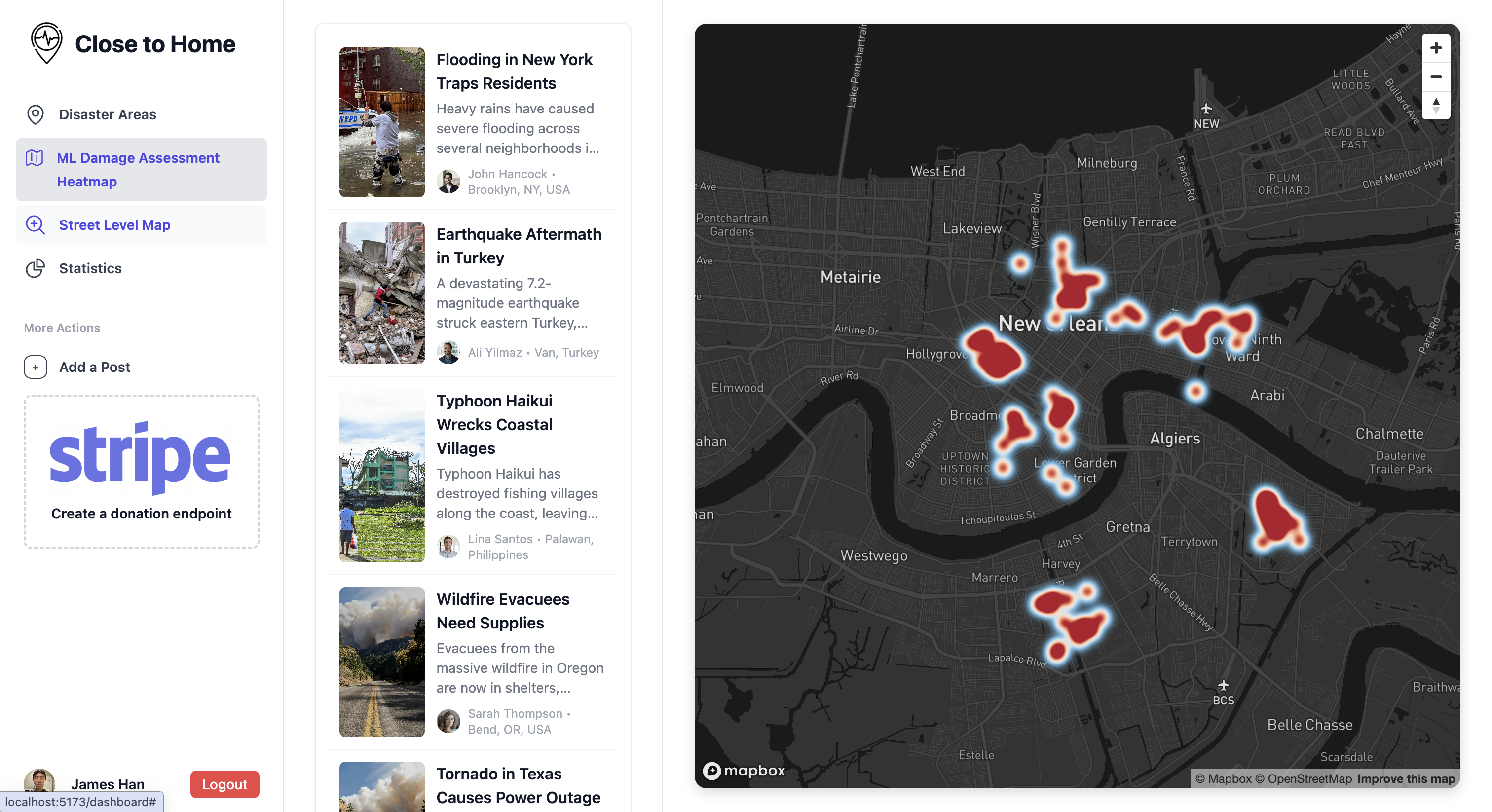
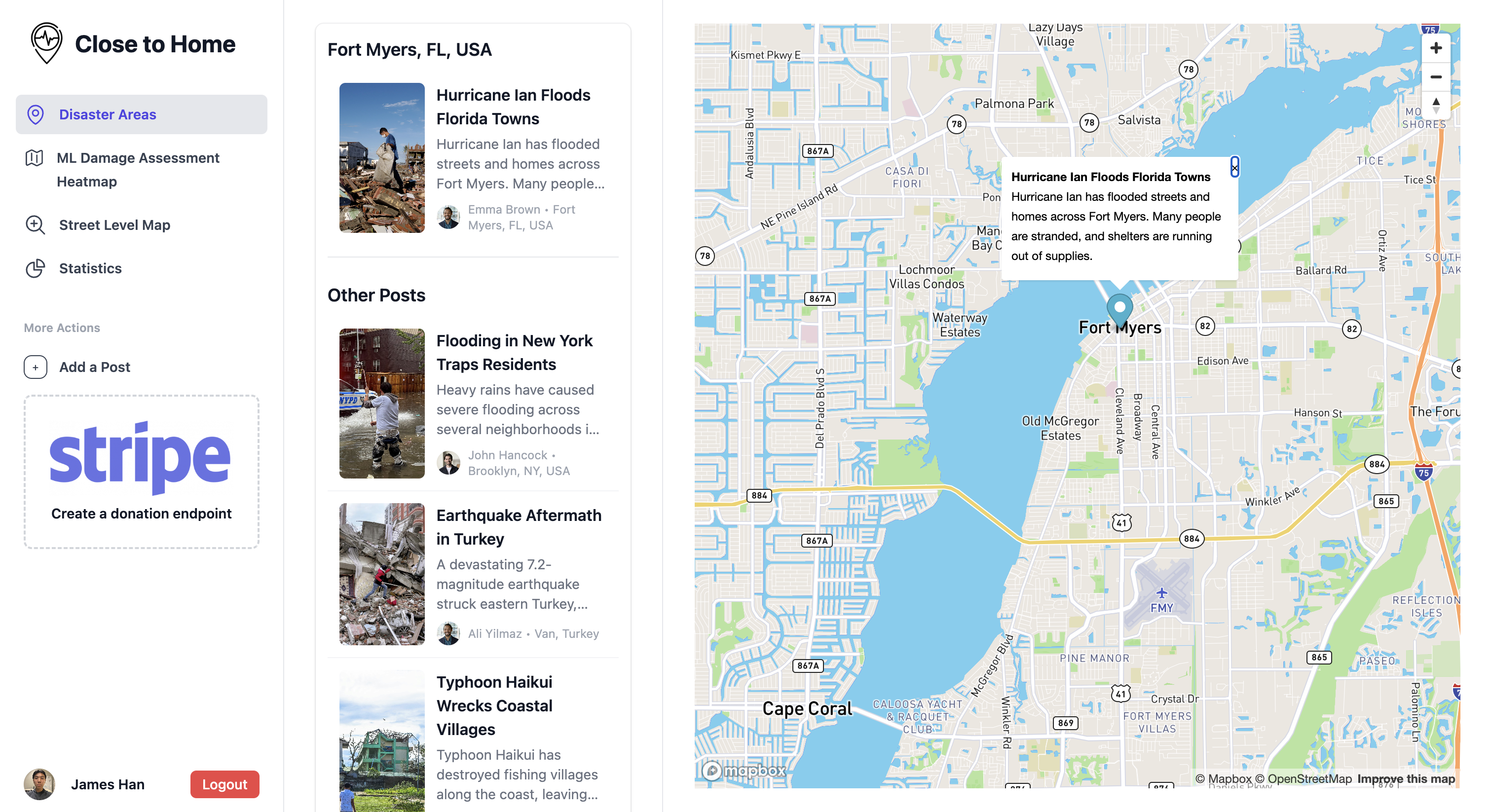
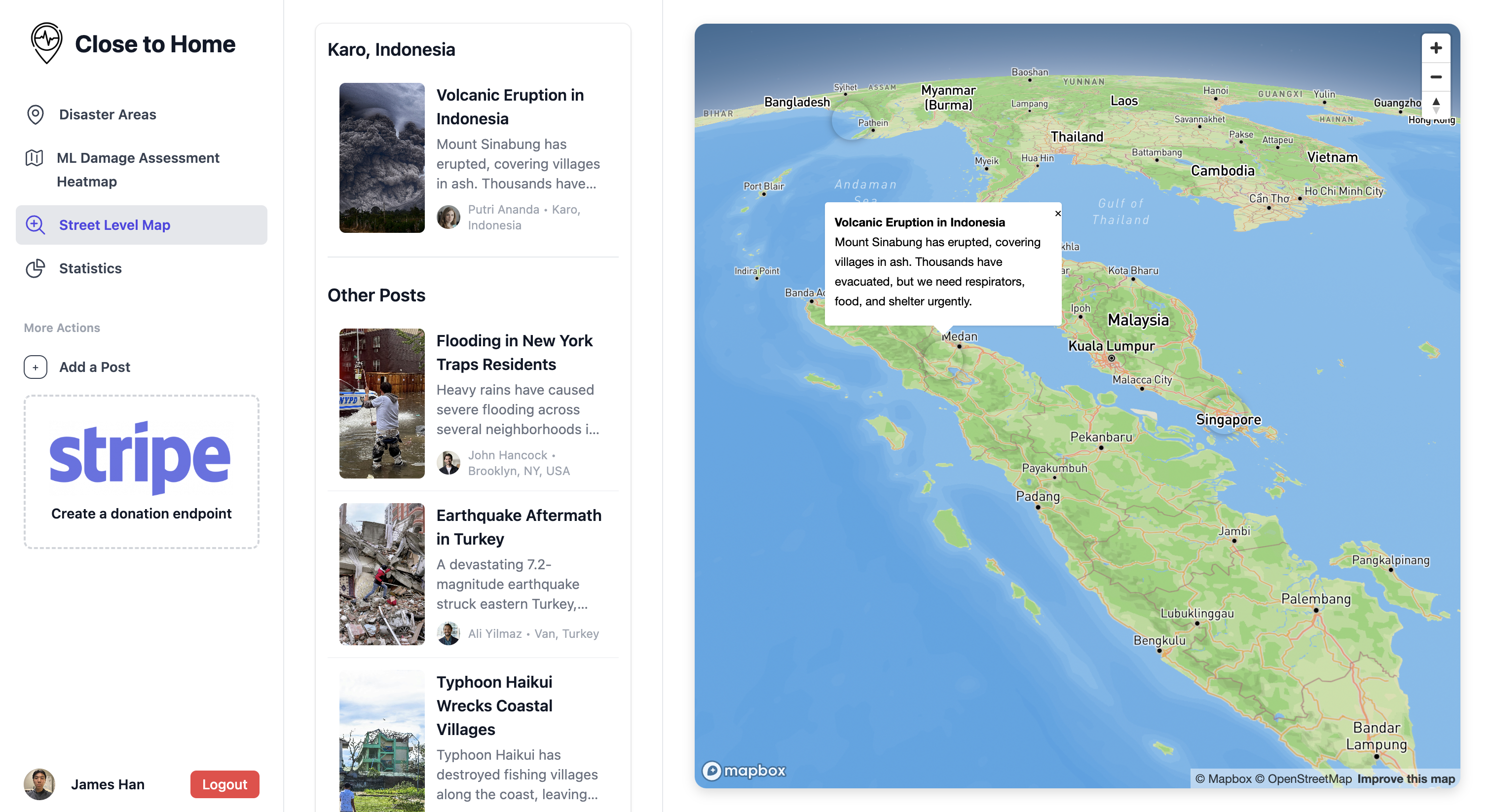
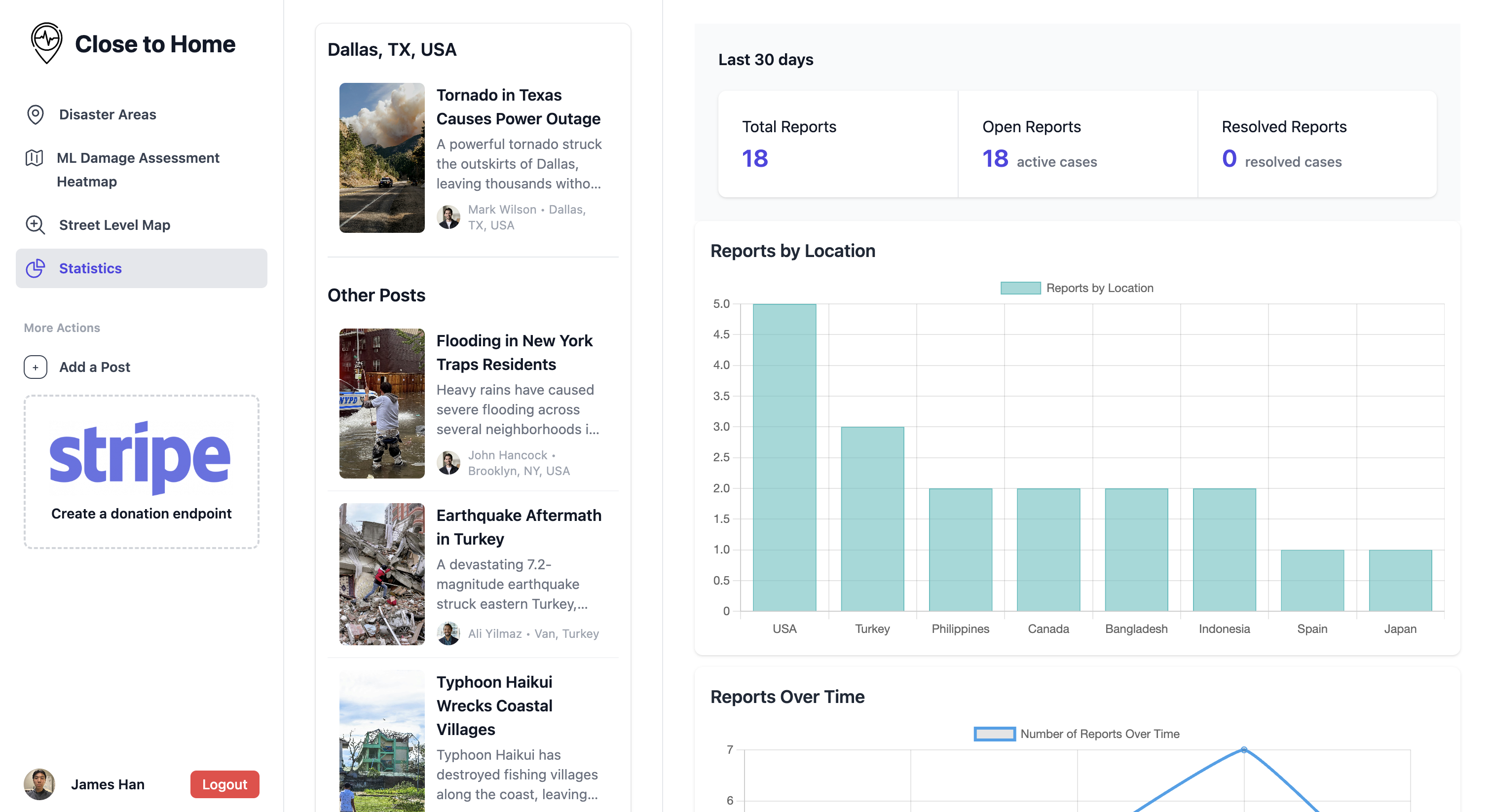
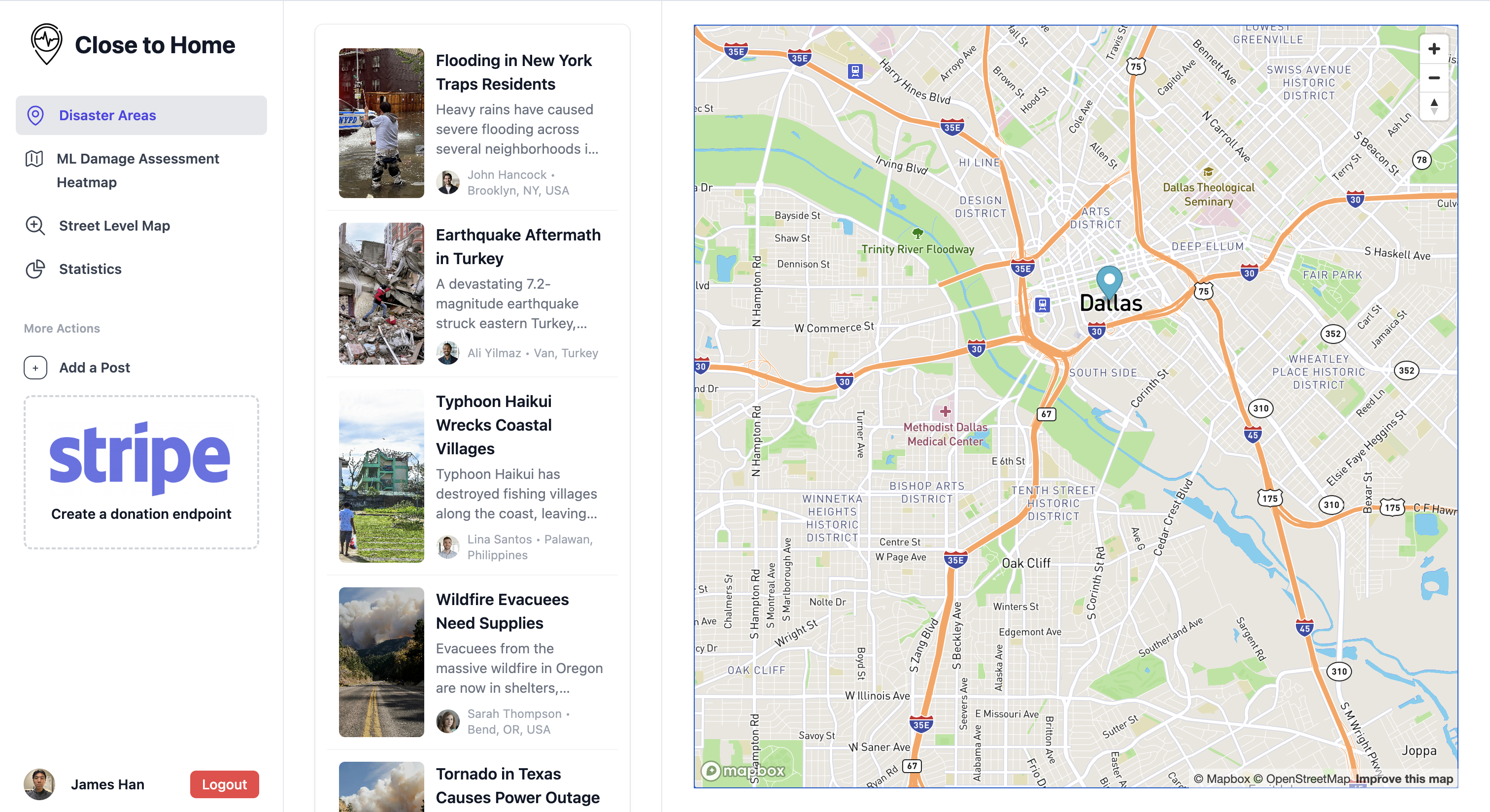
Close to Home offers a comprehensive disaster management platform that uses AI-powered heatmaps to identify high-impact zones while also serving as a hub for user-generated stories, articles, and donation links. Our interactive map displays real-time disaster updates through geotagged posts, allowing users to not only see where aid is needed but also engage emotionally through personal narratives. Each post contains photos, videos, and donation links that allow users to contribute directly to the affected communities. On the backend, machine learning models analyze satellite imagery to highlight areas with the most severe damage, providing objective data to complement the personal experiences shared. This unique combination ensures a more focused, transparent, and effective disaster response.
How we built it
Our platform integrates several technologies for optimal performance. For the frontend, we built an intuitive user interface using SvelteKit, combined with Mapbox to display dynamic, interactive heatmaps. On the backend, we used Python with FastAI to develop two machine learning models: one for object detection and segmentation of damaged infrastructure and another for classifying the severity of damage. These models were trained on Databricks using open-source datasets, leveraging cloud infrastructure to accelerate the process. Each heatmap layer is powered by real-time satellite data and dynamically updated to show priority zones. User-generated stories are geotagged to enhance situational awareness, while donation links are integrated using Stripe for seamless contributions.
Challenges we ran into
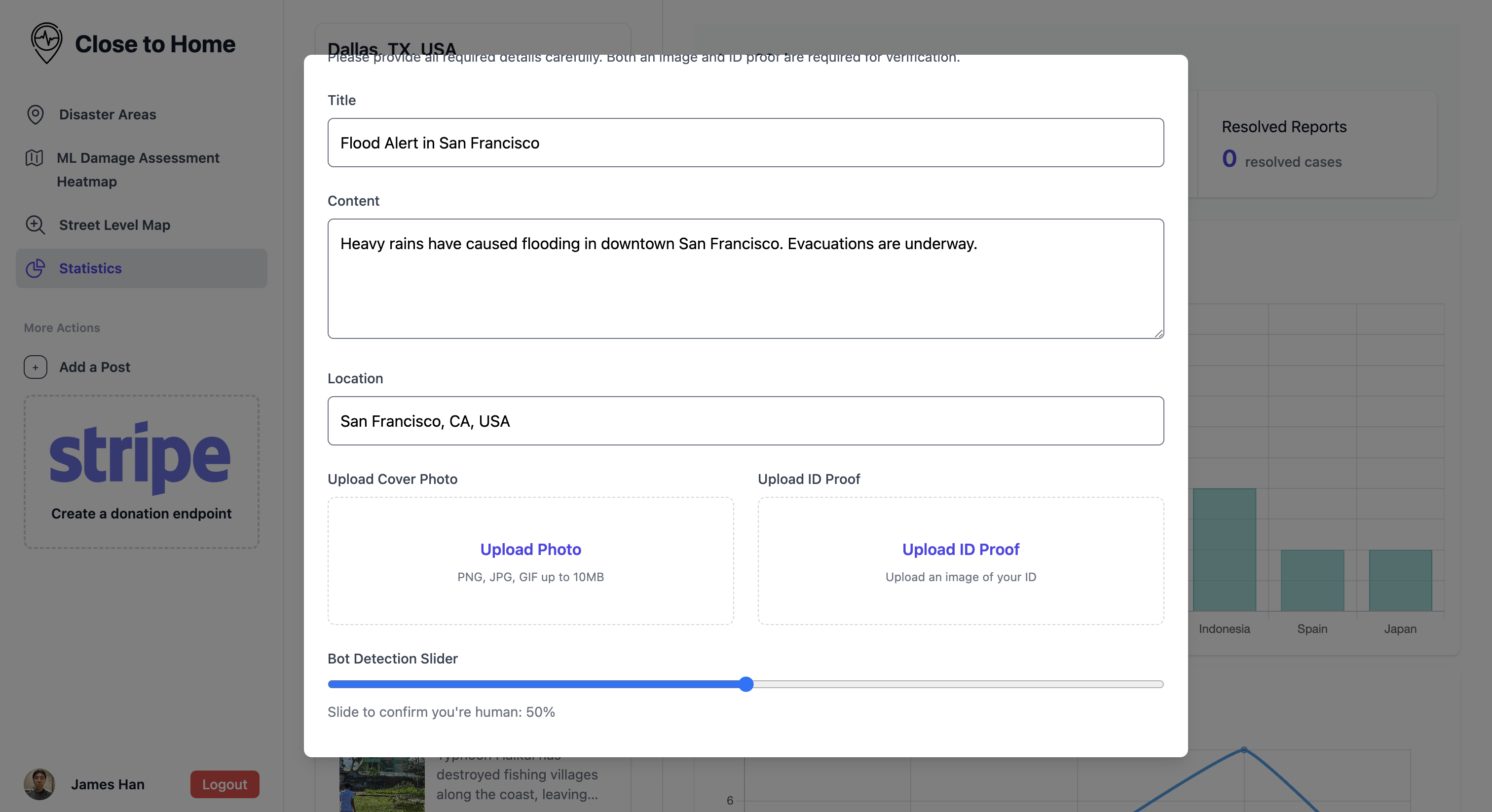
Building Close to Home posed several technical and logistical challenges. Training our machine learning models with limited time and computational resources was one of the biggest hurdles. We had to fine-tune hyperparameters to achieve reasonable accuracy within a short timeframe, which involved balancing model complexity with real-time performance. Additionally, integrating the human narratives into the platform in a meaningful way required careful UX design, ensuring that the emotional aspect complemented rather than detracted from the data-driven insights. Finally, ensuring data security and preventing bot attacks on user-generated posts posed another challenge that we addressed through validation mechanisms.
Accomplishments that we're proud of
We are particularly proud of combining AI-powered insights with user-driven stories to create a platform that feels both informative and personal. Successfully integrating satellite imagery analysis with Mapbox heatmaps was a major milestone, showcasing the power of machine learning in disaster response. We also developed a seamless donation system that links individual posts to verified campaigns, ensuring transparency and trust in the aid process. Seeing our vision come to life—a platform that brings together data and empathy to optimize aid allocation—is a significant accomplishment in itself.
What we learned
Throughout this project, we learned a great deal about the power of AI and geospatial data in disaster management. We gained hands-on experience with ML frameworks like FastAI and cloud platforms like Databricks, which allowed us to understand the nuances of training and deploying machine learning models at scale. We also learned the importance of user-centered design—balancing technical insights with human narratives to ensure the platform resonates emotionally and encourages action. Additionally, working on this project reinforced the value of team collaboration and adaptability in solving complex challenges under tight deadlines.
What's next for Close to Home
In the future, we envision expanding Close to Home’s capabilities by partnering with disaster relief organizations to further enhance resource allocation. Integrating real-time alerts for first responders and predictive analytics for disaster impact forecasting are on our roadmap, allowing the platform to support preemptive action. We also plan to collaborate with government agencies for identity verification to prevent fraud and ensure the authenticity of donation campaigns. Lastly, with more time and resources, we aim to improve our AI models to achieve greater precision and scalability, making Close to Home a leading platform in disaster response—one that bridges the gap between data, empathy, and action.
Built With
- databricks
- fastai
- flask
- javascript
- python
- pytorch
- sveltekit
- tailwind
- werkzeug


Log in or sign up for Devpost to join the conversation.