Inspiration
Month-end close is a deadline repeated twelve times a year. The work already lives in tickets and pages, but the status lives in spreadsheets and the explanations of why accounts moved (flux commentary) are written from scratch every month. Close Context puts the close status, the blockers and the commentary where the team already works.
What it does
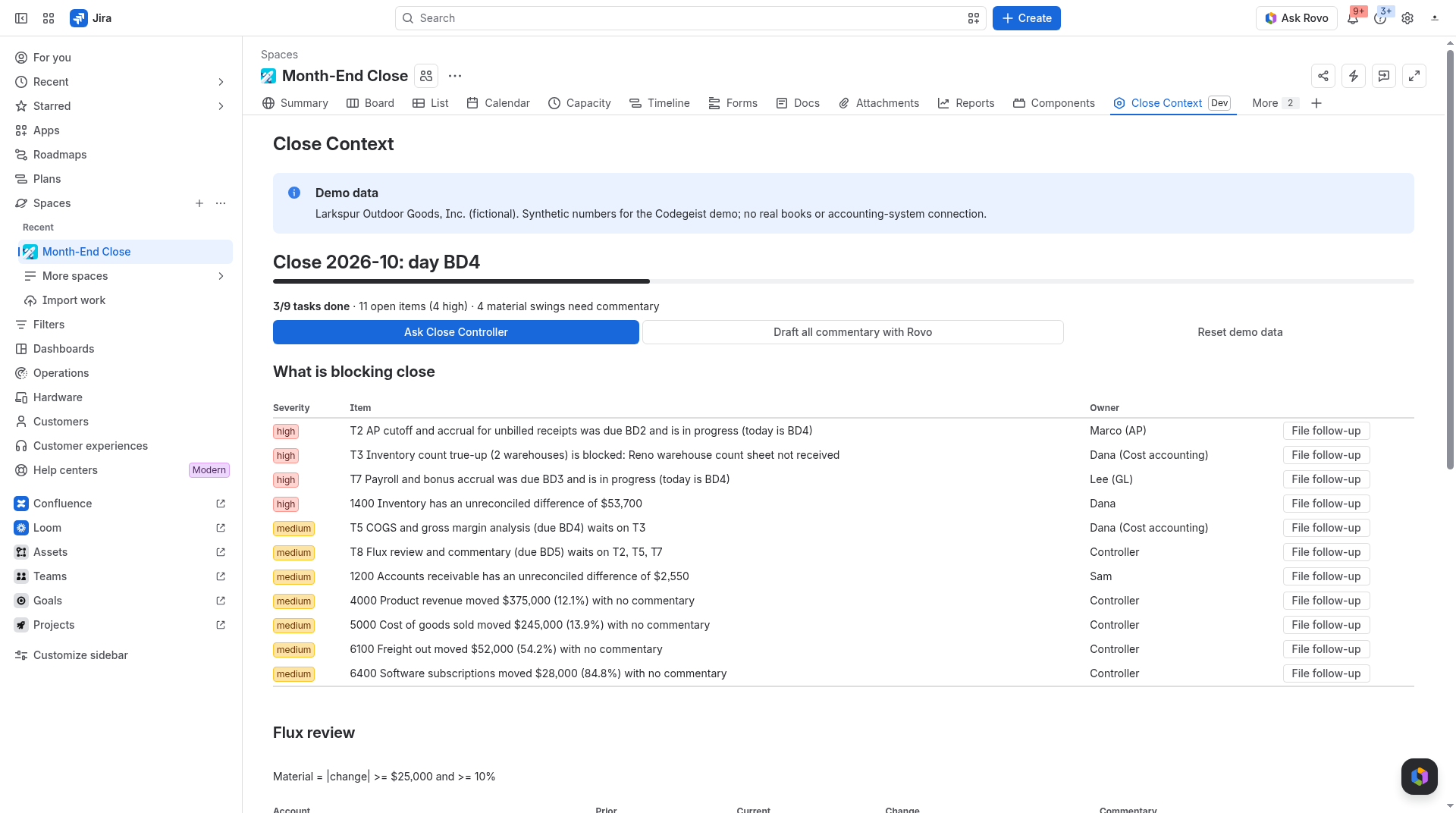
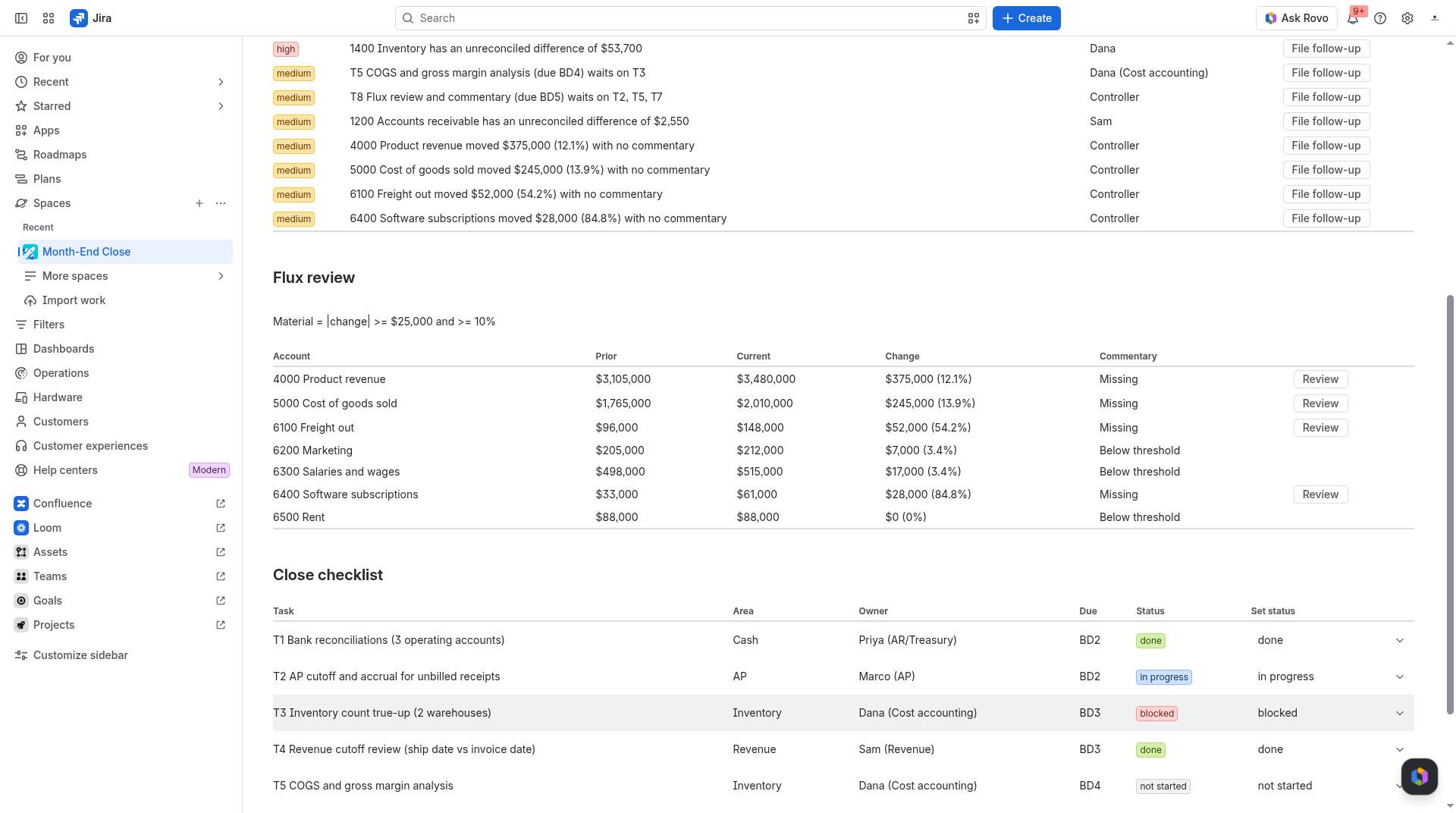
- Close room (Jira project page): progress by business day, a ranked list of blockers (blocked or overdue tasks, open dependencies, unreconciled differences, material swings with no commentary), a flux table with review and approve, and the close checklist.
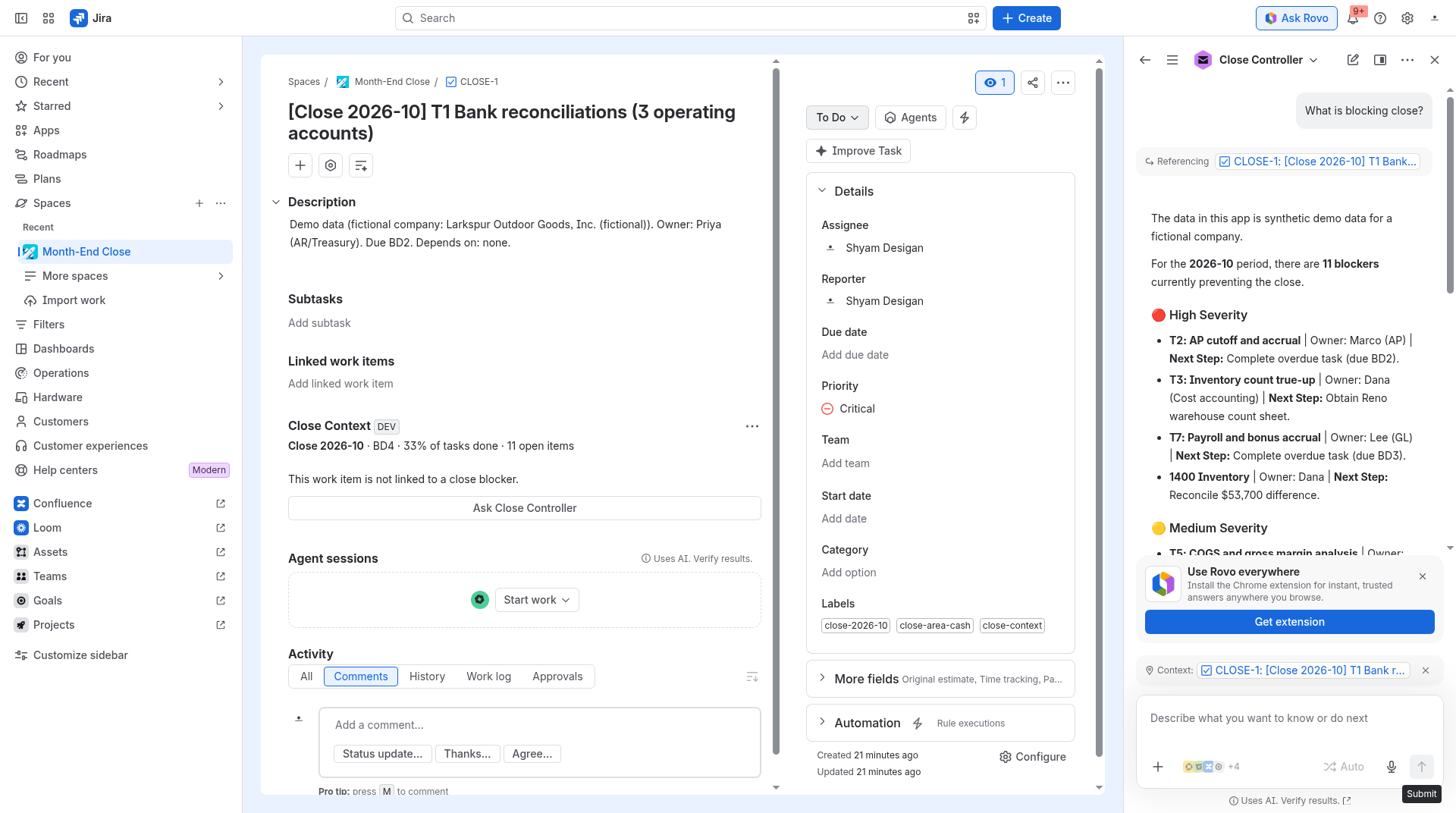
- Close Controller (Rovo agent): answers "what's blocking close?", drafts flux commentary using only the drivers the team recorded (and says "driver needed" when there isn't one), saves drafts for human approval, and files follow-up Jira work items for a blocker.
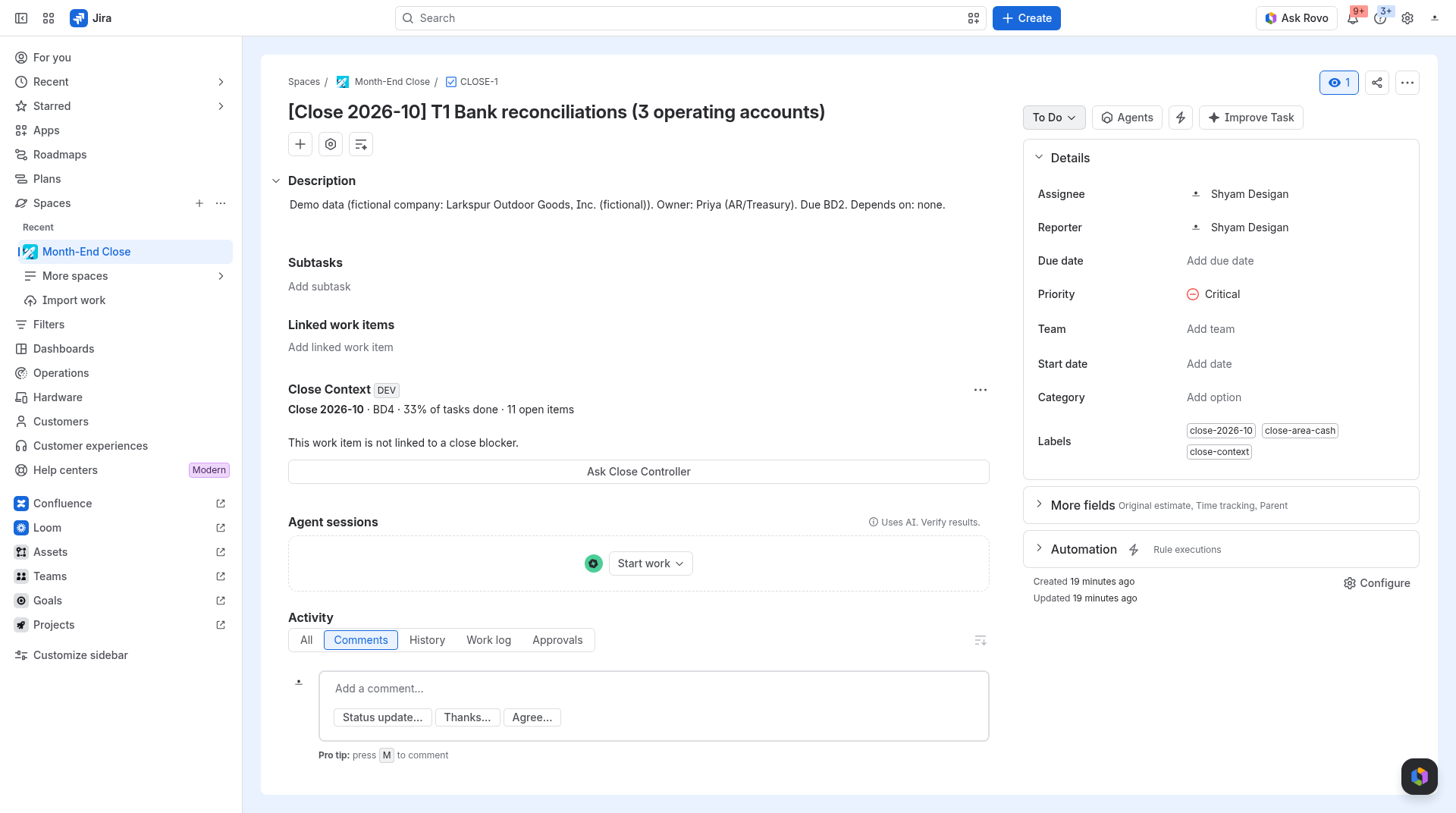
- Issue panel: shows whether a work item is blocking close.
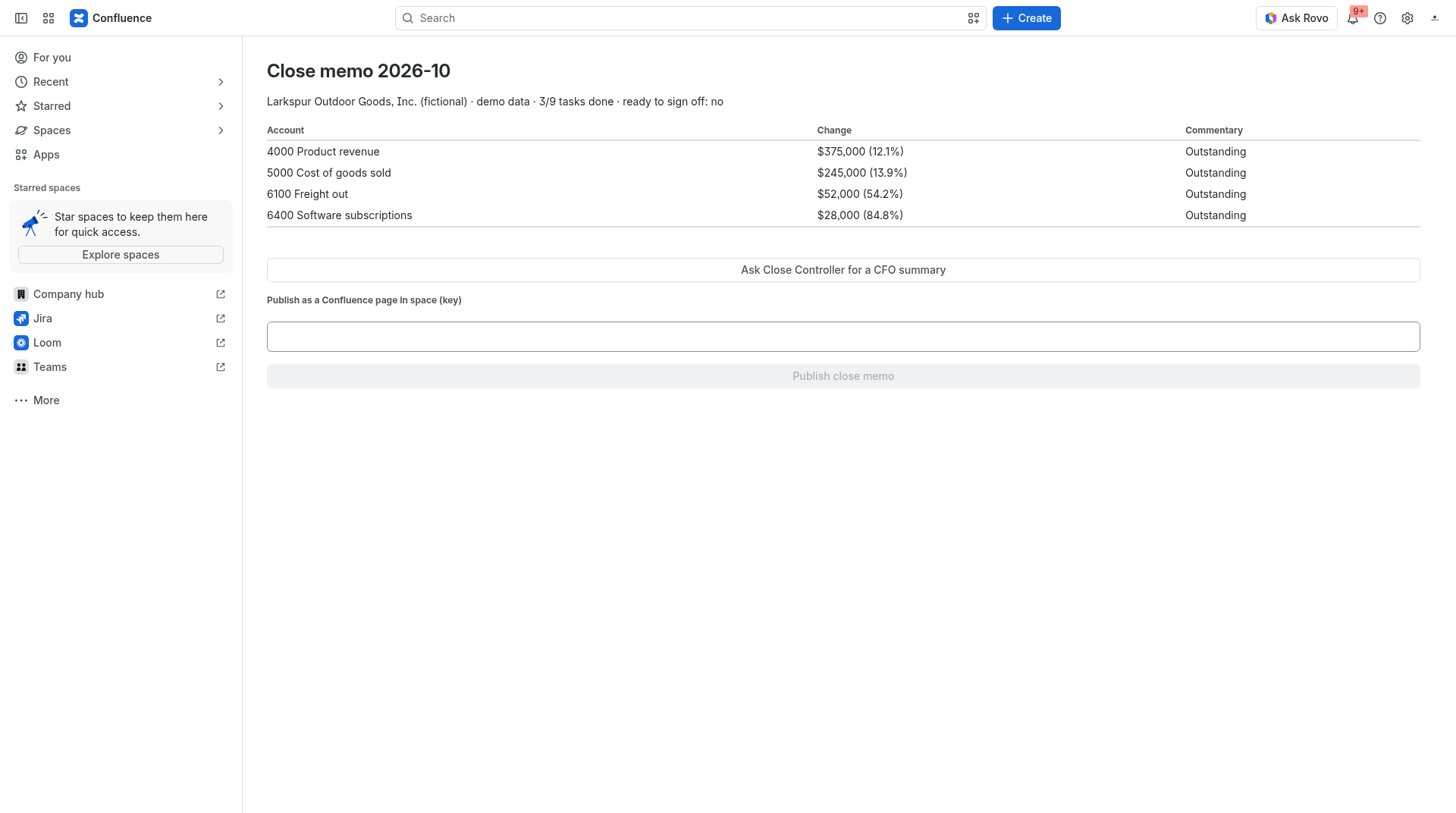
- Close memo (Confluence global page): collects material swings and commentary and publishes a memo page.
- MCP tools and Teamwork Graph: the same actions are exposed through
rovo:mcpfor other agents (with askill.md), and owner workload comes from the Teamwork GraphatlassianUserAssignedJiraWorkItemscurated query.
The demo uses synthetic data for a fictional company. There is no connection to real books or an accounting system.
How we built it (Forge requirement)
Close Context is a new Forge app with a manifest.yml and these modules: jira:projectPage,
jira:issuePanel, confluence:globalPage (all UI Kit), rovo:agent, seven action modules,
and rovo:mcp. Backend functions run on the Forge Node.js runtime and store close data in Forge
KVS. Jira, Confluence and Teamwork Graph calls run as the user (api.asUser()). Close logic is pure
JavaScript with unit tests; action handlers are tested with Forge APIs mocked.
Challenges
- Keeping an LLM honest about numbers: commentary starts from a deterministic draft and is always saved unapproved; drivers come only from recorded data.
- Inputs from the agent are treated as untrusted (project key and blocker refs are validated and fall back to the Jira context).
Accomplishments
Verified on a live Atlassian developer site (Nov 13, 2026), not just in tests:
- The close room, issue panel and Confluence memo all load and run on the deployed app.
- Close Controller answered "What is blocking close?" in Rovo by calling the app's action: 11 blockers by severity with owners and next steps, and "not ready for sign-off".
- The agent drafted commentary for revenue, cost of goods sold and freight using only the drivers recorded for those accounts, and said software subscriptions still needs a driver instead of guessing. Its drafts were saved unapproved; the freight commentary was then approved by the signed-in user in the close room.
- Filing a follow-up from the close room created a labeled Jira work item (CLOSE-10), and its issue panel showed it as blocking close.
- The Confluence memo page published a close memo page into a space.
- 21 unit and action tests;
forge lintclean; deployed to development and production.
What we learned
- Forge storage is partitioned per Atlassian app unless the manifest declares multi-app compatibility. Our first live memo showed every swing as "Commentary outstanding" even though the Jira close room showed freight as approved, because Confluence had its own copy of the data. Declaring Jira as required and Confluence as optional gives one installation and one store; the memo now matches the close room.
- With
"type": "module"in package.json, the Forge bundler loads Forge's CommonJS packages differently, and the first live run crashed on load. Tests with mocks didn't catch it; a live run did. - Agents need guardrails in the data, not only the prompt: the draft action returns the account's recorded drivers, and agent-written text is always saved unapproved.
What's next
Importing a trial balance from a CSV, multi-entity closes, and scheduled Rovo automation that posts the blocker summary each morning of close.
Built With
- confluence
- forge
- javascript
- jira
- mcp
- node.js
- rovo
- teamwork-graph
- ui-kit