-
-
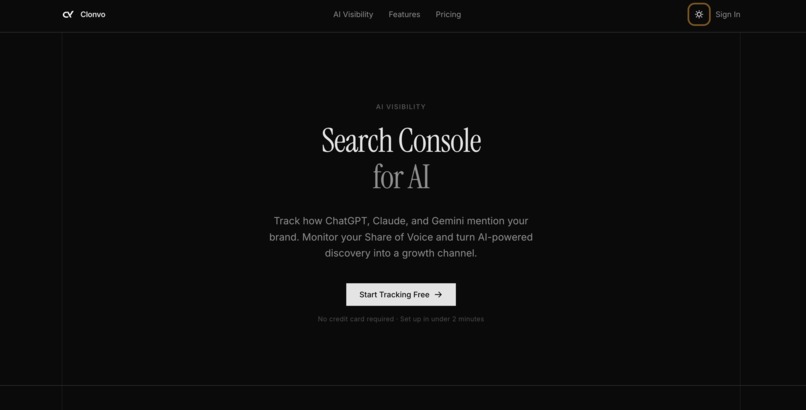
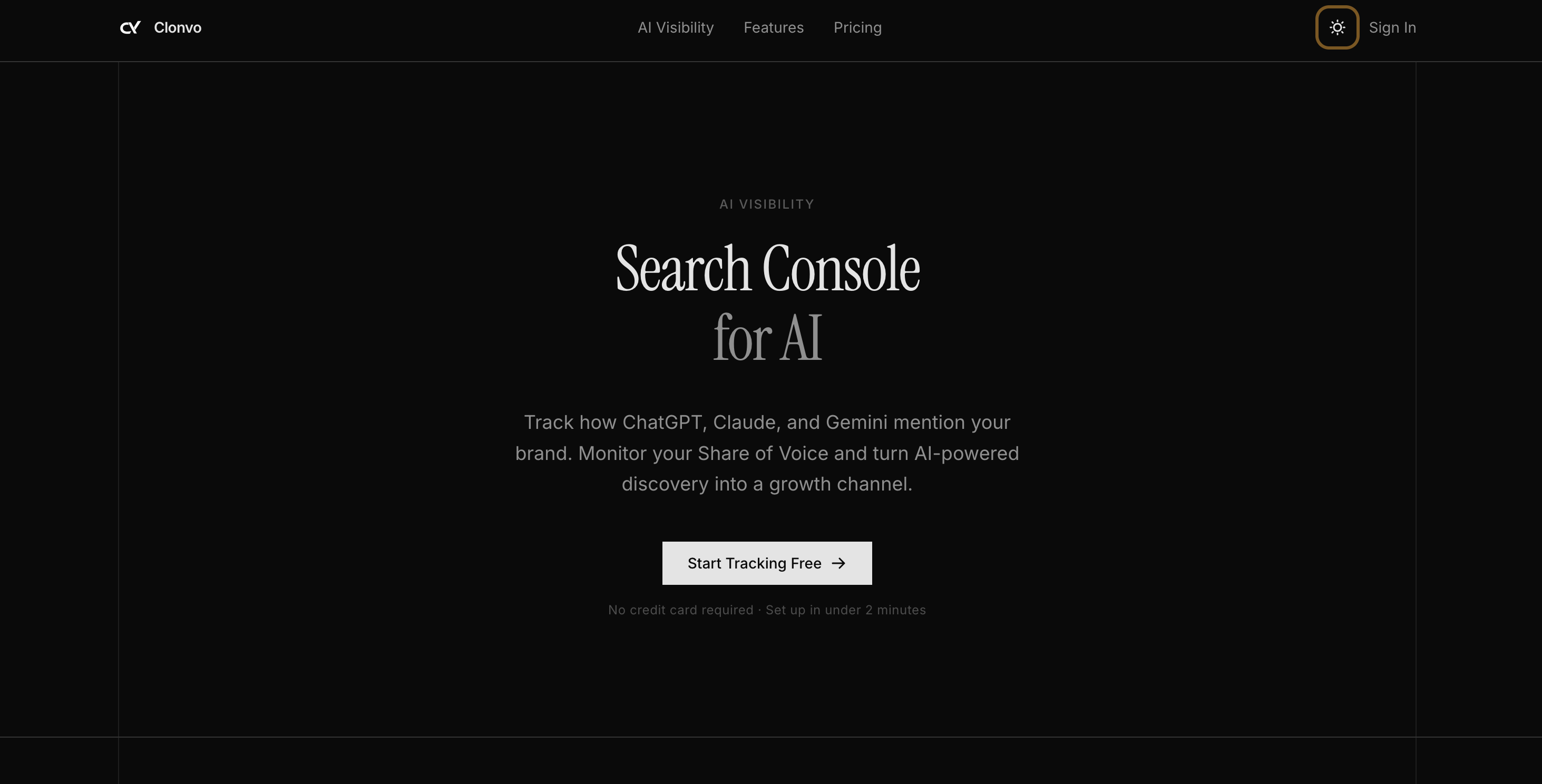
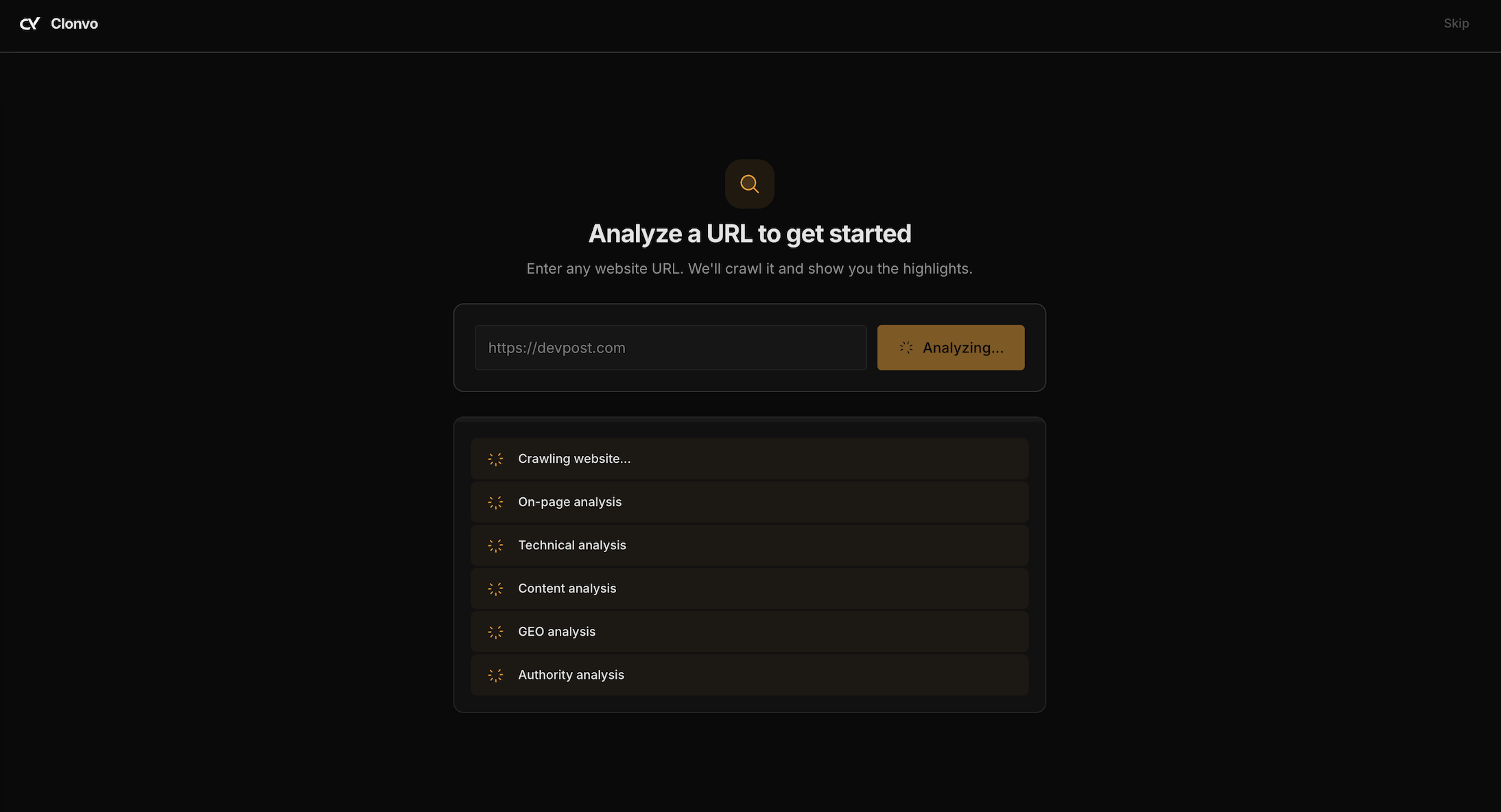
landing page
-
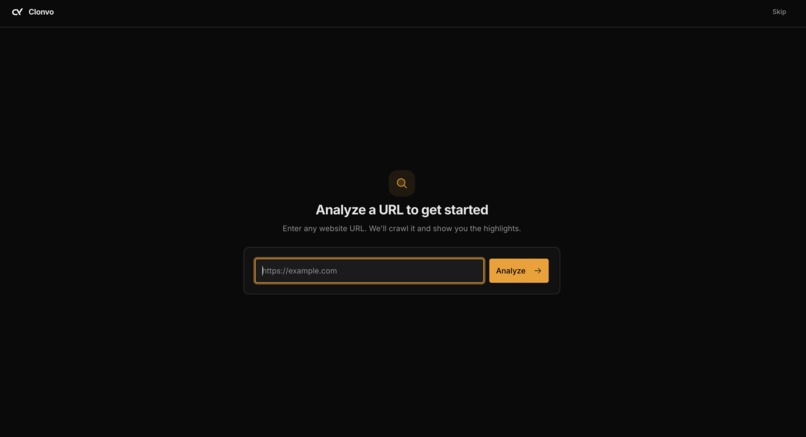
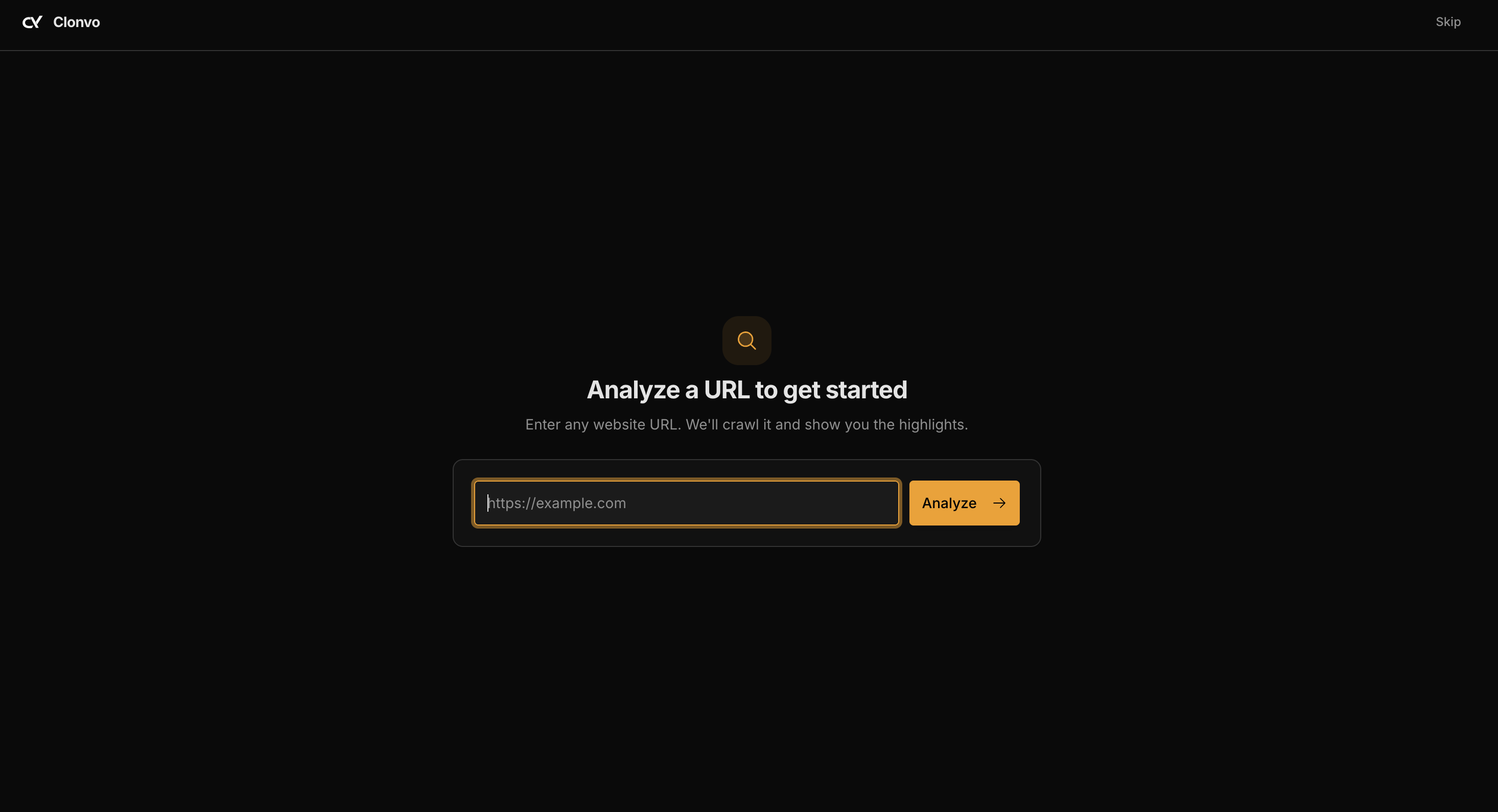
give URL for inspection
-
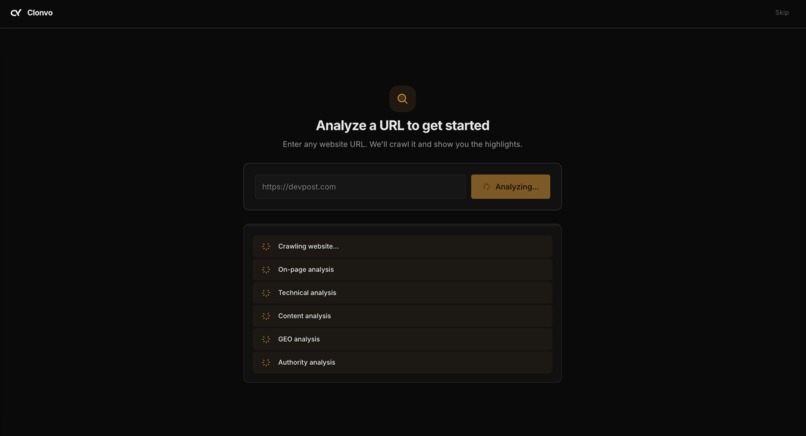
inspecting url for details
-
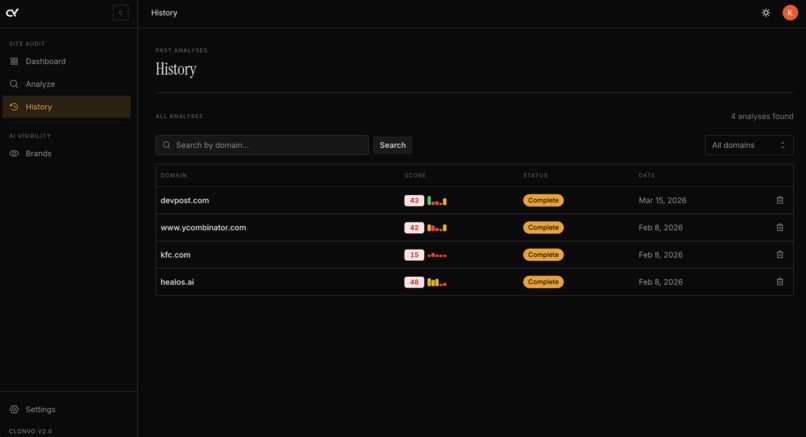
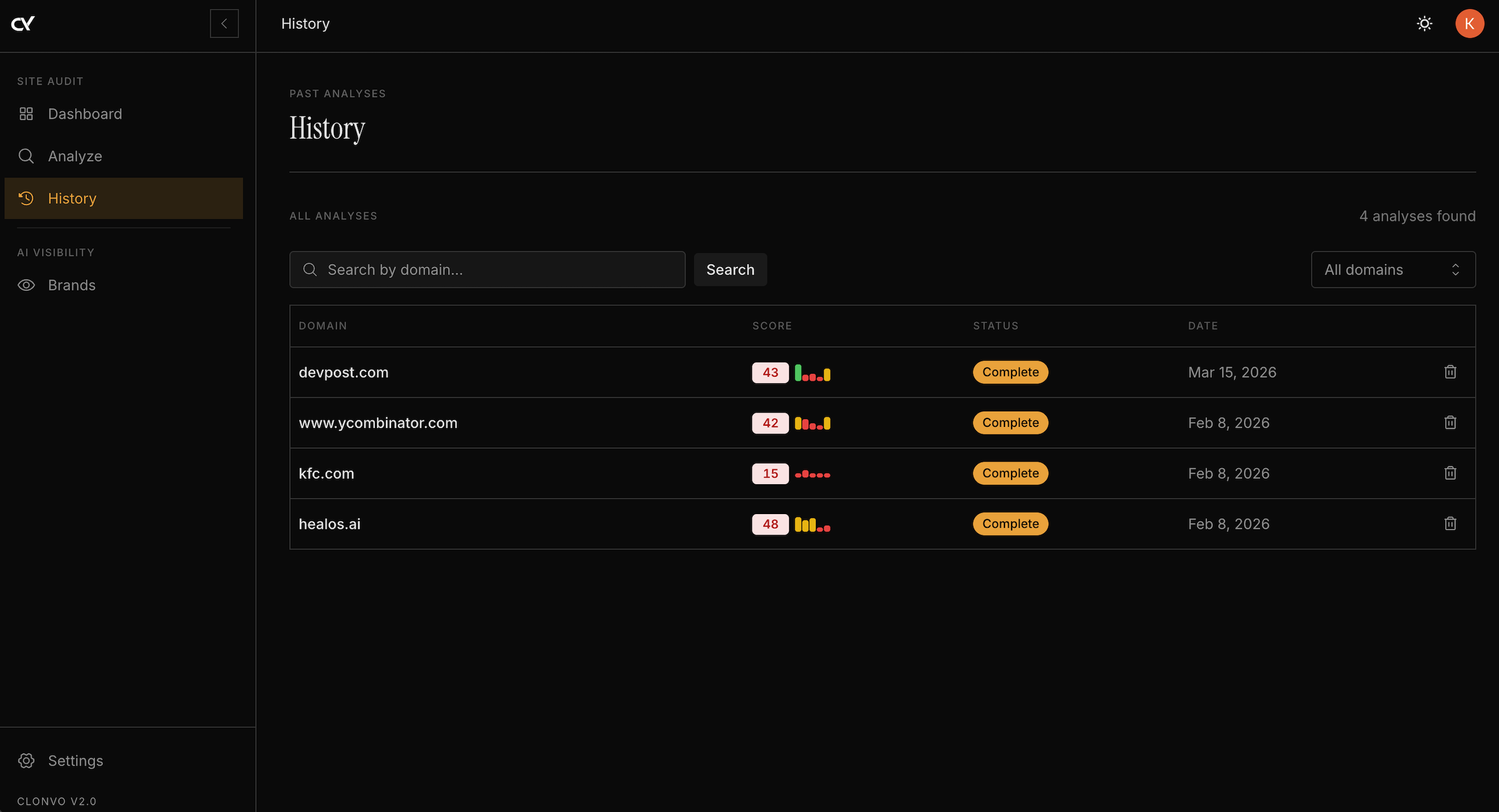
history of url reports
-
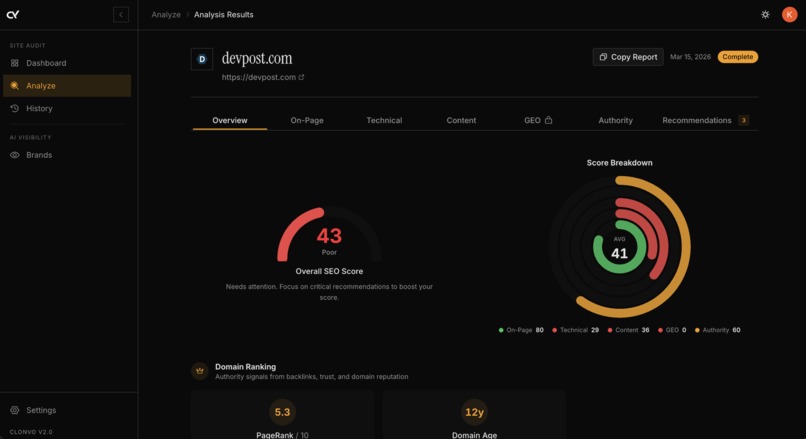
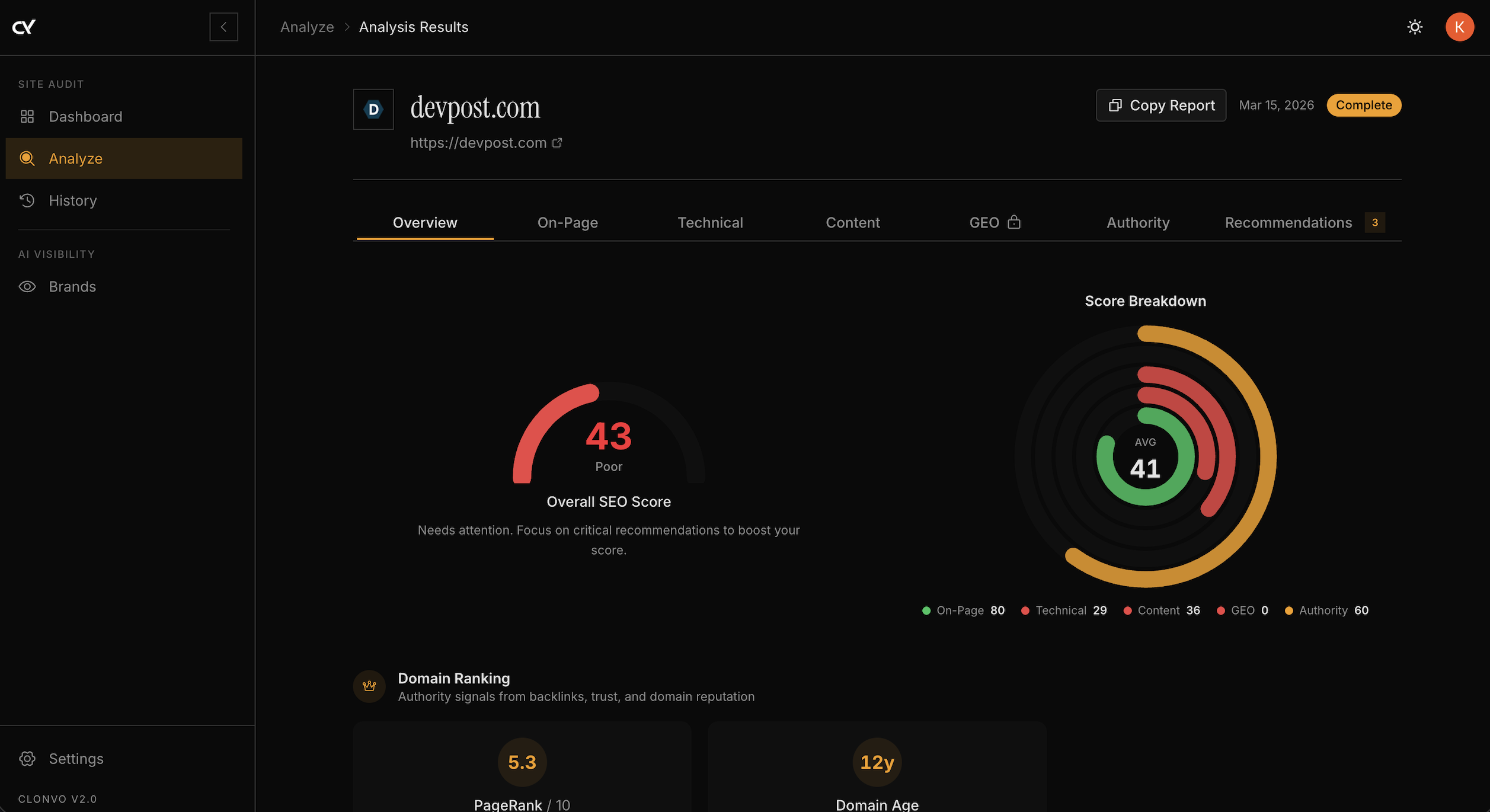
full report
-
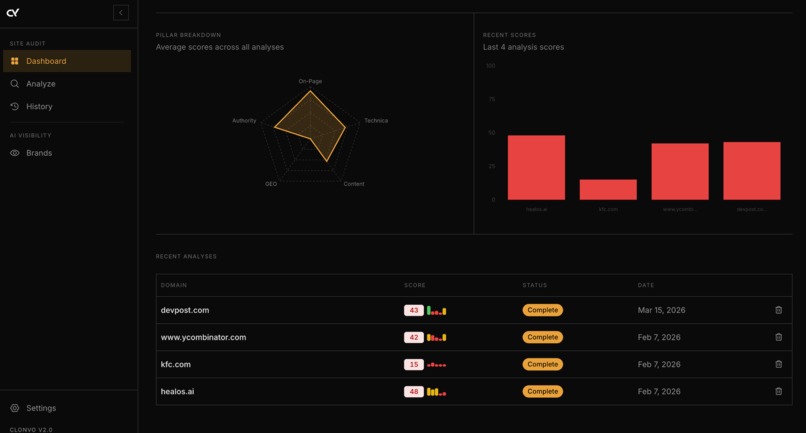
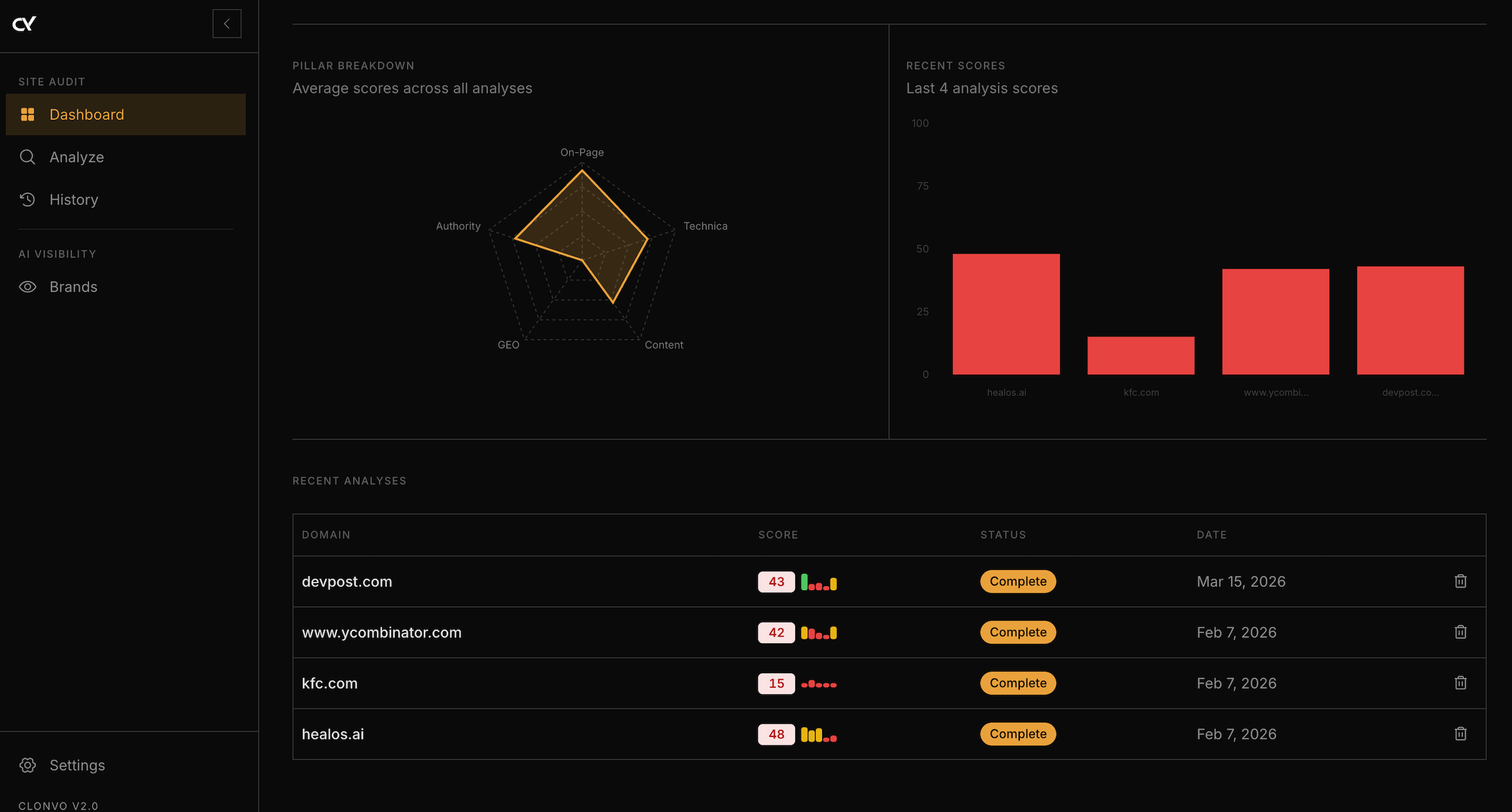
dashboard
About the Project
What Inspired Me
For years, SEO has been a single-player game focused entirely on Google. But the sudden rise of generative AI search engines—like Perplexity, ChatGPT, and Claude—is fundamentally shifting how users discover content.
I realized there was a massive gap in the market: traditional SEO tools simply don’t measure how well content is optimized for Large Language Models (LLMs). I wanted to build a platform that treats AI search as a first-class citizen. My goal was to unify traditional SEO and Generative Engine Optimization (GEO) into a single, concrete platform that turns vague AI research into an actionable, quantitative score. That is how Clonvo was born.
What I Learned
Building a production-ready application taught me how to bridge the gap between abstract AI theory and deterministic software engineering:
- Decoding GEO Principles: I learned how AI citation patterns drastically differ from traditional keyword rankings. I had to figure out how to programmatically measure things like citable answer block density, link-free capsules, and AI crawler accessibility (like
llms.txt). - Mastering the Modern Stack: I deepened my expertise in Next.js 16 and React 19, specifically leveraging React Server Components and Server-Sent Events (SSE) to handle long-running, asynchronous tasks without blocking the UI.
- Resilient Data Pipelines: I learned how to orchestrate multiple external APIs in parallel and handle partial failures gracefully so that a single timeout doesn't crash the entire user experience.
- Database Architecture & Gating: I learned how to design a scalable database schema using Drizzle ORM to soft-gate premium features—storing complete analysis data on the backend, but safely stripping restricted fields at the API layer for free-tier users.
How I Built It
Clonvo is not a fragile prototype; it is built on a resilient, scalable Next.js architecture. The core pipeline follows a strict Crawl → Parse → Audit → Score → Recommend flow:
- The Crawler Engine: An SSRF-protected fetcher that validates URLs, blocks private IP ranges, enforces a 5MB payload limit, and securely handles redirects.
- Data Extraction: Using Cheerio, the system parses the raw HTML to extract over 100 data points (meta tags, heading hierarchies, schema.org JSON-LD, etc.).
- Parallel API Execution: To keep the tool lightning-fast, I use
Promise.allSettledto simultaneously hit Google PageSpeed, Open PageRank, the Wayback Machine CDX, and DataForSEO. - The Five Audits: The extracted data is run through 95 distinct checks categorized into five pillars: On-Page, Technical, Content, GEO, and Authority.
- Weighted Scoring Algorithm: I engineered a composite scoring system to give users an at-a-glance health metric. The math behind the overall score is calculated as:
$$Score_{overall} = (0.25 \times OnPage) + (0.25 \times Technical) + (0.20 \times Content) + (0.15 \times GEO) + (0.15 \times Authority)$$
- Actionable Recommendations: Every failed check dynamically generates a prioritized recommendation card, sorted by a custom severity and impact matrix.
- Real-Time UI: Instead of making users wait at a loading screen, I implemented Server-Sent Events (SSE) to stream the analysis progress live to the client dashboard.
Challenges I Faced
Building a tool that crawls arbitrary, user-submitted URLs introduces massive security and stability risks. Here is how I solved the core engineering hurdles:
| The Challenge | My Approach |
|---|---|
| SSRF Vulnerabilities | I built a custom validation layer that strictly blocks localhost/private IPs and aggressively re-checks DNS resolution on every single redirect hop. |
| Third-Party API Instability | Since Clonvo relies on multiple external APIs, a timeout could ruin an audit. I wrapped all external calls in a Promise.allSettled block, allowing the core Cheerio parser to finish the audit even if an external API degraded. |
| Quantifying "GEO" | Turning qualitative AI research into code was tough. I had to build custom parsers to count specific HTML patterns (like 20–35 word "capsules" and structured data arrays) to map abstract AI concepts into a strict 0–100 score. |
| Plan Gating Logic | To allow users to upgrade and immediately see historical premium data, I designed the backend to always run a full 95-point scan. A custom stripRestrictedData() utility ensures Free users only receive partial JSON payloads until they upgrade via Polar. |
| Abuse & Rate Limiting | To protect my database and API quotas, I implemented strict user-based rate limiting (5 scans/minute) alongside a 30-day rolling scan quota tied to their subscription tier. |
Built With
- anthropic
- app-router
- bun
- cheerio
- clerk
- css
- dataforseo
- drizzle
- icons
- insights
- machine
- migrations
- neon
- next-themes
- next.js
- openai
- openpagerank
- orm
- pagespeed
- phosphor
- polar
- postcss
- postgresql
- radix
- react
- recharts
- shadcn/ui
- svix
- tailwind
- technology
- typescript
- ui
- wayback
- zod


Log in or sign up for Devpost to join the conversation.