-
-
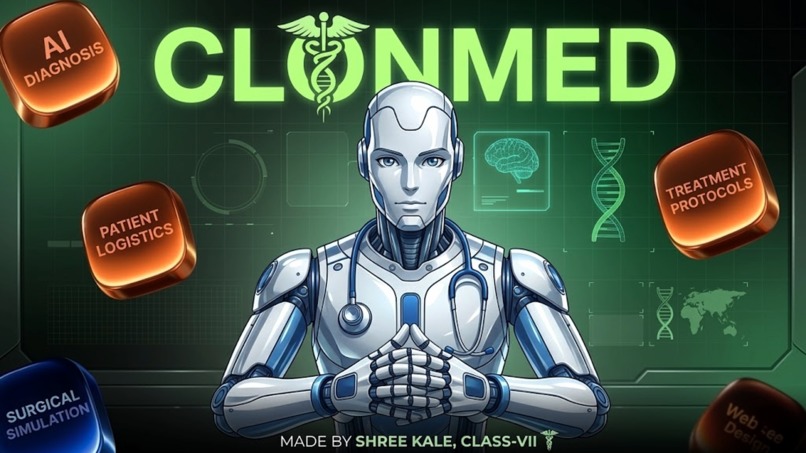
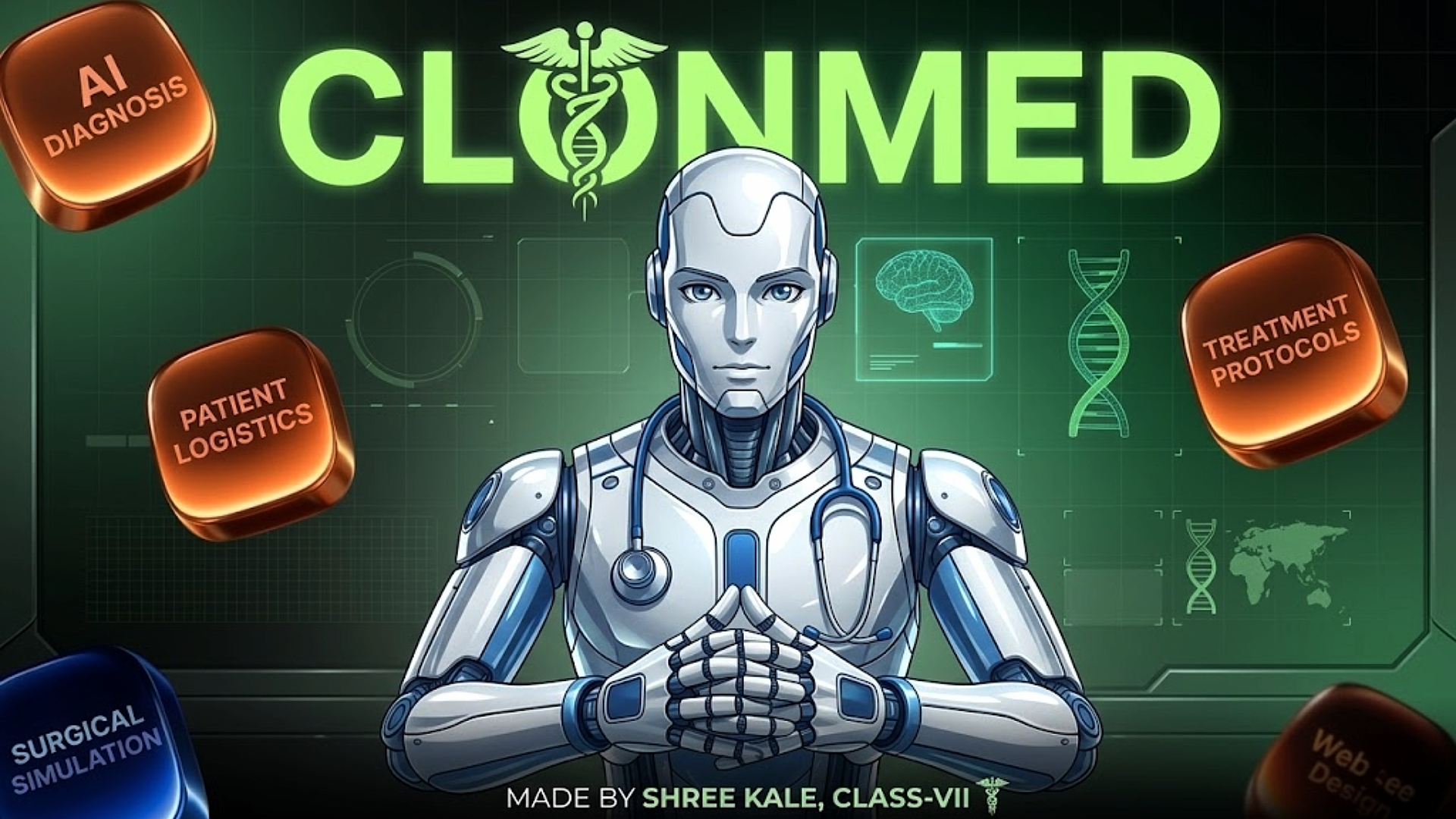
ClonMed is out now
-
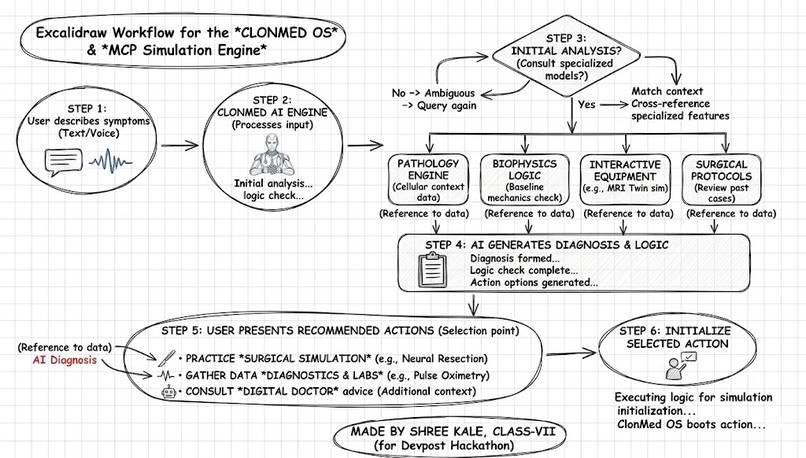
Workflow
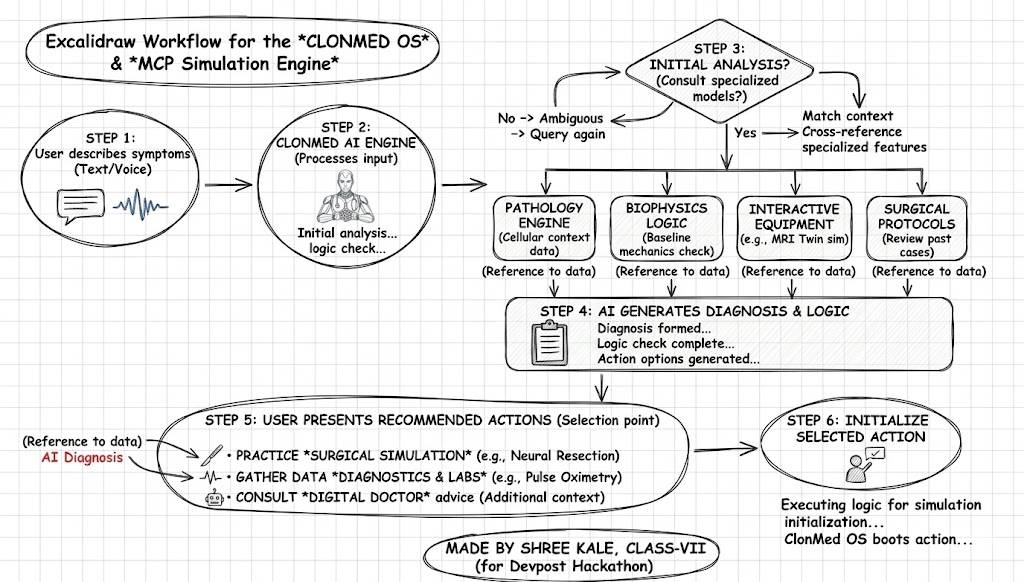
🧬 Inspiration Medical education is stuck in the era of static textbooks and 2D diagrams. While AI agents are becoming incredibly smart at talking about medicine, they lack a "body"—a way to visually execute and simulate procedures. We were inspired to build Clonmed to bridge the gap between AI intelligence and clinical reality. We wanted to create an environment where an AI isn't just an advisor, but a practitioner capable of launching high-fidelity biophysics and surgical simulations on demand.
🩺 What it does Clonmed is a comprehensive medical operating system and simulation engine. It features a massive library of over 100+ interactive, mathematically accurate laboratories built on the Model Context Protocol (MCP).
For Students: It provides a "Clinical Minimalist" dashboard to practice everything from Neural Resection to Vascular Embolization.
For AI Agents: It acts as a Visual Tool Registry. Using MCP, an agent can detect a clinical need and programmatically launch the exact simulation environment required for the task.
The Scale: 106 unique simulations covering Surgery, Diagnostics, Pathology, and Biophysics—all running natively in the browser or via a standalone Windows OS.
🛠️ How we built it The core engine is built using Vanilla JavaScript and the HTML5 Canvas API to ensure maximum performance and zero external dependencies. This allows simulations to run at 60FPS even on low-end hardware.
Frontend: A custom-designed UI utilizing Glassmorphism and a "Clinical White" aesthetic for a premium healthcare SaaS feel.
Architecture: We structured the project as an MCP-ready infrastructure, allowing AI models to treat each lab as a callable function.
Desktop Deployment: We used Nativefier to wrap the web engine into a Chromium-based desktop shell and Inno Setup to compile a professional Windows Installer (.exe) with custom branding and system integration.
🚧 Challenges we ran into The biggest challenge was optimization at scale. Managing 106 separate JavaScript engines within a single unified dashboard required a strict directory structure and memory management to prevent browser lag. Additionally, creating the Windows Installer was a hurdle; ensuring that all local file paths remained intact after the Electron-wrapper compression required multiple iterations of the .iss script logic.
🏆 Accomplishments that we're proud of We are incredibly proud of the sheer volume and accuracy of the simulations. Building over 100 labs that cover complex biophysics like the Bohr Effect and Action Potentials—and making them all interactive—was a massive undertaking. We are also proud of the transition from a web app to a standalone Windows OS, giving the project a level of polish usually reserved for professional medical software.
📖 What we learned Throughout this build, we dived deep into the Model Context Protocol (MCP) and how it redefines the relationship between AI and tools. We learned that for an AI to be truly useful in specialized fields like healthcare, it needs a "Visual Sandbox" to show its work. On the technical side, we mastered software packaging and distribution, learning how to turn raw code into a deployable installer for the end-user.
🚀 What's next for ClonMed The current 106 labs are just the foundation. Our next steps include:
Real-time Feedback Loops: Allowing the AI agent to not only launch the lab but also receive data back from the simulation to grade the user's performance.
Multiplayer Clinical Rounds: A cloud-based version where multiple students and an AI "Chief of Medicine" can interact in the same surgical environment.
Hardware Integration: Connecting the Clonmed engine to physical sensors (like Arduino-based heart rate monitors) to feed real-world biometrics into our digital twins.
Built With
- api
- canvas
- compiler
- context
- css3
- github
- html5
- inno
- javascript
- model
- nativefier
- netlify
- protocol
- setup

Log in or sign up for Devpost to join the conversation.