-
-
title
-
problem
-
solution
-
engine
-
schedule manually
-
schedule with ai
-
calendar updates
-
use cases
We wanted to build something we’d actually use every day. As college students, scheduling time with friends or classmates is surprisingly frustrating. Between classes, clubs, recruiting, and part-time jobs, even finding a 30-minute window can spiral into endless text threads. “How about Tuesday?” “I’m busy then.” “What about next week?” After enough back-and-forth, nothing ever gets scheduled.
We realized that the issue isn’t a shortage of calendars; it’s a lack of coordination. Current tools either give users too much control with manual slot picking or too little intelligence with basic availability overlap. Clockwork was created to fill that gap.
What We Built
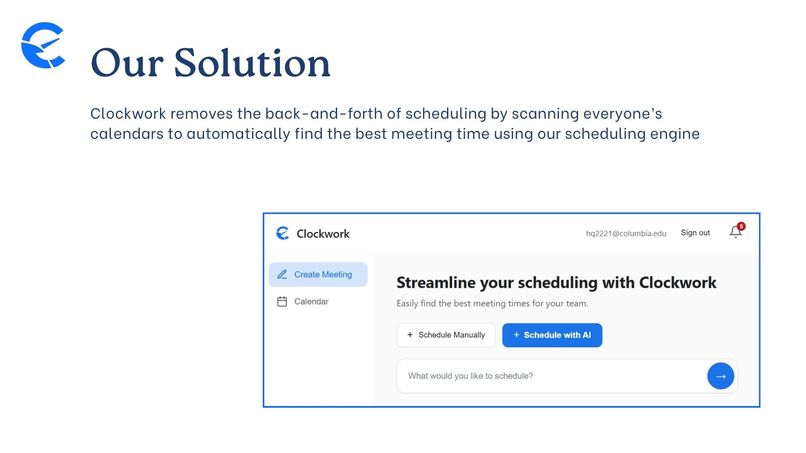
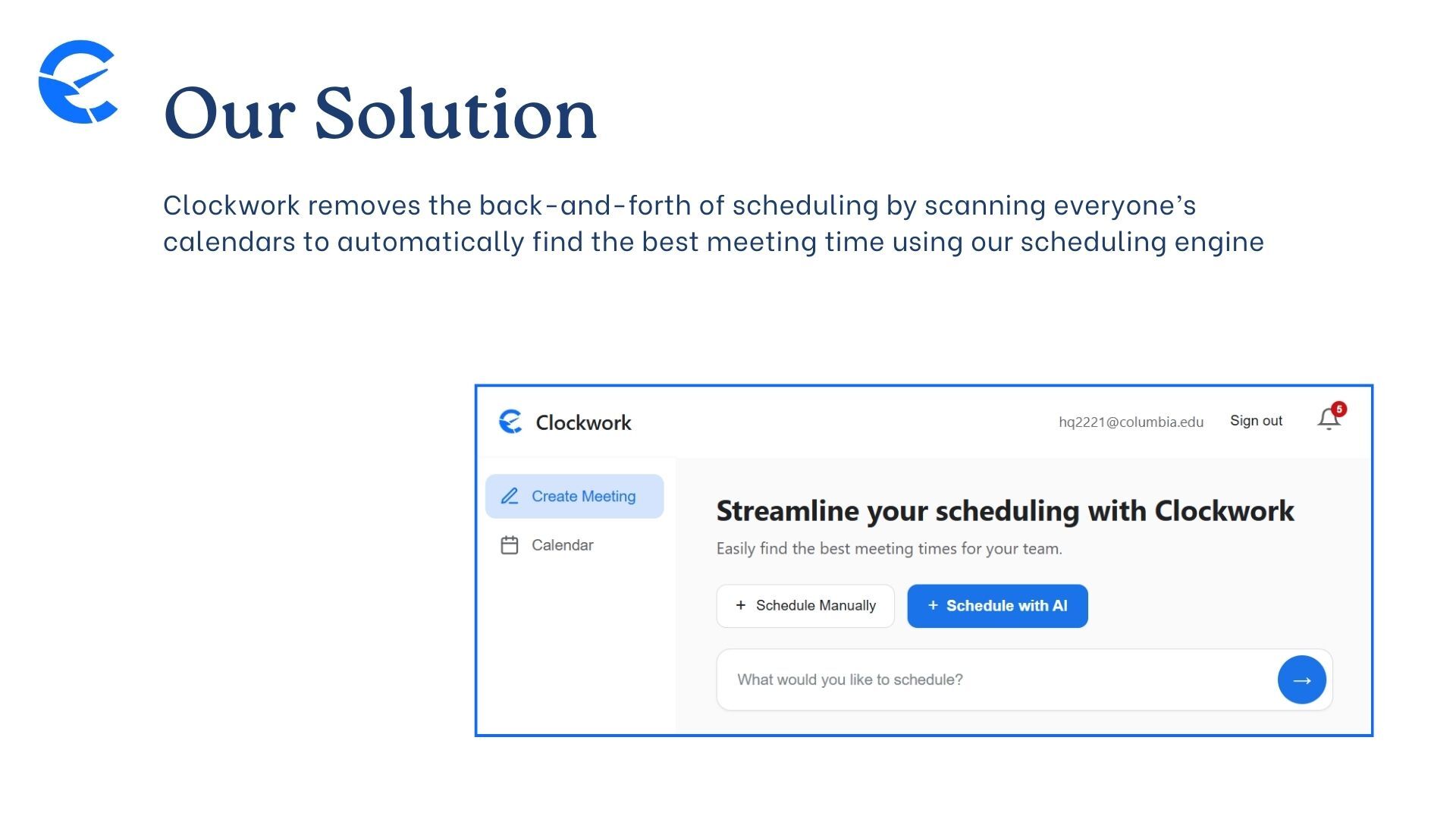
Clockwork is a smart scheduling system with two modes:
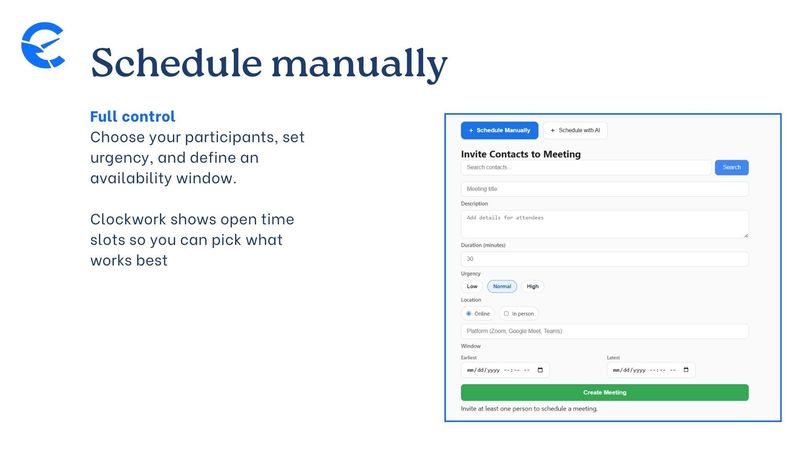
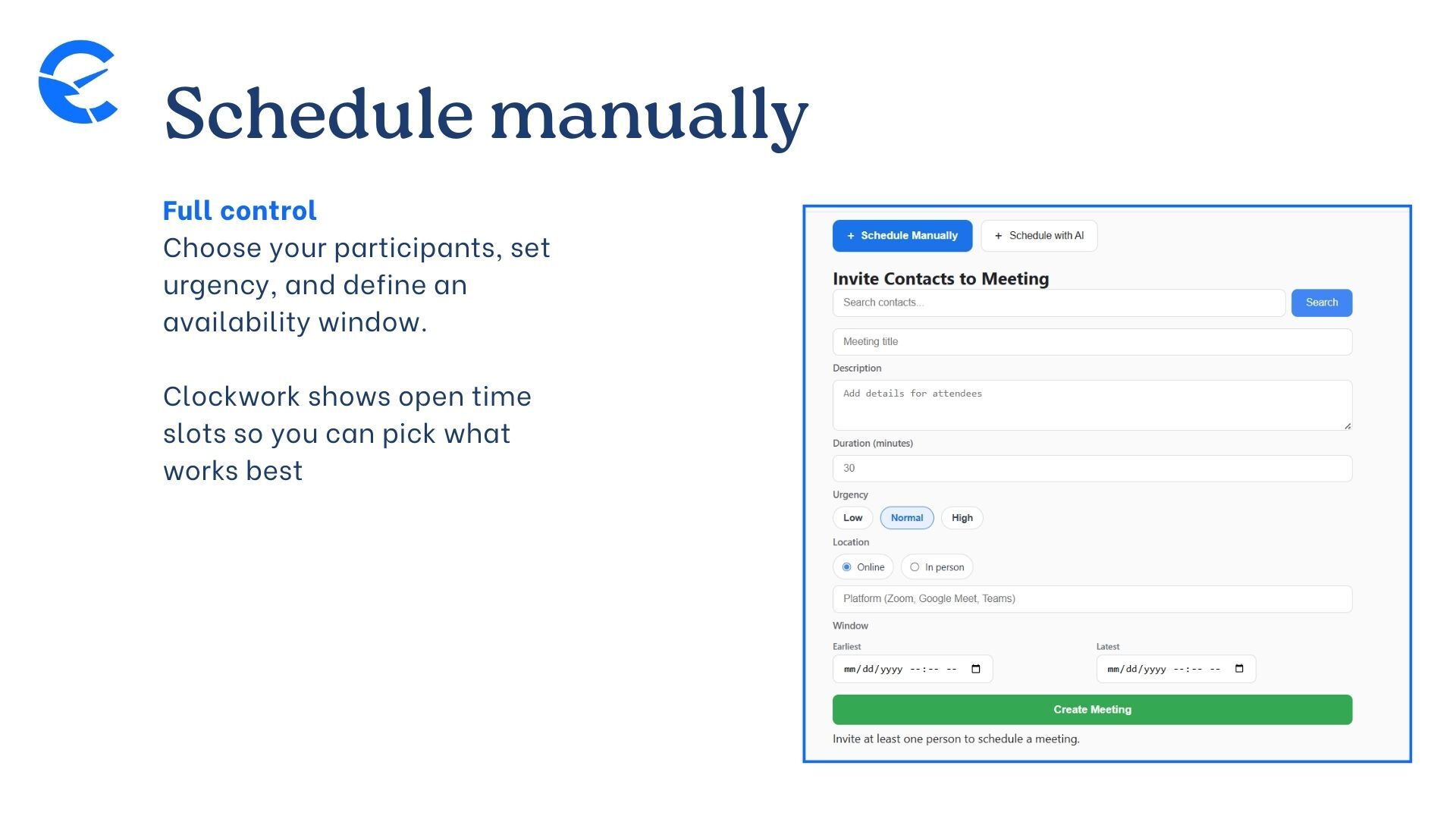
Manual: users select participants, urgency, and an availability window, and Clockwork surfaces optimal open slots using our scheduling engine.
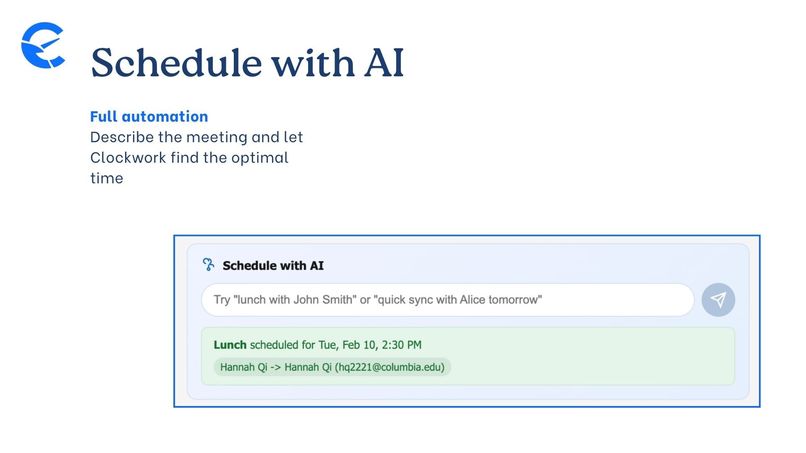
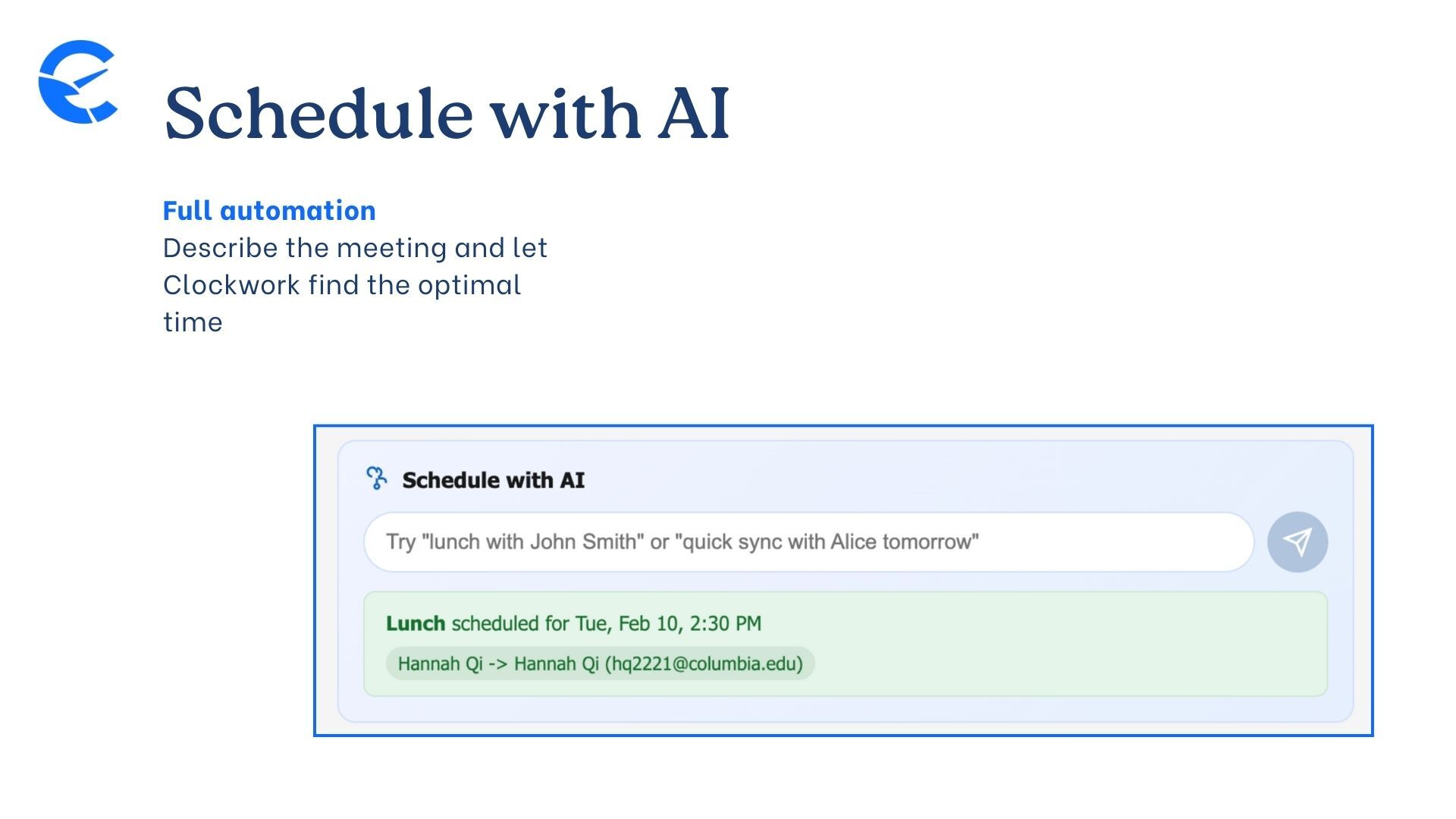
AI-powered: users simply describe the meeting, and Clockwork uses contextual signals to generate the best meeting time automatically.
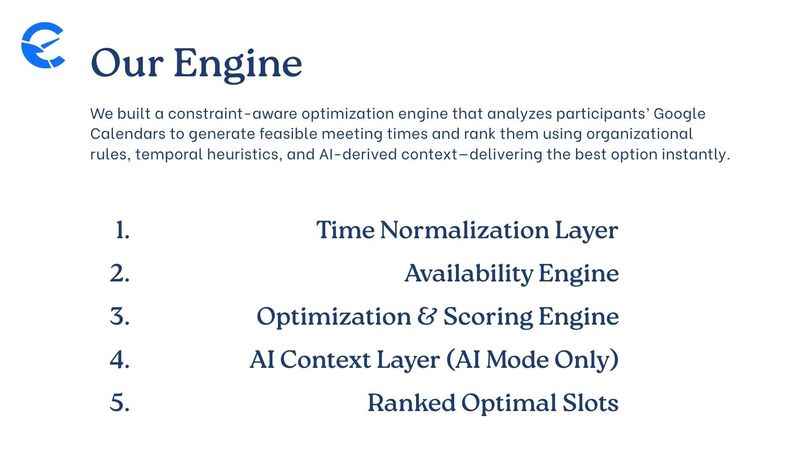
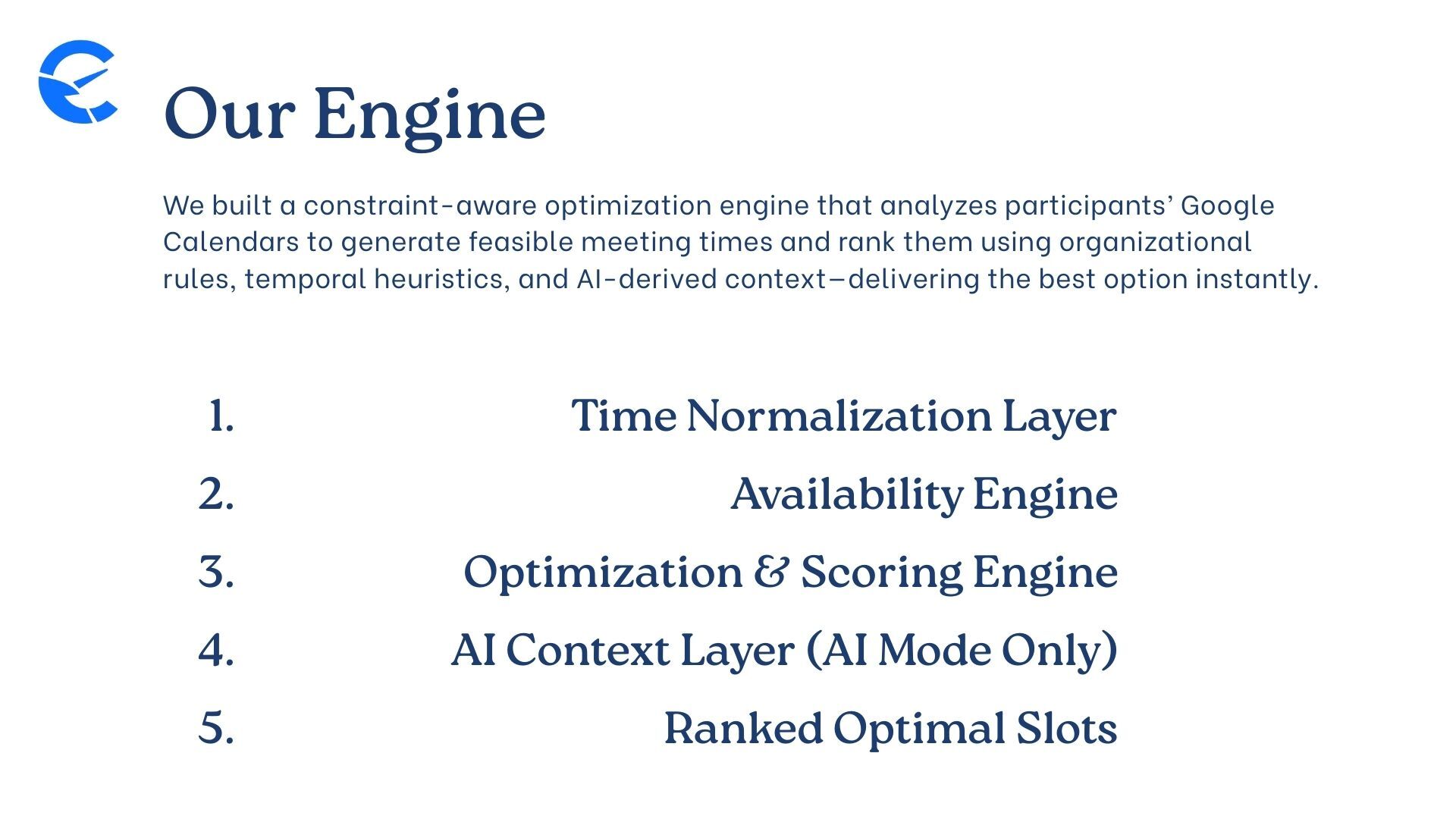
Instead of brute-forcing overlaps, Clockwork uses a backend scheduling algorithm that consolidates each participant’s calendar into busy intervals, generates feasible open slots, and scores them to find the optimal meeting time. It reasons about who matters, how urgent the meeting is, and when disruption is minimized.
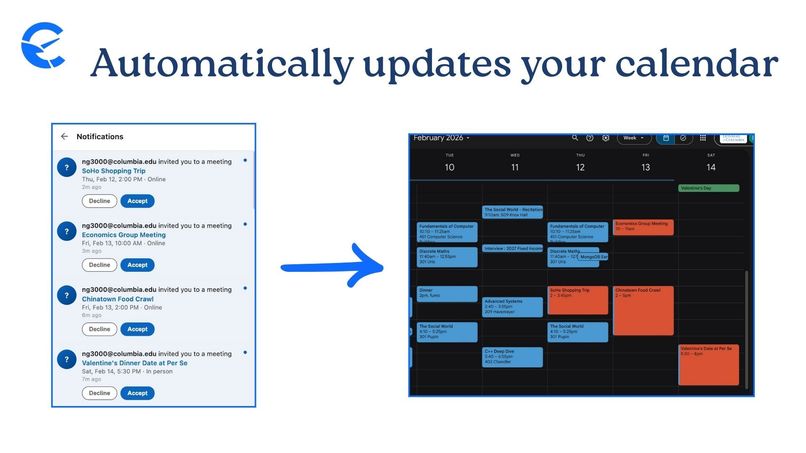
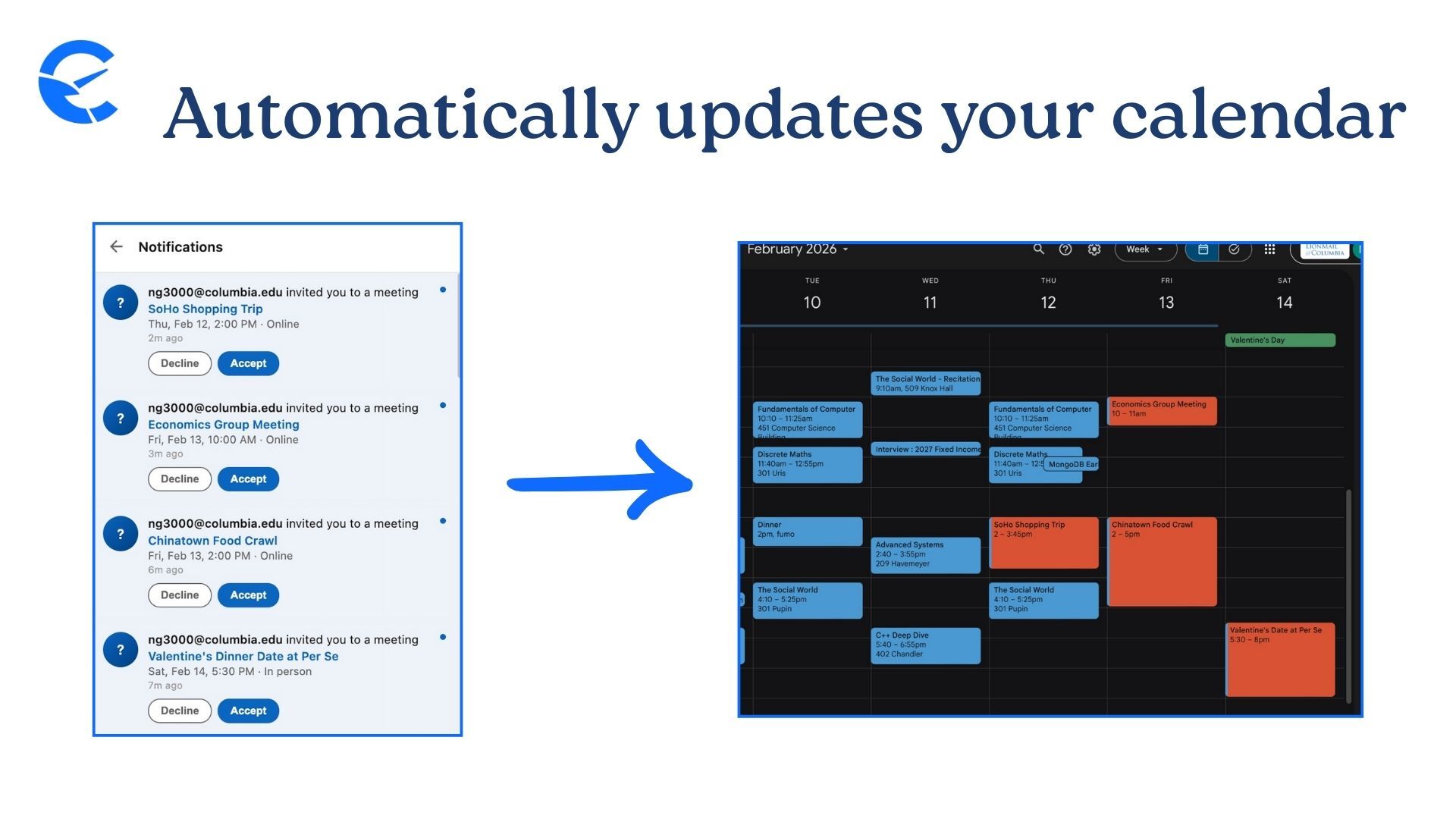
Once a time is generated, Clockwork can automatically create the event and place it on everyone’s Google Calendar — no copying links or manual invites.
It comes as a website and a Chrome Extension.
How We Built It
- Normalized calendar events into per-user busy intervals
- Clipped and merged intervals across a shared time window
- Ranked candidate slots using urgency, participant load, and context
- Integrated an LLM layer to interpret natural-language meeting descriptions and translate them into structured scheduling constraints
Challenges
- Handling edge cases like partial overlaps, fragmented calendars, and time-zone consistency
- Designing a system that feels “AI-powered” without removing user trust or transparency
- Balancing deterministic scheduling logic with probabilistic, context-aware AI decisions
What We Learned
- Scheduling is as much a human coordination problem as a technical one
- AI is most effective when it augments algorithms instead of replacing them
- Clear abstractions dramatically simplify complex systems
Built With
- flask
- geminiapi
- googlecalendarapi
- googlepeoplesapi
- javascript
- postgresql
- python
- react.js
- sqlalchemy
- supabase


Log in or sign up for Devpost to join the conversation.