-
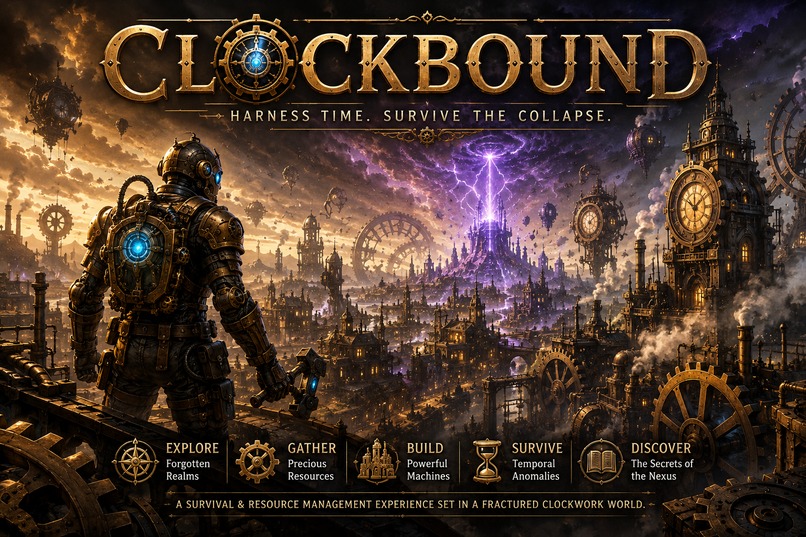
Concept
-
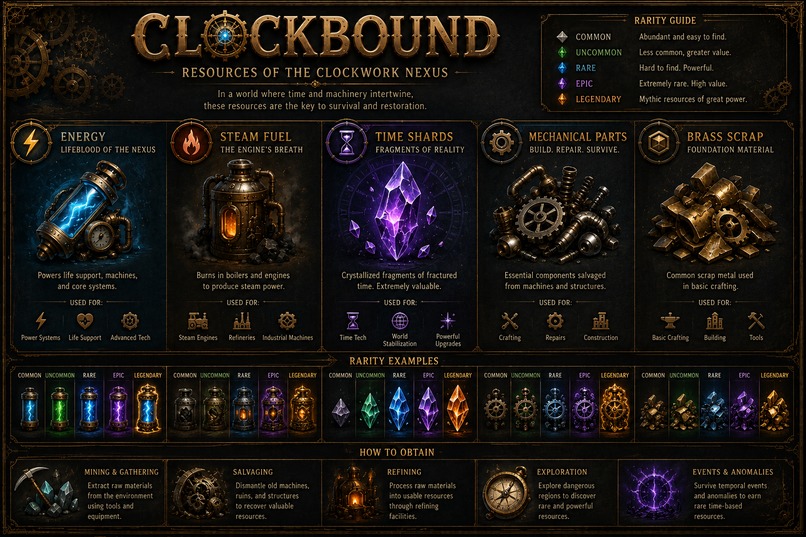
Resources
-
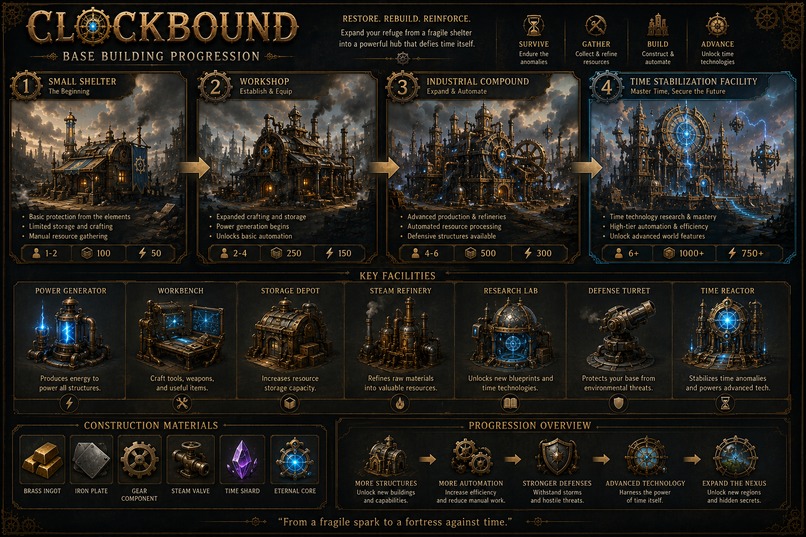
Building
-
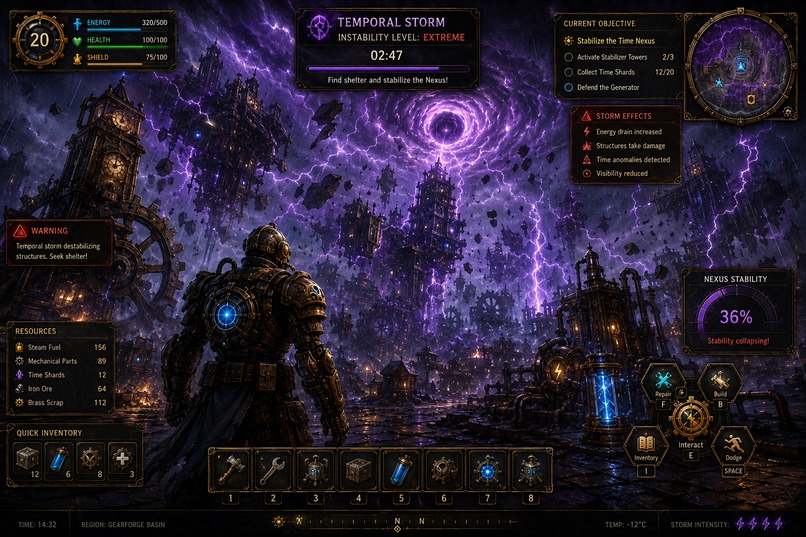
Temporal Storm
-
Repair
Clockbound
Inspiration
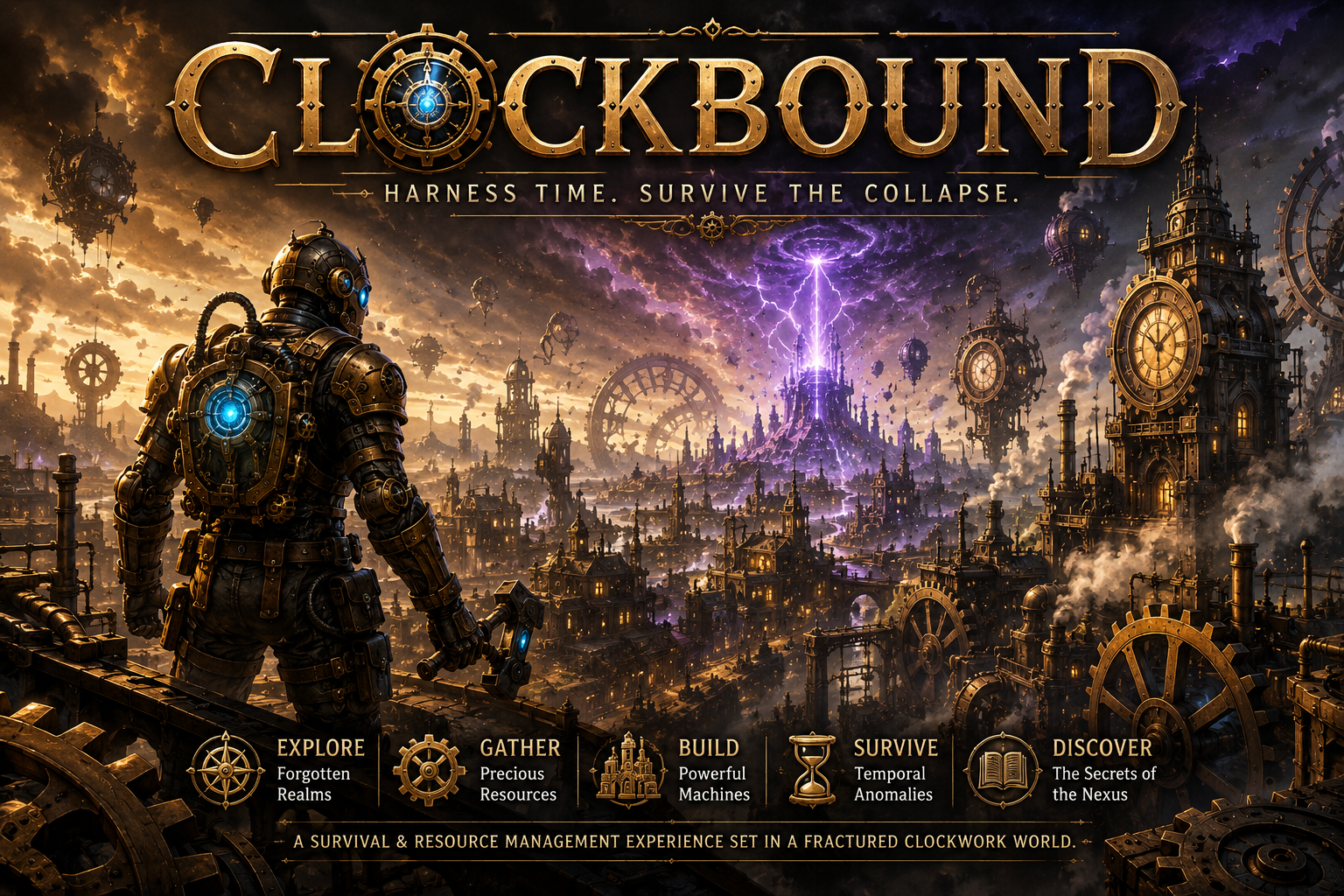
Clockbound was inspired by our fascination with survival games that create meaningful player stories through exploration, resource management, and environmental challenges. We wanted to combine the tension and progression of survival experiences with a unique clockpunk aesthetic where time itself becomes a gameplay mechanic.
Many survival games focus on managing food, shelter, and resources, but we asked ourselves a different question:
What if time was the most valuable resource of all?
The result was Clockbound — a world fractured by temporal collapse where players must gather resources, build settlements, survive catastrophic anomalies, and harness unstable temporal energy to restore the Clockwork Nexus before reality completely unravels.
Our visual inspiration comes from Victorian-era machinery, massive clockwork structures, steampunk architecture, and science-fiction concepts involving time manipulation. We wanted players to feel like explorers venturing through a beautiful but dangerous world where every discovery could change the future.
What it does
Clockbound is a survival and resource management game set within the Clockwork Nexus, a world destabilized by temporal anomalies.
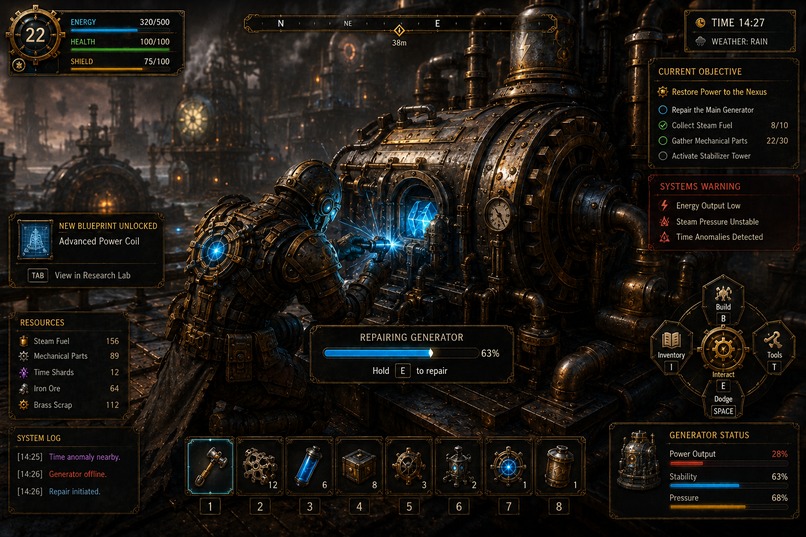
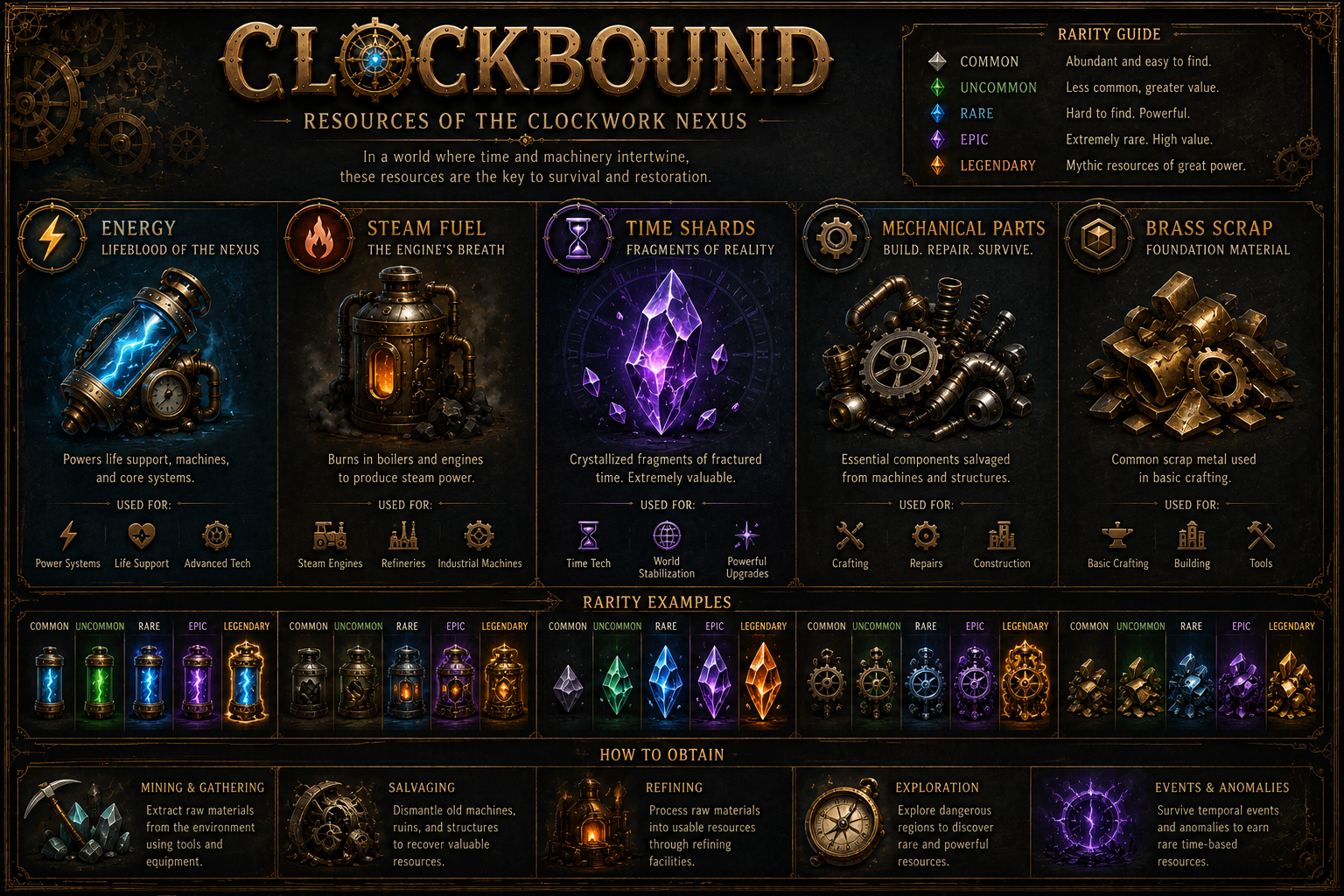
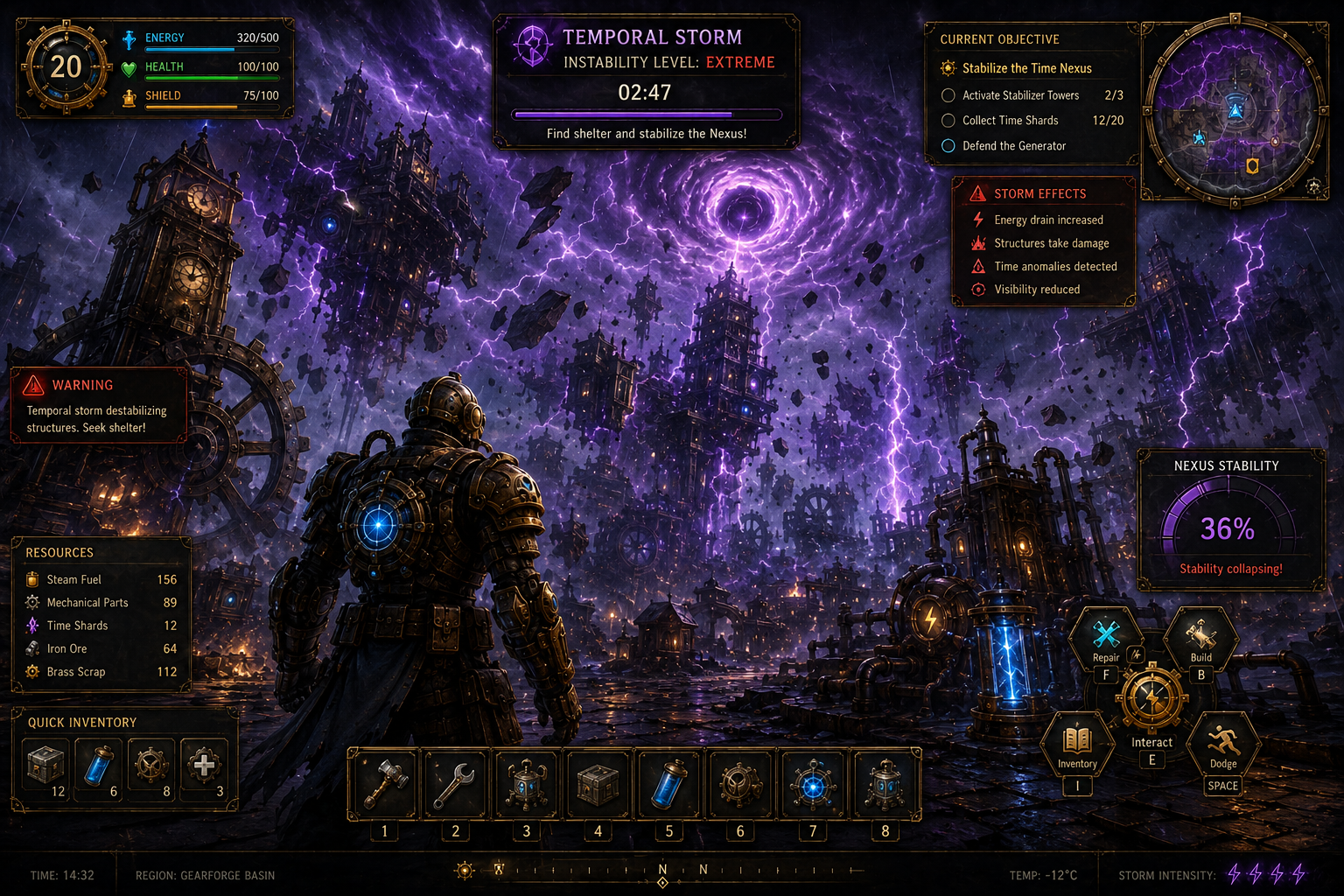
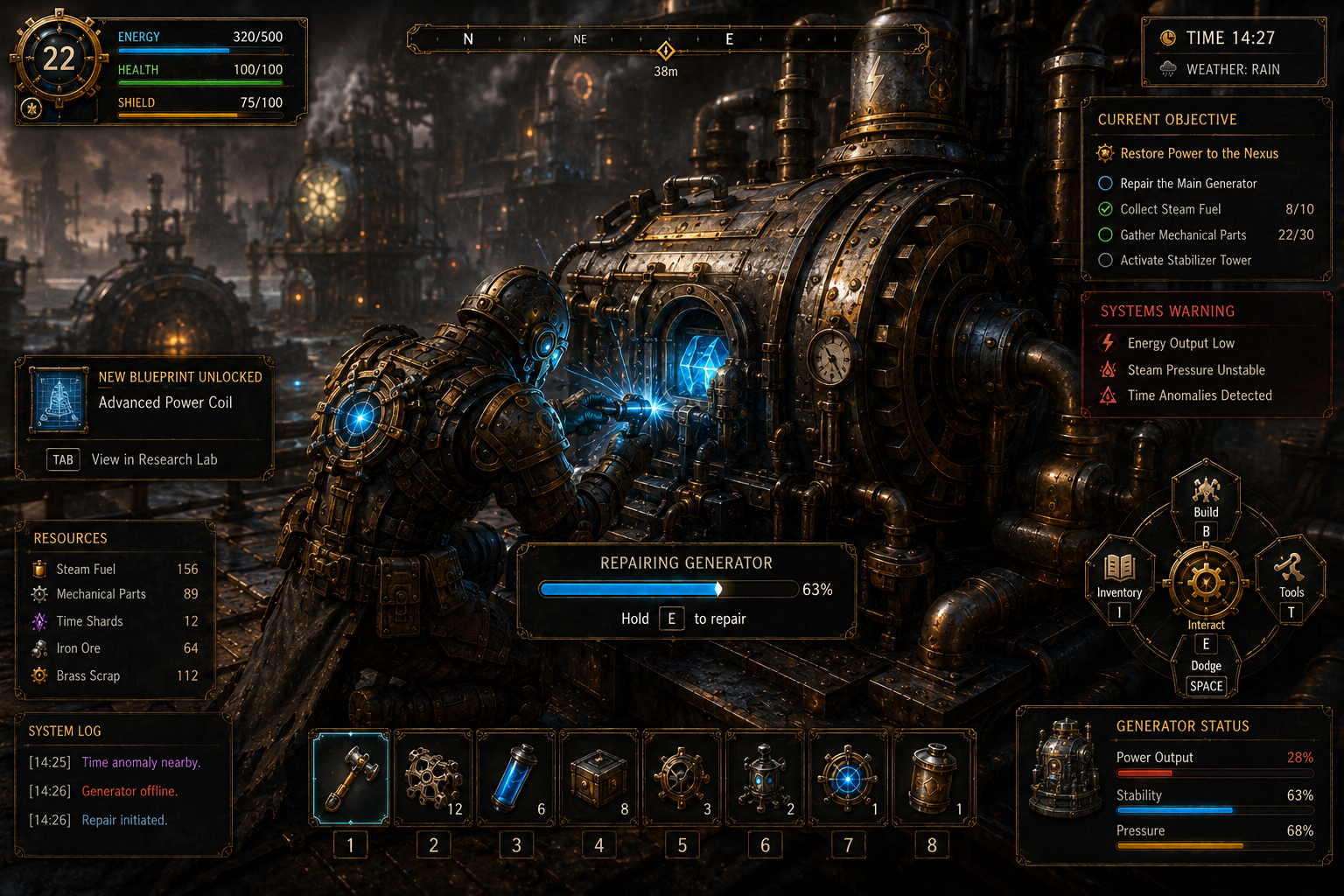
Players explore diverse biomes, gather resources, craft tools, build shelters, repair ancient machinery, and defend against increasingly dangerous temporal storms.
Core Gameplay Systems
- Resource gathering and management
- Crafting and technology progression
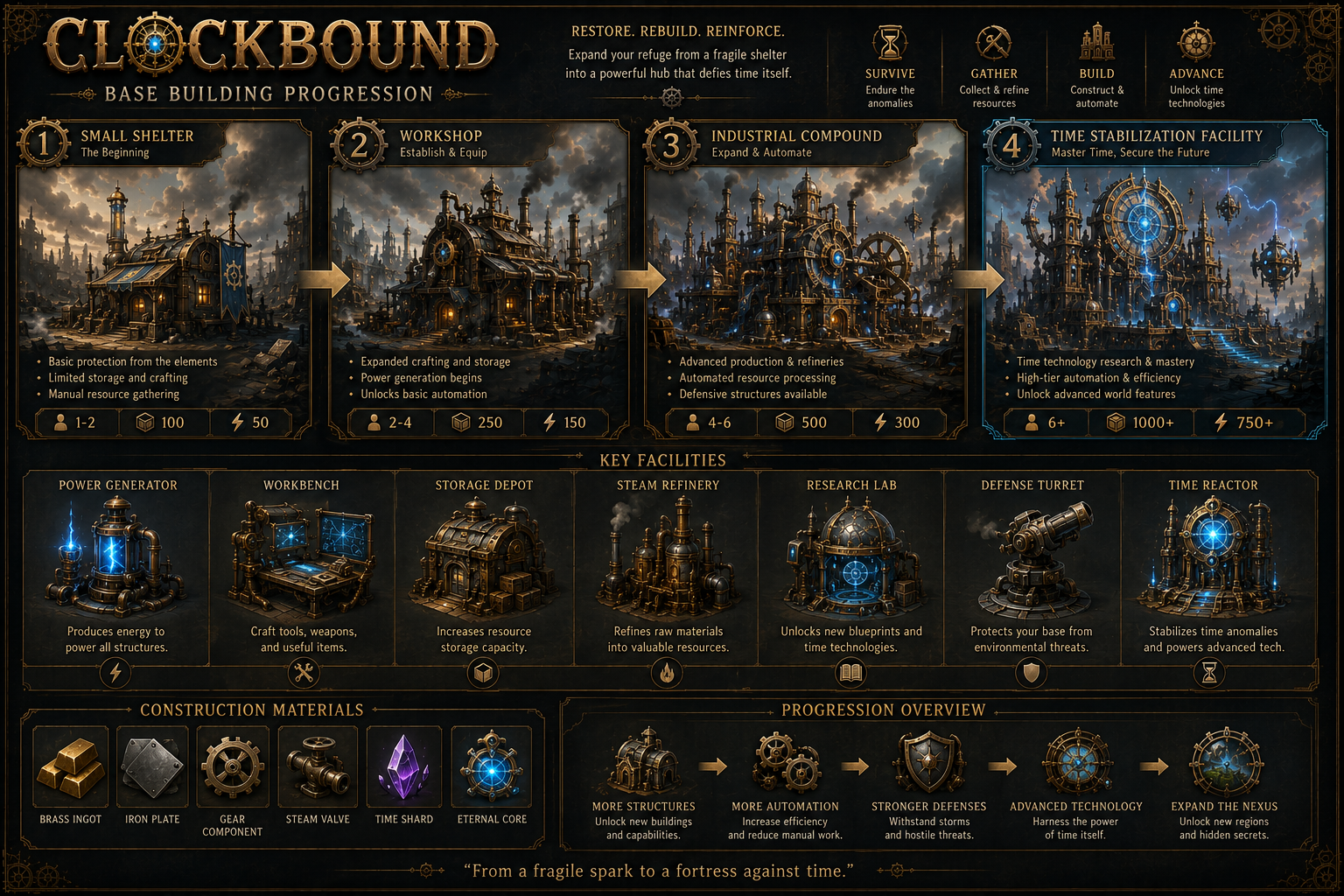
- Base building and settlement expansion
- Exploration and discovery
- Dynamic environmental hazards
- Temporal storm events
- Long-term world restoration objectives
Players must carefully balance exploration, construction, and survival while adapting to an ever-changing world where time itself has become unstable.
How we built it
Clockbound is being designed for Meta Horizon Worlds using the Horizon Worlds Desktop Editor for mobile.
Our development process began with identifying a strong gameplay loop centered around survival, progression, and meaningful player decisions. We then expanded the concept through extensive game design documentation, visual development, world-building, user interface design, and production planning.
Key Areas of Development
- Gameplay systems design
- Survival and crafting mechanics
- Resource economy planning
- Progression framework design
- World and biome concepts
- Character development
- User interface mockups
- Technical production planning
- Player onboarding and progression mapping
We created a complete visual package to communicate the game's artistic direction, including environment concepts, character sheets, gameplay scenarios, UI concepts, progression diagrams, and player experience flowcharts.
Challenges we ran into
One of the biggest challenges was balancing originality with accessibility.
We wanted Clockbound to feel familiar enough for survival game fans to immediately understand the core gameplay while introducing a unique identity through its temporal mechanics and clockpunk setting.
Another challenge was defining systems that create meaningful choices without overwhelming players. Resource management, crafting, exploration, and environmental hazards all needed to work together as a cohesive experience.
We also spent significant time refining the visual direction to ensure every piece of artwork communicated a consistent world, tone, and gameplay fantasy.
Finally, translating large-scale survival systems into a scoped MVP required careful prioritization so the core experience remains achievable while still leaving room for future expansion.
Accomplishments that we're proud of
We are particularly proud of:
- Creating a unique clockpunk survival concept
- Building a cohesive visual identity
- Designing a complete progression framework
- Developing a strong survival gameplay loop
- Creating detailed world-building and lore foundations
- Producing professional-quality concept art and presentation materials
- Establishing a realistic production roadmap
Most importantly, we created a project vision that feels both ambitious and achievable.
What we learned
Clockbound reinforced the importance of early design validation and visual communication.
We learned that strong gameplay pillars help guide every design decision and prevent feature creep. By focusing on survival, resource management, exploration, and temporal instability, we were able to evaluate new ideas against a consistent vision.
We also learned how valuable visual prototypes and player journey mapping can be when communicating a game concept to others.
The process highlighted the importance of balancing creative ambition with practical production planning and MVP scoping.
What's next for Clockbound
Our next goal is to transition Clockbound from concept and planning into a playable prototype.
Future Milestones
- Core survival systems
- Resource gathering mechanics
- Inventory and crafting systems
- Base building functionality
- Dynamic temporal storm events
- Exploration gameplay
- Progression systems
- Multiplayer cooperative features
- Expanded biomes and world content
Long-Term Vision
We envision Clockbound becoming a living survival experience where players rebuild civilization within a fractured timeline and ultimately determine the future of the Clockwork Nexus.
As development continues, we plan to expand the world, deepen progression systems, and introduce new ways for players to cooperate, explore, and master the forces of time.
Built With
- chatgpt
- gimp
- powerpoint



Log in or sign up for Devpost to join the conversation.