-
-
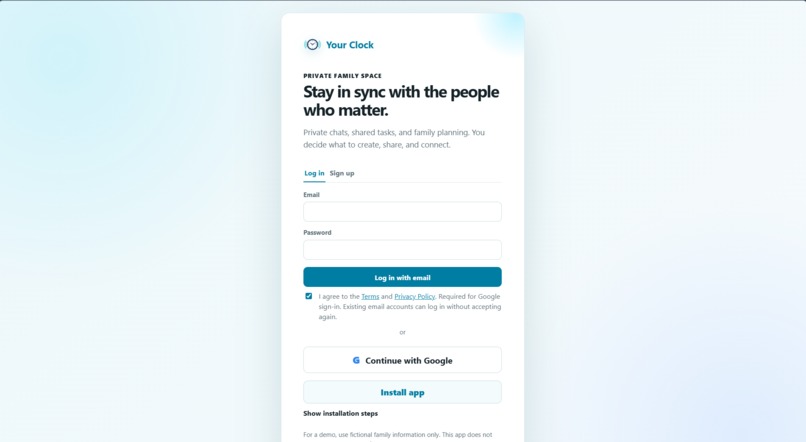
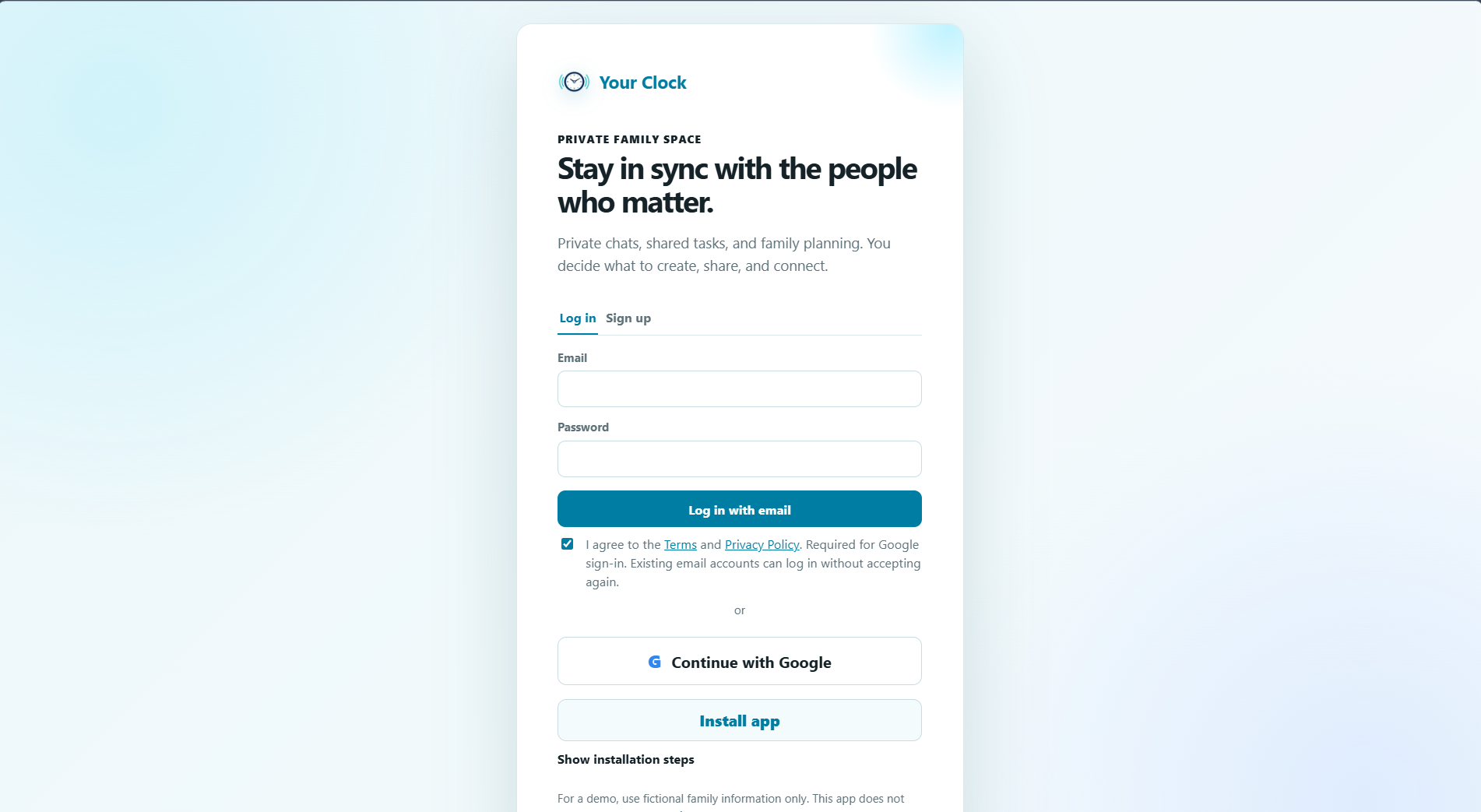
login page
-
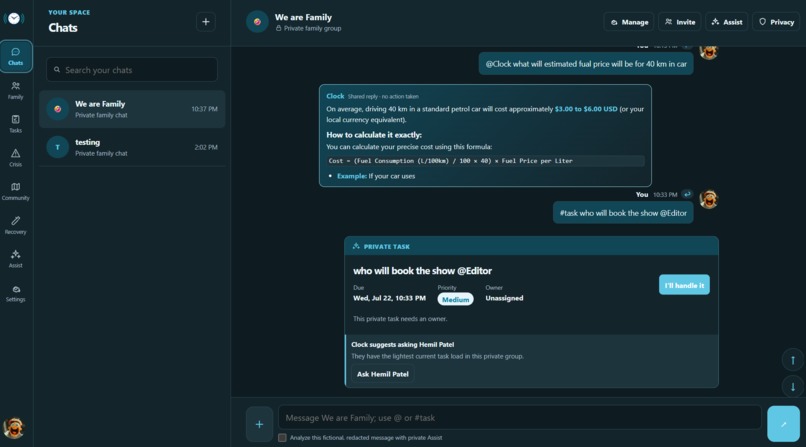
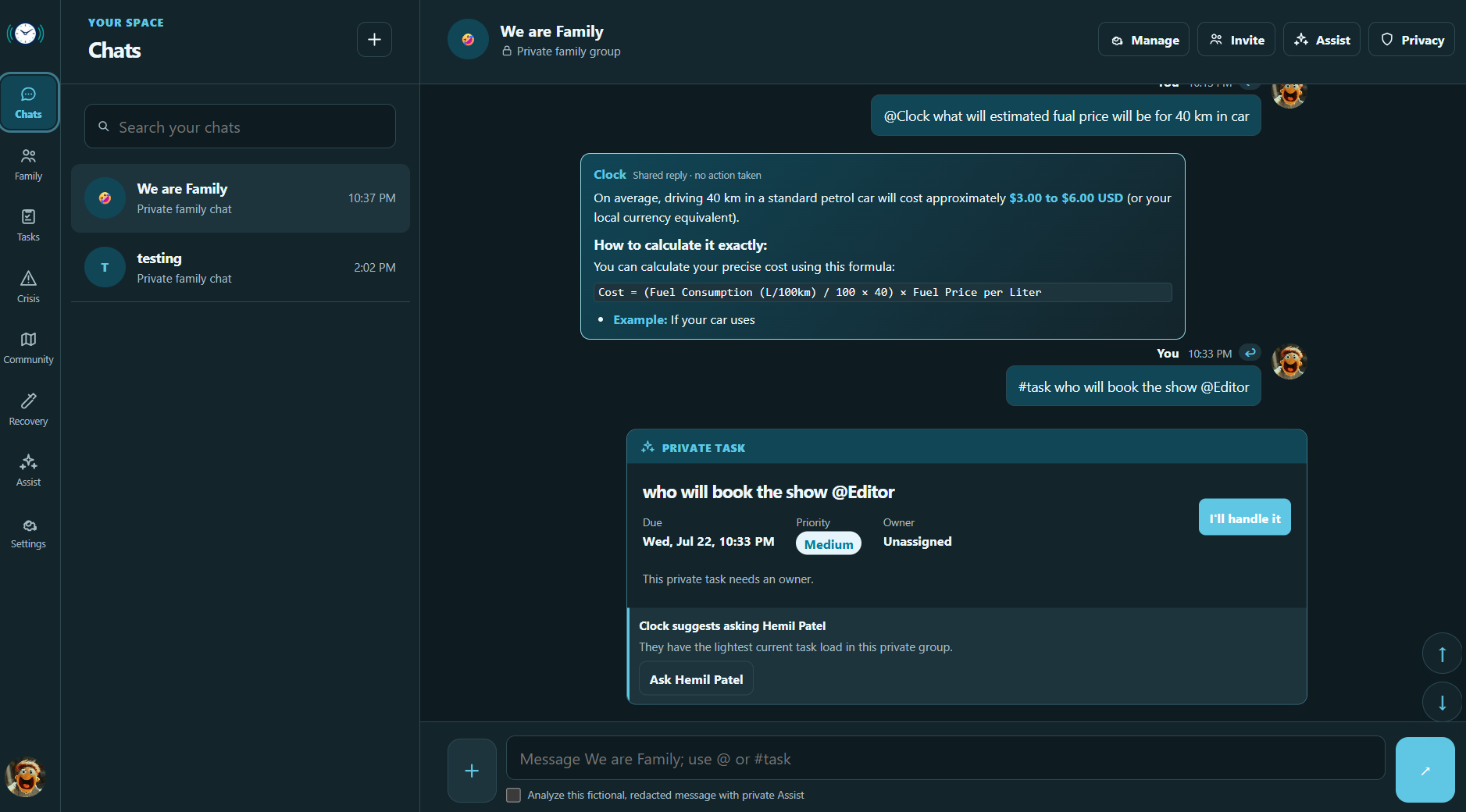
family chat
-
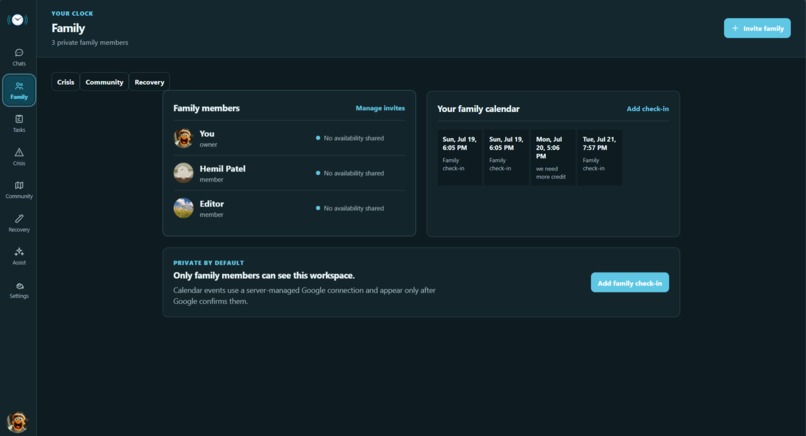
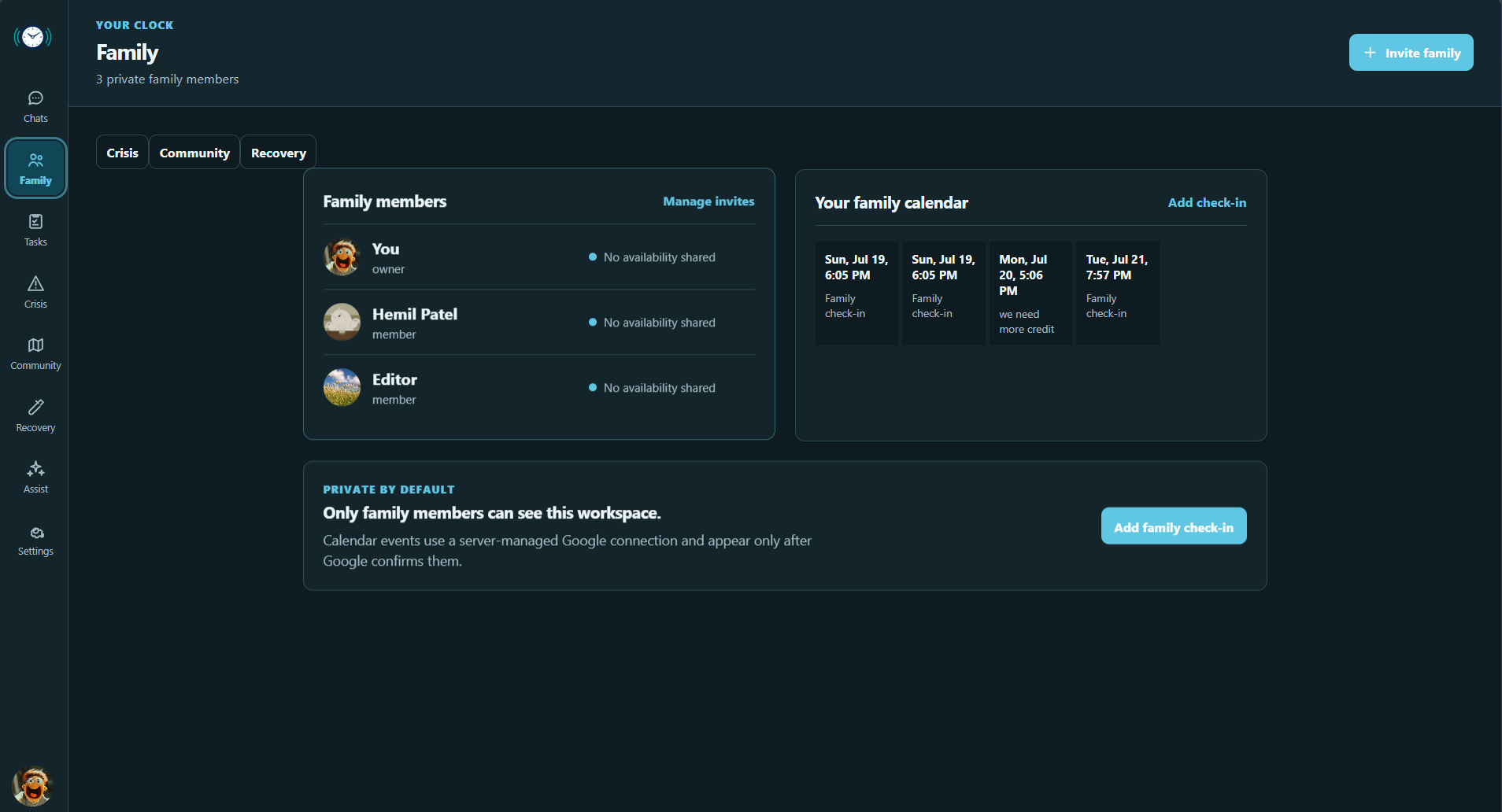
family management
-
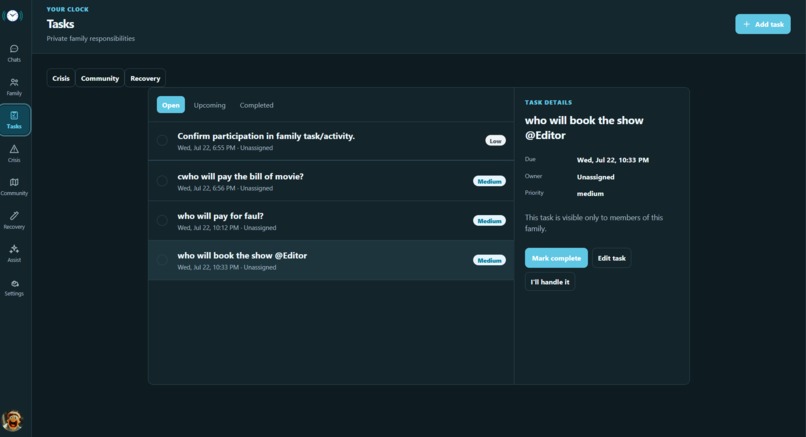
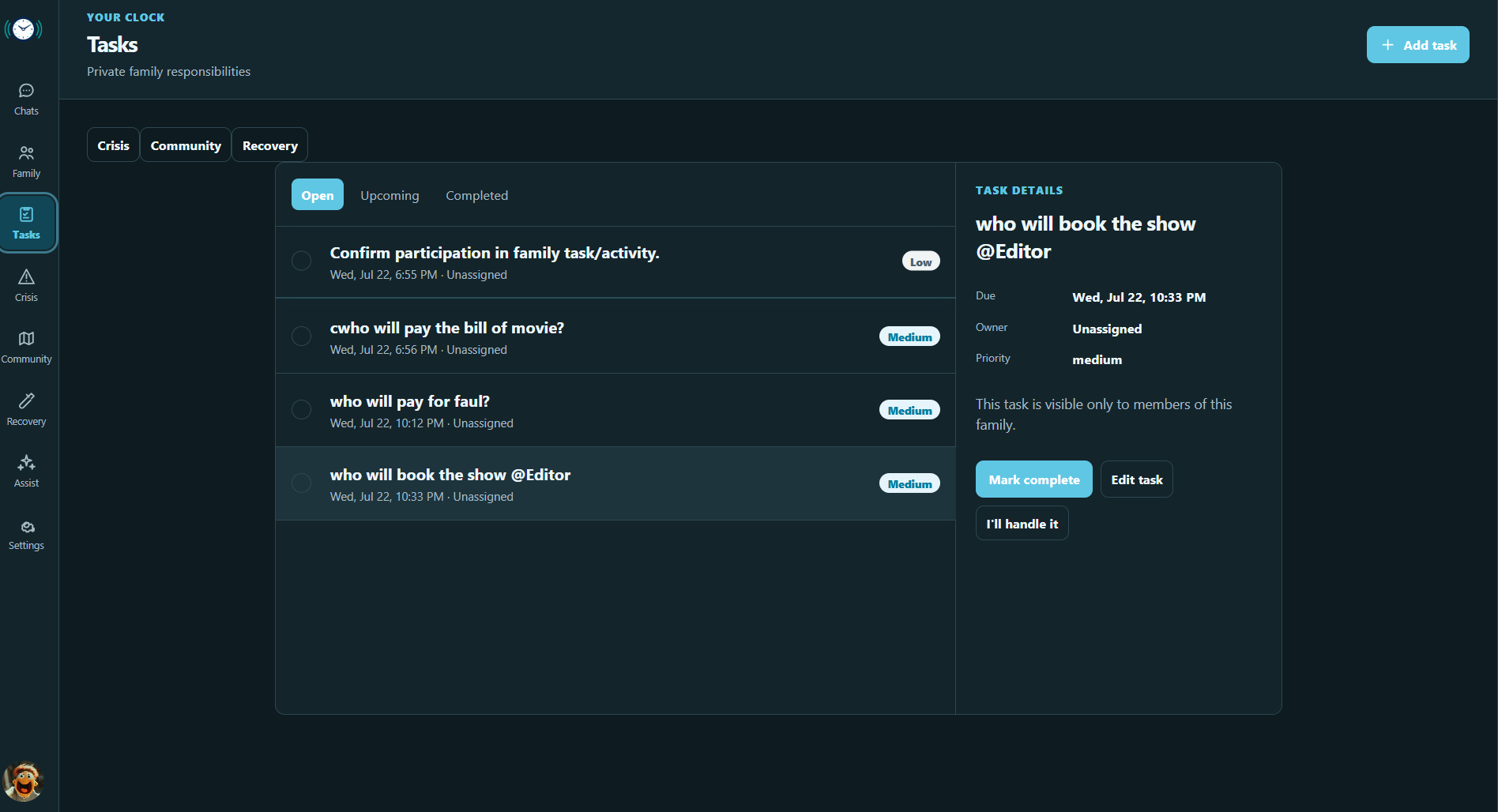
task open
-
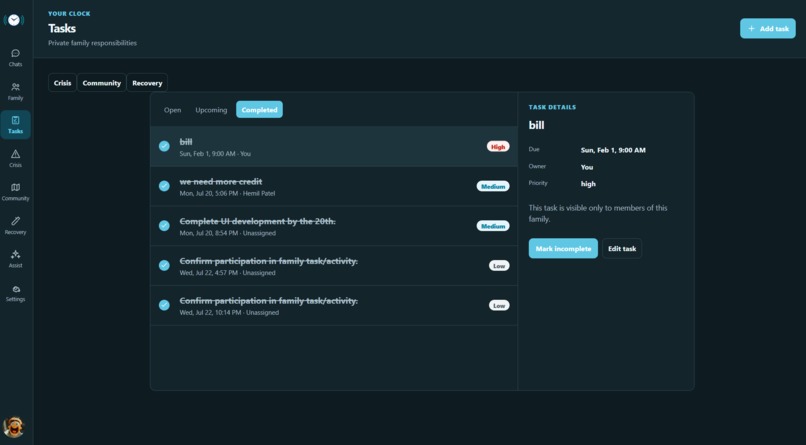
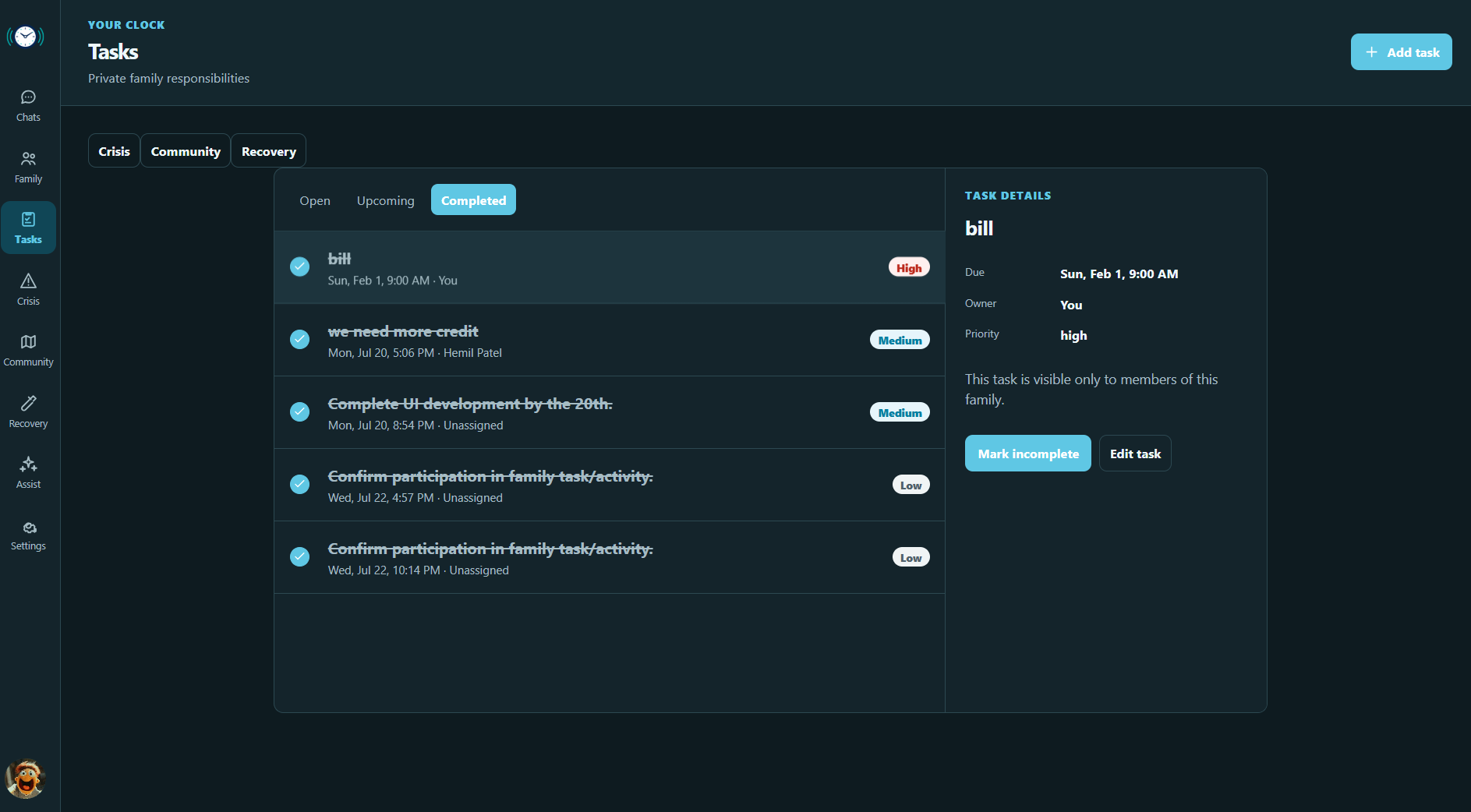
task completed
-
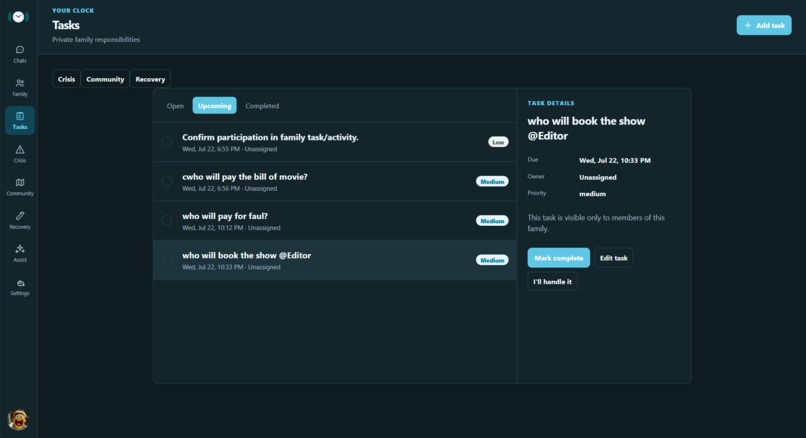
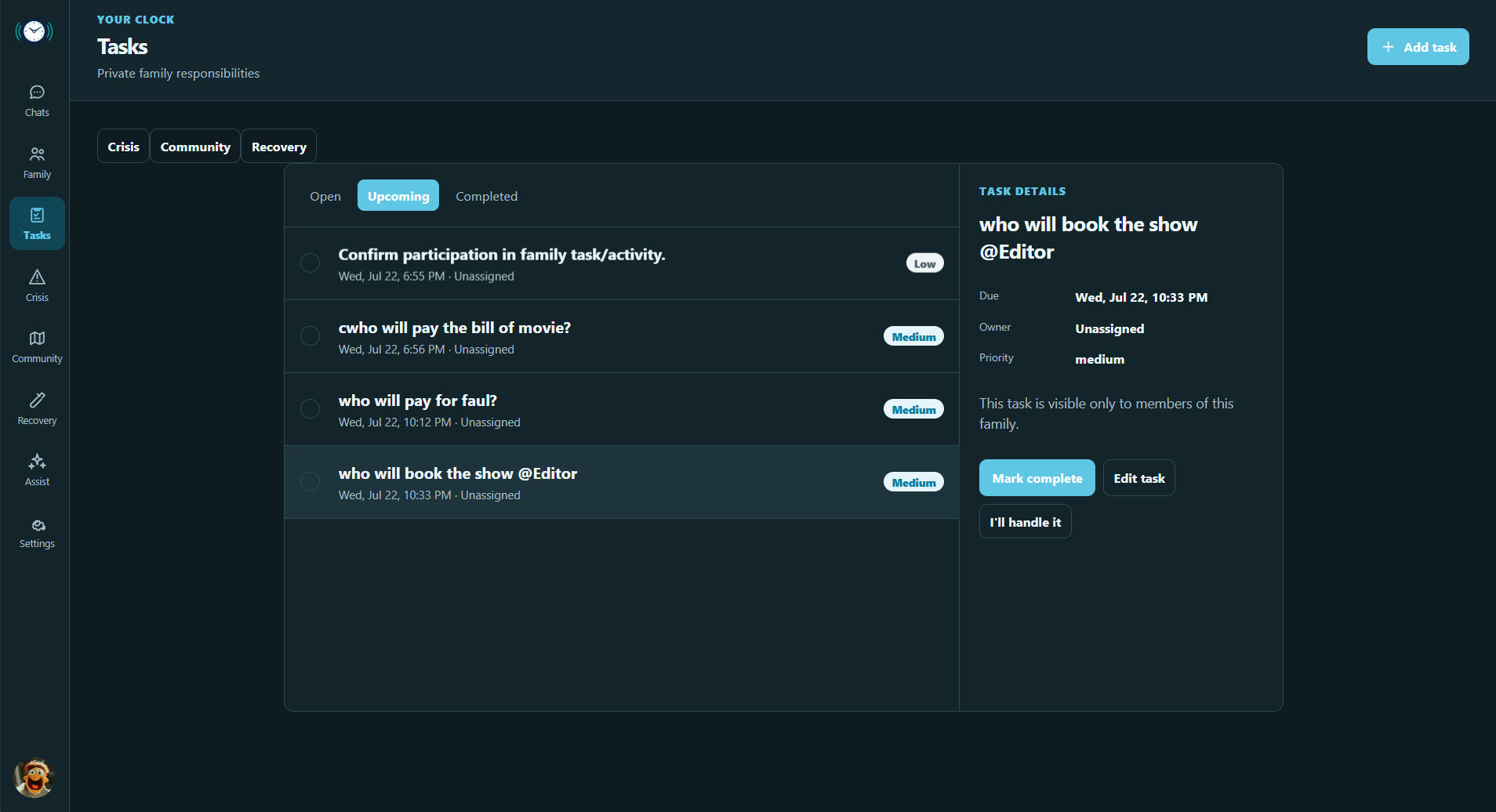
task upcoming
-
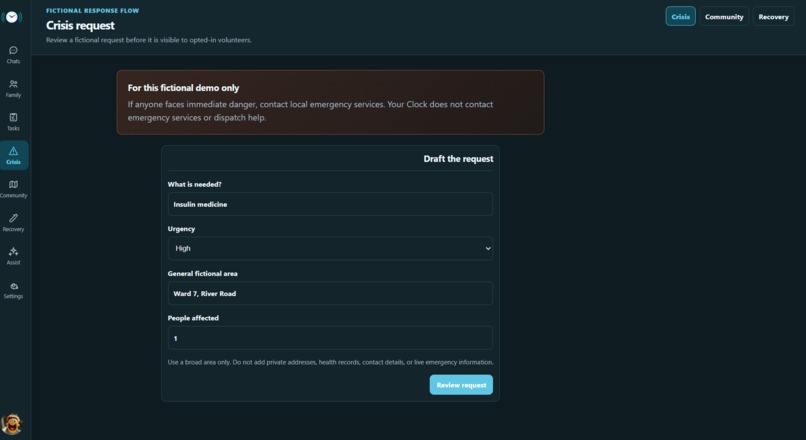
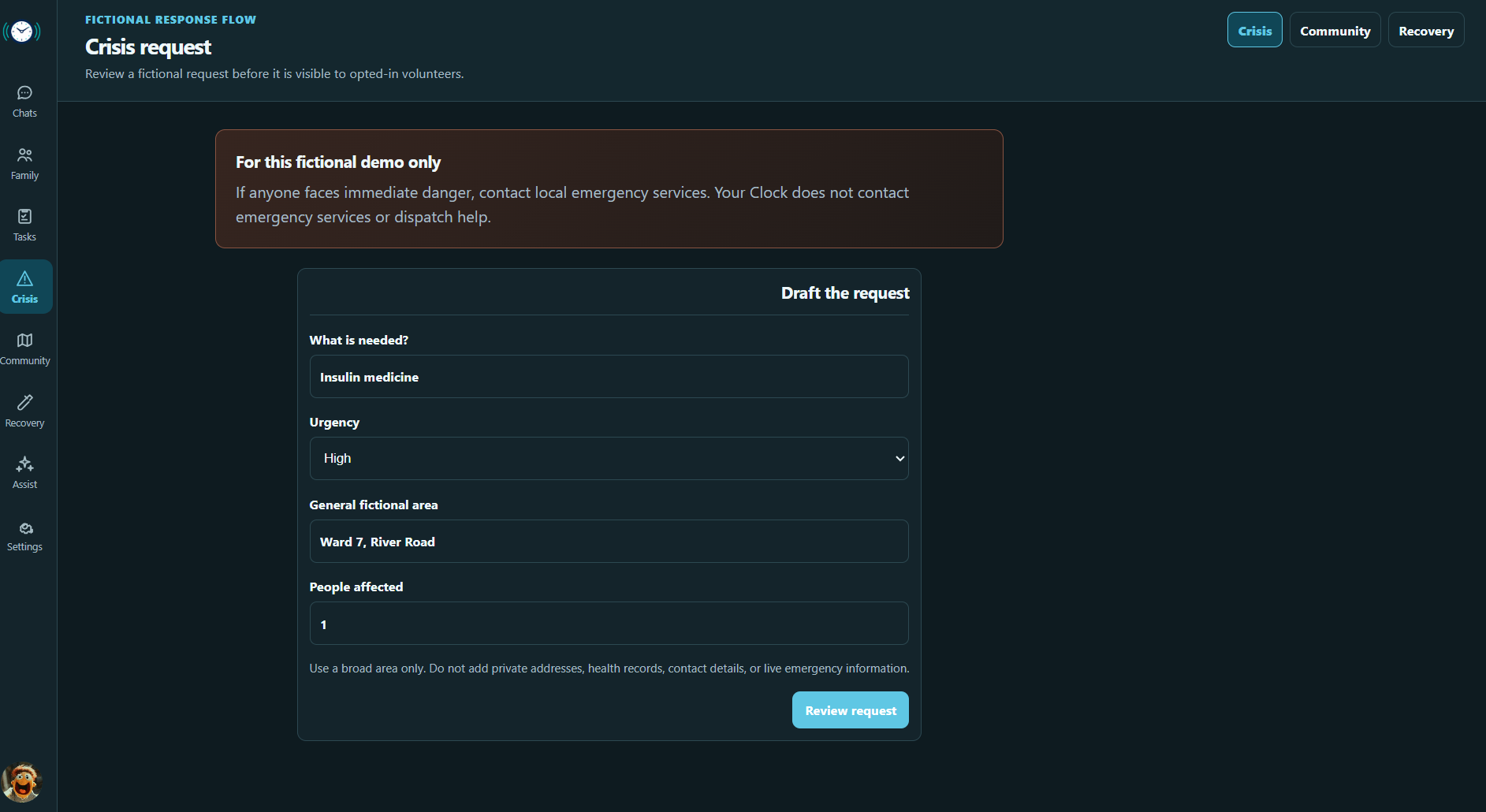
crisis page
-
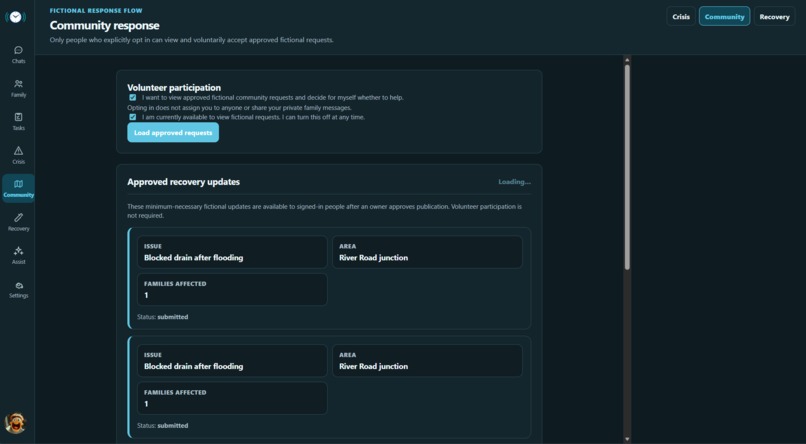
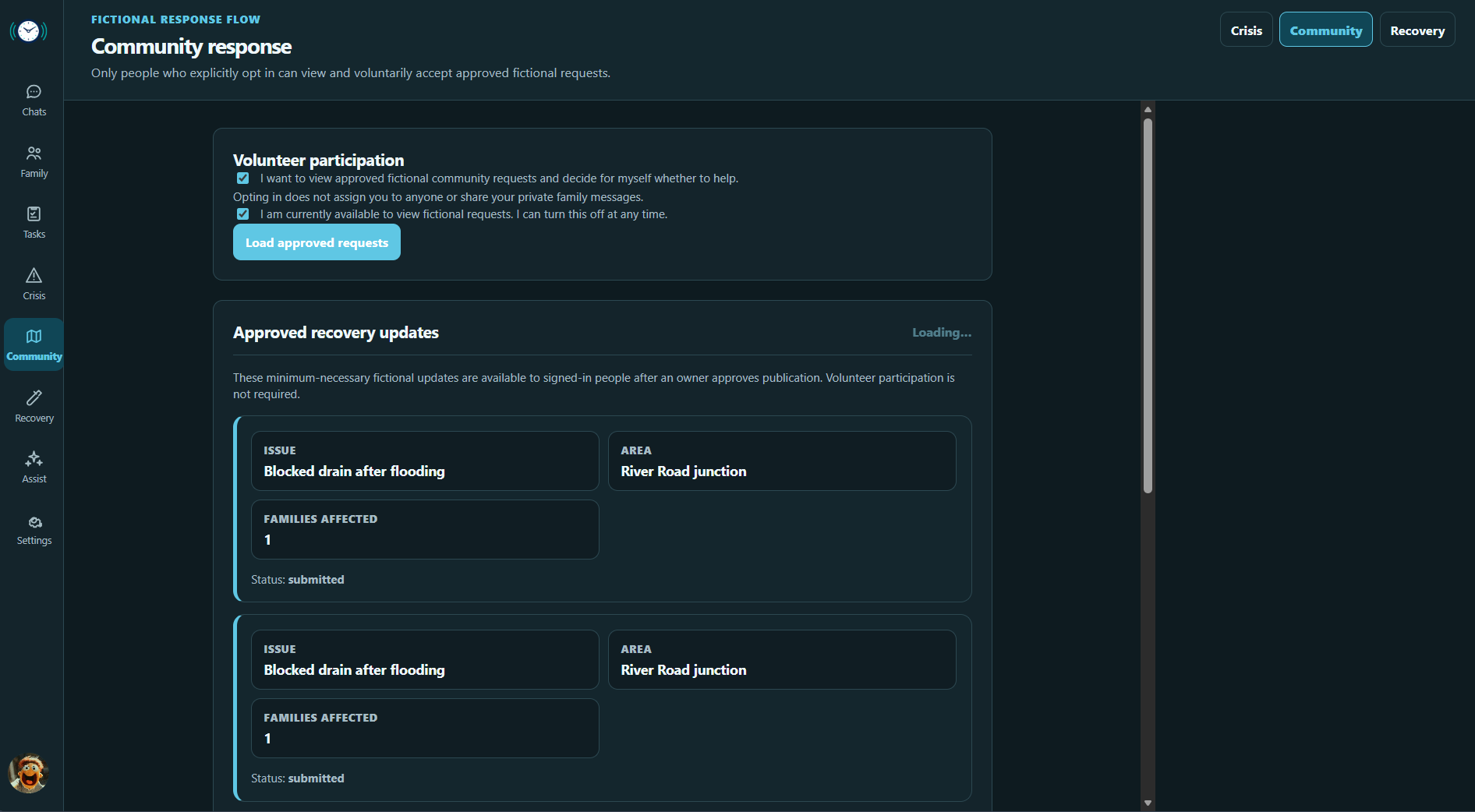
Community page
-
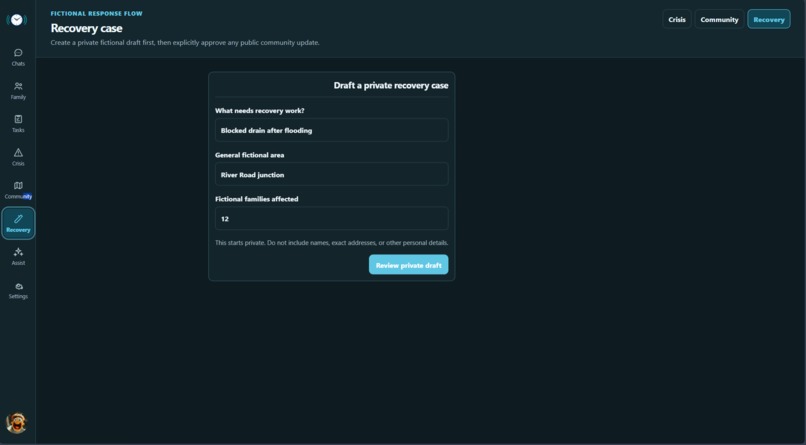
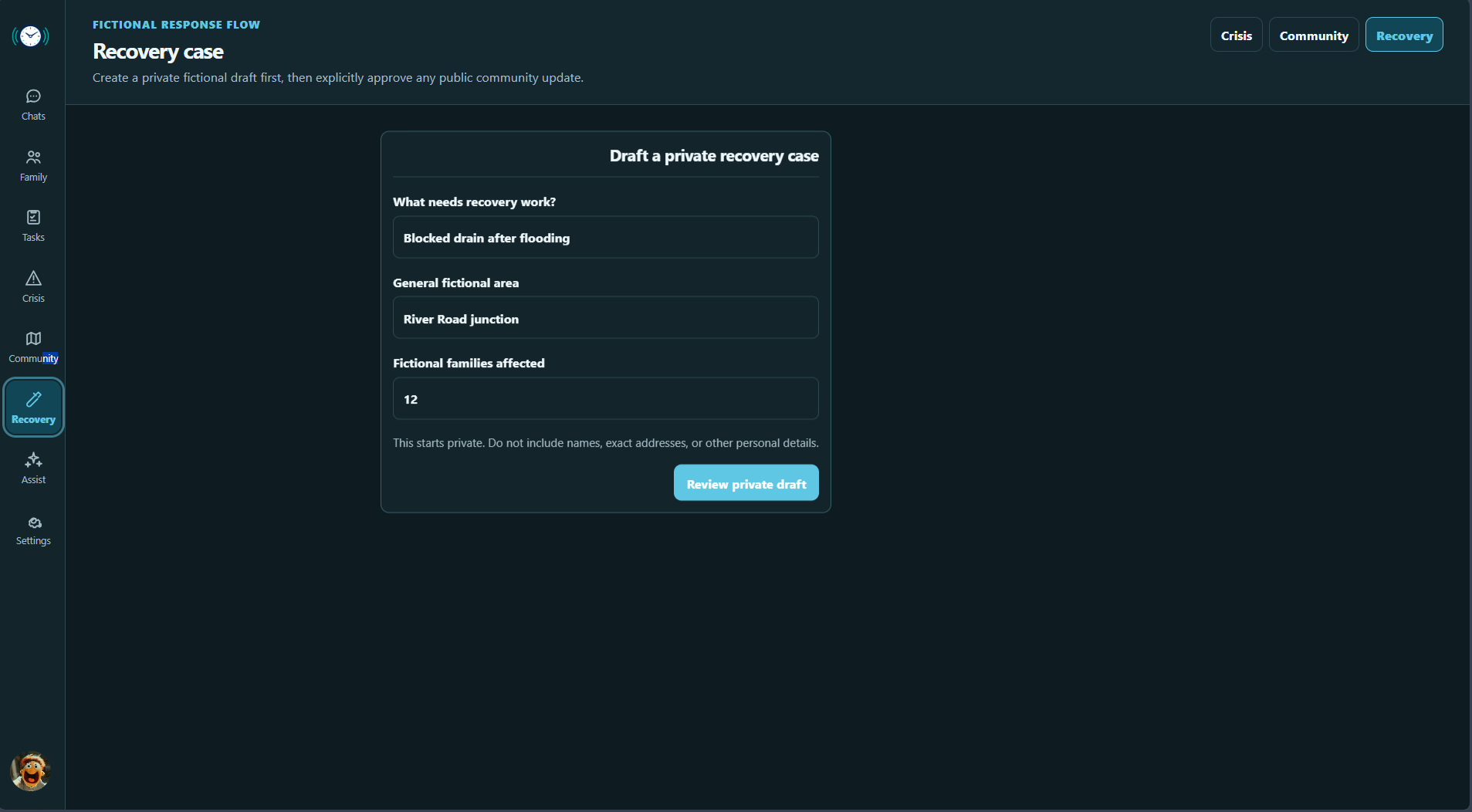
recovery page
-
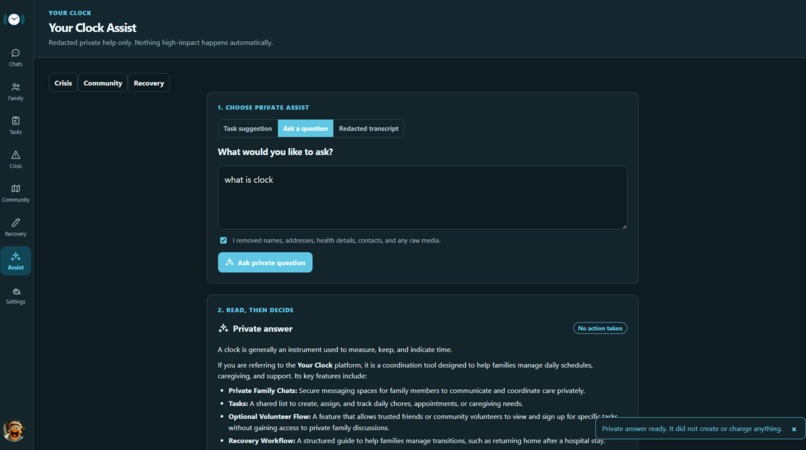
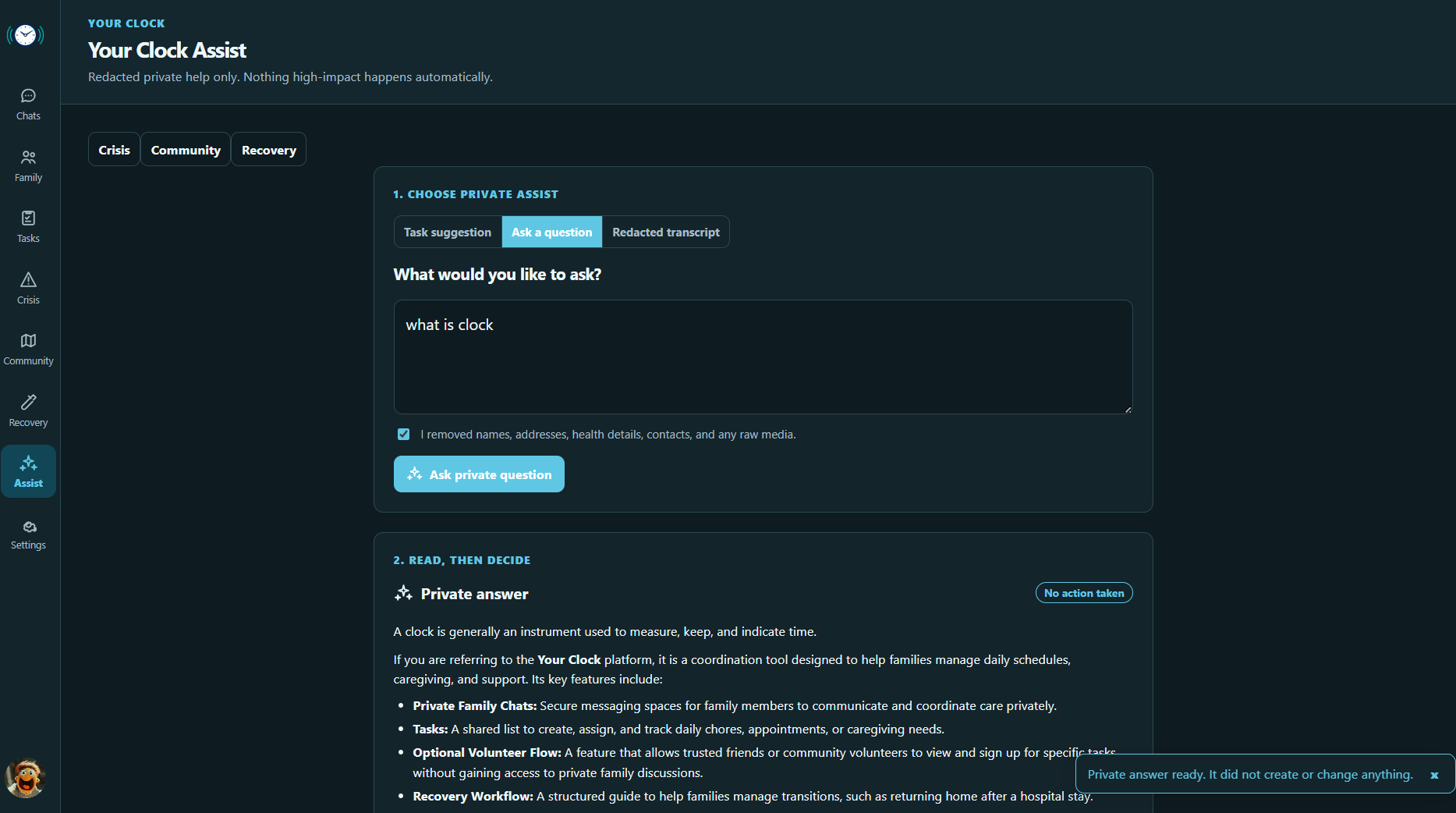
assist page
-
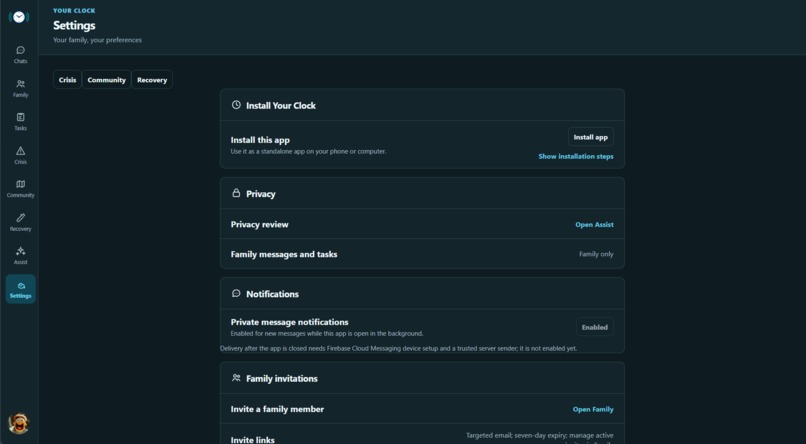
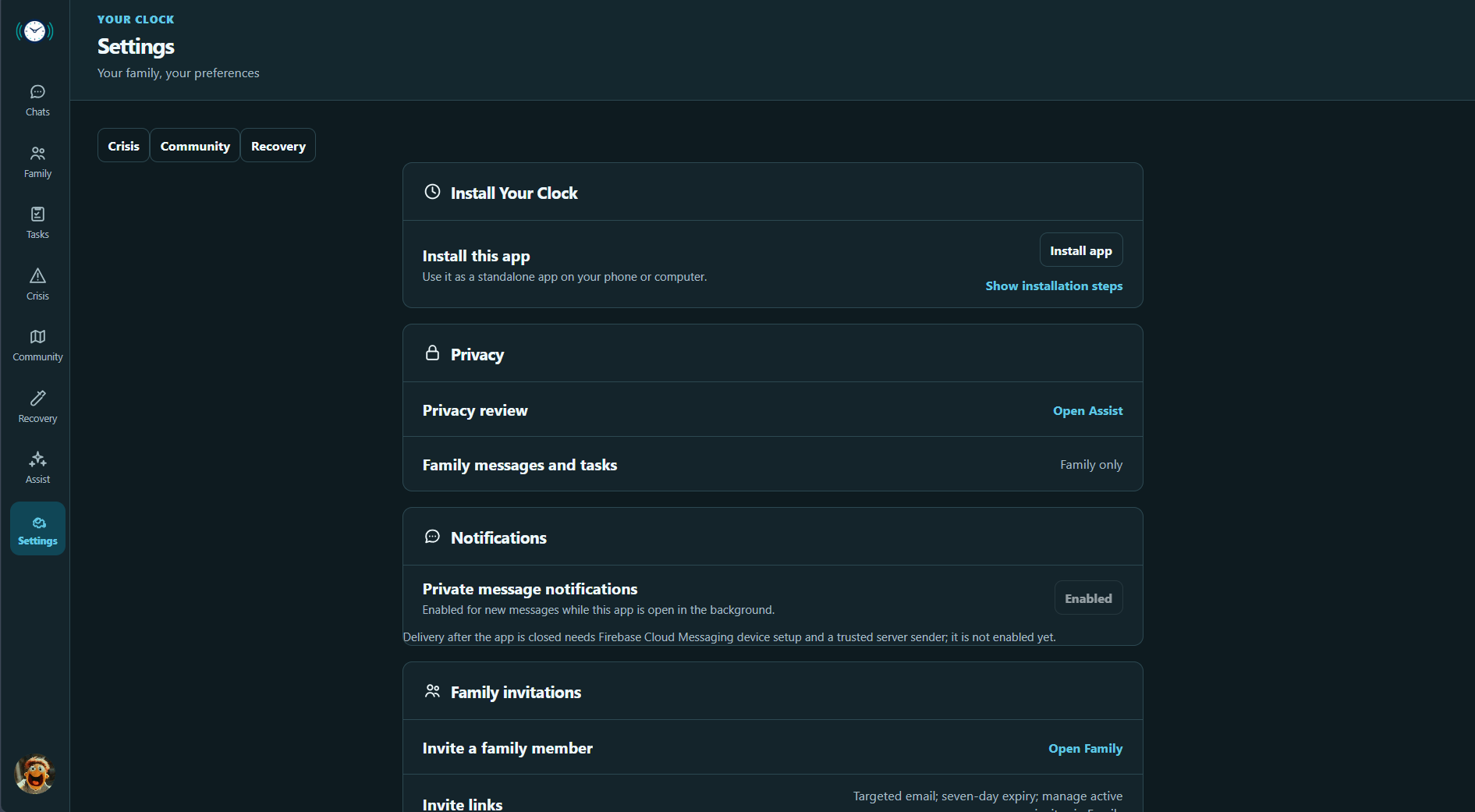
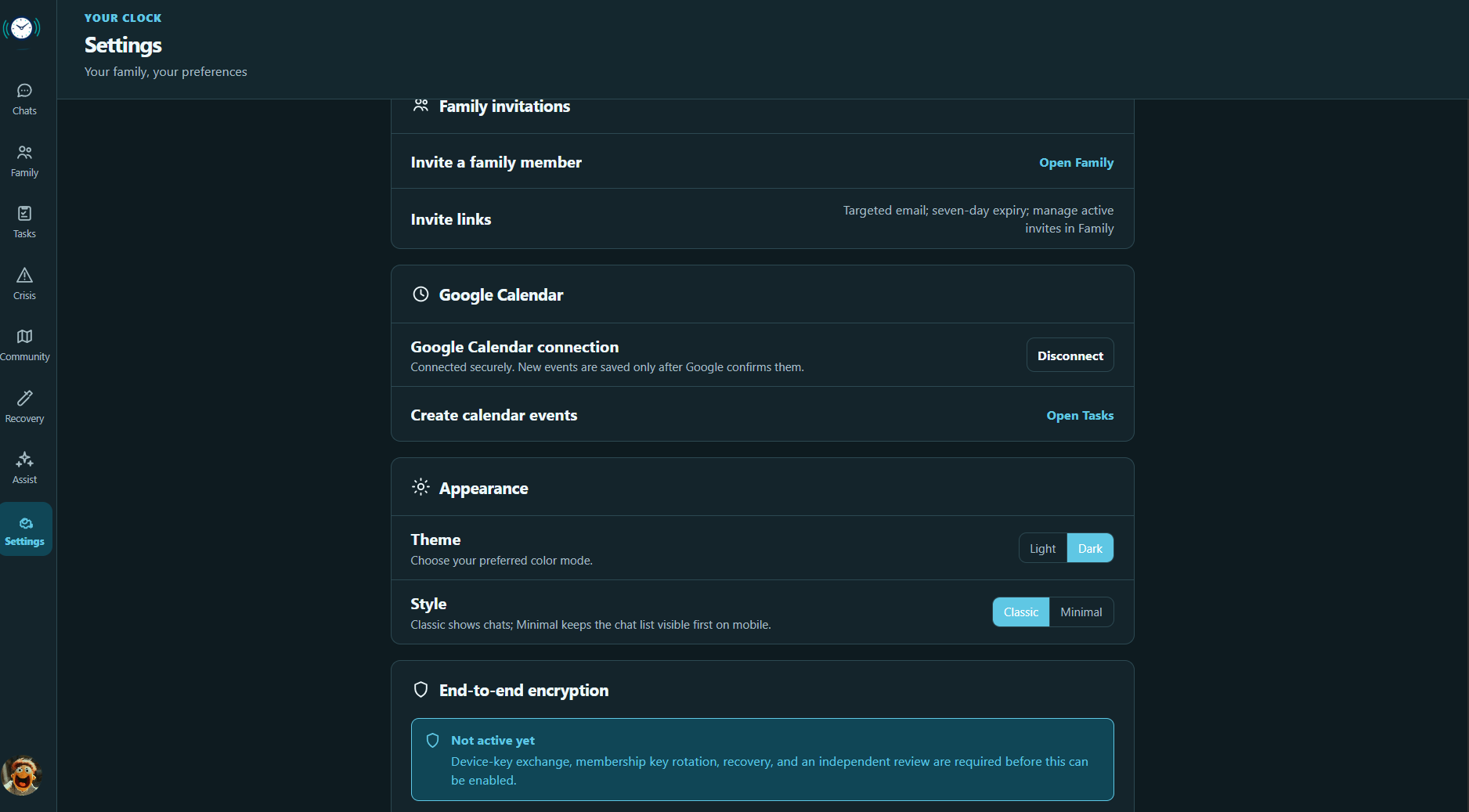
Settings
-
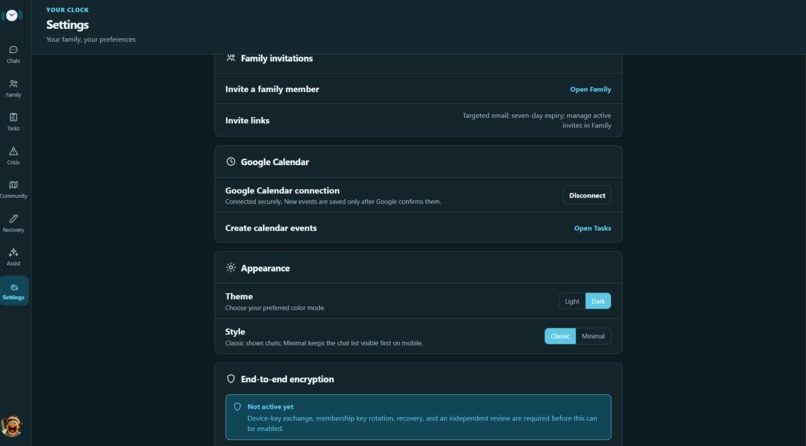
Settings
-
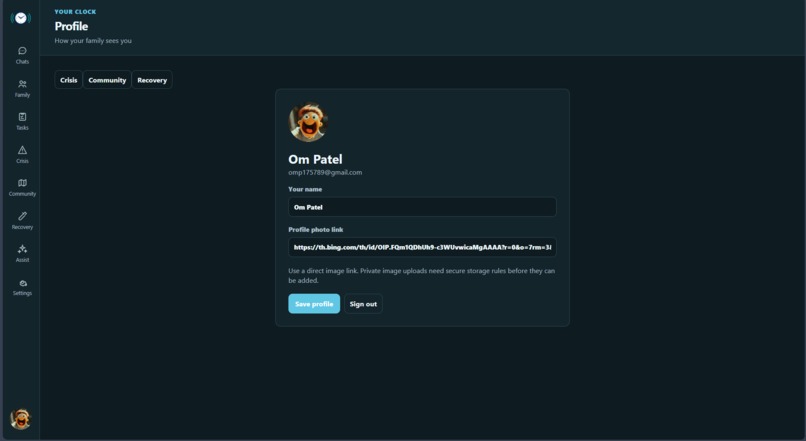
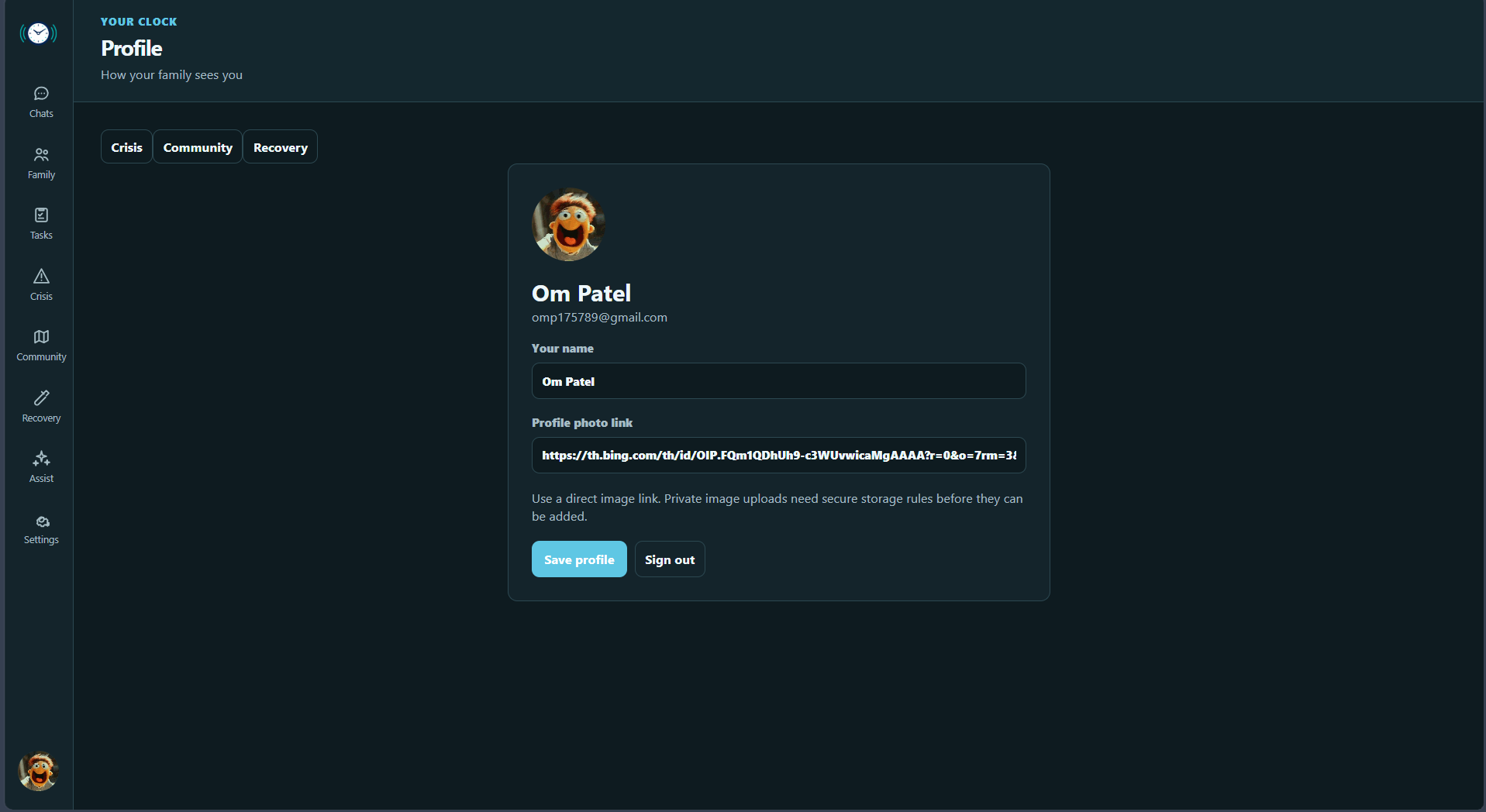
profile
Inspiration
Families already coordinate school runs, medicines, errands, appointments, and daily responsibilities through scattered chats and reminders. But when a flood or other crisis happens, those same conversations become urgent, confusing, and difficult to act on.
We created Your Clock to make family coordination useful every day and dependable when every minute matters. It begins as a shared family-management space with tasks and AI messages (need consent to send msg to AI so privacy is maintained) and then helps people organize requests, opt in to support, and do recovery work during a crisis.
What it does
Your Clock helps families manage shared responsibilities in one place. Family members can create tasks, share updates, and stay accountable for everyday needs.
During a crisis, Your Clock shifts into a coordination tool. A family responsibility can become a crisis request, volunteers can choose to help, and unresolved damage can be documented as a recovery case. Recovery cases remain unverified and private until a person explicitly approves them for wider sharing.
Your Clock does not replace emergency services. It guides people in immediate danger toward official emergency help.
How we built it
Your Clock was developed as a web application with distinct frontend, backend, AI, and integration tasks.
Clear family and crisis flows are the main focus of the frontend. For tasks, requests, volunteer involvement, and recovery cases, the backend offers reliable data contracts. We use Supabase for protected application data and Firebase for identity. The in-app AI is only used to turn unstructured updates into structured recommendations. High-impact actions are always checked and verified by humans.
Challenges we ran into
The hardest challenge was keeping the project useful in both ordinary and high-pressure moments. A family planning tool should be calming, simple. A crisis tool needs to be urgent, clear, with firm safety boundaries.
“We had to make privacy visible in the product as well.” Family messages are private by default, volunteering is always opt-in and recovery cases can't be published without approval. On the technical side, integrating Firebase authentication and Supabase access controls required a careful management of token and profile sync.
Accomplishments that we're proud of
- Creating one product that supports both daily family life and disaster recovery.
- Designing a clear path from responsibility to crisis request to recovery case.
- Keeping people, not AI, in control of meaningful decisions.
- Building privacy and consent into the core flow instead of treating them as afterthoughts.
- Demonstrating the entire experience with fictional data and an understandable end-to-end scenario.
What we learned
We learned that resilient technology is not only about sending alerts. It is about helping people understand who needs help, who has volunteered, what remains unresolved, and what can safely be shared.
We also learned that trust comes from clear boundaries: private by default, opt-in participation, visible verification status, and explicit approval before public recovery work.
What's next for Your Clock
Next, we want to strengthen everyday family planning, improve accessibility for stressful situations, and add richer coordination tools for trusted local communities. We also plan to refine the recovery workflow so families and community partners can track approved needs through to resolution without compromising privacy or making unsupported claims about emergency response.
Built With
- firebase-authentication
- google-calendar-api
- google-gemini-api
- postgresql
- progressive
- pwa
- react
- supabase
- tailwind-css
- typescript
- vite
- web-app


Log in or sign up for Devpost to join the conversation.