🩺 About ClinicLite
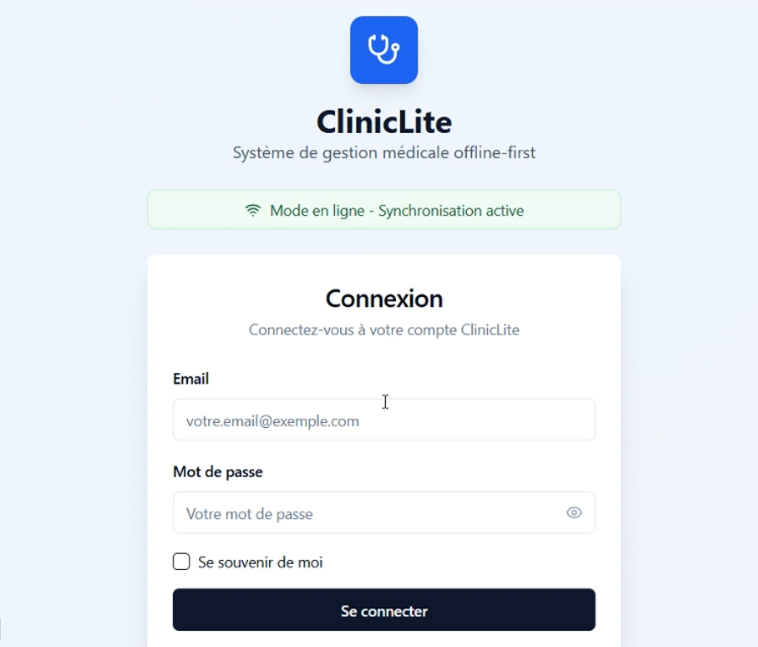
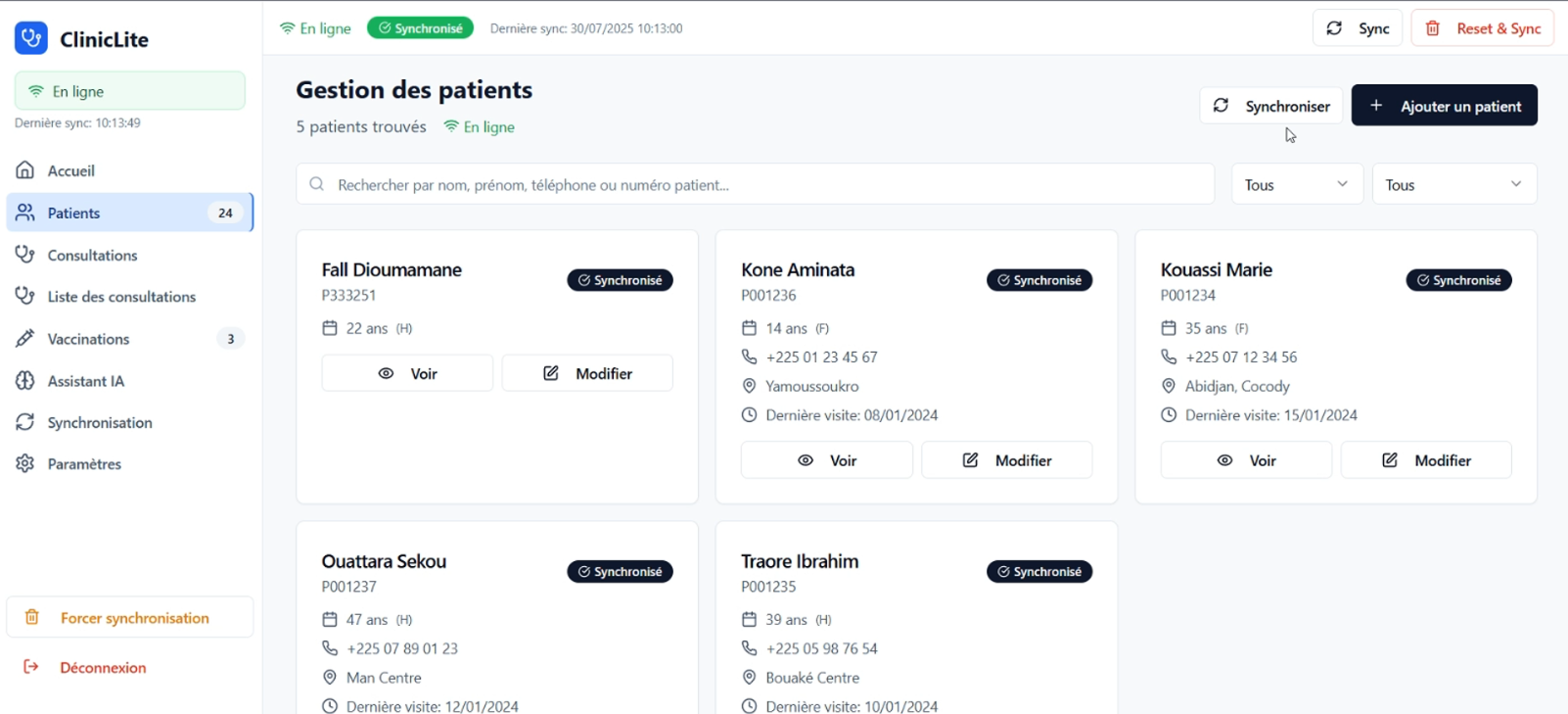
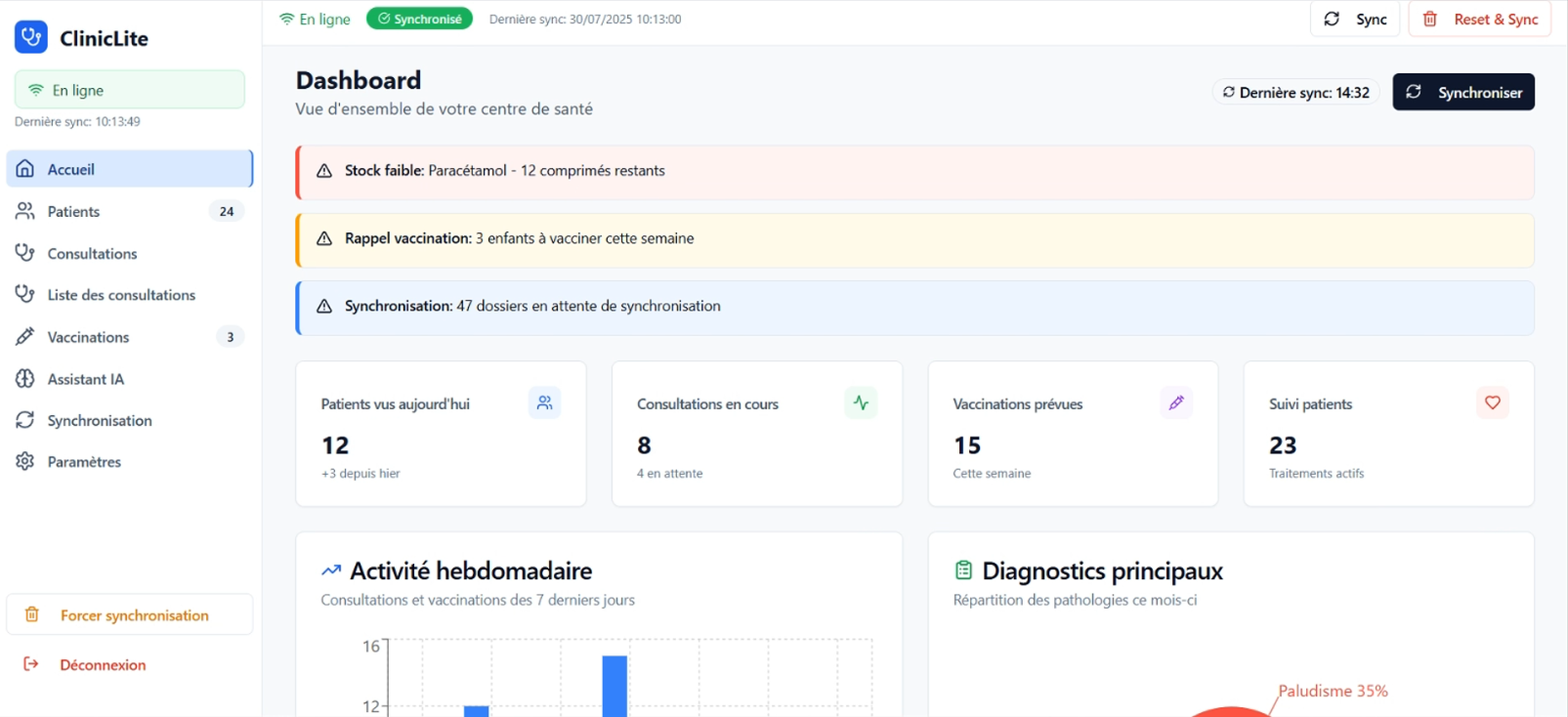
ClinicLite is an offline-first electronic health records (EHR) system tailored for rural or resource-constrained environments. It empowers healthcare workers in remote areas to manage patient data even without internet access, while also leveraging AI locally to assist in clinical tasks.
🌱 Inspiration
In many parts of the world, rural clinics still rely on paper records or limited digital systems, often due to poor connectivity, lack of power, or outdated hardware. We wanted to design a system that works offline by default, is lightweight, and still brings the power of AI assistance to frontline health workers — without relying on cloud APIs or constant internet.
🛠️ Tech Stack
We deliberately chose technologies that are resource-friendly, open source, and easy to deploy on modest hardware:
⚙️ Backend: Node.js with Express — fast, lightweight, and easy to containerize.
🖥️ Frontend: React (Vite) PWA — optimized for speed and offline use via PouchDB + Service Workers.
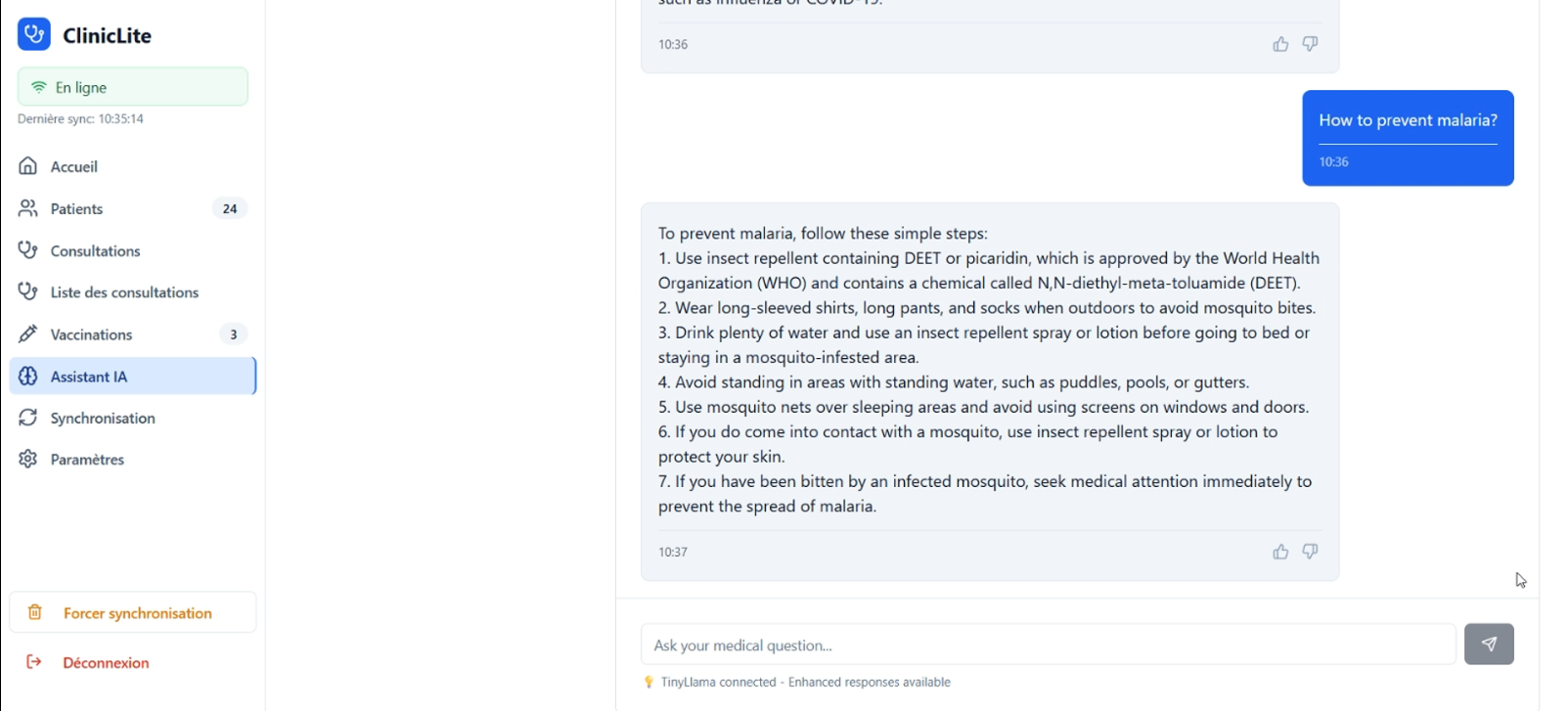
🧠 AI: TinyLLaMA running locally via Ollama, eliminating the need for external AI APIs.
💾 Database: SQLite (on backend) and PouchDB (in-browser sync).
📦 Docker Compose: Entire system runs in containers, easy to deploy on any PC or LAN without internet.
🛜 Optional Sync: When a connection is available, data can be synced securely to a central database.
🔁 How It Works The React PWA runs fully offline using PouchDB, storing patient data locally in the browser.
The backend handles synchronization and reporting, using SQLite as a fast and minimal embedded DB.
Ollama loads the TinyLLaMA model locally for tasks like summarizing notes, suggesting treatments, or generating patient reports — all without the cloud.
The entire stack is wrapped in Docker containers and can be deployed on multiple PCs connected via LAN.
🚧 Challenges
Running LLMs locally in limited environments (no GPU, limited RAM) required model optimization and tight integration.
Ensuring smooth sync between frontend PouchDB and backend SQLite was tricky, especially for offline-first behavior.
Making everything work offline, including authentication and AI inference, required careful architectural design.
Packaging the app for easy deployment on other machines was solved via Docker and local model bundling.
💡 What We Learned
It's absolutely possible to bring cutting-edge AI to low-resource contexts if you combine the right tools.
Offline-first design isn't just a fallback — it's a powerful architecture for resilience and accessibility.
AI models like TinyLLaMA and containers like Ollama can dramatically expand what's possible without the cloud.

Log in or sign up for Devpost to join the conversation.