-

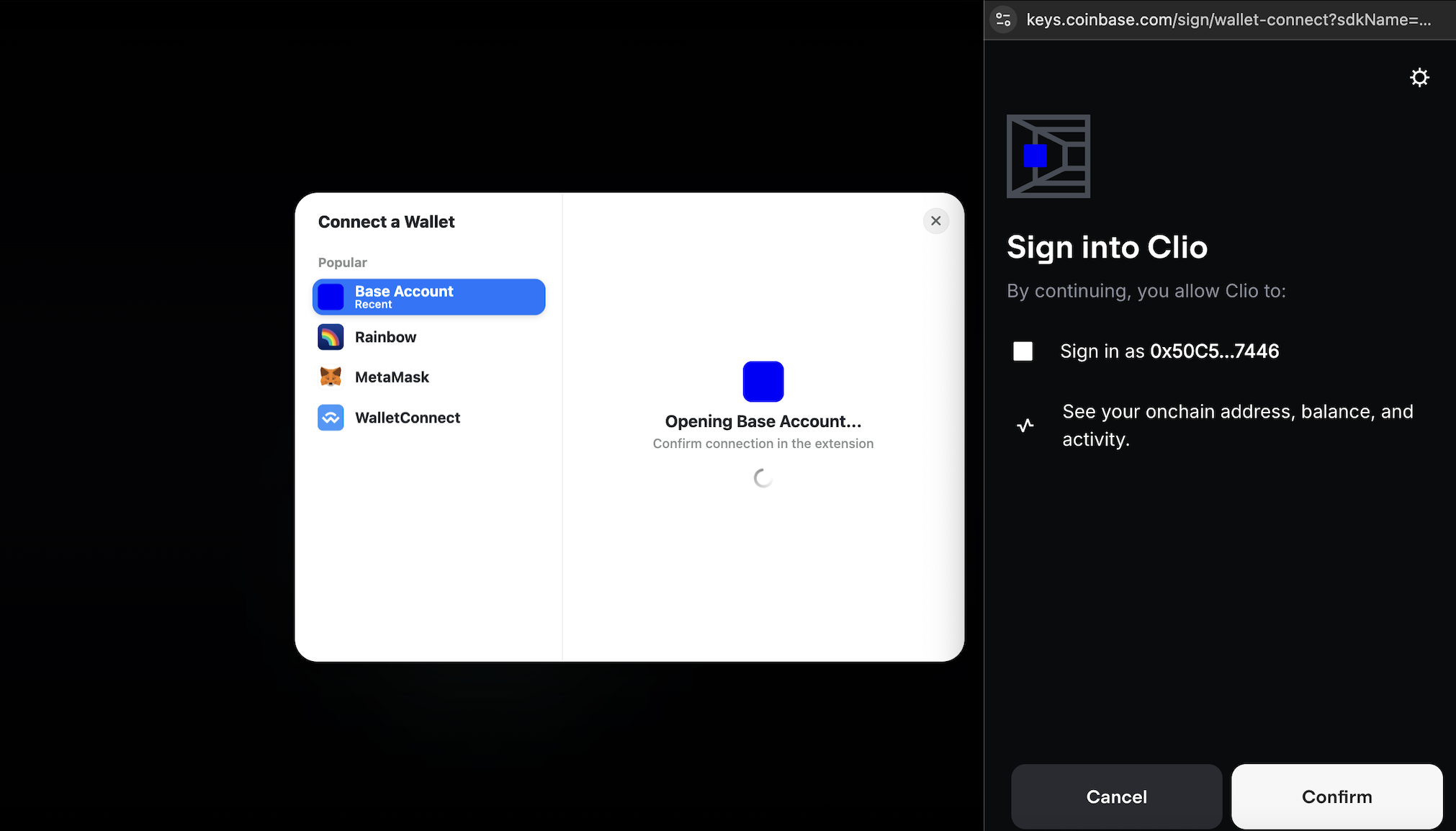
Wallet Connection
-

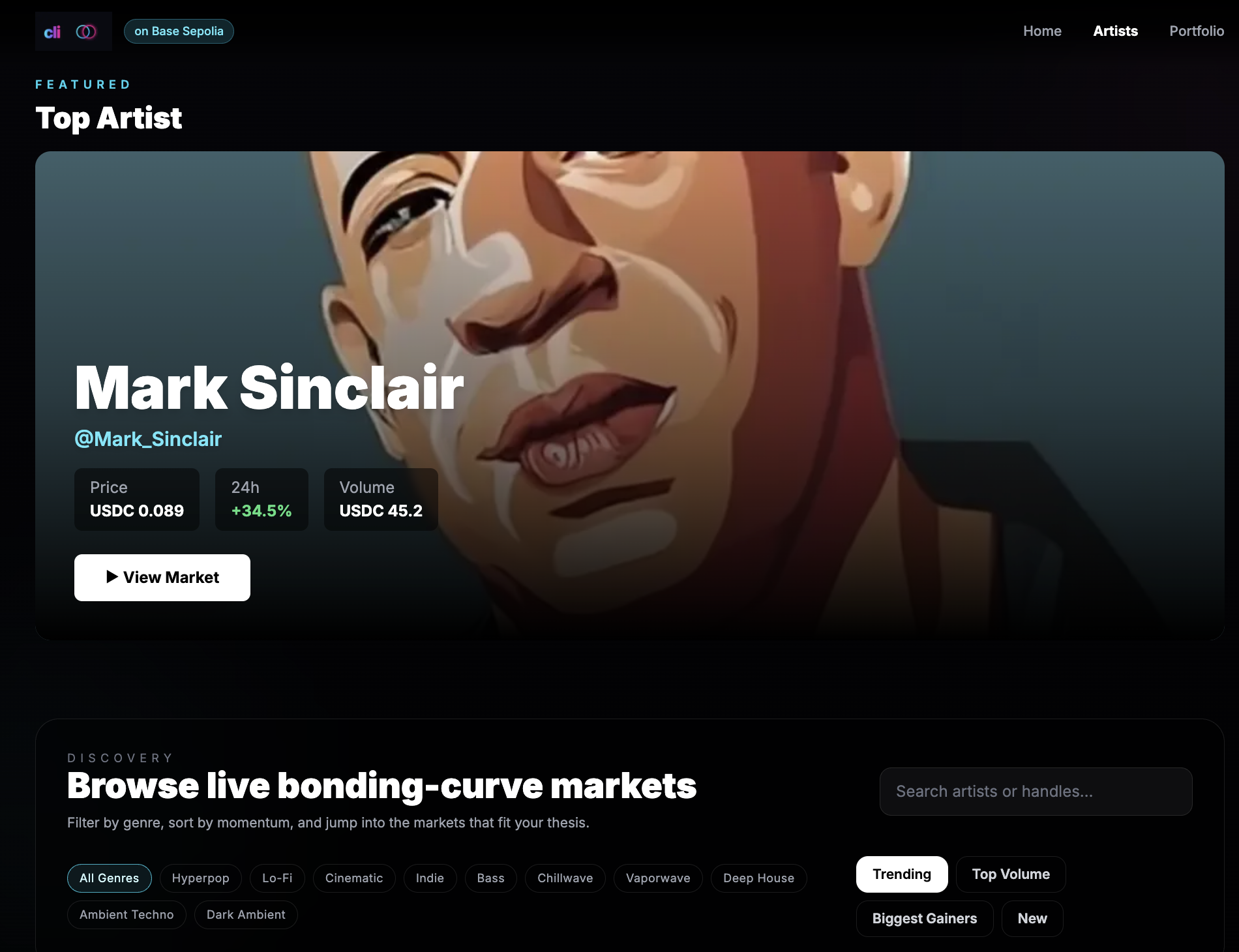
Main UI Page
-

MAIN UI Page (cont.)
-

Individual Trading Market
-

Portfolio Page
-

Early Access Episode


What Inspired Us
People-driven markets today are built on hype, not on real talent growth or long-term potential.
They explode fast, die faster, and never create lasting value. We wanted to build something different, a people-market that measures trajectory, not virality.
The Gap We Saw
Everything in the current landscape monetizes attention and speculation. What’s missing is the one force that actually sustains value: community. It might sound simple, but strong community leads to long-term monetization. That’s the core insight behind Clio.
We built Clio around identity + incentive + culture.
You don’t earn because you’re trending; you earn because you support, discover, and witness real progress.
How We Built It
Clio’s architecture is designed to combine on-chain guarantees with a responsive frontend, creating a seamless people-market experience.
On-Chain Architecture
- ClioRegistry: Maintains the artist roster.
- ClioFactory: Mints
ClioArtistTokenand registers artists. - ClioMarket: Implements a USDC-only linear bonding curve per artist, paying a fee to the artist wallet and tracking reserves per artist.
Flow:
approve USDC→buy(artistId, tokenAmount, maxUsdcIn)mints tokens and pays fee →sell(artistId, tokenAmount, minUsdcOut)burns tokens and releases USDC from reserves (fee skimmed).
Curves are pre-initialized (basePriceWad, slope, feeBps) and enforced using quoteBuy/quoteSell math.
Frontend Design
- Built with Next.js 13 App Router + TypeScript, using wagmi v2 + viem for Ethereum interactions.
- Pages fetch artist metadata directly from the on-chain registry and market price, enriched with mock visuals and the
deployedArtistsmapping for live addresses. - React hooks wrap buy/sell/approve logic, read balances and allowances, and gate the UI with slippage checks, allowance verification, and balance guards.
Data Flow
- Direct contract reads power prices, allowances, and balances.
- No indexer yet, so volume and market cap are placeholders.
- USDC uses 6 decimals, while on-chain prices use 18-decimal wad format, converted client-side.
Tech Stack
- Contracts: Solidity 0.8.20, OpenZeppelin ERC20 + SafeERC20/ReentrancyGuard, Hardhat for builds and deploys, targeting Base Sepolia.
- Frontend: Next.js 13, TypeScript, Tailwind CSS, wagmi v2 + viem, Prisma (for DB, not in buy/sell flow), npm workspaces (root, contracts, web).
- Tooling: Generated ABIs in
abis/, config incontracts.ts, deployment/seeding scripts.
Engineering Challenges
- Allowance UX: Needed to read USDC allowance and hide/disable approve when sufficient, avoiding double-approval friction.
- Slippage & Pricing Units: Handling USDC 6 decimals vs 18-decimal wad on-chain prices; exposed
maxUsdcInon buys to prevent reverts. - Curve Initialization & IDs: Ensured correct
artistIdmapping (0–9) and pre-initialized curves to prevent “curve not initialized” errors. - Balance Enforcement: Prevented sells above wallet balance using additional reads and UI guards.
- Data Gaps: Without an indexer, bridged on-chain data with mock visuals and the deployed mapping to keep the UX coherent.
Designing the Experience
We spent significant time designing the Discovery Feed.
It’s the central place where users don’t just scroll; they evaluate in investing in real human trajectory.
It has to feel:
- interactive
- investment-driven
- identity-forward
Each card reflects someone’s potential through consistency signals, progress updates, and verified milestones.
Challenges We Faced
One of the hardest problems was figuring out how to score success without turning the platform into another popularity contest. We experimented with identity layers, milestone proofs, and community-supported signals.
What’s Next
One feature we’re excited to build next is a Credibility Score.
It’s a metric that evaluates actual potential and enables data-driven decision making. Close to a composite index of consistency, milestones, and cultural proof-of-work.
Built With
- base
- circle
- hardhat
- javascript
- next.js
- openzeppelin
- remix
- solidity
- sqlite
- typescript

Log in or sign up for Devpost to join the conversation.