-
-
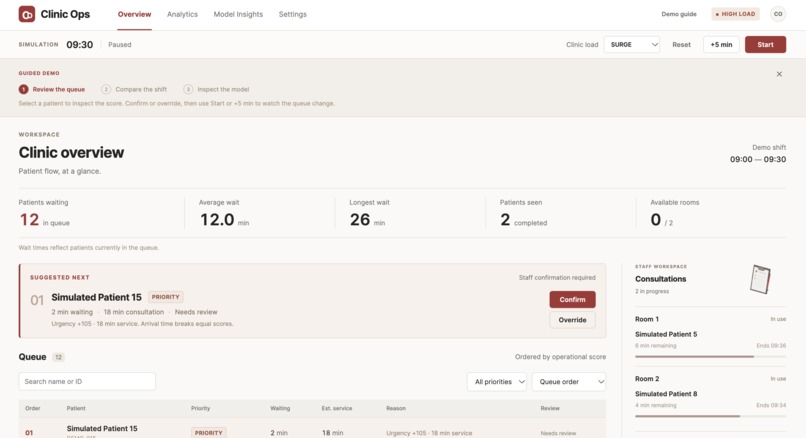
Overview
-
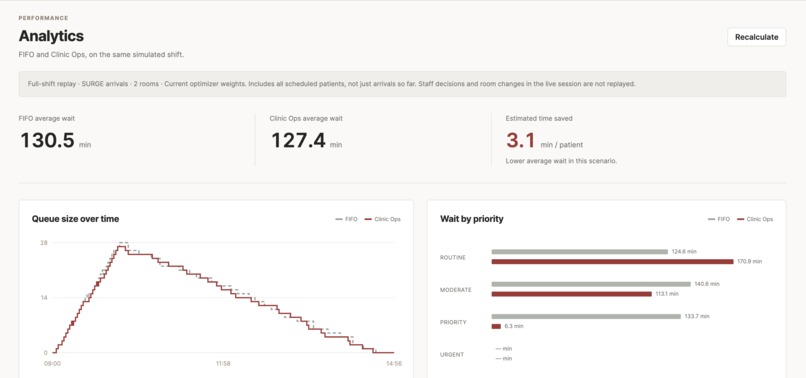
Analytics
-
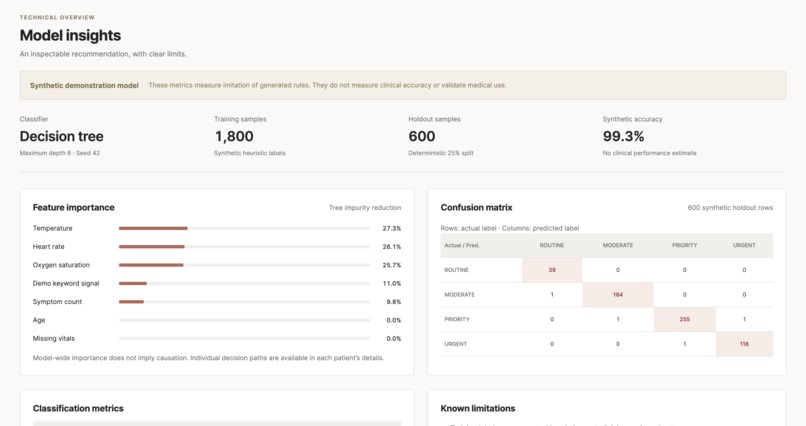
Model Insight
-
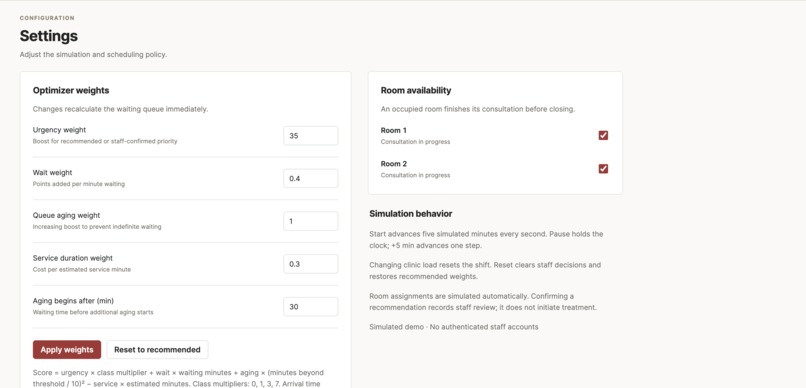
Settings
Inspiration
My inspiration for this project was the fact that one of my friends' grandmothers died when she went to the emergency room because she had a crucial brain tumor and she fell. They went to the emergency room, but it was so full, and no one took care of his grandma. By the time she got care, it was too late, and she died. I saw how this had a great impact on my friend and his family, and I believe that this problem should not be on anyone's family. That's why we created Clinic Ops.
What it does
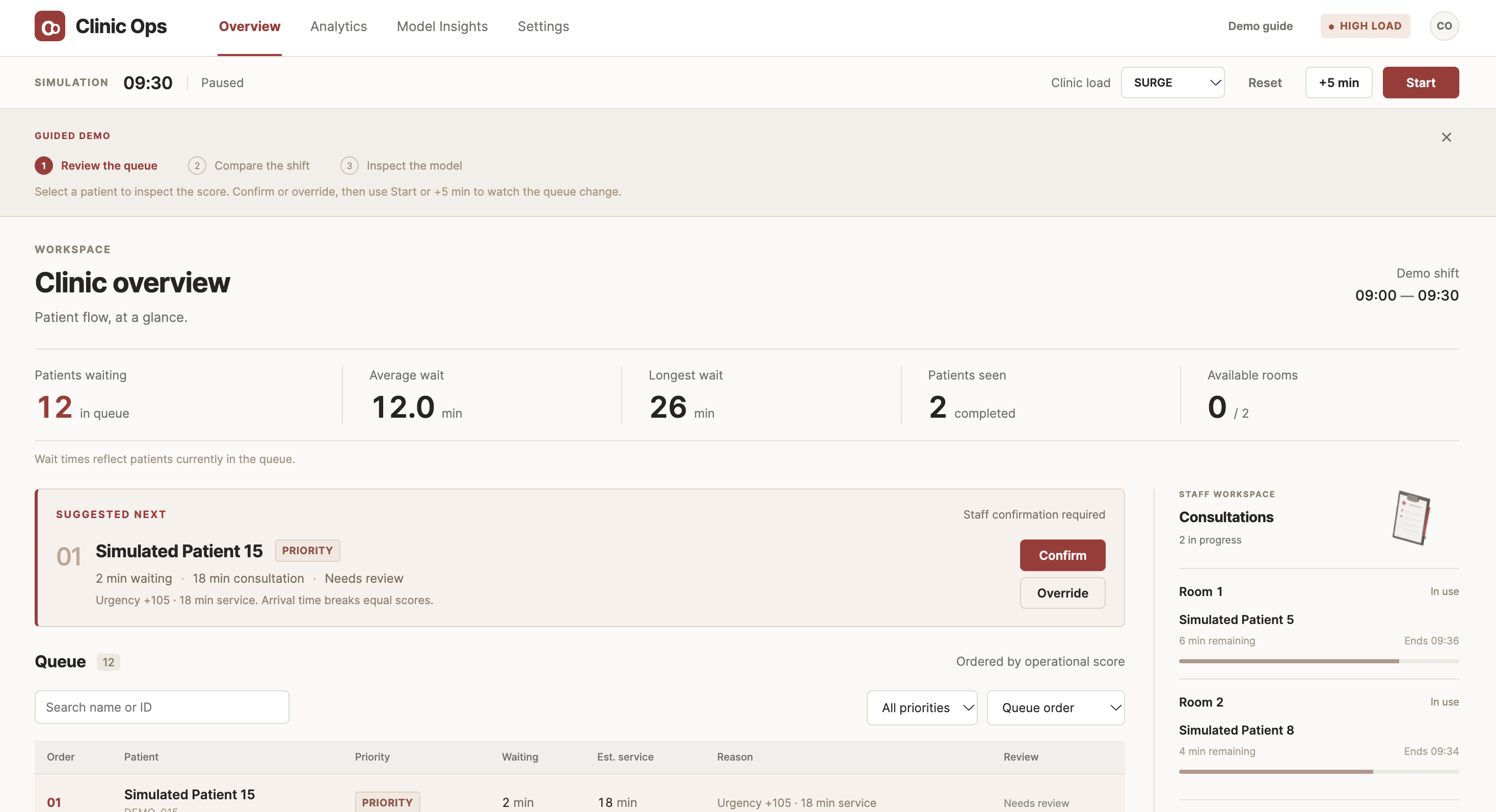
Clinic Ops is software that allows individuals to input what happened, their different vitals, and any crucial information that they believe is important. This information is run through an AI model and is given a projected level of importance compared to the other patients who are there. This information is also given to the doctor, who can then either accept the suggestion given by the AI or not accept it. We do not want the AI to make the final decision because AIs are prone to mistakes, and people's lives are in its hands.
How it works
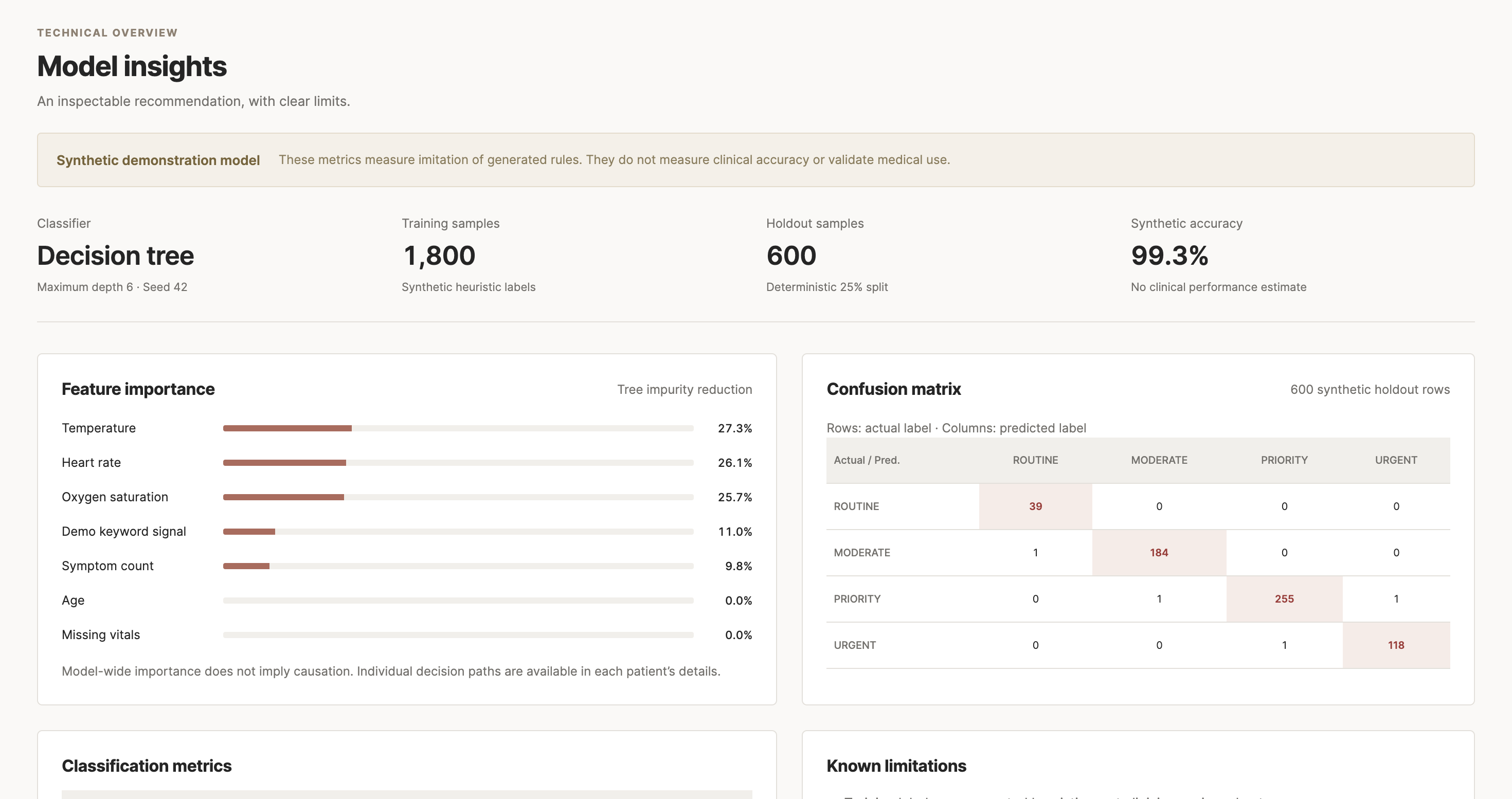
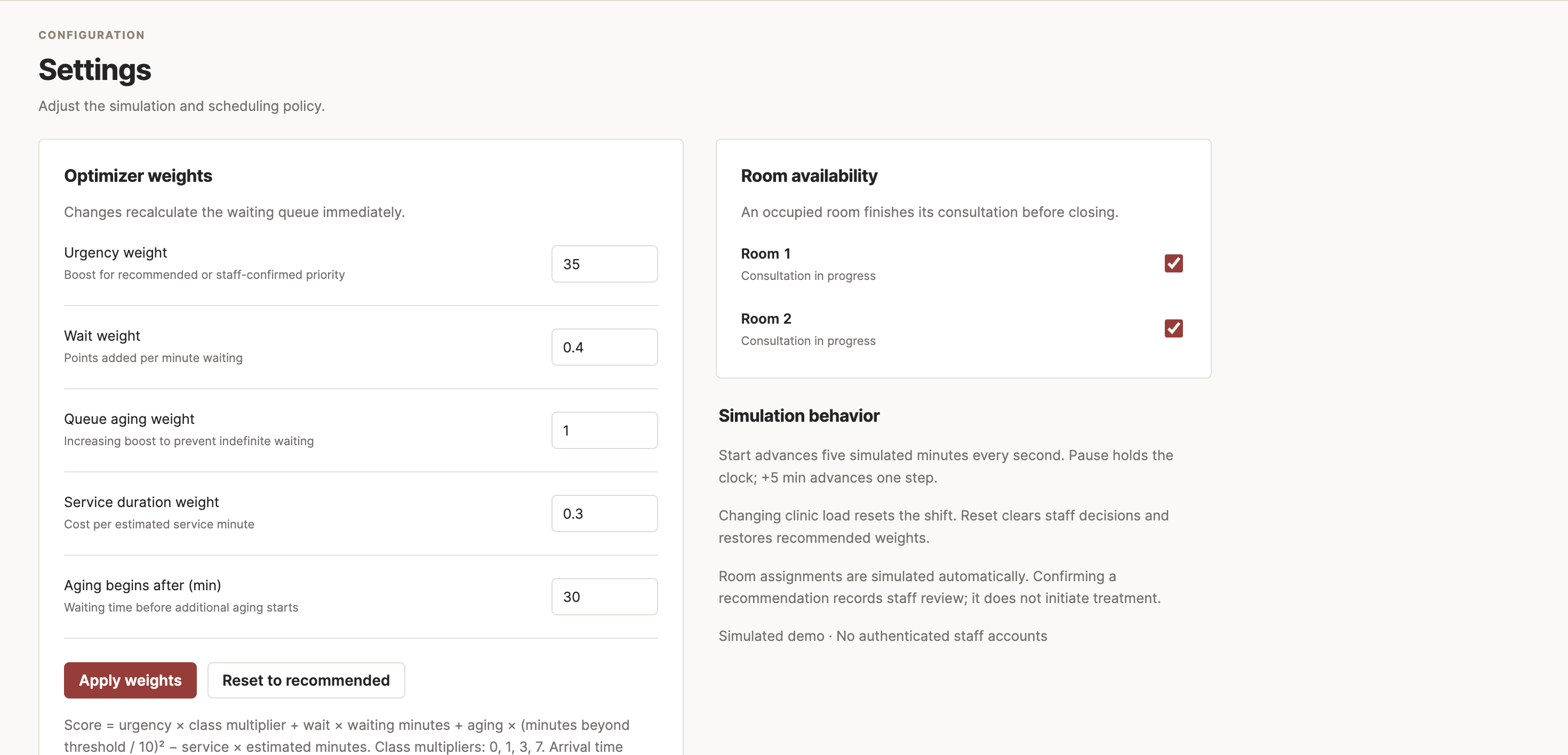
Clinic Ops turns a static patient queue into an intelligent, continuously optimized workflow. Patient data from JSON is analyzed by an ML classifier that assigns an operational urgency level. Our queue optimizer then combines urgency, wait time, queue aging, and estimated service time to determine the suggested order.
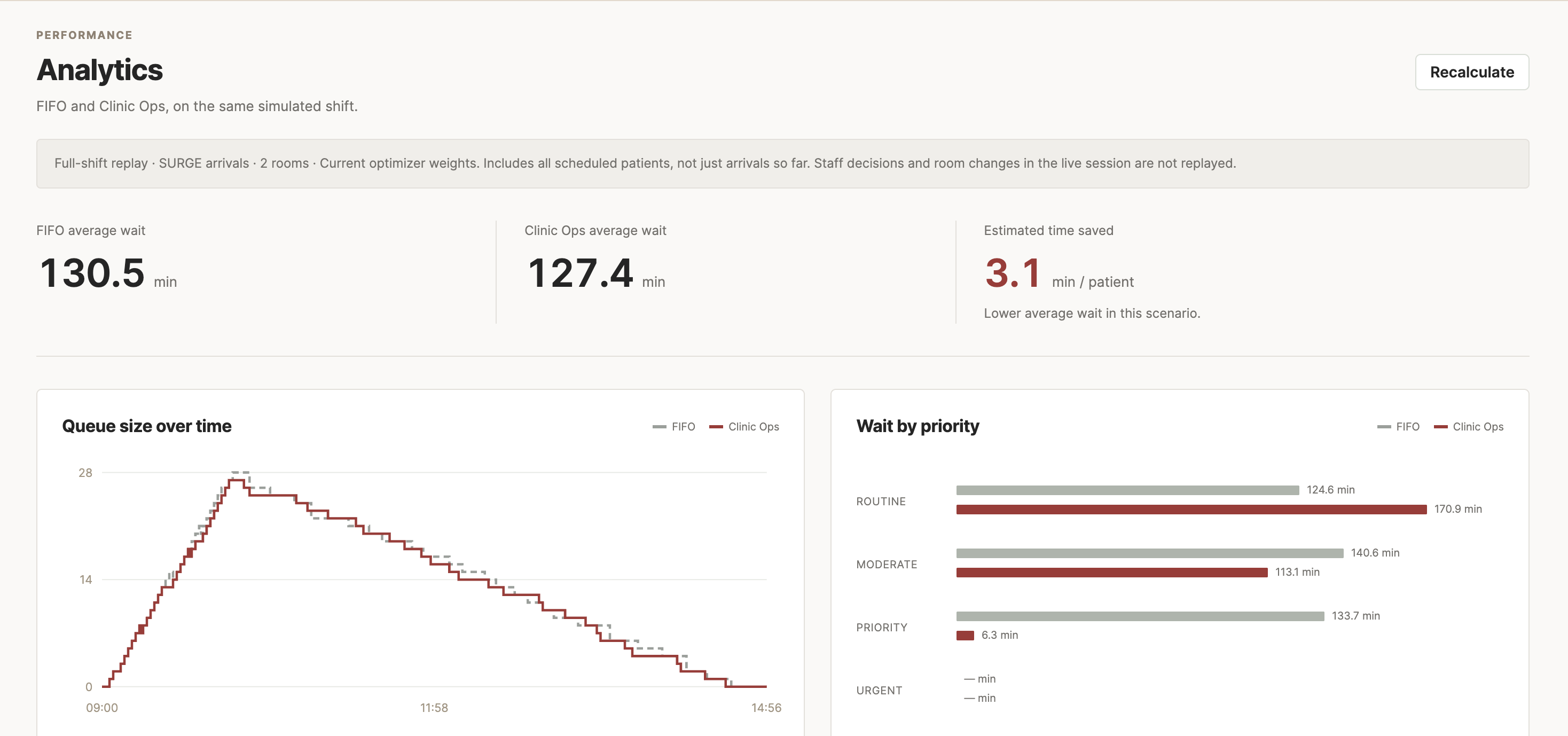
We compare the optimized queue against traditional FIFO scheduling and track metrics like average wait time, maximum wait time, and throughput. Staff can review, confirm, or override every recommendation.
How we built it
We built Clinic Ops with Python, pandas, scikit-learn/XGBoost, and Next.js/React. Python handles patient processing, ML classification, and queue optimization, while the frontend provides a real-time operational dashboard.
We use Three.js/React Three Fiber for an interactive landing experience and subtle medical visualizations. The dashboard displays the live queue, recommendations, simulation controls, analytics, and model insights using data generated by the actual optimization engine.
Challenges we ran into
Our biggest challenge was balancing urgency with fairness. Simply prioritizing the most urgent patients could cause lower-priority patients to wait indefinitely, so we introduced queue aging and wait time into the optimization process.
We also had to make ML useful without turning it into a black-box medical decision-maker. Clinic Ops therefore provides explainable operational recommendations while keeping staff in control.
Finally, we wanted the project to feel innovative without falling into the typical AI-dashboard aesthetic, so we focused on purposeful animation, restrained medical visuals, and a clean operational interface.
Accomplishments that we're proud of
We are proud of being able to create a program that could help many people in the future.
What we learned
During this project, we learned how many people in the world die because of delays in emergency room care, and how serious this problem is. This is also a problem that can be easily solved with a proper understanding of the importance and cruciality of a certain person's case and an organization that can help doctors with this.
What's next for ClinicOps
For ClinicOps, we plan on creating a physical kiosk model which has a blood pressure monitor, a blood oxygen machine, as well as a heart rate monitor. This is so that we can get all of these different clinical vitals and input them into our AI, where it can then analyze them and see where the patient belongs. After creating this kiosk, we plan on running clinical trials in some emergency room facilities and seeing how ClinicOps can actually work in these facilities and improve them.
Built With
- ai
- heath


Log in or sign up for Devpost to join the conversation.