-
-
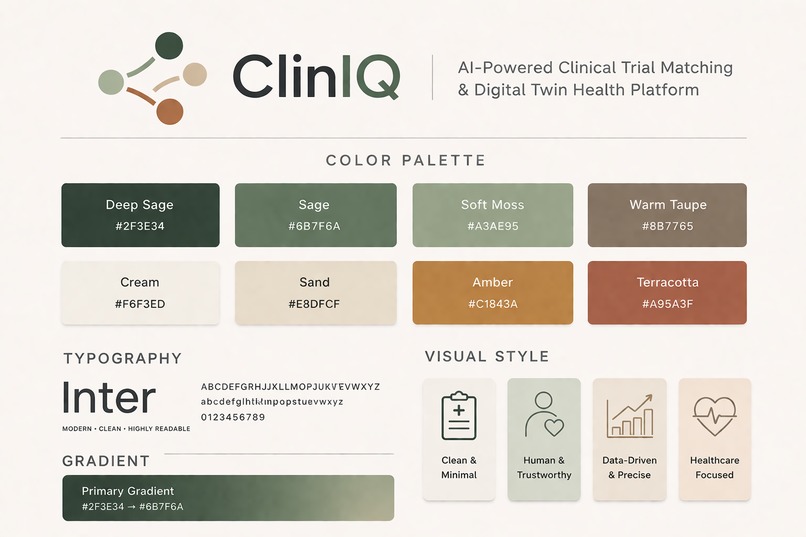
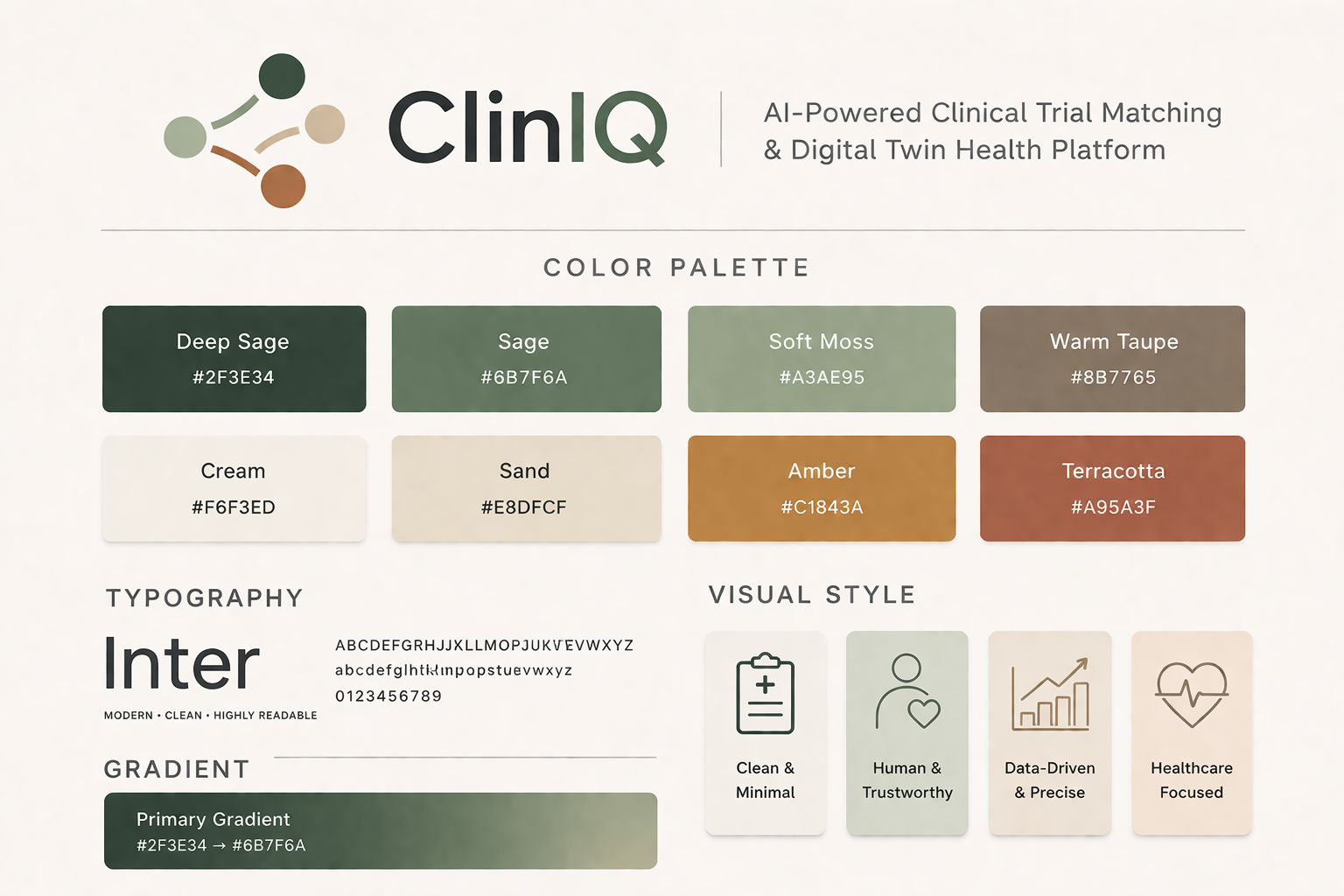
Brand Identity
-
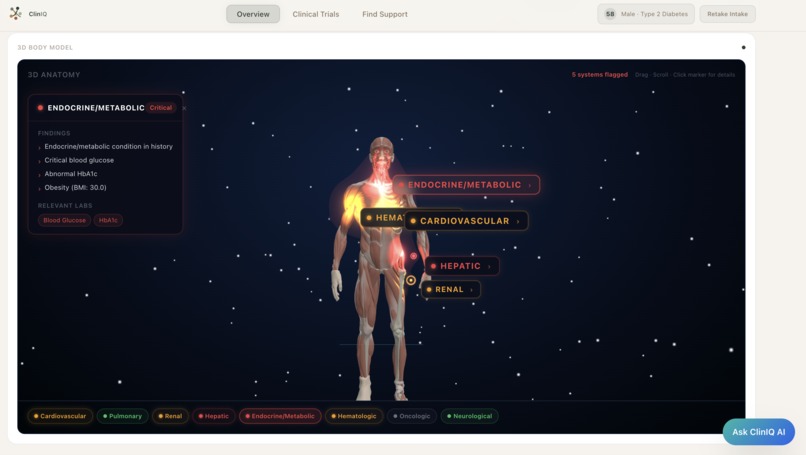
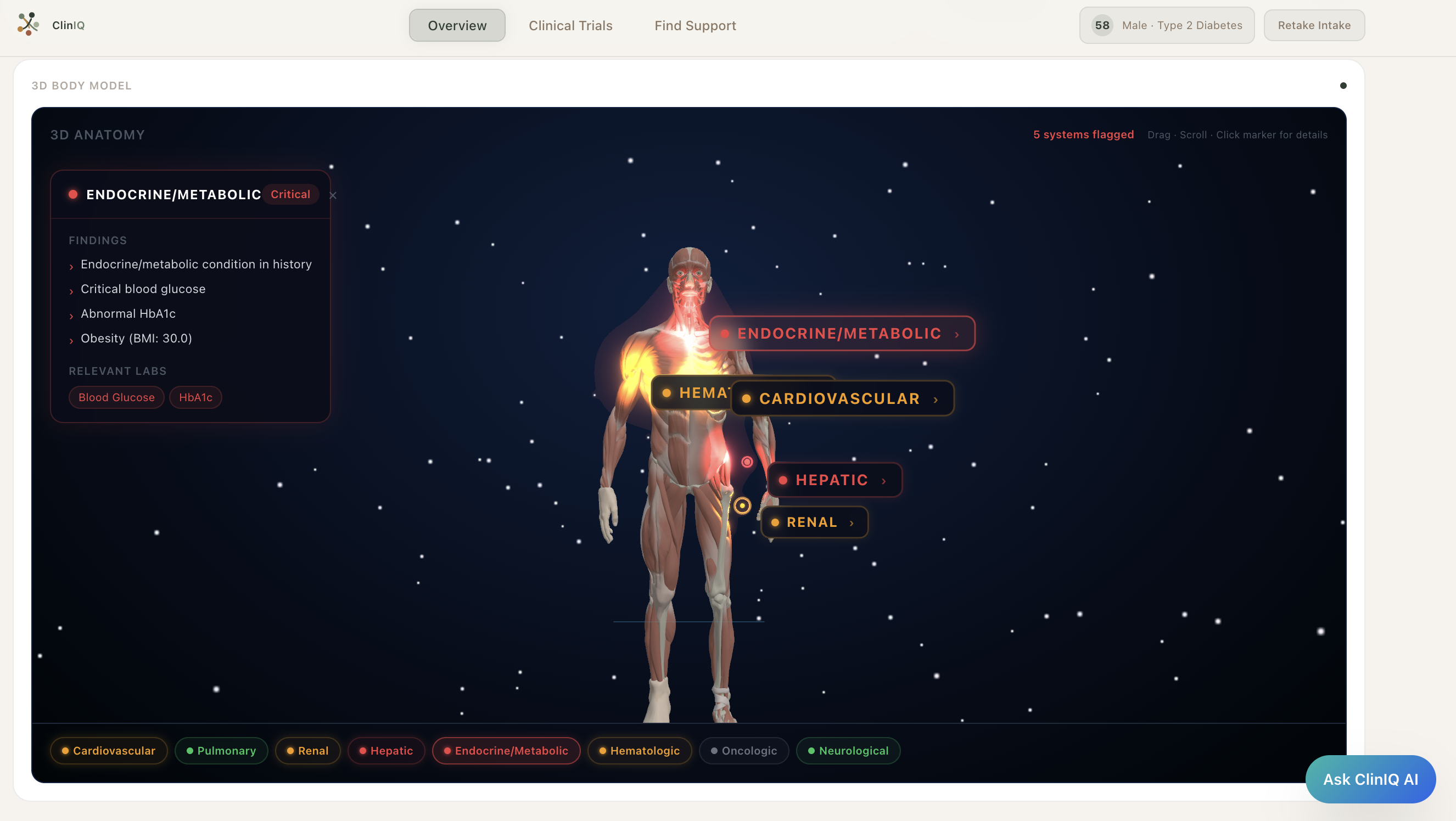
3D Anatomy explorer
-
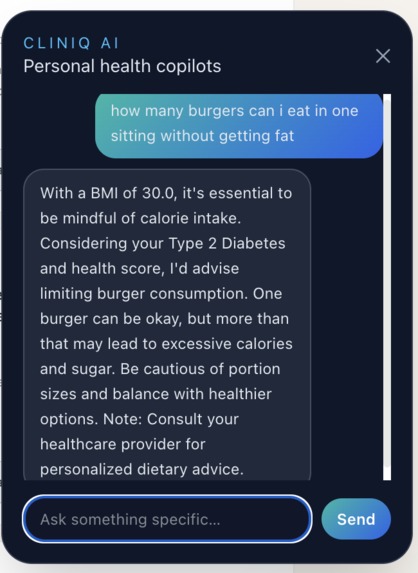
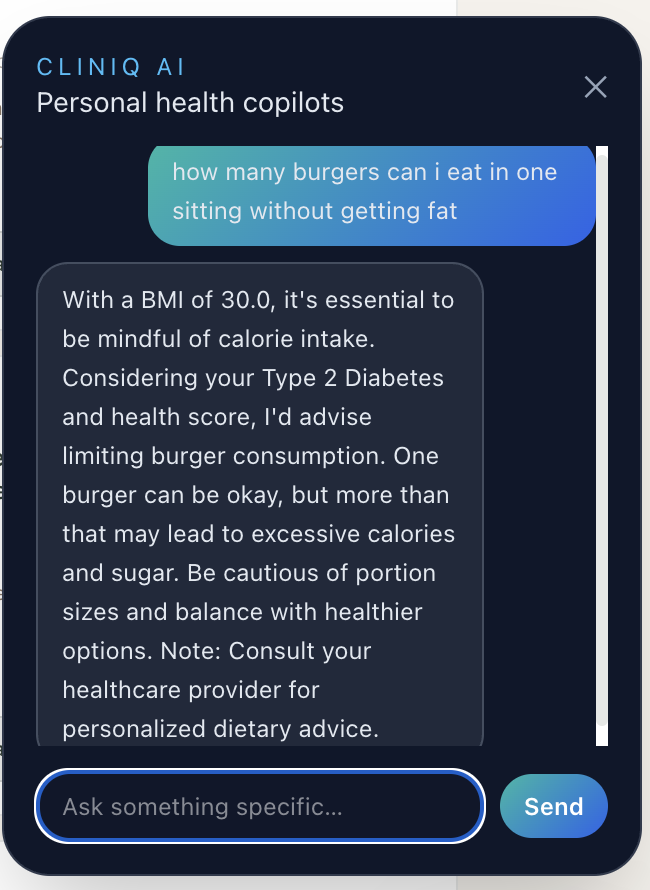
Chatbot Interaction
-
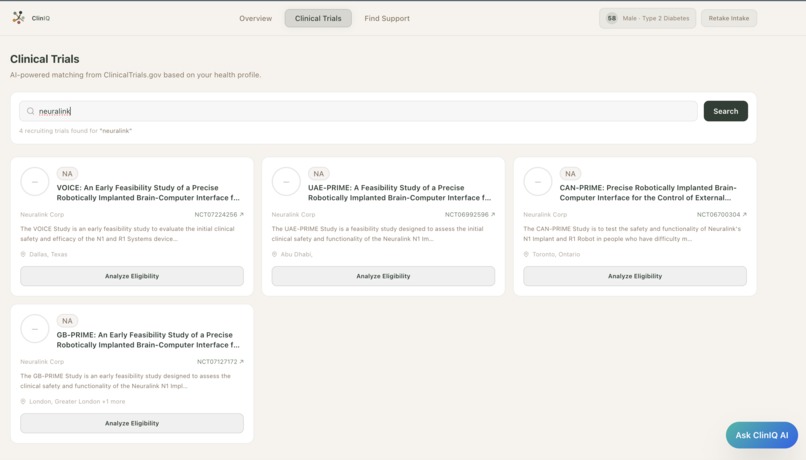
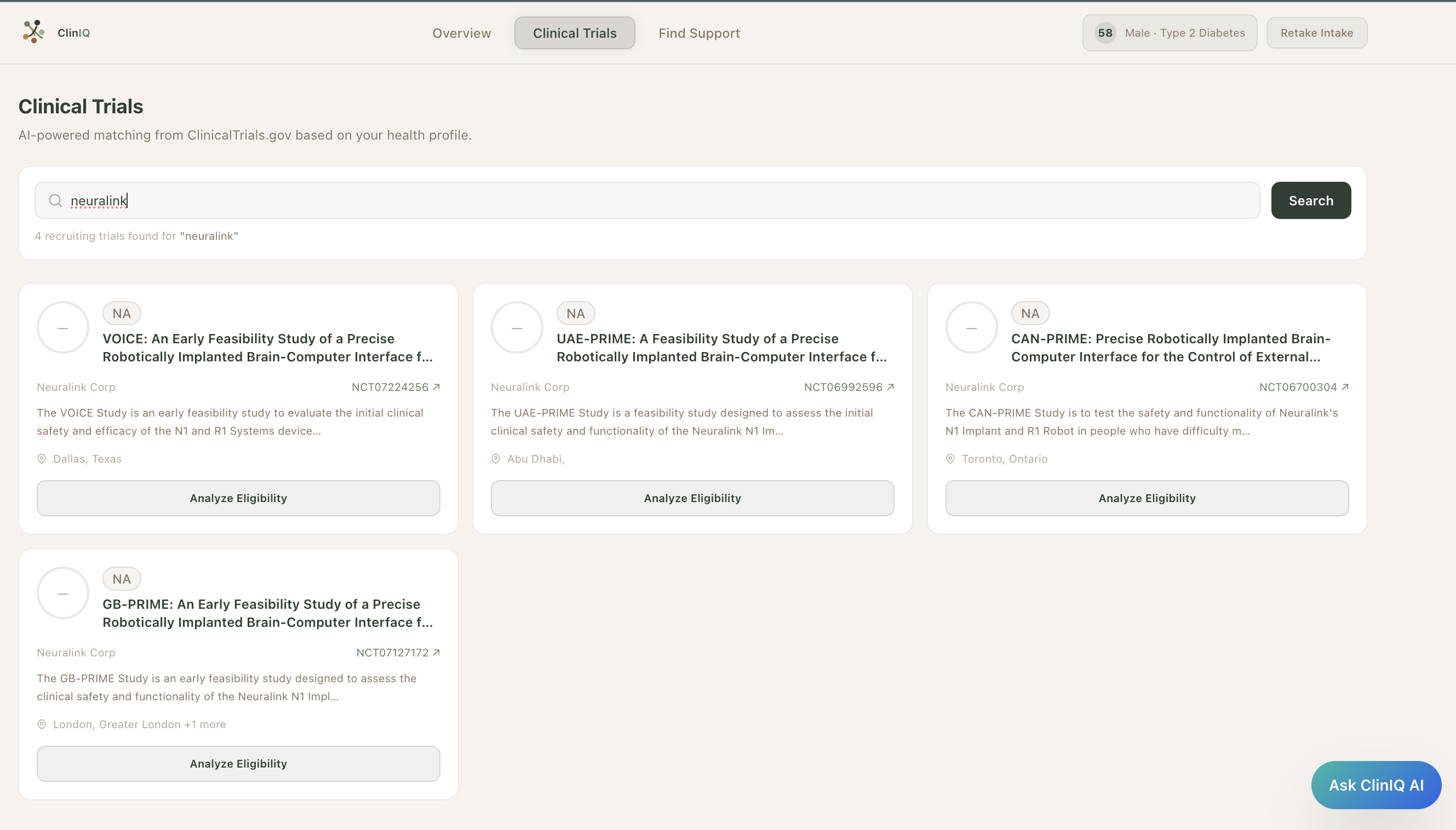
Searching for new trials
Inspiration
We built CliniQ after experiencing firsthand how overwhelming the healthcare system can be. Between juggling clinical trial options, confusing lab results, and endless doctor referrals, everything was scattered across different platforms, documents, and conversations, and there was no single place to actually understand what was going on and It felt like patients were expected to connect all the dots themselves.
So the idea behind ClinIQ was simple: What if all of this health data, trials, and care could live in one clear, intelligent workspace? Something that doesn’t just show data, but actually helps you understand it and act on it.
What it does
ClinIQ is an AI-powered platform that helps patients understand their health, discover relevant clinical trials, connect with healthcare professionals and take action.
It provides:
- A health dashboard that explains lab results, vitals, and conditions in plain English
- AI-powered clinical trial matching with personalized eligibility scoring
- A provider search system to find relevant specialists and trials nearby
- A context-aware AI assistant that answers questions based on the patient’s actual profile
At the core is a digital twin, a structured model of the patient that combines diagnosis, medications, lab results, vitals, and lifestyle factors.
How we built it
We built ClinIQ using a modern full-stack architecture focused on speed and real-time interaction.
- Frontend: Vite + React + Tailwind for a clean, responsive dashboard
- Backend: Express + TypeScript for a lightweight and fast API layer
- AI + Retrieval:
- Custom trial search pipeline using claude, groq and Scraper
- Claude-powered LLM for reasoning and chat
- Data Sources:
- ClinicalTrials.gov for trial data
- NPI Registry for provider lookup
- OpenStreetMap for location-based services
- Web Scraping
The system transforms raw patient data into a structured digital twin, which is then used for intelligent retrieval and explainable results.
Challenges we ran into
One of the biggest challenges was building the 3D body visualization. Mapping medical data to an interactive model while keeping performance smooth was much harder than expected, and required significant simplification and optimization. Even just finding the correct model was hard and unfortunately we aren't skilled in blender yet!
Another major challenge was dealing with messy healthcare data. Lab reports and health documents come in completely different formats, so we built an extraction layer that parses uploaded PDFs and uses AI to normalize them into a structured patient schema which handles inconsistent field names and layouts automatically.
Accomplishments that we're proud of
- Building a working digital twin system that powers the entire platform
- Creating an AI pipeline that can interpret real clinical trial eligibility criteria
- Delivering plain-English explanations for complex medical data
- Integrating trial search, provider discovery, and AI chat into one seamless experience
- Achieving fast response times while handling complex data and reasoning
What we learned
We learned that healthcare isn’t just a data problem, but an understanding problem.
Working with real medical data taught us how messy and fragmented the system is, and how important normalization and structure are.
Most importantly, we learned that even highly technical systems need to feel simple and intuitive for users.
What's next for CliniQ
In the future we'd like to expand CliniQ with:
- Medication and dosage tracking
- A collaborative caregiver view for families
- Deeper personalization for trial matching
- Long term health tracking
Built With
- claude
- clinicaltrials.gov
- express.js
- groq
- node.js
- npi
- react
- serpapi
- tailwind
- typescript


Log in or sign up for Devpost to join the conversation.