-
-
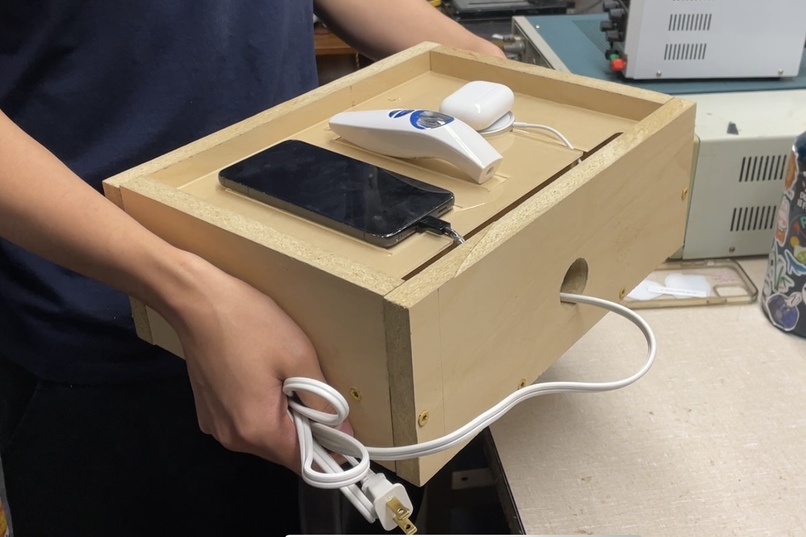
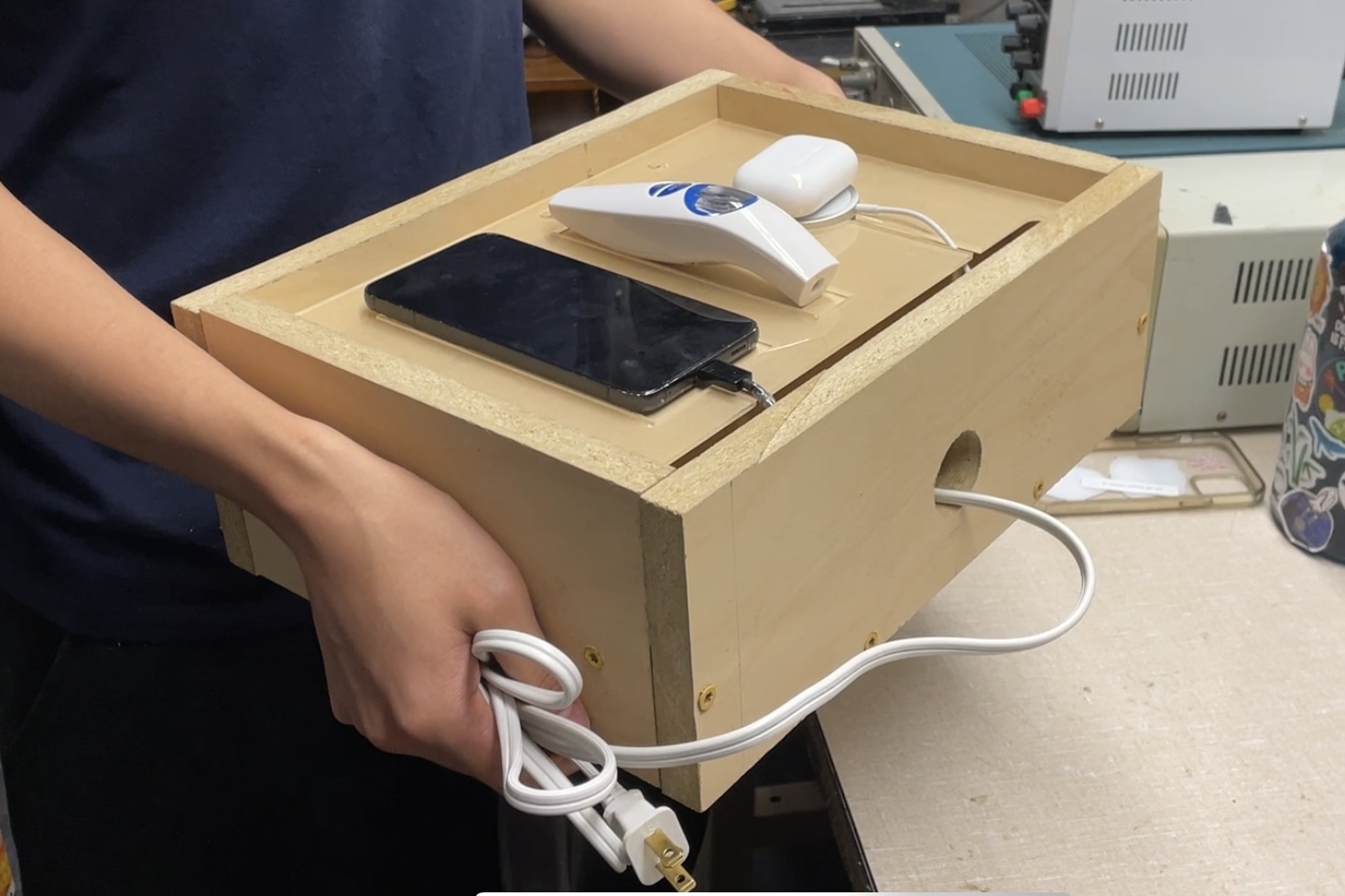
A look at the exterior of the clinimod box, featuring a minimalistic design and a single charging cable
-
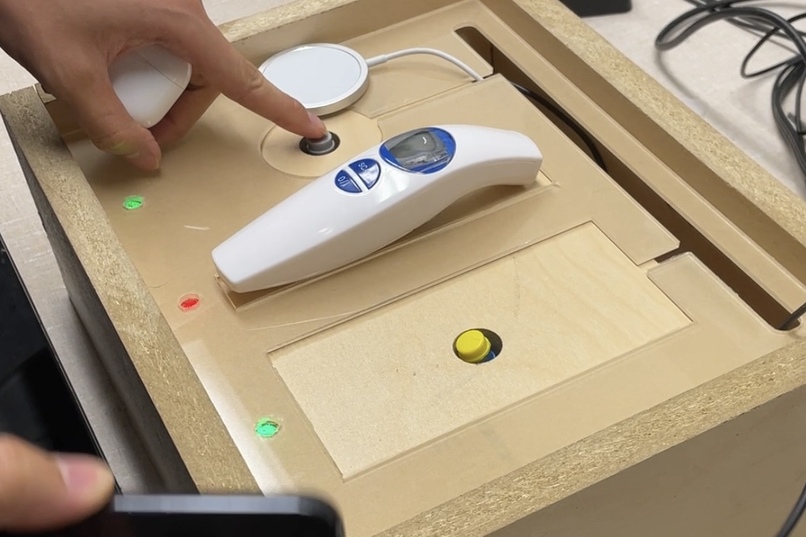
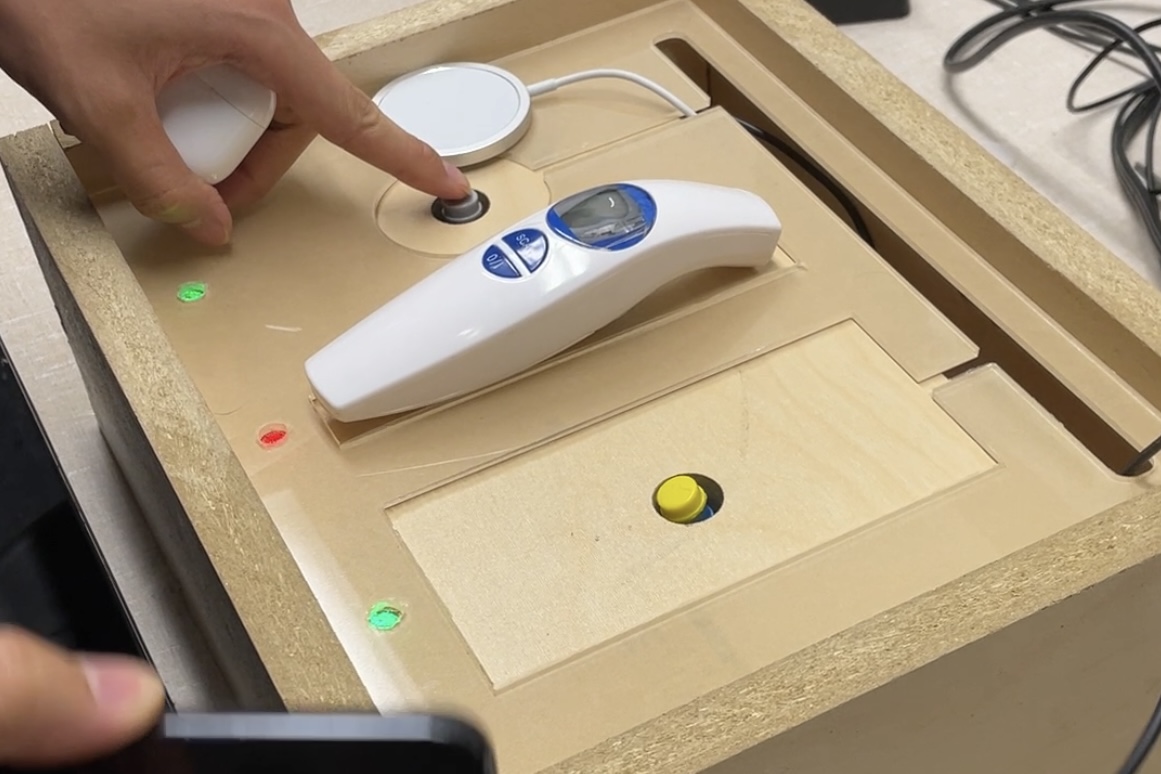
Closer look at the mechanism located below each device and the LED light system in action
Inspiration
Clinical trials are a large hold up for companies developing drugs for the market. Recent innovation has shifted the discussion to decentralizing some or all of these trials, making them accessible to a wider, more diverse population. However, in talks with lead trial organizers at Takeda, they mentioned that the decentralized trials lacked the empathy traditional trials excelled in. This project is targeted towards improving the patient experience in decentralized clinical trials, increasing patient adherence to trial guidelines and maximizing trial impact.
What it does
The CliniMod box is specifically tailored to meet the requirements of each decentralized clinical trial. The box features a single charging cable for all devices, ensuring that it is easy to setup the box as a hub for the clinical trial in patient's homes. It also has passive notifications to gently remind users to meet trial guidelines for device usage without being over bearing; red indicates that one should use the device as soon as possible, green gives assurance. All of this is packed within a minimalistic design to ensure the patient experience is as simple and streamlined as possible.
How we built it
We began by customizing a tray to fit a few example devices (a pair of earbuds, a thermometer, and a phone). The tray was laser cut using 1/8th inch acrylic. Next, a box was designed and built to house the acrylic tray. These aspects represented most of the mechanical aspects of this project. To produce the lights and timing, an ESP32 arduino and coded the passive notification in arduino C. Wires to the buttons and lights were soldered on for surer connection.
Challenges we ran into
Mechanically, there were many challenges with producing the perfect components that would fit together in the end. It took nearly 6 passes of a laser cutter to get through the acryllic. The wood box took nearly 2 hours to find perfect dimensions and ensure everything was flush.
The coding and electronic engineering side was even more challenging as the lights and buttons needed to work in tandem. The unconventional LEDs used took some work arounds to figure out, and timing the buttons to trigger lights at the right time took dozens of iterations.
Accomplishments that we're proud of
The overall box works exactly as intended with minimal concessions made due to time constraints. It looks sleek from the outside and performs its function well. Although challenges did arise, the entire build process was a great learning experience.
What we learned
I learned a lot about the design process, from idea to production to electrical engineering. Each step of the process, while physically happening in series, needed to be planned in parallel from the very beginning. If I had build the box's base plate with slightly different dimensions, the electronics would not have been able to fit down the line. If I had not remembered to drill holes for LEDs, the LEDs would not sit at the most optimal location.
What's next for CliniMod
We hope to develop this idea further and turn out idea into a startup. We are currently looking to build a scalable prototype to test in real trials and measure the effectiveness of the Clinimod box.


Log in or sign up for Devpost to join the conversation.